In the Midst

Increasingly I find Radio 4 a disturbing listen. Not because the content is controversial (usually), or offensive, but because every time I switch it on I realise how much I don’t know. Whether it’s In Our Time, or some other consideration of a niche topic, I’m made aware of the vast range and depth of human knowledge about which I was oblivious. One example of this arose last week, listening to the Seven Deadly Psychologies. While I certainly have views about why greed is bad, this programme delved into the mechanics of why this might be the case. In the discussion there was a fascinating debate about the fact that, generally speaking (but with notable exceptions), research has demonstrated that rich people have less empathy and compassion than poorer people. In charity, the poor overwhelming give away a significantly higher proportion of their wealth when compared with the financially advantaged.

One reason offered to explain this was that wealth meant people became more distant from communities. It was not possessing a fortune per se which caused this lack of compassion, but the acquisition of space. The consequence of an exclusive lifestyle is that it removes us from close company of our ‘fellow-passengers to the grave’, to quote A Christmas Carol. In turn, this increasing remoteness appears to dull the understanding of the thoughts and feelings of other people. Richer people often feel entitled to their wealth – and perhaps see poverty as simply other people’s failure to accrue resources. Perhaps some of the present UK Government should listen to this episode.

A crowded nativity scene in St. Hippolytus Pfarrkirche, Zell am See, Austria January 2023

While wealth and power no doubt brought King Herod a significant ‘exclusion zone’ this can hardly be said of Jesus. The narrative of the nativity describes a Bethlehem bursting at the seams. In the traditional portrayal, Jesus and his family are cheek by jowl with the beasts of the stall; receive a stream of uninvited visitors; and find themselves in a town where every bed is taken. Lack of worldly privilege ensured that Jesus grew up close to a wide variety of trades, in a community where modest livelihoods required people to cooperate.

Sovereignty in a cattle stall is one example of the paradox that runs through the Christian story. If wealth dulls our capacity to be compassionate it can also diminish our ability to recognise a God who expresses a preferential option for the poor. A God who, in Christ, is able to hear the plea of the Syro-Phoenician woman; the prisoner on the cross; the dilemma of the rich young man. Only when the Word-made-flesh pitches its tent in the heart of humanity is the gulf between God and creation closed. Ultimate power and splendour, commanding more space than we can ever imagine, chooses to renounce entitlement and make the ultimate identification with humanity.

For Dietrich Bonhoeffer the paradox lies partly in the idea that this God is not seen easily by those who have the most resources, or education, or stability in their lives.

“The celebration of Advent is possible only to those who are troubled in soul, who know themselves to be poor and imperfect, and who look forward to something greater to come.”

Dietrich Bonhoeffer

Knowing our need for one another, and our need of God, is a prerequisite for our spiritual growth and maturity. It is one of the reasons why Advent is an uncomfortable season. Many of us recognise the greed we feel for our own space, and to have the freedom to do as we wish. Community implies compromise and association, experiences which appear to have fading appeal in the West. However, to know God seems to require us to be immersed in the dependencies of human society – a truth which both Advent and Christmas impress upon us each passing year.

Common Sense

In the 18th century the fortunes of the city of York, along with its Minster and clergy, were enjoying a rise in both wealth and status. This led to the creation of prestigious new buildings, sweeping away some of the more mundane Medieval dwellings. This was a time when the buildings surrounding York Minster began to change with dramatic effect. Demolishing – and in some degree, incorporating – 15th century cottages to the north-east of the cathedral, Dr William Ward built himself a fine Georgian townhouse (pictured). He was the chief legal officer (‘commissar’) for the Dean and Chapter of York, a role which brought many pecuniary benefits. The new house was a fitting expression of his wealth and status.

The role of ‘commissary’ brought both influence and financial reward. There is every indication that Ward used his position to become wealthy and further the ambitions of his family. His daughter, Sarah, married a baronet and become Lady Fagg. While little is known about Ward, like many gentleman of his era, we know that he had a significant personal library. This is indicated by an Item in the late lawyer’s Last Will and Testament in which he bequeathed to his wife and daughter, ‘Forty English Books each such as they shall chuse out of my Library excepting the large Bible’. Perhaps foreseeing that this could lead to some dispute over which books each should have, Ward adds: ‘my wife to have the first choice’. In all likelihood the large bible would have passed to his son.

The wealth of legal officer such as Ward was built on a considerable degree of misery. Misery, that is, for the poor souls who came before the ecclesiastical courts. The leading Sterne scholar Arthur H. Cash described these courts as:

‘weak remnants of what had once been a terrifying Protestant inquisition’

Cash, A. H. (1971). Sterne as a Judge in the Spiritual Courts: The Groundwork of A Political Romance. In English Writers of the Eighteenth Century (pp. 17-36). Columbia University Press.

The main purpose of these courts was to deter pregnancy outside wedlock. It often led to both fines and public humiliation. It is hard for us to understand the level of pastoral disregard and cruelty which this system could produce. For example, Cash cites an incident where Robert Milburn was tried in 1753 in the village of Alne, just north of York, for antenuptial fornication ‘with Jane his wife, now dead’. It is little wonder that these courts were abolished or that clergy came to have a very mixed reputation through their enthusiasm to become judges. It provides some insight about how Lawrence Sterne came to be so familiar with a range of conduct and human emotion. Perhaps the perceived bawdiness of Tristram Shandy owes something to the process of examining cases that were brought to the courts by church wardens. In addition to his responsibilities as a parson, as the son of an army officer; a sometime farmer; and a judge in the courts, Sterne must have heard and seen a wide spectrum of life. Additionally, as a frequent visitor to nearby York, he was also connected to middle class mores and cosmopolitan life.

Perhaps William Ward’s main claim to fame is that his death precipitated a decade long dispute between the Dean of York and the Archbishop’s chief legal officer. It was a disagreement concerning the many legal roles which Ward had occupied and how these were to be inherited on his death. The Archbishop’s legal officer believed that the Dean had promised them to him, a promise on which he claimed the Dean reneged. Finally, after heated public exchanges between these two worthies, the situation provoked Laurence Sterne to publish his first significant literary work – a satire on the dispute entitled ‘A Political Romance’ or, as it is often known, ‘The History of a Good Warm Watch-Coat’. It was so accurate and effective that the Archbishop of York instructed all copies to be returned and the entire stock to be burned. Thankfully, at least six people either didn’t get the memo, or they decided not comply with the instruction.

Which brings me to common sense. Looking back it is easy to name the intolerable cruelties of another ago, or of a different place and people. In the style of Jonathan Swift, Sterne brings to the dispute a creative reframing that allows people to see their conduct in a different light. What may have appeared to be an obvious and inevitable response, suddenly becomes more complex and questionable. Creative writing invited the reader to wonder about the behaviour of those involved and the apparent inevitability of the dispute that unfolded. In many ways Sterne was an actor within events that seemed natural and necessary – and in the end he inherited some of Dr Ward’s legal responsibilities. However, he was also able to see beyond the near horizon of common sense and question the relationships and conduct which were doing little to promote the reputation of the church. Common sense in one age can appear as outrageously cruel in another – and I hope that in her new role of ‘minister for common sense’ Esther McVey will recognise the provisionality of her brief. The common sense of one group in society may be seen very differently by another group. Unless handled with the greatest of care, common sense can conserve and perpetuate some of our worst practices and behaviours.

  • The illustration of Dr Ward’s house, Chapter Yard, York, is by Allan T Adams BA FRSA FSAI

Civilisation

Tied with sackcloth strips, the ears of wheat on the pew ends at Marton in the Forest appear timeless. A small token of thanks for a harvest safely gathered. In the rich land of North Yorkshire, where fields now bare the dark earth of recent ploughing, there is an atmosphere of plenty. No doubt there have been difficult years, and times when the crop has been reduced, but seldom will it have failed completely. It is a lush landscape through which countless streams murmur contentedly. Nevertheless, there has been change. In place of homes occupied by agricultural workers the villages have been gentrified with people in high-end professions, many no doubt enjoying home working in the post-lockdown world. Even in modest Marton there is an ‘Old Vicarage’, from a time when even the smallest community boasted (or endured) a parson.

Lack of food has led to human migration as long as humanity has existed. The Bible is full of such episodes and, in the Book of Ruth, it is famine that leads Naomi to go into the land of Moab with her husband Elimelech and their two sons. It could not have been an easy decision. Many commentators describe the relationship of the people of Israel and the people of Moab as one of ‘hatred’. Nevertheless, the family not only survive but the sons marry two of the Moabite women. Again, probably not something done lightly, but perhaps a small sign of the possibility of better relations emerging between the two peoples. Sadly, Elimelech and their sons perish and Naomi, and her two daughters-in-law are alone.

In an era when links to male family members was so important for security and subsistence this all-female household appeared to be untenable. Naomi decided that they must split up, each returning to their wider families. For Naomi this required a journey to Bethlehem while for the daughters-in-law it meant staying in Moab. One accepts this option; but not Ruth. Ruth comes to realise that if she wishes to remain loyal to her husband and in-laws it will require a decisive change of belief. We have no idea from the book how differences in religious faith were handled within the marriage itself but, at this point, Ruth gives voice the profundity of her decision:

““Do not press me to leave you,
            to turn back from following you!
Where you go, I will go;
    where you lodge, I will lodge;
your people shall be my people
    and your God my God.
Where you die, I will die,
    and there will I be buried”.

Book of Ruth, Chapter 1 . 16-17
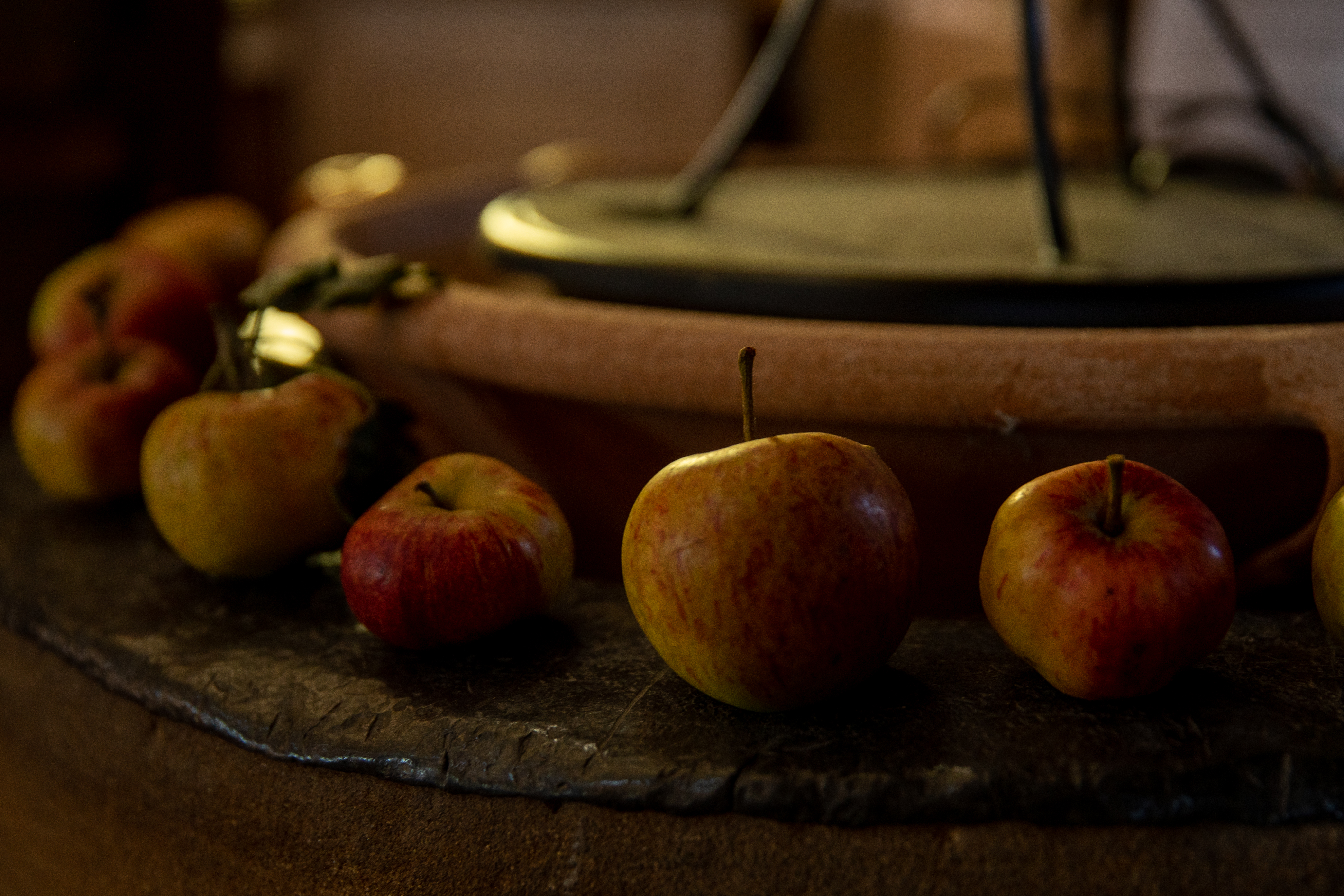
Harvest apples around the font at St Helen & the Holy Cross, Sheriff Hutton, October 2023

Remarkably, when the pair arrive back in Jerusalem, Naomi appears to overlook this astonishing daughter-in-law. Naomi announces that she has come back ‘with nothing’ and changes her name to Mara, meaning bitter. Accepting that they are at the bottom of the economic order, gleaning becomes the only way for them to both survive and secure a future. Gleaning was an activity for both gaining food and also for initiating relationships. The women might choose which group of young men to follow in their reaping and, as food was shared, so courtship began. Carefully, Ruth chooses to follow the older and wealthier Boaz rather than to fraternise with the younger reapers. Eventually this leads to marriage with Boaz and the birth of a son, something the women of Bethlehem assure Naomi will be: ‘a restorer of life and a nourisher of your old age’. These same women then tell Naomi, who came back ’empty’, that Ruth ‘is more to you than seven sons’. In the patriarchal society of the time this is an astonishing testimony.

Yesterday I conducted the wedding of two young people. At the end of a week filled with so much horror, hatred and destruction, it felt like the lighting of one small candle in the midst of darkness. Weddings feature a number of times in the teachings of Jesus, and they serve as an image for the Kingdom of Heaven. They bring together communities, recall the past, and chart a path to the future. They are often occasions to cement links between families and for everyone to pledge their support to the couple. However, for marriages like the one at Cana in Galilee to take place, a degree of peace, prosperity and security is required. These circumstances should never be taken for granted. As we see now, in both Gaza and Israel, there are planned marriages which will never take place – either one or both of the people have been killed. In several other contexts, the places and resources to hold a family wedding no longer exist. The threads of what make up a functioning society have been severed. Instead of a harvest there are only ashes; where joy could have been shared, there is only silence.

We have been here before, far too often, but now the weapons and technology enable hatred to do ever more damage. The ordinary things that make up civil society cannot be taken for granted. Destruction is quick and definitive – the creation of healthy communities takes much, much longer. At the moment it is hard to know how peace will return and flourish in so many places in our world. How the celebration of marriages and relationships of commitment will resume and contribute to societies of care and compassion. The first step on that journey must be the ending of hostilities, especially when innocent people become part of the collateral damage of a conflict in which they want no part. Endless violence, modelling violence to a new generation, is in the interests of nobody.

What is Life?

John Clare asked the question ‘what is life?’ at the beginning of his poem of the same title. It is a work that reflects the angst and instabilities experienced by this notable English poet. A figure who emerged from a family of agricultural workers, did a range of manual jobs, and came to be favoured by people of literary society. Clare’s emergence as a poet was partly driven by financial distress, and the need to generate funds to prevent the eviction of his parents from their home.

And what is Life?—An hour-glass on the run,
A Mist retreating from the morning sun,
A busy, bustling, still repeated dream;
Its length?—A minute’s pause, a moment’s thought;
And happiness?—A bubble on the stream,
That in the act of seizing shrinks to nought.

John Clare, included in Poems Descriptive of Rural Life and Scenery, 1820

Clare’s experience of life was distinct from other poets who were writing in this period. He was employed in what are often considered to be basic occupations. He would have known the relative powerlessness of his position in the social order, and how much material well-being rested on the decisions, patronage and preferences of wealthy people. The poem’s opening words assault us with a question that is both profound and also indicative of a question that has prompted the poet. It feels like a retort to someone who is pontificating about the value, pleasures and virtue of life.

The response of the poet is to focus on the ephemeral nature of our existence. Not only that, but even when we encounter a time of happiness, it is merely ‘a bubble on that stream’. If life is brief than Clare tells us that our better moments are simply an even more fleeting by-product of the water’s turbulent churn. A fraction of bliss in an otherwise downward torrent of vain hopes. In a life of brevity, happiness is a reprieve that bursts as soon as it encounters the rocks that lie all around.

I have always been rather suspicious of happiness. Perhaps that’s due to an American interpretation of it that has come to dominate our perceptions of a good time. There is a whole industry dedicated to what happiness is, and how to promote it. Inevitably, there is a lot of interest about this in marketing, where our perceptions of life can be harnessed to the priorities of consumerism. Any deficiency in our sense of well-being can become a target for products and experiences we are told will fill the void and deliver our happiness. Psychology and spirituality may often be drawn into this tension of anxiety; unsatisfactory lifestyle solutions to our needs; and consequent disenchantment. There are several ways in which happiness is identified and calibrated, such as the Oxford Happiness Questionnaire. This was influenced by the following understanding:

Argyle and Crossland (1987) suggested that happiness comprises three components: the frequency and degree of positive affect or joy; the average level of satisfaction over a period; and the absence of negative feelings, such as depression and anxiety.

Francis, L. (2010). Religion and happiness: Perspectives from the psychology of religion, positive psychology and empirical theology. In The Practices of Happiness (pp. 113-124). Routledge.

While I am sure that such tools and schemes of analysis have their uses I would question the particular concept of happiness that underpins the method of enquiry. In many respects the surveys appear to deal with a sense of well-being which is then conflated with happiness. These things are not the same. Twentieth century influences tend towards a very individualistic form of happiness, albeit that this may incorporate those people to whom we are closest. However, where is the political dimension that addresses how much our happiness (e.g. meaning, for some, to do what we want) is paid for by the misery of others? There are some researchers who have identified problems in the Western conception of happiness, advocating ‘an alternative approach, relational wellbeing, which is grounded in a relational ontology that can challenge dominant ideologies of the self’.

Religions have often had a complicated relationship with happiness. There is a recognition that, like a bubble on a stream, happiness can be momentary and elusive. As one hymn puts it: ‘Fading is the worldling’s pleasure’. Faith offers something that is not transitory. The focus is about wealth that does not decay – treasure we encounter now, but will experience fully in a life to come. There are risks with this conviction but also great possibilities. Not least, to live in some kind of peace with the world, and find value and joy in relationships. Challenging the narrow focus of ‘my’ happiness and focusing instead on our collective shalom seems a much healthier and constructive path to take. Perhaps then we might even discover that our personal happiness is what we are most likely to find we have when we have ceased to look for it.

A Bye Corner of the Kingdom

These are the words Laurence Sterne used to describe the vicarage at Coxwold. A ‘retired thatched house’ in a place remote from the concerns of even a provincial city, such as York. Perhaps Sterne did not see this as a promising location from which to change the course of world literature. It is difficult to imagine what life in a remote Yorkshire village was like in the 1700s. Far more people worked on the land, while today the holiday cottage dwellings mean occupancy fluctuates each week, and there will be seasons when only a few people inhabit the place. The population was 348 in the early 19th century – and 250 in 2021.

Despite a limited literary output, Sterne’s work is recognised for its transformative impact on the course of Anglo-Irish literature. It was an influence for James Joyce, Salman Rushdie and many others.

Sterne was adept in deflating many of the pompous debates of his time. In chapter 20 of the first book of The Life and Opinions of Tristram Shandy, where birth is such a central theme, there is a digression about the baptism of babies before they are born. The view in Catholic circles to this point had been that at least some part of the baby must be born in order for a baptism to take place. Inevitably, there were circumstances when the baby had died in the womb and where it was believed that baptism was impossible. (There is a history in northern Europe where the Church operated ‘Resurrection Chapels’ to enable the baptism of a baby which was stillborn – Swift, p.119). However, the debate that Sterne cites in this section of the book looks to marry advancing technology with the possibility that a baptism could take place before birth:

Le Chirurgien, qui consulte, prétend, par le moyen d’une petite canulle, de pouvoir baptiser immediatement l’enfant, sans faire aucun tort à la mere.

The surgeon who raises the question asserts that by means of a little injection-pipe he can baptize the child directly, without doing any harm to the mother.

Sterne, L. (1759). The Life and Opinions of Tristram Shandy, Gentleman (reissued).

In this debate Sterne is not oblivious to the dubious nature of a suggestion, in which male medics and male theologians decide that a medical procedure – with no medical benefit – will not result in any harm to the mother. In his imaginative response to this scholarly discussion Sterne takes the argument a stage further, and suggests that one way to avoid any doubt in the matter would be to baptise all of a man’s sperm. (This reflects thinking at the time that there was a fixed stock of sperm containing ‘homunculi’ – minuscule people ready to grow once in the womb). Chapter 20 concludes with the thought that a little injection-pipe could be inserted into the man (‘sans faire auxin tort au père’), between marriage and consummation, to ensure a ‘shorter and safer’ way to baptism. The reader is left to ponder whether male theologians and medics would find this a better solution.

Simultaneously this passage hints at how medical technology might affect sacramental practice, while lampooning male discussions which determine what will do no harm to women. In pushing the ideas further, Sterne discomforts his male readers – and certainly amuses his female audience – in suggesting that sticking a cannula into a penis would be more effective ‘without doing any harm to the father’. It would also provide an interesting ceremony on the day of the wedding.

St Michael and All Angels, Coxwold – where Laurence Sterne served as a priest.

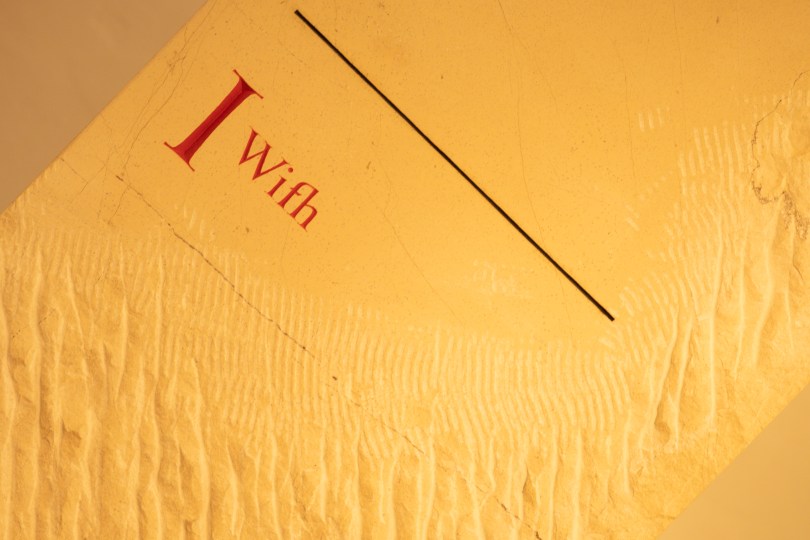
If Coxwold is a ‘bye corner of the Kingdom’ it didn’t stop Sterne writing some of the most adventurous and sophisticated prose of English literature. Thankfully, The Laurence Sterne Trust continues to stimulate interest in the author’s legacy and enable artists to engage with his work. In its most recent exhibition a range of creative people have been challenged to interpret the opening words of Shandy – ‘I wish’ – to reflect on their response to the text. This vibrant exhibition is a fitting contribution to the 50th anniversary celebrations of Shandy Hall’s existence as a public museum.

Milk to Faith

What, I wonder, do we ask for in prayer? I am thinking in particular of moments when we might petition to know God more fully; more deeply; more intimately. Perhaps our wish is for only the slightest indication that God is present with us – of no more substance than the passing brush of a moth. Often we prize these glimpses and signs, feeding on them for many years after the event itself.

In characteristic style, John Donne had no truck with these modest expectations of divine encounter. In one of his sonnets Donne demands a much more forceful – even brutal – experience of God:

Batter my heart, three-person’d God, for you
As yet but knock, breathe, shine, and seek to mend;
That I may rise and stand, o’erthrow me, and bend
Your force to break, blow, burn, and make me new.

Batter My Heart John Donne 1633

It is a metaphysical poem par excellence, full of paradox, wit and irony. In the relationship between the poet and God Donne pleads to be overpowered, even referencing in the opening line that the individual soul is outnumbered by this God of three persons. It is the text used for a remarkable aria by the contemporary American composer John Adams, in his opera Doctor Atomic. The opera concerns the first test of an atom bomb, known as the ‘Trinity’ test, a designation reflecting Robert Oppenheimer’s fascination with Donne’s poetry.

Jefrey Johnson, in his book about the theology of the 17th century dean, identifies the Trinity as Donne’s seminal Christian belief. As Fred Sanders put it some years ago, having examined his poetry and sermons, this belief was centred on the concept of sacred community:

That God is a unity rather than a singularity, a communion rather than a monad. And as we gather our scattered selves into the act of worshiping the triune God, we become more unified, more focused, more truly ourselves.

Fred Sanders: Today is John Donne’s Birthday, blog 2009

The visceral tone of Batter My Heart reflects Donne’s passionate desire to surrender the whole of himself to God. This is no insipid theology of cautious approach, but a demand to be broken, blinded and burnt in order to be restored; to see aright, and emerge, phoenix like, as a new creation. Left to the intellect alone the Trinity might remain a stumbling block and cause of confusion, but when engaged as God-in-community Donne sees the doctrine as a vibrant expression of sacred relationship. Perhaps it is for this reason that in his Litany Donne recognises fundamental differences between an approach to the Trinity that draws on philosophy and one where faith is placed at the heart of things:

O blessed glorious Trinity,
Bones to philosophy, but milk to faith,
Which, as wise serpents, diversely
Most slipperiness, yet most entanglings hath,
As you distinguish’d, undistinct,
By power, love, knowledge be,
Give me a such self different instinct,
Of these let all me elemented be,
Of power, to love, to know you unnumbered three.

Donne, John. Poems of John Donne. vol I. E. K. Chambers, ed. London: Lawrence & Bullen, 1896. 174-187.

Philosophers will ponder the meaning and nature of the Trinity until kingdom come. The Trinity remains, for people of faith, a vibrant community of persons, where equality of status is lived in a dynamic relationship of power, love and knowledge. If in Christ we are born again then it is in the Trinity that we learn to grow again, nurtured by the milk of a faith flowing from the God who shines upon us, and seeks to mend all that is done amiss.

Feature image is the Trinity depicted in stained glass at York Minster. Photo by Lawrence OP

Compassion and Complicity

Chaplains always walk a fine line between the pastoral care of distressed people and the risk of making the intolerable, tolerable. It is an experience that runs deep in the history of chaplaincy. The workhouse chaplain and the workhouse master were designed to operate as ‘good cop, bad cop’. One the stern disciplinarian; the other the ‘friend of the poor’. Perceptive critique of this relationship arrived at the jarring description of the chaplain as the Sunday gaoler.

More recently – the early 1990s – an NHS CEO was feeling somewhat anxious about selling the concept of greater autonomy to a largely left-wing audience. As one of the first implementers of the new ‘Trusts’, the CEO imagined that there could be popular opposition to anything that might smack of gradual privatisation. So he asked the medical director and the chaplain to sit on either side of him on the platform. Not only that, but he was keen to see the medic in a white coat and the chaplain in a clerical collar. Armed with the presence of medical authority and religious support, the CEO judged that this would help lessen the opposition.

In a similar way during the organ retention crisis it was often left to chaplains to engage with parents and conduct the ‘reunitings’ – when newly discovered remains were buried alongside the original casket. Around the country special religious services were held to mark the experiences of loss which these circumstances had made more complex. I was involved with the one at Leeds Minster and preached the sermon. After the service one relative said that he felt better about the sermon than he had when he attended a similar event in the south of England. On that occasion the local bishop had preached and, when the relative saw him after the service, he asked the bishop: ‘So when’s the NHS going to give you your thirty pieces of silver?’ The relative thought the bishop had done everything possible to defend the institution – but done nothing to express solidarity for the grieving families.

“There comes a point where we need to stop just pulling people out of the river. We need to go upstream and find out why they’re falling in.”

Desmond Tutu

Desmond Tutu’s reflection emphasises the need to ensure that pastoral concern is matched with prophetic witness. It is better to stop the circumstances that lead to suffering rather than focus exclusively on saving those already drowning. Many well-meaning people baulk at the political involvement that requires injustice to be challenged – but in doing so risk propping up systems that are fundamentally pernicious.

In meeting with members of the Faculty of Theology at the University of Stellenbosch I learned about the ‘Day of Courageous Conversations’. This took place in 2015 when the Anglican Archbishop of Cape Town, The Most Reverend Dr Thabo Makgoba, hosted representatives of the South African mining sector, civil society and faith communities to discuss the future of the mining industry. The aim was to see a way forward for sustainable mining that limited its damage to local communities.

The Most Reverend Dr Thabo Makgoba

One possible outcome of these conversations (which are continuing) might be the allocation of chaplains to the mines. Given that mining is undoubtedly at the sharp end of capitalism, not to mention environmental harm, chaplaincy in this context will be daunting. The balance between spiritual sticking plasters, and questioning unjust and injurious practices, will be extremely challenging. Perhaps, if chaplaincy is provided in this industry, there need to be clear and anonymous ways in which chaplains can reflect back to senior church leadership the concerns they identify. This could in turn enable and resource prophetic witness which would allow pastoral care to continue while moral questions are raised and pressed forward. Only time will tell if this is an ethical and faithful way in which to balance the need for compassion with the risk of complicity.

If any chaplain ever feels that there are no tensions between the organisation they serve and the people they pastor, this is probably the clearest warning that something is wrong in their ministry. Chaplaincy will always be at the messy interface of personal experience and institutional power. In the midst of all the distortions this creates, the chaplain’s calling is to stand by and for the things that belong to the Kingdom.

Theology at the Edge

For many years I have been fascinated by theology at the edge. In hospitals and care homes, ITUs and delivery suites, I have been with those experiencing some of the hardest moments which life can bring. It has long been my belief that these are the places from which theology should be written. They are the boundary moments, the liminal spaces, in which our lives are defined and transformed. Once, when I was asked to bless a suite of operating theatres due to ‘concerns’, I agreed to do it only on the basis that I met and spoke with the whole staff team. While there was spiritual significance in what I was doing for some, for others there was the recognition that these are extraordinary places in society. To do what happens in an operating theatre just a few yard away would get you arrested. These are important, sacred, and atypical spaces. Not only are lives changed on the operating table, but far beyond the hospital lives are altered by the recovery or loss of the person undergoing surgery. Blessing these kinds of places is giving expression to the seriousness of the events they contain and enable.

In his critique of empire Allan Boesak writes about ‘a theology at the edge’. Unsurprisingly, Boesak is not describing the kind of edge which I refer to above, but the place where theology is driven when we join the struggle against injustice. There is a double sense here about what it means to be at the edge. It is where theology is pushed when people ask Kingdom questions about the absence of justice in their lives and the lives of others. But it is also used in the sense that this is cutting edge theology – the sharp place in our world where theology is far more than an abstract academic discussion.

“We are speaking of a certain expression of theology, a prophetic theology, the theology that responded to the struggle in South Africa with prophetic truth and faithfulness, standing as the oppressed and with the oppressed in our struggles against oppression in colonial times and during the reign of apartheid, and now in global struggles against the devastating reach of imperial powers and their underlings everywhere”.


Boesak, A. A. (2017). Pharaohs on Both Sides of the Blood-Red Waters: Prophetic Critique on Empire: Resistance, Justice, and the Power of the Hopeful Sizwe–A Transatlantic Conversation. Wipf and Stock Publishers. Chicago.

Perhaps these two edges are not quite so far apart as they seem at first sight. The access and use of health services is also bound up with issues of justice, not least in the fact that the poor in society are more likely to access health care, and more often, than wealthier individuals. Medicine sits within the economic framework of capitalism which shapes and directs investment in new drugs and therapies. Minor conditions in the West leverage a disproportionate influence in the search for cures compared with far more serious conditions which are found most frequently in the developing world. As Nicholas Freudenburg has argued, at the very least, the various incarnations of capitalism need to be explored in order for people to understand the relationships and consequences of the economic realities which shape our lives.

In a theology at the edge Boesak issues a bold challenge to locate our understanding of God in the places – and with the people -who are on the margins. These edge places are simulataneously at the cutting edge of tough and creative transformation. How we engage and support theology that is with and for the oppressed is perhaps the next question. In the UK there is some evidence of churches responding to this kind of call, even if they are few and far between. For example, it can be seen in the work of Barrett and Harley in their title Being Interrupted. Perhaps before we can make any greater progress, we need to interrupt the smooth narratives of our theologies and allow new voices to shape the conversation about how we go forward in order to enable the Kingdom of God to break into our lives and disrupt the smooth running of oppressive structures.

Sentry Duty

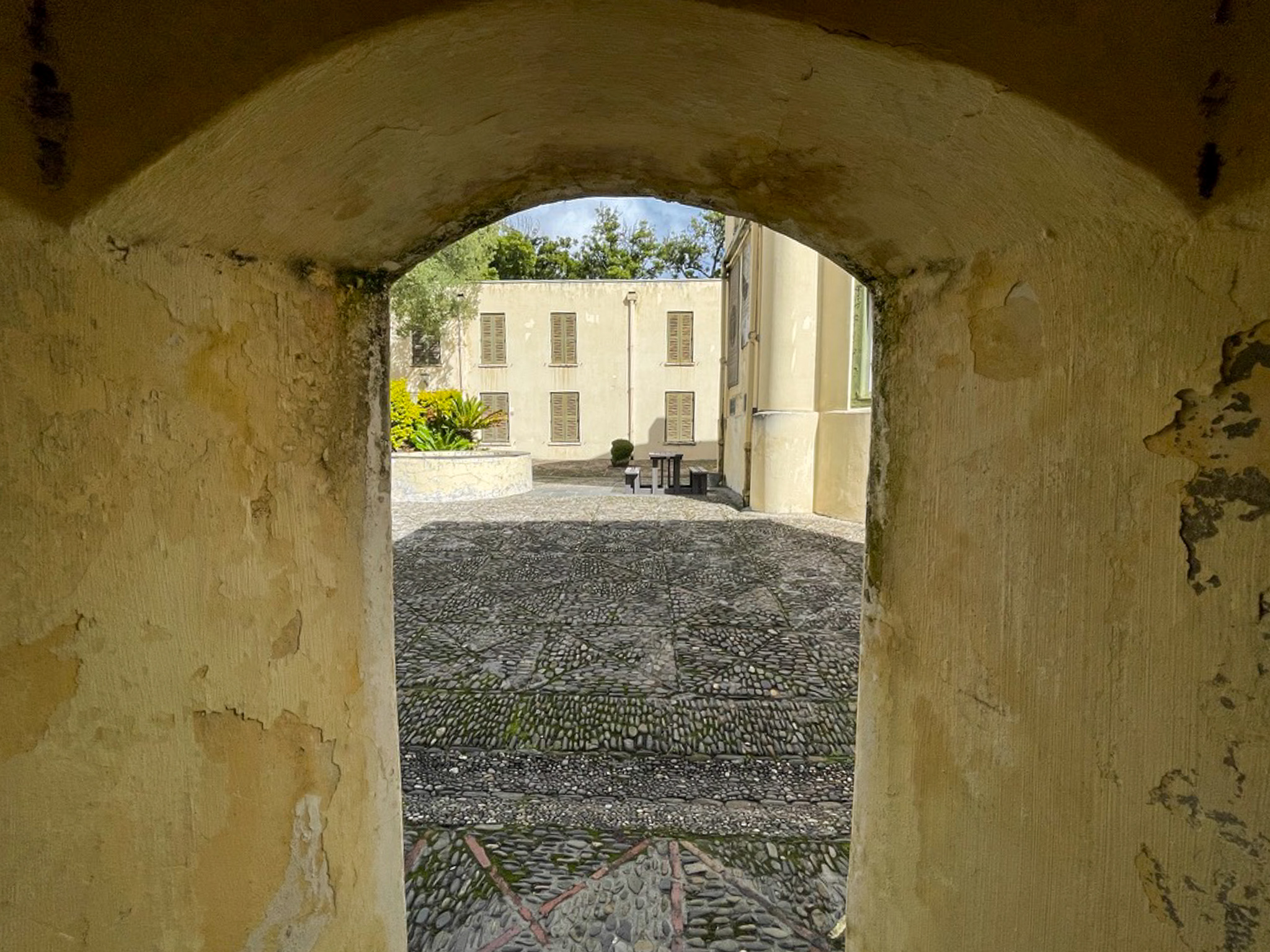
Observation alters behaviour. This was a truth made with notable clarity and force by the French philosopher Michel Foucault, in relation to prisons – but the effect is far wider. In the courtyard of the Slave Lodge in Cape Town there is a sentry box, re-sited from Fort Knokke (built in 1744). It was part of the infrastructure of military occupation that safeguarded colonial interests, not least those of the East India Company.

I can’t recall whether I’ve ever stood in a sentry box before. Spending some time walking around the box, and then standing inside, brought home to me the altered state that occupying the box brings. A soldier has the benefit of protection bought at the price of limited sight. Narrow slits afford some vantage, but these are inevitably narrow in perspective and focused on particular points of danger. Walking into the box demonstrated how much sound is altered in the small structure. Effectively the sentry’s perspective is limited and defined, while sound is muffled and becomes more distant. Simultaneously the guard is present in, and distanced from, the wider community.

The relationships which colonialism brings are invariably infantilising. The occupying powers ‘know best’ and inflict their religious, economic, military and political stamp on unwilling lands. Spending time with the people from The Warehouse in Cape Town reveals the lasting scars and consequences of a regime rooted in colonial attitudes. In a clear and autobiographical style, people shared with us their identities and histories, and explained how growing up in different decades in South Africa has affected their family relationships; education; type of work; place to live; and friendships.

It was encouraging to hear all this set within a framework of a theology that was natural to reference and practical in its insights. Equally, along with many other things, I found it disturbing to learn that at one point in its history the Dutch Reformed Church had decided that the common cup would not be shared between ethnic groups.

the discomfort of white members in sharing a cup during the offering of the sacraments led to the establishment of the coloured “daughter church” and later that of the black population, which came to be known as the Dutch Reformed Church in Africa.

Konzane, M. P. (2017). Mission calling in a congregation of the Dutch Reform Church of Africa in a transforming society: a case study in South Africa (Doctoral dissertation, North-West University (South-Africa)).

At the start and end of this first day in Cape Town we read Matthew 21. As our pilgrimage progressed I found resonance and connection with a detail towards the end of the passage, when the religious leaders say to Jesus: ‘Do you hear what these children are saying?’ The translation we are using says the leaders were ‘indignant’ when they asked this question. It is not uncommon for discriminatory language to belittle others by making a comparison to children, implying that some adults are less than they ought to be. Daughter churches? As we spoke about the decision to segregate the administration of Holy Communion it also led me to reflect on the common practice in many churches to exclude children from this sacrament. It may seen natural to some, but I wonder whether it is wise.

Inevitably, my first 48 hours in South Africa has raised questions about the mechanics of oppression; all the people caught up in its operation; and those bearing the brunt of its legacy. Where we stand shapes what we can see and how we can hear – and sometimes we all need to take the risk of stepping out of our box to engage with different perspectives. That, as much as anything else, should be our duty and our joy.

Salty Language

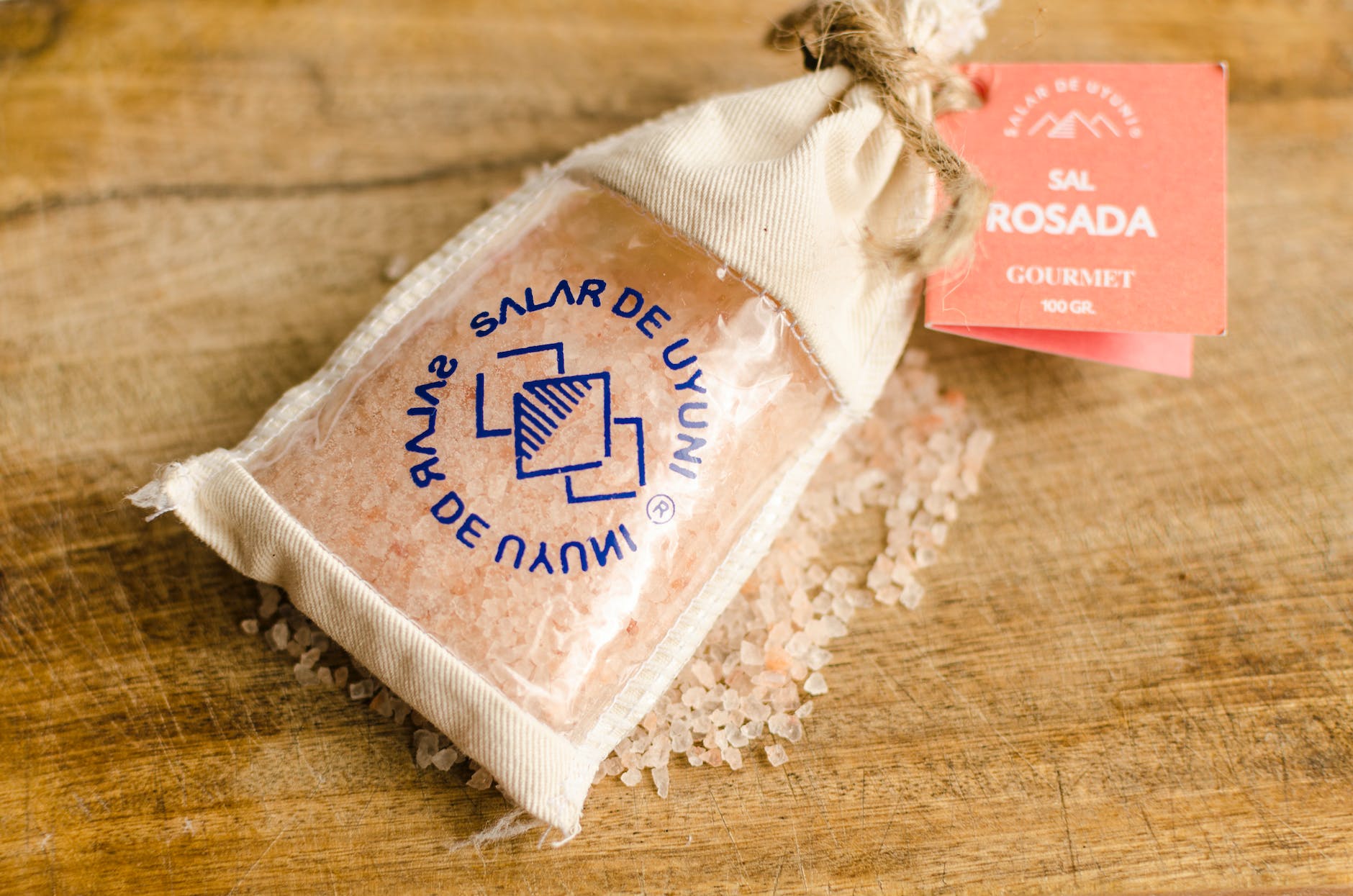
Over ten thousand feet above sea level in central Peru it was surprising to find a whole industry dedicated to the production of salt. The Maras salt pans go back over a millennium to the Chanapata culture. As this civilisation gave way to the Inca Empire, they continued to provide their distinctive pink salt far and wide. At such a distance from the sea, and at such altitude, the steady supply of salt seems miraculous. Long ago, this land was below the sea and left salt hidden in the hills. A spring which runs through the complex of underground passages this enables the striking ‘pink gold’ to be extracted from the small stream that emerges above the pans. The rights to salt production are handed down through the generations, back to a time now lost to memory, with tourism adding further value to the enterprise. It is hard work, but the rewards can be significant.

Photo by Roger Duran on Pexels.com

For all of my life salt has been readily available and cheap. This was not always the case and for most of human history salt has been a precious commodity. In the Roman Empire it was taxed, and served a wide variety of uses – religious sacrifice, medicinal, fish preservation and, of course, the seasoning of food. Like anything that is taxed, this also made salt political. In Matthew chapter five, when Jesus says ‘you are the salt of the earth’, it follows only a few verses after the calling of the first disciples. In a way largely missed today, the leap from those involved in fishing, to an image of salt, was entirely natural. Everyone was connected to salt in some way; and no one doubted its value.

In the Jewish Scriptures there are intriguing references to the ‘covenant of salt’. In the various covenants God made, such as with Noah and Abraham, there is a theme of constancy (at least on God’s part). Probably due to its properties of preservation, salt was often used for these moments of commitment. In Numbers 18:19 we hear about the relationship of God to the people as ‘a covenant of salt forever before the Lord for you and your descendants’. A commitment made in salt was expected to endure.

In Greek and Latin the words for ‘salt’ also carry the sense of wit and sparkle. Salt put the zest into a meal, transforming the plain into the delicious. As an image used by Jesus (‘salt of the earth’) to address the crowds who came to hear him, it suggests that those who are alive to God should be the people changing the taste of living. Like the image of yeast used by Jesus, this isn’t about changing what would become the Christian Church, but about how the baptised are called to transform the world.

is it really the salt
that really matters
or is it the bitterness
that wakes us up
and lets us know
what this life is all
about

Ric Bastasa, 2009, The Salt of the Earth

Salt is undoubtedly a powerful and necessary part of our lives, but it is not benign. We talk about ‘rubbing salt into the wound’. When we distrust what we are being told we ‘take it with a pinch of salt’. Spilling it is seen by many as bad luck. The language about salt reminds us that anything significant can be used for good or ill. As Ric Bastasa conveys in his poem, we can spend too long wondering about the salt – and not enough time thinking about the changes it brings. Portrayed as the salt of the earth, the crowd was being encouraged to preserve its sparkle; never to lose its wit and flavour. Jesus may be suggesting – by comparison – that the religious leaders had grown bland and stale: ‘but if salt has lost its taste… It is no longer good for anything, but is thrown out and trampled under foot’. Without the responsibility to enliven others these leaders had failed in their calling: to enable people to be God’s salt for the world.