Another Shore

Taking part in a local pub quiz, about as far away from the UK as you can get, was disconcerting. Not because we came last – but because we didn’t. Most questions were within the limits of our cultural understanding (apart from early video games and mis-apprehended music lyrics). For example, one question asked who the British PM was throughout the 1980s. Yet this is a country where the Māori make up 15% of the population and lived on the islands for centuries before the arrival of the first Europeans. I imagine that we would have fared far less well in a quiz about Māori culture, history and the natural environment of Aotearoa New Zealand.

The practice of presenting the European and Māori names for these islands together is increasingly common. It reflects the reality that this is a land of (at least) two pub quizzes. Somehow, these need to coexist in constructive ways, ensuring that any ‘solution’ isn’t the steady erosion of one culture by another. Of course, I don’t need to travel thousands of miles to reflect on that reality – the UK has living languages other than English, and I don’t do enough to consider what that means for the ebb and flow of colonialism in my own context.

The differences in cultural knowledge aren’t only apparent in the local pub. TV in New Zealand is dominated by British quiz shows, again reflecting a particular expectation of given knowledge. Riddles draw on European and English forms of perception and thought-processing. While there are channels that cater to the language and culture of the Māori, the process of creating a bi-cultural reality is both protracted and challenging. Yesterday, on Anzac Day, the ceremonies appeared to achieve an admirable mix of Māori and Anglo-European cultures. However, in neighbouring Australia one dawn service was marred by booing of an indigenous speaker. Achieving cultural understanding and respect will always be a work in progress, but is essential for the wellbeing of everyone in Aotearoa New Zealand and supporters beyond its shores.

Visiting a leisure complex fed by hot springs, I unfortunately found myself in a pool of 40 degrees with a local man who proudly told me that he spent all day either listening to a transistor radio or reading the Bible. He embarked on his interpretation of the Book of Revelation, which would clearly involve things getting a lot hotter. He was delighted to recount his various conspiracy theories about what the beast represented, etc, but we were thankfully joined by some other bathers, which gave me an opportunity to escape.
Limiting our exposure to different cultures is very dangerous. Much of the current global turmoil can be traced to enclave-thinking and the belief in the innate superiority of one perspective. A lack of understanding of Iran, for example, has left the USA floundering in a conflict where it now has no definition of ‘winning’. It is dangerous to bully people who see themselves as having very little to lose other than their dignity.

The hymn The Day Thou Gavest is often cited as a paean to both church and empire. When pink once paraded across the atlas and the Anglican Church was dotted across the globe. There was indeed a time when the words of Cranmer would have been spoken unceasingly throughout the day. However, unlike its solar equivalent, the twilight of Empire resists the moment when the last vestiges of its particular luminosity die away. I suspect it will be a mark of progress when I travel and find pub quiz questions harder to answer and, consequently, learn to recognise something of the measure of what I have to learn, or, at the very least, to respect.

“… understanding cannot be forced. Trust and honesty, vulnerability and conversion will happen if the fullness of Te wā is the vision, but in their own and in the right time. Our friendship has certainly experienced phases. These have been held by a thread of commitment sourced in our identities in God – te aho tapu (the sacred thread). We have shared and risked with one another things we would not with others and that bears remembering. Relationships cannot run to a formula”.

Hall-Smith, BM & Dewerse, R. ‘Wheiao, A Threshold – where Māori and Pākehā meet” in Theology as Threshold: Invitations from Aotearoa New Zealand eds. Blyth, C., Callaghan, M., Colgan, E., Dewerse, R., Garner, S., Hall-Smith, B. M., … & Zachariah, G. (2022) Bloomsbury Publishing USA.


Bicultural Theology

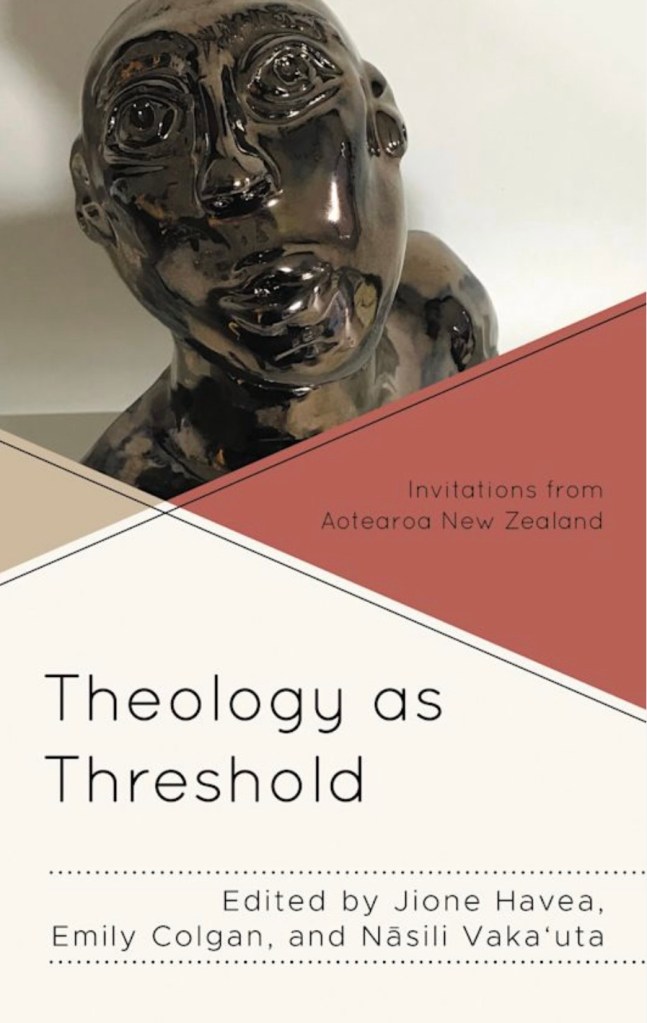
I am visiting Aotearoa New Zealand. Whenever I travel I like to read something authored by people living there. For this trip I’m engrossed in Theology as Threshold, edited by Emily Colgan, Jione Havea, and Nasili Vaka‘uta. A powerful counter to the Western domination of theology, the book advocates the importance of contextual insights and theologies that emerge through (and in) practice. Among other things, the book has informed me about the ‘Treaty of Waitangi’ (in English): Māori, ‘Te Triti o Waitangi’.

In ways that possibly resonate with the current war in the Middle East, the British and the Māori signed two incompatible documents. They were not translations of each other, but two fundamentally different statements of what was agreed. It would appear, in the ongoing USA-Israel-Iran war, that parties walked away from negotiating a ceasefire with two significantly different views about what was signed up to, chiefly about the Strait of Hormuz and Israeli military operations in South Lebanon.

The Mine Bay Māori Rock Carvings

The history of colonial powers flexing their muscle against nations with less military might is both dark and long. As Aotearoa New Zealand demonstrates, living with the consequences of colonialism lasts much longer than the phase of initial settlement.

‘political systems can also be manipulated to ensure that majority democracy continues to support colonization and its values’.

Callaghan, M., Biculturalism and Democratic Decision-Making: Models for Theological Education in Theology as Threshold: Invitations from Aotearoa New Zealand eds. Blyth, C., Callaghan, M., Colgan, E., Dewerse, R., Garner, S., Hall-Smith, B. M., … & Zachariah, G. (2022) Bloomsbury Publishing USA.

While legislation can be important, personal and community change is critical. In post-Apartheid South Africa the law is clear but inter-community tensions and disputes remain. Changing hearts and minds is a more complex and essential process than litigating.

Christ Church, Waiwera New Zealand

The world is studded with quaint mini-churches that reflect the Anglicanism of Victorian expansion that swept the globe in the 19th century. Places where the religious rationale for colonialism was blessed with spiritual affirmation. Buildings that powered a perceived philanthropy imbued with patronage and the perception that conquest reflected superiority. It is heartbreaking that we still cannot find fairer and more compassionate ways to live creatively with the rich differences that constitute the human race – and our environment. It is a small but significant sign of hope that theologians such as Callaghan articulate and advocate a bicultural approach that is wise, feasible and necessary to work towards shared human flourishing.

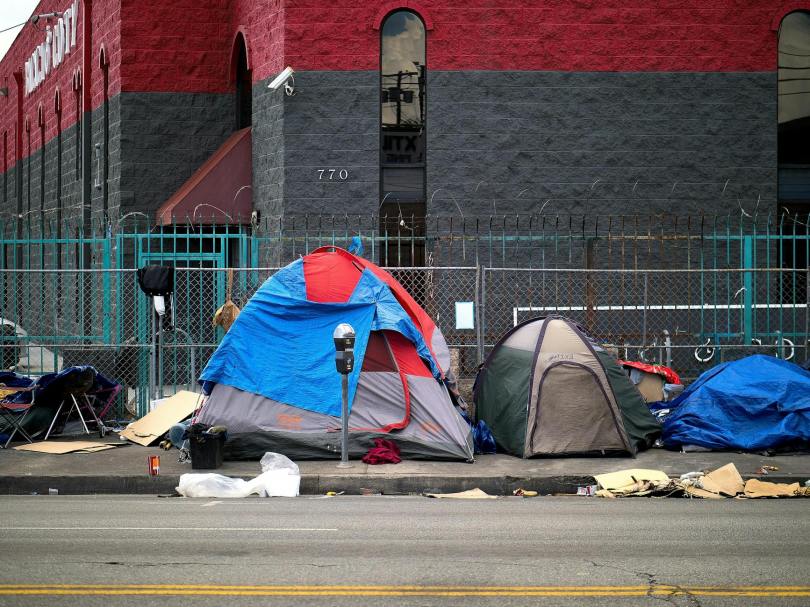
The Geography of Poverty

During research into the London hospitals at the Reformation, I discovered their role in policing the streets. Following the dissolution of the monasteries, each of the five re-founded hospitals maintained beadles, part of whose job was to patrol the streets around the institutions, retrieving the sick and poor into them, with the power to “expulse” sturdy vagrants from the City. This was done in response to concerns by city leaders that the city was looking disheveled. In the politics of reformation, this was an unwelcome development. In the document re-founding the London hospitals it was stated:

“considering the miserable estate of the poor aged sick sore and impotent people, as well men as women, lying and going about begging in the common streets of the said City of London and the suburbs of the same, to the great pain and sorrow of the same poor aged sick and impotent people, and to the great infection hurt and annoyance of his Grace’s loving subjects, which of necessity must daily go and pass by the same poor sick sore and impotent people being infected with divers great and horrible sicknesses and diseases...”

The Crown, 1546

The last part suggests the true cause, despite protestations of concern for the homeless, of the creation of London’s post-Reformation hospitals. It allowed the poor and diseased to be put out of sight. This is a good example of how the geography of poverty matters a lot more than the existence of destitution. The myths of Robin Hood and his outlaws living in woodland reflects this expulsion into obscurity.

Medieval beggar, with crutch, rendered as a grotesque at York Minster

Plus ça change, plus c’est la même chose. Donald Trump didn’t like the view from his $1.5 million state Cadillac, and ordered parks in Washington DC to be cleared of temporary structures. He deployed the military. People were given scant notice of the impending eviction, and bulldozers arrived to complete the task.

The White House said it will offer to place people sleeping on the streets in homeless shelters and provide access to addiction or mental health services – but if they refuse, they will face fines or jail time.

From a BBC report posted on 17 August 2025

Immaculate public areas are not always a good or healthy sign of a compassionate society. I recall visiting Santiago in Chile in 1987, with General Pinochet in charge, and finding the subway exceptionally clean with classical music blaring out. Perhaps not a bad thing except, when a woman walked in while eating an ice cream, she was immediately surrounded and intimidated by security personnel. The ice cream had to be thrown into a bin. It would appear that for many leaders on the right, poverty doesn’t exist if it can’t be seen (by them) and perhaps many of us bother little about what’s “out of sight”.

The fantasy video which appeared after Trump’s statements about making Gaza a Mediterranean resort (re-tweeted by Trump on his own account) affirms this narrative of illusion. The poor will always be with us, but that doesn’t matter if they are out of view. Rather than allowing his motorcade trip to inspire programmes to alleviate poverty, it simply incentivised the violent and dramatic relocation of misery.

What is happening on the other side of the pond is, inevitably, stimulating similar attitudes here. Reform UK’s statement about mass deportations of asylum seekers is all about the geography of poverty. It doesn’t matter if it’s somewhere overseas, perhaps in a country whose economy and politics still labour under circumstances brought about by the aftermath of colonialism. The injustices of global trade are irrelevant when those in power simply want an outlook that’s neat and tidy.