What is Life?

John Clare asked the question ‘what is life?’ at the beginning of his poem of the same title. It is a work that reflects the angst and instabilities experienced by this notable English poet. A figure who emerged from a family of agricultural workers, did a range of manual jobs, and came to be favoured by people of literary society. Clare’s emergence as a poet was partly driven by financial distress, and the need to generate funds to prevent the eviction of his parents from their home.

And what is Life?—An hour-glass on the run,
A Mist retreating from the morning sun,
A busy, bustling, still repeated dream;
Its length?—A minute’s pause, a moment’s thought;
And happiness?—A bubble on the stream,
That in the act of seizing shrinks to nought.

John Clare, included in Poems Descriptive of Rural Life and Scenery, 1820

Clare’s experience of life was distinct from other poets who were writing in this period. He was employed in what are often considered to be basic occupations. He would have known the relative powerlessness of his position in the social order, and how much material well-being rested on the decisions, patronage and preferences of wealthy people. The poem’s opening words assault us with a question that is both profound and also indicative of a question that has prompted the poet. It feels like a retort to someone who is pontificating about the value, pleasures and virtue of life.

The response of the poet is to focus on the ephemeral nature of our existence. Not only that, but even when we encounter a time of happiness, it is merely ‘a bubble on that stream’. If life is brief than Clare tells us that our better moments are simply an even more fleeting by-product of the water’s turbulent churn. A fraction of bliss in an otherwise downward torrent of vain hopes. In a life of brevity, happiness is a reprieve that bursts as soon as it encounters the rocks that lie all around.

I have always been rather suspicious of happiness. Perhaps that’s due to an American interpretation of it that has come to dominate our perceptions of a good time. There is a whole industry dedicated to what happiness is, and how to promote it. Inevitably, there is a lot of interest about this in marketing, where our perceptions of life can be harnessed to the priorities of consumerism. Any deficiency in our sense of well-being can become a target for products and experiences we are told will fill the void and deliver our happiness. Psychology and spirituality may often be drawn into this tension of anxiety; unsatisfactory lifestyle solutions to our needs; and consequent disenchantment. There are several ways in which happiness is identified and calibrated, such as the Oxford Happiness Questionnaire. This was influenced by the following understanding:

Argyle and Crossland (1987) suggested that happiness comprises three components: the frequency and degree of positive affect or joy; the average level of satisfaction over a period; and the absence of negative feelings, such as depression and anxiety.

Francis, L. (2010). Religion and happiness: Perspectives from the psychology of religion, positive psychology and empirical theology. In The Practices of Happiness (pp. 113-124). Routledge.

While I am sure that such tools and schemes of analysis have their uses I would question the particular concept of happiness that underpins the method of enquiry. In many respects the surveys appear to deal with a sense of well-being which is then conflated with happiness. These things are not the same. Twentieth century influences tend towards a very individualistic form of happiness, albeit that this may incorporate those people to whom we are closest. However, where is the political dimension that addresses how much our happiness (e.g. meaning, for some, to do what we want) is paid for by the misery of others? There are some researchers who have identified problems in the Western conception of happiness, advocating ‘an alternative approach, relational wellbeing, which is grounded in a relational ontology that can challenge dominant ideologies of the self’.

Religions have often had a complicated relationship with happiness. There is a recognition that, like a bubble on a stream, happiness can be momentary and elusive. As one hymn puts it: ‘Fading is the worldling’s pleasure’. Faith offers something that is not transitory. The focus is about wealth that does not decay – treasure we encounter now, but will experience fully in a life to come. There are risks with this conviction but also great possibilities. Not least, to live in some kind of peace with the world, and find value and joy in relationships. Challenging the narrow focus of ‘my’ happiness and focusing instead on our collective shalom seems a much healthier and constructive path to take. Perhaps then we might even discover that our personal happiness is what we are most likely to find we have when we have ceased to look for it.

A Bye Corner of the Kingdom

These are the words Laurence Sterne used to describe the vicarage at Coxwold. A ‘retired thatched house’ in a place remote from the concerns of even a provincial city, such as York. Perhaps Sterne did not see this as a promising location from which to change the course of world literature. It is difficult to imagine what life in a remote Yorkshire village was like in the 1700s. Far more people worked on the land, while today the holiday cottage dwellings mean occupancy fluctuates each week, and there will be seasons when only a few people inhabit the place. The population was 348 in the early 19th century – and 250 in 2021.

Despite a limited literary output, Sterne’s work is recognised for its transformative impact on the course of Anglo-Irish literature. It was an influence for James Joyce, Salman Rushdie and many others.

Sterne was adept in deflating many of the pompous debates of his time. In chapter 20 of the first book of The Life and Opinions of Tristram Shandy, where birth is such a central theme, there is a digression about the baptism of babies before they are born. The view in Catholic circles to this point had been that at least some part of the baby must be born in order for a baptism to take place. Inevitably, there were circumstances when the baby had died in the womb and where it was believed that baptism was impossible. (There is a history in northern Europe where the Church operated ‘Resurrection Chapels’ to enable the baptism of a baby which was stillborn – Swift, p.119). However, the debate that Sterne cites in this section of the book looks to marry advancing technology with the possibility that a baptism could take place before birth:

Le Chirurgien, qui consulte, prétend, par le moyen d’une petite canulle, de pouvoir baptiser immediatement l’enfant, sans faire aucun tort à la mere.

The surgeon who raises the question asserts that by means of a little injection-pipe he can baptize the child directly, without doing any harm to the mother.

Sterne, L. (1759). The Life and Opinions of Tristram Shandy, Gentleman (reissued).

In this debate Sterne is not oblivious to the dubious nature of a suggestion, in which male medics and male theologians decide that a medical procedure – with no medical benefit – will not result in any harm to the mother. In his imaginative response to this scholarly discussion Sterne takes the argument a stage further, and suggests that one way to avoid any doubt in the matter would be to baptise all of a man’s sperm. (This reflects thinking at the time that there was a fixed stock of sperm containing ‘homunculi’ – minuscule people ready to grow once in the womb). Chapter 20 concludes with the thought that a little injection-pipe could be inserted into the man (‘sans faire auxin tort au père’), between marriage and consummation, to ensure a ‘shorter and safer’ way to baptism. The reader is left to ponder whether male theologians and medics would find this a better solution.

Simultaneously this passage hints at how medical technology might affect sacramental practice, while lampooning male discussions which determine what will do no harm to women. In pushing the ideas further, Sterne discomforts his male readers – and certainly amuses his female audience – in suggesting that sticking a cannula into a penis would be more effective ‘without doing any harm to the father’. It would also provide an interesting ceremony on the day of the wedding.

St Michael and All Angels, Coxwold – where Laurence Sterne served as a priest.

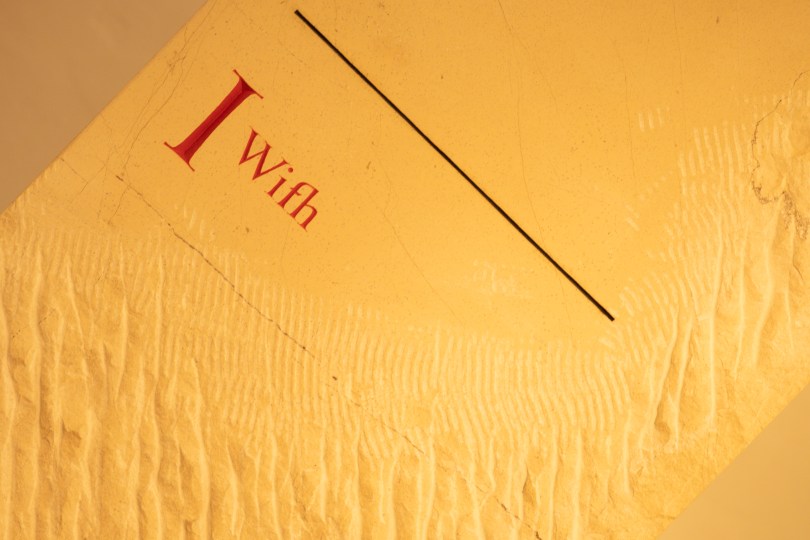
If Coxwold is a ‘bye corner of the Kingdom’ it didn’t stop Sterne writing some of the most adventurous and sophisticated prose of English literature. Thankfully, The Laurence Sterne Trust continues to stimulate interest in the author’s legacy and enable artists to engage with his work. In its most recent exhibition a range of creative people have been challenged to interpret the opening words of Shandy – ‘I wish’ – to reflect on their response to the text. This vibrant exhibition is a fitting contribution to the 50th anniversary celebrations of Shandy Hall’s existence as a public museum.

Milk to Faith

What, I wonder, do we ask for in prayer? I am thinking in particular of moments when we might petition to know God more fully; more deeply; more intimately. Perhaps our wish is for only the slightest indication that God is present with us – of no more substance than the passing brush of a moth. Often we prize these glimpses and signs, feeding on them for many years after the event itself.

In characteristic style, John Donne had no truck with these modest expectations of divine encounter. In one of his sonnets Donne demands a much more forceful – even brutal – experience of God:

Batter my heart, three-person’d God, for you
As yet but knock, breathe, shine, and seek to mend;
That I may rise and stand, o’erthrow me, and bend
Your force to break, blow, burn, and make me new.

Batter My Heart John Donne 1633

It is a metaphysical poem par excellence, full of paradox, wit and irony. In the relationship between the poet and God Donne pleads to be overpowered, even referencing in the opening line that the individual soul is outnumbered by this God of three persons. It is the text used for a remarkable aria by the contemporary American composer John Adams, in his opera Doctor Atomic. The opera concerns the first test of an atom bomb, known as the ‘Trinity’ test, a designation reflecting Robert Oppenheimer’s fascination with Donne’s poetry.

Jefrey Johnson, in his book about the theology of the 17th century dean, identifies the Trinity as Donne’s seminal Christian belief. As Fred Sanders put it some years ago, having examined his poetry and sermons, this belief was centred on the concept of sacred community:

That God is a unity rather than a singularity, a communion rather than a monad. And as we gather our scattered selves into the act of worshiping the triune God, we become more unified, more focused, more truly ourselves.

Fred Sanders: Today is John Donne’s Birthday, blog 2009

The visceral tone of Batter My Heart reflects Donne’s passionate desire to surrender the whole of himself to God. This is no insipid theology of cautious approach, but a demand to be broken, blinded and burnt in order to be restored; to see aright, and emerge, phoenix like, as a new creation. Left to the intellect alone the Trinity might remain a stumbling block and cause of confusion, but when engaged as God-in-community Donne sees the doctrine as a vibrant expression of sacred relationship. Perhaps it is for this reason that in his Litany Donne recognises fundamental differences between an approach to the Trinity that draws on philosophy and one where faith is placed at the heart of things:

O blessed glorious Trinity,
Bones to philosophy, but milk to faith,
Which, as wise serpents, diversely
Most slipperiness, yet most entanglings hath,
As you distinguish’d, undistinct,
By power, love, knowledge be,
Give me a such self different instinct,
Of these let all me elemented be,
Of power, to love, to know you unnumbered three.

Donne, John. Poems of John Donne. vol I. E. K. Chambers, ed. London: Lawrence & Bullen, 1896. 174-187.

Philosophers will ponder the meaning and nature of the Trinity until kingdom come. The Trinity remains, for people of faith, a vibrant community of persons, where equality of status is lived in a dynamic relationship of power, love and knowledge. If in Christ we are born again then it is in the Trinity that we learn to grow again, nurtured by the milk of a faith flowing from the God who shines upon us, and seeks to mend all that is done amiss.

Feature image is the Trinity depicted in stained glass at York Minster. Photo by Lawrence OP

Compassion and Complicity

Chaplains always walk a fine line between the pastoral care of distressed people and the risk of making the intolerable, tolerable. It is an experience that runs deep in the history of chaplaincy. The workhouse chaplain and the workhouse master were designed to operate as ‘good cop, bad cop’. One the stern disciplinarian; the other the ‘friend of the poor’. Perceptive critique of this relationship arrived at the jarring description of the chaplain as the Sunday gaoler.

More recently – the early 1990s – an NHS CEO was feeling somewhat anxious about selling the concept of greater autonomy to a largely left-wing audience. As one of the first implementers of the new ‘Trusts’, the CEO imagined that there could be popular opposition to anything that might smack of gradual privatisation. So he asked the medical director and the chaplain to sit on either side of him on the platform. Not only that, but he was keen to see the medic in a white coat and the chaplain in a clerical collar. Armed with the presence of medical authority and religious support, the CEO judged that this would help lessen the opposition.

In a similar way during the organ retention crisis it was often left to chaplains to engage with parents and conduct the ‘reunitings’ – when newly discovered remains were buried alongside the original casket. Around the country special religious services were held to mark the experiences of loss which these circumstances had made more complex. I was involved with the one at Leeds Minster and preached the sermon. After the service one relative said that he felt better about the sermon than he had when he attended a similar event in the south of England. On that occasion the local bishop had preached and, when the relative saw him after the service, he asked the bishop: ‘So when’s the NHS going to give you your thirty pieces of silver?’ The relative thought the bishop had done everything possible to defend the institution – but done nothing to express solidarity for the grieving families.

“There comes a point where we need to stop just pulling people out of the river. We need to go upstream and find out why they’re falling in.”

Desmond Tutu

Desmond Tutu’s reflection emphasises the need to ensure that pastoral concern is matched with prophetic witness. It is better to stop the circumstances that lead to suffering rather than focus exclusively on saving those already drowning. Many well-meaning people baulk at the political involvement that requires injustice to be challenged – but in doing so risk propping up systems that are fundamentally pernicious.

In meeting with members of the Faculty of Theology at the University of Stellenbosch I learned about the ‘Day of Courageous Conversations’. This took place in 2015 when the Anglican Archbishop of Cape Town, The Most Reverend Dr Thabo Makgoba, hosted representatives of the South African mining sector, civil society and faith communities to discuss the future of the mining industry. The aim was to see a way forward for sustainable mining that limited its damage to local communities.

The Most Reverend Dr Thabo Makgoba

One possible outcome of these conversations (which are continuing) might be the allocation of chaplains to the mines. Given that mining is undoubtedly at the sharp end of capitalism, not to mention environmental harm, chaplaincy in this context will be daunting. The balance between spiritual sticking plasters, and questioning unjust and injurious practices, will be extremely challenging. Perhaps, if chaplaincy is provided in this industry, there need to be clear and anonymous ways in which chaplains can reflect back to senior church leadership the concerns they identify. This could in turn enable and resource prophetic witness which would allow pastoral care to continue while moral questions are raised and pressed forward. Only time will tell if this is an ethical and faithful way in which to balance the need for compassion with the risk of complicity.

If any chaplain ever feels that there are no tensions between the organisation they serve and the people they pastor, this is probably the clearest warning that something is wrong in their ministry. Chaplaincy will always be at the messy interface of personal experience and institutional power. In the midst of all the distortions this creates, the chaplain’s calling is to stand by and for the things that belong to the Kingdom.

Theology at the Edge

For many years I have been fascinated by theology at the edge. In hospitals and care homes, ITUs and delivery suites, I have been with those experiencing some of the hardest moments which life can bring. It has long been my belief that these are the places from which theology should be written. They are the boundary moments, the liminal spaces, in which our lives are defined and transformed. Once, when I was asked to bless a suite of operating theatres due to ‘concerns’, I agreed to do it only on the basis that I met and spoke with the whole staff team. While there was spiritual significance in what I was doing for some, for others there was the recognition that these are extraordinary places in society. To do what happens in an operating theatre just a few yard away would get you arrested. These are important, sacred, and atypical spaces. Not only are lives changed on the operating table, but far beyond the hospital lives are altered by the recovery or loss of the person undergoing surgery. Blessing these kinds of places is giving expression to the seriousness of the events they contain and enable.

In his critique of empire Allan Boesak writes about ‘a theology at the edge’. Unsurprisingly, Boesak is not describing the kind of edge which I refer to above, but the place where theology is driven when we join the struggle against injustice. There is a double sense here about what it means to be at the edge. It is where theology is pushed when people ask Kingdom questions about the absence of justice in their lives and the lives of others. But it is also used in the sense that this is cutting edge theology – the sharp place in our world where theology is far more than an abstract academic discussion.

“We are speaking of a certain expression of theology, a prophetic theology, the theology that responded to the struggle in South Africa with prophetic truth and faithfulness, standing as the oppressed and with the oppressed in our struggles against oppression in colonial times and during the reign of apartheid, and now in global struggles against the devastating reach of imperial powers and their underlings everywhere”.


Boesak, A. A. (2017). Pharaohs on Both Sides of the Blood-Red Waters: Prophetic Critique on Empire: Resistance, Justice, and the Power of the Hopeful Sizwe–A Transatlantic Conversation. Wipf and Stock Publishers. Chicago.

Perhaps these two edges are not quite so far apart as they seem at first sight. The access and use of health services is also bound up with issues of justice, not least in the fact that the poor in society are more likely to access health care, and more often, than wealthier individuals. Medicine sits within the economic framework of capitalism which shapes and directs investment in new drugs and therapies. Minor conditions in the West leverage a disproportionate influence in the search for cures compared with far more serious conditions which are found most frequently in the developing world. As Nicholas Freudenburg has argued, at the very least, the various incarnations of capitalism need to be explored in order for people to understand the relationships and consequences of the economic realities which shape our lives.

In a theology at the edge Boesak issues a bold challenge to locate our understanding of God in the places – and with the people -who are on the margins. These edge places are simulataneously at the cutting edge of tough and creative transformation. How we engage and support theology that is with and for the oppressed is perhaps the next question. In the UK there is some evidence of churches responding to this kind of call, even if they are few and far between. For example, it can be seen in the work of Barrett and Harley in their title Being Interrupted. Perhaps before we can make any greater progress, we need to interrupt the smooth narratives of our theologies and allow new voices to shape the conversation about how we go forward in order to enable the Kingdom of God to break into our lives and disrupt the smooth running of oppressive structures.

Sentry Duty

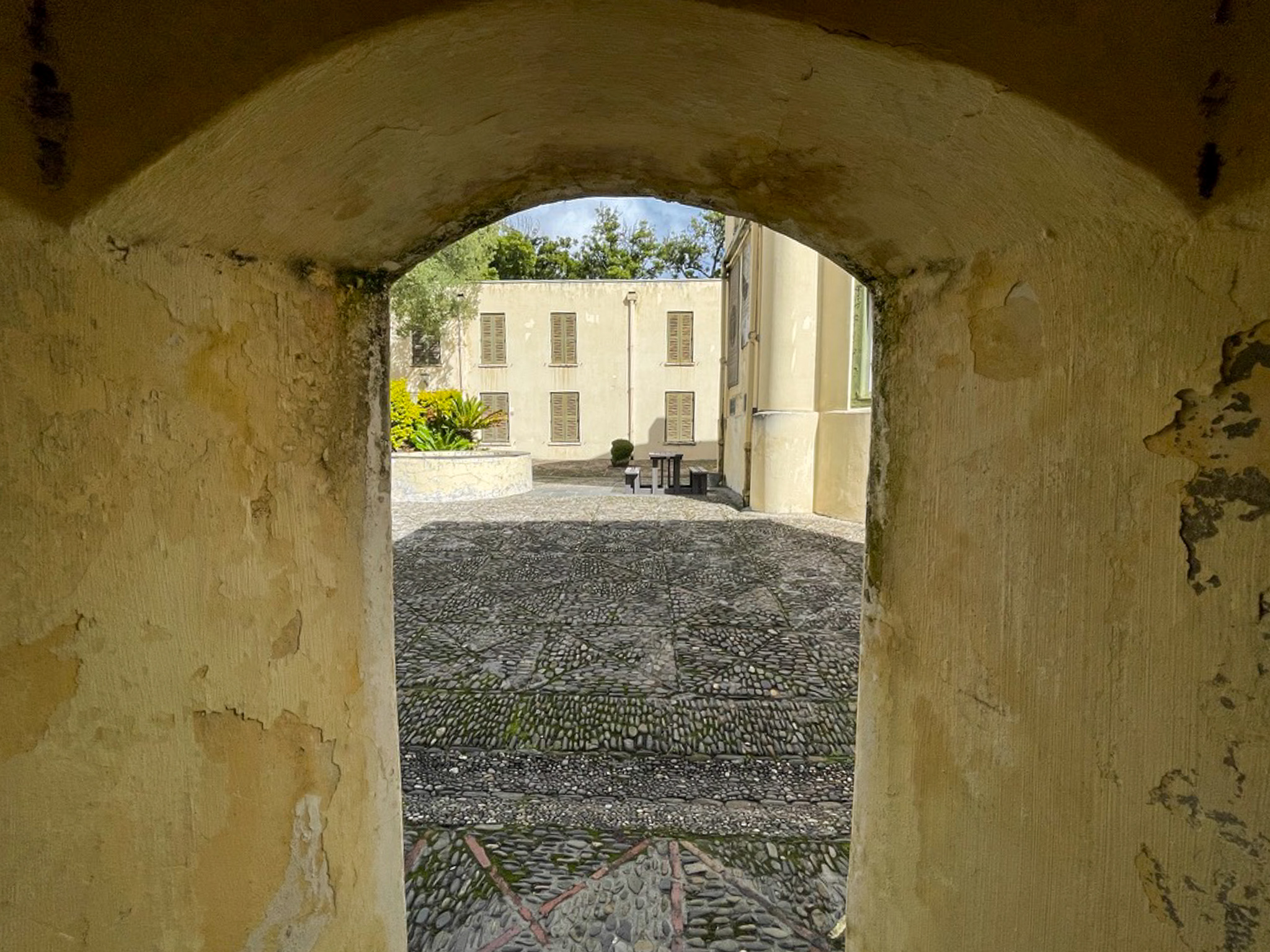
Observation alters behaviour. This was a truth made with notable clarity and force by the French philosopher Michel Foucault, in relation to prisons – but the effect is far wider. In the courtyard of the Slave Lodge in Cape Town there is a sentry box, re-sited from Fort Knokke (built in 1744). It was part of the infrastructure of military occupation that safeguarded colonial interests, not least those of the East India Company.

I can’t recall whether I’ve ever stood in a sentry box before. Spending some time walking around the box, and then standing inside, brought home to me the altered state that occupying the box brings. A soldier has the benefit of protection bought at the price of limited sight. Narrow slits afford some vantage, but these are inevitably narrow in perspective and focused on particular points of danger. Walking into the box demonstrated how much sound is altered in the small structure. Effectively the sentry’s perspective is limited and defined, while sound is muffled and becomes more distant. Simultaneously the guard is present in, and distanced from, the wider community.

The relationships which colonialism brings are invariably infantilising. The occupying powers ‘know best’ and inflict their religious, economic, military and political stamp on unwilling lands. Spending time with the people from The Warehouse in Cape Town reveals the lasting scars and consequences of a regime rooted in colonial attitudes. In a clear and autobiographical style, people shared with us their identities and histories, and explained how growing up in different decades in South Africa has affected their family relationships; education; type of work; place to live; and friendships.

It was encouraging to hear all this set within a framework of a theology that was natural to reference and practical in its insights. Equally, along with many other things, I found it disturbing to learn that at one point in its history the Dutch Reformed Church had decided that the common cup would not be shared between ethnic groups.

the discomfort of white members in sharing a cup during the offering of the sacraments led to the establishment of the coloured “daughter church” and later that of the black population, which came to be known as the Dutch Reformed Church in Africa.

Konzane, M. P. (2017). Mission calling in a congregation of the Dutch Reform Church of Africa in a transforming society: a case study in South Africa (Doctoral dissertation, North-West University (South-Africa)).

At the start and end of this first day in Cape Town we read Matthew 21. As our pilgrimage progressed I found resonance and connection with a detail towards the end of the passage, when the religious leaders say to Jesus: ‘Do you hear what these children are saying?’ The translation we are using says the leaders were ‘indignant’ when they asked this question. It is not uncommon for discriminatory language to belittle others by making a comparison to children, implying that some adults are less than they ought to be. Daughter churches? As we spoke about the decision to segregate the administration of Holy Communion it also led me to reflect on the common practice in many churches to exclude children from this sacrament. It may seen natural to some, but I wonder whether it is wise.

Inevitably, my first 48 hours in South Africa has raised questions about the mechanics of oppression; all the people caught up in its operation; and those bearing the brunt of its legacy. Where we stand shapes what we can see and how we can hear – and sometimes we all need to take the risk of stepping out of our box to engage with different perspectives. That, as much as anything else, should be our duty and our joy.

Salty Language

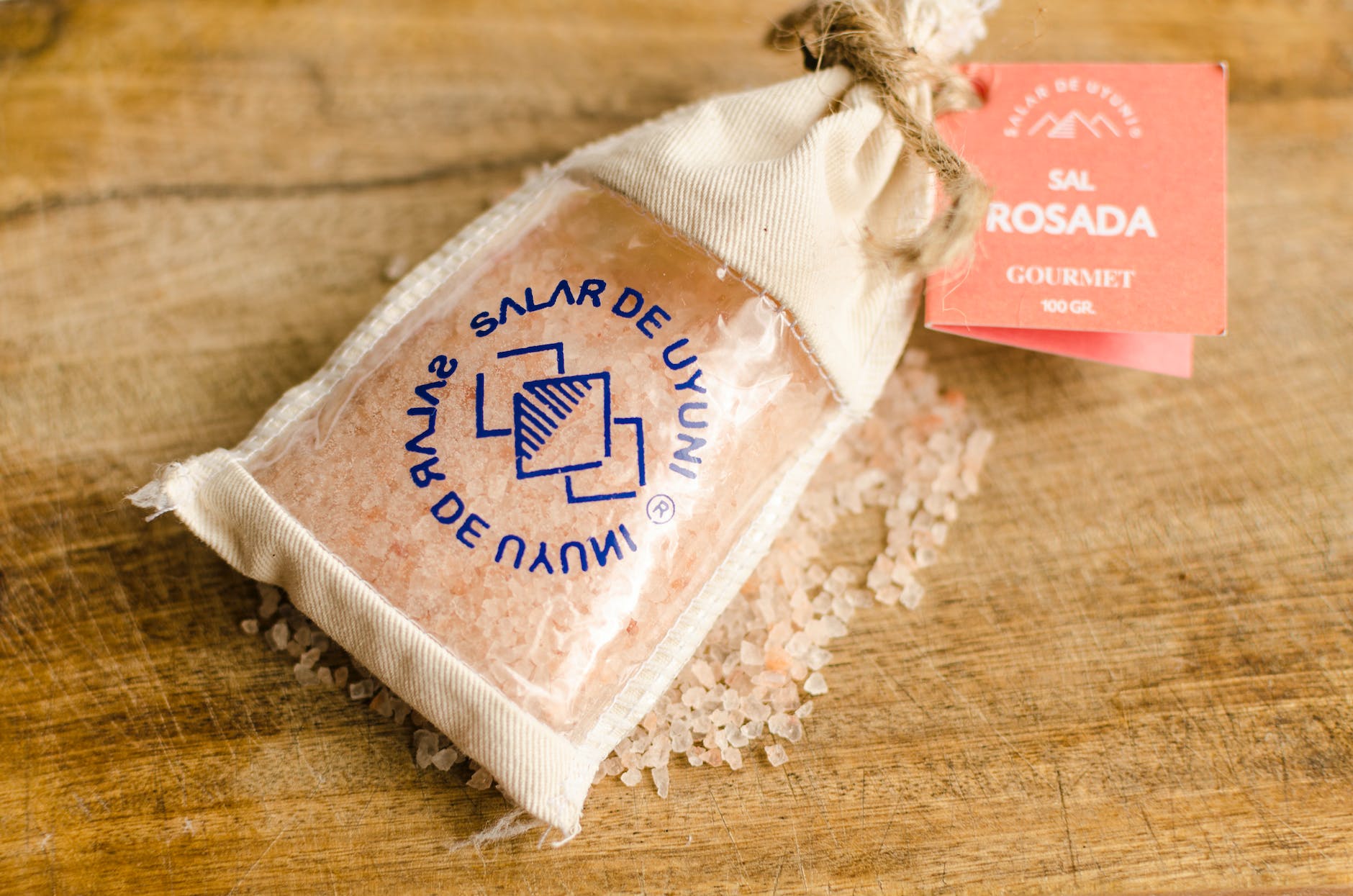
Over ten thousand feet above sea level in central Peru it was surprising to find a whole industry dedicated to the production of salt. The Maras salt pans go back over a millennium to the Chanapata culture. As this civilisation gave way to the Inca Empire, they continued to provide their distinctive pink salt far and wide. At such a distance from the sea, and at such altitude, the steady supply of salt seems miraculous. Long ago, this land was below the sea and left salt hidden in the hills. A spring which runs through the complex of underground passages this enables the striking ‘pink gold’ to be extracted from the small stream that emerges above the pans. The rights to salt production are handed down through the generations, back to a time now lost to memory, with tourism adding further value to the enterprise. It is hard work, but the rewards can be significant.

Photo by Roger Duran on Pexels.com

For all of my life salt has been readily available and cheap. This was not always the case and for most of human history salt has been a precious commodity. In the Roman Empire it was taxed, and served a wide variety of uses – religious sacrifice, medicinal, fish preservation and, of course, the seasoning of food. Like anything that is taxed, this also made salt political. In Matthew chapter five, when Jesus says ‘you are the salt of the earth’, it follows only a few verses after the calling of the first disciples. In a way largely missed today, the leap from those involved in fishing, to an image of salt, was entirely natural. Everyone was connected to salt in some way; and no one doubted its value.

In the Jewish Scriptures there are intriguing references to the ‘covenant of salt’. In the various covenants God made, such as with Noah and Abraham, there is a theme of constancy (at least on God’s part). Probably due to its properties of preservation, salt was often used for these moments of commitment. In Numbers 18:19 we hear about the relationship of God to the people as ‘a covenant of salt forever before the Lord for you and your descendants’. A commitment made in salt was expected to endure.

In Greek and Latin the words for ‘salt’ also carry the sense of wit and sparkle. Salt put the zest into a meal, transforming the plain into the delicious. As an image used by Jesus (‘salt of the earth’) to address the crowds who came to hear him, it suggests that those who are alive to God should be the people changing the taste of living. Like the image of yeast used by Jesus, this isn’t about changing what would become the Christian Church, but about how the baptised are called to transform the world.

is it really the salt
that really matters
or is it the bitterness
that wakes us up
and lets us know
what this life is all
about

Ric Bastasa, 2009, The Salt of the Earth

Salt is undoubtedly a powerful and necessary part of our lives, but it is not benign. We talk about ‘rubbing salt into the wound’. When we distrust what we are being told we ‘take it with a pinch of salt’. Spilling it is seen by many as bad luck. The language about salt reminds us that anything significant can be used for good or ill. As Ric Bastasa conveys in his poem, we can spend too long wondering about the salt – and not enough time thinking about the changes it brings. Portrayed as the salt of the earth, the crowd was being encouraged to preserve its sparkle; never to lose its wit and flavour. Jesus may be suggesting – by comparison – that the religious leaders had grown bland and stale: ‘but if salt has lost its taste… It is no longer good for anything, but is thrown out and trampled under foot’. Without the responsibility to enliven others these leaders had failed in their calling: to enable people to be God’s salt for the world.

The Undeserving Rich

It feels as though the Victorian idea of ‘the deserving poor’ have largely dropped out of our consciousness. There are the frugal poor, the people using all the tips and tricks recommended by governments and gurus to try to keep our heads above water. While advice about saving costs and keeping warm is welcome, it freights the implication that the poor have some hand in their own misery. ‘If only they could be a bit wiser, a bit more canny, then everything would be OK’. Apart from that, even right wing politicians don’t feel much need to divvy up the poor between deserving and profligate. The poor are now one homogenous mass of food-bank using, low income living individuals, occasionally doled out a bit of help from the centre. Put bluntly, we are now a society content to live with high levels of endemic poverty – set alongside an elite that clearly deserve to be rich, and are entitled to become even richer.

Perhaps this is the chief legacy of Thatcherism. The import of the notably American idea that we make, or discard, our own opportunities to be self-made and wealthy. Consequently, poverty is simply individual failure. Despite the mountain of evidence that refutes this simplistic narrative it can feel as though it’s now welded into the psyche of modern Britain. The very fact that we can tolerate such significant rates of poverty, including child poverty, supports the view that we have somehow imbibed and owned this destructive myth. While there is general support for striking nurses and paramedics, there aren’t yet massed crowds present in support asking why an employee of a national health service should need the support of charity in order to live. Compare this with France, where a million people demonstrated in response to the proposal to change the state pension age from 62 to 64.

Last week an MP suggested that if someone couldn’t live on £35K a year without using food banks ‘something is wrong with your budgeting’. I found this reminiscent of the remark made a decade ago, that in the face of a strike by petrol tanker drivers, people should store a can of petrol in their garage. Apart from the lunacy that this would add to shortages by encouraging stock-piling (and potential danger in holding unnecessary petrol supplies at home), there was also the implication that everyone with a car had a garage. It appears to be a constant thread throughout the gaffs of wealthy politicians, that they are wildly out-of-touch with the circumstances of many voters.

Which brings me to the undeserving rich. It is not unreasonable to expect that wealthy people in public life would want to ensure they have done at least the minimum to contribute to the public good. Which is why the tax affairs of Nadhim Zahawi rightly raise serious questions about his suitability for political office. The penalty imposed by HMRC is a strong indication that Zahawi has (at best) been fairly uninterested in paying his correct contribution to the NHS, and everything else funded by the public for our collective wellbeing. I am sure that there will be voices speaking in his defence, implying that he is very important and very busy. Yet there seems to be no end of money that can be found by rich individuals to ensure accountants let them pay the minimum amount of tax. Why not spend a little bit of money on other accountants, who will ensure you never pay less than you should?

“Some people continue to defend trickle-down theories which assume that economic growth, encouraged by a free market, will inevitably succeed in bringing about greater justice in the world. This opinion, which has never been confirmed by the facts, expresses a crude and naïve trust in the goodness of those wielding economic power.”

Pope Francis as quoted in The Pope, the Bible and Trickle-Down Economics, by Obery M. Hendricks, Jr.

In 2022 the Joseph Rowntree Foundation set out a ‘minimum income standard’ (MIS) for the UK. If the nurse mentioned above is part of a couple with two children, then the JRF calculate that the household MIS would need to be £43,400. Given our current inflation this figure might now be closer to £50K and, it is important to emphasise, this is a minimum income. It can hardly come as a surprise that a nurse earning £35K might need to use a food bank.

Even if MPs lack personal experience of poverty or the challenges of low income, there is no excuse for a failure to engage with reputable and independent sources of data and analysis. Whether it is in a lack of attention to personal tax obligations, or the choice to live only in an echo-chamber of the likeminded, there is plenty of evidence that the undeserving rich are happily thriving in post-pandemic Britain. Change is long, long overdue.

A Jangling Noise

During a recent trip to Austria I decided it was time to learn some German. In the dim distant past, at secondary school, I’d done a couple of years studying the language – but with very limited success. Now the internet and various apps make language learning much more accessible and entertaining. Alongside this I decided to learn one or two phrases by rote, including ‘happy New Year!’, which had rather specific and time-limited utility. However, making any attempt to speak a local language brings rewards, not least as it conveys the desire to learn; to understand and to be understood.

The only language in which I have any proficiency is Spanish. Living for a year in a Latin American country immersed me in the sounds and the culture of a land which felt very different from my own. Slowly the words seeped into my thoughts and I realised for the first time that language is about far more than translation. Words approximate – but they are not identical. Living and speaking in a culture different from my own taught me that language is an embodied experience of a particular way of seeing the world. As a result, the way we speak offers a unique insight into how human beings encounter community; reflect history; and give voice to their desires.

In the book of Genesis there is a fascinating account of how human beings moved away from one language to having many. It is a myth of explanation that seeks to translate the phenomenon of linguistic diversity into a tale of divine intervention. In the beginning ‘the whole earth had one language and the same words’ (Genesis 11:1). This is typically interpreted as a story about human pride in which, in due course, we would be able to achieve anything. Consequently God intervened and ‘confused the language of all the earth’ (ibid., v. 9). As Milton puts it, God sowed a ‘jangling noise’ amongst the people. In effect, pluralism of language was a punishment designed to slow the development of human power in response to the growth of human ambition.

“But God who oft descends to visit men
Unseen, and through thir habitations walks
To mark thir doings, them beholding soon,
Comes down to see thir Citie, ere the Tower
Obstruct Heav’n Towrs, and in derision sets
Upon thir Tongues a various Spirit to rase
Quite out thir Native Language, and instead
To sow a jangling noise of words unknown”

J Milton, Paradise Lost, Book XII verses 48-55

Some interpretations of the Babel story have seen it as God’s response to Empire. When one people use their common heritage to mobilise resources and expand their territory, to such an extent that nothing seems impossible, their pride is met with punishment. This interpretation is linked in particular to the role of Babylon in the oppression of Israel and Judah. Undoubtedly this view is informed by the common practice of single-language empires to suppress (sometimes with violence) the use of local idioms. However, this interpretation feels at times to stretch a point beyond its supporting evidence, and some recent scholars have turned away from the ‘pride-and-punishment’ exegesis to focus on the narrative as a theme of cultural origins following the flood.

In his paper on the interpretation of the Babel story, Theodore Hibert, argues that the primary motive of construction is not to affront God (pride) but to remain in one place (i.e. to avoid being ‘scattered abroad upon the face of the whole earth’ ibid, v. 4). This suggests that God’s concern is that human culture will remain homogenous and limited. Strikingly, this interpretation is aware that language and land belong together. Therefore, the mixing of language and the dispersal of the people is an early recognition that cultural diversity is dependent on geographical location. While there is no explicit reference to it Genesis 11, it is tenable to infer that the desire of the people to be culturally uniform and in one place ran counter to God’s instruction earlier in the book for the people ‘to fill the earth’. Consequently, the cultural diversity that arises from dispersion is seen to be divinely desired and instigated. (see Hiebert, T., 2007. The Tower of Babel and the Origin of the World’s Cultures. Journal of Biblical Literature, 126(1), pp.29-58. Vancouver).

Yesterday The Guardian featured an article about the demise of many languages. The reason for this is primarily connected with climate change and the fact that many distinct cultures live in places liable to be harmed by global warming. The article reports the launch by the United Nations of a Decade of Indigenous Languages, recognising that this diversity is not only important for the people speaking these languages, but for all of humanity. As languages become extinct (which happens for one language every 40 days) we lose a distinctive way of seeing the world and, importantly, connecting with the natural environment. At the same time, as the late Ken Hale put it, losing any language is the cultural equivalent of ‘dropping a bomb on the Louvre’.

In a few weeks time Lent will begin, the 40 day period of reflection for Christians with a focus on the time Jesus spent in the wilderness. This Lent I’ll be mindful that in that brief span of time a language will die, and hope I shall be more motivated to contribute towards limiting climate change and its consequences – as well as continuing to learn and appreciate new languages. In my experience the rich diversity post-Babel is a joyful jangle, and God help us if we end up with the horror of a single voice.

This Doubtful Day

In Austria, on Palm Sunday, branches of pussy willow are used instead of palms to honour the entry of Jesus into Jerusalem. In the parish church of Viehhofen, in Hinterglemm, I found a spray of pussy willow attached to a processional cross as part of the Christmas decorations. I am unclear about the reason for this, and a search of the internet turned up little. However, it seems a fitting nod towards the passion of Christ and serves as a reminder that events in the Christian year are interlaced in ways that are sometimes surprising.

In 1608 John Donne wrote about the coincidence of the Annunciation (25 March 1608) falling on Good Friday. (We don’t need to worry about that happening in our lifetimes, no matter how young you are, as it occurs next in the year 2157. It happened last in 2016). Donne reflected on ‘the head Of life at once not yet alive, yet dead’, the day when news of great joy lands on the remembrance of deep sorrow. News about the same person – anticipation of new life held simultaneously with the pain and suffering of that life being extinguished. In the calendar, the Church transfers the celebration of the Annunciation to another date. It is almost impossible to attend fully to both these extremities without experiencing some kind of theological breakdown.

All this, and all between, this day hath shown,
Th’ abridgement of Christ’s story, which makes one—
As in plain maps, the furthest west is east—
Of th’ angels Ave, and Consummatum est.

The conclusion of Donne’s poem: On Annunciation and Passion Falling on the Same Day

As a hospital chaplain there were many occasions when joy and sorrow were held in the same time. I shall never forget working in the neonatal units at Christmas, when all attention in the outer world was fixed upon a particular birth but, tragically, I was baptising and blessing lives that would not last the day. Every Christmas I think of those parents and families, for whom this date of joy in the world had become a time of painful recollection. Our annual baby remembrance service was held in early December in order to allow families a ritual of acknowledged loss, and then proceed to keep Christmas as well as possible for other children in the family.

We tend to think that Christmas should be a time when we are shielded from the harsh experiences of being human. Sadly, as the UK has witnessed, violent deaths have taken place over the festivities. Families have been devastated by loss when so much public narrative focuses on being together; reunited. Police officers speaking about these events have often said words to the effect that: ‘while this would be appalling at any time, it is particularly difficult coming at Christmas’. The remembrance of families will forever be made in a context of public joy and celebration.

It is the work of the Church to hold these things together. It is always both ‘our duty and our joy’. The word death is spoken in front of the family and friends of a child brought to baptism; in the joy of a wedding we are reminded it is ’till death do us part’. In a funeral we hear the language of a life to come, and resurrection. The wonderful life which Mary brings into the world is destined for abuse; mockery; humiliation; and a criminal’s execution. Donne called the coming together of joy and sorrow in 1608 ‘this doubtful day’. He knew not whether to feast or fast.

The crucifix doesn’t leave the church to make our Christmas feast more palatable. Neither is it wrapped in tinsel to pretend that suffering can be masked, so that our carols might be more joyful. Pussy willow seems a fitting decoration. A foreshadowing of the Passion that begins on Palm Sunday – but also one of the first heralds of Spring, and a reminder that in the death of winter, new life is promised.