The Year that King Uzziah Died

Our memories are often linked to significant events. Will people in the future say, I wonder, that for most of us 2020 was the year that COVID began? Sometimes it is personal recollections that mark the passing of time. Four years ago my father-in-law died on Boxing Day and my mother on New Year’s Eve. It brought to an end a year we shall never forget. For both its global significance and no doubt the sense of personal loss, 2021 will probably live with 2020 as a watershed in our collective perception of time.

It surprises some people that the demise of a King is the theme for a Christmas carol. Michael Nicholas’s composition ‘Twas in the Year that King Uzziah Died’, featured in an afternoon concert on Radio 3 recently and lies in a long tradition of settings for this text (including Dr Francis Jackson CBE, onetime Director of Music at York Minster). The words from Isaiah feel an incongruous and unpromising start to a carol, and perhaps explain why it doesn’t sit in the canon of popular nativity anthems. Equally, it is clear why this moment would remain with the prophet throughout his life. In that year, Isaiah had an astounding vision of the Lord. It was awesome and overwhelming, spectacular and sobering. At that moment, Isaiah sees himself in the presence of God and feels his unworthiness. The text in Isaiah builds the sense of scale and magnificence. The celestial speech of seraphs, and the music and cries of acclamation are so great that the pivots on the threshold shake.

And at their cry the lintels moved apace,
And clouds of incense filled the holy place.

From overpowering beauty Isaiah is asked to undertake a thankless task. He is called to prophecy the destruction of the people; the laying waste of the land; the failure of the crops. After Uzziah’s long reign, during which much of the security and fabric of Jerusalem was restored, the people are to face the loss of everything they possess. Isaiah’s task is to tell prophetic truth – as Alison Phipps puts it:

The beautifully excessive, poetic, edgy speech of the prophet who is experiencing a ‘surfeit of aliveness’ (Scarry 2001: 89) as conferred by the beauty of God’s right relationships marks out what Brueggemann terms a ‘counterscript’ (Brueggemann 2007). This ‘counterscript’ is a steady, careful truth-telling about the wrongness and wrongedness of present relationships between God and God’s (ex-) people; between people and people; between the more-than-human-world (creation) and human beings

Phipps, A. (2010). 7th February: 5th after Epiphany. The expository times, 121(4), 187-188

The message given to Isaiah was that after the terrible time to come, a stump would survive the desolation. Out of this unpromising remnant the life of the people would continue. The role of the prophet is to tell the reality of what is unfolding and foretell the hope that is to come. In this way the prophets steer Israel through times when a better future would have seemed impossible – the accuracy of their carefully narrated truth enabling the people to have confidence in the description of a better world that lies beyond their present troubles. Realistic about current woes, prophecy is capable of stirring people to work towards enduring change.

Photo by Ihor Lypnytskyi on Pexels.com

Last week we lamented the loss of a contemporary prophet – Archbishop Desmond Tutu. He was certainly someone who epitomised this ‘surfeit of aliveness’ and the relentless truth-telling that offered a counter-narrative to both the evils of apartheid and the temptation for retribution. Tutu did not hold his friends to a lesser standard than he held those who had operated and enabled segregation. He wanted to save the nation of South African for everyone and offer the world a different model of community.

As we embark on 2022 we need voices that expose the injustices of our world and challenge short-sighted self interest. The pandemic will not end until we have much better levels of vaccination across the world. Narrow self-interest must rise above the narrative of ‘me and mine’ to recognise and act on our responsibilities to humanity. What is true for COVID-19 is no less true for climate change. We cannot cut ourselves off and live lives disconnected from the poorer nations of our planet. The truth is that we are all in these defining issues together, and we shall prosper, live or die, together. Long may the prophets continue to trouble us – and hold out the hope of our salvation.

The Passing Present

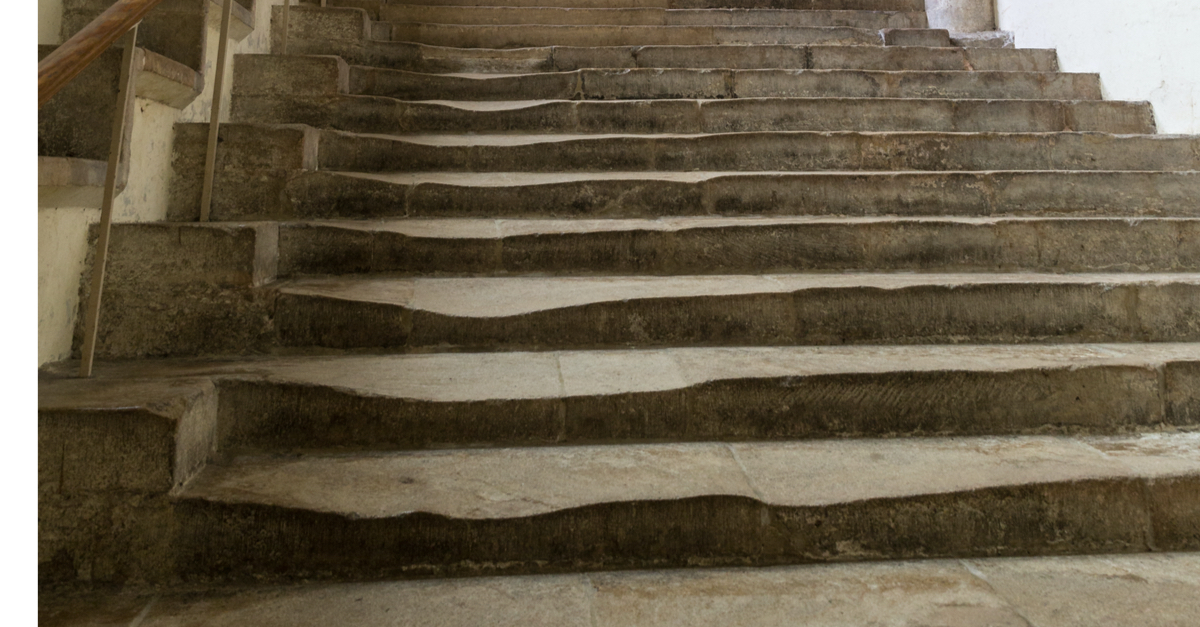
I am always moved by the sight of ancient stone stairways. The sag of centuries worn stone looks like a gentle impress made on fabric. Our forebears used some of the most resilient materials available to bear the steps of millions. Over time, the micro-erosions of clogs, boots and heel plates have changed that steely strength into the smooth aspect of stone turned through the mill of human transit. Like the steady drip of water on granite, the repeated touch of soles has altered what seemed unchanging and certain. If we stopped an individual at the top of the stairs and asked if they had left a mark on the stone during their ascent, they would almost certainly look back and answer: ‘no’.

On Christmas Eve for sixteen years, at around 5:30 pm, I would hover by the entrance to the oldest part of the Leeds General Infirmary. It was here that I met the choristers of Leeds Minster as they arrived to sing carols around the wards. This time of day on the 24th of December was always remarkably quiet. Visitors had left – or they were leaving their visit until the following day. Wards were as empty as they could be. Creating capacity before Boxing Day seemed to be a major management priority, and I once went with the singers onto a ward where there was just one patient. That will not be the case this year.

After arriving, the choristers would bustle into the nearby Boardroom where a buffet tea awaited. Following this festive offering they changed into their choir robes and formed two lines on the tiled floor of Gilbert Scott’s ‘St Pancras of the North’. Then, in the silence of its Victorian grandeur, a lone voice would hit the first note of Once in Royal David’s City. The choir joined in and we all processed up the split stone staircase to the Chapel on the first floor, the choristers’ steps falling where their predecessors had walked on this same day for over a century.

Christmas can incline us to nostalgia. In a world where the present seems to pass very quickly, surviving and looking forward can preoccupy our thoughts. Those quiet moments in the busyness of Christmas may lead us to remember other festivities and look back (either happily or uneasily) to our childhoods. On Christmas Eve, in waiting for the choir, there was the space to reflect on the history of the hospital and all who had walked these corridors since the 1860s. The poor who had sought help here before the founding of the NHS; the rich philanthropists who created it; and the eminent doctors, proud of their place in a rising profession. It isn’t hard to understand why Christmas is synonymous with ghost stories and a strong sense of the past. For all those years, on Christmas Eve, I felt I was keeping company with my predecessors.

The Chapel, Leeds General Infirmary

Once again, this Christmas is likely to be unusual for many people around the world. For the second year in a row the infection and illness caused by COVID-19 is expected to curtail the extent of our celebrations. Countries are closing boarders and battening down the hatches. Even if laws are not changed, we are being encouraged to limit our contacts and make sure we are vaccinated. Already the hospitality and entertainment sectors are suffering cancellations.

Restrictions imposed in response to the pandemic hit the headlines, but they don’t tell the full story of how people are responding to the experience. We know from occasional media reports, and perhaps from first hand knowledge, that countless micro-acts of kindness have helped people journey through this difficult and isolating event. The cards, phone calls and messages that have enabled people to feel valued and connected. The delivery of food, or medicine, that has allowed neighbours to keep safe and have the things they need. The vast majority of these small deeds will pass unreported. Research is unlikely to capture the scale, extent or consequence of these tiny impressions of compassion. The people doing them generally appear to feel these actions amount to very little. Nevertheless, they are part of the fabric of our lives, shaping and sustaining the quality of our relationships. When news reports convey the scale of problems facing humanity there is both comfort and hope in the knowledge that so much unregarded kindness happens at a local level. Love expressed with no expectation of reward, but done for its own sake, and found in the bonds of human connection which, at Christmas, are hallowed by the Incarnation.

People, look east. The time is near
Of the crowning of the year.
Make your house fair as you are able,
Trim the hearth and set the table.
People, look east and sing today:
Love, the guest, is on the way.

Eleanor Farjeon (1881-1965)

The Speed of Love

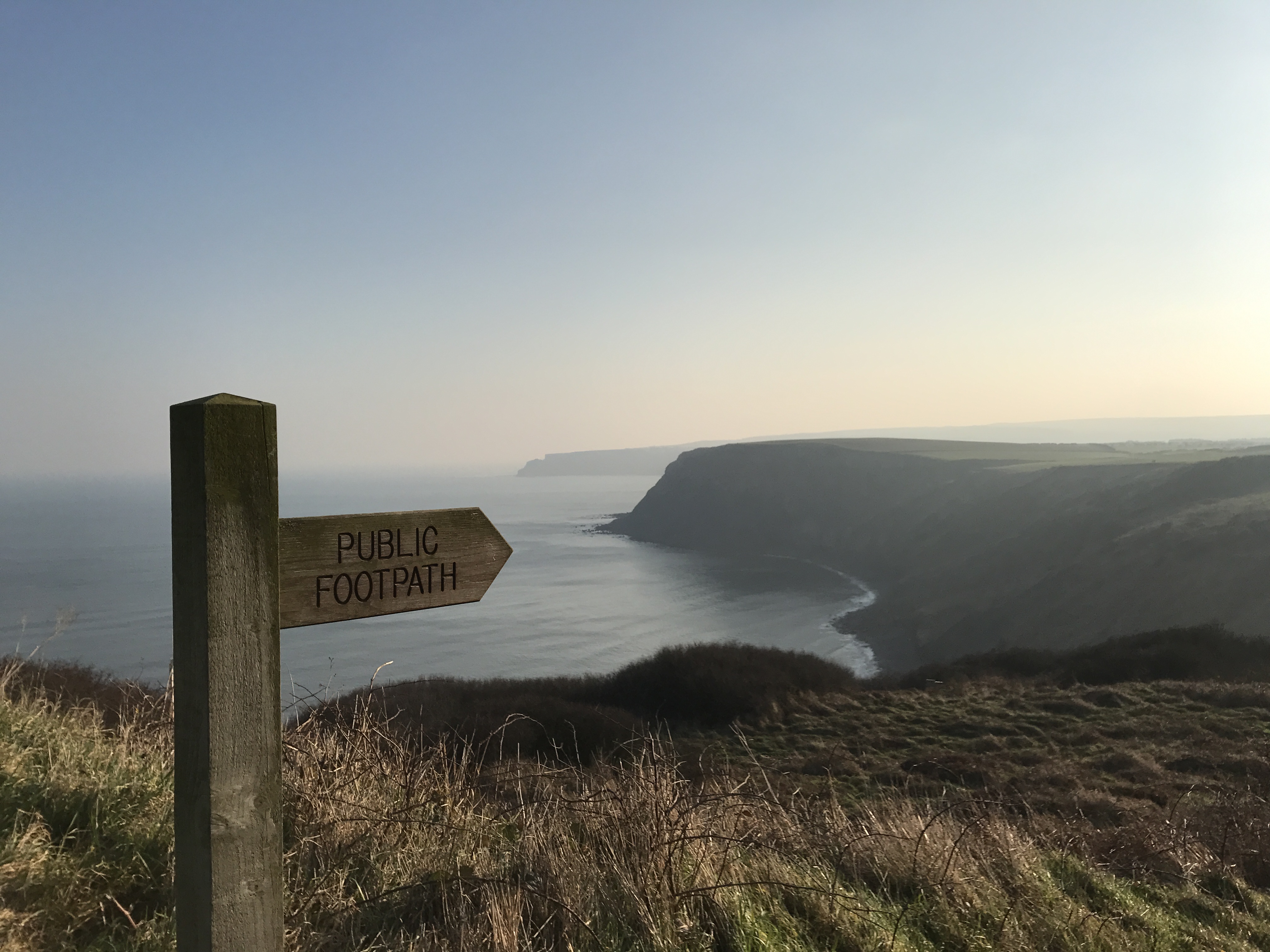
I have always been intrigued by liminal places. The kind of setting that is neither here nor there, one thing nor the other. Sometimes they are the border lands where people live, perhaps working in one country and supporting a nearby football team in another. In places they are the dividing line – the point of passage from one landscape to a very different terrain. I associate this with the feeling of a sea crossing to an island, or the steep ascent and dramatic drop when crossing the North York Moors. These are generally uninhabited places where a crossing can be closed suddenly in winter weather. Often they assist the sense of separation from a familiar context – a good way to mark a different place and time; something unusual.

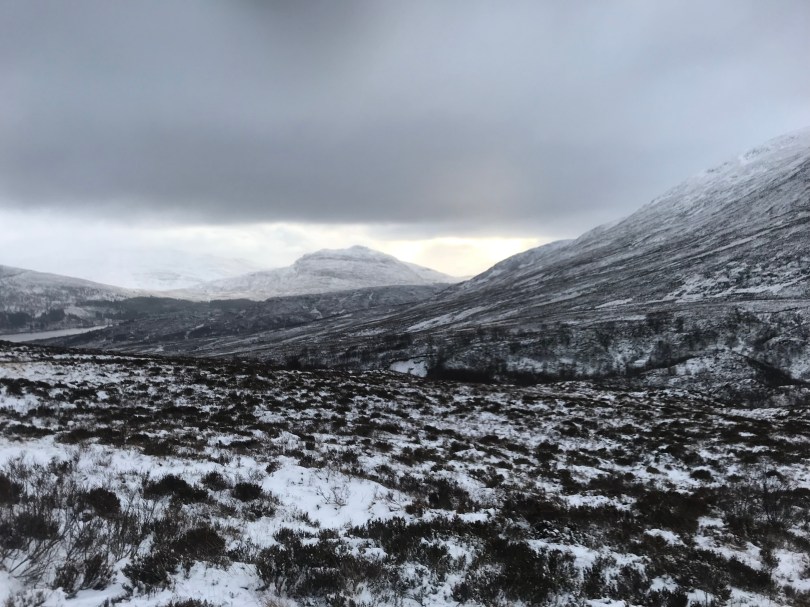
While they may not be crossing places from one kind of setting to another, even a country walk has the power to loosen our attachment to busy thoughts. Watching the excellent BBC 4 series Winter Walks I’ve been struck by the spiritual qualities of these seemingly ordinary country rambles. Unlike so much that grabs media attention today, these are not death-defying climbs up impossible slops, nor heroic marches across vast distances. Their route and length are decidedly modest. However, winter no doubt reduces the number of people the walkers encounter, so an awareness of the adverse elements and a spirit of reflective solitude emerge.

A good example of the spiritual qualities of a walk came in the episode featuring Alasdair Campbell. He began by a Yorkshire force (waterfall) with his surroundings covered in light snow. He went on to discuss his challenges with mental health. Reading a small inscription on a bench moves him to speak about the dead and how he still feels to be in their company. Family features, as it has so often, when he recalled childhood days spent in similar landscapes growing up in Yorkshire. There is a reflection on silence and sound. Throughout these episodes brief texts appear on screen stating the distance covered and the journey to go. There are occasional reminders of how many minutes it is until sunset, providing a factual commentary that complements the hints of finitude present in the walker’s words.

There is growing evidence that this kind of walking is good for our mental health. Sadly, as it appears to be the only measure we value, this benefit is quantified as a financial saving in the provision of health and social care services. This limits the broader recognition that many kinds of walking are primarily spiritual and holistic experiences. For people interested in faith and belief it comes as no surprise that these winter walks (mini pilgrimages?) stimulate this sense of spirituality. In 1980 the Japanese theologian Kosuke Koyama published his book Three Mile and Hour God. The idea of a God who goes with us at walking speed has a lot of appeal. It can feel that in Western life there is an irresistible and inexorable drive to go faster tomorrow – to use our time efficiently so that there appears to be more time. Slowing down to a walking speed, as the BBC series illustrates, effortlessly foregrounds spiritual themes.

“God walks ‘slowly’ because he is love. If he is not love he would have gone much faster. Love has its speed. It is an inner speed. It is a spiritual speed. It is a different kind of speed from the technological speed to which we are accustomed. It is ‘slow’ yet it is lord over all other speeds since it is the speed of love”.

Koyama, K. (2021). Three mile an hour God. SCM Press.

Advent is a good time to think about journeys. According to Luke’s gospel, after the annunciation, Mary hurries to a town in the hill country to visit her cousin Elizabeth. It doesn’t sound like an easy journey, and Mary remains in Elizabeth’s home for three months before returning. This time (we assume) well into her pregnancy, and carrying a fragile flicker of hope through the world’s darkness. Other journeys will follow – for registration in Joseph’s hometown; for shepherds from the fields; and, in due course, figures from the East putting their faith in a star. This is without mentioning the flight into Egypt and the echoes of Exodus. These were mostly slow and risky journeys by our standards.

Some journeys are inevitable. No matter how ill prepared we are, the 25th of December will come (and go). Wherever possible people will travel to be with loved ones. Sometimes those journeys begin several days before Christmas – with visits to others along the way. There can be an inevitability about the distance to be crossed and the day that will come. How we use these times is very much down to us – to simply get to our destination, or allow the journey to sift our thoughts and feelings. Reflecting that all of life is a journey – until it is not.

“This year I don’t know how to find

the way to Christmas. Instead

my mind replays memories

I’d thought to burn – the first-blows

of my youth.

And yet Christmas

and my family will come;

have already begun their journey South,

and there is solace in that …

From ‘Midwinter’ by Anne Walsh