Dumb Oratories

In The Eve of St Agnes Keats created a poem that can cause a shiver even on a summer’s afternoon. Like the accrual of snow, or the gradual appearance of frost, the poet adds layer upon layer of freezing imagery. Into this icy world Keats introduces the fire of youthful passion, dangerous and agile, breaking convention and stealing away into the night. The chill of the poem goes hand-in-hand with a general sense of the supernatural and of a world that vanished ‘long ago’, but is brought to life through the magic of poetic imagination.

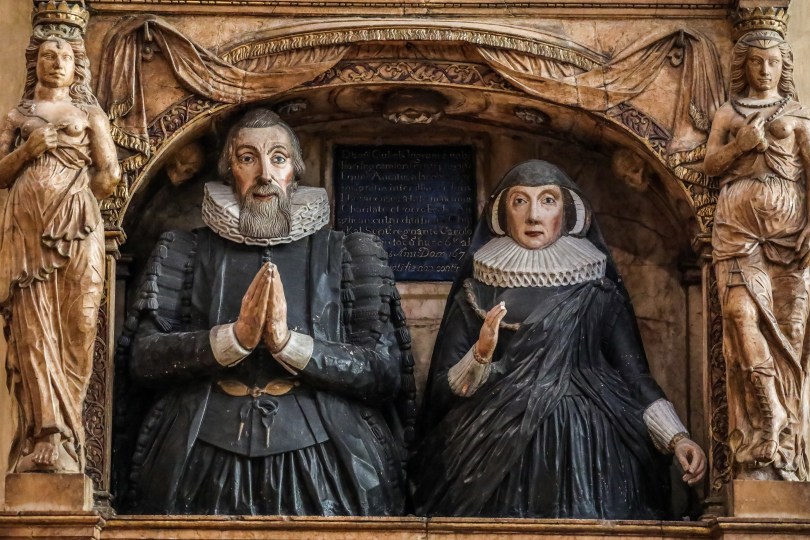
The poem includes references to funerary monuments: ‘The sculptur’d dead’. It is these figures of noblemen and women that Keats describes as ‘praying in dumb orat’ries’. Often we find the depictions of the deceased in our churches and cathedrals placed in a pose of intercession. In some religious understandings this may suggest that virtuous people who have died continue to support us through their prayers. Although not in church (but more significantly in heaven) the good continue to be in relationship with us through the prayers they offer on our behalf. It was the theology that powered an industry of intercession in the Middle Ages, with the sick, poor and clergy in particular, paid to intercede with the Saints for the souls of the wealthy seeking admission to paradise. Keats describes one of these ‘beadsmen’, someone typically pensioned in order to pray, using his rosary for those he was tasked to remember.

Numb were the Beadsman’s fingers, while he told
His rosary, and while his frosted breath,
Like pious incense from a censer old,
Seem’d taking flight for heaven, without a death,
Past the sweet Virgin’s picture, while his prayer he saith.

John Keats, The Eve of St Agnes, 1819

For anyone who has experienced a close bereavement this may not seem to be very surprising. The dead are seldom forgotten by those who were caught up in their living. The deceased continue to be with us in our thoughts, dreams and daily living. I cannot count how many times I have heard hospital patients speak about a visceral experience of a loved one being present with them. Sometimes it takes place in a dream, but it can also be an experience that appears to be as real as anything else. It was these encounters that led me to write a paper in 2014 with Stephen Sayers, discussing these experiences and suggesting how NHS staff might support such events during a patient’s admission. Interestingly, I think it is the only paper to which I’ve contributed that remains entirely uncited. This lends support to our contention in the paper that the clinical world is inclined to dismiss experiences that don’t make sense, and categorise them as evidence of mental illness. Awareness of this culture is something people discern and it is likely that many experiences like this are never shared with anyone. It seems that we lack a narrative for experiences which are real and meaningful for many, but fail to fit in with our sense of rationality.

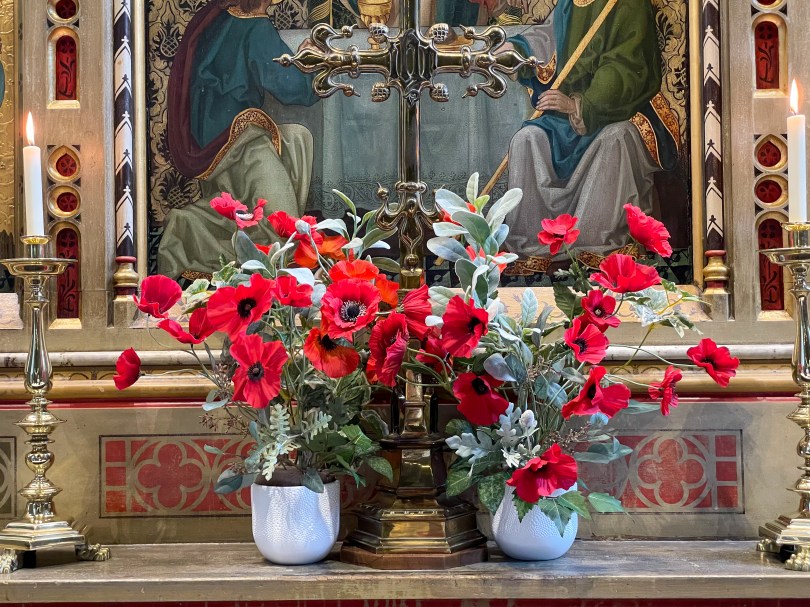
On All Hallows’ Eve, and with All Souls’ Day this week, people around the world will be reflecting on those who have died. Given that our awareness and thoughts about the dead are often private and internal, this week offers a rare moment for names to be spoken and people remembered in public. Despite the continuing growth of a playful and scary Halloween, the serious, quiet and moving act of explicit remembrance offers a less spectacular but deeper moment when we acknowledge our continuing bonds with the departed. Remembrance Sunday adds to the sense that November has an inclination to memorial.

We continue to have traffic with those we have loved but see no more. There are particular moments, such as a family wedding, when those attending may think of the people who are absent – but whose blessings would be with the couple and their future. Choices we make in life may lead us to ponder what the deceased would think of our decisions. For better or worse, the silent prayers of the dead circle our experience and commune with our conscience. What may seem to be dumb and frozen out of our reality is never wholly gone. In different ways Halloween; All Hallow’s; All Soul’s and Remembrance Sunday remind us of this truth and allow a fleeting moment for what is hidden to be spoken and named.

We die with the dying: 

See, they depart, and we go with them. 

We are born with the dead: 

See, they return, and bring us with them.

TS Eliot, Little Gidding

Set in a Silver Sea

John of Gaunt’s valedictory speech is one of the most famous texts left to us by Shakespeare. It paints a picture of an idyllic England – a second Eden – benefiting from natural advantages that make it the envy of other nations.

This fortress built by Nature for herself

Against infection and the hand of war,

Richard II

Most of us remember parts of this lyrical acclaim for all that England might be. However, as Gaunt goes on to say, this vision of a country playing to its strengths is undermined by the reality of its government. The glory of ‘this sceptre isle’ has been leased out like a ‘pelting farm’. There is some uncertainty about what pelting means, but it isn’t difficult to hazard a guess. This is the kind of farm, not well managed by owners, let out instead to irresponsible tenants. Rotten deals and blotched paperwork converting the richness of the land into a shameful destruction. Feeding the greed of a few rather than the common wealth of the many.

Plus ça change, plus c’est la même chose.

There is little to suggest that our island fortification has served us against infection. The recent report on the UK’s Government’s handling of the pandemic identifies a sense of resignation about widespread infection: “a policy approach of fatalism about the prospects for covid in the community: seeking to manage, but not suppress, infection“. As we journey into winter there is growing concern about the impact of an approach that appears to tolerate a high level of virus transmission. Quite what immediate and enduring damage that policy will inflict can only be guessed. Vaccination has made dramatic changes to the severity of illness and number of deaths, but very small percentages of very large numbers may still overwhelm the NHS.

Whether with COVID-19, human conflict or climate change, it appears that we continue to pose a danger to ourselves. We have turned parts of a beautiful world into pelting farmland, leased our lands and sold the future through the debt of bonds. Offering a different perspective on familiar problems, Professor Brian Cox gives us new cause for thought in his TV series Universe. According to quotes in The Guardian he believes that life capable of generating meaning may be a very rare phenomenon. It leads the paper to conclude that “the demise of Earth could wipe out meaning”.

Photo by Miguel u00c1. Padriu00f1u00e1n on Pexels.com

Whilst humanity has flirted with the apocalypse since people could create meaning, our capability to destroy has never been greater. We have focused on the development of technologies that have made astonishing strides in our ability to alter and shape our environment. A question to which we should give urgent attention is whether our moral and ethical capacities have matched this pace of development? Looking around the world it appears that the growth of wisdom has lagged ever further behind our capacity to manipulate our environment.

Even the most glancing trawl of social media reveals the scary range of human folly and denial. There are people so fed up with the BBC that they have decided not to use it anymore because it should be called the ‘British COVID Corporation’. The BBC is simply seen as a co-conspirator with the Coronavirus hoax. Another message contains a video clip of a group entering an NHS Trust HQ and presenting ‘legal’ documents calling the hospital to account for its complicity with the hoax. Earlier last week Michael Gove was surrounded by a group of anti-lockdown protesters. Following the murder of an MP I can’t imagine how frightening this kind of experience must be, both for him and the Police then required to attend.

What is infuriating for so many people working in the NHS is that despite all the evidence to the contrary, people continue to think doctors and nurses are ‘making it up’. For a decade I served on a research ethics committee made up of leading figures from a number of fields. We had the services of a professional academic statistician; a lawyer; lay members; and senior nurses and consultants from a wide range of clinical disciplines. The focus on probity and evidence could not have been greater. While on a recent holiday I watched the Matt Damon narrated documentary film Inside Job. It tells the story of the 2008 financial crash and, among its many points, draws attention to the way leading economists with lucrative links to Wall Street wrote articles about the safety of new financial products without any hint of conflicting interests. By contrast, medical research has multiple safeguards to ensure this lack of transparency doesn’t happen. I’m not saying the NHS is perfect, but it is light years away from the free-for-all that appears to go on in the financial institutions featured in Inside Job.

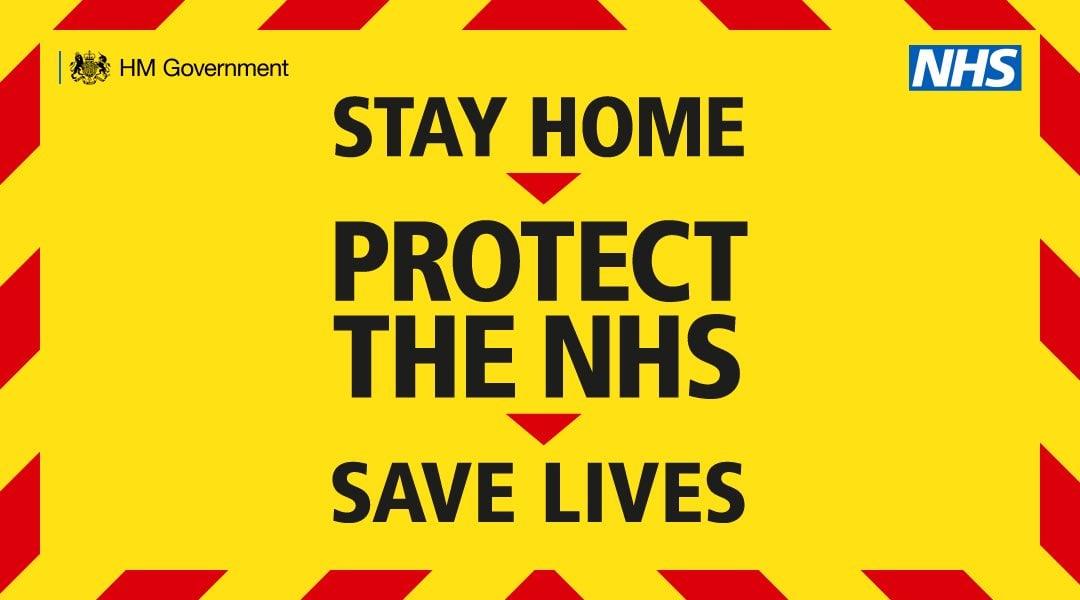
Political messaging in the first wave of the pandemic was clear – protect people by protecting the capacity of the NHS

Of course, I have little hope that reasoned argument will diminish the passion of resolute protesters. While it would be easy to dismiss them as voices from the outer fringes of society I am not so sanguine about their impact. The Government is listening to those who believe (or wish to believe) that living with high levels of COVID transmission and deaths is a price worth paying for an open society. Boris Johnson has quoted months ago as stating a preference for ‘bodies piled high‘ over another lockdown. Once again, it is likely to be the vulnerable and elderly who will pay the price for this policy, with the ONS reporting a range of common pre-existing conditions among those who have died in recent weeks.

How we navigate the coming months will tell a story about attitudes in the UK to the vulnerable, elderly and poor – and whether we prefer to be a pestilent and pelting farm, rather than a noble, blessed and happy isle.

Don’t Panic

It was one of the stock responses in the long-running BBC comedy Dad’s Army. Whenever there was the slightest possibility of something going wrong, and Captain Mainwaring appealed for calm, Corporal Jones shouted ‘don’t panic’. He shouted it in a way that communicated the exact opposite of his words. Perhaps this is an ingrained reaction of the British people: when we were told that fuel supplies would be fine ‘so long as we shopped normally’, car keys across the Kingdom flew into people’s hands. The instruction to keep calm and carry on seems to be heard as a clarion call to action. The perception exacerbating the problem.

Listening to Anil Seth speaking on a recent edition of Radio 4’s Start the Week I was reminded just how much of our experience we take for granted. What we tend to notice is the unusual and we therefore focus on ‘exception reporting’ to add to our understanding of the world. Without doubt, especially for people in the West, the last couple of years have been full of exception reporting. The things we took to be routine and reliable have become irregular and doubtful. It began with toilet rolls, moved through domestic flour supplies, and now rests with petrol. Rather than just a tiny part of our experience reporting the exceptional, it feels like the balance has shifted dramatically. From seeing family members, to taking holidays, a once predictable world has become fragmented and startling. The new normal is a somewhat moth-eaten version of our former reality.

This is without doubt a Western phenomenon and even within advanced industrialised nations it is far from everyone’s experience. Many citizens have lived with serious uncertainties as a part of daily life. Much of the world experiences the unreliability of supply as the norm. When I lived in Argentina for a year it was not uncommon for public employees to be paid several months after it was due. This degree of coping with uncertainty is something alien to the West. A few years ago, when there was a hiccup at the Santander Bank, it meant that account holders didn’t get their salaries on the day they were due. In the NHS the switchboards went into meltdown. Operators had never known a day so busy. Even the slightest change in a culture with very high confidence in the delivery of services causes a major wobble.

Photo by Anna Shvets on Pexels.com

In many respects this experience is changing a form of expectation that is novel for humanity. Across history this degree of reliability and its associated expectation has been both recent and rare. It is arguably the case that this confidence is paid for by the poorest communities on the planet. Post-colonial powers continue to leverage their advantages over other nations, ensuring that our certainty of supply is extracted at the price of unreasonable flexibility for the poorest people in the world. Added to which the emissions of the wealthy nations are accelerating changes to our climate where, once again, the most marginal communities will bear the heaviest toll.

The key question we ought to consider is whether we are panicking about the right things? Minor disruptions to rice and petrol are generally an inconvenience rather than a threat to life. The gradual shift in climate and its consequences for people living on the edge will end lives and devastate communities. However, it appears we are incapable of collective action until the consequences of disaster arrive on the doorsteps of the powerful.

Photo by Markus Spiske on Pexels.com

In some respects it feels as though I have gone full circle in my own attitude towards waste. My grandfather would often berate me in the 1970s when, as a child, I’d put enough butter on my toast ‘to sink a battleship’. I’m not quite sure where the phrase originated, but I always took it to mean that excess use of anything during wartime would require more ships to cross the Atlantic – with the risk of sinking due to enemy action. That was my grandparents’ experience. People’s use of materials during WWII was therefore directly connected to the amount of danger involved with resupply. Maybe we need to reinvent that phrase today, not as a call for unregulated panic, but as a reminder of the small deeds connected to great consequences. Only when we understand the implications of every action and inaction are we likely to see the changes in behaviour needed to avoid a catastrophe.

‘Enough butter to incinerate a planet’?

Send Thine Archangel

I’ve always loved Michaelmas. Perhaps it’s about the time of year when the feast of Michael falls, with schools back and universities about to start the academic year. Or it could be to do with the dedication of the church where I grew up, St Michaels’ Kirkham, and the C of E primary school I attended. For whatever reason, St Michael has always occupied by thoughts in September.

Much of the understanding of angels has shifted over the centuries under the changing winds of theological fortune. At the Reformation many physical representations of angels were lost, albeit that interest in angels continued in other ways. For Milton they were towering figures of supernatural power; of a grandeur hard for humans to gaze upon, yet also imbued with a compassion that is equally reflective of the God they serve.

Whereat Michael bid sound
The archangel trumpet; through the vast of Heaven
It sounded, and the faithful armies rung
Hosanna to the Highest

Paradise Lord, book VI

Angels persist in popular imagination and are major figures in many world religions. Especially connected with children, there have been several funerals I’ve conducted for babies where Robbie Williams’ Angels has been played and poems about angels have been read. The contemporary artist and poet Roger Wagner depicts angels across the full spectrum of his work. Often he creates contemporary scenes in which these spiritual beings are as real as the cooling towers of a power station. Through their presence in his illustrated translations of the Psalms, Wagner’s angels are given a consistent appearance across the arc of human history – hinting that human structures are temporary and fleeting set alongside the presence of these ageless entities.

Michaelmas Daisies , Museum Gardens, York 2021

And in that summer evening’s fading light
I saw his angels gather in the wheat.
Like beaten gold their beauty smote the air
And tongues of flame were streaming in their hair.

‘I Saw the Seraphim’, Roger Wagner 2019

Angels probably surface most in Western countries towards the end of the year. Whether on Christmas cards, at nativity plays, or their ubiquitous presence in carols, it feels that December is the month when we allow these strange creatures to enter our imaginations. In the child-like play of creativity that the festive season invites, these bright beings connect with a nostalgia that appears to bring wistful comfort to some. Yet angels aren’t all about sweetness and light.

When the second Adam appears, angels fly like sparks at the moment the human and divine are forged into one. The shepherds’ experience of overwhelming glory is countered by the threats of infanticide and the flight into Egypt. In the Shepherd’s Farewell by Berlioz, the lyric is tinged with a sense that even Christ must journey through a wilderness, and the shepherds petition God’s blessing on the holy child.

That is how life goes–we send our children into the wilderness. Some of them on the day they are born, it seems, for all the help we can give him. Some of them seem to be a kind of wilderness unto themselves. But there must be angels there, too, and springs of water. Even that wilderness, the very habitation of jackals, is the Lord’s.

Marilynne Robinson, Gilead

It feels to me that angels occupy that ever-present and boundless wilderness of the unknown. As we understand more about the universe its scale seems to widen, and within human life there is an equal expanse of the yet-to-be-known. These glittering creatures may have cast us out of Eden, but they are also with us on our journey, ciphers of the realms of which we are only dimly aware. When Milton pictures Adam and Eve leaving the garden, they go to meet a world that ‘was all before them’. Into this great unknown they go ‘hand in hand with wandering steps and slow’.

This and the first picture are depictions of angels in the stained glass of the Great East Window (1405-1408). Photos by the author.

God protect you,
guide you safely through the wild!

The idea of angels and their depiction in the arts may seem far removed from our reality. What they represent still has lessons to teach us, and in their glow they carry the embers of eternity. They are in the dark places as well as the daylight, the unexpected glimpse of something wonderful and beyond our comprehension. Signs heralding life’s ultimate goodness and the hope of returning home. For all our advances in the world, Shakespeare’s words convey with simplicity what remains true today: ‘There are more things in heaven and earth…Than are dreamt of in your philosophy’. The infinity of angels reminds us of a vastness which cannot be fathomed, and a God who is dazzling glory – and the faintest flicker of hope in our darkness.

Nor Wanting Nor Wasting

Many people who participate in religious worship have missed singing. Thankfully, it is returning to churches and other places of worship. Singing once again has reminded me of the rich resource of both melody and poetry that makes up our finest hymns. Last Sunday featured Immortal, Invisible, God only wise at Evensong in York Minster. The phrasing and economy of the text allows a rich vein of theology to flow throughout the hymn. The paradox of a God who is hidden in light; lacking nothing, and yet whose bounteousness isn’t wasteful. Neither growing nor diminishing.

Hymns have the capacity to connect our hearts, spirits, minds and emotions in powerful ways. The enduring presence of Songs of Praise on Sunday TV is testimony to the need people feel to hear these much loved tunes and words in their lives. Hymns continue to be sung at some football clubs before matches, and Abide with Me is a part of the traditions of the FA Cup final. Radio 4’s Soul Music has featured a number of hymns and told both the story behind their creation and the impact they have had on people’s lives.

Last week I listened to another Radio 4 programme which set me thinking about all of this. Start the Week took on the ambitious topic of consciousness and how we have a sense of self. Deep waters indeed. One of the speakers was Tiffany Watt Smith, Director of the Centre of the History of Emotions at Queen Mary University of London. In her contribution to the programme Tiffany focused on the idea that language enables emotions. In other words, that “language allows us to notice those inchoate physiological experiences”. The implication is that if we lacked words to express our sensory experiences it could create a degree of inner tension and psychological difficulty.

This makes a lot of sense to me, especially when I think about the capacity of the language of poetry to express those feelings and thoughts that teeter on the edge of perception. So that my worship of a God hidden in light can find shape and expression in the combined effect of music and words. Nothing else will do this nearly so well. Dr Watt-Smith gave some examples during the programme of cultures that had a word to describe a feeling for which we no longer seem to have a use – and words we had in the past to express this, which have now dropped out of use. Perhaps ‘melancholy’ might be one example?

A cursory review of contemporary Western societies suggests that the ebbing of religious language does not represent the loss of religious experience. The growth of spirituality; the interest in phenomena such as eclipses; and the turn to mindfulness, all demonstrate a search for the transcendent. What the atheist Philip Larkin described in Church Going as an unexpected ‘hunger’ to be more serious. In the current edition of the Church Times the reviewer Andrew Brown notes the ‘uncharacteristically tentative article’ in The Economist about the state of the Church of England. The Economist article ends with words reminiscent of the experience of Larkin. Are some things timeless and beyond price?

The experience of working with people living with dementia provides vivid examples of the anxiety and frustration that are generated when words to express feelings elude. Following Watt Smith’s argument, this is not simply a problem in the communication of feelings: the lack of language impedes the development of feeling itself. If we cannot tell, then we are unable to experience hearing our own words being spoken, heard and reflected back to us.

“The Christian worldview is shaped by a variety of forces: community praxis, scripture, prayer, and perhaps supremely, participation in the liturgy”.

White, S. J. (2006). “Sing to the Lord A new song”: Christian Hymnody and the Scientific Worldview. Liturgy, 21(3), 41-50.

It may be that faith cannot be shared and developed when the language of belief has waned. This is not a purely technical problem in sharing faith, but a fundamental obstacle in allowing religious sentiments to grow. A hunger may be felt, but how will that appetite blossom and flourish? The resources that animated an inner sense of God were once plentiful and rich. Now it feels that there are gaps and holes in the discourses available to us, and a central theme with multiple facets has become a landscape of disparate ideas, struggling to sustain a core.

The Jewish people in exile asked how they could sing the Lord’s song when they had been ripped away from the fabric of of community and context. It is a question that is highly relevant for Christians in the West today as societies become ever more distanced from Christian culture and heritage. In the midst of exile it is never easy to see how liberation might come – yet time and again God’s people eventually found the freedom to re-establish a culture of faith.

We need the poetry and music to re-pattern the narrative of faith, even as we search for ways to live faithfully in a land that may feel unfamiliar and strange. In Susan White’s paper, there is a widening gap between a scientific world and a Church singing hymns reflecting a pre-modern world. I echo her conclusion that unless we find new ways of faith in the 21st century ‘we will find ourselves wandering directionless between the two worlds’. We need poets and musicians who can use the kind of economy , skill and depth illustrated by Immortal Invisible. This is no easy task, but unless we renew the culture of faith in the West, religious feeling will reach for words that can no longer be found.

The Aged Poor

There are many different things that can make us feel our age. From the commonplace of wistful reflection that police officers are looking younger, to the telltale bits of IT equipment in a film. ‘Look, it’s an Amstrad green screen’. In a world where the pace of technical change is ever faster this calibration of time is ever clearer. From the first appearance of computers, to the desktop PCs, then laptops and tablets, the clues to different decades are there to see in every movie. Seeing a production of Educating Rita at the York Theatre Royal last week was to behold a vanished academic setting. No computer; one-to-one tuition; books (and whisky) everywhere.

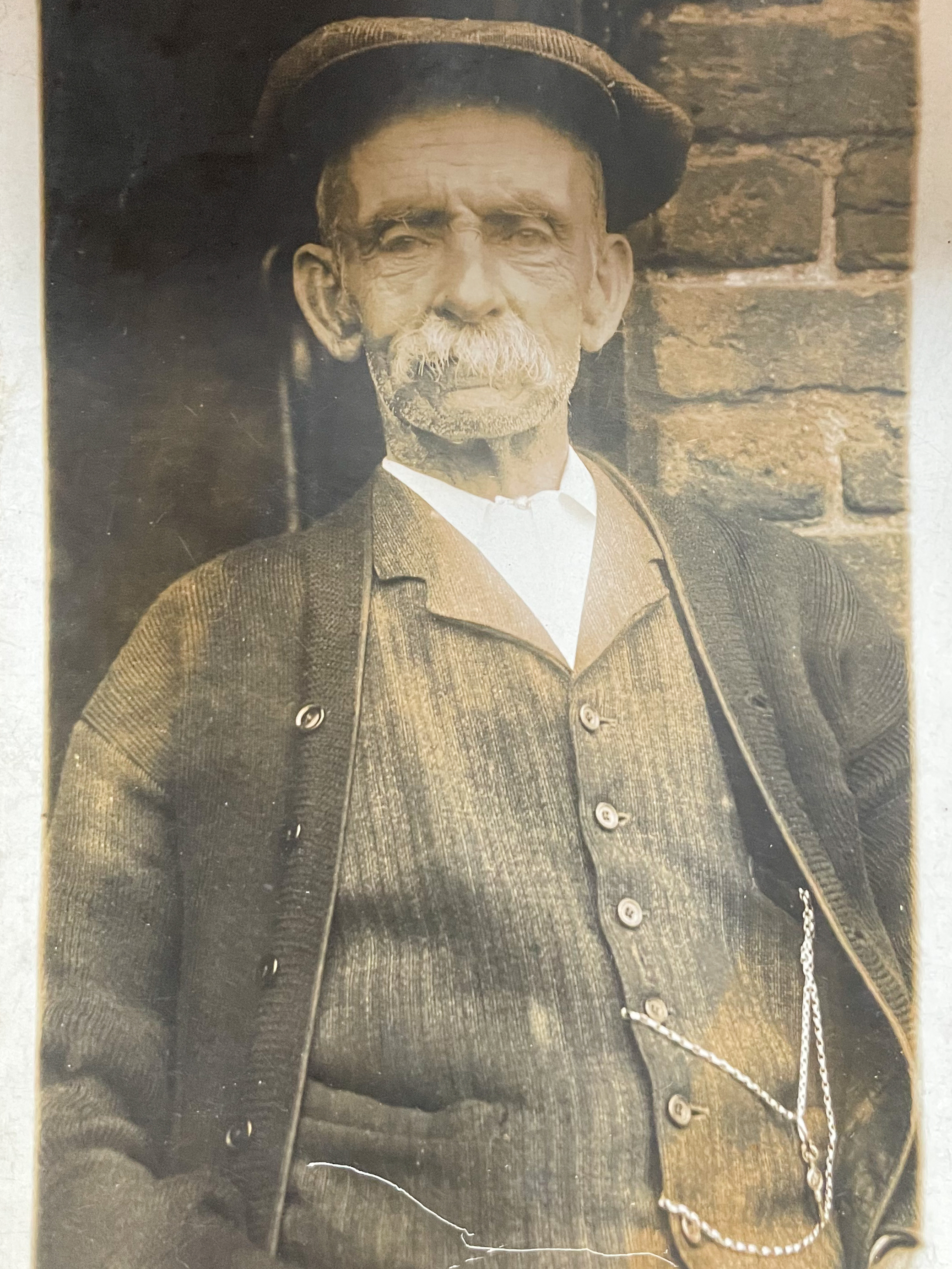
The consequences of ageing appear, ironically, to be timeless. Even as the UK government attempts to grapple with the question of how to fund social care, they are tackling a problem that is both ancient and modern. The Aged Poor in England and Wales is the title of the report written by Charles Booth and published in 1894. That was two years before the birth of my paternal grandfather who, like so many of his generation, troubled the exchequer very little (he died aged 69, having been predeceased by his wife). Yet demographics were changing and the question of how to support a population living longer into retirement was becoming more pressing.

“but for those who are not able-bodied, and these include almost all the old, each Board of Guardians is at liberty to adopt its own rules and to change them at will, or to act without any rules at all”.

Booth, C. (1894). The aged poor in England and Wales. Macmillan and Company.

In Booth’s report nearly 30% of the over 65s were receiving either indoor (Workhouse), or outdoor, relief. This sort of dependency and survival on minimal rations was not the kind of old age people wanted, either for themselves or for others. Rather than a life of comfortable leisure, the thought of retirement stimulated apprehension and fear. Not only were financial resources limited, but the NHS was decades away, leaving many dependent on charitable support and care – or to get by without health care altogether. As a curate in the 1990s I would meet older people who had harrowing memories of relatives suffering from illnesses which either lacked effective treatment altogether, or where treatment was unaffordable. It is not a situation to which any of us would wish to return.

Since social care lacks the coherence of a national service such as the NHS it can still feel potluck as to the quality of the care many receive. When I was involved in these decisions for my mother a few years ago, as her dementia advanced and her health deteriorated, the access to social care seemed haphazard. At the time when she needed to move from a care home to a nursing home I recall talking to a local manager who told me there was a room available but that ‘three people are interested in it’. What should have been a process focused on the needs of an older person suddenly took on the character of house buying. Would I get everything sorted in time, or would we be gazumped?

It is hard for people to understand the pressures and anxieties that the current situation creates for people seeking care. At a time when people are vulnerable and distressed the last thing we need is a system that is chaotic, and where there is no central co-ordination of supply and demand. Given that most of us will find ourselves in later life at some point, and in need of support, our inability to provide a decent level of care across society is symbolic either of a failure in self-care, or a fear to contemplate what we might one day need. Either way it is detrimental to us all if this situation is simply allowed to continue until it falls apart.

We are promised that later this week the UK Government will bring forward plans for social care. There is anxiety that while this may appear to be one thing it will turn out to be another. In other words, that the NHS will in fact receive the lion’s share of any increased funding. Yet instead of pitching one sector against another, we need both the NHS and social care to work together. One can never achieve its ambitions without the other; and older people can’t be left to fall between the gaps in service provision. The world has moved on since Charles Booth, but unless we have the political will to grasp this age-old challenge, we risk perpetuating a shameful dereliction of care.

It is likely that our unwillingness to resolve the way we support an ageing population reflects wider attitudes to older age. Age discrimination is frequently described as a widely tolerated part of society, and implies a failure to recognise the worth and dignity of people as they age. Just as in Educating Rita, where the student is also a teacher, we need to understand that socially constructed roles are often less clearcut than they seem to be at first sight. We should never underestimate the value of people in later life or the lessons their lives, and even their needs, can teach the rest of us.

Seasons for Everything

It always felt like the first intimation that summer had ended. When I was a vicar in north London in the early ’90s, the opening week of September brought an invitation to speak to the local Cub Scouts. After the holidays and warmer days of August this annual meeting marked the start of all those activities that punctuate the remaining months of the year. There might be warm days, or even brief heatwaves, but they always felt borrowed out of season. The trajectory of shortening days continued notwithstanding the gift of unexpected heat.

York has been exceptionally busy this month. It has been impossible to get a table for dinner at a reasonable hour even when you try to book the day before. The streets hum with the chatter of tourists discovering (or rediscovering) the charm of England’s northern capital. When the sun is out the river side pubs and open spaces fill with drinkers and sunbathers alike.

This weekend York has hosted a balloon fiesta and crowds have filled The Knavesmire. People have come from far and wide to visit the fair or hear the acts performing on the open air stage. On the whole this looks and feels like a return to 2019 normality, with little mask wearing or social distancing. The joy of these once familiar freedoms at an outdoor event no doubt adds to the delight of those attending. Yet it is hard to feel entirely at ease when so many concerns circle the globe. From the disastrous exit from Afghanistan to a UK COVID rate 26 times higher than a year ago. The problems we face show little sign of diminishing, even though vaccination has thankfully transformed the severity of the risk associated with the pandemic.

We need ordinary pleasures. During the past 18 months many of us have rediscovered a connection with nature, from walks to wild swimming. In places this has created its own pressures on the environment and local facilities, but there are plenty of less crowded locations of outstanding natural beauty. As I know from working with older people, the vivid differences we see in each of the four seasons can be both orientating and affirming. To look at a tree tells us where we are in the year. The deep greens of August promise the glorious transformation to browns, yellows and golds still to come.

The interplay of human activity and the seasons is captured brilliantly by Ali Smith in her quartet series. Here the personal, the political and the natural are meshed together in a vivid reflection of how the seasons shape our thoughts and interactions. I can’t imagine living where both daylight and weather alter very little across the year, but perhaps smaller changes simply become more significant. During a year I spend in South America that certainly seemed to be the case.

“The days are unexpectedly mild. It doesn’t feel that far from summer, not really, if it weren’t for the underbite of the day, the lacy creep of the dark and the damp at its edges, the plants calm in the folding themselves away, the beads of the condensation on the webstrings hung between things.” 

Smith, A. (2016). Autumn (Vol. 1). Penguin UK.

The Church’s year is clearly marked by a Christianity that developed chiefly in the northern hemisphere. As the months march on to the year’s end, gathering darkness is met by the gift of light. The imagery and significance of saints’ days, fasts and feasts parallels the natural world and walks hand-in-hand with the changing seasons. It feels that liturgy and the seasons are welded together.

I have no doubt that age and experience influence the ways in which we respond to the stations of the sun (to quote the title of Ronald Hutton’s book). While some may feel melancholy at the approach of autumn, the Cubs of Barnet were full of enthusiasm and energy as they gathered together after the summer holidays. For them, the season of ghost stories and fireworks ensures that darkness is not without excitement; and explosions of light are brilliant only because they are set against the backdrop of night.

Chronic Emergency

Halfway down the Shambles in York is a shop that closed just before Christmas 2019. Perhaps a victim of an increasingly difficult retail environment, Zatchels ceased trading before the pandemic. However, COVID-19 is almost certainly the reason that this shop has remained sealed and unchanged since its demise. Closing when it did, the window brings a hint of Narnia with its winter decorations and a Christmas that never came. Complete with snowflakes and tinsel it has seen out two summers. In a street which millions normally visit every year the longevity of this winter scene is a small sign of the crisis through which we are living.

The most helpful thing I watched before the start of the COVID-19 pandemic was Chernobyl. The Netflix mini-series is pitch-perfect in its portrayal of an unfolding crisis. Events progress from initial denial, to hastily constructed counter-measures and finally to a realistic assessment and response to the catastrophe. Tragically, like the nuclear accident, it is certain that the consequences of COVID-19 will be with us for years to come. Looking back I’m sure there are many lessons that will be learned and a host of things that would have been done differently with hindsight. In the case of Chernobyl, collateral health consequences and psychological harm were (and are) a significant legacy of the original event – and arguably more damaging than the effects of radiation itself. There has even been the suggestion that relocating residents away from the disaster area to cities such as Kiev caused more deaths and ill health due to pollution compared with the probable outcomes had residents remained in place. It may well transpire that elements of our COVID response likewise caused unintended consequences that outweigh the initial dangers.

There is a human fascination with the consequences of an overwhelming event. Perhaps Pompeii and surrounding cities may be one of the oldest examples of this tendency. These are times of accelerated human analysis and response, when unprecedented actions are taken. It is claimed that the eruption of Vesuvius led to the first attempt at the mass evacuation of a civilian population by a military force for the purpose of rescue from natural disaster. Critical moments can generate unusual thinking and actions, leading in turn to developments which might otherwise have taken decades. I’ve no doubt that the strides made in creating vaccines in 2020 will have speeded up the capacity to design effective pharmaceuticals in the future.

Pompeii – the focus for the launch of a military attempt to evacuate citizens out of the path of disaster

There is little disagreement that a world-changing event such as the pandemic moves through phases. For some time now colleagues in the NHS have characterised this as a ‘chronic emergency’. The immediate response has been made, and now we are living with a high level of daily cases and a steady population of patients in hospitals. The crisis hasn’t ended but we know far more about what we are dealing with and have both vaccines and new forms of authorised treatments. Yet there is little indication that COVID is going away. Despite the high level of vaccination in the UK population we have not entirely halted serious illness, deaths and disruptions to daily life.

The concept of chronic emergency may help explain the high rate of job vacancies in the UK. One report notes that 22% of workers over-50 are planning to bring forward their retirement plans. The unending crisis caused by COVID is sustaining pressures within organisations such as the NHS. Just how long this can continue without staffing issues becoming critical is uncertain. As we drift into the final days of August, with daily cases approaching 40,000, the prospect of schools re-opening; university students re-connecting; and an inevitable turn in the weather, must raise concerns that there is yet another mountain to climb. Just how many summits must be reached before the chronic emergency degrades to a manageable pressure is unknown. Even this uncertainty is a stress on staff who see and experience the impact of the pandemic, not as a set of figures, but as lives ended or changed forever.

“our previously world-beating health service is at risk of moving to the middle of the pack”

Siva Anandaciva, the chief analyst at the King’s Fund, The Guardian, 4 /8/2021

At some point there will be an evaluation of how different response to COVID-19 led to different outcomes. It was sad to see in the most recent evaluation of health systems by the Commonwealth Fund that the NHS has slipped from first to fourth. While this is not entirely attributable to the pandemic there can be no doubt that absorbing the care of thousands of patients with COVID-19 has come at a cost to the NHS. Few other countries have placed so much strain on their health resources during the past two years. If the plan is to ‘learn to live’ with the virus we need to provide the health service with the means to carry out its usual care as well as support people with COVID and its consequences.

In many ways the UK is returning to normality at a pace that will surprise many people. Walking round York and visiting a supermarket, it appears that mask wearing is on the wane. The emergency is slipping from public view and becoming focused in hospitals and GP services. This may be fine for the moderately wealthy, fit and well, but the pressures that continue in health and social care will not remain isolated from wider society. Keeping the standards of the NHS at a high level requires funding that will increase the staffing levels needed to cope with normality plus COVID. That’s no small challenge, but without it the medium and long-term consequences may outweigh the original crisis. We forget the lessons of history at our peril.

The Greatest Temptation

Judging by the queues and packed rooms of the Thomas Becket exhibition at the British Museum, the story of the tension between Church and State continues to hold fascination. Archbishops of Canterbury tend to come and go without too much fuss, and seldom leave anything approaching the legacy of Becket. The impact of this Archbishop’s murder catapulted Canterbury into the top flight of European destinations for Medieval pilgrims. The elaborate shrine that housed the remains of the Saint drew visitors from far and wide. It is the cause of the journey that features the many characters of The Canterbury Tales, drawing into one text figures from a range of classes.

The exhibition is in its final week and appears to have been very popular. The alabaster reliefs, elaborate reliquaries, and fine stained glass portray the channeling of wealth in honour of a saint whose significance across the continent lasted until the 16th century. At the same time, as Chaucer’s fiction depicts, the motives of pilgrims varied considerable. The corruption of spiritual practices through avarice is evident in The Canterbury Tales. Nevertheless, the portrayal of corruption demonstrates a common agreement about the the kind of life clergy should lead and the way in which the Church should carry out its vocation. The ‘poor parson’ is a priest unswayed by wealth or the social standing of the parishioners. We are told that ‘first he wrought, and afterwards he taught’.

For if a priest be foul in whom we trust
No wonder that a common man should rust;
And shame it is to see – let priests take stock –
A shitten shepherd and a snowy flock.

The most notable work of literature in the 20th century which focused on the life of Becket was penned by TS Eliot. Many years ago I was a member of the the cast for an eleven performance run of the play in a parish church. At the interval one evening I overheard someone telling their friend that they had come thinking Murder in the Cathedral was a whodunit – but they kindly stayed for the second half. Of course, at one level, any consideration of the events of 1170 involves reflection on who was truly responsible for the deed.

Both Chaucer and Eliot explore the concept of the decisions and choices made by Christian leaders. Whether in a parish or at a cathedral, the doing and saying must be closely aligned. Eliot’s rendering of Becket shows the power of temptation to deflect the pilgrim from their path – to choose an accommodation with sin rather than try to confront and resolve our true calling. Like Jesus in Gethsemane, Becket is in the path of inexorable events. There is a moment for possible escape, and in both cases soul-searching arrives at a point of spiritual peace and steadfastness.

In all the various discussions about the future of the Church of England I hope that somewhere this same kind of spiritual examination is underway. I fear it isn’t. There is understandable angst among the hierarchy that the trajectory of attendance figures and finances will ultimately undo the C of E. As this likelihood marches towards us, it seems that our concerns are narrowing to focus on how best to escape this apparent failure. I think the lesson of Becket gives us a different model for how to confront our demise.

The Church is renewed all the time by the food it offers to Christians seeking to discern the best way forward. Patterns of Bible readings ensure that we are guided by the wide sweep of religious experience and thought, not becalmed by the vagaries of a particular day. For anyone reading this who hasn’t discovered it, the Church of England Daily Prayer app is an excellent resource, now with an audio option. Reading the Hebrew Scriptures at morning prayer this week has reminded me of the pith and power of wisdom. Here is thought distilled through faith and experience – the kind of guidance the Church needs today more than ever. Rather than haste and urgency a greater stillness and listening to God is required. As the parish priest David Ford argues in last week’s Church Times, the excitement of those bent on evangelising their way out of decline appears not to register the faithful, quiet and fruitful witness of many parishioners.

“The beginning of wisdom is this: Get wisdom,

and whatever else you get, get insight.

Prize her highly, and she will exalt you;

she will honour you if you embrace her.

She will place on your head a fair garland;

she will bestow on you a beautiful crown”.

Proverbs 3: 7-9

There is much in Scripture about not making a show of faith or kindness. Jesus is clear that performing self-righteous prayers in public, and brandishing conspicuous generosity, are to be avoided by his followers. He knows from his harrowing in the wilderness that there are temptations in religion which can give even the holiest human a moment’s hesitation. Lesser mortals need to live with clerical identity and its claims with as much humility as possible. When have a divine conviction that our course of action is the right one, or the only one, we risk falling prey to a sin that is both subtle and persuasive.

Chaucer’s poor parson or Eliot’s saintly Archbishop both demonstrate considerable wisdom. Perhaps having the insight to risk perishing while doing the right thing is not the least faithful route available to the Church. Who knows what good may grow out of the seeds of diligent pastoral care, or the hearts that will be turned to God by the witness of an Archbishop who resisted the greatest temptation of all: ‘to do the right thing for the wrong reason’.

The Land the Sunset Washes

It was a very warm mid-afternoon. Cycling had ended for the day, and our tent was pitched. I was 18 years old, sitting with my back to a tree by a babbling brook somewhere in Belgium and reading The Portrait of a Lady. A book that opens with an idyllic description of afternoon tea in a beautiful Thames-side garden during ‘the perfect middle of a splendid summer afternoon’. The kind of writing that lends space and warmth to the image it creates, a picture conjured when the full heat of day was ebbing: an hour which ‘expressed that sense of leisure still to come’. While it is an image steeped in privilege, the leisure and heat of a perfect summer’s day is something many of us have been fortunate to experience at one time or another.

There is an unpredictability about the climate in England that lends a sense of unexpected gift to weather events. Whether it is the warmth and stillness of a summer’s day, or snow falling at a time we are able to enjoy it, nothing in the climate can be taken for granted. A year may pass with hardly any glorious summer days – and winter can fizzle its way through drizzle and damp without the spectacle of a world transformed in a sheet of white. Perhaps we talk about the weather so much because we lack the certainties taken for granted in other countries. Yet even there, climate change means diminished confidence in weather patterns familiar for generations.

Summer in the northern hemisphere can be a time when many people are away and the pace of life seems to slow, just a touch. For classical music lovers The Proms season begins and, to quote Sir David Attenborough in this year’s BBC trailer, ‘a kind of light comes into the diary’. Watching Ralph Fiennes’ stunning performance of TS Eliot’s Four Quartets at York Theatre Royal last week, I was reminded of the reference to ‘summer, the unimaginable Zero summer’. Perhaps this is the kind of perfect day that lives in our memory and is also expressed as a future hope. The pause at the close of an August day, when nature is full and still, and when the warmth feels comfortable and enduring. In a culture when we are so often invested in the last thing, or planning the next thing, a rare moment when we attend to what is at hand.

And for that minute a blackbird sang
Close by, and round him, mistier,
Farther and farther, all the birds
Of Oxfordshire and Gloucestershire.

The final lines of Adlestrop by Edward Thomas

It is this kind of moment, set against the horror of WW1, that made Adlestrop so popular. The poem by Edward Thomas captures the heat-filled moment of a train pausing at a rural station. Long before the rise of mindfulness, this unexpected stop allows the poet to drink in the reality of the moment – from meadowsweet to birdsong. Its uneventfulness somehow achieves a transcendence, even as the moment slips away and the train resumes its journey. It was a picture of peace published just weeks after Thomas lost his life in the war, and it became a touchstone for people longing for the ordinary beauty and peace his words evoked.

In a more recent poem Sean O’Brien reflects on another train journey, this time lost in marking adjudication as the engine draws the carriages through an England of past and present. A daydream lacuna of stillness when work is set aside and the landscape passes like a film.

“This green reserve where no one comes or goes and all
Are necessary as the weather, and where no one seeks
Coherence greater than this afternoon suggests, and where
To all intents and purposes the living and the dead may pass
Their time beneath a sun in cloudy splendour.”

Sean O’Brien , The Lost of England, from The Beautiful Librarians 2015 Picador Poetry
View from Route 66 of the National Cycle Network near Dunnington

As we attempt to recover from the worst effects of the pandemic we need these moments of pause and reflection more than ever. They cannot always be planned, but when they occur we should sink into their stillness. Moments of tranquil and transcendent beauty, when the burdens of past and future are lifted and we are simply required to ‘be’. Entering into such stillness is not a luxury but a vital ingredient of being human. A fleeting pause which, if well observed, becomes food for our journey.

For most of us, there is only the unattended
Moment, the moment in and out of time,
The distraction fit, lost in a shaft of sunlight,
The wild thyme unseen, or the winter lightning
Or the waterfall, or music heard so deeply
That it is not heard at all, but you are the music
While the music lasts.

TS Eliot, The Dry Salvages, The Four Quartets