Misperception

Life-drawing presents all kinds of challenges to the drawer – especially me. A fundamental issue is the need to unlearn our habits of seeing what we think is there, and focus on the reality of the subject. This requires careful attention to the relative size and scale of limbs and their disposition. For example, the face is only a small part of the head, even if our communication-centred focus leads us to privilege the eyes and the mouth. Drawing what we see as important delivers a disjointed and disproportionate view of the body.

For some time I have been intrigued by Anil Seth’s hypothesis that consciousness and our sense of self is best understood as a ‘controlled hallucination’. Reflecting on this I would be more inclined to amend the phrase to ‘collective’ rather than controlled. In every age there have been people who stood apart from a collective agreement about what constitutes a normal sense of self. Usually, they suffered for this nonconformity, even if their perspective later came to be an accepted view. For me the strength of Seth’s idea is not so much for people who share an agreed interpretation of objects and events, but as a way to explain behaviour when the hallucination is fractured. For example, with dementia, the way we order past and present might be rearranged. There is still engagement with the material world but this materiality might be significantly recast and reinterpreted. A husband and son are not recognised in these roles but instead named as the person’s father and brother. Sense-making appears to be less controlled and requires some lateral thinking in order to comprehend. In this example, in which I was involved, the person knew that these were her male relatives of different generations, but the designations were misplaced.

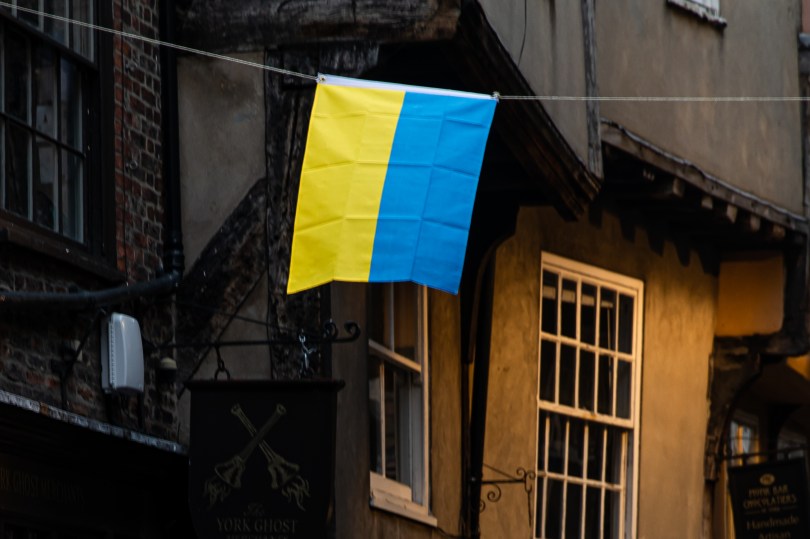
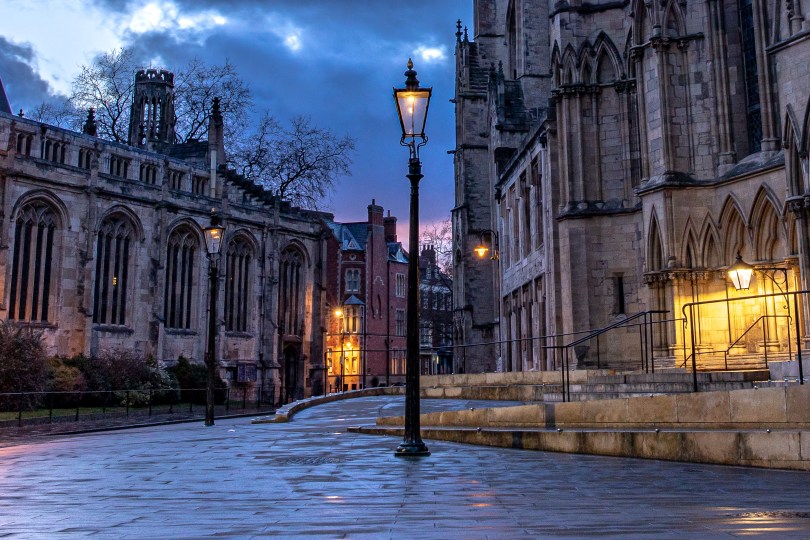
I noted some time ago that the pandemic has generated increasing interest in subjects such as those covered in York’s nightly ghost-tours. At the time I thought this was linked to increased mortality but in the light of a recent Guardian article I wonder if there is another reason. For example, whether the degree of social disruption has sent a significant earthquake through the ground of our perception. What was assumed to be certain was shaken, and many people are in the process of renegotiating the relative meaning and value we construct to make sense of the world. It is not necessarily the case that more people believe in ghosts, but they may be more open to the unexpected and the disruptive.

Prof Christopher French, head of the anomalistic psychology research unit at Goldsmiths, University of London, is not surprised to hear reports of a rise. “There is historical evidence for increased interest in, and reported experiences of, this kind of stuff at times of uncertainty, stress and turmoil.”

Emine Saner, ‘Spooky Britain: how ghosts became a national obsession’ The Guardian, 6 April 2022

How we draw a head, or how we order our experiences of the physical world, may not be as accurate as we would like to think. A significant aspect of religious experience is that the way we accept the world should be questioned and challenged. Today, Palm Sunday, is a day when the Church marks the start of a week in which the presence of Jesus questions a whole range of assumptions. Entering Jerusalem on a donkey, the expectation of sovereignty is placed in a posture of humility and service. This is a King who is not here to stamp authority on a subjugated people. Perhaps more potently, his action in washing the disciples’ feet on Maundy Thursday puts the teaching into action. Jesus’ words and deeds subvert the accepted relationships in society and open the possibility that we see and embrace a more proportionate understanding of our place in the world. A place where we see properly the people who are often peripheral to our vision; recognise our illusions of independence for what they are; and live at peace with our mortality. The foundational stories of the Abrahamic faiths all narrate how our clarity of sight has been corrupted and distorted. On our own we cannot see aright, and embracing this awareness should foster some humility and co-dependence as we seek to determine how best to live.

Outside York Minster on Palm Sunday 2022, the Processional Cross is ready to be lifted high

Christians live with a conviction that the world is not as it should be. The idea of the Kingdom of God points to an altered reality where a different kind of society lives in peace and justice. Having this belief may inspire discontent with the world as it is, as well as energise activity to aid this Kingdom emerge fully into our personal relationships and local communities. In this much there is hope, resisting the temptation simply to accept what is in front of us and ‘labour for what does not satisfy’ (Isaiah 55:2). When it is fully alive, the Christian story challenges false power by its persistent presence and emphasis on servant leadership. It questions those who misuse religious authority, and stands in profound silence before Pilate. At the end of this week those who oppose the petition ‘your Kingdom come’ find that even the certainty of a sealed tomb is not enough to extinguish this outrageous hope.
Melancholy

Last Sunday, as I begin to fill in the Register at a church where I’d just lead a service, my fountain pen broke in two. It was quite dramatic. Large blots of black ink formed on the page; my hand was doused in the stuff; a small amount pooled onto the floor. As far as possible, using tissues and wipes, I remedied the damage – but left an indelible mark of my (first!) visit to the church.

Returning home I turned to Google to see if I was alone in my experience. Apparently not. This trusted model from a good brand was known to suffer the occasional failure of a welded section, causing the split I had just experienced. I also learned that it is reparable, and during the week I parcelled up the parts to send to a UK agent for assessment and onward travel to Germany. Like many items we might have as we get older, not only was it – until this point – a reliable mainstay of my writing, it was also a gift from my father for my 50th birthday.

Although I have only caught glimpses of the BBC series The Repair Shop, it isn’t difficult to understand the popularity of the programme. Things that have aged and become damaged are brought back to their former glory. Through the process of repair we are connected with the past as heritage skills are used by the experts to restore the items. Of course, in the process, the person who has presented the treasured artefact tells us the story about its origin and arrival with the current owner. Often these accounts will involve bereavement and the role of the heirloom has a tangible connection with a vanished world.

The Repair Shop

It may be that this programme appeals to younger people – but I suspect the larger audience will be at the older end of the scale. People who have inherited items or been gifted them by friends or relatives when inevitably downsizing as the years advance. Perhaps some personalities are more invested in such things than others, but I imagine that almost everyone can recognise the feeling that an item from the past evokes a sudden sense of connection to a world where we once lived, and which is now past. Watching Kenneth Branagh’s Belfast last night led us to remark that it was like watching our childhoods, not because of the circumstances of growing up in Northern Ireland, but because of the consumer products, Christmas decorations, gifts and furnishings that were featured in the film.

Now in his late 80s, the unconventional former leader of the Episcopalian Church in Scotland, Richard Holloway, has been reflecting on melancholy in his latest book, The Heart of Things. Holloway’s writing in recent years has been a great blessing, not least because he is sharing with us considerable insight, intelligence and feeling from what might be called ‘the front line of later life’.

“Melancholy has become a kind of grateful sadness at what life has given us but which we can never cling to, because it is constantly passing, disappearing into the past. Melancholics find it impossible not to keep looking back at what time has wrought as it slips away behind them like the wake of a ship”.

Richard Holloway, ‘The Heart of Things: An Anthology of Memory & Lament’ Canongate 2021 p. 9

It is little wonder that so many of us enjoy repairing things from the past and re-lustering what has become dull over time. Through these physical fragments of heritage we achieve something we know is impossible for ourselves. We can pass on these keepsakes in near mint condition, while recognising that we share with their first users the reality of our own change and ultimate demise. Like Holloway, I don’t find this a depressing thought, and will be glad to receive back my fountain pen in one piece and use it for a while longer.

Religions typically invite their adherents to avoid investing excessive attachment to things. Whether it is putting wealth into barns or clinging onto power, the behaviour of Jesus in the wilderness is to reject the beguiling shortcuts to food and sovereignty. In his life and teaching Jesus makes clear that false attachments become a barrier to a spirituality that endures. We can live well with ‘things’ but need to be mindful that everything is lent to us for a time. Jesus doesn’t reject possessions entirely, but questions what his hearers ‘treasure’, aware that material things are not eternal. Living at ease with an awareness of irretrievably passing time can help us all live each day well. It is folly, like the example of Cnut, to think that the sands of the hour glass can be diverted or prevented. We live within their falling, and might live better lives if we were at peace with this reality – and our custody of things for a season.

Useless Beauty

Sadly, neither music nor sculptures stop tanks. Military bands, uniforms and insignia may all demonstrate the way art can be conscripted into morale boosting service, but these are details rather than the main event. Many people will be tempted to see artistic talent in current circumstances as a ‘nice to have’ at a time when many people in Ukraine are searching for bread, shelter, safety and warmth. Yet the countless social media clips of singing children, firefighter violinists, and heavily sandbagged civic statues, suggest a deep determination to make sure that a people’s culture endures.

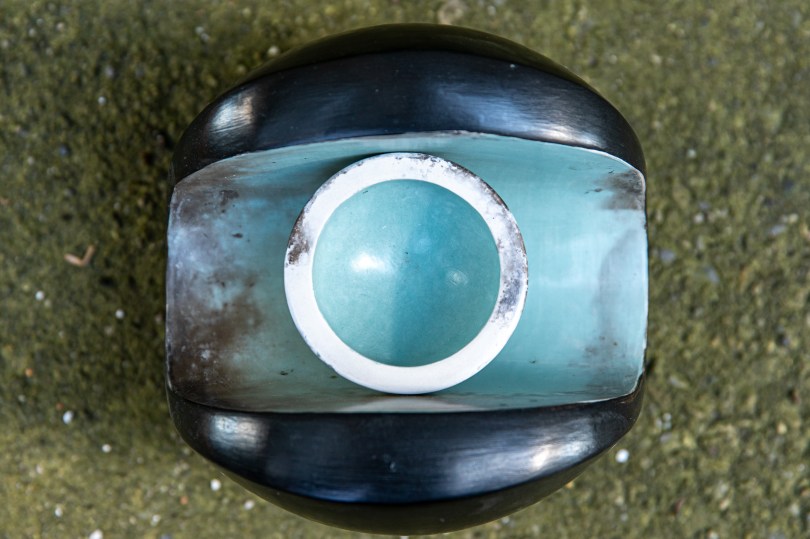
I am a great admirer of the ceramic sculptures created by Antonia Salmon. In a recent circulation to her contacts, Antonia reflects on the state of the world and the point of art:

“In one sense it could be easy to regard the arts as frivolous at a critical time such as this. Both the quality of our Presence and regard for our fellow human beings, and for our planet as a whole, is vitally important at this time. I’m certain that in whatever way you are able you will contribute to the awareness and growth of human connection, to love and to beauty.”

Antonia Salmon, Spring Update 13 March 2022, email quoted with permission
Detail of ‘Winged Form’ by Antonia Salmon

In the same week as receiving Antonia’s email I heard an excellent reflection on lament. This was given by Wendy Lloyd in a Lent series for York Minster. With the title Prayer as Lament and Hope, Wendy set out the idea of prayerful lament as a way of ensuring we continue to hold the vision of how things could (or should) be, especially when life is at its most difficult and destructive. All the acts of art or culture we are seeing in Ukraine suggest that in adversity people need to sustain a vision that amounts to far more than nostalgia. It constitutes a progressive hope focused on a time when all these slivers of Sabbath become the life we lead. As we maintain and re-pattern our creative senses and connectedness, art can make us restless with many aspects of the world in which we are living. As such, lament prevents us colluding with the failings and distortions of the world. In her reflection Wendy quoted an excellent article from a recent issue of The Financial Times:

Lament understands that naming reality is part of what enables one to address it and move towards a new reality. It is a way of bearing witness to injustice when we see it, to the unfairness of life, and yet also to a deeper belief in a world where we can seek help and have the agency to make decisions and take action so that pain and suffering are not the accepted order of the day.

Enuma Okoro, The Importance of Lament, The Financial Times, March 4 2022

When we see courageous acts of creativity and beauty in the midst of horror it reminds us all that we cannot afford to abandon the very things that make human beings their best selves. The arts have an invaluable role in both naming the injustices of life whilst simultaneously expressing the hope and possibility of something far better. In Lent, for Christians, the temptations of Jesus illustrate the tawdry shortcuts that will never achieve the splendour of what might be – of the time when all creation finds its true peace and purpose.

The featured image is an overview of ‘Holding Piece’. Antonia Salmon’s website: http://www.antoniasalmon.co.uk

To Break Every Yoke

I have been fortunate in my life to know very little of war. It has been a distant experience, vicariously brought nearer by television, conversations, films and books. Only once have I ever felt the uncertainty and apprehension that comes with sudden military action. This was in Argentina in 1987, while spending a year in the country working with a mission organisation. I was based in Córdoba where, in April of that year, a Major in the army began a mutiny. A few days later this was followed by a military revolt in Buenos Aires in support of the Major’s action. It was Holy Week, and in the student hostel where I was staying in Córdoba a man in plain clothes took up sentry just outside the property. Some of the students asked who he was and phoned the local police station to check his credentials. Back in the UK my family saw film on BBC News of tanks rolling through the streets of the capital.

Thankfully what became known as ‘the Carapintada’ mutiny was short-lived. The elected President regained control and peace was restored across the country. In places unfamiliar with recent armed conflict it seems unimaginable that life can change so quickly. Yet, in Ukraine, we are witnessing the terrible cost of war in Europe in the 21st century. Destruction is so quick and devastating – building and establishing civil society takes much more effort and far more time. Even if there was a permanent caseation of hostilities and withdrawal of Russian troops, it would take years for Ukraine to be restored to what it was just couple of weeks ago. Given that the conflict is unlikely to end soon I wonder whether I will ever see that country return fully to peace, stability and prosperity in my lifetime.

Is not this the fast that I choose:
to loose the bonds of injustice,
to undo the thongs of the yoke,
to let the oppressed go free,
 and to break every yoke?

Isaiah 58:6 NRSV

Religions as a whole have a mixed track record when it comes to conflict. Many people don’t describe themselves as ‘religious’ due to the way in which religious groups have behaved when it comes to war. More often than not people in the West see religious differences as part of the problem rather than the solution. Without doubt there is truth in the view that just as religions can be brilliant at binding people together, shaping their identify and offering a sense of purpose, so too that cohesion can come into conflict with other groups holding different convictions. Even now we see two Orthodox churches each supporting leaders who are commanding their nations in a war. There are certainly dissenting voices, but the leadership of the churches appears to be supporting the Governments of both countries.

A student from Ukraine speaking at a demonstration in York UK on Saturday 5 March 2022

Speaking at a rally in York yesterday the Archbishop of the city suggested that we have taken peace in recent years for granted – and that ‘peace is something you have to work at’ (BBC Breakfast at 1:18 minutes). Undoubtedly this is a Western perspective as many part of the world have been mired in conflict in recent decades, but it has not been at our door. The challenge for us is to reflect on the extent to which racism has shaped our responses to various crises, which must prompt soul-searching and a change in our attitudes. There is no question that our response to Ukraine is the least we can do – but in many other conflicts there is almost certainly more that we could have done.

For Christians attempting to observe Lent this year there are plenty of passages in the Bible that tell us God is uninterested in token sacrifices. Isaiah describes God’s fast as an active confrontation with the injustices of the world. When you loose the bonds of injustice and let the oppressed go free not everyone is pleased. Pursuing God’s call for us to confront the evils of our age will bring us into conflict with the people doing the oppressing and keeping people captive. This Lent let us recognise injustice and heed God’s call to confront it so that people are freed from suffering. Let us also ask in our hearts why we do not always feel equally motivated to do this for all peoples around the world. Maybe, this year, Lent will begin to break the yoke of our prejudice and allow us to become the people who let the oppressed go free, irrespective of who they are.

The Church of England

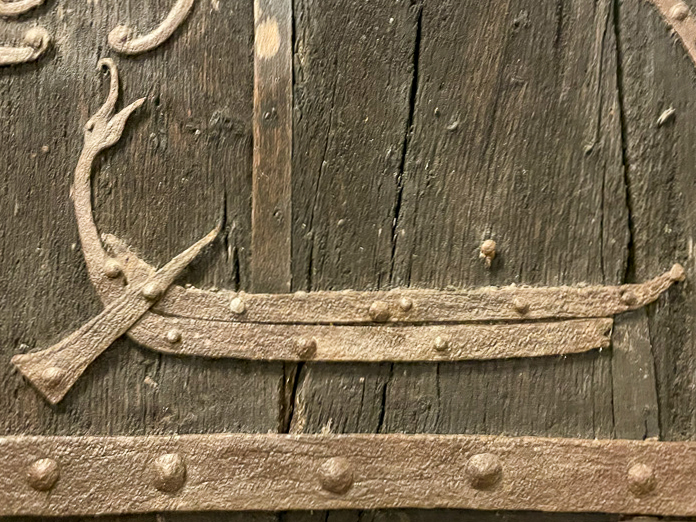
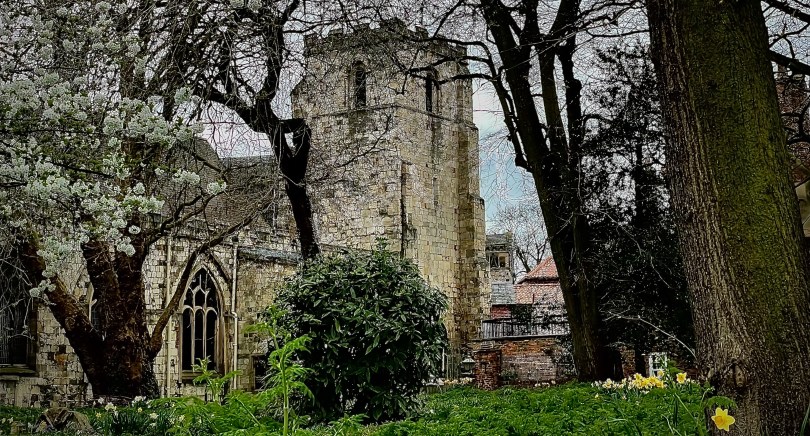
The village church is a gem of a building, a plot of holy ground that has been knelt on for at least a millennium. An iron door hinge depicts a Viking longship, perhaps in tribute to the defeat of the invading Norwegian army that sailed up the River Ouse in 1066. The church features many Norman carvings which, for their variety and quality, are considered to be some of the finest 12th century sculptures in England. It is fabric of exquisite design, a thread of gold pulled across centuries of English Christianity. On the Sunday I attended the congregation consisted of five people. There was no organist and little expectation for a structured liturgy. Together we found two hymns in the church’s copies of Mission Praise which we felt confident enough to sing unaccompanied. It is a story similar to another church I attend, where pre-pandemic double figure attendance has been reduced to seven or eight.

This year I shall have been a priest for 30 years. A curacy began in 1991 with a pattern that seemed relevant and long-established. Sundays could be busy days with an 8 o’clock Communion; 10:30 Parish Eucharist; afternoon baptisms (there were over 80 Christenings one year); Evensong, ending the day with a vibrant Youth Group. Then a move to become a Team Vicar and hospital chaplain on the edge of North London. A small church, but still three services a Sunday, plus the growing work of a chaplaincy that began to be given increasing recognition by the hospital. This led to a departure into full-time chaplaincy with a move back to the North of England. Employment in the NHS lasted for 20 years in total, throughout which I helped out in urban, suburban and rural churches. They were not all thriving, but in each there was a recognisable pattern of Anglican worship, with the Eucharist central to the liturgy of the parish.

It is said that the pandemic has accelerated many changes. The high street is one example as shops struggled to survive the worsening of already difficult trading conditions. I suspect that churches will also find a decline that comes from a mixture of related COVID consequences; a significantly higher mortality rate amongst older people, greater anxiety for some in social mixing; broken patterns of religious practice that will struggle to re-emerge. More broadly, the Church has not been in great evidence during the past two years – it has appeared overly risk averse and hesitant. In an article published recently Rob Marshall writes that once reopened ‘it was immediately clear that there was no swift return to the old ways of doing things’ (The Journal of Christian Social Ethics Jan 2022 p. 56).

The most pressing need for the church is to be an authentic presence, articulating a humble faith expressed in a humane spirituality. It feels that this is something that has become rarer and rarer. Embodying faith and a passion for social justice, Desmond Tutu is no longer with us. Rowan Williams remains a bright light of spiritual coherence and integrity, able to understand and interpret the contemporary world without casting it as the enemy of the Gospel. Listening to Williams speaking in Cardiff in July 2019 I found his analysis accurate, realistic and hopeful. That’s a trinity which is increasingly scarce, and becomes starker as theology departments in England close and vanish. When I studied theology at Hull in the mid-1980s I came to a department already being run down by cuts and unfilled vacancies. I wonder whether other departments of humanity felt (at some level) that this might shift more students in their direction. Voices in support of theology were muted. However, the rest of the humanities must now be realising that what began with theology was not a one-off, but represented a direction of travel. It is likely that history, art, English Literature and the like will soon be subjects for personal hobbies rather than a cornerstone of the academy. Finding value for subjects beyond the physical sciences is getting harder.

In this environment, can the Church of England still have a role? I’ve little doubt that there have been doom mongers in every generation when it comes to the C of E, but the evidence on the ground suggests that things cannot continue as they are for very much longer. As the sea of faith withdraws there will be rock pools that feel as though the tide is still with them, but under the midday sun that illusion will not last long. We cannot go back to some Call the Midwife nirvana – because that never existed. However, there was a time when most people in England knew about their local church – probably even knew the name of the Vicar. Not so much in 2022. Vibrant churches of all traditions are the exception, and look increasingly like islands of survival rather than vanguards of renewal.

The Church of England has mostly been about worship and service, offering a framework of relevant and local spirituality accompanying people’s lives. I don’t think we can or should abandon this – or what’s the point of the C of E at all? We need clergy trained with the knowledge and skill to bridge the cultures of faith and meaning in a post-pandemic world, working with the many gifted people of our parishes. This isn’t simple, but faith is seldom about the easy road – it needs our best efforts of mind, spirit and creativity. It requires love. It’s not clear to me that communities today feel loved by an institution that is asset stripping (vicarages) and reducing professional ministry (vicars). Is it too late to turn that around and give back to places people equipped to care, to teach, to live beside, and to love? To reverse what Paul Hackwood has described as ‘a journey from the local to the central’. Without a serious and realistic commitment to sustain and develop parish ministry, the Church of England risks losing both its purpose and its peculiar genius.

Watery Faith

Sermon preached at the Priory Church of the Holy Trinity, Micklegate, York Epiphany 2 2022

Today we continue in the season of Epiphany – weeks when in the darkness of winter we reflect the light of Christ come into our world. I was going to say, ‘reflect on’ – but the truth of Epiphany is not that we simply contemplate the light shining in the world, but that we invite this light into our lives – to bear something of the brightness of Christ in all that we do, day by day, and among those we meet.

It can feel at the moment, as we listen to the news, that there’s an awful lot of darkness compared with what we may feel to be our faint and flickering lights. Perhaps it was always thus – and our calling to hold our light steady is even more important when the shadows lengthen.

One of my most valuable books is a 1939 edition of William Temple’s commentary on the Gospel of John. Written in nearby Bishopthorpe, when he was Archbishop of York, his reflections on the Gospel are the wise words of both a pastor and a theologian. Yes, it comes bearing the marks of a different era, but many of the points Temple makes are pertinent today. Perhaps even more so in our recent experience because it was written in the upheavals of war. 

The turning of water into wine is the first miracle John describes in what we might call the long epiphany of his Gospel. Out of the four evangelists John is the most consciously theological – he conveys to us what the life of Jesus means for all places; for all times; and for all people. It is magisterial in its scope.

https://en.wikipedia.org/wiki/The_Wedding_at_Cana#/media/File:Paolo_Veronese_008.jpg

Yet given the scale of what John addresses, his account of Jesus is rooted in the real and the everyday. There was a wedding. Across millennia and across cultures, weddings are profound moments of change. Two people become one. Families are bound together – friends rejoice and dance. If you’ve ever seen the Veronese painting ‘The Wedding at Cana’ you can’t miss the sense of overflowing conviviality on his vast canvas. Everyone is talking, laughing and rejoicing – apart from one figure: in serenity, Jesus gazes out at the viewer, a still point amid the commotion. In this picture the figure of worldly splendour is the groom. Decked out in his wedding finery he holds a champagne coupe, staring at it in perplexity as the chief steward tells his tale. ‘How could this have happened?’

John begins this account with the casual comment that it took place ‘on the third day’. Four words that for any Christian signify not the start of Jesus’ ministry, but its joyful conclusion. Another day of reunions and delight: the day of resurrection.

Christ is not a grim task-master in obedience to whom life becomes gloomy. He compared himself to children playing at weddings.

William Temple, ‘Readings in St John’s Gospel’ 1939, Macmillan

This is a miracle that marks the difference between the ways of men and the ways of God. The steward is bewildered. The organisers of this feast have not done what they were supposed to do: give the guests quality wine at the start, and then they won’t notice when you switch to the cheap stuff later. No. What God is doing in Christ isn’t about what we expect – it’s about what we need.

The 17th century Metaphysical poet Robert Crashaw described it with beautifully economy: ‘the modest water saw its God and blushed’.

Offered to God – brought before Jesus – what we may consider the modest water of our lives can be transformed. Perhaps we think the best years are behind us – that the time we have to offer now is weak and watery compared with our past vigour. Tell it to God.

Water become wine.

Faith is all about offering what we have, not what would be ideal. The disciples weren’t the intellectual stars of their generation. They weren’t conspicuously wealthy or influential, they don’t appear to have been known to the religious authorities. Jesus took what was offered and forged the foundations of the church. Time and again people came to him who had little to give, and he took it and blessed it and broke it – and it was transformed.

We may feel like we hold a flickering light of faith – so fragile a gust of wind might extinguish it. This Gospel says ‘don’t worry’. Bring to God what you have. Share what may seem watered down and weak, and Jesus will use whatever we have, and it will be changed. 

In a world where there is so much darkness God asks us to offer what we have. Because, when we place it into the hands of Jesus, who knows what it will become. Two thousand years ago they brought him water at a wedding: today we share wine that becomes the life-blood of our faith – and we go out refreshed, to be God’s light in our world.

Known Unknowns

Much mocked at the time, Donald Rumsfeld’s response to a press question is a largely accurate assessment of the murky evidence on which we attempt to make decisions. Sometimes we know that we don’t have the data about something. Equally, we know that there will be things that blindside us – key pieces of information that come out of the blue. These are the unknown unknowns. Realising that this is the reality in which we work, we need a wise humility about the scope of information that is available to us. One of the dangers inherent in the decision making process is the temptation to only see the information our data tools are designed to collect. This appears to make perfect sense, as we have proven and validated methods to acquire certain kinds of evidence. However, it may also mean that we give scant regard to the unknown unknowns – the inevitable and significant factors that are not amenable to the measurements we can use. These exist, but operate outside our frame of reference.

Reports that say that something hasn’t happened are always interesting to me, because as we know, there are known knowns; there are things we know we know. We also know there are known unknowns; that is to say we know there are some things we do not know. But there are also unknown unknowns—the ones we don’t know we don’t know. And if one looks throughout the history of our country and other free countries, it is the latter category that tends to be the difficult ones.

“Defense.gov News Transcript: DoD News Briefing – Secretary Rumsfeld and Gen. Myers, United States Department of Defense (defense.gov)”. February 12, 2002. Archived from the original on March 20, 2018.

There are useful philosophical approaches to the basis of our knowledge. Often there is a distinction made between analytical (or Anglo-Saxon) philosophy and continental philosophy. The former is very much focused on the known knowns; the latter is more concerned with lived experience and the role of language in the nature of our perception. It follows that continental philosophy has a healthy regard for the scale of information that isn’t amenable to our existing forms of analysis and measurement. Many years ago I was involved in the delivery of a learning module for medical students at a Russell Group university. At one point I asked the 30 or so students to imagine everything they could ever conceive might be known about human physiology and clinical care. The I asked them to tell me how much of that they felt we knew today. With commendable insight and honesty one student responded: ‘sweet FA’. We tend to place great confidence on our current knowledge, which his understandable, but the story of science is that what we knew in 1922 is largely inferior, wrong or misguided, compared with what we know today. The corollary of this is that what we know today is likely to be seen in the future as clumsy, partial or lacking critical information.

It is encouraging that the Templeton Foundation has awarded funding to the University of St Andrews for a project entitled “Widening Horizons in Philosophical Theology”. This work has led to a host of international research studies co-ordinated to inform the development of a renewed philosophical theology, drawing on insights from the approaches of continental philosophy. This is intended to generate an “holistic approach to exploring questions of spiritual discovery and growth”. All this involves close attention to the lived experience of people as we share in relationships and learn more about ourselves and those around us.

In attempting to understand hospital chaplaincy and my place within its practice, I spent time exploring the work of Michel Foucault, one of the continental philosophers. In reading Foucault’s work I felt a strong affinity with his attention to shifting regimes of power and what knowledge this permits or suppresses. As a chaplain I was aware of the authority of medical and managerial discourses and the ebbing regard given to religious and spiritual ways of knowing. As prevailing power relations often seem inevitable and invisible, my formation as a priest and a chaplain frequently seemed to jar with a view of knowledge that most people regarded as self-evident. There was certainly a counter-narrative of patient experience, but this was usually accommodated within, rather than allowed to alter, the terms of what counted as actionable information.


https://templetonreligiontrust.org/explore/new-directions-in-philosophical-theology/

Without doubt approaches aligned with analytical philosophy have delivered a huge amount for many people. It is equally true that a vast amount of knowable information lies outside the systems we use to gather data. These are often aspects of the complex and multi-faceted experience of living that we find difficult to disaggregate into measurable and reportable data. Researchers have designed approaches that attempt to translate this complexity into useful information, but it remains a challenge.

It presents continental philosophy as an open, discovery-oriented discipline whose questions, approaches and methods make it an important partner for a theology.

https://philosophical-theology.wp.st-andrews.ac.uk/vision/

Given the scope and nature of theology, the recognition of inter-connection and open enquiry offered by continental philosophy has considerable potential to inform methods of theological research. Theology has no illusions about how little we know, and the enormity of potential knowledge that surrounds us. Understanding how to act in this context of partial information, in which lived experience is critical but often unamenable to study, is something a theology informed by continental philosophy could make more visible and help us live creatively within all that remains unknown.

The Year that King Uzziah Died

Our memories are often linked to significant events. Will people in the future say, I wonder, that for most of us 2020 was the year that COVID began? Sometimes it is personal recollections that mark the passing of time. Four years ago my father-in-law died on Boxing Day and my mother on New Year’s Eve. It brought to an end a year we shall never forget. For both its global significance and no doubt the sense of personal loss, 2021 will probably live with 2020 as a watershed in our collective perception of time.

It surprises some people that the demise of a King is the theme for a Christmas carol. Michael Nicholas’s composition ‘Twas in the Year that King Uzziah Died’, featured in an afternoon concert on Radio 3 recently and lies in a long tradition of settings for this text (including Dr Francis Jackson CBE, onetime Director of Music at York Minster). The words from Isaiah feel an incongruous and unpromising start to a carol, and perhaps explain why it doesn’t sit in the canon of popular nativity anthems. Equally, it is clear why this moment would remain with the prophet throughout his life. In that year, Isaiah had an astounding vision of the Lord. It was awesome and overwhelming, spectacular and sobering. At that moment, Isaiah sees himself in the presence of God and feels his unworthiness. The text in Isaiah builds the sense of scale and magnificence. The celestial speech of seraphs, and the music and cries of acclamation are so great that the pivots on the threshold shake.

And at their cry the lintels moved apace,
And clouds of incense filled the holy place.

From overpowering beauty Isaiah is asked to undertake a thankless task. He is called to prophecy the destruction of the people; the laying waste of the land; the failure of the crops. After Uzziah’s long reign, during which much of the security and fabric of Jerusalem was restored, the people are to face the loss of everything they possess. Isaiah’s task is to tell prophetic truth – as Alison Phipps puts it:

The beautifully excessive, poetic, edgy speech of the prophet who is experiencing a ‘surfeit of aliveness’ (Scarry 2001: 89) as conferred by the beauty of God’s right relationships marks out what Brueggemann terms a ‘counterscript’ (Brueggemann 2007). This ‘counterscript’ is a steady, careful truth-telling about the wrongness and wrongedness of present relationships between God and God’s (ex-) people; between people and people; between the more-than-human-world (creation) and human beings

Phipps, A. (2010). 7th February: 5th after Epiphany. The expository times, 121(4), 187-188

The message given to Isaiah was that after the terrible time to come, a stump would survive the desolation. Out of this unpromising remnant the life of the people would continue. The role of the prophet is to tell the reality of what is unfolding and foretell the hope that is to come. In this way the prophets steer Israel through times when a better future would have seemed impossible – the accuracy of their carefully narrated truth enabling the people to have confidence in the description of a better world that lies beyond their present troubles. Realistic about current woes, prophecy is capable of stirring people to work towards enduring change.

Photo by Ihor Lypnytskyi on Pexels.com

Last week we lamented the loss of a contemporary prophet – Archbishop Desmond Tutu. He was certainly someone who epitomised this ‘surfeit of aliveness’ and the relentless truth-telling that offered a counter-narrative to both the evils of apartheid and the temptation for retribution. Tutu did not hold his friends to a lesser standard than he held those who had operated and enabled segregation. He wanted to save the nation of South African for everyone and offer the world a different model of community.

As we embark on 2022 we need voices that expose the injustices of our world and challenge short-sighted self interest. The pandemic will not end until we have much better levels of vaccination across the world. Narrow self-interest must rise above the narrative of ‘me and mine’ to recognise and act on our responsibilities to humanity. What is true for COVID-19 is no less true for climate change. We cannot cut ourselves off and live lives disconnected from the poorer nations of our planet. The truth is that we are all in these defining issues together, and we shall prosper, live or die, together. Long may the prophets continue to trouble us – and hold out the hope of our salvation.

Good & Bad Government

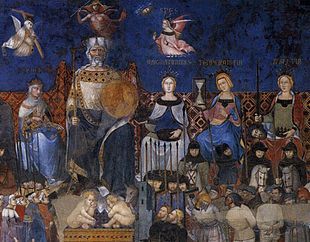
It is sobering to stand before the The Allegory of Good and Bad Government in the beautiful city of Sienna. The exquisitely detailed frescoes by Ambrogio Lorenzetti were painted in the mid-14th century and focus on the responsibilities and consequences of civic authority. It was created at a time when the Italian city-states were evolving efficient and pragmatic forms of government. Notably, as with Lorenzetti’s frescos, this form of politics was not channeled through the Church. Methods of organisation and management were viewed as some of the finest in Europe and provided models for institutions in other lands. For example, Henry VII drew on plans designed for running one of Florence’s hospitals to inform his work to found the Savoy Hospital in London.

The concept of governance, defined as “the way in which public power and authority is formed and used to control and manage society’s resources”.

Laver, R. (2010). ““Good News” in the fight against corruption.” The Review of Faith & International Affairs 8(4): 49-57.

During the Reformation in England there was a decided turn towards the centrality of governance. This isn’t unexpected given the King’s determination to consolidate his position at the pinnacle of authority. Nor can it be surprising that an assertive renewal of governance would clash with anything that might appear to trespass on sovereign power – not least the Church. From the mid 1530s ‘Henry remained insistent on his royal supremacy for the rest of his reign’ (Orme, 2005). The government of Church and State were to be united in the King’s person.

“and shall have and enjoy, annexed and united to the imperial crown of this realm, as well the title and style thereof, as all honours, dignities, preeminences, jurisdictions, privileges, authorities, immunities, profits, and commodities to the said dignity of the supreme head of the same Church belonging and appertaining”.

Henry VIII ‘s Act of Supremacy (1534)

The consequences of this spiritual and temporal unity ran wide and deep. Sovereignty was projected into public life in ways that proclaimed the place of the King as governor of all that lay in the Kingdom. It became customary to replace sacred images in churches with religious texts and the Royal coat of arms. Tellingly, among the options available to address God in prayer, the language of governance became more pronounced. The poorest in society, those availing themselves of re-founded hospitals, made their prescribed prayers to: ‘O Lord, our Governor’.

Good and bad governance is a persistent theme in many books of the Bible. The prophets in particular spoke out for just government and against corrupt or self-interested forms of leadership. Ruling with justice was seen as the fulfilment of God’s will for the people. The initial verses of Isaiah 32 convey the sense of desire for a sovereign righteousness that will bring peace. With the right King the ‘princes will rule with justice’ and be ‘like the shade of a great rock in a weary land’. The prophet articulates the longing of the people. The time for the rule of villains and fools has passed.

 “A fool will no longer be called noble,

    nor a villain said to be honourable”.

Isaiah 32: 5 NRSV
Photo by RODNAE Productions on Pexels.com

While it may sound like a festive after-dinner entertainment, ‘when is a party not a party’ involves far more serious issues than its frivolity suggests. It isn’t possible yet to calculate the sheer cost of lockdowns for people, only time will reveal the consequences of isolation and shielding. For some people the impact of COVID-19 deprived them of a last Christmas with their nearest and dearest.

We can all say silly things and forget the wider context of life around us, but at 10 Downing Street it feels more like an infestation of disdain rather than a slip of the tongue. A Prime Minster who began the pandemic bumptiously telling reporters he’d been to a hospital where there were COVID patients and shaken ‘everyone’s hand‘. Then he was in hospital – but appears to have learned little from the experience. It certainly didn’t appear to increase his determination to practice prudent infection control. A Government that didn’t even bother thinking what COVID would do to care homes, until the mounting death toll made it unavoidable. A Secretary of State for Health who broke the COVID rules and resigned. Vast amounts of money paid to poorly vetted suppliers, to do at huge expense what other countries managed far more economically. The handling of Brexit.

I can only begin to imagine the lurid frescoes Lorenzetti would need to paint to capture this litany of maladministration, self-interest and contempt. ‘Bad Government’ is too weak an epithet for what we are living through, experiencing and enduring.

The Speed of Love

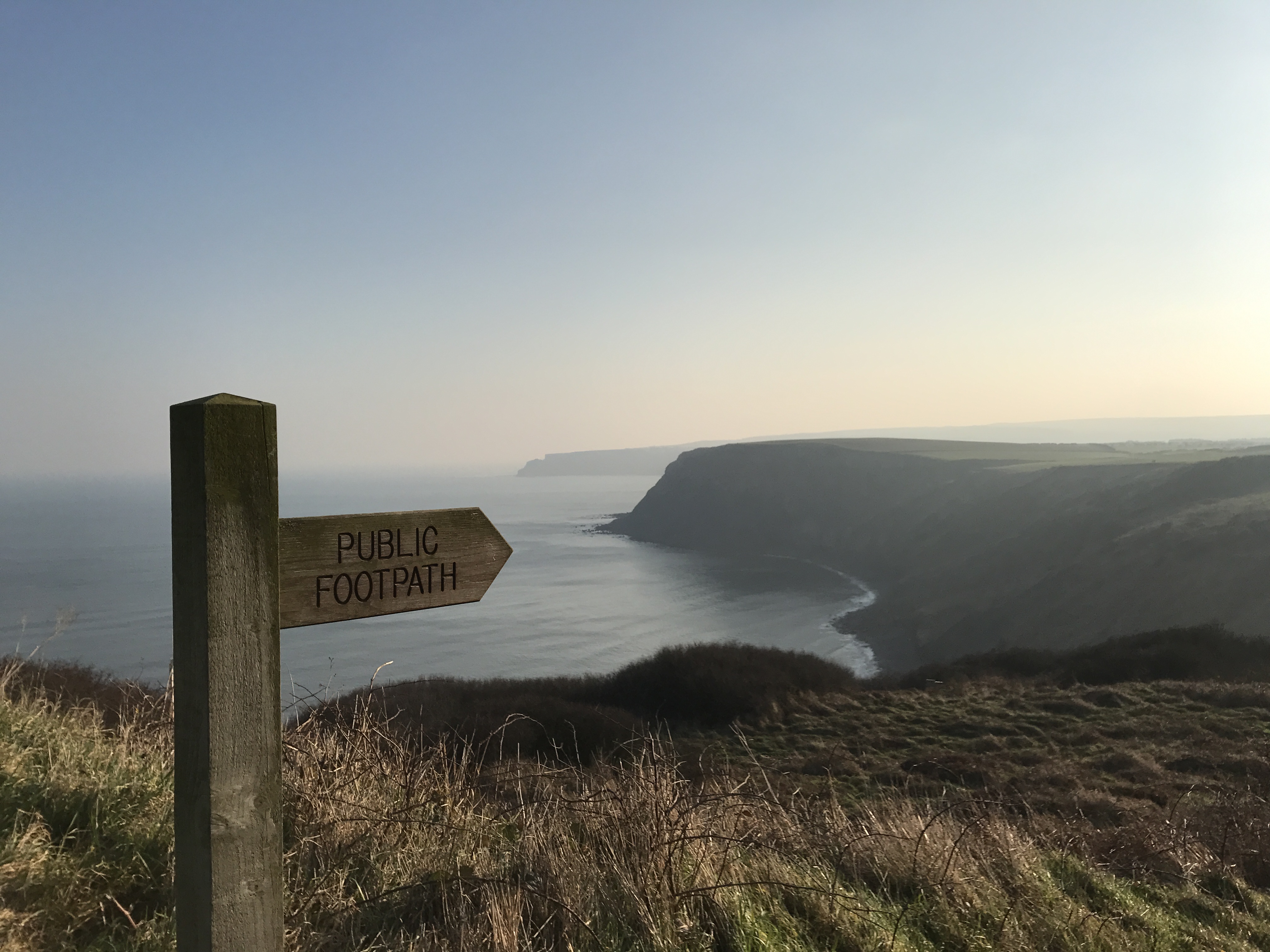
I have always been intrigued by liminal places. The kind of setting that is neither here nor there, one thing nor the other. Sometimes they are the border lands where people live, perhaps working in one country and supporting a nearby football team in another. In places they are the dividing line – the point of passage from one landscape to a very different terrain. I associate this with the feeling of a sea crossing to an island, or the steep ascent and dramatic drop when crossing the North York Moors. These are generally uninhabited places where a crossing can be closed suddenly in winter weather. Often they assist the sense of separation from a familiar context – a good way to mark a different place and time; something unusual.

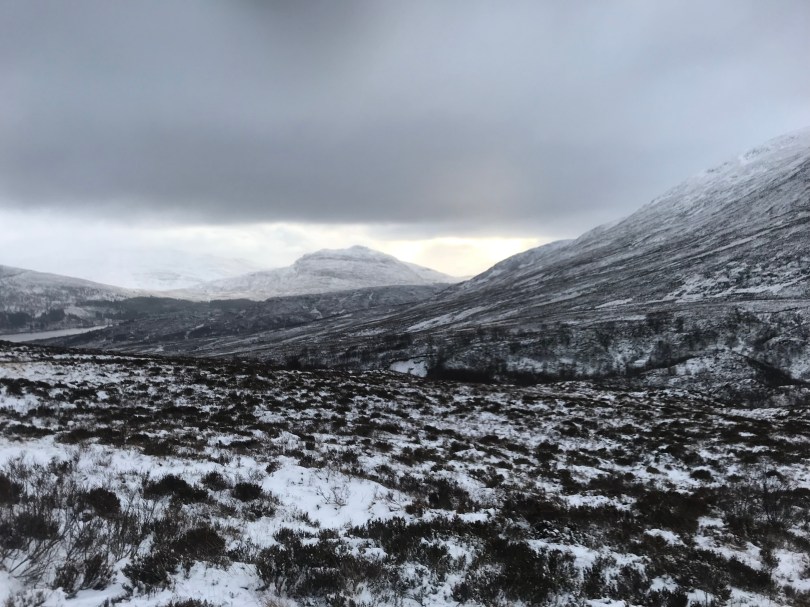
While they may not be crossing places from one kind of setting to another, even a country walk has the power to loosen our attachment to busy thoughts. Watching the excellent BBC 4 series Winter Walks I’ve been struck by the spiritual qualities of these seemingly ordinary country rambles. Unlike so much that grabs media attention today, these are not death-defying climbs up impossible slops, nor heroic marches across vast distances. Their route and length are decidedly modest. However, winter no doubt reduces the number of people the walkers encounter, so an awareness of the adverse elements and a spirit of reflective solitude emerge.

A good example of the spiritual qualities of a walk came in the episode featuring Alasdair Campbell. He began by a Yorkshire force (waterfall) with his surroundings covered in light snow. He went on to discuss his challenges with mental health. Reading a small inscription on a bench moves him to speak about the dead and how he still feels to be in their company. Family features, as it has so often, when he recalled childhood days spent in similar landscapes growing up in Yorkshire. There is a reflection on silence and sound. Throughout these episodes brief texts appear on screen stating the distance covered and the journey to go. There are occasional reminders of how many minutes it is until sunset, providing a factual commentary that complements the hints of finitude present in the walker’s words.

There is growing evidence that this kind of walking is good for our mental health. Sadly, as it appears to be the only measure we value, this benefit is quantified as a financial saving in the provision of health and social care services. This limits the broader recognition that many kinds of walking are primarily spiritual and holistic experiences. For people interested in faith and belief it comes as no surprise that these winter walks (mini pilgrimages?) stimulate this sense of spirituality. In 1980 the Japanese theologian Kosuke Koyama published his book Three Mile and Hour God. The idea of a God who goes with us at walking speed has a lot of appeal. It can feel that in Western life there is an irresistible and inexorable drive to go faster tomorrow – to use our time efficiently so that there appears to be more time. Slowing down to a walking speed, as the BBC series illustrates, effortlessly foregrounds spiritual themes.

“God walks ‘slowly’ because he is love. If he is not love he would have gone much faster. Love has its speed. It is an inner speed. It is a spiritual speed. It is a different kind of speed from the technological speed to which we are accustomed. It is ‘slow’ yet it is lord over all other speeds since it is the speed of love”.

Koyama, K. (2021). Three mile an hour God. SCM Press.

Advent is a good time to think about journeys. According to Luke’s gospel, after the annunciation, Mary hurries to a town in the hill country to visit her cousin Elizabeth. It doesn’t sound like an easy journey, and Mary remains in Elizabeth’s home for three months before returning. This time (we assume) well into her pregnancy, and carrying a fragile flicker of hope through the world’s darkness. Other journeys will follow – for registration in Joseph’s hometown; for shepherds from the fields; and, in due course, figures from the East putting their faith in a star. This is without mentioning the flight into Egypt and the echoes of Exodus. These were mostly slow and risky journeys by our standards.

Some journeys are inevitable. No matter how ill prepared we are, the 25th of December will come (and go). Wherever possible people will travel to be with loved ones. Sometimes those journeys begin several days before Christmas – with visits to others along the way. There can be an inevitability about the distance to be crossed and the day that will come. How we use these times is very much down to us – to simply get to our destination, or allow the journey to sift our thoughts and feelings. Reflecting that all of life is a journey – until it is not.

“This year I don’t know how to find

the way to Christmas. Instead

my mind replays memories

I’d thought to burn – the first-blows

of my youth.

And yet Christmas

and my family will come;

have already begun their journey South,

and there is solace in that …

From ‘Midwinter’ by Anne Walsh