Holy Zadok

Handel’s anthem, composed in 1727 for the critical moment of a coronation, the anointing, is the only piece to have been used on all subsequent coronations. It is not hard to understand why. It is magisterial, with a substantial introduction which swells and calms, sustaining a growing sense of expectation. When the choir enters, it is with a sudden and dizzying burst of sound. The text from 1 Kings is brief. In many respects it is a prosaic passage, describing with an almost matter-of-fact tone the actions of a priest and a prophet. Centuries later, in the hands of Handel, it is transformed to embellish the coronation of a British sovereign, conveying an auspicious announcement and the response of the people.

Zadok the priest and Nathan the prophet
anointed Solomon king.
And all the people rejoiced and said:
“God save the King!
Long live the King!
May the King live forever!
Amen! Amen! Alleluia!”

The text of the anthem from 1 Kings chapter 1

In its context the words used in the anthem signify rejoicing after uncertainty and discord. Another of David’s sons is attempting to take the crown, even as his elderly father still lives. The promise of succession had been given to Solomon, but this suddenly looks precarious. To avert civil war or other disorder, David orders Solomon to be taken to Nathan and Zadok (two figures who had not sided with the contender) – so that he can be proclaimed King. This action seals the succession and prevents any violence.

The BBC Radio 4 episode of Soul Music which centres on Handel’s anthem is a fine reflection on the technical achievements of the work as well as its past and present reception.

Hearing Zadok the Priest played for the Platinum Jubilee in York Minster this weekend, with the organ recently restored, has been a highlight of the celebrations. The well known notes, the tension of the moment and the release of expectation, never lose their power, despite their familiarity. As with so much of the symbolism of a coronation, each reference carries links to other times and occasions. Sometimes these feel fully justified, while at others it can amount to a forced connection which may be far removed from its original meaning. The text in 1 Kings, with its reference to Zadok and Nathan, appears to convey social order; the fulfilment of lawful succession; righteousness and fidelity.

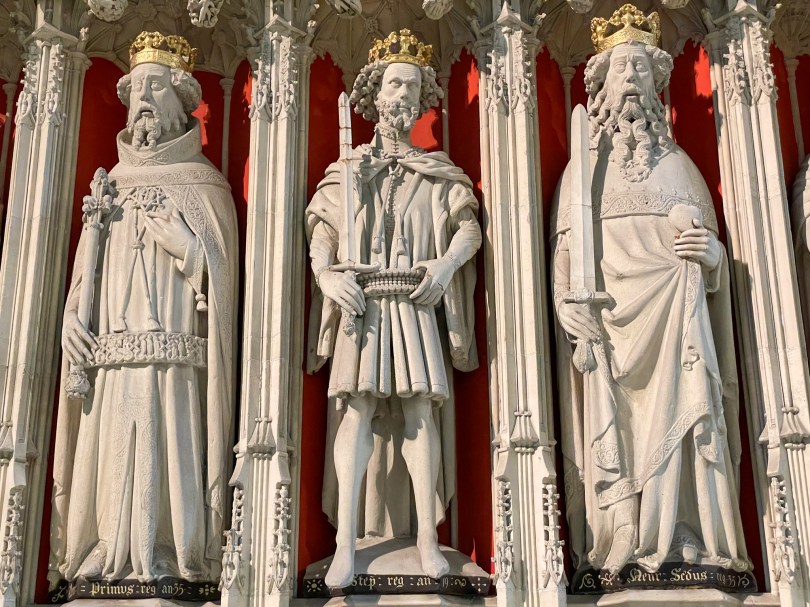
David and Solomon, The Great East Window, York Minster

Events conspired to bring Elizabeth II to the throne – it could easily have been otherwise. Across seventy years her presence has provided stability in the winds of political change. Perhaps one day we shall know what the Queen thought about the political leadership and direction of the country. I cannot imagine that the last decade will have filled her with satisfaction as her long reign enters its twilight years. In the UK, even as the pandemic began, 27% of children were living in poverty. Recent rises in energy costs and the overall impact on the cost of living are likely to increase that figure, despite Government assistance. The gap between wealth and poverty has ballooned during the pandemic and it will take more than charity to transform this dismal trajectory.

Zadok and Nathan ensured orderly succession. Prophets, priests and kings did not always agree – but the tensions between these roles could work creatively for the people as a whole. Checks and a recognised dispersal of power are always needed for good governance, but so too is a common desire to see the whole community flourish. There has been much that is good over the last 70 years, but the reality of an ever-widening gap between wealth and poverty requires determined action if we wish to see everyone enjoy both peace and prosperity. This weekend has witnessed a rightful sense of celebration, but to honour the Queen and her unique role in British public life we cannot pass by the pressing issues of our time. A fitting legacy for this remarkable reign will be a society in which the fear of injustice, and of poverty, will begin to fade.

In Memory of God

Sometime in the late 1930s or early 40s, my father was very naughty. He used to tell me the tale with a chuckle, as he recounted the time he carved his initials into a church pew. What remained most notable in this memory was the rationale that accompanied his telling off. He was told, rather sternly I imagine, that he: ‘shouldn’t do that because people pay a lot of money to have their names inscribed in church’. As always in Lancashire, people cut to the chase.

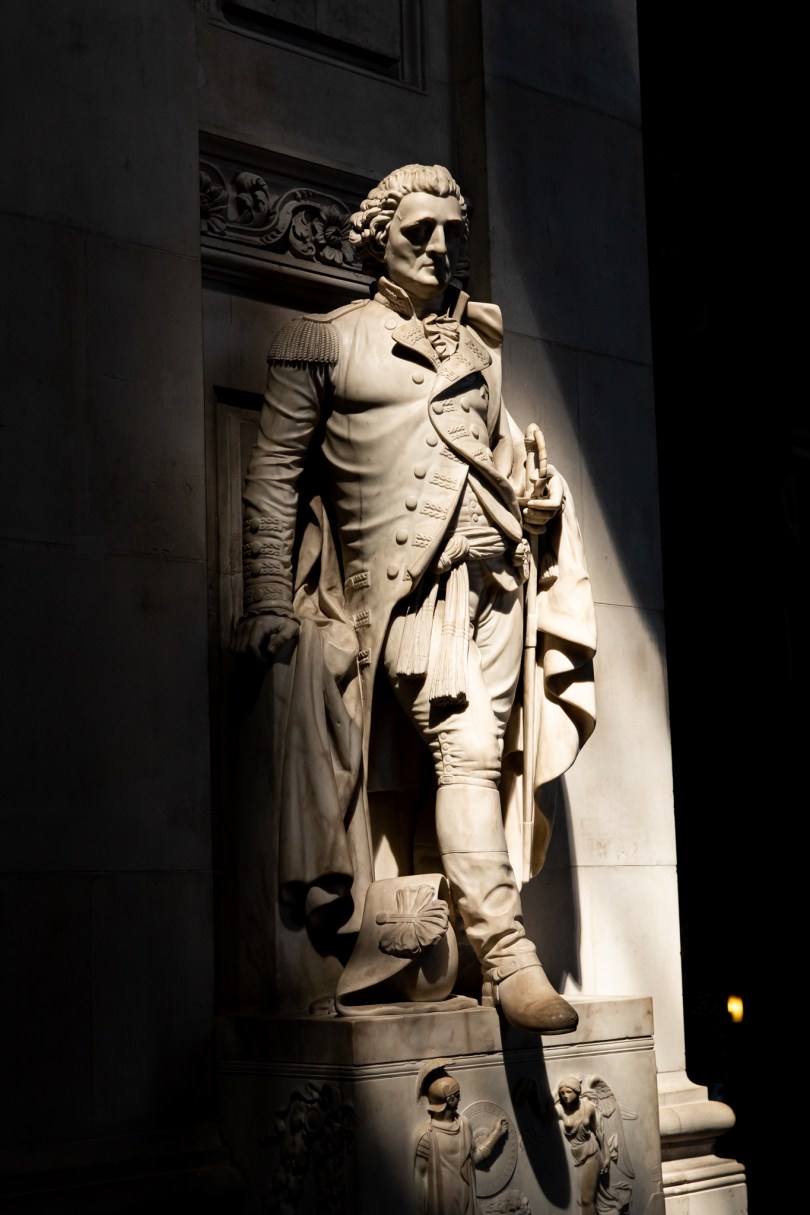
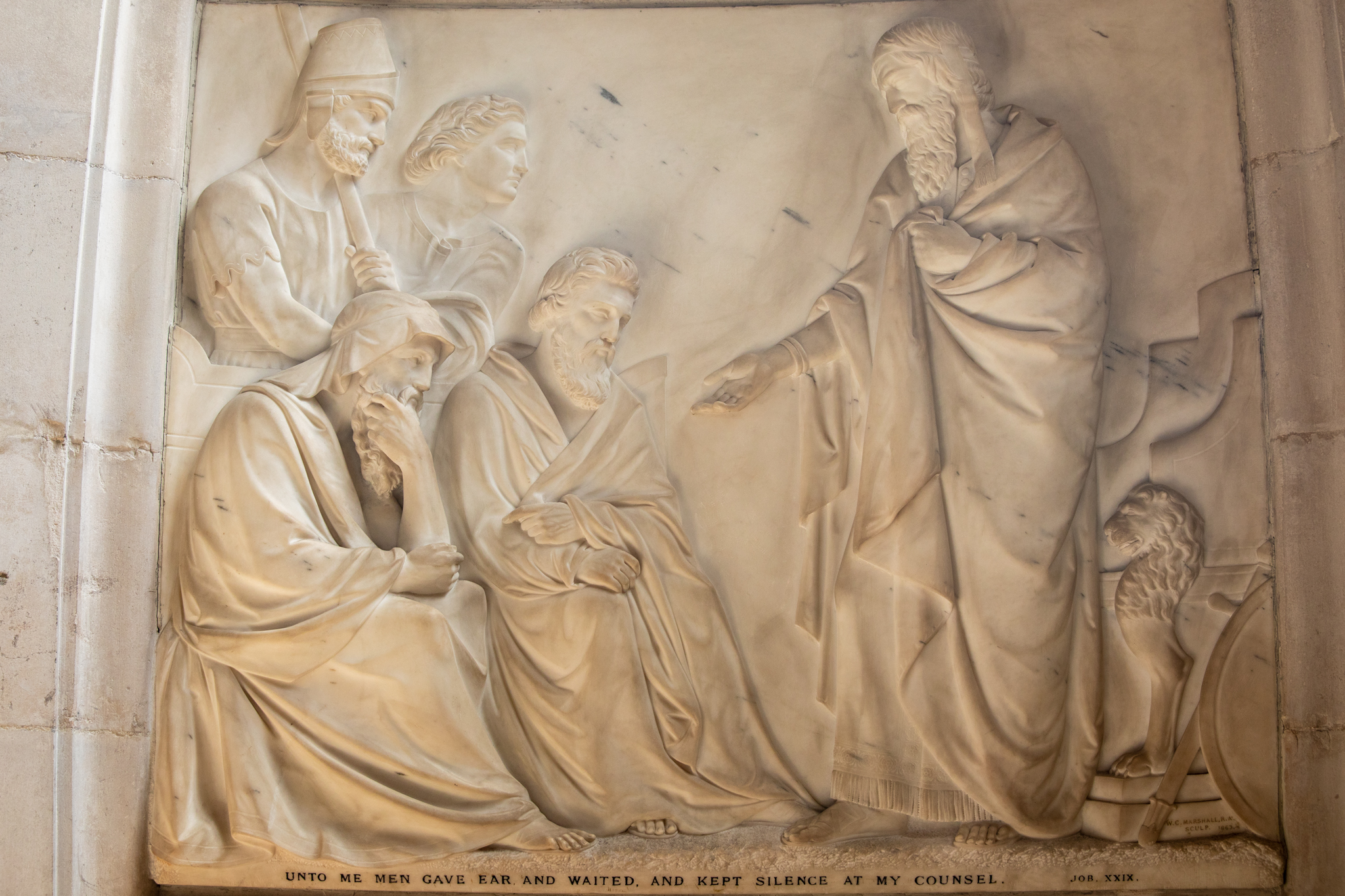
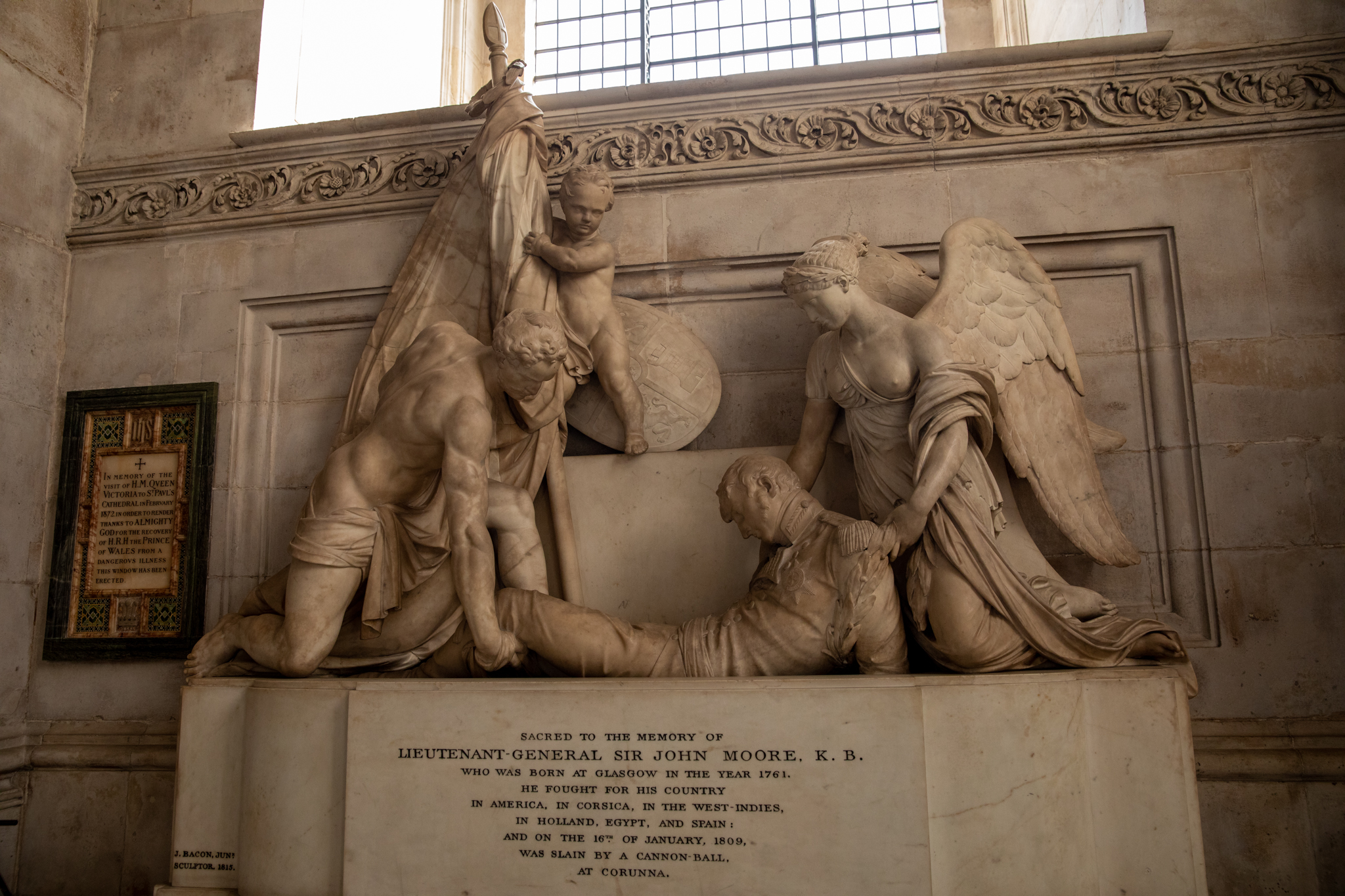
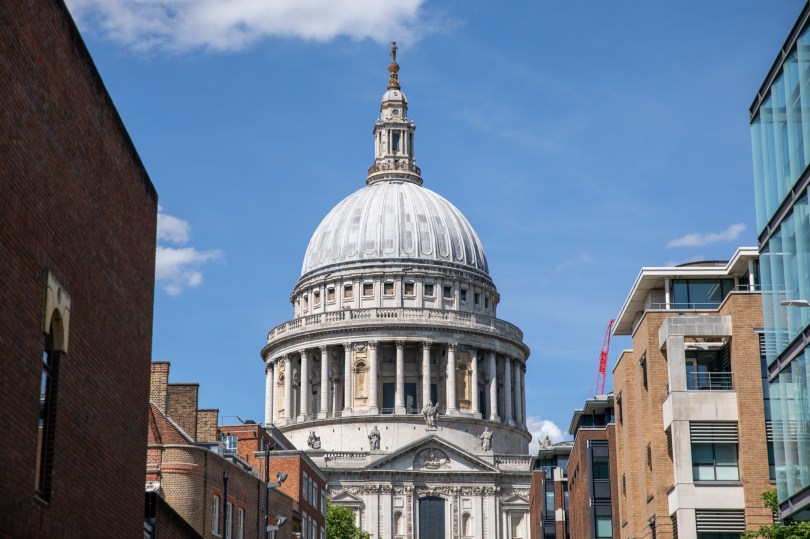
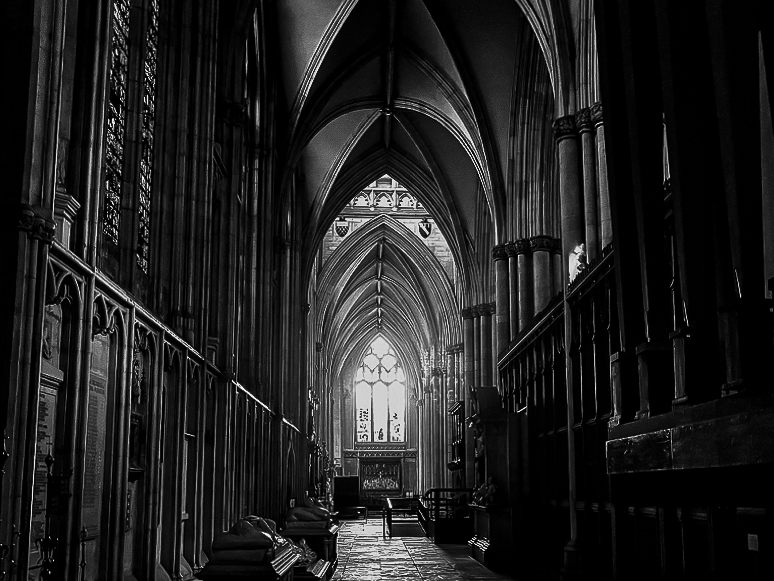
On a recent visit to St Paul’s Cathedral I was reminded of this as I walked amongst the multitude of monuments. To amble down the aisles of this cathedral is to be surrounded by the ghosts of Empire – set out either in the commemoration of notable clergy who converted people around the world, or in the words written across the tombs of generals; admirals; and sea captains. I doubt there are many omissions from the references to far flung parts of Empire that once came under British rule. Across the acres of white marble I was left wondering what untold stories lie behind the eulogies of these historic leaders. In contrast to the praise of their actions, the voices of the acted upon are absent.

There is no doubt that these monuments signify both money and power. Set in the midst of the City of London, the figures can be seen as the immortalised heroes of a mercantile thirst that brooked little opposition. The inscriptions carry numerous references to the East India Company. There is something very disturbing about a spiritual place that glorifies colonial power and is silent about a legacy still blighting people around the world. This substantial void at the centre of Capitalism – Conrad’s ‘heart of darkness’ – is a fitting mausoleum for the sons of Empire.

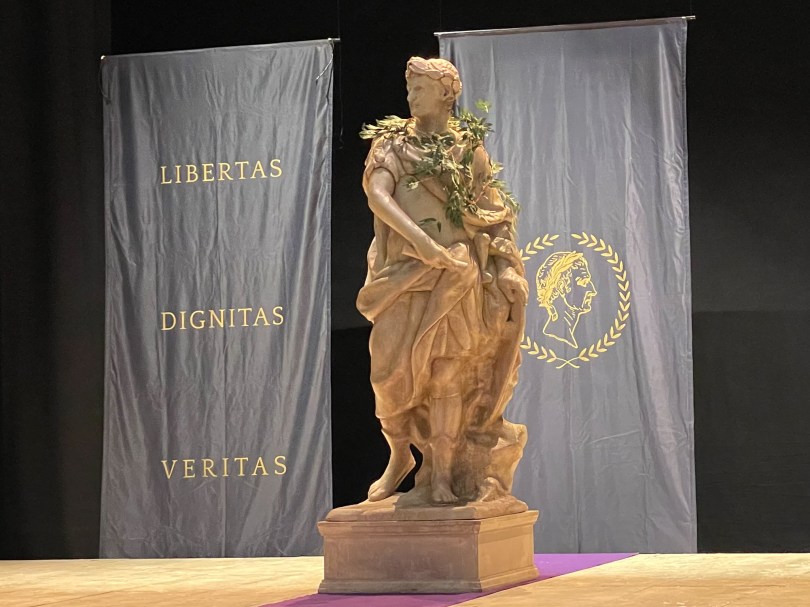
In the current issue of Crucible, The Journal of Christian Social Ethics, Carlton Turner writes about the possibilities of decolonising theology. This is a challenging task as theology was recruited into the work of colonisation from the outset, or at least from the moment when a faith smelted in the experience of military occupation was integrated into government. The statue of the Emperor Constantine outside York Minster is an ever present reminder that Christianity, once on the margins of Empire, suddenly came to occupy a place at the centre.

… for people within the colonial situation, the very way theology has been done, and continues to be done, is problematic and perpetuates their own annihilation.

Turner, C. ‘Give us Healing Balm: Decolonising Theology Through African Caribbean Eyes’, Crucible April 2022 pp. 16-23.

The theology of the privileged never fully absorbs the theology that germinates in ‘base communities’, but the struggle and cost of sustaining local and authentic theologies is far from easy. For some theologians, acquiescence to the status quo is tantamount to self-harm or accepting an unchosen and enforced sacrifice (in favour of the West). Trust in Theological Education, written by Eve Parker and just published by scm press, adds further consideration and challenge to the assumptions of a theology written mostly in places of privilege and power.

When we listen to a greater variety of voices we have the opportunity to understand the damage which our theology has created, and the risks arising from a ‘normative’ Christianity applied across a range of contexts. For observers from these contexts it must often seem that these fine statues glorify man and, at best, give a modest nod to the memory of a God who made the inconvenient choice to be born amongst the poor of our planet. Every day in St Paul’s the following words are said or sung. The incongruence feels too large to reconcile:

He hath shewed strength with his arm :
he hath scattered the proud in the imagination of their hearts.
He hath put down the mighty from their seat :
and hath exalted the humble and meek.
He hath filled the hungry with good things :
and the rich he hath sent empty away.

The Magnificat, Book of Common Prayer (Luke 1)

Donne and Dusted

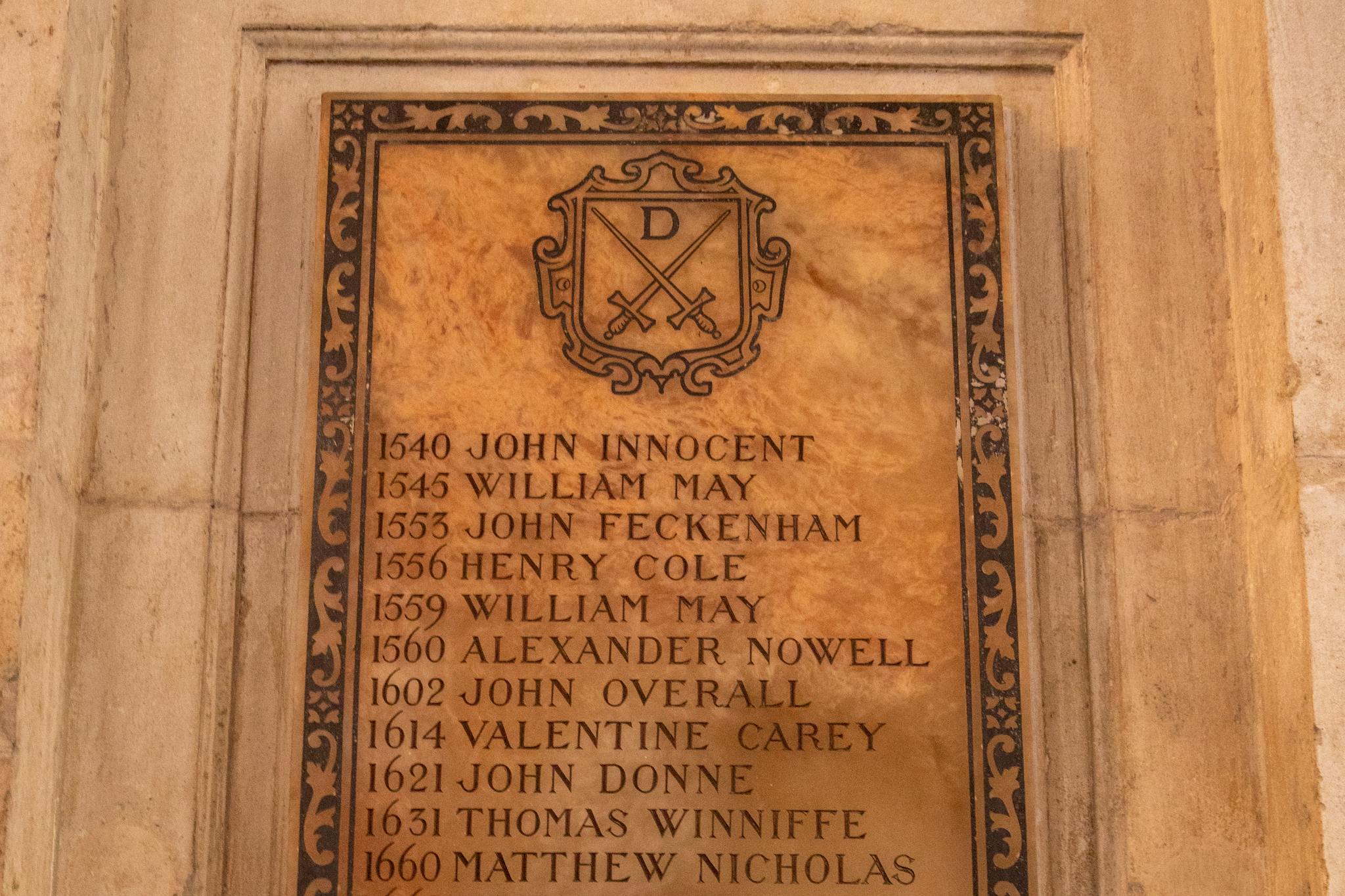
I was very sad when John Donne died. This wasn’t recently (in fact, 1631), nor is it a plot spoiler, but is retold in the culmination of Katherine Rundell’s absorbing recent biography of the poet. Like so many in his generation Donne had a momento mori close by on his desk – a reminder of mortality present at all times. To modern sentiments this may seem mawkish, but in an era when sudden death was far from rare, it was wise to live with an active awareness that your current experience could came to an abrupt full stop.

The awareness of death is a characteristic consistent with Donne’s relentless attention to the material world, no matter how grim or gritty it got. There was nothing too impolite or unseemly to be dragged into the pulpit of St Paul’s Cathedral and shared with the multitudes. Life, Donne told his hearers, is like a journey between a gaol and a place of execution. A short trip that ran from crime to punishment, darkness to death. Except that this wasn’t the lesson of his analogy. Donne was provoking the congregation to contrast our human inattention with the alertness of someone knowingly going to their death. As he put it, on the journey from Newgate to Tyburn, no one sleeps. Yet, Donne argues, we are heading towards the same certainty spending significant parts of the journey asleep. His call echoes the Biblical and Advent theme that ‘now it is time to wake out of sleep’. To be stirred up, ‘now, in the time of this mortal life’.

Donne is not a wholly attractive figure. As a financially challenged poet his obsequious letters to various grandees grate in a more egalitarian age. His rise to high office in the Church of England required careful nurturing of royal connections. Despite this, he brought to the Deanery a fierce intellect; an astonishing mastery of language; and a theological sensitivity to the complexity of the times. The combination of his gifts and experiences enabled Donne to further what we might now call ‘the Anglican Project’ – establishing the groundwork for an expression of Christianity shaped by the heritage and nuances of English experience. There was certainly an appetite for his approach, with large crowds flocking to hear him preach. A few years ago, an experiment took place to see how audible Donne’s sermons would have been from the outside pulpit at St Paul’s, surrounded by hundreds of people.

The memorial to John Donne, St Paul’s Cathedral

Perhaps the most curious, visceral and haunting detail in Rundell’s book describes Donne’s preparation for death. As the end approached Donne saw its prospect as one final dramatic moment. He ordered an urn and shroud to be made, then lay in the shroud so an artist could sketch his appearance at full scale. This became the image from which his statue was carved following his death – still in St Paul’s today, one of very few to survive the Great Fire of 1666.

“Donne made himself ready; part, perhaps, of a desire to have things done exactly as he had imagined them – an artist of ferocious precision, dying precisely. His last words – ‘I were miserable if I might not die.'”

Rundell, K, ‘Super-Infinite: The Transformations of John Donne’, Faber 2022 p. 290

It is fitting that Donne is most often remembered for his poem beginning ‘No man is an island’. Fitting because it addresses two themes which ran throughout Donne’s life: mortality and connectedness. He lived at a time when the fusion of the material and spiritual, the sensory and the abstract, was an acceptable way to write about the world. Given the ubiquity of death, including young family members, mortality made Donne’s life an ever changing landscape. Undoubtedly these losses were never welcome, but they contributed to a vivid celebration of life and determination to be awake and alert. Donne notices the world in a way that comes from an acute sense that each and every day is gift that will not be repeated.

Two or Three

Understandably, Evensong is about the ending of the day. As I have written before, it offers a space for reflection and prayer rendered in words that are centuries old. Once a staple ingredient of the worshipping diet of the Church of England, fewer and fewer churches hold the service with any regularity. Cathedrals still maintain its place as a mainstay of their existence and many are rewarded with appreciative congregations. York Minster saw many hundreds of people at its Easter Sunday Evensong, but this is the exception rather than the rule.

Recently I attended Evensong in the pretty port town of Whitby. I was fortunate in that my stay coincided with the one Sunday in the month when Evensong is held in one of the Anglican churches. This information wasn’t difficult to find on the internet – but I note that the local paper, the Whitby Gazette, no longer carries a listing for local church services. The publication has always felt a little retro (I’ve no idea how common the practice is) but until the pandemic there was always a sizeable entry reporting all the service times for Whitby and the surrounding villages for the forthcoming Sunday.

‘The other response to decline has been the creation of complex patterns of rotation of services’.

Bruce, S. (2011). Secularisation, church and popular religion. The Journal of Ecclesiastical History, 62(3), 543-561.

The service I attended took place at 6 pm in the large Victorian church of St Hilda, built in 1844. As I have found with a number of churches at service times, there was no external indication of what was about to take place. Admittance was by a modest door that stood open, but with no signage inviting entry. Coming to this service required a confident churchgoer. While there was no one there to greet worshippers, books with a service pamphlet were prepared and waiting on a table. Arriving just a few minutes before the service time I found that I was one of three worshippers sitting in the nave. On the hour a crucifer and robed choir in double figures entered via what appeared to be a side chapel, and the service began.

It was a good service. Three hymns were sung, all familiar to me and strongly led by the choir. There was no sermon. Yet in a town of thirteen thousand souls, with many more visiting as tourists on a Bank Holiday weekend, the congregation never rose above three (two of whom were clergy). I’m not very interested in nostalgia, but there may well be a place for lament. For Evensong aficionados the service was listed in the Choral Evensong website, but that made no discernable difference to the attendance. Although over a decade old, I think Steve Bruce identifies accurately many of the problems of religion in these coastal communities, and more widely. Numbers have dwindled; clergy are fewer; sustaining services across multiple benefice parishes has led to complex timetables; as churches have closed a wider network of folk religion has diminished. In all the counting done by church strategists, the existence and role of popular religion is mostly neglected. The people whose children went to Sunday school; who attended the Carol services and coffee mornings; who turned to the church for occasional offices. Throughout my ministry, this group has been a vital part of my pastoral ministry, whether as residents in a Lancashire suburban parish; as patients in hospital; or amongst the people now living into their tenth decade and beyond. The mood music of the C of E seems to require this group to make a decision: be a disciple or be gone.

‘a notional sense of affiliation and occasional and peripheral involvement in churches and chapels requires that there be functioning churches and chapels close at hand’.

Ibid.

While there are groups now fighting a rearguard action, such as ‘Save the Parish‘, the spiritual capital already squandered through closure, complexity and theological withdrawal, will not be regained. It was built over centuries and lost in a generation. To many of us the ‘disciple’ mantras from the centre sounds like an ever-narrowing agenda. The ark may have escaped our reach, but we are downsizing to lifeboats in order to accommodate the faithful few and float over an ocean of the un-saved. This pays little regard to the everyday sacred; the resources of our churches as wonderful places to ‘be’ (when they are open); the honest striving of people to make sense of their lives.

In the glories of High Church Victoriana, Evensong can feel like the faithful performance of am-dram Shakespeare. A mystery play forged through the fires of Reformation England, with local actors adding their accents to the long, long tradition of Anglican spirituality. Words that name our wretchedness, speak of the dead and lay hope in the resurrection. In a town where the physical landscape is used to such good effect, and where jet became the jewellery of mourning, I wonder if there is any chance that new life might be breathed into this ancient worship? Before we give up the ghost on this liturgy, perhaps we should consider the possibility of new links and relationships. Surely, if any piece of worship was ever made for the Goths who congregate in Whitby, it’s Choral Evensong.

Dawn Leads on Another Day

The break of day is a moment that divides and defines the ambit of our experience. Perhaps we find it mundane and predictable, but each dawn is momentous. For most of us it stirs us to waking and unfolds the day ahead. I never fail to feel that each day is unique and marvellous – a never-to-be-repeated opportunity. Of course, days will recur: but never the same day. Like the blare of a siren we are aware of their approach, and with rapidity they fall behind us. There are countless days we shall forget and a small number that will remain with us until the grave. In literature the risks and possibilities of each day have been a foil for playwrights and poets:

Night’s candles are burnt out, and jocund day
Stands tiptoe on the misty mountain tops.
I must be gone and live, or stay and die.

Romeo and Juliet Act 3 Scene 5

It is little wonder that in Genesis the first words attributed to God are: ‘let there be light’. It is the division between light and dark which forms the fundamental aspect of life, perhaps the first element of conscious human awareness. It grants us the experience of time. In Mark 16, just as God created the first day, so the women go to the tomb ‘when the sun had risen’. It is another day; a second creation; the moment when ‘light shines in the darkness’ and humanity no longer has to dwell in night. For, although in creation day was divided from night, when the Psalmist thinks about God: ‘even the darkness is not dark to you; the night is as bright as the day, for darkness is as light to you’ (Psalm 139). Whether in the darkness of rooms behind locked doors, or when, ‘just after daybreak, Jesus stood on the beach’ (John 21) the resurrection stories contrast night and day. Easter is a daybreak that will never darken.

Converting 4 million tons of matter into energy every second, the sun constitutes about 99.86% of the mass of the Solar System

Perhaps the reliability of the sun’s daily appearance dulls our appreciation of what is taking place – both in space and time. Our brief lives are lived in orbit around this ancient and enduring fixed point. It was not always here, and it will not last forever, although in all probability it will outlive humanity. While its output fluctuates, to our senses it is constant and unchanging. Our days, months, years and hours are defined by its appearance. Like so many things, including historic perceptions of earth’s centrality to the universe, the sun’s significance is estimated from a human perspective. Despite all our technology and progress we have no ability to alter or influence its existence.

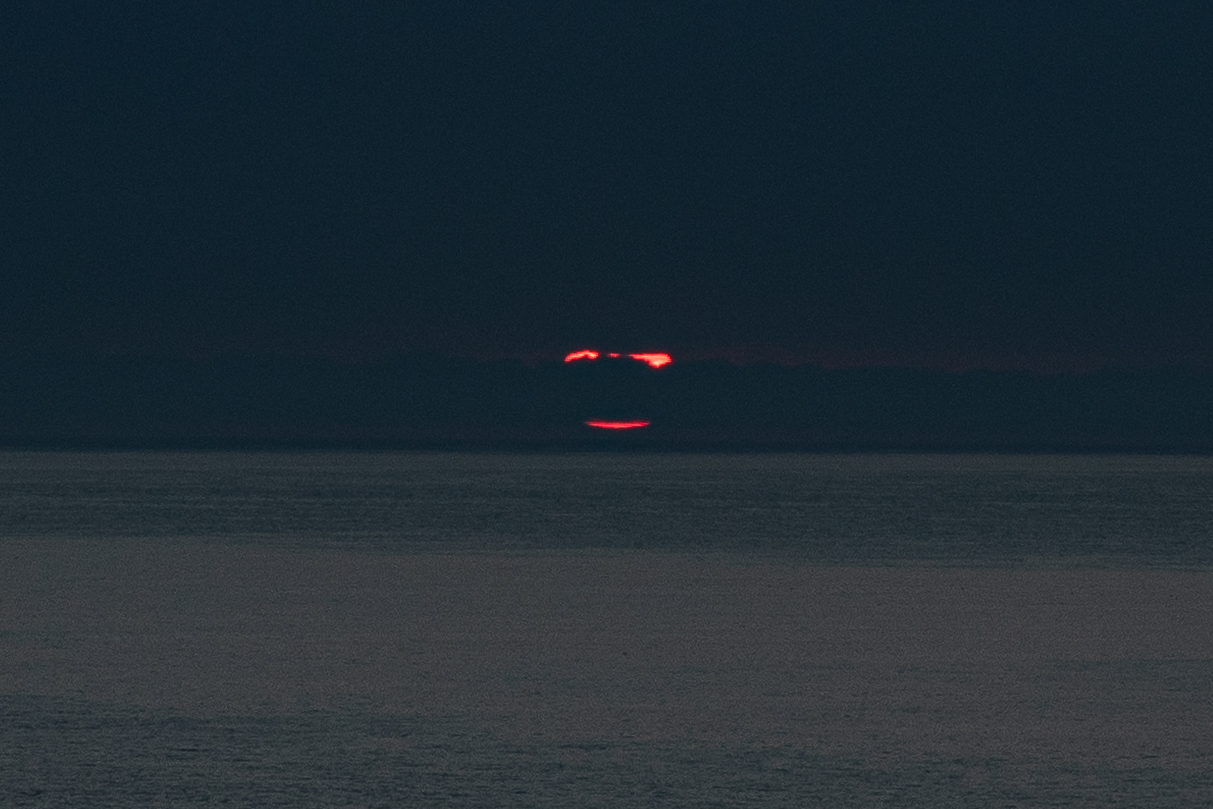
Of course, when the dog stirs at first light, I am not enamoured with the shift to longer days in the Northern hemisphere. (I think 05:30 is the limit of my tolerance for greeting the new day with a spring in my step). Watching the inexorable rise of the sun out of the sea is certainly a spiritual experience and prompts metaphysical questions. It is little wonder that many religions have tied their prayer times to reflect such moments, responding to the natural world with practices that invest meaning, seek relationship and prompt contemplation. Perhaps uniquely in the ancient churches of the world, only the Armenians developed a ‘Sunrise Office’. Touchingly, it describes monks ‘having awakened in awe’, instantly moved to pray. The service came to stand apart from Prime or Matins and included Psalm 112, a text reflecting on those who fear the Lord: ‘They rise in the darkness as a light for the upright; they are gracious, merciful, and righteous’.

This prayer signifies the second coming of Christ and the resurrection of humanity from the tombs on the first day of the week at the first hour. For the resurrection of all human natures will take place at that hour… he is the morning and the beginning of the dawning of the sun of righteousness, and it will take place at that first hour of the great day.

Findikyan, M. D. (2000). On the origins and early evolution of the Armenian office of sunrise. Orientalia Christiana Analecta, (260), 283-314
Sunrise, the North Sea, 29 April 2022

Rich with Yeast

Allelulia, The Lord is Risen!

In a hot climate, the poet AE Stallings writes of the difficulty of locating a family grave in a cemetery. Someone goes in search of information to find the right place:

Then you came back
With the coordinates, and snagged a priest
Glistening in polyester black,

Who, at the grave, now found,
Spoke of the rest and rising of the dead
As if they were so many loaves of bread
Tucked in their oblong pans
In a kitchen gold with sunlight, rich with yeast.

From A. E. Stallings, ‘Memorial (Mnemosyno)’

He is Risen Indeed. Alleluia!

Unvarnished Truth

It is the thing which shouldn’t be there. High up in the crossing above the worn-smooth stones of the Cathedral floor. It is visible across the nave of the building, raised in front of newly refurbished organ pipes resplendent in gold and bright vermilion. Millions were spent bringing this huge instrument back to a state of excellence. Every note sounding pitch-perfect, and accompanying a choir of international renown. Below the organ pipes is the screen. Elaborate stonework and gilded kings – the work of master masons long departed this world. The Cathedral harvests the best that can be had, filling this barn of a building with the finest sculptures, carpentry and glasswork. During Lent, into all this splendour, is lifted a rough-hewn cross. As basic as you can imagine, two planks of unpolished, unvarnished and uninspiring timber hanging in space below the central tower.

Liturgy, and the context it inhabits, has a knack of creating paradox. When it seems that the church has been enthralled by worldly standards, with a hierarchy of clergy, the splendour of an Archbishop or Pope is cast aside on Maundy Thursday as they kneel to wash people’s feet. All the grandeur is subverted by the truth that the least will be greatest in the Kingdom of God, and the last shall be first. Stitched into our services is the recurring message that things will not always be as we expect. God can, and does, disturbs us in surprising ways.

The Lenten cross is yet another jarring sign of this unsettling truth: just when we think everything is polished and perfect, the rough and the ready is what we need to tell us what God is about.

“But lying there long while, I,
troubled, beheld the Healer’s tree,
until I heard its fair voice.
Then best wood spoke these words:
“It was long since – I yet remember it –
that I was hewn at holt’s end,
moved from my stem.”

The Dream of the Rood

Theology could not function without paradox. Christianity is not – and can never be – something that reconciles every aspect of human experience in a divine plan. Our worship requires us to recognise and name the most difficult aspects of human living. In baptism we say that this new life will one day die. At every marriage ceremony we are reminded that the commitments are made ‘until death us do part’. There is no shying away from these fundamental truths of human life. Yet our commitment to the limits of human existence is held in tension with a great hope. A hope which, on Good Friday, we affirm even in the shadow of the cross; the Healer’s tree. We cannot disregard the injustice, suffering and humiliation of this public execution. We see it and name it.

For some people it will not be Good Friday that is difficult. Human suffering is obvious and ubiquitous. The step of faith to Easter Day is the part of Christianity that stretches their credulity. Yet for those who follow the way of Christ, our response to suffering is lit with a hope that radiates from the empty tomb. Yes, suffering is real – but it is not all.

He hung there limply on the frame,
His body beaten black and blue.
Exposure was the thing; humiliation, too;
To which the nails seemed superfluous
When all you had to do was die of shame;
Quietly expire, a minimum of fuss.
But what a noise you made, Silent Messiah,
Your humbling death, so nakedly exposed,
Conquered forum, basilica and the choir
Of poets with the love you interposed.

N. S. Thompson, ‘Silent Messiah’ in ‘The Poet’s Quest for God’ Eyewear Publishing 2016

Misperception

Life-drawing presents all kinds of challenges to the drawer – especially me. A fundamental issue is the need to unlearn our habits of seeing what we think is there, and focus on the reality of the subject. This requires careful attention to the relative size and scale of limbs and their disposition. For example, the face is only a small part of the head, even if our communication-centred focus leads us to privilege the eyes and the mouth. Drawing what we see as important delivers a disjointed and disproportionate view of the body.

For some time I have been intrigued by Anil Seth’s hypothesis that consciousness and our sense of self is best understood as a ‘controlled hallucination’. Reflecting on this I would be more inclined to amend the phrase to ‘collective’ rather than controlled. In every age there have been people who stood apart from a collective agreement about what constitutes a normal sense of self. Usually, they suffered for this nonconformity, even if their perspective later came to be an accepted view. For me the strength of Seth’s idea is not so much for people who share an agreed interpretation of objects and events, but as a way to explain behaviour when the hallucination is fractured. For example, with dementia, the way we order past and present might be rearranged. There is still engagement with the material world but this materiality might be significantly recast and reinterpreted. A husband and son are not recognised in these roles but instead named as the person’s father and brother. Sense-making appears to be less controlled and requires some lateral thinking in order to comprehend. In this example, in which I was involved, the person knew that these were her male relatives of different generations, but the designations were misplaced.

I noted some time ago that the pandemic has generated increasing interest in subjects such as those covered in York’s nightly ghost-tours. At the time I thought this was linked to increased mortality but in the light of a recent Guardian article I wonder if there is another reason. For example, whether the degree of social disruption has sent a significant earthquake through the ground of our perception. What was assumed to be certain was shaken, and many people are in the process of renegotiating the relative meaning and value we construct to make sense of the world. It is not necessarily the case that more people believe in ghosts, but they may be more open to the unexpected and the disruptive.

Prof Christopher French, head of the anomalistic psychology research unit at Goldsmiths, University of London, is not surprised to hear reports of a rise. “There is historical evidence for increased interest in, and reported experiences of, this kind of stuff at times of uncertainty, stress and turmoil.”

Emine Saner, ‘Spooky Britain: how ghosts became a national obsession’ The Guardian, 6 April 2022

How we draw a head, or how we order our experiences of the physical world, may not be as accurate as we would like to think. A significant aspect of religious experience is that the way we accept the world should be questioned and challenged. Today, Palm Sunday, is a day when the Church marks the start of a week in which the presence of Jesus questions a whole range of assumptions. Entering Jerusalem on a donkey, the expectation of sovereignty is placed in a posture of humility and service. This is a King who is not here to stamp authority on a subjugated people. Perhaps more potently, his action in washing the disciples’ feet on Maundy Thursday puts the teaching into action. Jesus’ words and deeds subvert the accepted relationships in society and open the possibility that we see and embrace a more proportionate understanding of our place in the world. A place where we see properly the people who are often peripheral to our vision; recognise our illusions of independence for what they are; and live at peace with our mortality. The foundational stories of the Abrahamic faiths all narrate how our clarity of sight has been corrupted and distorted. On our own we cannot see aright, and embracing this awareness should foster some humility and co-dependence as we seek to determine how best to live.

Outside York Minster on Palm Sunday 2022, the Processional Cross is ready to be lifted high

Christians live with a conviction that the world is not as it should be. The idea of the Kingdom of God points to an altered reality where a different kind of society lives in peace and justice. Having this belief may inspire discontent with the world as it is, as well as energise activity to aid this Kingdom emerge fully into our personal relationships and local communities. In this much there is hope, resisting the temptation simply to accept what is in front of us and ‘labour for what does not satisfy’ (Isaiah 55:2). When it is fully alive, the Christian story challenges false power by its persistent presence and emphasis on servant leadership. It questions those who misuse religious authority, and stands in profound silence before Pilate. At the end of this week those who oppose the petition ‘your Kingdom come’ find that even the certainty of a sealed tomb is not enough to extinguish this outrageous hope.

Melancholy

Last Sunday, as I begin to fill in the Register at a church where I’d just lead a service, my fountain pen broke in two. It was quite dramatic. Large blots of black ink formed on the page; my hand was doused in the stuff; a small amount pooled onto the floor. As far as possible, using tissues and wipes, I remedied the damage – but left an indelible mark of my (first!) visit to the church.

Returning home I turned to Google to see if I was alone in my experience. Apparently not. This trusted model from a good brand was known to suffer the occasional failure of a welded section, causing the split I had just experienced. I also learned that it is reparable, and during the week I parcelled up the parts to send to a UK agent for assessment and onward travel to Germany. Like many items we might have as we get older, not only was it – until this point – a reliable mainstay of my writing, it was also a gift from my father for my 50th birthday.

Although I have only caught glimpses of the BBC series The Repair Shop, it isn’t difficult to understand the popularity of the programme. Things that have aged and become damaged are brought back to their former glory. Through the process of repair we are connected with the past as heritage skills are used by the experts to restore the items. Of course, in the process, the person who has presented the treasured artefact tells us the story about its origin and arrival with the current owner. Often these accounts will involve bereavement and the role of the heirloom has a tangible connection with a vanished world.

The Repair Shop

It may be that this programme appeals to younger people – but I suspect the larger audience will be at the older end of the scale. People who have inherited items or been gifted them by friends or relatives when inevitably downsizing as the years advance. Perhaps some personalities are more invested in such things than others, but I imagine that almost everyone can recognise the feeling that an item from the past evokes a sudden sense of connection to a world where we once lived, and which is now past. Watching Kenneth Branagh’s Belfast last night led us to remark that it was like watching our childhoods, not because of the circumstances of growing up in Northern Ireland, but because of the consumer products, Christmas decorations, gifts and furnishings that were featured in the film.

Now in his late 80s, the unconventional former leader of the Episcopalian Church in Scotland, Richard Holloway, has been reflecting on melancholy in his latest book, The Heart of Things. Holloway’s writing in recent years has been a great blessing, not least because he is sharing with us considerable insight, intelligence and feeling from what might be called ‘the front line of later life’.

“Melancholy has become a kind of grateful sadness at what life has given us but which we can never cling to, because it is constantly passing, disappearing into the past. Melancholics find it impossible not to keep looking back at what time has wrought as it slips away behind them like the wake of a ship”.

Richard Holloway, ‘The Heart of Things: An Anthology of Memory & Lament’ Canongate 2021 p. 9

It is little wonder that so many of us enjoy repairing things from the past and re-lustering what has become dull over time. Through these physical fragments of heritage we achieve something we know is impossible for ourselves. We can pass on these keepsakes in near mint condition, while recognising that we share with their first users the reality of our own change and ultimate demise. Like Holloway, I don’t find this a depressing thought, and will be glad to receive back my fountain pen in one piece and use it for a while longer.

Religions typically invite their adherents to avoid investing excessive attachment to things. Whether it is putting wealth into barns or clinging onto power, the behaviour of Jesus in the wilderness is to reject the beguiling shortcuts to food and sovereignty. In his life and teaching Jesus makes clear that false attachments become a barrier to a spirituality that endures. We can live well with ‘things’ but need to be mindful that everything is lent to us for a time. Jesus doesn’t reject possessions entirely, but questions what his hearers ‘treasure’, aware that material things are not eternal. Living at ease with an awareness of irretrievably passing time can help us all live each day well. It is folly, like the example of Cnut, to think that the sands of the hour glass can be diverted or prevented. We live within their falling, and might live better lives if we were at peace with this reality – and our custody of things for a season.

Useless Beauty

Sadly, neither music nor sculptures stop tanks. Military bands, uniforms and insignia may all demonstrate the way art can be conscripted into morale boosting service, but these are details rather than the main event. Many people will be tempted to see artistic talent in current circumstances as a ‘nice to have’ at a time when many people in Ukraine are searching for bread, shelter, safety and warmth. Yet the countless social media clips of singing children, firefighter violinists, and heavily sandbagged civic statues, suggest a deep determination to make sure that a people’s culture endures.

I am a great admirer of the ceramic sculptures created by Antonia Salmon. In a recent circulation to her contacts, Antonia reflects on the state of the world and the point of art:

“In one sense it could be easy to regard the arts as frivolous at a critical time such as this. Both the quality of our Presence and regard for our fellow human beings, and for our planet as a whole, is vitally important at this time. I’m certain that in whatever way you are able you will contribute to the awareness and growth of human connection, to love and to beauty.”

Antonia Salmon, Spring Update 13 March 2022, email quoted with permission
Detail of ‘Winged Form’ by Antonia Salmon

In the same week as receiving Antonia’s email I heard an excellent reflection on lament. This was given by Wendy Lloyd in a Lent series for York Minster. With the title Prayer as Lament and Hope, Wendy set out the idea of prayerful lament as a way of ensuring we continue to hold the vision of how things could (or should) be, especially when life is at its most difficult and destructive. All the acts of art or culture we are seeing in Ukraine suggest that in adversity people need to sustain a vision that amounts to far more than nostalgia. It constitutes a progressive hope focused on a time when all these slivers of Sabbath become the life we lead. As we maintain and re-pattern our creative senses and connectedness, art can make us restless with many aspects of the world in which we are living. As such, lament prevents us colluding with the failings and distortions of the world. In her reflection Wendy quoted an excellent article from a recent issue of The Financial Times:

Lament understands that naming reality is part of what enables one to address it and move towards a new reality. It is a way of bearing witness to injustice when we see it, to the unfairness of life, and yet also to a deeper belief in a world where we can seek help and have the agency to make decisions and take action so that pain and suffering are not the accepted order of the day.

Enuma Okoro, The Importance of Lament, The Financial Times, March 4 2022

When we see courageous acts of creativity and beauty in the midst of horror it reminds us all that we cannot afford to abandon the very things that make human beings their best selves. The arts have an invaluable role in both naming the injustices of life whilst simultaneously expressing the hope and possibility of something far better. In Lent, for Christians, the temptations of Jesus illustrate the tawdry shortcuts that will never achieve the splendour of what might be – of the time when all creation finds its true peace and purpose.

The featured image is an overview of ‘Holding Piece’. Antonia Salmon’s website: http://www.antoniasalmon.co.uk