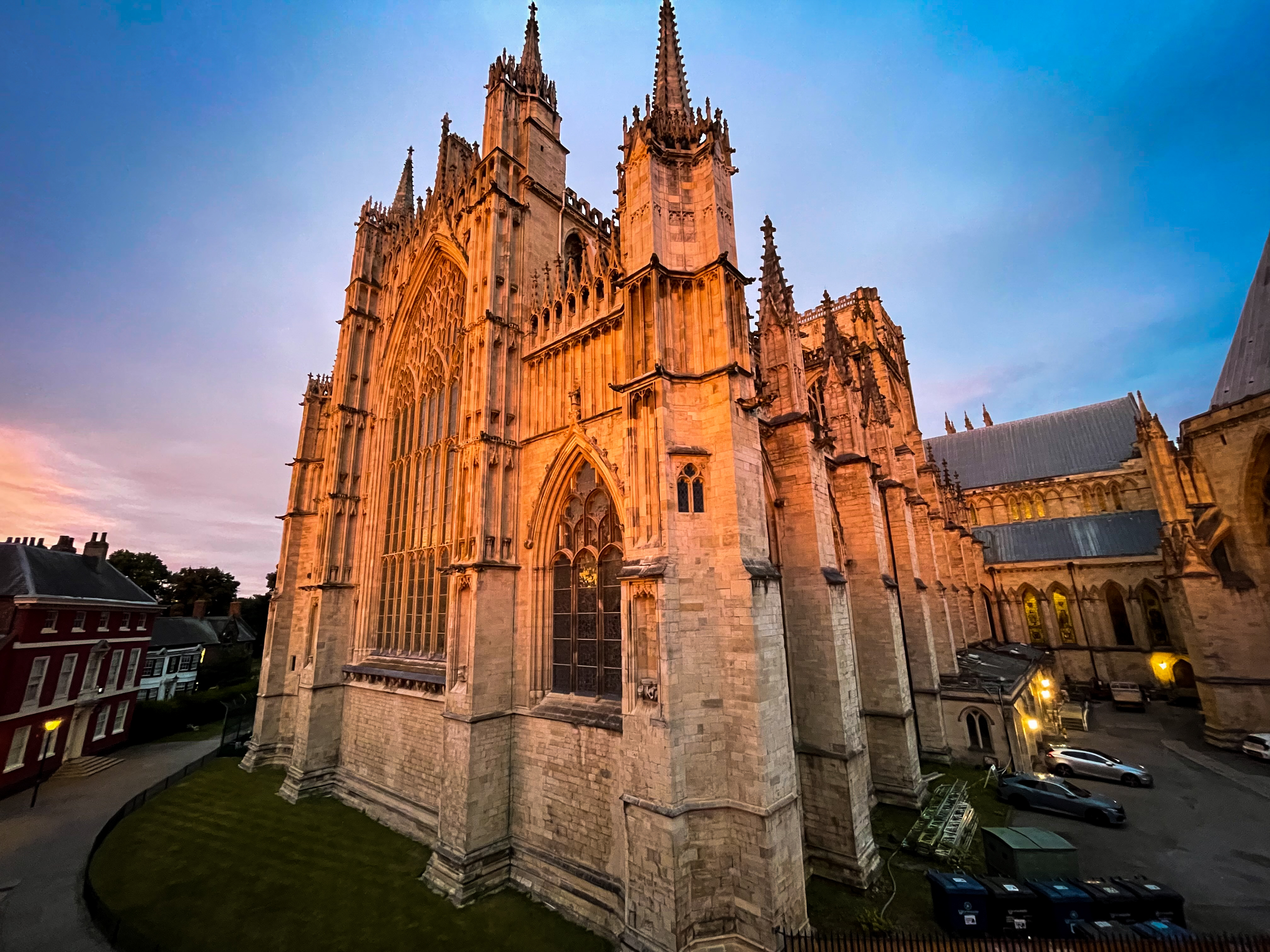
St Luke’s church in Cleckheaton is a barn of a building. Like so many of the churches thrown up to meet the needs of urban populations, this Victorian Gothic edifice had the working classes in its sights. A nearby Medieval church had assigned seating, and was no doubt the preferred place of worship for the landed gentry and families that looked to the countryside for their employment. St Luke’s, by contrast, was marking a new path in religion and a foundation stone in its porch made known the more egalitarian ambitions of its approach. As The Church Times of 28 October 1887 reported from the laying of the foundation stone: “It is to seat 650 persons, and the sittings are to be free and unappropriated”.
I was reminded of this bold statement of intent during this morning’s edition of Sunday on Radio 4. An item from BBC Radio Solent told the story of an Anglican church that has doubled up as a badminton court for more than 50 years. At Christ Church Melplash, one of the locals interviewed read out the statement made at its foundation that “the seats in this church are to be free and unappropriated forever”. The instruction was given by James Bandinel, the son of a cleric and a civil servant involved in implementing the abolition of slavery. His role was to supervise the suppression of slave trade activities and this included the seizure of boats. Bandinel received a good salary based on the funds generated by selling condemned slave ships. In turn, Bandinel used his wealth to fund the construction of Christ Church Melplash.
The approach to founding churches without assigned seating, or pew rents, perhaps responded to growing militancy in the population at large about privilege in the Church of England. Another example of churches taking this line includes Holy Trinity Stowupland, in Suffolk. Perhaps due to the nature of the its rural character, there were only two of these cheap, plain churches built in the county to meet the growing needs of urban populations.
‘here in the porch is the original foundation board, beginning This church was erected 1843. It contains 250 sittings,and in consequence of a grant from “The Incorporated Society for promoting the enlargement, building and repairing of Churches and Chapels”, the whole of that number are hereby declared to be free and unappropriated forever‘.
www.suffolkchurches.co.uk – a journey through the churches of Suffolk

Plaque at the Church of the Holy Trinity, on the outskirts of Toronto: “free and unappropriated”
Which leads me, inevitably, to the Church of England today. The unique characteristics of the C of E mean that this is a church that belongs to the people of England – free and unappropriated. It’s why, in the current turbulence of the resignations; uncertainty; and instability, the outcome of events is more than a matter to be resolved by clergy and congregations. It must involve a wider consultation and engagement with parishioners and enable the Church to continue its historic mission to serve the people of England in the name of Christ. That’s why, on 27 November 2024, I wrote to the Prime Minister to express concerns about the ability of the C of E to resolve its own problems.
‘While the nature and resources of the Church of England has changed significantly over the past twenty years it continues to have an unparalleled presence across the cities, towns and villages of England. It has often played a key role in developing inter-faith relations, community cohesion and pastoral care, especially at times of national crisis or change. I believe that this role continues to be valuable and worthy of political support. However, it appears very uncertain that the Church of England can reform itself within the provision of its existing structures and leadership. The safe operation of the Church remains a concern”.
Extract from my Letter to Sir Keir Starmer, 27 November 2024
Unsurprisingly, the reply from the Correspondence Officer in the Cabinet Office did little more than refer the matter to the Honours Secretariat. In turn, the Secretariat pushed the issues into the court of General Synod. Perhaps the only slight indication that there is some concern at the level of political leadership has come in the form of a communication from the Charity Commission to members of General Synod. The letter is hosted on the UK Government website. The tone of the letter suggest that it is intended to be a “shot across the bows” of the C of E, reminding Synod members to “remain aware of your legal trustee duties during debate and voting on relevant Synod business”.
Over many centuries the C of E has benefited from charitable endowments and donations. It is duty bound to manage the charitable aspects of its structure for the good of the people it serves, in this case, the entire population of England. Narrow religious enterprises which fail to demonstrate public benefit must be brought under examination and the central purpose and mission of the C of E cannot be watered down in an attempt to shape itself to what many other churches already do very well. The C of E has a clear character, heritage and purpose. This must be upheld; funded; supported and encouraged.