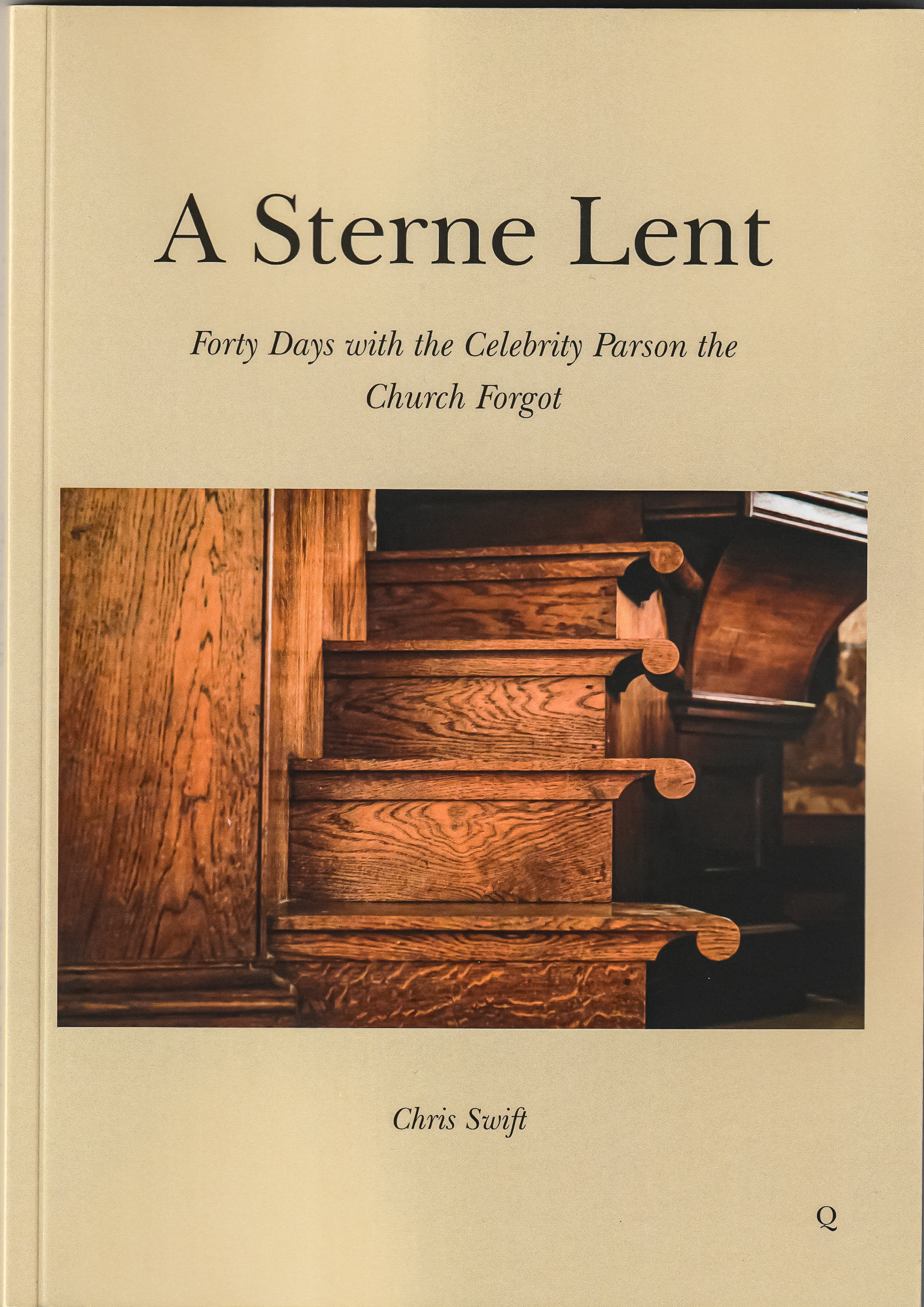
For the past 18 months I have been journeying with the unlikely, contradictory and inspiring Laurence Sterne. In a few weeks’ time I’ll be making the formal launch of the Lent book which is the product of this reflection: A Sterne Lent: Forty Days with the Celebrity Parson the Church Forgot.
People have asked me, as well they might, why on earth I picked Sterne’s work as a muse for the serious spiritual reflections of Lent. There are a number of reasons. Firstly, being in the centre of York, I became aware of multiple connections with Sterne, all within a few yards of where I am living. Indeed, the cleric who built this house, William Ward, might be described as the creative impulse that launched Sterne’s literary career and consequent fame. This creative impetus took the form of Ward’s death. The demise of Ward opened the door to a deeply personal, bitter and decade-long dispute between the Archbishop of York’s legal officer and the Dean. It only ended when Sterne wrote his first book, a satire on the controversy, which was so accurate and witty that the Archbishop ordered all copies of A Political Romance to be burned. Thankfully a few survived.
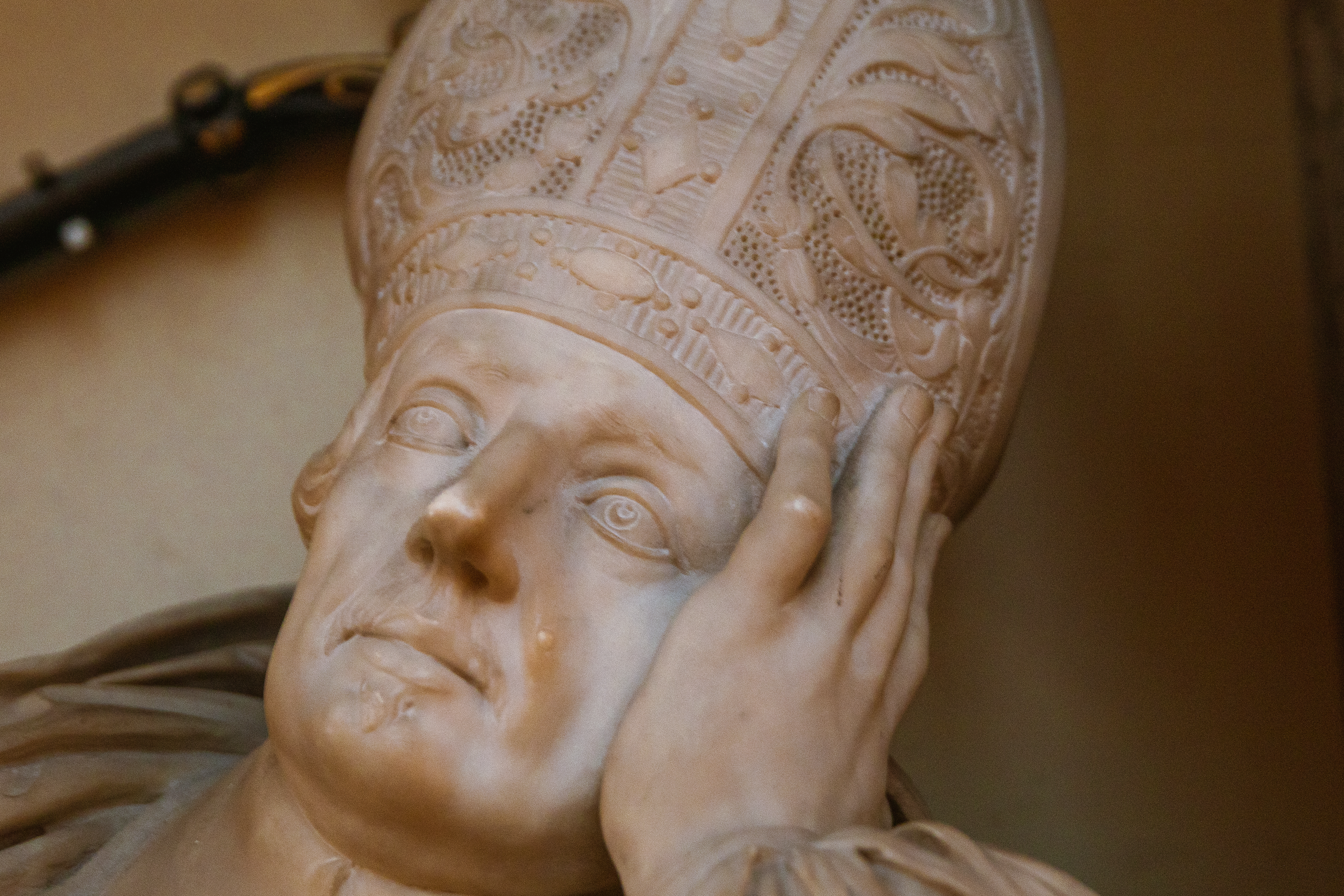
Effigy of Richard Sterne, Archbishop of York 1664-1683. North Quire Aisle, York Minster
Inside York Minster, Laurence’s great grandfather lies in repose. This is Archbishop Richard Sterne, and his recumbent form was carved by Grinling Gibbons (detail pictured above) the notable Anglo-Dutch sculptor. Outside the Minster, but only a matter of yards away, are two civic plaques. The first is in celebration of Elizabeth Montagu, the “Queen of the Blues”, who led a group of privileged women interested in education and mutual support for the development of their respective interests. Montagu was a correspondent with Sterne and also his wife’s cousin. A little further along the same cobbled street is the plaque to Jaques Sterne, the writer’s uncle and one-time Precentor of the Minster. As a Prebendary, Laurence Sterne would often have been in the Minster, preaching or attending meetings of the governing body. On the opposite side of the cathedral, down the ancient Roman road of Stonegate, a stained-glass commemorative disk records the place where Sterne’s Tristram Shandy was first published. As it happens, this printer’s business lies in the lineage of the publisher of A Sterne Lent, Quacks The Printer, which is today found a short distance away on a road parallel to Stonegate.
All this is interesting – possibly – but there is more to A Sterne Lent than geographical convenience. Sterne’s work continues to be significant in the arts and humanities. Tristram Shandy has a sustained and enduring influence on English literature, and literature in other languages. In the fine arts Sterne’s legacy still generates new works. Yet in the Church, Sterne is largely forgotten. Unlike Samuel Johnson or John Donne, he is absent from the religious calendar. When I re-read Tristram Shandy, and took a look at Sterne’s sermons and other writing, I discovered themes that are relevant today and, in many respects, were absolutely groundbreaking in the 18th century. For example, he uses satire to make explicit the repeated absence of female voices from decisions about their bodies and financial independence. It never occurs to the men who pontificate on the acceptability of using a cannula to perform an emergency baptism, to seek a woman’s view about the matter. When spurious pseudo-scientific and legal arguments are cited during a dinner after a major church service, involving the disinheritance of a widow, no female voice is in the conversation.
I do not know what readers will make of A Sterne Lent. As DH Lawrence famously commented: “never trust the teller, trust the tale”. Perhaps that is true in particular for Lent books. Sterne is an unlikely figure to choose as a conversation partner for the most sober season of the Christian year. He is full of mirth; jocularity; and satirical juxtapositions. Giving up some pleasure for the sake of his soul would probably have seemed a bizarre suggestion to Sterne. He is full of humour and weaves a thread of radical and counter-intuitive thinking across his writing. Not only in the prose, but in the physical presentation of the novel, he deploys startling surprises, twists and turns. Like the fluidity of the marbled page, the narratives jostle together and suddenly find themselves emerging into a new and unexpected digressions. Is Sterne taking us for a ride – or on a revelatory and challenging journey? Never trust the teller…
The unsettling ambiguity of Sterne’s writing may help us see the world anew, and fashion questions we had not thought to ask. At a time when there is so much turmoil in the Church of England I would contend that this Lent book offers reflections which have found their moment juste. With a vacancy at Lambeth, Sterne’s writing on vocation, ambition and patronage, are as pertinent today as they were in 1759. If the Church is to change for the better it needs to interrogate and understand the historic power which continues to tick in the mechanism of its present. As any reader of Tristram Shandy will tell you, when it comes to important matters in life, we must at all costs mind what we are about – consider how much depends upon what we are doing – or live with the consequences.
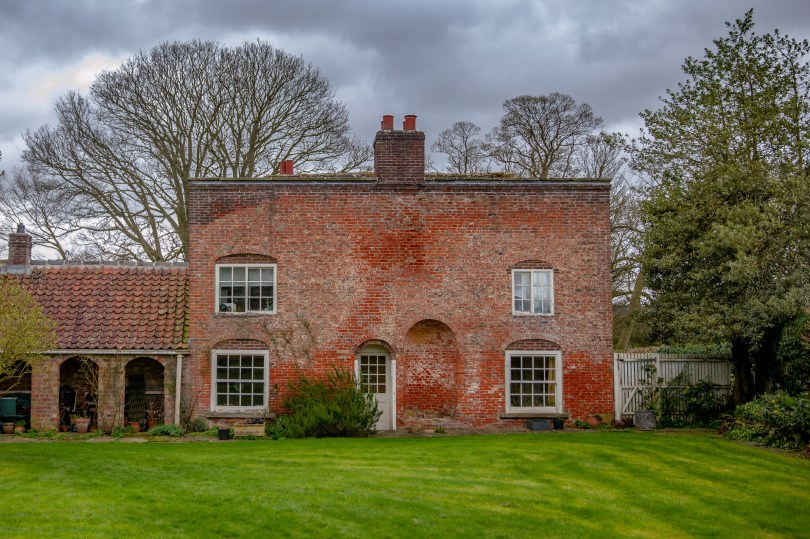
A Sterne Lent can be obtained from Quacks books or Amazon – where a Kindle edition is available. The photograph at the head of this blog features Shandy Hall, Coxwold, the Museum dedicated to the life and work of Laurence Sterne.
 Swift Reflections
Beautiful house