Forgotten Conscripts

The consequences of war run wide and deep. While the focus of Remembrance may be soldiers on the battlefield, the effort of supporting a sustained conflict involved many, many, more people. At Bishop Auckland’s Mining Art Gallery, a new exhibition – Ted Holloway – A Bevin Boy Remembered – takes the work of a single Bevin Boy to present an insight into what it meant to be conscripted into the mines. Coal was essential to the overall war effort and the manufacturing capability of the country. It was in December 1943 that Ernest Bevin, the wartime Minister of Labour and National Service, devised the scheme to conscript by ballot a number of men of military age to go into the coal industry. Holloway, who was caught up in a form of work many would not have chosen, drew on his experiences to create art which reflects the hard and perilous experience of working underground. While many Bevin Boys were not working at the coalface they performed an invaluable role in maintaining the mine’s infrastructure, enabling regular miners to dig for coal and increase their productivity

“I was sent into the quarry, which was adjacent to the pit… That quarry work was the hardest work I have ever done in my life. It was through winter and you often had freezing water round your ankles and we had leather boots and no wellies, raw fingers, it was so cold, it was so hard and it sometimes rained and you had to carry on working. I looked forward to the warmth of going down the working pit, which came after about five weeks”.

I was called up for National Service in the autumn of 1943, by Douglas Ayres

There has been a long political campaign to honour the courage, effort and difference which the work of the Bevin Boys brought to the war. Sometimes referred to as the “forgotten conscripts” they finally achieved recognition when the Bevin Boys Veterans Badge became available after 2007. This still feels a modest acknowledgement of what they achieved, especially given the experience of many who, unlike other conscripts, did not return to their communities in uniform (or with the automatic right to resume their former employment).

Take Five (2006) Tom Lamb, Gemini Trust, Zurbarán Collection

War brings many horrors and devastates communities. The Bevin Boys remind us that the efforts of countless people to support a war effort often go unacknowledged and can be left in the dark. While the work of the British Legion and many other groups has been effective in widening the recognition of people (and animals) engaged in military struggle, it seems that too many national leaders forget this cost when new conflicts begin. I can only imagine that those who lived through the world wars would be incredulous that we continue to approach so many disputes with a call to arms. The post-war aspirations that new bodies, such as the UN, would manage disagreements differently, and peacefully, seems to have failed. Perhaps, as the last survivors of the world wars leave us, the risk of future conflagrations will increase. Maintaining some honest recollection of war’s human and material cost, and the legacy it leaves, might become more necessary than ever.
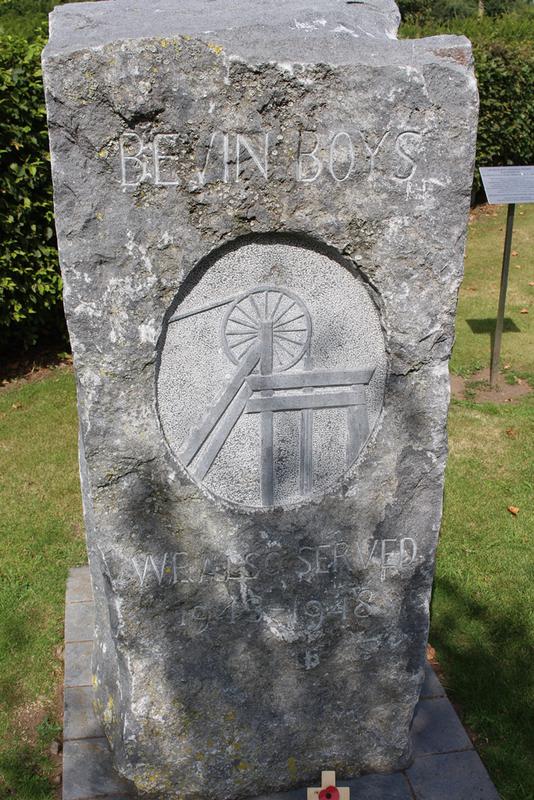
  • Above – The Bevin Boy Memorial, Alrewas, Staffordshire
  • The picture which heads this blog is taken from Miners’ Heads No. 2 by Ted Holloway.
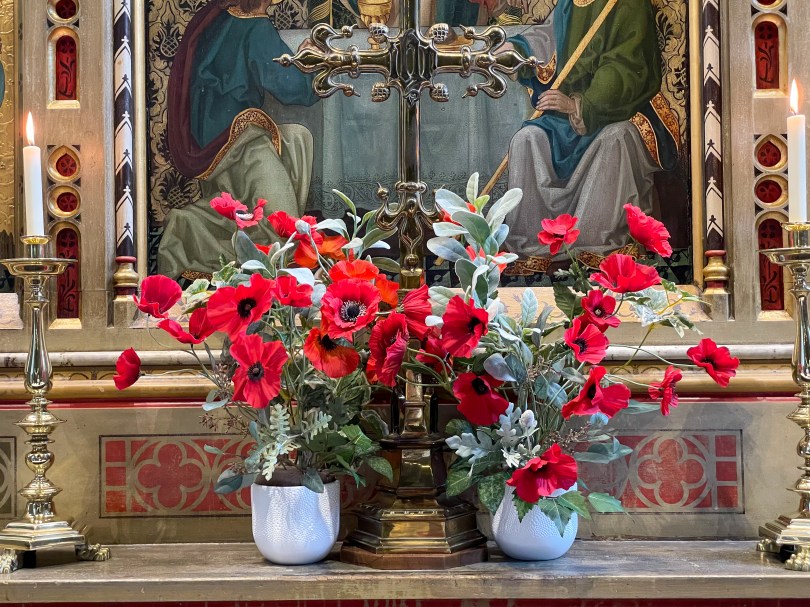
Remembering the Absence

Increasingly, I think of my grandfather on Remembrance Sunday. I can imagine that his arrival in the world would have attracted some kind and amusing comments. Thomas was a ‘Valentine’ baby – born on 14 February. So far so good, but unbeknown to his parents and family he was born in a fateful year: 1896. This meant that his eighteenth birthday fell in February 1914, and in the summer of that year he signed up for active service,

I know almost nothing about his military service. Sadly, we only overlapped in life for 11 months. I was born in the January and he died in December. I know that he enlisted with the Loyal North Lancashire Regiment and, because of the Battalion in which he served, he spent most of WWI in Gallipoli, the Middle East and West Africa. It appears that he continued to be in the army as a Private until 1920. As he had nothing that drew him into official records (such as injury) there is very little left to show for his six years of service. Like most other troops, he was awarded the British War Medal and Victory Medal.

I would love to have talked with him about those years. With an upbringing in a Lancashire market town, and a family trade of weaving, Tom probably never imagined that he would travel so widely or find himself in such danger. The Regiment he joined would have been full of people he knew, perhaps even distant relatives or school friends. Those years away from home probably had a number of consequences, not least marriage at the then relatively late age of 28. Equally, I have no idea either whether this experience contributed to his death aged 69. My non-combatant maternal grandparents lived into their 80s.

Across the twentieth century, and even today, people will be thinking about absent family members and friends. War has led to so many untimely deaths, and continues to do so. Given that peaceful co-existence is so clearly in the interests of humanity it seems remarkable that it is so elusive. Human greed and fear appear to be the characteristics that fuel conflict and despite all we have learned we find it impossible to resolve these feelings and live peacefully with one another. The astonishing development of technology and science is unmatched by any noticeable change in human maturity, wisdom or insight.

The father of the poet Ted Hughes served with the Lancashire Fusiliers during WWI. At Gallipoli he was one of only 17 men to survive from his battalion, giving some idea of the harrowing circumstances in which these young men found themselves. As so many of the troops were serving in the same units the consequent loss of life within the mill towns of Lancashire was devastating. As Hughes put it, ‘We are the children of ghosts / And these are the towns of ghosts’.

Hi father’s war stories were so vivid, his psychological wound so palpable that Hughes felt he himself had witnessed the apocalyptic carnage. 

Meyers, J. (2013). Ted Hughes: War Poet. The Antioch Review71(1), 30-39.

Only recently has some kind of understanding emerged about the enduring scars of conflict. The growing study and use of the concept of moral injury reflects an awareness of suffering that continues. Alongside PTSD there is recognition that terrible events in conflict reverberate down the decade and – as the quote above illustrates – even be passed across generations. When the cost of a war is estimated these kinds of injury appear to be omitted from the calculations. The lack of peace in our world comes at a terrible price.

The soldier and war poet Siegfried Sassoon imagines in one of his compositions that the devil visits a cenotaph. The prayer of the prince of darkness is that humanity will forget the damage done by war, and that human folly will be repeated. It feels that our task is the exact opposite – to remind any war-hungry politician that conflicts seldom end in less than a century, and that the greatest price is paid by ordinary men and women long after the guns fall silent. The absence of an estimate of emotional damage does not mean the damage doesn’t exist. There is no lack of testimony, like that of Hughes, showing the lasting trauma both in field participants and in the communities from which so many young people suddenly became absent.

We will remember them – and must never forget that hell on earth reaches far and wide.