Tempus Fugit

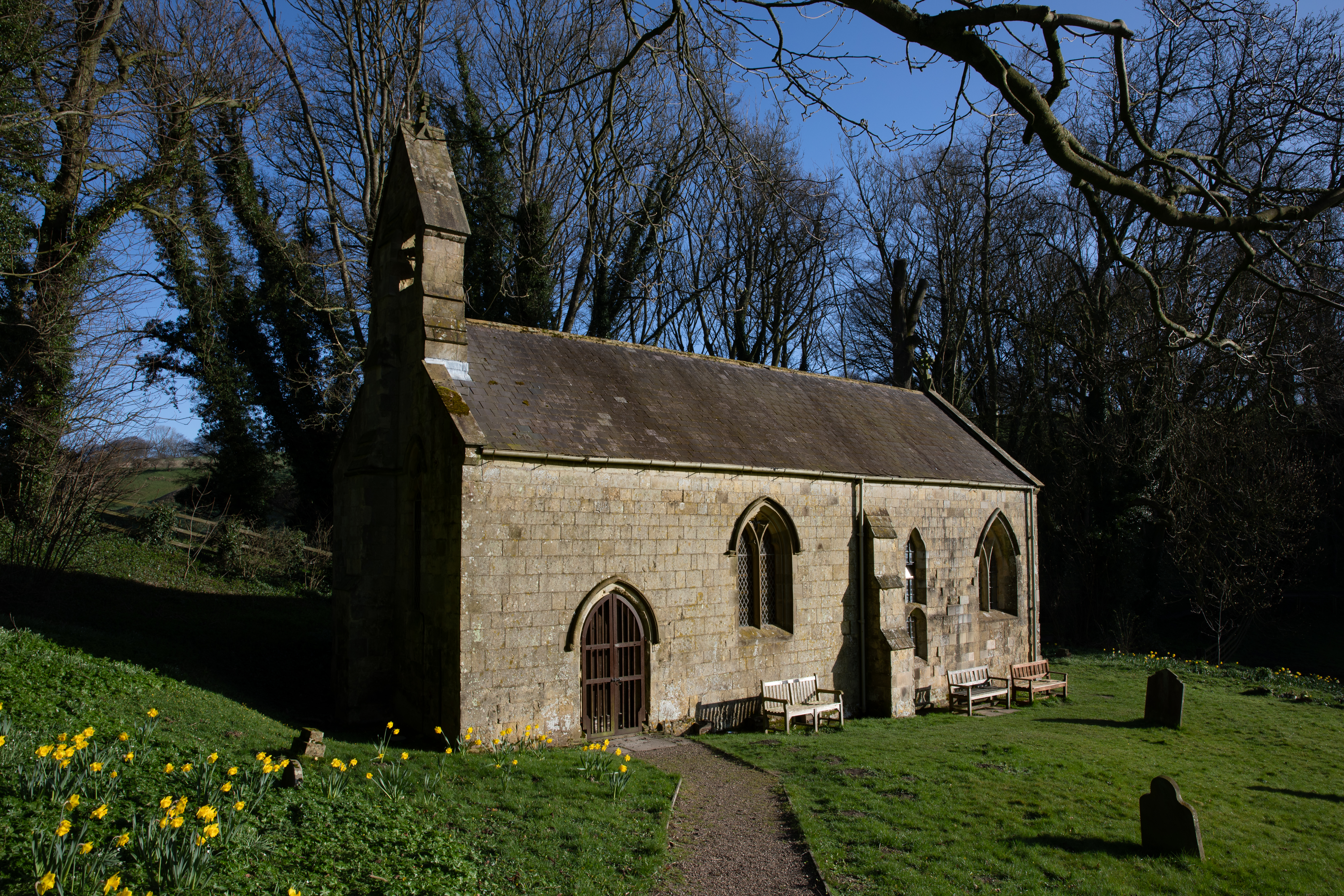
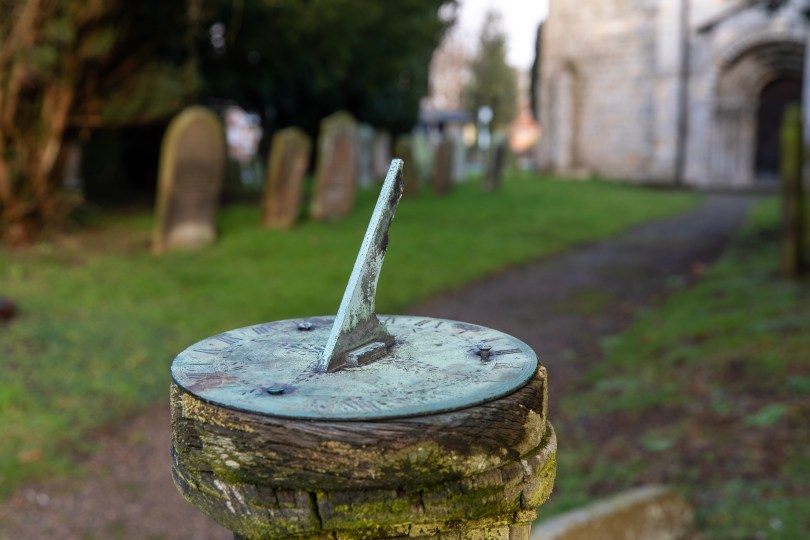
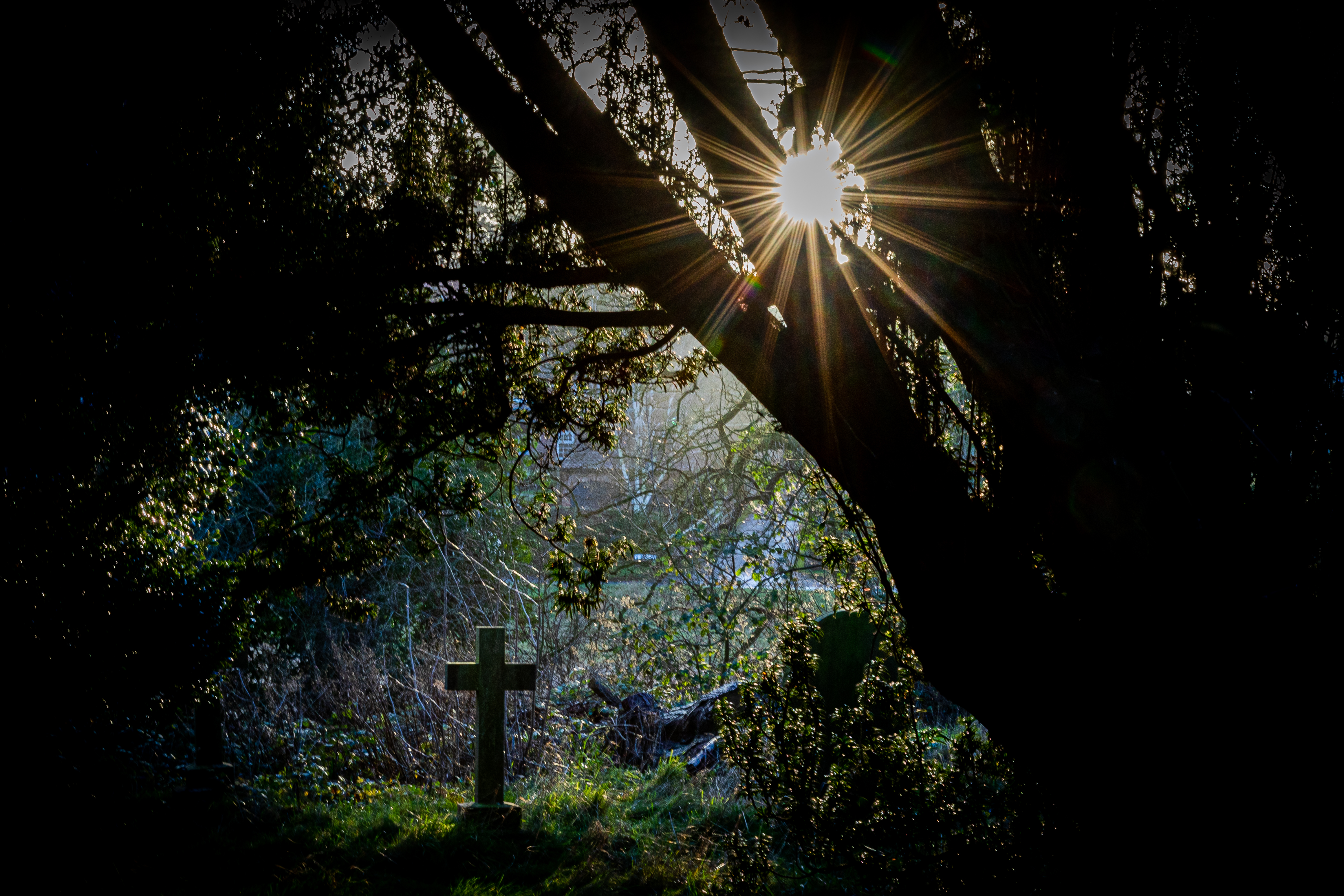
A churchyard feels an appropriate place for a sundial, even in January when the daylight is fleeting. In addition to its timepiece, the fabulous Norman church of Stillingfleet is surrounded by mature yew trees, with their pagan and Christian symbolism and, according to some, once offering a living arsenal for the bowmen of the village. Today they tower over graves that are a mix of the well-maintained and the tottering. In places the elements have gouged out the ancient letters, leaving a ribcage of indentations on the once smooth surface of stone.

Of course, as many have come to realise, Stillingfleet’s churchyard is a sanctuary for nature untroubled by construction and development. The dead offering protection for so much that is living but all too often struggling to survive in the modern world. From lichens to snowdrops, the gentle neglect of holy ground provides space and tranquility for life to flourish.

Beneath those rugged elms, that yew-tree’s shade,

         Where heaves the turf in many a mould’ring heap,

Each in his narrow cell for ever laid,

         The rude forefathers of the hamlet sleep.

Lines from Grey’s Elegy Written in a Country Churchyard

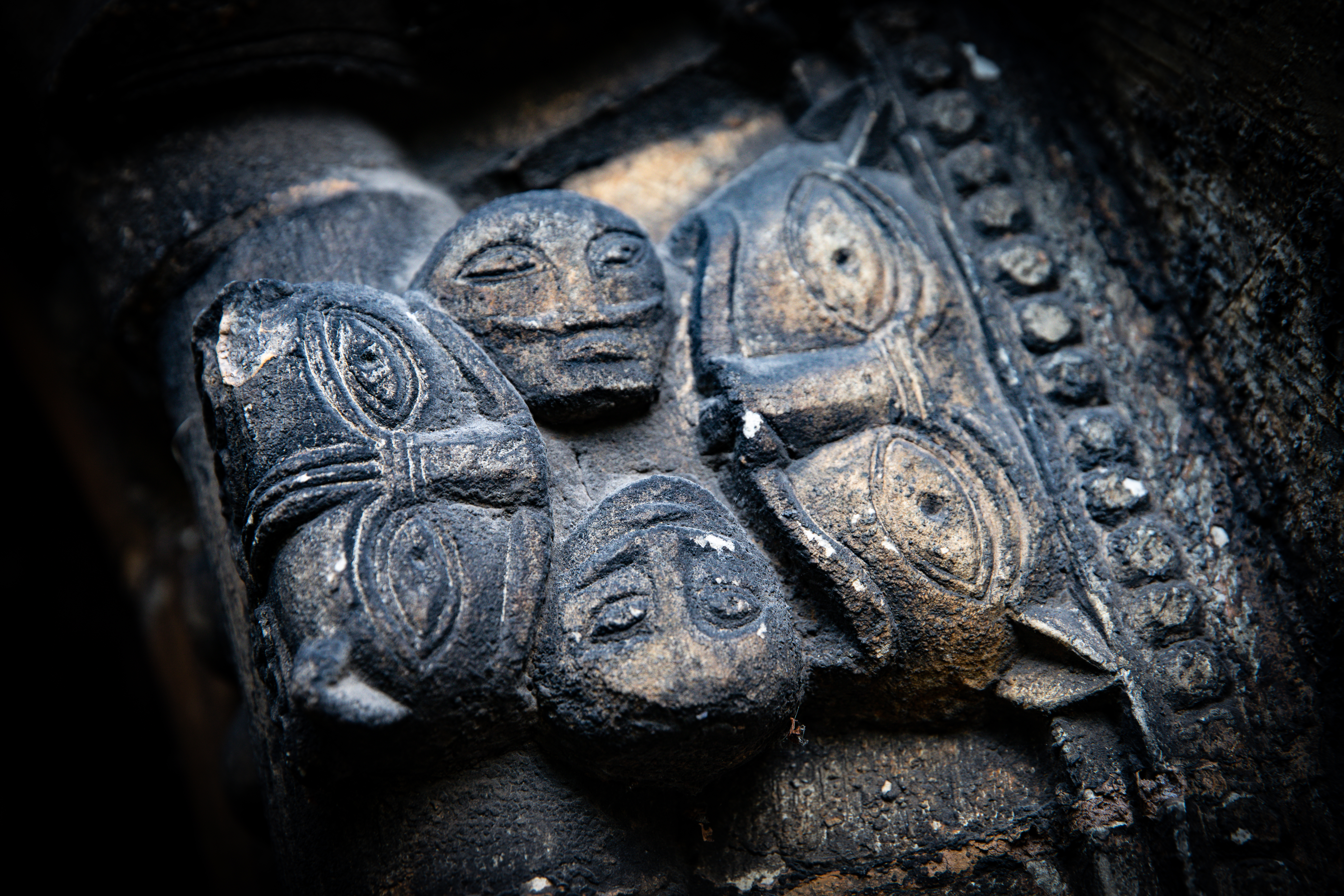
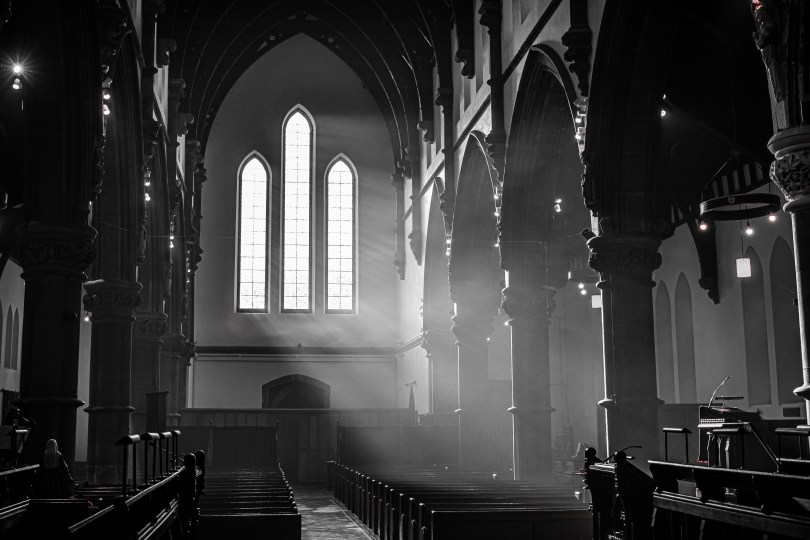
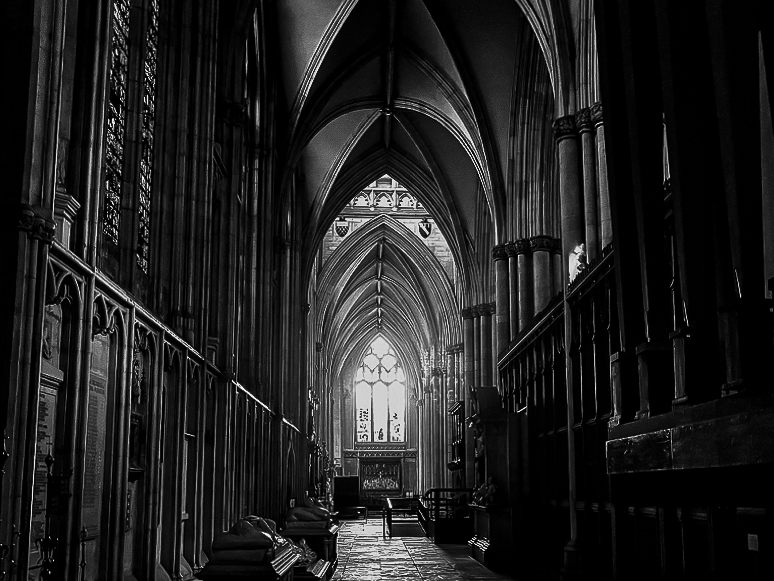
The most astonishing architectural feature of the church is the south door, described as ‘a door of national importance‘. I have written about this door previously, but as impressive as the door is the Norman doorway surround. The carved images of beaks and human figures are a marvellous survival across more than eight centuries. The clarity of the images today might owe something to their position on the south side of the building, and the durability of the stone used to create them. While we are familiar with seeing such churches surrounded by later buildings, they must have been a truly extraordinary sight when family dwellings were more rudimentary. On winter nights, candlelit services must have made these churches extraordinary images of light when so much of the world was in darkness, and homes couldn’t wholly keep out the elements.

Across the many centuries in which churches have retained their ground and provided the space for worship, much has changed. The chaos of our own time would be familiar to many who have gone before us, and I’m quite sure that it will also be a part of the lives of generations to come. We have the time we’re given, an opportunity for good or ill, and we pass on its risks and opportunities to others. I haven’t entirely given up hope that the lanterns of faith left by former generations might still hold some light for the future, and trust that the prayers said by those lying in their narrow cells were not exclusively for their own salvation, but for the good of the world as a whole.

Sweet Flying Baby Jesus

It appears as a small detail in some classical depictions of the Annunciation, but it is not uncommon to find a tiny baby Jesus surfing a beam of celestial light towards the Virgin Mary. We might take this to be no more than an artistic expression of the theological significance of what was unfolding at this critical moment at the start of the Gospel. However, there is more to this illustration than meets the eye.

A middle part of so called Mérode Triptych, created in 1430’s in the workshop of a Master of Flémalle, and kept in the Metropolitan Museum of Art in New York

Anyone familiar with The Life and Opinions of Tristram Shandy, Gentleman will know that the clerical author, Laurence Sterne, makes play with the concept of “homunculi”. Developed to a significant extent by Aristotle, this idea centres on the belief that all the physical aspects of procreation resided with the man. Unbelievably small babies were thought to be present in semen which, at the moment of conception, were passed by the man to the woman. It is hard not to interpret this as a startling manifestation of misogyny. Life being so important it could only originate from a man; and pregnancy so inconvenient it must be the perpetual obligation of a woman. In Tristram Shandy this theory is mocked from the first page, when the conception of Tristram is interrupted by Mrs Shandy, who distracts her husband by asking: “Have you not forgot to wind up the clock?” The effect of this is to weaken the efforts of Mr Shandy, and results in irrevocable damage to the homunculus that is, and will become, Tristram.

It would be easy to underestimate the consequences of this belief. Sterne incorporates into his novel the real-life situation of the Duchess of Suffolk. When her husband and son died in quick succession she was granted administration of the estate. However, when it was contested, part of the appellant’s legal argument was the assertion that – based on an understanding of homunculi – she was not a blood relative of her son. The Duchess lost her right to inherit.

As the Church celebrates the Annunciation on 25th March it is worth asking the basic question: “What was going on?” The classical paintings of a tiny Jesus heading towards Mary imply that the infant saviour was a divine homunculus. The mother of Jesus was simply receiving a delivery from the Almighty, leaving her virgin state unaltered and confining her responsibilities to safe carriage. At its most extreme, Mary would be seen as having a vocation – but no blood relationship with Jesus.

In the classical world divergent views about conception include those of Aristotle, and an alternative approach can be found in the work of Galen. Galen’s understanding of conception sees both the man and the woman contributing seed to form an embryo. As Magdalena Łanuszka put it in a blog entitled “Flying Baby Jesus”, the homunculus interpretation lacks serious theological foundation:

Such a depiction suggests that Christ was incorporated as a human child somehow beyond Mary’s womb and then “placed” in it. That weird In Vitro is of course an idea absolutely theologically incorrect. Jesus’ body was formed entirely out of Mary’s body, not somewhere outside it.

http://en.posztukiwania.pl/2014/06/01/flying-baby-jesus/

In a timely inclusion, the current issue of The Church Times features a review of a new book focusing on the embodied experiences and theologies of birth. Pregnancy and Birth: Critical Theological Conceptions challenges the dearth of theological work done on these major topics. It is not difficult to imagine that if men underwent the experience of pregnancy, the number and variety of titles on these subjects would be immense. In another review of Karen O’Donnell and Claire Williams’ new book, Dr. Emma Percy, a researcher working in this field, offers some concluding reflections:

Pregnancy and all the complexities around reproduction should not be a niche topic, just for the feminist theologians or those who have been pregnant. We are all born from a body that gestated us for months. Jesus, as O’Donnell reminds us, shared this very human experience in the womb of Mary. There is much for all to learn from taking a more realistic look at a bodily experience that is so fundamental to our being human.

Emma Percy book review in Theology. First published online January 8, 2025

Sweet flying baby Jesus should concern us all. How we respond to this framing of the Annunciation and Incarnation is fundamental to our understanding of Christianity, and the God we worship. Sterne turned the evident nonsense of the homunculi into satire, but underneath the wit is a profound question about the humanity of the God in whom we place our faith. From what I have read, it is uncertain whether the writers of the Bible shared a uniform understanding of conception: they almost certainly didn’t. (There’s an excellent article about this by Laura Quick entitled Bitenosh’s Orgasm, Galen’s Two Seed and Conception Theory in the Hebrew Bible). Ultimately, when we lack the understanding of what the authors of Scripture thought when they were writing, we need to arrive at our own conclusions as to whether our interpretation enlarges our love of God and of neighbour, or diminishes it. For me, the idea of Jesus as a foetus implanted in Mary’s womb by the Holy Spirit undermines a primary doctrine of Christianity; namely, that the Word made flesh is both fully human and wholly divine.

Unappropriated Forever

St Luke’s church in Cleckheaton is a barn of a building. Like so many of the churches thrown up to meet the needs of urban populations, this Victorian Gothic edifice had the working classes in its sights. A nearby Medieval church had assigned seating, and was no doubt the preferred place of worship for the landed gentry and families that looked to the countryside for their employment. St Luke’s, by contrast, was marking a new path in religion and a foundation stone in its porch made known the more egalitarian ambitions of its approach. As The Church Times of 28 October 1887 reported from the laying of the foundation stone: “It is to seat 650 persons, and the sittings are to be free and unappropriated”.

I was reminded of this bold statement of intent during this morning’s edition of Sunday on Radio 4. An item from BBC Radio Solent told the story of an Anglican church that has doubled up as a badminton court for more than 50 years. At Christ Church Melplash, one of the locals interviewed read out the statement made at its foundation that “the seats in this church are to be free and unappropriated forever”. The instruction was given by James Bandinel, the son of a cleric and a civil servant involved in implementing the abolition of slavery. His role was to supervise the suppression of slave trade activities and this included the seizure of boats. Bandinel received a good salary based on the funds generated by selling condemned slave ships. In turn, Bandinel used his wealth to fund the construction of Christ Church Melplash.

The approach to founding churches without assigned seating, or pew rents, perhaps responded to growing militancy in the population at large about privilege in the Church of England. Another example of churches taking this line includes Holy Trinity Stowupland, in Suffolk. Perhaps due to the nature of the its rural character, there were only two of these cheap, plain churches built in the county to meet the growing needs of urban populations.

‘here in the porch is the original foundation board, beginning This church was erected 1843. It contains 250 sittings,and in consequence of a grant from “The Incorporated Society for promoting the enlargement, building and repairing of Churches and Chapels”, the whole of that number are hereby declared to be free and unappropriated forever‘.

www.suffolkchurches.co.uk – a journey through the churches of Suffolk

Plaque at the Church of the Holy Trinity, on the outskirts of Toronto: “free and unappropriated”

Which leads me, inevitably, to the Church of England today. The unique characteristics of the C of E mean that this is a church that belongs to the people of England – free and unappropriated. It’s why, in the current turbulence of the resignations; uncertainty; and instability, the outcome of events is more than a matter to be resolved by clergy and congregations. It must involve a wider consultation and engagement with parishioners and enable the Church to continue its historic mission to serve the people of England in the name of Christ. That’s why, on 27 November 2024, I wrote to the Prime Minister to express concerns about the ability of the C of E to resolve its own problems.

‘While the nature and resources of the Church of England has changed significantly over the past twenty years it continues to have an unparalleled presence across the cities, towns and villages of England. It has often played a key role in developing inter-faith relations, community cohesion and pastoral care, especially at times of national crisis or change. I believe that this role continues to be valuable and worthy of political support. However, it appears very uncertain that the Church of England can reform itself within the provision of its existing structures and leadership. The safe operation of the Church remains a concern”.

Extract from my Letter to Sir Keir Starmer, 27 November 2024

Unsurprisingly, the reply from the Correspondence Officer in the Cabinet Office did little more than refer the matter to the Honours Secretariat. In turn, the Secretariat pushed the issues into the court of General Synod. Perhaps the only slight indication that there is some concern at the level of political leadership has come in the form of a communication from the Charity Commission to members of General Synod. The letter is hosted on the UK Government website. The tone of the letter suggest that it is intended to be a “shot across the bows” of the C of E, reminding Synod members to “remain aware of your legal trustee duties during debate and voting on relevant Synod business”.

Over many centuries the C of E has benefited from charitable endowments and donations. It is duty bound to manage the charitable aspects of its structure for the good of the people it serves, in this case, the entire population of England. Narrow religious enterprises which fail to demonstrate public benefit must be brought under examination and the central purpose and mission of the C of E cannot be watered down in an attempt to shape itself to what many other churches already do very well. The C of E has a clear character, heritage and purpose. This must be upheld; funded; supported and encouraged.

A Time to Reform

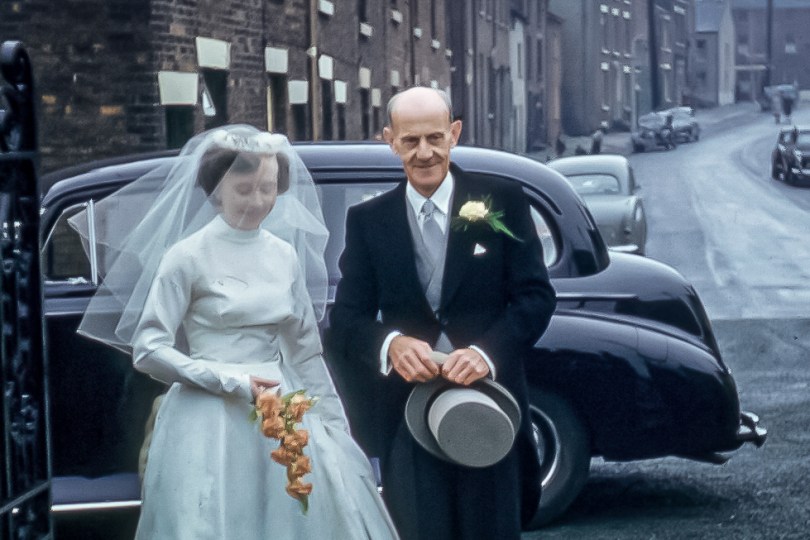
In September 1957 my parents got married. Earlier in the year my grandfather had been asked to become ‘Vicar’s Warden’ at the local Parish Church. He accepted. A local tradesman and Rotarian, Robert’s family was slowly advancing in material circumstances and civic standing. When he became a churchwarden it was news (albeit locally). The gazette carried a report that he “will be sworn in by the archdeacon or chancellor at the annual visitation”. In the 1950s, perhaps especially in counties like Lancashire, the Church of England was a notable presence in most communities. I attended the church primary school across the road from the substantial sandstone bulk of St Michael’s, erected in 1822. On Ascension Day we had a half day – one of many minor observations that peppered the year and kept the school, town and community connected. I’m sure the growing number of working parents often cursed the annual appearance of what must have appeared to be a rather random and inconvenient half-day!

When I began ordained ministry in 1991, also at a parish in Lancashire, it seemed that every church had at least its own vicar if not a curate as well. A nearby incumbent, in a more rural parish, took most of one day a week to visit a local hospital using public transport. Perhaps it was an inefficient way to spend his time, but I bet there were some interesting conversations along the way. In the parish where I served we had over 80 baptisms in one year; a memorable Holy Week with one or more funerals every day; and a church hall that bore the brunt of heavy usage from uniformed groups, parish thespians and the might of the Parochial Church Council. There was certainly no shortage of work to do or activities to support. By the time youth group had ended on a Sunday evening, on a day that began at 7:30 am, I was very happy to slump into a comfortable chair.

Those days have gone – for better and for worse.

Had the Church of England stopped evolving in the 1990s it is hard to know what would be left today. Perhaps, if it had continued to invest and support as much parish ministry as possible, the numbers with which Church House and the Archbishops’ Council seem preoccupied would be little different from those we see today. When people bemoan churches that appear to be stuck in the past, or unchanging, there is good evidence around that these same churches are often doing very nicely. Of course, nothing remains genuinely unaltered because the people change, and so does society. The ordination of women as priests and bishops was a matter of both faith and justice, and has added fresh qualities and fulfilled vocations at a time when both were in decline.

We know from many different reports that in the past egregious wrongs were perpetrated by clergy, and laity, under the guise of virtue, holiness and a perverted theology. I suspect that what we know about is the tip of a very, very large iceberg. All too often clergy have been a law unto themselves and, when something has been raised, benefited from the collusion of powerful patrons. This lack of accountability has deep roots. When I researched the history of institutional spiritual care I came across the case of a Victorian workhouse chaplain, Frederick Pocock, who neglected his charge with impunity due to the unwavering support of his bishop. The Board of Governors of the institution was powerless.

At one level, it seems astonishing that the Church has failed to learn a lesson that goes back deep into its history. In another sense, for rogue clergy, the cover-ups and collusion were (are) a desirable facet of the mercurial behaviour of a Medieval institution embedded in the modern world. Perhaps it is unsurprising (although it was startling at the time) that when I told my grandfather that I was exploring a sense of vocation he immediately left the room to be sick. Looking back I wonder, as a churchwarden, what he had seen or heard that caused such a reaction? He never said.

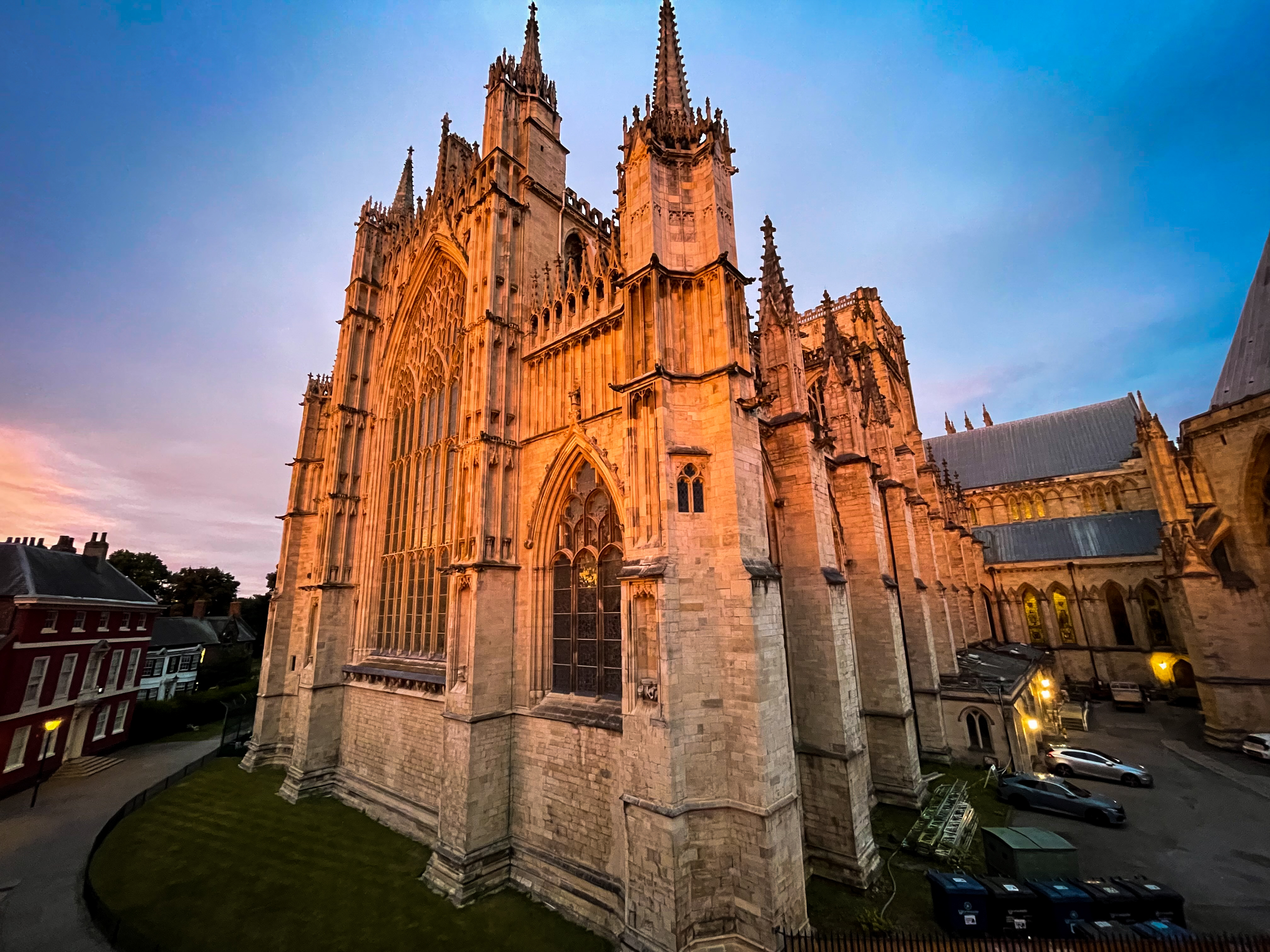
There is much about Anglican reason, tradition and spirituality that appeals to me. At its best there is a generous and pastoral care for communities and the “frowsty barn”, as Larkin put it, that is often at the physical centre of towns and villages. Sometimes it is the spiritual centre as well – but not always. It feels that this is the moment when England needs to decide the fate of its Church. Whether through a Royal Commission – as Martyn Percy suggests in today’s Observer – or a different process, some definitive solution is needed to ensure the safety and ongoing purpose of the Church. Many of the attractive characteristics of the Church I grew up with have gone – but can something new emerge that preserves the best of it for the future? The 500th anniversary of the Act of Supremacy is on the horizon (2034). Perhaps even Thomas Cromwell might feel that now is the right time to begin reshaping the kind of Church he helped establish, to fulfil it’s calling in a new era?

“To reform church and state you must deal with the populace.”

Mantel, H. (2011). Wolf Hall (Vol. 1). Fazi Editore.

Wings of Longing

Recently I was prompted to ponder whether angels have beards. I was visiting St John’s church at Howsham, in the Harton Benefice, north east of York. In the church’s porch is a carving of an angel sporting a beard (below). It was a sight that stimulated thoughts about angels, our tendency to anthropomorphise these heavenly beings, and what our long history says, across many faiths, about angels in the 21st century. As it happens, the appearance of angels has a lot to do with our imagination and how people conceived of beings who can span the divide between the secular and the sacred.

Today, on the Feast of St Michael and All Angels, it might be helpful to recall that many theologians across church history have not viewed angels as corporeal. Instead they have been regarded as expressions of Divine thought and agency; the light of heaven that breaks into the darkness of this world. Of course, in the history of art they are consistently represented as beings akin to people, albeit extra-shiny and with a pair of wings. Their expressions are typically impassive, like good servants they betray neither joy nor sorrow about the news being conveyed. The notable exception to this is the antics of the heavenly host at the Incarnation, joyfully praising God and generally whooping it up.

Thomas Aquinas, the Angelic Doctor, famously wrote of the “Bread of Angels, made the bread of people”. Panis angelicus is a stirring hymn of praise to God for the grace of sharing with humanity food which is the everyday fare of heaven. Consequently, at the Eucharist, angels are always referenced in the liturgy. As bread and wine are taken and consecrated, the material becomes one with the Divine, just as it did when the Word became flesh. This enacts a significant truth of Christianity: that in Christ the world is being redeemed. It is a central tenet of orthodox Christology, expressed in the Athanasian creed, that Jesus was perfectly divine and perfectly human. This was not God and a man sharing a room! The presence and witness of the angels in the liturgy expresses this fulfilment of the secular in the sacred. In the birth, death and resurrection of Christ, humanity is truly “ransomed, healed, restored, forgiven”.

“The beast taken” Revelation 19:20. York Minster Great East Window

Angels are not beings confined to churches and places of worship. The biblical references to them are most often in the secular, encountering people out in the world. Their strangeness and seemingly random appearances inspired the author of the Letter to the Hebrews to remind us that in our reception of others “some have entertained angels unawares”. During a time as poet in residence at Bradford Cathedral, Diane Pacitti published a collection of poems entitled Dark Angelic Mills. In the final entry, ‘Angels in Bradford’, Pacitti reflects that angels come in many guises. Perhaps as ‘kindertransport children, Asian workers, Syrian refugees, Rohingya Muslims’. In her poem, just as each church had its angel in the Book of Revelation, she invokes the spirit of St John to call into being the Cathedral’s angel:

Let it spread
huge-feathered wings over this hut of stone.
Let the song of wonder weave into its prayers
and seep into its silences. Angel-voice,
speaker of demanding truth, send out this church
to affirm the holy in what seems most broken.

Dark Angelic Mills by Diane Pacitti, Norwich, Canterbury Press, 2020.

The Church should always be the place which drives the heart of our participation in God’s mission of love for the world. We are drawn in, revitalised, and expelled back into the pathways that take us to both places of obvious significance, as well as to the peripheral and the neglected. In the ‘hut of stone’ where the church gathers we should encounter again the moment when the secular and the sacred meet: ‘the end of all symbols’ and the place where we are fed with the bread of angels.

Lancashire Low

It’s probably a phrase which means nothing to all but a few people today, but ‘Lancashire Low’ was once a term applied to the character of the worship offered in the churches of that county. I heard it first when speaking with an ‘ACCM selector’. These figures were the driving force of the Church of England’s process for selecting candidates to train for ministry. Having lived all my life in Lancashire this description came as news to me although, intuitively, I recognised what it was describing. Not high up the candle ‘bells and smells’; nor ‘happy clappy’ evangelicalism, but a fairly sober, minimalist and no-frills approach to divine service. During my childhood and adolescence, as the C of E began to experiment with new liturgies, this character was beginning to change. Perhaps most notably, the Eucharist was becoming the most central act of worship, and a variety of vestments were beginning to be used more widely.

“the Lord’s Supper is a sacrament of our redemption by Christ’s death; it is not only a badge or token of our profession, but rather a certain sure witness and effectual sign of grace and God’s goodwill towards us, by which He doth work invisibly in us, and doth not only quicken, but also strengthen and confirm our faith in him”.

Mary Astell (1668-1731)

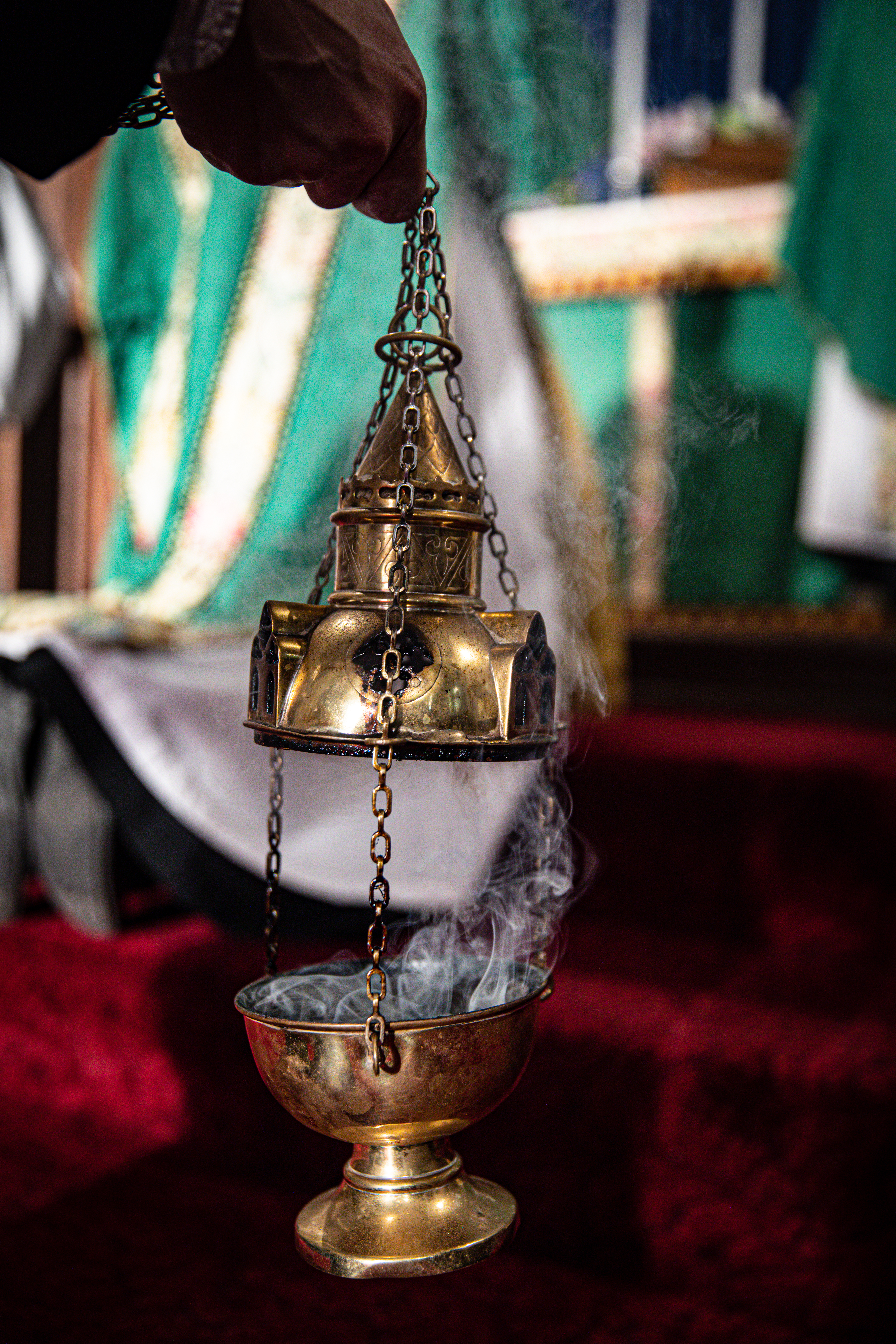
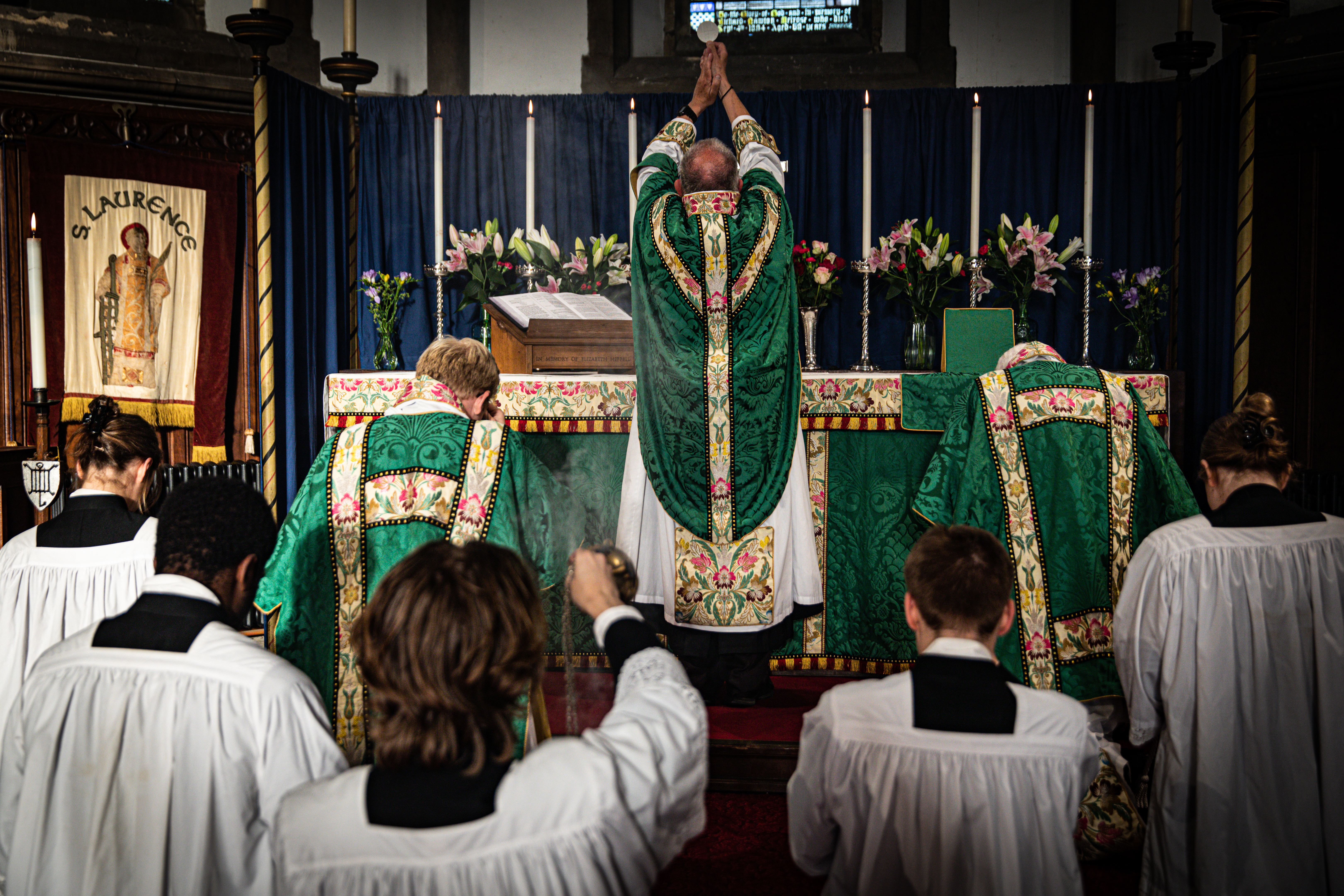
One of the parishes in York which I am supporting on Sundays could not be further removed from ‘Lancashire Low’. The church of St Lawrence, a few yards outside the city wall to the east, was built at the time of Catholic emancipation to offer a High Church, Book of Common Prayer, liturgy for people who might otherwise have been attracted across the Tiber. On Maundy Thursday, when the church is stripped of all adornments, the vestry overflows with the sheer quantity of vestments, candles, hangings etc. etc..

Despite the disparity between the church of my youth and this particular church, there are many interesting features in the character of St Lawrence’s. Firstly, located in an area of significant student accommodation, it counts many 18-30 year olds in its congregation. As is the manner of High Church liturgy, there are lots of ways for these young adults to get involved, for example, in the choir or serving. Perhaps in an age when choice continues to be elevated as the principal virtue, the given nature of the liturgy – its specification and detail – holds a counter-cultural appeal. Also, in a world of words, the presence of fabrics, colour, smells and bells, offers an in-person sensory experience that is welcome and appealing. All too often, when I assist at other churches, there is only the vaguest awareness of a pattern or tradition. “Wear what you like” can be the unhelpful response when I ask about the usual clergy attire for conducting the service. More often than not there are no vestments at the church or, if there are, the sets are incomplete.

Unusually, with an immense amount of hard work by dedicated laity, this church has been transformed from near-closure to become one of the better-attended churches in the city. There has been a sustained commitment to weekly Evensong on Sundays which has established a strong choral reputation and can see attendances reach a hundred. Generous gifts and successful grant applications have put the fabric of the building back into good order. None of this has been easy, not least because many students are only with the church for a few years while some, however, have decided to make York their home and continue to worship and assist at the church.

It is not possible to convey the Gospel, or help people shape and develop their religious life, without contact and engagement. Over many years the church of St Lawrence has done the hard work of building student engagement and outreach. Despite the assumption of many people that a church using the Prayer Book would be destined to failure, the opposite has been true. This is not without risks, as there can be a temptation in any tradition to see what is at hand and miss that to which it points, but you can’t get somewhere unless you start somewhere. In recent years several young men and women have entered on a journey of vocation leading to ordination. This is a church that has an ebb and flow of involvement, but it is unlikely – whatever happens in the future – that people will forget the experience of worship into which they are invited and immersed at a formative stage in their lives.

Sentry Duty

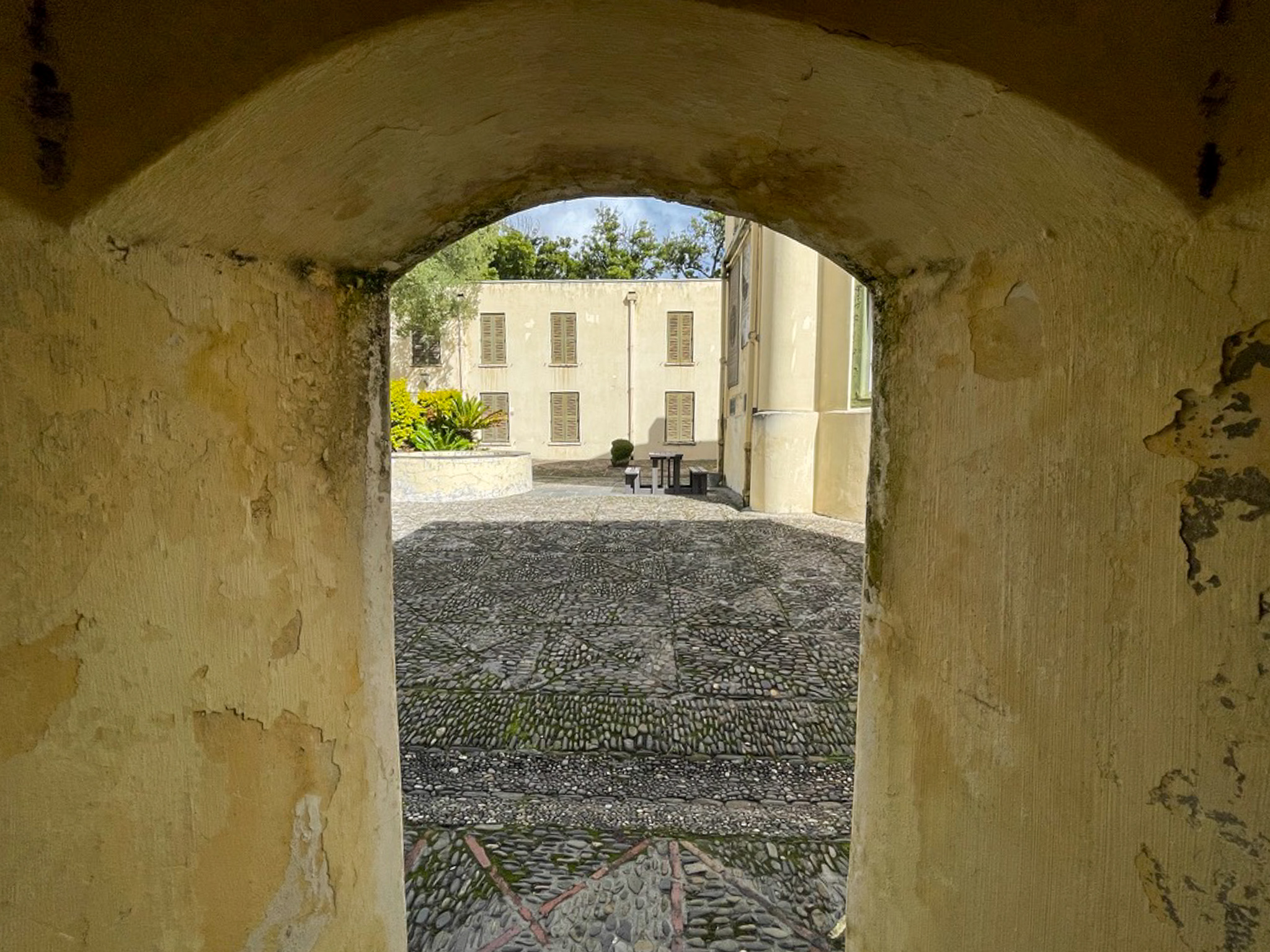
Observation alters behaviour. This was a truth made with notable clarity and force by the French philosopher Michel Foucault, in relation to prisons – but the effect is far wider. In the courtyard of the Slave Lodge in Cape Town there is a sentry box, re-sited from Fort Knokke (built in 1744). It was part of the infrastructure of military occupation that safeguarded colonial interests, not least those of the East India Company.

I can’t recall whether I’ve ever stood in a sentry box before. Spending some time walking around the box, and then standing inside, brought home to me the altered state that occupying the box brings. A soldier has the benefit of protection bought at the price of limited sight. Narrow slits afford some vantage, but these are inevitably narrow in perspective and focused on particular points of danger. Walking into the box demonstrated how much sound is altered in the small structure. Effectively the sentry’s perspective is limited and defined, while sound is muffled and becomes more distant. Simultaneously the guard is present in, and distanced from, the wider community.

The relationships which colonialism brings are invariably infantilising. The occupying powers ‘know best’ and inflict their religious, economic, military and political stamp on unwilling lands. Spending time with the people from The Warehouse in Cape Town reveals the lasting scars and consequences of a regime rooted in colonial attitudes. In a clear and autobiographical style, people shared with us their identities and histories, and explained how growing up in different decades in South Africa has affected their family relationships; education; type of work; place to live; and friendships.

It was encouraging to hear all this set within a framework of a theology that was natural to reference and practical in its insights. Equally, along with many other things, I found it disturbing to learn that at one point in its history the Dutch Reformed Church had decided that the common cup would not be shared between ethnic groups.

the discomfort of white members in sharing a cup during the offering of the sacraments led to the establishment of the coloured “daughter church” and later that of the black population, which came to be known as the Dutch Reformed Church in Africa.

Konzane, M. P. (2017). Mission calling in a congregation of the Dutch Reform Church of Africa in a transforming society: a case study in South Africa (Doctoral dissertation, North-West University (South-Africa)).

At the start and end of this first day in Cape Town we read Matthew 21. As our pilgrimage progressed I found resonance and connection with a detail towards the end of the passage, when the religious leaders say to Jesus: ‘Do you hear what these children are saying?’ The translation we are using says the leaders were ‘indignant’ when they asked this question. It is not uncommon for discriminatory language to belittle others by making a comparison to children, implying that some adults are less than they ought to be. Daughter churches? As we spoke about the decision to segregate the administration of Holy Communion it also led me to reflect on the common practice in many churches to exclude children from this sacrament. It may seen natural to some, but I wonder whether it is wise.

Inevitably, my first 48 hours in South Africa has raised questions about the mechanics of oppression; all the people caught up in its operation; and those bearing the brunt of its legacy. Where we stand shapes what we can see and how we can hear – and sometimes we all need to take the risk of stepping out of our box to engage with different perspectives. That, as much as anything else, should be our duty and our joy.

Hidden in Plain Sight

Churches pepper the landscape of England, to such an extent that there are few places without some kind of ecclesiastical edifice. Now well into my fourth decade of ordained ministry, I would be able to retire comfortably if I had received a pound for every time someone has remarked that the church is the people, not the building. I do not doubt the statement, but Christians are physical beings who need physical places in which to meet and pray. Even transient settings are altered for a few moments when a sacrament is shared. Countless times at a hospital bedside, with curtains drawn at the patient’s request, the ancient prayers and ritual have evoked a fleeting stillness and sense of the sacred. On very rare occasions, having heard the liturgy being spoken, a nurse has ducked into the space to received Communion as well – something I doubt there would be time for in today’s overstretched NHS.

There was a notable minority thread of comments on Twitter over Christmas from clergy who were not tweeting about full churches at midnight; crib services that were overflowing with children; or carols sung robustly by the faithful gathering of older parishioners. Away from the cathedrals and civic churches many services took place with thin congregations and in the absence of children. These were no doubt meaningful and moving, but they are also a reminder that in many communities the ‘fringe’ of people who attended on high days and holidays has mostly evaporated.

It was encouraging recently to be sharing in worship at rural churches in East Yorkshire where, statistically, a significant minority of the population attends church. I can well imagine that this is the kind of place where occasional worshippers would also be present at Christmas and Easter. It was encouraging, in conversation, to hear about plans to improve the welcome for new residents in the parishes, and fresh thoughts about how to connect and involve people who might be feeling isolated. All this within an Anglican-Methodist ecumenical partnership which is currently advertising for a Minister/Vicar.

The church building is at the heart of these communities. While maintaining them is problematic and costly they offer a focal point that pose questions of faith and purpose every hour of every day. It is quite true that on their own this seldom achieves very much – or some of the churches I’ve mentioned would be full to the rafters. The buildings require an active Christian community just as much as that community needs a place to meet, and a place to manifest the physical expression of faith over time. I’m not sure we understand fully, as a society, how precious and valuable our stock of churches is when it comes to art; social history; traditional crafts; and the evolution of theology and belief. Perhaps there is more that we need to do to enable these buildings to speak and, in their speaking, to tell afresh the faith that has inspired their creation.

“Comprehension of architectural monuments, signs, symbols, cultural codes allows students to penetrate into the spiritual life of another culture, especially the national character through comparison with their culture. Thus, when considering the semiotics of a Russian church and an English medieval cathedral, students’ attention is focused on symbolism, which helps decode non-verbal languages and meanings, helps to understand the mentality of the English people”.

Sabirova, D.R., Solovyova, E.G., Pomortseva, N.P. and Antonova, S.P., 2019. Comprehension of the english national character in building professional linguistic culture. Journal of Educational and Social Research9(3), pp.101-101.

Perhaps the lack of progress in this direction stems in part from anxieties concerning cultural heritage. For example, that prior to the 1950s Britain was a culturally much less diverse society than it is today. Using building to interpret the past could emphasise a narrow concept of being English and exclude the presence of the faiths now widely present in society. Furthermore, as the Church of England itself recognised with a debatable financial commitment, the construction of many churches was funded to varying degrees by the proceeds of slavery; exploitation; and the blessing of abusive power.

At the moment it seems that we do a modest amount to share the architectural marvels and complex histories that litter our countryside, towns and cities. In some cases, if just one of these buildings was somewhere in the USA, it would draw visitors from across the continent. Here many are closed most of the time; lack explanatory boards and information; and do little to make their presence known. No doubt funding is part of the problem – but that is also a catch 22. Without being open and communicative, fewer and fewer churches will have the vibrancy I encountered in rural East Yorkshire.

Today is Mothering Sunday and some people will be remembering with thanks a particular church in which their faith was once nurtured and inspired. A number of those church buildings will no longer be in use as a place of worship, while others will have disappeared entirely. However, the spiritual imprint of a church that has served us well is carried far beyond the walls of any given place. We carry its light into our daily lives, and hope that – meeting the lit shards of others’ faith and love – a pattern of greater purpose and beauty takes shape. At times this can feel a forlorn hope but, perhaps, it is the only meaningful hope we have.

Two or Three

Understandably, Evensong is about the ending of the day. As I have written before, it offers a space for reflection and prayer rendered in words that are centuries old. Once a staple ingredient of the worshipping diet of the Church of England, fewer and fewer churches hold the service with any regularity. Cathedrals still maintain its place as a mainstay of their existence and many are rewarded with appreciative congregations. York Minster saw many hundreds of people at its Easter Sunday Evensong, but this is the exception rather than the rule.

Recently I attended Evensong in the pretty port town of Whitby. I was fortunate in that my stay coincided with the one Sunday in the month when Evensong is held in one of the Anglican churches. This information wasn’t difficult to find on the internet – but I note that the local paper, the Whitby Gazette, no longer carries a listing for local church services. The publication has always felt a little retro (I’ve no idea how common the practice is) but until the pandemic there was always a sizeable entry reporting all the service times for Whitby and the surrounding villages for the forthcoming Sunday.

‘The other response to decline has been the creation of complex patterns of rotation of services’.

Bruce, S. (2011). Secularisation, church and popular religion. The Journal of Ecclesiastical History, 62(3), 543-561.

The service I attended took place at 6 pm in the large Victorian church of St Hilda, built in 1844. As I have found with a number of churches at service times, there was no external indication of what was about to take place. Admittance was by a modest door that stood open, but with no signage inviting entry. Coming to this service required a confident churchgoer. While there was no one there to greet worshippers, books with a service pamphlet were prepared and waiting on a table. Arriving just a few minutes before the service time I found that I was one of three worshippers sitting in the nave. On the hour a crucifer and robed choir in double figures entered via what appeared to be a side chapel, and the service began.

It was a good service. Three hymns were sung, all familiar to me and strongly led by the choir. There was no sermon. Yet in a town of thirteen thousand souls, with many more visiting as tourists on a Bank Holiday weekend, the congregation never rose above three (two of whom were clergy). I’m not very interested in nostalgia, but there may well be a place for lament. For Evensong aficionados the service was listed in the Choral Evensong website, but that made no discernable difference to the attendance. Although over a decade old, I think Steve Bruce identifies accurately many of the problems of religion in these coastal communities, and more widely. Numbers have dwindled; clergy are fewer; sustaining services across multiple benefice parishes has led to complex timetables; as churches have closed a wider network of folk religion has diminished. In all the counting done by church strategists, the existence and role of popular religion is mostly neglected. The people whose children went to Sunday school; who attended the Carol services and coffee mornings; who turned to the church for occasional offices. Throughout my ministry, this group has been a vital part of my pastoral ministry, whether as residents in a Lancashire suburban parish; as patients in hospital; or amongst the people now living into their tenth decade and beyond. The mood music of the C of E seems to require this group to make a decision: be a disciple or be gone.

‘a notional sense of affiliation and occasional and peripheral involvement in churches and chapels requires that there be functioning churches and chapels close at hand’.

Ibid.

While there are groups now fighting a rearguard action, such as ‘Save the Parish‘, the spiritual capital already squandered through closure, complexity and theological withdrawal, will not be regained. It was built over centuries and lost in a generation. To many of us the ‘disciple’ mantras from the centre sounds like an ever-narrowing agenda. The ark may have escaped our reach, but we are downsizing to lifeboats in order to accommodate the faithful few and float over an ocean of the un-saved. This pays little regard to the everyday sacred; the resources of our churches as wonderful places to ‘be’ (when they are open); the honest striving of people to make sense of their lives.

In the glories of High Church Victoriana, Evensong can feel like the faithful performance of am-dram Shakespeare. A mystery play forged through the fires of Reformation England, with local actors adding their accents to the long, long tradition of Anglican spirituality. Words that name our wretchedness, speak of the dead and lay hope in the resurrection. In a town where the physical landscape is used to such good effect, and where jet became the jewellery of mourning, I wonder if there is any chance that new life might be breathed into this ancient worship? Before we give up the ghost on this liturgy, perhaps we should consider the possibility of new links and relationships. Surely, if any piece of worship was ever made for the Goths who congregate in Whitby, it’s Choral Evensong.

Misperception

Life-drawing presents all kinds of challenges to the drawer – especially me. A fundamental issue is the need to unlearn our habits of seeing what we think is there, and focus on the reality of the subject. This requires careful attention to the relative size and scale of limbs and their disposition. For example, the face is only a small part of the head, even if our communication-centred focus leads us to privilege the eyes and the mouth. Drawing what we see as important delivers a disjointed and disproportionate view of the body.

For some time I have been intrigued by Anil Seth’s hypothesis that consciousness and our sense of self is best understood as a ‘controlled hallucination’. Reflecting on this I would be more inclined to amend the phrase to ‘collective’ rather than controlled. In every age there have been people who stood apart from a collective agreement about what constitutes a normal sense of self. Usually, they suffered for this nonconformity, even if their perspective later came to be an accepted view. For me the strength of Seth’s idea is not so much for people who share an agreed interpretation of objects and events, but as a way to explain behaviour when the hallucination is fractured. For example, with dementia, the way we order past and present might be rearranged. There is still engagement with the material world but this materiality might be significantly recast and reinterpreted. A husband and son are not recognised in these roles but instead named as the person’s father and brother. Sense-making appears to be less controlled and requires some lateral thinking in order to comprehend. In this example, in which I was involved, the person knew that these were her male relatives of different generations, but the designations were misplaced.

I noted some time ago that the pandemic has generated increasing interest in subjects such as those covered in York’s nightly ghost-tours. At the time I thought this was linked to increased mortality but in the light of a recent Guardian article I wonder if there is another reason. For example, whether the degree of social disruption has sent a significant earthquake through the ground of our perception. What was assumed to be certain was shaken, and many people are in the process of renegotiating the relative meaning and value we construct to make sense of the world. It is not necessarily the case that more people believe in ghosts, but they may be more open to the unexpected and the disruptive.

Prof Christopher French, head of the anomalistic psychology research unit at Goldsmiths, University of London, is not surprised to hear reports of a rise. “There is historical evidence for increased interest in, and reported experiences of, this kind of stuff at times of uncertainty, stress and turmoil.”

Emine Saner, ‘Spooky Britain: how ghosts became a national obsession’ The Guardian, 6 April 2022

How we draw a head, or how we order our experiences of the physical world, may not be as accurate as we would like to think. A significant aspect of religious experience is that the way we accept the world should be questioned and challenged. Today, Palm Sunday, is a day when the Church marks the start of a week in which the presence of Jesus questions a whole range of assumptions. Entering Jerusalem on a donkey, the expectation of sovereignty is placed in a posture of humility and service. This is a King who is not here to stamp authority on a subjugated people. Perhaps more potently, his action in washing the disciples’ feet on Maundy Thursday puts the teaching into action. Jesus’ words and deeds subvert the accepted relationships in society and open the possibility that we see and embrace a more proportionate understanding of our place in the world. A place where we see properly the people who are often peripheral to our vision; recognise our illusions of independence for what they are; and live at peace with our mortality. The foundational stories of the Abrahamic faiths all narrate how our clarity of sight has been corrupted and distorted. On our own we cannot see aright, and embracing this awareness should foster some humility and co-dependence as we seek to determine how best to live.

Outside York Minster on Palm Sunday 2022, the Processional Cross is ready to be lifted high

Christians live with a conviction that the world is not as it should be. The idea of the Kingdom of God points to an altered reality where a different kind of society lives in peace and justice. Having this belief may inspire discontent with the world as it is, as well as energise activity to aid this Kingdom emerge fully into our personal relationships and local communities. In this much there is hope, resisting the temptation simply to accept what is in front of us and ‘labour for what does not satisfy’ (Isaiah 55:2). When it is fully alive, the Christian story challenges false power by its persistent presence and emphasis on servant leadership. It questions those who misuse religious authority, and stands in profound silence before Pilate. At the end of this week those who oppose the petition ‘your Kingdom come’ find that even the certainty of a sealed tomb is not enough to extinguish this outrageous hope.