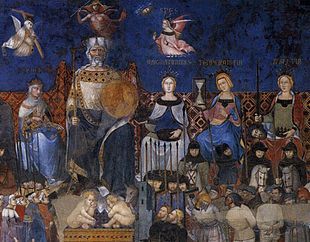
Good & Bad Government

It is sobering to stand before the The Allegory of Good and Bad Government in the beautiful city of Sienna. The exquisitely detailed frescoes by Ambrogio Lorenzetti were painted in the mid-14th century and focus on the responsibilities and consequences of civic authority. It was created at a time when the Italian city-states were evolving efficient and pragmatic forms of government. Notably, as with Lorenzetti’s frescos, this form of politics was not channeled through the Church. Methods of organisation and management were viewed as some of the finest in Europe and provided models for institutions in other lands. For example, Henry VII drew on plans designed for running one of Florence’s hospitals to inform his work to found the Savoy Hospital in London.

The concept of governance, defined as “the way in which public power and authority is formed and used to control and manage society’s resources”.

Laver, R. (2010). ““Good News” in the fight against corruption.” The Review of Faith & International Affairs 8(4): 49-57.

During the Reformation in England there was a decided turn towards the centrality of governance. This isn’t unexpected given the King’s determination to consolidate his position at the pinnacle of authority. Nor can it be surprising that an assertive renewal of governance would clash with anything that might appear to trespass on sovereign power – not least the Church. From the mid 1530s ‘Henry remained insistent on his royal supremacy for the rest of his reign’ (Orme, 2005). The government of Church and State were to be united in the King’s person.

“and shall have and enjoy, annexed and united to the imperial crown of this realm, as well the title and style thereof, as all honours, dignities, preeminences, jurisdictions, privileges, authorities, immunities, profits, and commodities to the said dignity of the supreme head of the same Church belonging and appertaining”.

Henry VIII ‘s Act of Supremacy (1534)

The consequences of this spiritual and temporal unity ran wide and deep. Sovereignty was projected into public life in ways that proclaimed the place of the King as governor of all that lay in the Kingdom. It became customary to replace sacred images in churches with religious texts and the Royal coat of arms. Tellingly, among the options available to address God in prayer, the language of governance became more pronounced. The poorest in society, those availing themselves of re-founded hospitals, made their prescribed prayers to: ‘O Lord, our Governor’.

Good and bad governance is a persistent theme in many books of the Bible. The prophets in particular spoke out for just government and against corrupt or self-interested forms of leadership. Ruling with justice was seen as the fulfilment of God’s will for the people. The initial verses of Isaiah 32 convey the sense of desire for a sovereign righteousness that will bring peace. With the right King the ‘princes will rule with justice’ and be ‘like the shade of a great rock in a weary land’. The prophet articulates the longing of the people. The time for the rule of villains and fools has passed.

 “A fool will no longer be called noble,

    nor a villain said to be honourable”.

Isaiah 32: 5 NRSV
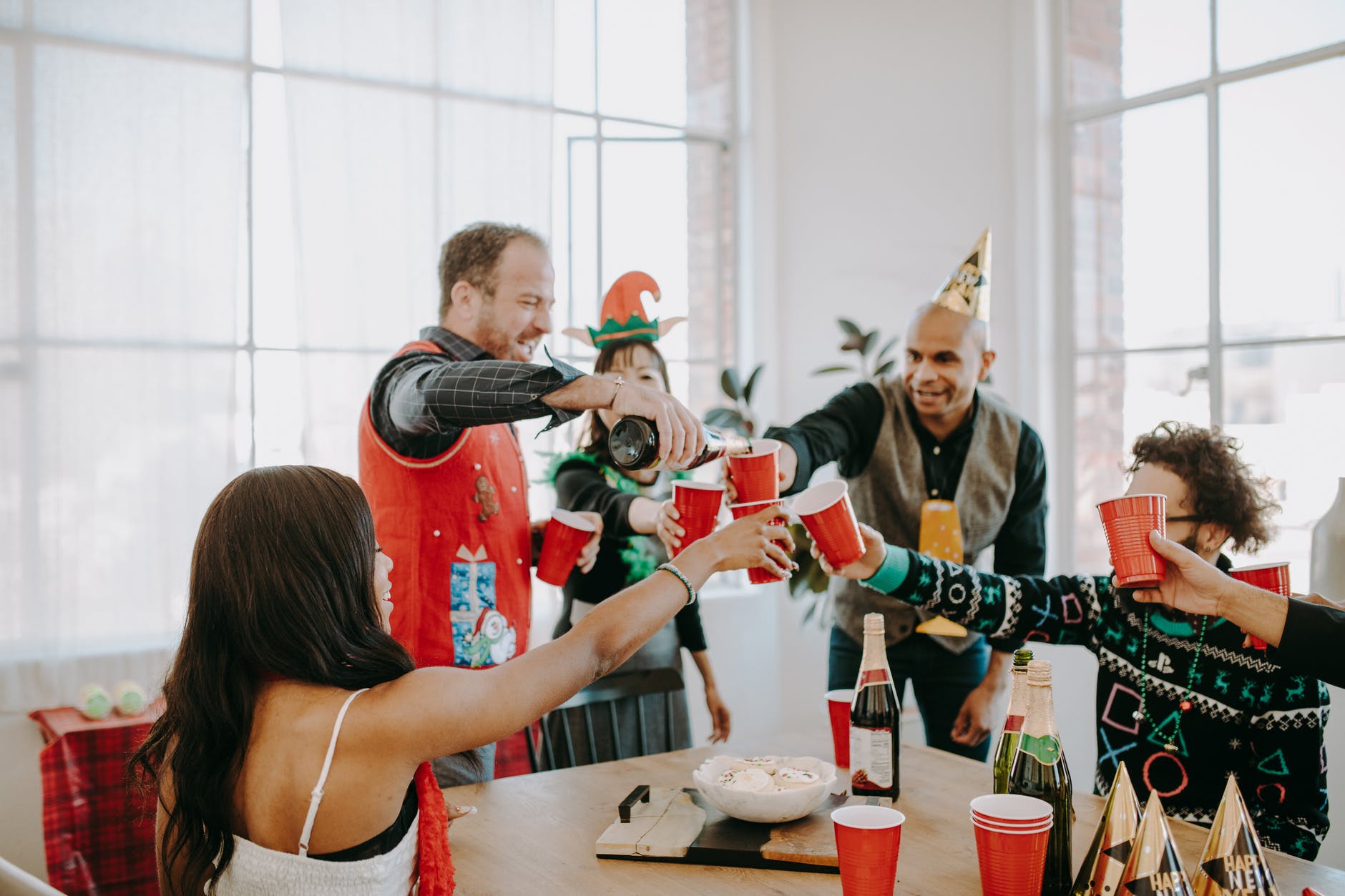
Photo by RODNAE Productions on Pexels.com

While it may sound like a festive after-dinner entertainment, ‘when is a party not a party’ involves far more serious issues than its frivolity suggests. It isn’t possible yet to calculate the sheer cost of lockdowns for people, only time will reveal the consequences of isolation and shielding. For some people the impact of COVID-19 deprived them of a last Christmas with their nearest and dearest.

We can all say silly things and forget the wider context of life around us, but at 10 Downing Street it feels more like an infestation of disdain rather than a slip of the tongue. A Prime Minster who began the pandemic bumptiously telling reporters he’d been to a hospital where there were COVID patients and shaken ‘everyone’s hand‘. Then he was in hospital – but appears to have learned little from the experience. It certainly didn’t appear to increase his determination to practice prudent infection control. A Government that didn’t even bother thinking what COVID would do to care homes, until the mounting death toll made it unavoidable. A Secretary of State for Health who broke the COVID rules and resigned. Vast amounts of money paid to poorly vetted suppliers, to do at huge expense what other countries managed far more economically. The handling of Brexit.

I can only begin to imagine the lurid frescoes Lorenzetti would need to paint to capture this litany of maladministration, self-interest and contempt. ‘Bad Government’ is too weak an epithet for what we are living through, experiencing and enduring.

Set in a Silver Sea

John of Gaunt’s valedictory speech is one of the most famous texts left to us by Shakespeare. It paints a picture of an idyllic England – a second Eden – benefiting from natural advantages that make it the envy of other nations.

This fortress built by Nature for herself

Against infection and the hand of war,

Richard II

Most of us remember parts of this lyrical acclaim for all that England might be. However, as Gaunt goes on to say, this vision of a country playing to its strengths is undermined by the reality of its government. The glory of ‘this sceptre isle’ has been leased out like a ‘pelting farm’. There is some uncertainty about what pelting means, but it isn’t difficult to hazard a guess. This is the kind of farm, not well managed by owners, let out instead to irresponsible tenants. Rotten deals and blotched paperwork converting the richness of the land into a shameful destruction. Feeding the greed of a few rather than the common wealth of the many.

Plus ça change, plus c’est la même chose.

There is little to suggest that our island fortification has served us against infection. The recent report on the UK’s Government’s handling of the pandemic identifies a sense of resignation about widespread infection: “a policy approach of fatalism about the prospects for covid in the community: seeking to manage, but not suppress, infection“. As we journey into winter there is growing concern about the impact of an approach that appears to tolerate a high level of virus transmission. Quite what immediate and enduring damage that policy will inflict can only be guessed. Vaccination has made dramatic changes to the severity of illness and number of deaths, but very small percentages of very large numbers may still overwhelm the NHS.

Whether with COVID-19, human conflict or climate change, it appears that we continue to pose a danger to ourselves. We have turned parts of a beautiful world into pelting farmland, leased our lands and sold the future through the debt of bonds. Offering a different perspective on familiar problems, Professor Brian Cox gives us new cause for thought in his TV series Universe. According to quotes in The Guardian he believes that life capable of generating meaning may be a very rare phenomenon. It leads the paper to conclude that “the demise of Earth could wipe out meaning”.

Photo by Miguel u00c1. Padriu00f1u00e1n on Pexels.com

Whilst humanity has flirted with the apocalypse since people could create meaning, our capability to destroy has never been greater. We have focused on the development of technologies that have made astonishing strides in our ability to alter and shape our environment. A question to which we should give urgent attention is whether our moral and ethical capacities have matched this pace of development? Looking around the world it appears that the growth of wisdom has lagged ever further behind our capacity to manipulate our environment.

Even the most glancing trawl of social media reveals the scary range of human folly and denial. There are people so fed up with the BBC that they have decided not to use it anymore because it should be called the ‘British COVID Corporation’. The BBC is simply seen as a co-conspirator with the Coronavirus hoax. Another message contains a video clip of a group entering an NHS Trust HQ and presenting ‘legal’ documents calling the hospital to account for its complicity with the hoax. Earlier last week Michael Gove was surrounded by a group of anti-lockdown protesters. Following the murder of an MP I can’t imagine how frightening this kind of experience must be, both for him and the Police then required to attend.

What is infuriating for so many people working in the NHS is that despite all the evidence to the contrary, people continue to think doctors and nurses are ‘making it up’. For a decade I served on a research ethics committee made up of leading figures from a number of fields. We had the services of a professional academic statistician; a lawyer; lay members; and senior nurses and consultants from a wide range of clinical disciplines. The focus on probity and evidence could not have been greater. While on a recent holiday I watched the Matt Damon narrated documentary film Inside Job. It tells the story of the 2008 financial crash and, among its many points, draws attention to the way leading economists with lucrative links to Wall Street wrote articles about the safety of new financial products without any hint of conflicting interests. By contrast, medical research has multiple safeguards to ensure this lack of transparency doesn’t happen. I’m not saying the NHS is perfect, but it is light years away from the free-for-all that appears to go on in the financial institutions featured in Inside Job.

Political messaging in the first wave of the pandemic was clear – protect people by protecting the capacity of the NHS

Of course, I have little hope that reasoned argument will diminish the passion of resolute protesters. While it would be easy to dismiss them as voices from the outer fringes of society I am not so sanguine about their impact. The Government is listening to those who believe (or wish to believe) that living with high levels of COVID transmission and deaths is a price worth paying for an open society. Boris Johnson has quoted months ago as stating a preference for ‘bodies piled high‘ over another lockdown. Once again, it is likely to be the vulnerable and elderly who will pay the price for this policy, with the ONS reporting a range of common pre-existing conditions among those who have died in recent weeks.

How we navigate the coming months will tell a story about attitudes in the UK to the vulnerable, elderly and poor – and whether we prefer to be a pestilent and pelting farm, rather than a noble, blessed and happy isle.

Seasons for Everything

It always felt like the first intimation that summer had ended. When I was a vicar in north London in the early ’90s, the opening week of September brought an invitation to speak to the local Cub Scouts. After the holidays and warmer days of August this annual meeting marked the start of all those activities that punctuate the remaining months of the year. There might be warm days, or even brief heatwaves, but they always felt borrowed out of season. The trajectory of shortening days continued notwithstanding the gift of unexpected heat.

York has been exceptionally busy this month. It has been impossible to get a table for dinner at a reasonable hour even when you try to book the day before. The streets hum with the chatter of tourists discovering (or rediscovering) the charm of England’s northern capital. When the sun is out the river side pubs and open spaces fill with drinkers and sunbathers alike.

This weekend York has hosted a balloon fiesta and crowds have filled The Knavesmire. People have come from far and wide to visit the fair or hear the acts performing on the open air stage. On the whole this looks and feels like a return to 2019 normality, with little mask wearing or social distancing. The joy of these once familiar freedoms at an outdoor event no doubt adds to the delight of those attending. Yet it is hard to feel entirely at ease when so many concerns circle the globe. From the disastrous exit from Afghanistan to a UK COVID rate 26 times higher than a year ago. The problems we face show little sign of diminishing, even though vaccination has thankfully transformed the severity of the risk associated with the pandemic.

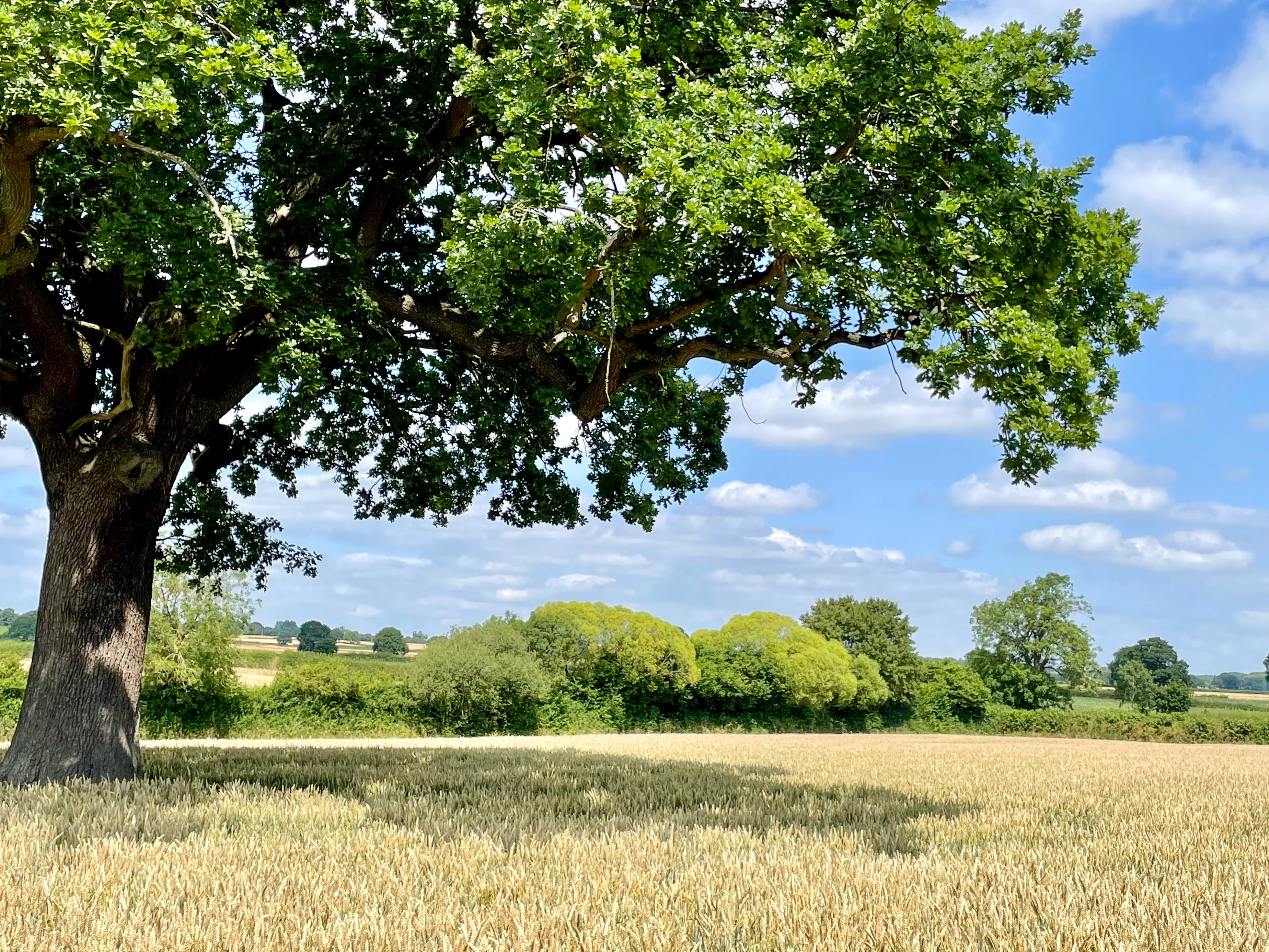
We need ordinary pleasures. During the past 18 months many of us have rediscovered a connection with nature, from walks to wild swimming. In places this has created its own pressures on the environment and local facilities, but there are plenty of less crowded locations of outstanding natural beauty. As I know from working with older people, the vivid differences we see in each of the four seasons can be both orientating and affirming. To look at a tree tells us where we are in the year. The deep greens of August promise the glorious transformation to browns, yellows and golds still to come.

The interplay of human activity and the seasons is captured brilliantly by Ali Smith in her quartet series. Here the personal, the political and the natural are meshed together in a vivid reflection of how the seasons shape our thoughts and interactions. I can’t imagine living where both daylight and weather alter very little across the year, but perhaps smaller changes simply become more significant. During a year I spend in South America that certainly seemed to be the case.

“The days are unexpectedly mild. It doesn’t feel that far from summer, not really, if it weren’t for the underbite of the day, the lacy creep of the dark and the damp at its edges, the plants calm in the folding themselves away, the beads of the condensation on the webstrings hung between things.” 

Smith, A. (2016). Autumn (Vol. 1). Penguin UK.

The Church’s year is clearly marked by a Christianity that developed chiefly in the northern hemisphere. As the months march on to the year’s end, gathering darkness is met by the gift of light. The imagery and significance of saints’ days, fasts and feasts parallels the natural world and walks hand-in-hand with the changing seasons. It feels that liturgy and the seasons are welded together.

I have no doubt that age and experience influence the ways in which we respond to the stations of the sun (to quote the title of Ronald Hutton’s book). While some may feel melancholy at the approach of autumn, the Cubs of Barnet were full of enthusiasm and energy as they gathered together after the summer holidays. For them, the season of ghost stories and fireworks ensures that darkness is not without excitement; and explosions of light are brilliant only because they are set against the backdrop of night.

Chronic Emergency

Halfway down the Shambles in York is a shop that closed just before Christmas 2019. Perhaps a victim of an increasingly difficult retail environment, Zatchels ceased trading before the pandemic. However, COVID-19 is almost certainly the reason that this shop has remained sealed and unchanged since its demise. Closing when it did, the window brings a hint of Narnia with its winter decorations and a Christmas that never came. Complete with snowflakes and tinsel it has seen out two summers. In a street which millions normally visit every year the longevity of this winter scene is a small sign of the crisis through which we are living.

The most helpful thing I watched before the start of the COVID-19 pandemic was Chernobyl. The Netflix mini-series is pitch-perfect in its portrayal of an unfolding crisis. Events progress from initial denial, to hastily constructed counter-measures and finally to a realistic assessment and response to the catastrophe. Tragically, like the nuclear accident, it is certain that the consequences of COVID-19 will be with us for years to come. Looking back I’m sure there are many lessons that will be learned and a host of things that would have been done differently with hindsight. In the case of Chernobyl, collateral health consequences and psychological harm were (and are) a significant legacy of the original event – and arguably more damaging than the effects of radiation itself. There has even been the suggestion that relocating residents away from the disaster area to cities such as Kiev caused more deaths and ill health due to pollution compared with the probable outcomes had residents remained in place. It may well transpire that elements of our COVID response likewise caused unintended consequences that outweigh the initial dangers.

There is a human fascination with the consequences of an overwhelming event. Perhaps Pompeii and surrounding cities may be one of the oldest examples of this tendency. These are times of accelerated human analysis and response, when unprecedented actions are taken. It is claimed that the eruption of Vesuvius led to the first attempt at the mass evacuation of a civilian population by a military force for the purpose of rescue from natural disaster. Critical moments can generate unusual thinking and actions, leading in turn to developments which might otherwise have taken decades. I’ve no doubt that the strides made in creating vaccines in 2020 will have speeded up the capacity to design effective pharmaceuticals in the future.

Pompeii – the focus for the launch of a military attempt to evacuate citizens out of the path of disaster

There is little disagreement that a world-changing event such as the pandemic moves through phases. For some time now colleagues in the NHS have characterised this as a ‘chronic emergency’. The immediate response has been made, and now we are living with a high level of daily cases and a steady population of patients in hospitals. The crisis hasn’t ended but we know far more about what we are dealing with and have both vaccines and new forms of authorised treatments. Yet there is little indication that COVID is going away. Despite the high level of vaccination in the UK population we have not entirely halted serious illness, deaths and disruptions to daily life.

The concept of chronic emergency may help explain the high rate of job vacancies in the UK. One report notes that 22% of workers over-50 are planning to bring forward their retirement plans. The unending crisis caused by COVID is sustaining pressures within organisations such as the NHS. Just how long this can continue without staffing issues becoming critical is uncertain. As we drift into the final days of August, with daily cases approaching 40,000, the prospect of schools re-opening; university students re-connecting; and an inevitable turn in the weather, must raise concerns that there is yet another mountain to climb. Just how many summits must be reached before the chronic emergency degrades to a manageable pressure is unknown. Even this uncertainty is a stress on staff who see and experience the impact of the pandemic, not as a set of figures, but as lives ended or changed forever.

“our previously world-beating health service is at risk of moving to the middle of the pack”

Siva Anandaciva, the chief analyst at the King’s Fund, The Guardian, 4 /8/2021

At some point there will be an evaluation of how different response to COVID-19 led to different outcomes. It was sad to see in the most recent evaluation of health systems by the Commonwealth Fund that the NHS has slipped from first to fourth. While this is not entirely attributable to the pandemic there can be no doubt that absorbing the care of thousands of patients with COVID-19 has come at a cost to the NHS. Few other countries have placed so much strain on their health resources during the past two years. If the plan is to ‘learn to live’ with the virus we need to provide the health service with the means to carry out its usual care as well as support people with COVID and its consequences.

In many ways the UK is returning to normality at a pace that will surprise many people. Walking round York and visiting a supermarket, it appears that mask wearing is on the wane. The emergency is slipping from public view and becoming focused in hospitals and GP services. This may be fine for the moderately wealthy, fit and well, but the pressures that continue in health and social care will not remain isolated from wider society. Keeping the standards of the NHS at a high level requires funding that will increase the staffing levels needed to cope with normality plus COVID. That’s no small challenge, but without it the medium and long-term consequences may outweigh the original crisis. We forget the lessons of history at our peril.

The Land the Sunset Washes

It was a very warm mid-afternoon. Cycling had ended for the day, and our tent was pitched. I was 18 years old, sitting with my back to a tree by a babbling brook somewhere in Belgium and reading The Portrait of a Lady. A book that opens with an idyllic description of afternoon tea in a beautiful Thames-side garden during ‘the perfect middle of a splendid summer afternoon’. The kind of writing that lends space and warmth to the image it creates, a picture conjured when the full heat of day was ebbing: an hour which ‘expressed that sense of leisure still to come’. While it is an image steeped in privilege, the leisure and heat of a perfect summer’s day is something many of us have been fortunate to experience at one time or another.

There is an unpredictability about the climate in England that lends a sense of unexpected gift to weather events. Whether it is the warmth and stillness of a summer’s day, or snow falling at a time we are able to enjoy it, nothing in the climate can be taken for granted. A year may pass with hardly any glorious summer days – and winter can fizzle its way through drizzle and damp without the spectacle of a world transformed in a sheet of white. Perhaps we talk about the weather so much because we lack the certainties taken for granted in other countries. Yet even there, climate change means diminished confidence in weather patterns familiar for generations.

Summer in the northern hemisphere can be a time when many people are away and the pace of life seems to slow, just a touch. For classical music lovers The Proms season begins and, to quote Sir David Attenborough in this year’s BBC trailer, ‘a kind of light comes into the diary’. Watching Ralph Fiennes’ stunning performance of TS Eliot’s Four Quartets at York Theatre Royal last week, I was reminded of the reference to ‘summer, the unimaginable Zero summer’. Perhaps this is the kind of perfect day that lives in our memory and is also expressed as a future hope. The pause at the close of an August day, when nature is full and still, and when the warmth feels comfortable and enduring. In a culture when we are so often invested in the last thing, or planning the next thing, a rare moment when we attend to what is at hand.

And for that minute a blackbird sang
Close by, and round him, mistier,
Farther and farther, all the birds
Of Oxfordshire and Gloucestershire.

The final lines of Adlestrop by Edward Thomas

It is this kind of moment, set against the horror of WW1, that made Adlestrop so popular. The poem by Edward Thomas captures the heat-filled moment of a train pausing at a rural station. Long before the rise of mindfulness, this unexpected stop allows the poet to drink in the reality of the moment – from meadowsweet to birdsong. Its uneventfulness somehow achieves a transcendence, even as the moment slips away and the train resumes its journey. It was a picture of peace published just weeks after Thomas lost his life in the war, and it became a touchstone for people longing for the ordinary beauty and peace his words evoked.

In a more recent poem Sean O’Brien reflects on another train journey, this time lost in marking adjudication as the engine draws the carriages through an England of past and present. A daydream lacuna of stillness when work is set aside and the landscape passes like a film.

“This green reserve where no one comes or goes and all
Are necessary as the weather, and where no one seeks
Coherence greater than this afternoon suggests, and where
To all intents and purposes the living and the dead may pass
Their time beneath a sun in cloudy splendour.”

Sean O’Brien , The Lost of England, from The Beautiful Librarians 2015 Picador Poetry
View from Route 66 of the National Cycle Network near Dunnington

As we attempt to recover from the worst effects of the pandemic we need these moments of pause and reflection more than ever. They cannot always be planned, but when they occur we should sink into their stillness. Moments of tranquil and transcendent beauty, when the burdens of past and future are lifted and we are simply required to ‘be’. Entering into such stillness is not a luxury but a vital ingredient of being human. A fleeting pause which, if well observed, becomes food for our journey.

For most of us, there is only the unattended
Moment, the moment in and out of time,
The distraction fit, lost in a shaft of sunlight,
The wild thyme unseen, or the winter lightning
Or the waterfall, or music heard so deeply
That it is not heard at all, but you are the music
While the music lasts.

TS Eliot, The Dry Salvages, The Four Quartets

Peregrination

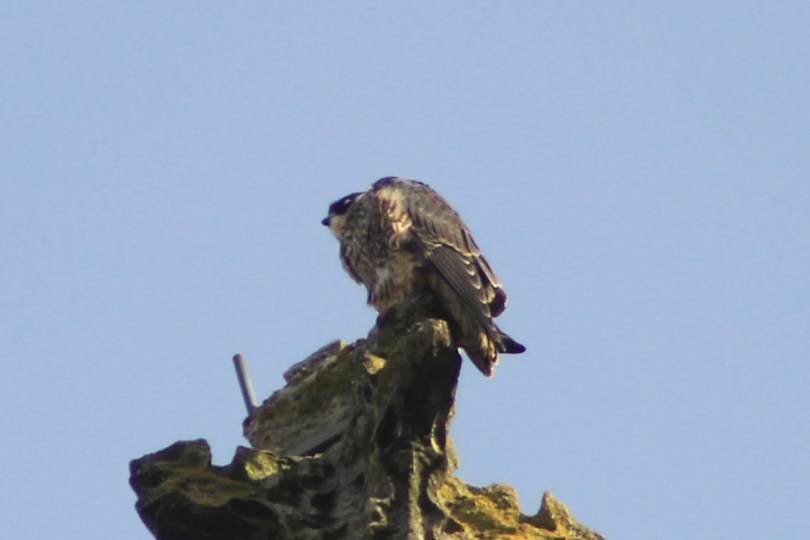
It is an eerie and frequent sound heard around the Minster. Peregrines screeching at one-another (or a passing pigeon) from dawn until dusk. Somehow the falcon’s wing shape feels fitting for a Medieval structure, angular and evidently strong, they combine speed with a sharp eye for distant prey. At height various parts of the cathedral’s platforms and towers show evidence of the peregrines’ success as predators. Pigeon carcasses as strewn about with abandon. Hilary Mantel’s depiction of Thomas Cromwell’s life in the company of Henry VIII sees Bring Up the Bodies open with the protagonist using hawks. Imagining Wiltshire in 1535, Mantel reflects on these skilful, amoral and focused carnivores.

“Their lives are simple. When they look down they see nothing but their prey, and the borrowed plumes of the hunters: they see a flittering, flinching universe, a universe filled with their dinner.”

Hilary Mantel, Bring Up the Bodies, 2012

There is little doubt that the reader is meant to connect the behaviour of these prized birds with the unflinching determination and modus operandi of Cromwell. Just as the hawk sees patterns hidden from sight at ground level, Cromwell is surveying a landscape inaccessible to all but a few. The breadth of his experience, from the narrow and stench ridden back streets of London, to the privy chamber, enabled him to see the connections of the body politic in a way that facilitated his inexorable rise to power. Mantel’s literary construction of this complex figure in English history is a masterpiece in itself, linking the diverse threads that come to make such a sumptuous story.

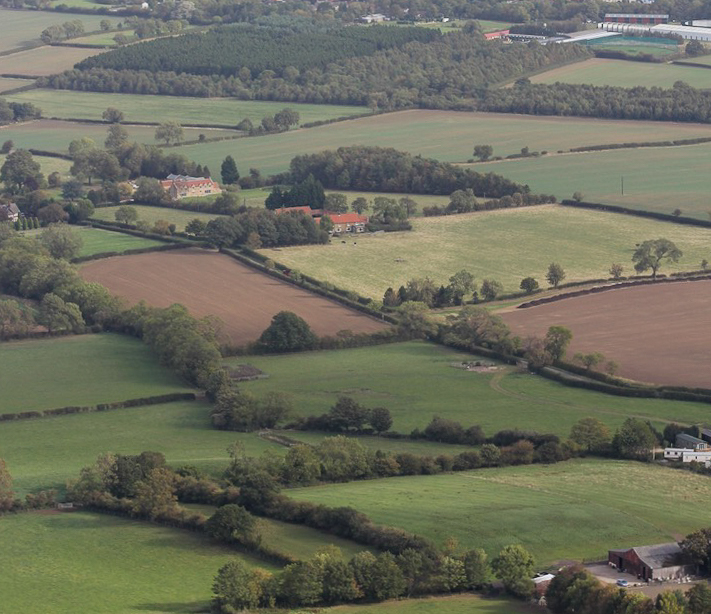
“The Peregrine sees and remembers patterns we do not know exist: the neat squares of orchard and woodland, the endless varying quadrilateral shapes of fields.”

J A Baker, The Peregrine

Gaining the kind of strategic overview exemplified by Mantel’s Cromwell requires more than elevation. It is one thing to see, another to interpret correctly and to understand. When we are in the thick of events this becomes very hard, as the jumble of information is likely to bury the facts which history will come to establish as definitive. Holding the puzzle together feels as if we have the pieces of the jigsaw without any picture to help us judge where to place them or connect them.

At times we have to resign ourselves to the fact that some key questions of our time cannot be resolved. The challenge is not how to rush to some precipitate interpretation of limited facts, but how we live well with the knowledge that events refuse to reveal their outcomes. When we lack the razor sharp detail the peregrine can see, we still need to find our way through the tangle of information and decisions that lie before us. It is here that our ethics and convictions provide a steer urging one course of action over another. To trust in the received wisdom of people who have travelled before us in similar territory, finding a way through huge complexities to arrive in a place that offers some greater clarity and a deeper sense of peace. It is not a trust which should be uncritical or lacking enquiry, but must recognise that humanity’s most frequent experience is to live with uncertainties.

The name peregrine derives from Latin meaning foreign, also linked to pilgrim – or traveller. TS Eliot’s writes in Little Gidding of the ‘spirit unappeased and peregrine’, caught between two worlds, past and future. We cannot live without a knowledge and interpretation of the past, neither can we live as though the future is already decided. Whether it is COVID or climate, there can be little question that decisions now will have far reaching consequences. Mindful of this the task of the present is to perceive and evaluate reality as clearly as possible. In his seminal work about the peregrine, JA Baker begins with a reflection on the disparity between the clarity and scale of a peregrine’s picture in a book and the fleeting blur of the real thing in flight. The static compared with the ‘passionate mobility of the living bird’. The ornithology book distills many examples of the bird into its archetypal specimen – in the wild each bird has its own character, hunting ground and eyrie. Paying attention to the living detail, rather than allowing the book or abstract data to overlay our perception, is vital if we are to see and understand the experiences through which we are living.

The capacity to retain fresh vision, alert even to the familiar, matters a lot. Classification can be useful, whether of birds or people, but it also holds dangers. Identifying a few characteristics so that we can order our world means that we may miss the exceptional and unexpected. It is one of the most moving themes in the ministry of Jesus that he refuses to see the world in this kind of way. He meets people on their own terms, with their own identity, even when that means they should be sidelined and ignored. A woman at a well; a Roman officer; the leprous and the unclean; people of religious power and the children in the streets. To allow the world to be as it is in that moment, erased neither by history nor personal attributes, is a rare and remarkable achievement. Doing all we can to improve the way we see the world might be one of the most important things we can do with our time: because it has the power to change everything.

“The hardest thing of all to see is what is really there”

J A Baker, The Peregrine

Freedom for Whom?

Landmark days are often false dawns. Think of George Bush standing on the USS Abraham Lincoln under a sign announcing ‘Mission Accomplished’. The irresistible political pull leading a politician to make this kind of announcement is the knowledge that it’s what most people want to hear. Even as George Bush spoke, plenty of commentators baulked at the implication of the banner’s message. It is increasingly likely that ‘Freedom Day’ in England will be yet another fictional waymarker, an illusion of normality which will run up against the reality of a strained health service and exponentially rising infection.

Promised, delayed and now hedged about with caution, the date when all legal restrictions in England are lifted comes at a moment when the virus seems to be everywhere. Data, modelling and research are telling us that a swift abandoning of restrictions will fuel a fire-storm of transmission leading to rising deaths and more people experiencing long-COVID. The Government expects the success of the vaccination campaign to blunt the cases, deaths and debilitation, but they will still come. It appears that we have decided to accept the cost of 200 daily COVID deaths in order to open the economy and allow life to return to normal. In all likelihood these will be deaths amongst the unvaccinated; people from minority-ethnic communities; the poor and those with underlying health conditions.

Before the final restrictions are lifted, crowded streets in York’s Medieval centre

There must be people in other parts of the world (and the UK) looking on in disbelief. Much of the argument seems to run economy/wellbeing against restrictions/safety. Yet if the cost of delayed freedom is high so too will be the long term price of COVID organ damage; psychological harm; and the risk of rapid transmission producing new variants against which vaccines are less effective. I appreciate that the UK Government, like all governments, is making hard choices on limited data. However, ‘learning to live with COVID’ could mean accepting some permanent changes in society rather than simply giving up on attempts to contain levels of transmission and the associated risks. It appears that our accommodation with COVID will suit the hale and hearty, while shifting the emotional, physical and psychological cost to those individuals and communities already disadvantaged in our society.

“as we are aware, the impact of these government policies will disproportionately affect already disadvantaged groups. Michael Marmot’s recent report shows us that the fall in life expectancy due to covid has been much greater in some regions, leading to even greater health inequalities. The social determinants of health inequalities have become wider during the pandemic, and any further mass infections and lockdown will simply make matters worse”.

“Freedom Day” is on the horizon, and brings with it the risk of mass covid-19 infection, 16 July 2021 BMJ Opinion by J S Bamrah, Chairman, BAPIO and Kailash Chand, former deputy chair, BMA

At the start of the Government’s roadmap to unlocking our arrival at a day without restrictions seemed reasonable. Yet on this narrow path of balanced risks we are straying ever closer to a reckless blow-out with consequences which, if the NHS is overwhelmed in summer, will cause major damage in delayed treatment for non-COVID patients (not to mention staff burnout). It is a missed opportunity that the interruption of routine living has not led to a deeper reflection on what a new normal might look like. There is every indication that many individuals have done that reflection, opting for altered lifestyles and early retirement (where possible), but the idea that we might live differently has bypassed political analysis. Even the modest change to greater working from home has been met with political statements about the need to return to the office.

We cannot live in lockdown indefinitely and few are suggesting that we should. However, with rocketing infection rates the wisdom of removing all legal restrictions in England feel like an irresponsible act. Having observed behaviours in a city during the last few months, let alone watched the antics of crowds at Euro 2020, the idea that most people will choose to observe the use of face covering etc., is ludicrous. An age-divide may well emerge in the way precautions are taken, which is ironic given the fact that younger populations have a lower level of vaccination. What was a disease of the elderly may end up taking a toll on the lives of countless younger people, whether in preventable loss of life or an enduring legacy of damaged organs and tissues.

More than anything else COVID-19 has posed a fundamental question about how we live. How the freedoms some of us assumed and took for granted enabled the rapid spread of a new disease around the world. As people took their holidays, or jetted across the globe for meetings and conferences, the virus went with them. While the lockdowns curtailed some of the human impact on the environment, with fewer journeys, this hasn’t stopped the effects that have burned the west of the USA and Canada, or led to the devastating deluge in Germany. On two life-defining issues, unqualified access to a seemingly infinite range of choices is likely to lead to calamity.

To reach the point of ‘freedom’ it feels like we have othered the virus. With the sustained campaign of vaccination the illness now belongs to those who have failed to understand its importance and declined the jab. Today it is a disease for the poor around the world, the people with no access to immunity or healthcare. At worst it is a minor inconvenience for the wealthy and well-resourced. Something to deny us our well deserved holiday abroad. Maybe all this will be true – but this is a disease about which we know very little. Long-COVID is only just being investigated and understood. No one knows what variant will emerge triumphant from the unimpeded production of virus copies being knocked out every day in the UK. Hundreds of thousands of transmissions every week. The angst being felt by the growing number of people ‘pinged’ by the COVID app should not be seen as a needless disruption to life. The Guardian cartoonist Martin Rowson got it right yesterday. As a motley group of silhouetted figures dance down a hill towards a town the caption reads: ‘Never send to know for whom the app pings”. As the Health Secretary and PM discovered today (eventually), it pings for thee.

Thym Tryeth Troth

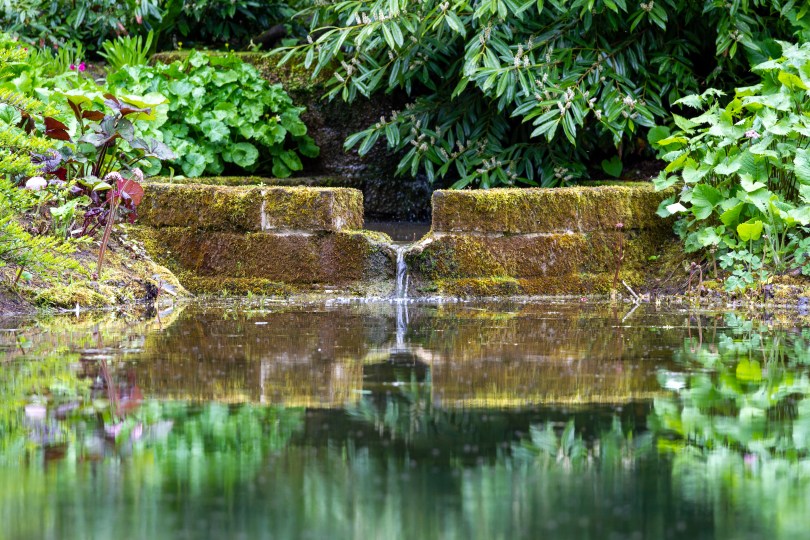
In the depths of the Northumbrian countryside is Wallington, a substantial house and estate managed by the National Trust. The walled garden is idyllic, with a wealth of colour and a sense of tranquility, accompanied by the soft trickle of flowing water. A place of calm, colour, order and reflection.

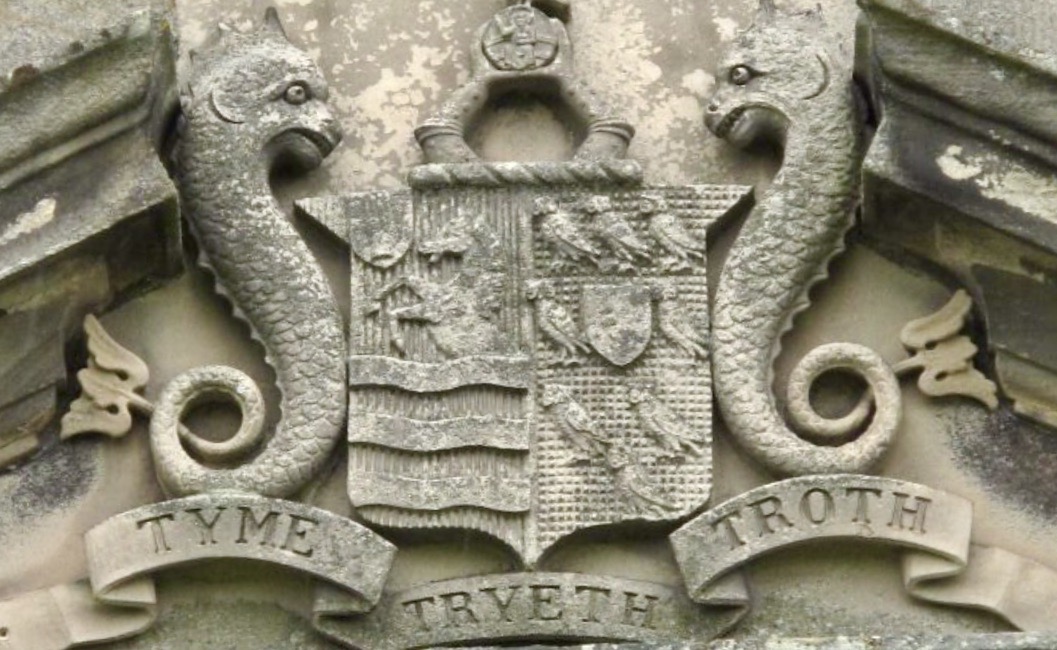
The house at Wallington bears the motto of the Trevelyan family: ‘thym tryeth troth’. Otherwise rendered as time tries faith, it is a reminder that loyalties can be made in a moment but are proven over time. If we ever think about the word ‘troth’ it is probably in the words of marriage service according to the Book of Common Prayer. It is here that people plight their troth, giving both a pledge and their ‘truth’ to one another.

Time tends to reveal many things – not least that apparent truths in one age can become questionable and dangerous opinions when viewed from a distance. Often, even at the time when purported truths hold sway, there are lone voices which query the assumptions underpinning these claims to truth. As the UK woke up to the reality of pandemic there were already those who had seen and set out in detail the implications of the impending crisis. On 12 March 2020 Rory Stewart was willing to voice what was happening and the actions that were needed.

There are also times when the truth about the past continues to have serious political weight. At a Downing Street briefing on 5 May 2020 Matt Hancock characterised the Government’s response to the COVID risk in care homes as an attempt to provide a protective shield. I don’t think I’ve ever watched a political statement being made and been so certain of its mendacity. Being fully aware of what was happening in care homes the idea that any serious Government effort had gone into protecting people was absurd. Even the data in the public domain made it clear that deaths in care homes were running at twice their rate compared with recent years.

“Right from the start it’s been clear that this horrible virus affects older people most. Right from the start, we’ve tried to throw a protective ring around our care homes”

Secretary of State for Health Matt Hancock speaking at a Downing Street briefing on 5 May 2020

All the evidence suggests that care homes were off the Government’s radar. Early models for the pandemic failed to take account of the way care homes are embedded in communities and what that might mean for transmission. Despite early evidence that once established in a care home COVID could be lethal, rapid and unstoppable, the political determination to halt the spread to homes was weak at best. In fact, as the evidence from Dominic Cummings suggests, not only were care homes unprotected but decisions to discharge untested NHS patients to homes caused illness and death. This is the detail which undermines the claim that any serious attempt was made to throw a protective ring round our most vulnerable citizens.

In the walled garden of Wallington all this seems far away. Places of tranquility invite us to take the long view and consider how humanity has lived through many different moments of crisis. Time continues to flow and every age can learn from critical experiences, drawing on painful episodes in order to become more just and merciful – or choose instead to entrench social inequalities with a spirit of fear and suspicion.

The walled garden, Wallington

If building back better means anything it must be about more than an exaggerated version of the past. From the degree of social inequality, to the environment, political apathy and consumerism, we owe the people who have died more than a warmed up version of previous policies. The pain of loss during the last 15 months is continuing to emerge. During Radio 4’s weekly phone in show, ‘Any Answers?’ a grieving widow noted not only the death she had experienced but its circumstances. Loss of contact in the months before death was a devastating cost in a marriage that spanned many decades.

In the months ahead – and through the promised inquiry – the detail of individual truths will be tested. However, these details of response (and lack of response) must come to inform the greater truth of how we live as a society and global community. Failing to do this will be a betrayal of the multiple losses experience during COVID-19, and the lessons that have come at such great cost. We need a better vision coming out of this crisis. A vision with a much stronger commitment to ‘love one another’. William Temple once said that it is impossible for governments to love individuals. However, there is an alternative way for this to be expressed. He commented: ‘love in social organisation is justice’. Let’s not deny future generations the justice they seek and deserve.

A Narrowing Path

In April I achieved a level of optimism about the pandemic which was entirely new. The success of the vaccine programme in the UK, combined with the lockdown, was delivering results that exceeded expectations. Numbers of cases and deaths weren’t just declining, they were tumbling. The BBC’s map of COVID infections was changing from the deep colours of danger to the lighter greens of relative safety. Everything looked set for joyful reunions on May 17, as indoor visits and restaurant dinning become possible. This optimism began to level off as reports of a new and more transmissible strain of the virus began to circulate.

The primrose path that seemed tantalisingly close has been replaced by the prospect of a more fraught road ahead. This is a narrow path with steep falls in either side. There is the real risk that tomorrow’s easing of restrictions will accelerate the transmission of the new strain. Given the huge response to vaccination in the UK this may appear to be excessively pessimistic. However, we are now experienced in COVID-19 and know that wherever there is an opportunity this virus thrives. Even with the shield of immunity for many, the pandemic will find the cracks in our defences. The people who haven’t been vaccinated; the people for whom the vaccine will not work as it should; the people whose health means that even mild symptoms push them into crisis. A much more transmissible version of the virus will find these people and fill the beds of the NHS.

Photo by George Morina on Pexels.com

What’s even more remarkable about the 1918 flu, say infectious disease experts, is that it never really went away. After infecting an estimated 500 million people worldwide in 1918 and 1919 (a third of the global population), the H1N1 strain that caused the Spanish flu receded into the background and stuck around as the regular seasonal flu.


The History Channel

This is quite depressing. As millions of people across the world continue to be infected, the changes that take place in the virus through transmission will intensify. When it came to the flu pandemic following the First World War the reduction of infection took place in a world where travel was enjoyed by the few, and a lot of journeys happened very slowly. Will COVID-19 recede so quickly in a world where normality in the West means an immense amount of rapid international travel? In the first lockdown in the UK it is calculated that there was a ‘74% reduction in the average daily number of contacts’. Normalised Western interactions in the 21st century are the perfect conduit for a disease that can be asymptomatic and spreads with remarkable ease among human beings. The role of ski resorts in gathering, infecting and dispersing people around the world is a microcosm of the global village.

Eleven months into the pandemic, we know that ski resorts played a significant role in seeding the pandemic across Europe 


World Health Organisation, Regional Office for Europe 16 December 2020

Both with the UK Government’s initiative to incentivise visits to restaurants, and the prospect of eased restrictions for Christmas, well-intended stimulus to human interaction fuelled transmission. The disheartening experience is that, as easing of measures approaches, time and again we have found the way ahead vanish in mists of uncertainty. The key difference this time is the high rate of vaccination – a factor which may turn the tide of any new surge. The simple fact is that we don’t know. However, we do know enough about the consequences of making a mistake in the freedoms we allow to incline us towards caution. It’s not what anyone wants to hear, but the reality of risk for the NHS, for care home residents, and for vulnerable individuals and communities cannot be discounted.

The government initiative (‘Eat Out to Help Out”), which cost around £500 million, caused a significant rise in new infections in August and early September accelerating the pandemic into its current second wave.


The University of Warwick
Photo by Helena Lopes on Pexels.com

While it is unclear what will unfold this week (and it may take two weeks to emerge) there is every sense that the path ahead is narrowing. Too many times we have failed to give the risks associated with the virus the respect they deserve. Of course we need to resume near-normal living as soon as possible. We know that there are many twists and turns in the pandemic, and harmful consequences can arise where least expected. Nevertheless, some risks are clear and should be avoided as far as possible, especially when so much is unknown.

As we chart the way ahead there must be a balance between the devil-may-care attitude of abandoned caution, and the doom-mongers who can only see risk on the horizon. A hundred years after the last pandemic, when that virus is still with us, we need to learn to live with the reality of COVID-19. As the first pandemic to occur in an age of rapid and plentiful transportation, the solutions we find to live with the virus will need to be new and innovative. Otherwise this won’t be a blip at the start of the 2020s – but the beginning of a decade of damaging restrictions.

Ashes Under Eboracum

Around the age of seven I went on a trip to Hadrian’s Wall. My parents took us to Housesteads, then on a walk along the wall from Steel Rigg. It is a dramatic and evocative setting, with the wall climbing the contours high up onto the Whin Sill. For whatever reason, it started an interest in Roman Britain that lasted well into my teens. The Lancashire town where I lived had Roman heritage, and a military shield boss found locally is in the British Museum. Encouraging my developing interest, my parents then arranged a tour in York – Roman Eboracum – with a local archeologist.

Living in that same city more than forty years later I’m mindful of the history lying just below the pavement. At least one of the sewers built by the Romans survives in excellent condition under Church Street in York. From Romans, to Saxons and Vikings, this patch of earth has been the centre of influence in the north for thousands of years. The Minster’s foundations stand in the remains of the heart of the Roman fortress – an empire of spiritual life supplanting the temporal forces that once ruled the city.

History has been in the news in the UK following the announcement that two modern universities plan to cut courses. There is concern that only elite centres of study will continue to offer history degrees. In a world where science is offering so much in responding to COVID-19, it isn’t difficult to see why some universities may be reviewing what they offer. Yet how short-sighted. Without doubt both humanities and the arts offer a vital dimension to our understanding and outlook. As I commented many blogs ago, when it came to COVID-19, our best academic modellers lacked the insight or imagination to appreciate how care homes interacted with their local communities. Without the disciplines that explore lived human experiences key dimensions of our understanding are absent. That absence can result in a failure to register vital elements of the reality we are addressing.

A people without the knowledge of their past history, origin and culture is like a tree without roots.


Marcus Garvey

History offers us perspective. As we study the past we encounter people very confident about how much they knew and how human life should be governed. These understandings have changed over time, and an important lesson for today should be the provisional nature of our knowledge. Science operates on the basis that there is more to know and, consequently, that what we take today to be certain may be questionable tomorrow. Many years ago, when running an elective course for medical students, I asked what proportion of all that could be known about medicine they thought was known today. With commendable candour one student pronounced it was ‘diddly-squat’. Our learning increases all the time and, when we look back at the past, we can experience horror at the medical procedures people once endured. Our great-great grandchildren may feel much the same when they look back at our response to the pandemic.

History has the power to teach us humility. It tells us that people made choices which seemed rational and wise at the time, only to realise that seeds of disaster were being sown. Understanding the past is vital if human beings are going to learn, change and live well in the future. Simply doing what we want in one generation fails to recognise that we are part of the future, and our choices have consequences that endure. This is perhaps one of the most important lessons in the response to climate change.

To-day the Roman and his trouble
Are ashes under Uricon.


From A Shropshire Lad 31: On Wenlock Edge the Wood’s in Trouble, by A. E. Housman

Housman’s poem reminds us that for all the power and reach of the Roman Empire, today it is a layer of ash under Wroxeter. The Roman remains of York are impressive and have endured a long time, but the people who built them and ruled here are gone. Much of the understanding about how the world works has changed over those centuries and, while some things may remain, human self-perception moves on. It will continue to evolve and change, hopefully with the aid of the arts and humanities bringing their own unique learning to our understanding. To lose that knowledge is too great a risk when we know how quickly human life can change. Living humbly with the limitations of our knowledge might be the most significant contribution history conveys to help us make wise choices today.