The Aftermath of Absence

Oscar Wild wrote the line that “wisdom comes with winters”. He might also have added, that growing old should be done with great care. For most of us it is inevitable, and brings all the risks of rejecting the world that is emerging in our wake. It isn’t difficult to recall the pessimism of my grandfather, born before powered flight and dying after the launch of a space shuttle ceased to be headline news. Having lived through rationing he despaired at the “throwaway” society that emerged in the twentieth-century.

In an age when generative artificial intelligence has arrived on many people’s desktops and phones, it feels as though we are in another moment of defining change. Projecting myself into the future, I wonder whether this alteration will become coupled to COVID-19? In other words, before the pandemic, we were fairly certain – bar a ghost writer – that an author had scripted their text from the title to the final word. Yes, there was proof-reading, copy-editing and the influence of publishers, but the script remained the work of the author. After COVID, how do we know the extent to which AI has been used. For example, has it conjured up the title – or a selection of titles – from which the writer has made a choice? Was the overall plan of a novel generated by a computer, complete with chapter headings and key features of the plot? The fact of the existence of chat-GPT, Copilot, and the rest, means that we cannot be certain how far the fingerprints of AI stretch across the work. It will be very difficult for even the most diligent student, pulling her hair out at 2 am ahead of an essay deadline, not to simply press the button, copy what she needs, and go to bed.

The inexorable decline of the Church of England cannot be pegged to a particular event. The concave downward curve of the C of E stretches back to the 1950s, if not earlier. In the current issue of The Church Times, Andrew Brown and others look at the in-tray awaiting the next Archbishop of Canterbury. Brown’s contribution is to review the various past Archbishops and the many attempts, and initiatives, intended to stem the haemorrhaging congregations. Brown argues that the collapse of the Established Church was partly a consequence of wider societal changes to which the Church had been wedded:

“It would be unfair to blame any archbishop for the scale of the subsequent collapse. The Church had been an integral part of a hierarchical and militarised England — as recently as 1990, the Archbishop of Canterbury was a man who had won the MC in action as a tank commander — and, when that country was washed away like a magnificent sandcastle by the tides of history, most of the Church went with it”.

Speaking at a training day for Licensed Lay Ministers in Mirfield yesterday, I was reflecting on just how much the landscape of ministry has changed since I was deaconed on 1991. Every parish had its vicar and vicarage; a minimal amount of money – if any – was sent to the Diocese; local ecumenical work drew together congregants and paid staff from several denominations. As a good friend reminds me from time-to-time, at theological college I predicted that during my time in ministry we would arrive at a point where the only stipendiary post in a deanery would be the Area Dean. If that hasn’t happened yet, it must surely be very close.

Currently I assist on Sundays in a variety of rural churches around York. Many of the church buildings are architectural gems, listed grade one or two, and containing a rich record of parish history. However, it’s always important to take a stole as many of these churches no longer have the items I would expect to find as a visiting priest. In one vestry I noted a processional cross and accompanying candles leaning in the corner, strewn in cobwebs and perhaps last put down by the crucifer on the day the last choir processed back from singing Evensong.

I don’t want to give a false or inadequate impression of the clergy in the past. They were not always glory days, and the scandals of abuse tell a dark story of what happened below the surface. This was true of many professions before a culture of effective safeguarding was established. There were also plenty of spiteful, indolent and career-starved clergy who used the pulpit as a form of performative one-sided therapy. The opportunity to verbalise every prejudice and, of course, list the many failings of the diocesan bishop, who – after all – had the temerity to “overlook” him. The comfortable deanery for which he once hankered was now the cesspit of oligarchy. However, the ancient system of one-priest-one-parish at least allowed the possibility of good, and plenty of good was done. That a gifted parson with compassion, skill and personality might use all her strength to help those beleaguered by modernity, as well as pronounce the forgiveness sins that have been humanity’s lot since Eden.

Recently I’ve been reading Jeff Young’s Wild Twin, Winner of  the TLS Ackerley Prize, 2025. Described as an “hallucinatory memoir of Young’s time as a young man in the 1970s”, the connections of past and present abound in the book. For example, he describes his father’s early life in Liverpool:

“During the Blitz when he climbed up through the skylight onto the roof, he was the watcher of the skies, the overseer of oblivion. He had first-hand knowledge of a place being there, and then not being there, of a thing you know being present and then becoming absent. He was a witness to the erasure and the aftermath of absence”.

Jeff Young, Wild Twin – dream maps of a lost soul and drifter, Little Toller Books, 2024

To some extent we are all witnesses to various erasures, if we endure long enough. Thankfully many of us live without the first hand experience of war, but will live in a world where war is never far away, nor without the risk of escalation. The world is always becoming, and developments such as AI bring both opportunity and risk. Hopefully, AI will enable many people to see health-risks long before they arrive and take appropriate action to halt or temper the worst consequences of that illness. Perhaps, just possibly, the expansion of virtual experiences will lead some people to seek a spirituality that is earthed and rooted in direct experiences and in-person community. There is already some evidence that this is happening. Religion – the oldest cultural expression of humanity – may yet find the wisdom to achieve renewal in the aftermath of absence.

The Outer Marker

Interpreting complex and dynamic information is never easy. As a hospital chaplain I was familiar with the necessity to appraise a situation and make a decision under significant time constraints. Finding the right words, rituals or other aspects of pastoral care, when death is imminent, has the capacity to focus both heart and mind. On rare occasions, when the family and friends of someone nearing the end of life presented a wide range of beliefs, great care was needed to find a form of recognition and support which was of genuine service to all concerned. Getting it “wrong” can have enduring consequences for the bereaved.

Five years ago we were getting to grips with the new phenomenon of SARS-COVID-19. Hardly anyone in society had experienced a serious pandemic in the UK. Working in the care sector, it soon became apparent that many leaders lacked the heath care background which would have supported a speedy awareness of the consequences inherent in the unfolding events. Perhaps most significantly, the understandable desire for clear evidence and guidance prevented early actions to stem the rate of infection. As I commented at the time, in a pandemic, waiting until the evidence is utterly compelling is the definition of leaving it too late.

“we want to avoid any over-reaction but preparation seems wise”

Chris Swift email 11 February 2020

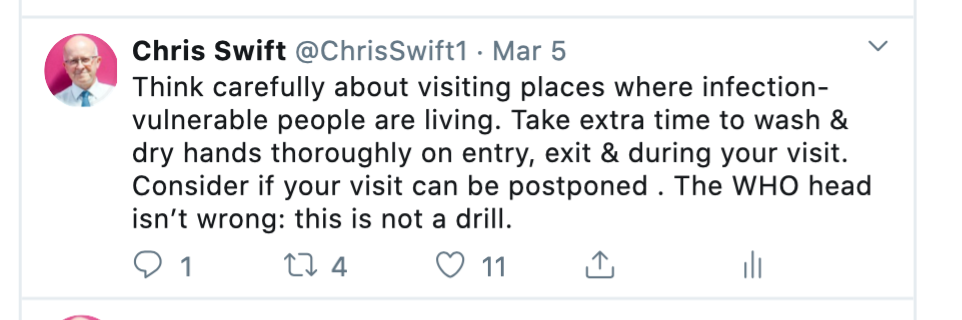
Viruses are most effective in the period when there is no immunity from prior infection; people feel no motivation to alter their routine behaviours; and when a delay between infection, illness and public reporting lasts several days. In care homes, where vulnerable people are kept close together, rooms are warm and many residents might forget requests to change behaviours, the risks of an easily transmissible respiratory infection are severe. By 5 March 2020 there was sufficient evidence available to determine that this wasn’t a rehearsal – but the emerging reality of a disease which spread quickly and had a high mortality rate amongst older populations. This was probably the prime date in the UK when decisive changes in behaviour would have saved the greatest number of lives. On 11 March 2020, I wrote to a colleague stating that, in my judgement, we were passing the outer marker of when it would be most beneficial to act. Finally, on 23 March, the UK went into its first national lockdown.

In 2020 different people came to a realisation of the need to act at different times. However, those differences undoubtedly had real-world consequences. If prompt actions made no impact there would, presumably, be no differences in the mortality rates of different countries. But there were significant disparities. Probably the best time to have acted in the UK would have been in the first few days of March. By the 11 March it felt as though we were heading into uncharted waters, beyond the zone in which wise actions would have made a significant difference to the incursion of infections. Sadly, in the UK and elsewhere, this delay undoubtedly multiplied the number of deaths; the incidence of care staff’s trauma; and the inevitable distress of relatives unable to be with loved ones at the end of life.

Five years still feels to be too brief a time for the world-changing events of 2020 to be fully digested or understood. It might be the case that we are in a phase of denial, finding it too difficult or too contentious to rake over the ashes of SARS-COVID-19. However, a time will come when we are ready to talk about the remarkable and tragic events which transformed our collective experiences of everyday living. Perhaps, when the UK Covid-19 Inquiry finally reports, we’ll be in a better place to take a measured view of what the global pandemic meant for us, and the lessons we can take into the future. Sadly, watching the world in the past five years, the international solidarity of lock downs and a shared experience of a sudden increase in mortality, appears to have done little to generate an enduring sense of our common humanity and interdependence. In times when threats to human life are intensifying and growing, the need to interpret dynamic data at a point when wise actions can still shape events, remains a critical need.

Liberation

Sometime in the mid-1980s, while studying theology as an undergraduate, my tutor told us that the new language of our discipline was Spanish. He was reflecting on the fact that for most of the 20th century it had been German, but now the rise of Liberation Theology had shifted the axis of theology to the Southern Hemisphere. A few years later, while working and studying in Argentina, I asked my Spanish tutor whether we might read A Theology of Liberation by Gustavo Gutiérrez. I’m not sure my tutor enjoyed the experience of helping me understand the technical and unusual language of the writing which Gutiérrez embarked on in the late 1960s, but it was undoubtedly memorable for both of us! Last week, this Peruvian priest, sometimes called the “father of liberation theology”, died aged 96.

At the beginning of an interview with the Bishop of Blackburn before my ordination in 1991 there was a moment in silence during which he perused my file. Suddenly the bishop latched onto a comment about my interest in Latin America and exclaimed: “Liberation Theology – in my Diocese!” This has seldom been a theology which has lifted the hearts of prelates, and he probably felt fairly safe by stationing me in the leafy suburbs of Preston. Nevertheless, even there, I managed to cause a little trouble now and then, not least over the ordination of women and by developing a social responsibility group in the parish.

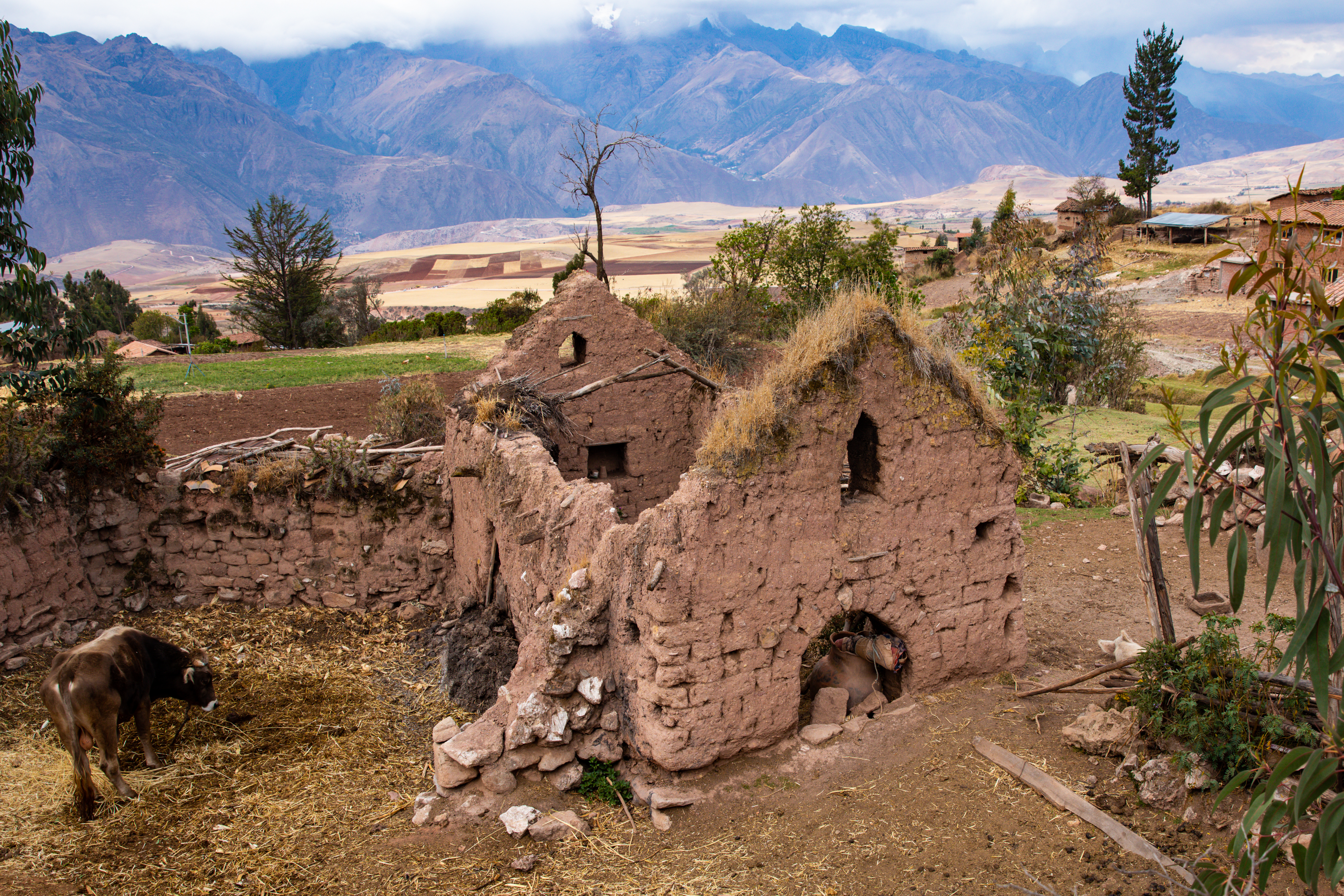
Poverty in Peru continues to be widespread despite progress achieved before the onset of the pandemic. Today, seven in ten Peruvians are poor or are at risk of falling into poverty. Picture taken during a visit to a social development project in rural Peru, 2022.

During my time in South America I observed that capitalism flowed more sluggishly than in Europe. It felt as if the aspirations of Western living were there, and some of its attributes and mechanisms, but it seemed that there was simply too little resource to make it happen. Comparisons can be odious, but this felt like the periphery of a system which served the North well, by sacrificing the best interests of the South. To note the fragility of structures in Latin America is not a criticism, but a recognition of the consequential dependency which the wealthy countries maintain with poorer nations. If the blood of finance flows more slowly in the South, it nevertheless continues to serve the interests of the North.

“The poor are a by-product of the system in which we live and for which we are responsible. They are marginalized by our social and cultural world”.

Gustavo Gutiérrez, The Power of the Poor in History

The scale, power and vested interests of capitalism feel insurmountable. No doubt many see it as the least-worst system for organising resources and creating successful societies. The truth is that this domestic security in the West – which is far from perfect – is paid for by many other communities across the world. The natural environment is ravaged and abandoned; societies are left in a state of daily hunger; the consequences of climate change are denied by powerful leaders. As is almost always the case, the least well-off shoulder the worst excesses of system that perpetually widens the gap between wealth and poverty.

Resignation in the face of injustice was never an option for Gustavo Gutiérrez. Like so many pioneers he experienced the scepticism, doubt and hostility which innovation brings. At one point he seemed destined for a formal rebuke by Catholic bishops – if not the Vatican – but this was headed off following an intervention by the eminent Jesuit theologian Karl Rahner. The influence of Gutiérrez continued to be felt across Latin America, and elsewhere, throughout his life. It will continue after his death. His passionate concern for the authenticity of the Church, by renouncing privilege and choosing instead to advocate for the poor, was always rooted in the Gospel and the Jewish Scriptures. Solidarity with the poor was the cri de coeur of Gutiérrez, as well as the product of his theology and lived experience. Ultimately, by the movement of the Holy Spirit in the world, the mission of God to which Gutiérrez bore witness will find fresh hands and voices to continue the work of liberation, which the Peruvian saw as the fundamental nature and purpose of Christ.

Grievous Sickness

It is approximately 4½ years since COVID first appeared. I am unconvinced that any of the hard work required in order to learn lessons from a profoundly difficult experience has taken place. I’m not referring to the various national inquiries that are underway, but to the more everyday reflection which generates learning and change. It would appear, as soon as we possibly could, we were desperate to return to the world we inhabited prior to 2020. All the rhetoric of care and compassion that sprouted during the darkest days of COVID-19 seemingly vanished as quickly as it came.

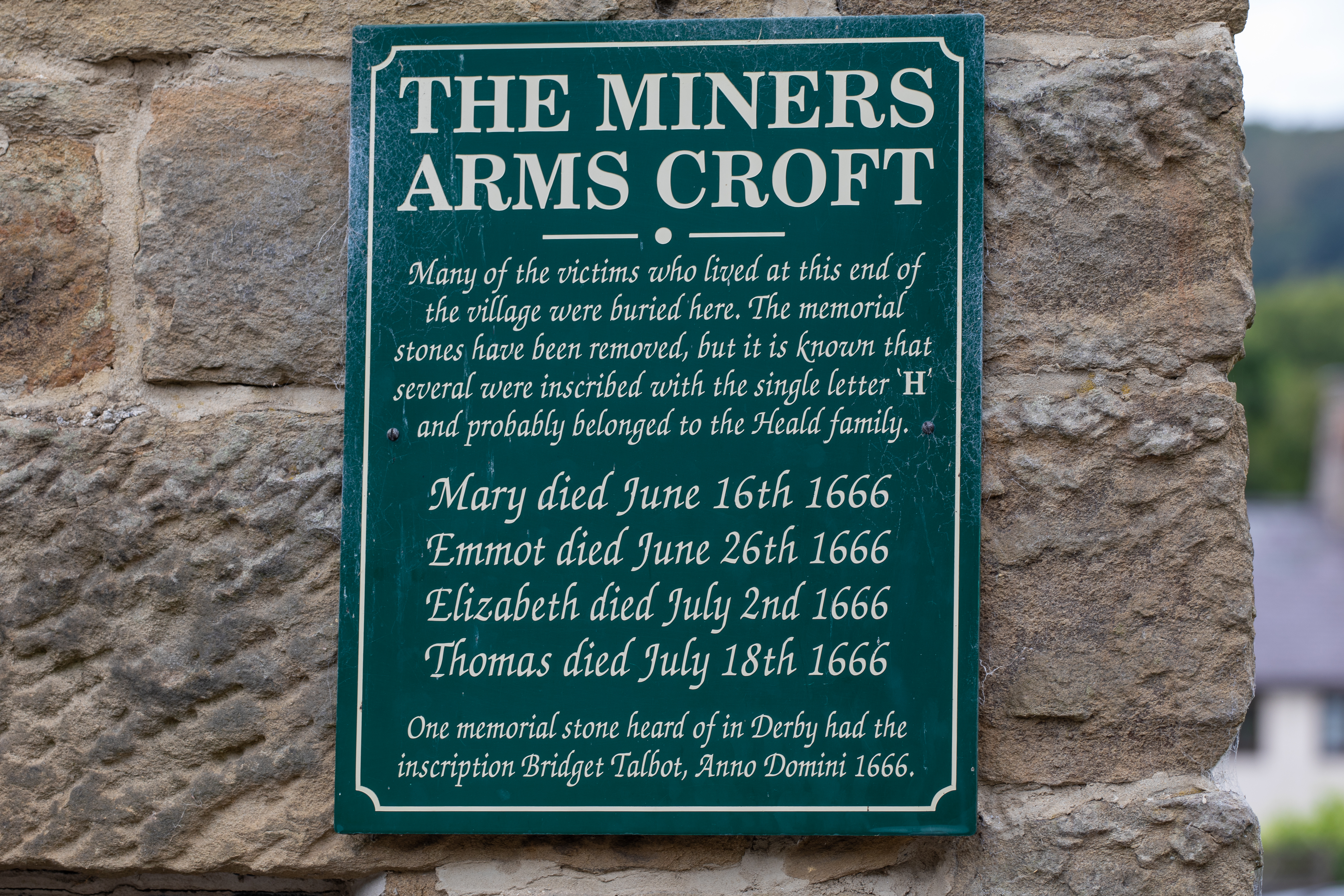
For the world, the effects of COVID were not as devastating as diseases in earlier centuries. Visiting the plague village of Eyam, in Derbyshire, I was reminded about the scale and consequence of the plague. At one house in the village only a single person survived the arrival of this deadly disease, and by the time it was over she had lost 25 relatives (including in-laws). Such a degree and speed of loss is beyond comprehension. While there were a few cases of multiple COVID fatalities in a family, these are remarkably rare. For example, one family experience 4 deaths due to the virus – a truly devastating experience for the family concerned.

Houses in Eyam tell the grim facts of what took place in 1665 and 1666

It is more than 350 years since the village of Eyam endured a sudden and apocalyptic rise in the mortality of its inhabitants. The ability to understand what was emerging, and devise a strategy for isolation and containment, was rudimentary. It is impossible to know how many deaths the world would have seen if COVID had spread abroad in the 17th century. In the 21st century we met the emergence of the virus with rapid progress in the development of vaccines. Knowledge about society and modern communications enabled some support to be offered and applied. Yet, as the first report from the UK COVID Inquiry makes clear, there was so much more that could have been done to mitigate harm. We had, with Pythonesque thinking, prepared for the wrong pandemic.

Speaking in response to the publication of Module-1 of the COVID Inquiry, Pat McFadden (Chancellor of the Duchy of Lancaster), shared with Parliament his thoughts for all those bereaved by COVID. He said that: “Their grief and the nature of their loss is harrowing, with so many loved ones lost before their time”. I think that these remarks are wise and sensitive. When the Government gave daily reports about the rising number of COVID deaths there was no accompanying statistic about the number of people denied access to their loved ones immediately before, and at, the time of their death. There were no figures about those unable to attend a funeral because the numbers were restricted. The sum total of altered rituals, and final farewells denied, will never be known.

There are many more lessons-learned that will come from the COVID Inquiry. The question is, do we have the desire and appetite to absorb those lessons and make changes that will protect more infection-vulnerable communities? COVID has not gone away, and some people continue to experience very debilitating periods of illness. At the moment, at least from a media perspective, this does not appear to be on our radar.

Back in March 2020, when the scale and consequence of the pandemic were becoming apparent, the poet Simon Armitage wrote a piece reflecting on the experience of Eyam. At that stage his hopeful and poetic focus was on the task of patience, and living through COVID knowing that, inevitability, it would pass – as all pandemics do. Taking the example of Eyam he celebrates many acts of individual and collective courage, as well as personal sacrifice, which came to confer on the Derbyshire village a revered status. It is impossible to quantify the number of lives saved by the villagers’ agreement to quarantine.

“the journey a ponderous one at times, long and slow
but necessarily so”

Simon Armitage, extract from “Lockdown”

It is not easy to be patient in a time of danger and uncertainty, and understandable that those who live through it wish to forget it as soon as possible. However, the risk of doing this is that we fail to learn important lessons and reflect properly on the society in which we wish to live. Perhaps it is not too late, and the publication of further Inquiry Modules will provide a basis for us to see clearly how vulnerable people were sacrificed. Already, it has been made clear that the impact of COVID “did not fall equally”. That alone is a fact that should help us to reflect on why some groups in society are deemed to be of lesser value than others.

Good Lord, Deliver Us

Management is an integral part of all organisations. It existed long before it was much spoken about or, indeed, became a field of study and development in its own right. Modern general management was introduced into the NHS following the Griffiths Inquiry in the mid 1980s. It paved the way for streamlining NHS processes and enhancing accountability which – eventually – even incorporated chaplaincy within its structures. Since then, in many organisations, I have witnessed and experienced the power of good management to exclude waste and improve efficiency. However (and there was always going to be an ‘however’!), there is plenty of evidence that contemporary management and executive leadership is far from perfect. Perhaps the instantaneous and seemingly universal response to Mr Bates v. The Post Office arises to a significant extent from the resonance of this story with many people’s experiences of institutional behaviour.

When I reflect upon my own professional journey there have been several key points when I have found myself in disagreement with a majority view. This is very inconvenient because, being naturally inclined to a quiet life, feeling compelled to express contrary views is time-consuming and energy-sapping. Often it requires detailed work to elucidate arguments and marshal the evidence that suggests – at the very least – that there is more than one way of looking at something. ‘Group-think’, especially when the leader’s views are clear and unequivocal, is far too easily generated in an environment which is unwelcoming of dissent. Over the years this is something I’ve observed in many contexts, including those of a research ethics committee and in church settings. The latter may be especially susceptible when the charisma of a Bishop is invested in a particular approach. Criticism of the approach can all too easily be perceived as criticism of the person.

It seems to me that a primary flaw in the case of the Post Office, and in many other institutions, is an inability to require a perspective 180° away from the one holding sway. For example, when a surprising number of post office staff were accused of fraud, and many maintained their complete innocence and were supported by local communities, why didn’t someone at a senior level think the unthinkable: what if they were right and Horizon was wrong? It isn’t difficult to speculate why a supplier might be reticent about admitting faults with a service it had provided. System error can be very costly and damage reputations (leading to even more adverse financial impact).

It would appear that often, as in the case of the Post Office, even independent reviews can encounter opposition if their findings differ from the dominant narrative of the organisation. When in leadership in health care chaplaincy I called on numerous occasions for an independent review of the operation of the Hospital Chaplaincies Council (HCC). There were many reasons for this, not least indications that something was wrong in the core operation of this Church of England quango. Eventually a review took place under Dame Janet Trotter, which concluded that the HCC was “too large and cumber­some for its purposes” and should be dissolved. Its findings were not welcomed by everyone and consequently the report was criticised from several quarters. However, the Hospital Chaplaincies Council no longer exists.

In leadership there is always more you could know, and the data will only ever be partial. Having a healthy appreciation of the gaps – the dark matter – is a key component in grasping the gravity of a situation. Being alert to seemingly insignificant anomalies can lead to the early detection of systemic failures. Simply closing ranks and moving into denial will only work for so long. Eventually, as the case of the Post Office demonstrates, you come up against the tenacity and determination that bends back into shape the distorted reality that huge resources have attempted to impose.

A wise leader doesn’t only want to hear the view of the majority. In 1 Kings chapter 22 we learn how King Jehoshaphat wasn’t content with the homogeneous advice of 400 prophets: ‘Is there no other prophet of the Lord here of whom we may inquire?’ Micaiah had the wisdom to make himself scarce when he knew the King wanted to hear from all the prophets. Micaiah was’t going to fall in line with the rest, and this would eventually earn him a slap and see him thrown into prison. Micaiah had the same inconvenient trait demonstrated by Mr Bates – he wouldn’t sign off on something he knew to be wrong.

“But Micaiah said. ‘As the Lord lives, whatever the Lord says to me, that I will speak.'”


I Kings 22:14 NRSV

Decennium Horribilis

The Queen famously reflected that 1992 had been, for her, an annus horribilis. At the moment if feels like the 2020s might come to be known as the decade of horror. Even as we wobble (possibly), out of a devastating pandemic, the world’s worst nightmares of climate change are becoming a reality. In the coming days the UK will experience temperatures never before known. For several days, the sun will extend its scorching heat all the way from the cool cloisters of Oxford colleges to York Minster; from the industrial north, to the vast storage heater that is our capital city. In all their antiquity, buildings will be placed in the stress of temperatures for which they were not built, and from which they may not survive unscathed.

A word that became over-used in the pandemic was ‘unprecedented’. Yet here we are again, facing a very different health emergency. As is so often the case, Shakespeare expresses this experience with economy when he puts the following text in the mouth of Claudio:

“When sorrows come, they come not single spies, but in battalions”

Hamlet, Act IV, Scene V

Michael Rosen, writing in yesterday’s edition of The Guardian, hits the nail on the head when he reflects from personal experience that we have not even begun to digest the catalogue of pains which have touched us all: “we are chewing over several levels of trauma at the same time: personal, social, national and possibly global”. I suspect that for many of us these traumas have been shelved, as much as they can be. The rapid succession of crises means that even as one drops from the headlines, a fresh assault has already muscled into prime position. It was all COVID; then a connected string of economic shocks, labour shortages and inflation; a war in Europe and displaced people to support; spiralling energy bills; and now a sustained period of temperatures we normally associate with Andalucía. I’ve probably missed some, and there are certainly other emerging concerns snapping at our heels.

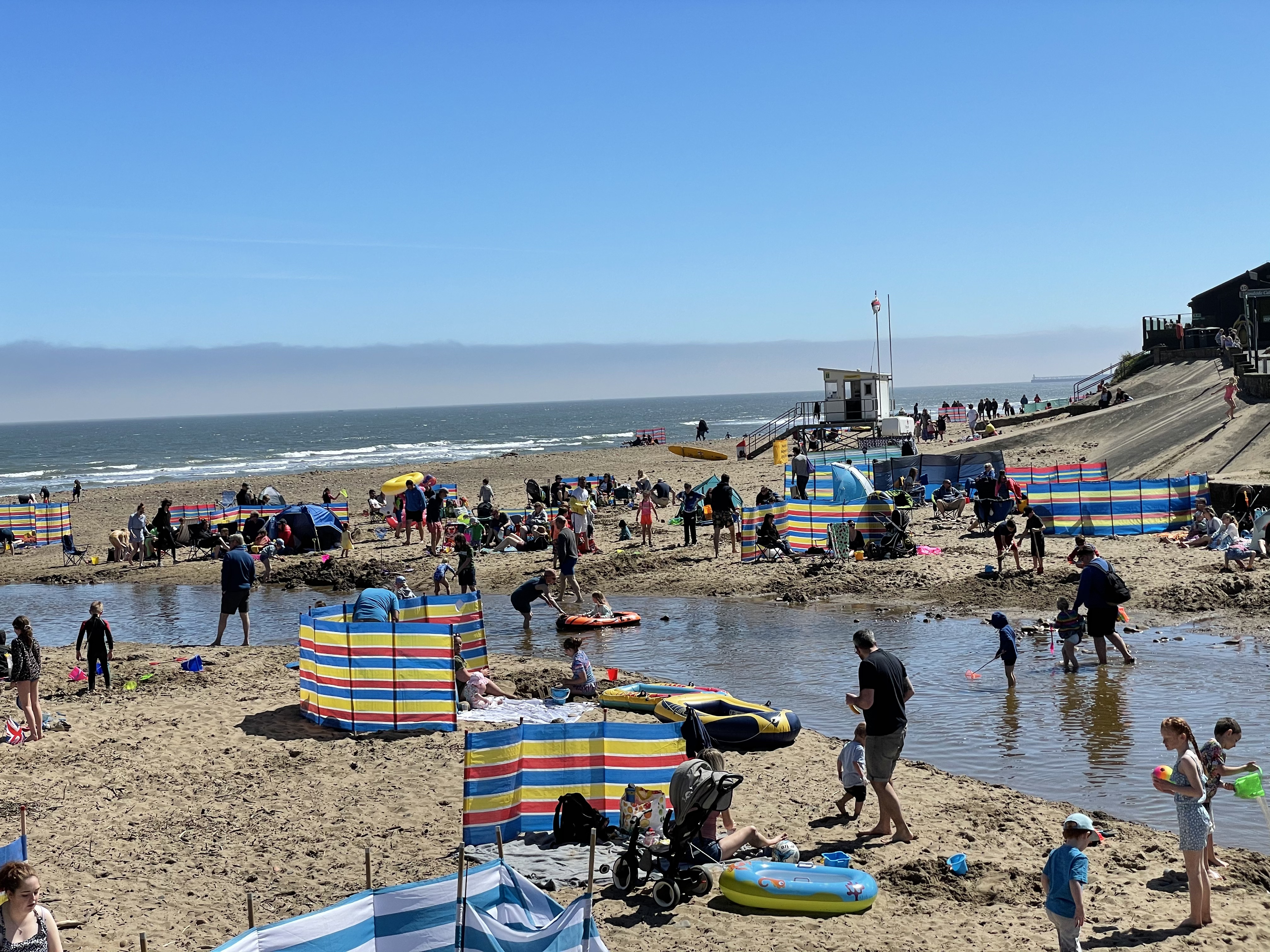
Coastal resorts will offer some cool respite from the high temperatures, for those able to travel

For the privileged and well resourced these challenges are inconvenient, rather than definitive. Isolation for the well-heeled may not have been welcome, but it came with interior space; expansive gardens; and possibly gyms or swimming pools. Excessive heat might be worrying, but it will be tolerated in large rooms, behind thick walls and with high ceilings. Perhaps, even, with air conditioning. For the poor in our society it will be a different story. Small spaces, tower blocks, no private garden, an infrastructure of roads and pavements that will absorb the heat throughout the day and emit it during the night. In the 1980s I was staying in Argentina during a spring heatwave with temperatures in excess of 40°. I was in student accommodation, sharing a small room, close to the centre of Córdoba. During a sleepless night I reached out to touch the wall and found it still warm, stalling the drop in temperature for which we were all waiting. People survive in these temperatures, but they do not thrive.

There have been few decades in human history that have all been sweetness and light. In terms of the title of this blog, it is also worth considering the question: ‘horrible for whom?’ Just like the Queen, our perception of events can be very parochial. It may concern our home and our family, but touch little on a broader political context. Once out of the long Edwardian summer, European history of the 20th century is a sorry story of futile destruction; a second war that followed disastrous economic turmoil; the physical division of Europe and the threat of nuclear destruction. However, both with the pandemic and the UK weather forecast, there are measurable impacts which can only be described as ‘unprecedented’. This is not simply an endless human story of generational angst. These experience are either entirely novel or the fresh occurrence of a crisis last experienced a century ago.

As Rosen observes, talk of memorial events to recognise the 200,000 COVID deaths in the UK appears to have been kicked into the long grass. Our attention has moved on (but, perhaps, not our feelings or our analysis of events). I certainly meet many people who think of COVID as last-year’s news. As we move beyond the first quarter of this decade the signs are not good that peace and prosperity will be more prevalent by the end of 2029 than they were in 2020. The carousel of crises shows little sign of stopping and its pace certainly feels much faster. My hope and prayer is that we shall – eventually – begin to reflect on the cost of our inequalities and the toxic world they are creating. More importantly, that reflection and prayer leads to action and a stronger sense of how we, as a global community, act to ensure that the sorry story of the last couple of years does not become our permanent reality.

Holy God,
earth and air and water are your creation, and every living thing belongs to you: have mercy on us
as climate change confronts us.
Give us the will and the courage
to simplify the way we live,
to reduce the energy we use,
to share the resources you provide, and to bear the cost of change.
Forgive our past mistakes and send us your Spirit,
with wisdom in present controversies
and vision for the future to which you call us in Jesus Christ our Lord. Amen.


© The Anglican Church of Australia

Honourable Men

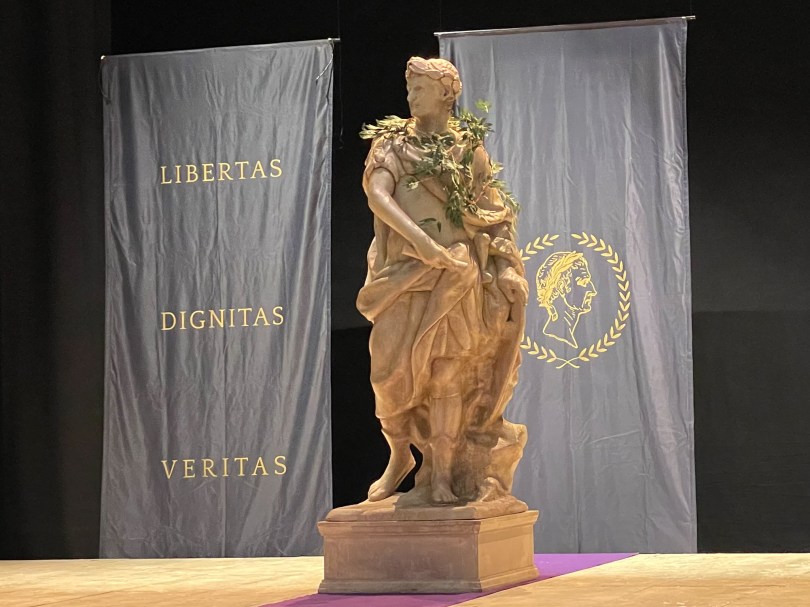
Marc Antony’s speech in Julius Caesar is a text famous for its oratory and skill in speaking one thing while meaning another. Time and again, he describes the conspirators who have killed Caesar as ‘honourable men’. As this repetition builds it sounds ever more hollow. The substance of the speech creates a growing space in which the populous may start to draw its own conclusions. It is a tactic of consummate skill that in Shakespeare’s hands becomes the opening salvo in a civil war.

‘Honour’ is not a term that sits comfortably in modern discourse. There is a mountain of evidence that suggests some MPs, who by tradition carry the title ‘Honourable’, are content to exhibit behaviour that undermines the recognition implied by the convention. It appears at times that there is a general desire on their part to sully the value of ethics in political office to achieve a particular goal: if everyone is behaving badly, what’s the difference when it comes to voting in elections? One recent example of this is the repeated claim by the Prime Minister that there are more people in work now than before the pandemic.

Responding to a complaint from the fact-checking organisation Full Fact, Mr Humpherson had told No 10 this claim had been made by the prime minister in Parliament on 24 November, 15 December, 5 January, 12 January and 19 January.

And it was “disappointing” the prime minister had “continued to refer to payroll employment as if describing total employment, despite contact from our office and from others”.

BBC News Website 7 February 2022

Perhaps Mr Johnson has learned the lesson from his time in journalism, that prominent and false claims continue to have credence even if they are corrected at a later date (less prominently, and in a much smaller font). Whether it is the ‘success’ of Brexit; the assertion that the UK Government did an excellent job handling the pandemic; or the overall state of the economy, aspirational claims and bluster appear to be the primary tactic of current political leadership. I am sure that however inaccurate many of these claims will appear to be, their confident assertion will hoodwink many people. The Globe’s touring production of Julius Caesar carries the right stapline: ‘Ancient Rome has never felt closer to home’. Elsewhere, Shakespeare provides Beatrice with words of contempt for the supposed bravery of big liars:

He is now as valiant as Hercules that only tells a lie and swears it.

Beatrice speaking in Much Ado About Nothing Act 4 scene 1

Establishing honour in civic life is not easy. It isn’t difficult to accuse people in leadership of hypocrisy, and none of us is perfect. However, it is a very sad state of affairs when honour is no longer held as a value to pursue. When simply holding power is seen as a kind of virtue, and the assumption is that whatever ‘sacrifice’ might be involved can be offset by the prospect of future gains (Saturday’s Guardian suggests that the Prime Minister will be able to earn £5 million per annum after leaving office).

The current political landscape in England cannot be blamed on leadership alone. We have stood by while the virtues and values of good government have been eroded. Any attempt to reverse this decline and promote more honourable leadership will require work at the grass roots. As people see the bluster for what it is, there is the chance that we can re-set expectations and encourage action and voting that sustains a better quality of leadership. I am not altogether hopeful that this can be achieved, but what honour would there be if we did not at least make the attempt?

Will God Get COVID?

This might sound like a rather abstruse theological question – along the lines of angels and pinheads. However, it isn’t as far as I’m concerned. Since auditioning for the York Mystery Plays‘ forthcoming wagon productions, I have become God’s understudy. I’m not sure whether this kind of role existed before, but the shadow of COVID has meant directors are more concerned about having ‘first reserves’ for the main speaking parts.

Some years ago I encountered the York Mystery Plays while undertaking research connected with the history of hospital chaplains. This involved visits to the York Minster Library to access records and materials connected with the large hospital of St Leonard, developed out of an infirmary built over a thousand years ago. It was here that I came across a reference in the prayer of the Barber Surgeons which addressed the Lord ‘as Sovereign Leech’. It’s a small expression of the visceral and earthy content of the plays, bringing the stories told in Latin in the pristine interior of the Minster down to the vernacular of the Shambles. A narrow lane where the butchers of York conducted their trade, and the cobbles no doubt ran with blood.

The play in the cycle which I’m supporting is The Flood. Given some of the inaccessibility of the language it’s helpful to have a story which is well known, even outside Christian circles. The cast has reflected on the question of what kind of god saves one family and kills everyone else? This may have been less troublesome to Medieval tellers of the tale or their audiences, where the traditional explanation of ‘sin’ is the accepted reason offered for the mass slaughter. God repents of creating humanity and decides to ‘work this work I will all new’.

Sithen has men wrought so woefully
And sin is now reigning so rife,
That me repents and rues fully
That ever I made either man or wife.

I’ve no doubt that official toleration of the plays depended to some extent on the text more or less following the official story known to the literate people of the day. However, it would be fascinating to know what some thought about this mass extinction when plague had been part of their experience. Times when everyone would have known someone who had suffered and died in the frequent outbreaks that occurred in urban centres. In the second half of the 14th century York’s population fell from 15,000 to 10,000. As the deaths undoubtedly fell unevenly, some families and professional Guilds would have experienced dire losses. Questions about the link between sin and an early grave may well have vexed the minds of citizens, especially given the suffering that took place with very limited medical aid.

Photo by James Wheeler on Pexels.com

At the very least, after the plagues, the story of the Flood may not have seemed quite so innocent or uncomplicated. Unlike many, this does not give me concern from a biblical perspective. Like the story of Job, I do not view these as literal accounts in the sense that they describe physical happenings as we would evaluate them today. Very often these accounts are addressing theological and philosophical questions that were real and pressing for people. Why do sudden natural events wipe away large number of people? Where is God in this destruction and loss of life? Are human beings living the way God is calling them to live? Can we make a fresh start? One view about the demise of Mystery Plays across Europe suggests that a growing diversity of beliefs meant that vernacular plays were no longer uncontroversial accounts of an agreed theology. This both placed people’s souls at risk (of error) and posed challenges to civic authorities attempting to maintain order in fractious times.

The plays are full of hints and winks that add ribald humour to the narrative and no doubt contributed to the popularity of the plays. For example, we are left to wonder whether one of the daughters became pregnant in the ark when she remarks towards the end of the flood: ‘Nine months past are plain Since we were put to pain’ (both the timespan and reference to pain – Genesis 3:16 – appear to leave little doubt). As with so much community theatre, the allocation of roles could also lead to mirth. Might some of the humour be subversive, casting a teetotaler as Noah or a reprobate as God? We know from the contemporaneous Canterbury Tales the character of Medieval discourse and popular humour or, at least, the kind of humour that found a ready audience. In a dissertation by Asier Ibáñez Villahoz, it is suggested that both the Mystery Plays and the Tales draw on a form of carnival subversion. While I disagree with Villahoz’s claim that sexual humour is absent, it may certainly have been more obscure or toned down when compared with the Tales due to its public performance.

Carnival subversion appears in the way some characters as the adulterous woman or Noah’s wife are depicted connected to that anti-feminist tradition. Misogyny is a major issue in these plays: not only Eve is represented in a negative way but also other women that have just been mentioned do not behave the rigid orthodox way of behaviour they should have.

https://uvadoc.uva.es/bitstream/handle/10324/33297/TFG_F_2018_35.pdf;sequence=1

The resurrection of the Mystery Plays in a modern setting may reflect the relative decline in the UK of religious disagreements as a cause for public disorder. The audiences appear happy to regard the wagon plays as public spectacles, with historical interest and a spirit of local pageantry. Seeing them performed in full for the first time since the pandemic may cause some to reflect on the recent inundation of infection. Whether this unforeseen loss of life will raise theological questions is uncertain and, despite the inevitable temptation, I genuinely hope that God does not come down with COVID.

The Church of England

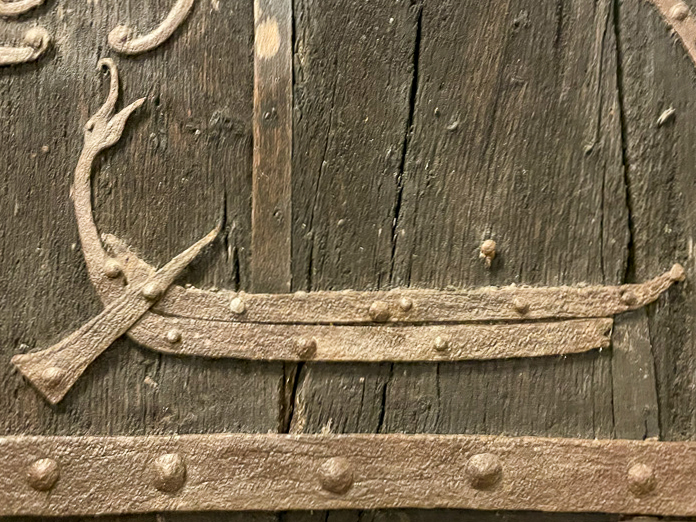
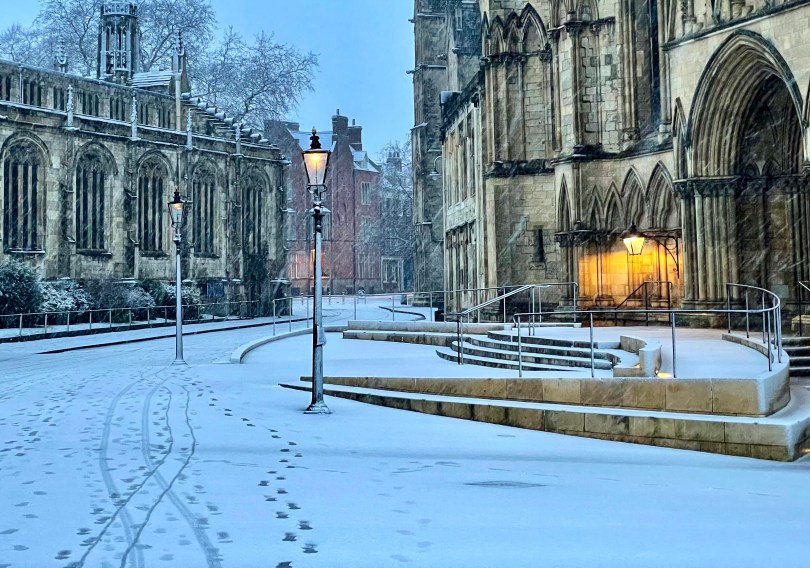
The village church is a gem of a building, a plot of holy ground that has been knelt on for at least a millennium. An iron door hinge depicts a Viking longship, perhaps in tribute to the defeat of the invading Norwegian army that sailed up the River Ouse in 1066. The church features many Norman carvings which, for their variety and quality, are considered to be some of the finest 12th century sculptures in England. It is fabric of exquisite design, a thread of gold pulled across centuries of English Christianity. On the Sunday I attended the congregation consisted of five people. There was no organist and little expectation for a structured liturgy. Together we found two hymns in the church’s copies of Mission Praise which we felt confident enough to sing unaccompanied. It is a story similar to another church I attend, where pre-pandemic double figure attendance has been reduced to seven or eight.

This year I shall have been a priest for 30 years. A curacy began in 1991 with a pattern that seemed relevant and long-established. Sundays could be busy days with an 8 o’clock Communion; 10:30 Parish Eucharist; afternoon baptisms (there were over 80 Christenings one year); Evensong, ending the day with a vibrant Youth Group. Then a move to become a Team Vicar and hospital chaplain on the edge of North London. A small church, but still three services a Sunday, plus the growing work of a chaplaincy that began to be given increasing recognition by the hospital. This led to a departure into full-time chaplaincy with a move back to the North of England. Employment in the NHS lasted for 20 years in total, throughout which I helped out in urban, suburban and rural churches. They were not all thriving, but in each there was a recognisable pattern of Anglican worship, with the Eucharist central to the liturgy of the parish.

It is said that the pandemic has accelerated many changes. The high street is one example as shops struggled to survive the worsening of already difficult trading conditions. I suspect that churches will also find a decline that comes from a mixture of related COVID consequences; a significantly higher mortality rate amongst older people, greater anxiety for some in social mixing; broken patterns of religious practice that will struggle to re-emerge. More broadly, the Church has not been in great evidence during the past two years – it has appeared overly risk averse and hesitant. In an article published recently Rob Marshall writes that once reopened ‘it was immediately clear that there was no swift return to the old ways of doing things’ (The Journal of Christian Social Ethics Jan 2022 p. 56).

The most pressing need for the church is to be an authentic presence, articulating a humble faith expressed in a humane spirituality. It feels that this is something that has become rarer and rarer. Embodying faith and a passion for social justice, Desmond Tutu is no longer with us. Rowan Williams remains a bright light of spiritual coherence and integrity, able to understand and interpret the contemporary world without casting it as the enemy of the Gospel. Listening to Williams speaking in Cardiff in July 2019 I found his analysis accurate, realistic and hopeful. That’s a trinity which is increasingly scarce, and becomes starker as theology departments in England close and vanish. When I studied theology at Hull in the mid-1980s I came to a department already being run down by cuts and unfilled vacancies. I wonder whether other departments of humanity felt (at some level) that this might shift more students in their direction. Voices in support of theology were muted. However, the rest of the humanities must now be realising that what began with theology was not a one-off, but represented a direction of travel. It is likely that history, art, English Literature and the like will soon be subjects for personal hobbies rather than a cornerstone of the academy. Finding value for subjects beyond the physical sciences is getting harder.

In this environment, can the Church of England still have a role? I’ve little doubt that there have been doom mongers in every generation when it comes to the C of E, but the evidence on the ground suggests that things cannot continue as they are for very much longer. As the sea of faith withdraws there will be rock pools that feel as though the tide is still with them, but under the midday sun that illusion will not last long. We cannot go back to some Call the Midwife nirvana – because that never existed. However, there was a time when most people in England knew about their local church – probably even knew the name of the Vicar. Not so much in 2022. Vibrant churches of all traditions are the exception, and look increasingly like islands of survival rather than vanguards of renewal.

The Church of England has mostly been about worship and service, offering a framework of relevant and local spirituality accompanying people’s lives. I don’t think we can or should abandon this – or what’s the point of the C of E at all? We need clergy trained with the knowledge and skill to bridge the cultures of faith and meaning in a post-pandemic world, working with the many gifted people of our parishes. This isn’t simple, but faith is seldom about the easy road – it needs our best efforts of mind, spirit and creativity. It requires love. It’s not clear to me that communities today feel loved by an institution that is asset stripping (vicarages) and reducing professional ministry (vicars). Is it too late to turn that around and give back to places people equipped to care, to teach, to live beside, and to love? To reverse what Paul Hackwood has described as ‘a journey from the local to the central’. Without a serious and realistic commitment to sustain and develop parish ministry, the Church of England risks losing both its purpose and its peculiar genius.

The Passing Present

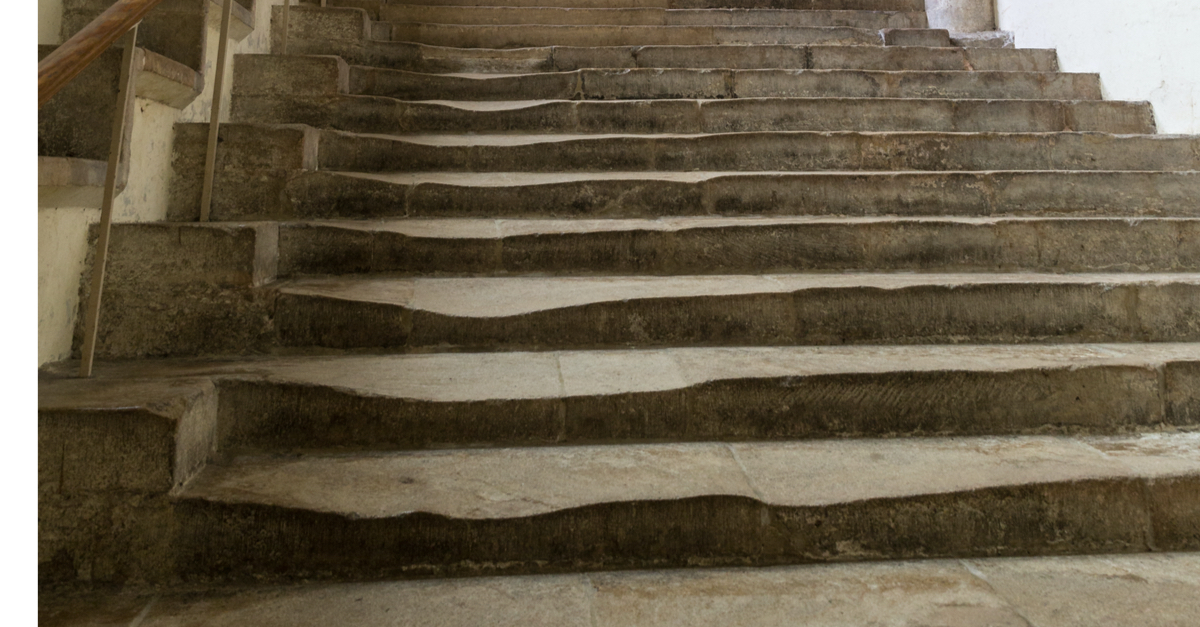
I am always moved by the sight of ancient stone stairways. The sag of centuries worn stone looks like a gentle impress made on fabric. Our forebears used some of the most resilient materials available to bear the steps of millions. Over time, the micro-erosions of clogs, boots and heel plates have changed that steely strength into the smooth aspect of stone turned through the mill of human transit. Like the steady drip of water on granite, the repeated touch of soles has altered what seemed unchanging and certain. If we stopped an individual at the top of the stairs and asked if they had left a mark on the stone during their ascent, they would almost certainly look back and answer: ‘no’.

On Christmas Eve for sixteen years, at around 5:30 pm, I would hover by the entrance to the oldest part of the Leeds General Infirmary. It was here that I met the choristers of Leeds Minster as they arrived to sing carols around the wards. This time of day on the 24th of December was always remarkably quiet. Visitors had left – or they were leaving their visit until the following day. Wards were as empty as they could be. Creating capacity before Boxing Day seemed to be a major management priority, and I once went with the singers onto a ward where there was just one patient. That will not be the case this year.

After arriving, the choristers would bustle into the nearby Boardroom where a buffet tea awaited. Following this festive offering they changed into their choir robes and formed two lines on the tiled floor of Gilbert Scott’s ‘St Pancras of the North’. Then, in the silence of its Victorian grandeur, a lone voice would hit the first note of Once in Royal David’s City. The choir joined in and we all processed up the split stone staircase to the Chapel on the first floor, the choristers’ steps falling where their predecessors had walked on this same day for over a century.

Christmas can incline us to nostalgia. In a world where the present seems to pass very quickly, surviving and looking forward can preoccupy our thoughts. Those quiet moments in the busyness of Christmas may lead us to remember other festivities and look back (either happily or uneasily) to our childhoods. On Christmas Eve, in waiting for the choir, there was the space to reflect on the history of the hospital and all who had walked these corridors since the 1860s. The poor who had sought help here before the founding of the NHS; the rich philanthropists who created it; and the eminent doctors, proud of their place in a rising profession. It isn’t hard to understand why Christmas is synonymous with ghost stories and a strong sense of the past. For all those years, on Christmas Eve, I felt I was keeping company with my predecessors.

The Chapel, Leeds General Infirmary

Once again, this Christmas is likely to be unusual for many people around the world. For the second year in a row the infection and illness caused by COVID-19 is expected to curtail the extent of our celebrations. Countries are closing boarders and battening down the hatches. Even if laws are not changed, we are being encouraged to limit our contacts and make sure we are vaccinated. Already the hospitality and entertainment sectors are suffering cancellations.

Restrictions imposed in response to the pandemic hit the headlines, but they don’t tell the full story of how people are responding to the experience. We know from occasional media reports, and perhaps from first hand knowledge, that countless micro-acts of kindness have helped people journey through this difficult and isolating event. The cards, phone calls and messages that have enabled people to feel valued and connected. The delivery of food, or medicine, that has allowed neighbours to keep safe and have the things they need. The vast majority of these small deeds will pass unreported. Research is unlikely to capture the scale, extent or consequence of these tiny impressions of compassion. The people doing them generally appear to feel these actions amount to very little. Nevertheless, they are part of the fabric of our lives, shaping and sustaining the quality of our relationships. When news reports convey the scale of problems facing humanity there is both comfort and hope in the knowledge that so much unregarded kindness happens at a local level. Love expressed with no expectation of reward, but done for its own sake, and found in the bonds of human connection which, at Christmas, are hallowed by the Incarnation.

People, look east. The time is near
Of the crowning of the year.
Make your house fair as you are able,
Trim the hearth and set the table.
People, look east and sing today:
Love, the guest, is on the way.

Eleanor Farjeon (1881-1965)