The Fourth Craw

Recently I was given charge of a baby. Thankfully this was only temporary, as mum went with her older son for the start of his first day at school. We were visiting family in Scotland and I was delighted to spend a short while with this delightful child. However, it is some time since I last looked after a baby, and this level of responsibility does not come without anxiety! In my attempts to entertain the bairn, I wondered what nursery rhymes might be familiar to him – and this is when I discovered the ‘Three Craws’ (described as a Scots classic).

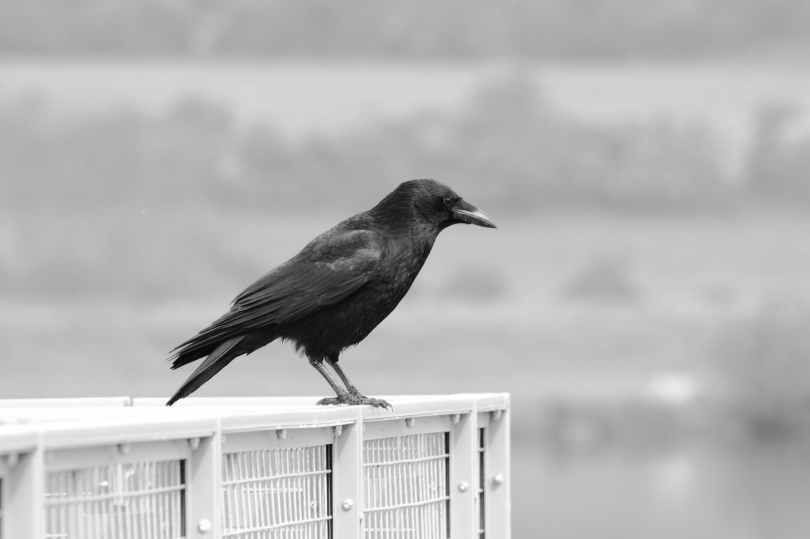
The ‘craws’ would be known in England as crows. In Scots it is a fine onomatopoeic rendition of the cry which the birds make. The craws in the rhyme are not doing very well. The first craw is crying for its mother; the second has broken its beak; the third is unable to fly. With the kind of simple repetition that makes the most effective nursery songs, each verse describes the crows sitting on a wall, sharing their woes on a cold and frosty morning. (It should be noted that the content of these verses varies, and people add their own).

At the end of one of the versions of the Three Craws, there is reference to a fourth craw – The fourth craw wasnae there at a’. It is an intriguing way to end. The rhyme is known as the Three Craws. The final craw never makes an appearance. Does this craw even exist – is it part of the gang? The song has a fourth craw, and yet it doesn’t. This bird is lacking, and seems to be the culmination of the losses that precede it. The craw missing its mother; the craw whose health has been impaired by a broken beak; and the craw unable to fly. It is an odd conclusion for our attention to be drawn to what is wholly absent.

A poetic response to this missing figure has been created by the Glasgow-based academic and writer Nalina Paul. The work is entitled The Fourth Craw and perhaps reflects the power of narratives as they emerge from the darkness of absence – the sparks of our imagination kindled by our earliest encounters with song and story:

Too much is said about night –
its fullness jug-heavy with distance
poured out into star-mapped flight.

But in the sky, protecting her addled head,
was a strange sense of grounding –
as if light were solid, for standing.

And from these things –
sparks in the high darkness
a smouldering moon –
came music, the raven’s song.

Its sound could wither the feathers of eagles
make fire from ice
play tricks with existence
changing form at a whim.

In the dim-lit great hall of glittering stories
the broken shine of the moon crackles.

Nalini Paul ‘The Fourth Craw’ 2015

The fourth craw is an absence and also an invitation. Travelling through Glencoe a couple of weeks ago I was reminded how much the landscape of Scotland fires the imagination, and has inspired many different forms of art. The colours and textures of the mountains; burns that gush with great force after the regular downpours; and trees lousy with lichen, branches encrusted in moss. Glencoe can hold a magical, childlike, atmosphere – even before it is layered with human narratives of heroism and betrayal. Sadly, as walkers and climbers discover every year, it can also be a very dangerous place.

The Three Craws suggests that, when we lament or suffer injury, being in company can make a difference. The birds are a small community of sorrow, who end by sharing an experience of the fourth bird’s absence. Even at a young age it appears that we prepare people for one of the central experiences of life, as well as providing the space for wonder, and the work of our imagination.

What is Life?

John Clare asked the question ‘what is life?’ at the beginning of his poem of the same title. It is a work that reflects the angst and instabilities experienced by this notable English poet. A figure who emerged from a family of agricultural workers, did a range of manual jobs, and came to be favoured by people of literary society. Clare’s emergence as a poet was partly driven by financial distress, and the need to generate funds to prevent the eviction of his parents from their home.

And what is Life?—An hour-glass on the run,
A Mist retreating from the morning sun,
A busy, bustling, still repeated dream;
Its length?—A minute’s pause, a moment’s thought;
And happiness?—A bubble on the stream,
That in the act of seizing shrinks to nought.

John Clare, included in Poems Descriptive of Rural Life and Scenery, 1820

Clare’s experience of life was distinct from other poets who were writing in this period. He was employed in what are often considered to be basic occupations. He would have known the relative powerlessness of his position in the social order, and how much material well-being rested on the decisions, patronage and preferences of wealthy people. The poem’s opening words assault us with a question that is both profound and also indicative of a question that has prompted the poet. It feels like a retort to someone who is pontificating about the value, pleasures and virtue of life.

The response of the poet is to focus on the ephemeral nature of our existence. Not only that, but even when we encounter a time of happiness, it is merely ‘a bubble on that stream’. If life is brief than Clare tells us that our better moments are simply an even more fleeting by-product of the water’s turbulent churn. A fraction of bliss in an otherwise downward torrent of vain hopes. In a life of brevity, happiness is a reprieve that bursts as soon as it encounters the rocks that lie all around.

I have always been rather suspicious of happiness. Perhaps that’s due to an American interpretation of it that has come to dominate our perceptions of a good time. There is a whole industry dedicated to what happiness is, and how to promote it. Inevitably, there is a lot of interest about this in marketing, where our perceptions of life can be harnessed to the priorities of consumerism. Any deficiency in our sense of well-being can become a target for products and experiences we are told will fill the void and deliver our happiness. Psychology and spirituality may often be drawn into this tension of anxiety; unsatisfactory lifestyle solutions to our needs; and consequent disenchantment. There are several ways in which happiness is identified and calibrated, such as the Oxford Happiness Questionnaire. This was influenced by the following understanding:

Argyle and Crossland (1987) suggested that happiness comprises three components: the frequency and degree of positive affect or joy; the average level of satisfaction over a period; and the absence of negative feelings, such as depression and anxiety.

Francis, L. (2010). Religion and happiness: Perspectives from the psychology of religion, positive psychology and empirical theology. In The Practices of Happiness (pp. 113-124). Routledge.

While I am sure that such tools and schemes of analysis have their uses I would question the particular concept of happiness that underpins the method of enquiry. In many respects the surveys appear to deal with a sense of well-being which is then conflated with happiness. These things are not the same. Twentieth century influences tend towards a very individualistic form of happiness, albeit that this may incorporate those people to whom we are closest. However, where is the political dimension that addresses how much our happiness (e.g. meaning, for some, to do what we want) is paid for by the misery of others? There are some researchers who have identified problems in the Western conception of happiness, advocating ‘an alternative approach, relational wellbeing, which is grounded in a relational ontology that can challenge dominant ideologies of the self’.

Religions have often had a complicated relationship with happiness. There is a recognition that, like a bubble on a stream, happiness can be momentary and elusive. As one hymn puts it: ‘Fading is the worldling’s pleasure’. Faith offers something that is not transitory. The focus is about wealth that does not decay – treasure we encounter now, but will experience fully in a life to come. There are risks with this conviction but also great possibilities. Not least, to live in some kind of peace with the world, and find value and joy in relationships. Challenging the narrow focus of ‘my’ happiness and focusing instead on our collective shalom seems a much healthier and constructive path to take. Perhaps then we might even discover that our personal happiness is what we are most likely to find we have when we have ceased to look for it.

The Cut Air

The garden is blissful in July late-in-the-day light. A blackbird calls in agitation from the margins of the lawn. The dog’s ears are pricked: perhaps there is a cat? Beyond the Georgian brickwork of the canonry the large mass of the Minster looms and the cry of a peregrine rises above the murmur of tourists in the precinct. Pigeons flutter hither and thither in alarm. At one point the scream of swifts breaks in, sudden and insistent, as three sets of scimitar wings slice the evening air. They appear and disappear in a moment. Bees toil amongst the lavender. In the walled garden the soil turns up fragments of clay pipes and not far below the surface there will be scaps of Roman detritus – ashes under Eboracum.

Sleepers over oceans in the mill of the world’s breathing. 
The grace to say they live in another firmament. 
A way to say the miracle will not occur, 
And watch the miracle.

Anne Stevenson, Swifts

Time stands thick in the bulk of the cathedral, the rustic garden bricks, and all that lies below. The long-dead masons and glaziers knew nothing about cluster bombs, and their small fires did little to harm the health of the world. Yes, there was fear of disease and the panic stirred by the silhouette of a longship appearing down the Ouse. Progress has dispelled misery but also birthed new anxieties. Now an exceptionally warm day can be an omen of humanity’s expansion and consumption, of heat that will change the way we live and drive the poorest to destruction. Our fingerprints are everywhere, with little but the length of days escaping some change wrought by our manipulation.

It is necessary to hold a balance between this becoming-future and the peace of an evening hour. Undoubtedly there is an imperative to act, but there is also a need to sit and stare, and savour the gift of all we must strive to save.

Behold, we know not everything;
I can but trust that good shall fall
At last – far off – at last, to all,
And every winter change to spring.

From In Memoriam A.A.H., by Alfred Tennyson

Milk to Faith

What, I wonder, do we ask for in prayer? I am thinking in particular of moments when we might petition to know God more fully; more deeply; more intimately. Perhaps our wish is for only the slightest indication that God is present with us – of no more substance than the passing brush of a moth. Often we prize these glimpses and signs, feeding on them for many years after the event itself.

In characteristic style, John Donne had no truck with these modest expectations of divine encounter. In one of his sonnets Donne demands a much more forceful – even brutal – experience of God:

Batter my heart, three-person’d God, for you
As yet but knock, breathe, shine, and seek to mend;
That I may rise and stand, o’erthrow me, and bend
Your force to break, blow, burn, and make me new.

Batter My Heart John Donne 1633

It is a metaphysical poem par excellence, full of paradox, wit and irony. In the relationship between the poet and God Donne pleads to be overpowered, even referencing in the opening line that the individual soul is outnumbered by this God of three persons. It is the text used for a remarkable aria by the contemporary American composer John Adams, in his opera Doctor Atomic. The opera concerns the first test of an atom bomb, known as the ‘Trinity’ test, a designation reflecting Robert Oppenheimer’s fascination with Donne’s poetry.

Jefrey Johnson, in his book about the theology of the 17th century dean, identifies the Trinity as Donne’s seminal Christian belief. As Fred Sanders put it some years ago, having examined his poetry and sermons, this belief was centred on the concept of sacred community:

That God is a unity rather than a singularity, a communion rather than a monad. And as we gather our scattered selves into the act of worshiping the triune God, we become more unified, more focused, more truly ourselves.

Fred Sanders: Today is John Donne’s Birthday, blog 2009

The visceral tone of Batter My Heart reflects Donne’s passionate desire to surrender the whole of himself to God. This is no insipid theology of cautious approach, but a demand to be broken, blinded and burnt in order to be restored; to see aright, and emerge, phoenix like, as a new creation. Left to the intellect alone the Trinity might remain a stumbling block and cause of confusion, but when engaged as God-in-community Donne sees the doctrine as a vibrant expression of sacred relationship. Perhaps it is for this reason that in his Litany Donne recognises fundamental differences between an approach to the Trinity that draws on philosophy and one where faith is placed at the heart of things:

O blessed glorious Trinity,
Bones to philosophy, but milk to faith,
Which, as wise serpents, diversely
Most slipperiness, yet most entanglings hath,
As you distinguish’d, undistinct,
By power, love, knowledge be,
Give me a such self different instinct,
Of these let all me elemented be,
Of power, to love, to know you unnumbered three.

Donne, John. Poems of John Donne. vol I. E. K. Chambers, ed. London: Lawrence & Bullen, 1896. 174-187.

Philosophers will ponder the meaning and nature of the Trinity until kingdom come. The Trinity remains, for people of faith, a vibrant community of persons, where equality of status is lived in a dynamic relationship of power, love and knowledge. If in Christ we are born again then it is in the Trinity that we learn to grow again, nurtured by the milk of a faith flowing from the God who shines upon us, and seeks to mend all that is done amiss.

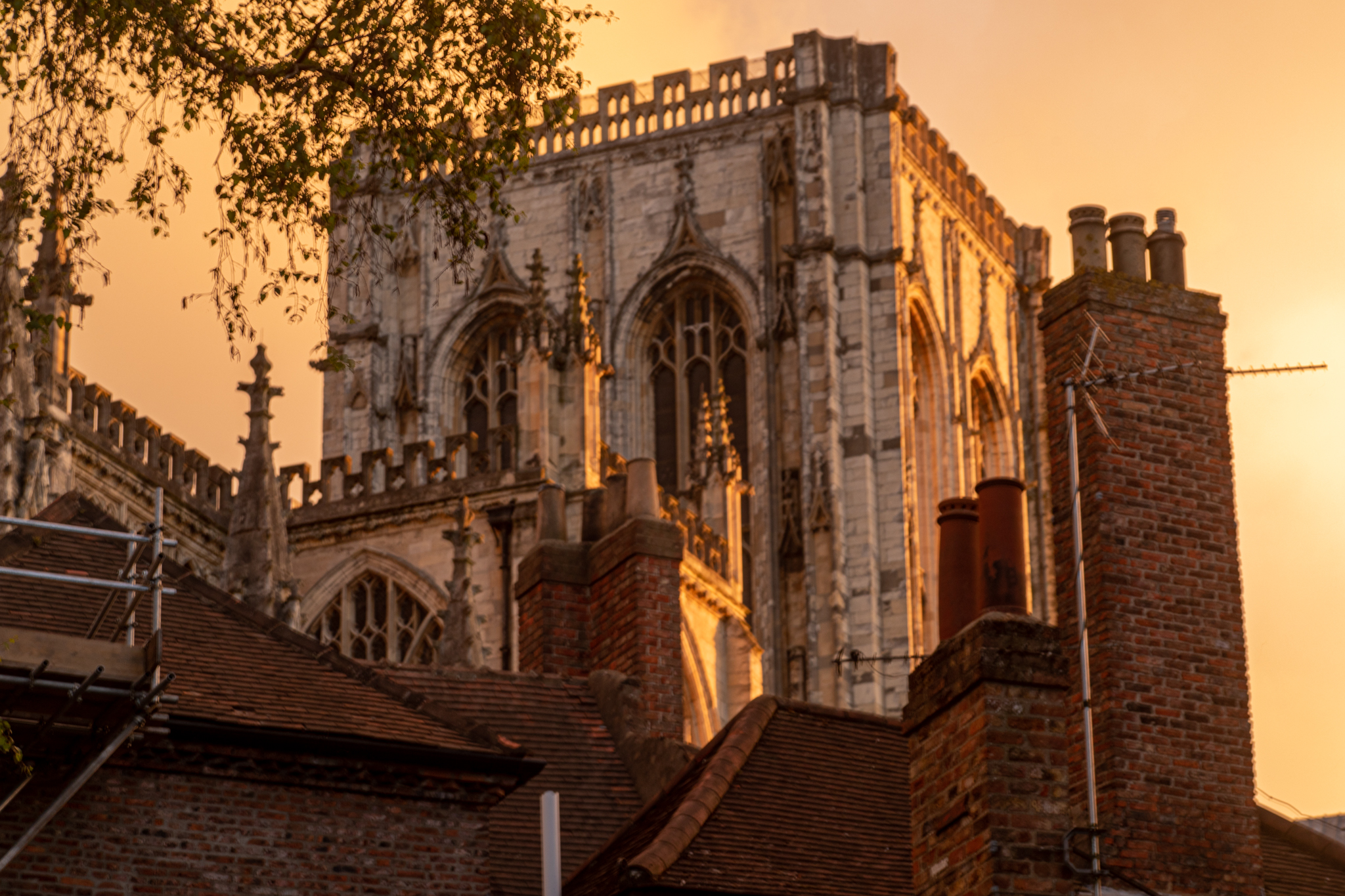
Feature image is the Trinity depicted in stained glass at York Minster. Photo by Lawrence OP

Letting go

In a parish I once knew, long ago, there was a splendid cabinet in the vestry. Made from fine timber, it was a large chest with many drawers – in which, liturgical vestments were stowed. It had been given in memory of their father by two members of the choir.

When I was present to lead worship on a Sunday I often spent time in the vestry before the liturgy began. On several occasions these members of the choir would voice concern about something to do with ‘father’s chest’. An alien object had been placed on the top; or a drawer was sticking out; on more than one occasion it appeared to have been moved an inch one way or the other. The cry would go up: ‘what have they done to father’s chest?’

Over time a question began to form in my mind. Had this object really been given? The continuing bonds of attachment seemed so great, so proprietary, that it was hard to think of this as a gift that was given free, unencumbered and without strings.

“But when you give alms, do not let your left hand know what your right hand is doing, so that your alms may be done in secret, and your Father who sees in secret will reward you”.

Matthew 6: 3-4 NRSV

On Ash Wednesday I think there is much to consider about giving and detachment. The ashes remind us that our physical life is temporary, and that all we own will one day be dust. More significantly, God gives Jesus without any sense or implication of ownership. Horrifically, human beings did with this gift what happens to far too many lives. Even on the cross and hearing the cry of despair, God is silent. This is a gift – a true gift, and therefore God can make no claim even on that desperate day we shall mark six weeks on Friday.

All out genuine acts of letting go echo something of this divine gift. If we give we can never claim ownership or, indeed, any greater interest than anyone else. Perhaps this is why gifts are so rare. In his poem ‘Walking Away’ C Day-Lewis reflects on the moment his young child disappears, momentarily, for the first time:

That hesitant figure, eddying away
Like a winged seed loosened from its parent stem,
Has something I never quite grasp to convey
About nature’s give-and-take – the small, the scorching
Ordeals which fire one’s irresolute clay


I have had worse partings, but none that so
Gnaws at my mind still. Perhaps it is roughly
Saying what God alone could perfectly show –
How selfhood begins with a walking away,
And love is proved in the letting go.

Salty Language

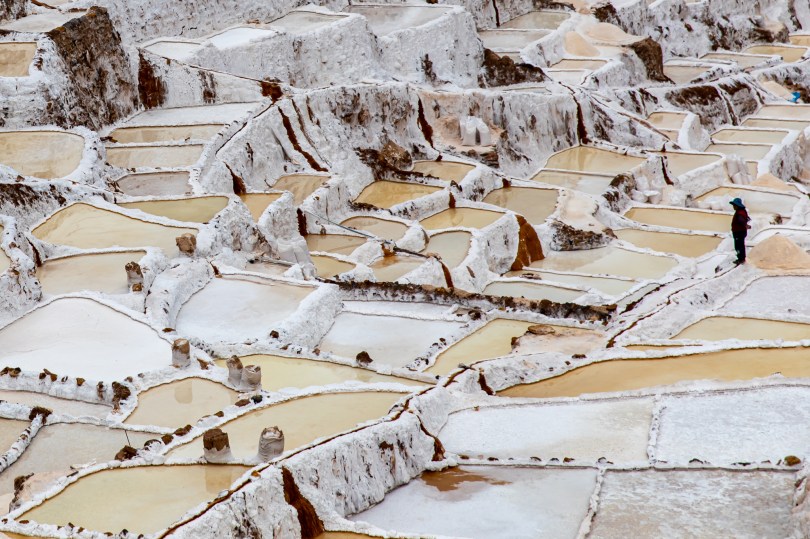
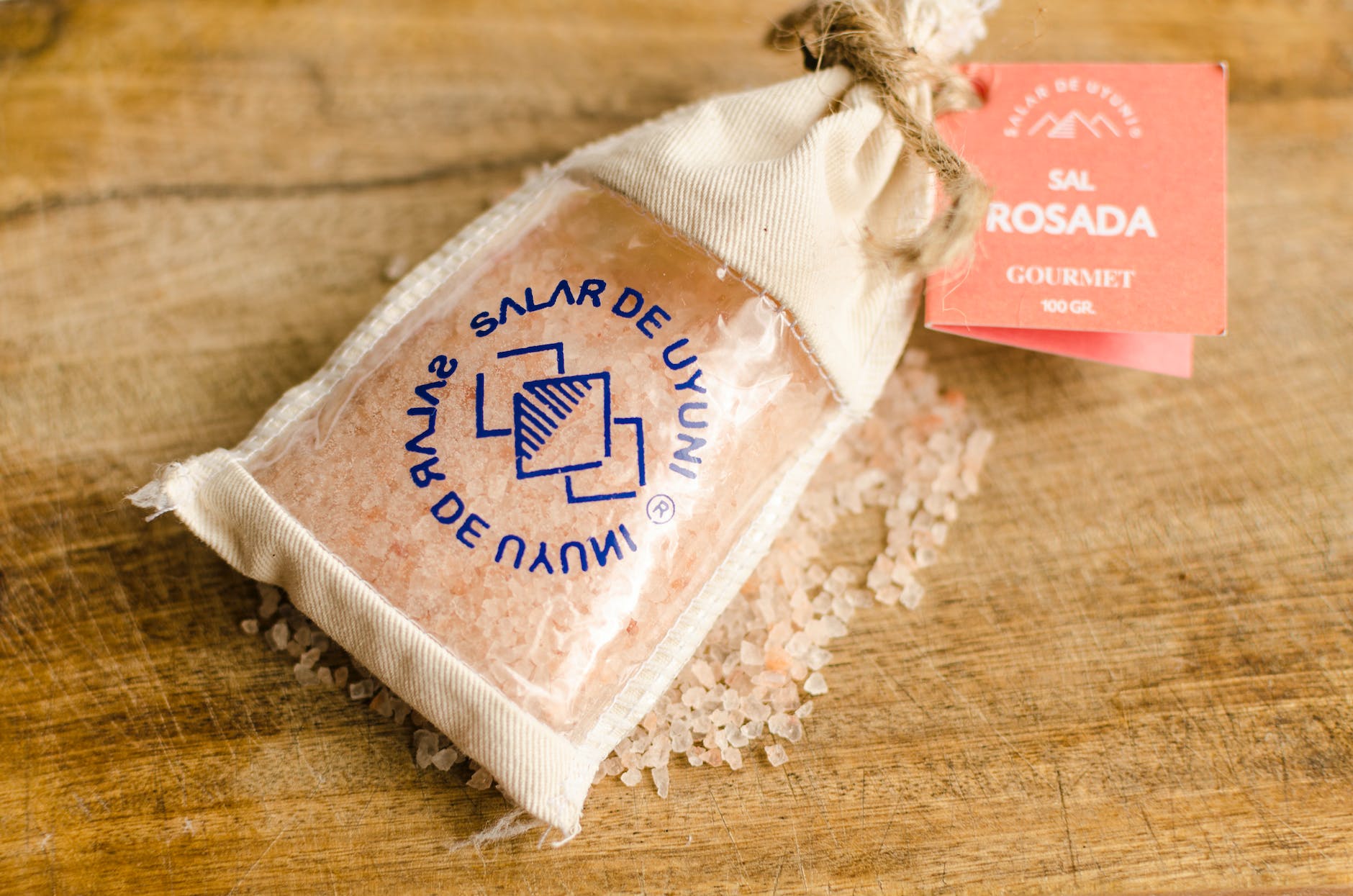
Over ten thousand feet above sea level in central Peru it was surprising to find a whole industry dedicated to the production of salt. The Maras salt pans go back over a millennium to the Chanapata culture. As this civilisation gave way to the Inca Empire, they continued to provide their distinctive pink salt far and wide. At such a distance from the sea, and at such altitude, the steady supply of salt seems miraculous. Long ago, this land was below the sea and left salt hidden in the hills. A spring which runs through the complex of underground passages this enables the striking ‘pink gold’ to be extracted from the small stream that emerges above the pans. The rights to salt production are handed down through the generations, back to a time now lost to memory, with tourism adding further value to the enterprise. It is hard work, but the rewards can be significant.

Photo by Roger Duran on Pexels.com

For all of my life salt has been readily available and cheap. This was not always the case and for most of human history salt has been a precious commodity. In the Roman Empire it was taxed, and served a wide variety of uses – religious sacrifice, medicinal, fish preservation and, of course, the seasoning of food. Like anything that is taxed, this also made salt political. In Matthew chapter five, when Jesus says ‘you are the salt of the earth’, it follows only a few verses after the calling of the first disciples. In a way largely missed today, the leap from those involved in fishing, to an image of salt, was entirely natural. Everyone was connected to salt in some way; and no one doubted its value.

In the Jewish Scriptures there are intriguing references to the ‘covenant of salt’. In the various covenants God made, such as with Noah and Abraham, there is a theme of constancy (at least on God’s part). Probably due to its properties of preservation, salt was often used for these moments of commitment. In Numbers 18:19 we hear about the relationship of God to the people as ‘a covenant of salt forever before the Lord for you and your descendants’. A commitment made in salt was expected to endure.

In Greek and Latin the words for ‘salt’ also carry the sense of wit and sparkle. Salt put the zest into a meal, transforming the plain into the delicious. As an image used by Jesus (‘salt of the earth’) to address the crowds who came to hear him, it suggests that those who are alive to God should be the people changing the taste of living. Like the image of yeast used by Jesus, this isn’t about changing what would become the Christian Church, but about how the baptised are called to transform the world.

is it really the salt
that really matters
or is it the bitterness
that wakes us up
and lets us know
what this life is all
about

Ric Bastasa, 2009, The Salt of the Earth

Salt is undoubtedly a powerful and necessary part of our lives, but it is not benign. We talk about ‘rubbing salt into the wound’. When we distrust what we are being told we ‘take it with a pinch of salt’. Spilling it is seen by many as bad luck. The language about salt reminds us that anything significant can be used for good or ill. As Ric Bastasa conveys in his poem, we can spend too long wondering about the salt – and not enough time thinking about the changes it brings. Portrayed as the salt of the earth, the crowd was being encouraged to preserve its sparkle; never to lose its wit and flavour. Jesus may be suggesting – by comparison – that the religious leaders had grown bland and stale: ‘but if salt has lost its taste… It is no longer good for anything, but is thrown out and trampled under foot’. Without the responsibility to enliven others these leaders had failed in their calling: to enable people to be God’s salt for the world.

The Stillness

In the stillness of a church where candles glow,
In the softness of a fall of fresh white snow,
In the brightness of the stars that shine this night,
In the calmness of a pool of healing light.

In the clearness of a choir that softly sings,
In the oneness of a hush of angels’ wings,
In the mildness of a night by stable bare,
In the quietness of a lull near cradle fair.

There’s a patience as we wait for a new morn,
And the presence of a child soon to be born.

Katrina Shepherd

The Hollow Crown

Part of what was so moving about Thursday’s events, was the experience common to so many families of sudden and unexpected news; the dash to a bedside; the realisation that life is ending. As a hospital chaplain I witnessed on many occasions the anxiety of families as to whether everyone would get there in time, the inevitable sorrow once the moment of death arrived, and the imperceptible shift in relationships that death precipitates. In many instances a death can be the end of an era. The moment when some familiar conversations about long-deceased relatives and neighbours are no longer possible.

The BBC series, The Hollow Crown, began in 2012 and featured several of Shakespeare’s history plays. It was a tour de force of casting and direction and will no doubt remain an important part of the BBC’s archive. One of the sublimely acted moments featured Simon Russell-Beale as the comic character, Falstaff. Sitting by a fireside at night, Falstaff reminisces with Shallow and Silence about the days of their youth. It is at once a sad and honest recognition of our mortality, and the days that pass so quickly.

Certain, ’tis certain; very sure, very sure: death,
as the Psalmist saith, is certain to all; all shall die.

King Henry IV, part II, Act 3, Scene 2, William Shakespeare 1660

In the conversation about their past, the protagonists avoid detail. Although the play is set in another era, looking back over the 55 years from the date of its performance, audiences would recognise how dangerous it was to discuss history. The beliefs, convictions and actions of one period could bring plaudits at the time but a decade later put someone in peril of trial and execution. It was much safer to say simply: ‘Ha, cousin Silence, that thou hadst seen that that this knight and I have seen!’

We do not now live in a country that presents this kind of risk. There may be a social expectation about public conduct and comments during the period of official mourning for the Queen, but there are no punitive sanctions. We can speak about the past, and voice convictions that may be at odds with the prevailing mood. This is not a freedom enjoyed everywhere and, travelling in Cuba some years ago, I was aware of how cautious local people could be in speaking about their society and its history.

The title for the BBC series is taken from Richard III and concerns the mortality of kings: ‘within the hollow crown That rounds the mortal temples of a king Keeps Death his court’. Despite all the layers of privilege and deference, sovereigns are mortal and death can come quickly. The empty crown is the enduring motif of royalty, with its void filled instantly, silently and seamlessly, the moment its last occupant dies. In the past this could be contested and fought over, whereas now the British monarchy’s succession is no longer disputed. After a reign of astonishing longevity, while its trappings and function may change, the likely succession of sovereigns appears guaranteed deep into the 22nd century.

While in no sense a presence in people’s immediate relationships, the departure of the Queen will be felt by many as the loss of a vital connection with the past. Her experience of WWII, and Prime Ministers from Churchill to Truss, highlight a consistency spanning generations. On the news of her death my thoughts went to my mother and grandmother, both keen supporters of the Queen. As an early and life-long member of the Mothers’ Union, my grandmother was an active participant in an organisation for which the Queen was Patron up until the moment of her death.

The poet John Donne was 31 years old when Elizabeth I died in 1603. His subsequent rise to become Dean of St Paul’s relied on Royal patronage, and was accompanied by the composition of some of the finest Metaphysical poetry in the English Language. Donne was very concerned with death, and one of his most memorable texts adopts the idea of literature to explore his theme.

When someone dies: “one chapter is not torn out of the book, but translated into a better language; and every chapter must be so translated; God employs several translators; some pieces are translated by age, some by sickness, some by war, some by justice; but God’s hand is in every translation, and his hand shall bind up all our scattered leaves again, for that library where every book shall lie open to one another”.

John Donne, Devotions Upon Emergent Occasions; Meditation XVII.

Understandably, the Queen’s life contained a series of volumes – possibly its own library – of public interactions and comments. Not to mention the private moments, the scattered leaves, that are also part of our story. She is now being translated into posterity and, spiritually, to a better place. To give Shakespeare the final word, even a long and notable Royal reign is fleeting in the sweep of human history. Our time on stage comes to an end and, when the ‘insubstantial pageant has faded’, no grandeur alters the truth we all hold in common: that ‘our little life is rounded with a sleep’.

Where wealth accumulates

Wharram Percy is perhaps England’s most celebrated deserted village. What had been a thriving community set in the rolling and rich landscape of the Yorkshire wolds, expired from a range of causes. There is probably no clear identification of a seminal bow, but a host of factors eventually led to the eviction of the last two families, Even if the Black Death had not impacted on the village directly, it led to a host of vacancies in city trades and no doubt acted as a magnet for younger workers who sensed that the tide was turning on rural life. Famously, in The Deserted Village, Oliver Goldsmith depicts a bucolic haven that gradually gives way to the corrosive influence of commerce and the appetite for wealth. Goldsmith’s observations omit the pressures and constraints of rural living, but the gist of the changes he describes have left echoes across England. It is estimated that 3,000 villages became deserted during the Middle Ages.

‘Here as I take my solitary rounds,
Amidst thy tangled walks, and ruined grounds,
And, many a year elapsed, returned to view
Where once the cottage stood, the Hawthorne grew,
Remembrance wakes with all her busy train,
Swells at my breast, and turns the past to pain’.

The Deserted Village, Oliver Goldsmith, 1770

A generation earlier a similar theme was explored by Thomas Gray in his famous Elegy. The subject here is not a deserted village but rather the individuals who lived and died in an English village. Like Goldsmith’s later work, the virtues of a simple life are extolled and contrasted with the vanity and pomp of new wealth. It marks the emergence of a theme which lasted for the following two centuries – and includes the work of the Romantic poets. It was becoming clear that a way of life was ending in England and there were plenty of people who lamented its loss. It must be said that, on the whole, these writers were not the ones living without the convenience of a growing range of emerging technologies or, if they did, it was through choice. Even today, wi-fi access is an issue where rural communities often have to wait long after towns for the delivery of services most people take for granted. This was true for everything from measures to improve public health to electricity and the telephone. On a personal note, it was my parent’s generation which was the last in our family to have a living connection to people still working the land. In the 18th century most urban dwellers would have had links to relatives living and working in a rural context. They would have heard at first hand how life was changing.

Beside other examples of graffiti at the main door at St Mary’s Wharram Percy, a small carved cross

In more recent literature, such as Remains of Elmet by Ted Hughes, the focus is not on deserted towns or distant generations, but on the supplanting of one people by another. Hughes observes changes that saw one set of trades giving ground to new occupations – or no occupation. He writes reflectively on life in the Calder Valley as industries declined and nature reclaimed the land while sealing the scars of human labour. In poems such as Crown Point Pensioners Hughes commemorates the ‘survivors’ who reached advanced age despite the legacy of war and the demise of traditional industries. Published in 1979 the collection of poems could not have been more timely: it was the year when Thatcherism began to eviscerate much of the North with devastating effect. Today, nature has indeed reclaimed many places once reduced to rubble, but the damage wrought by political change in towns and villages has passed down the generations. As Dr Jane Roberts observes in a paper published in 2009, drawing on her experiences as a GP working in Easington, government policies have frequently had the effect of disadvantaging people in communities where structural violence has had the greatest consequence. Narratives of individual improvement only add to the sense of failure for those whose life-opportunities have been dismantled and removed.

‘As long as we fail to acknowledge and confront the realities of patients whose illnesses and distress are often the manifest expression of the structural violence which encapsulates their lives we collude with the system and deny patients their basic human right to health and equal access to healthcare resources’. 

Roberts, J. H. (2009). Structural violence and emotional health: a message from Easington, a former mining community in northern England. Anthropology & Medicine16(1), 37-48.

The last two families in Wharram Percy were evicted sometime around 1500 (to make way for sheep). It is hard to imagine what it must have felt like to abandon the village and make a fresh start elsewhere. There will always be change in the economic and social life of communities, but there is no doubt that some forms of change are better supported than others. When we understand that structural violence is a choice, rather than an inevitability, we create space for society to act in ways that promote a more inclusive social justice. In England, in the 2020s, we may all be forced to learn what the victims of capitalism around the world have known for centuries. Our economic way of life accelerates the acquisition of resources by the rich as it simultaneously increases the relative (and absolute) poverty of the people who generate that wealth. The question as to whether our economic system can continue to widen this gap will become more urgent this winter with steep rises in energy costs. To paraphrase Goldsmith, the deserted villages are a graphic example of the dramatic change ‘Where wealth accumulates’ and people rot.

All Are Drowned

A literal reading of the story of The Flood would surely see God in the dock for genocide. Apart from one family, life in the world is washed away by a Deity impatient with the sinful state of humanity. According the Genesis 5:7, it is a decision to ‘blot out form the earth the human beings I have created’. In the York Mystery Plays performing this week, it is only Mrs Noah who makes a ‘din’ at this sudden and devastating loss of life:

But Noah, where are now all our kin
And company we knew before?

The resonance of these words to audiences that lived through plague years can only be imagined. People survived and wondered what had become of their neighbours; their extended families; and their friends. All the guilds that performed in the plays would have experiences the painful deaths of colleagues, with the plays being performed after a gap caused by the worst excesses of infection. Perhaps a full cast was harder to find and familiar figures were noticeable by their absence?

Maurice Crichton as Noah in The Flood, York’s Mystery Plays in 2022 (picture in York Press)

Some of the problems of the story are touched on in the narratives of the play. At the end, when the waters subside, an innocent son asks: ‘how shall this life be led Since none are in this world but we?’ Populating a new world from one family raises its own problems and risks. There is humour in the son’s question but also a serious point about the regeneration of humanity. In the streets of York such blunt questions were permitted in a way that was unlikely to be acceptable in the Minster and churches of the city.

In England the Archbishop of York proclaimed that the plague was “surely… caused by the sins of men who, made complacent by their prosperity, forgot the beauty of the most high Giver”.

Beidler, P. G. (1981). Noah and the Old Man in the “Pardoner’s Tale.” The Chaucer Review, 15(3), 250–254. http://www.jstor.org/stable/25093759

Understandably, and perhaps addressing the unspoken questions of an audience wondering about the repetition of such a catastrophe, one son asks whether the empire of the world will now last forever. Noah gives the assurance that there will not be another flood – but that the world ‘shall once be waste with fire, And never worth to world again’. The final cataclysm will be a blazing end to God’s creation. In current circumstances it might indeed feel that this is where we are heading – although the Deity only needs to sit back and watch as we pursue lifestyles that may lead to this ultimate conflagration. As the Mystery Play wagons roll through York this week they will follow a pattern, and repeat the words, used back into the mists of time. In every age they offer food for thought and hopefully, entertainment, which reflects on both our place in the world and the consequences of our actions.

We travel upon the Ark, in mud and rain,
Our oars promises from God.   
We live—and the rest of Humanity dies.   
We travel upon the waves, fastening
Our lives to the ropes of corpses filling the skies.
But between Heaven and us is an opening,
A porthole for a supplication.

The New Noah, by Adonis, translated by Shawkat M. Toorawa