While studying at the University of Hull in the mid-’80s I often sat in the theology section of the library. The librarian, Philip Larkin, had decided that the best place for the aloof subjects of philosophy and theology was on the seventh and highest floor of the Brynmor Jones Library. Sometimes, during a winter term, I would gaze out of the windows watching snow approach slowly from the direction of the Yorkshire Wolds. As the hills disappeared I knew it wouldn’t be long before snowflakes started to eddy around the building. This warm place was a pleasant alternative to a cold and damp student house.
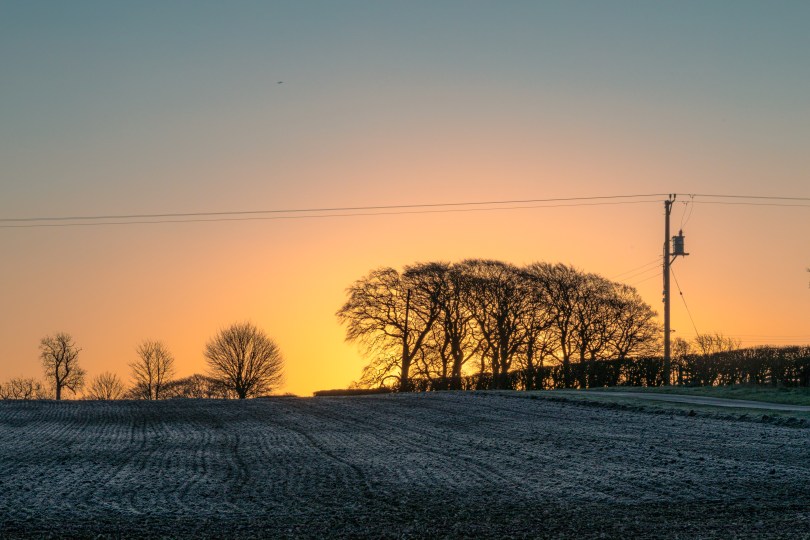
Forty years after those musings in the library, I decided that some walking in the wolds would be welcome. Along with the dog, I set out early to catch the sunrise from Garrowby Hill – the highest point in the area. I hoped to catch a glimpse of York Minster on the horizon but the air quality was poor. While possible to make out the Minster, a layer of mist made it almost impossible to photograph.
After parking in Bishop Wilton, we walked across fields and made our way to Great Givendale. The ‘Great’ appears somewhat ironic as it would be hard to imagine any hamlet much smaller than this one. Nevertheless, it has a beautiful little church to one side of the principal street. In 1823, when agriculture required more labourers, the population included four farmers and a gentleman. Dedicated to Ethelburga, the church overlooks a small lake and the area round it teems with wildlife.
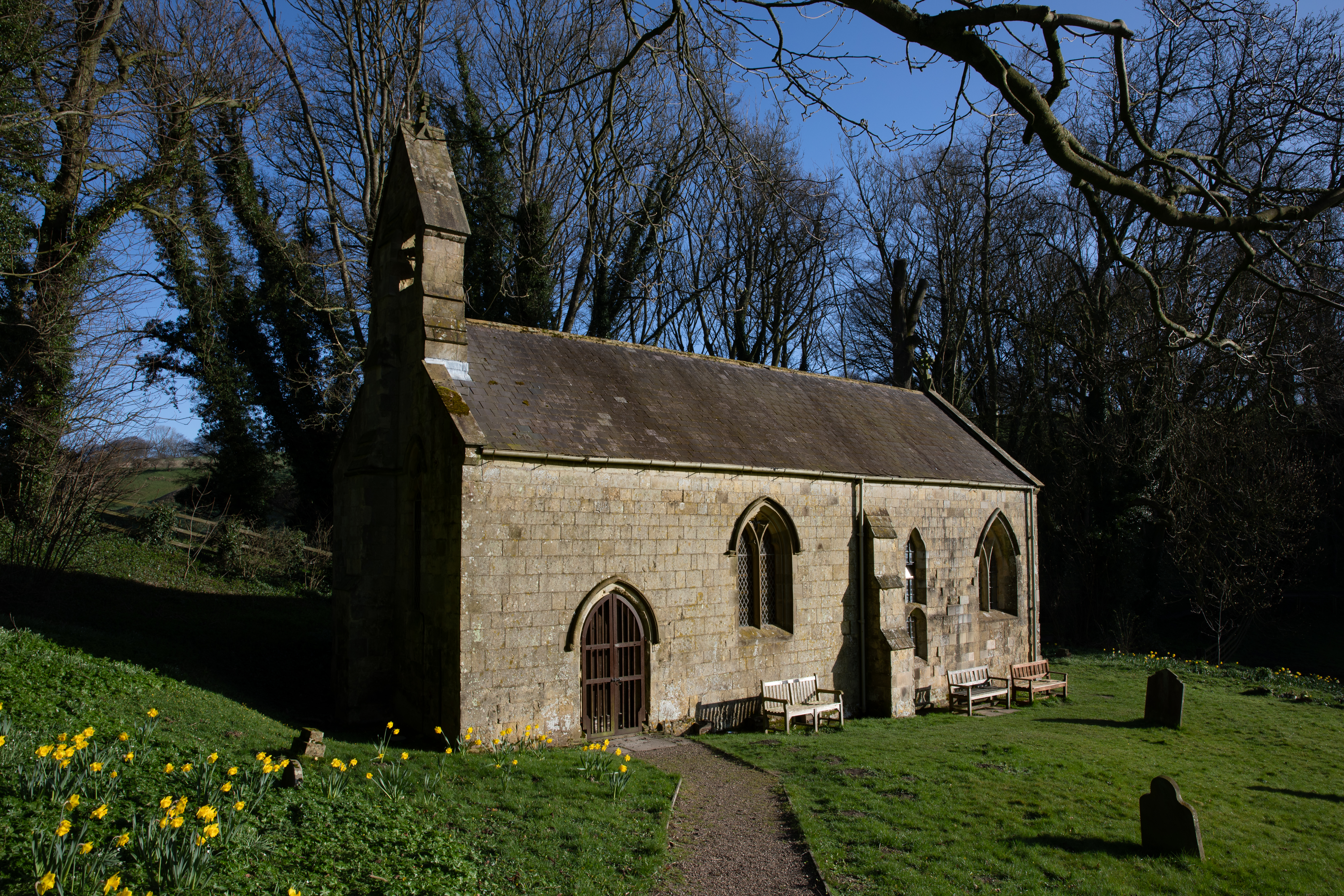
St Ethelburga’s Church, Great Givendale
While the day began with one of the last frosts of the season, bright sunshine in a cloudless sky soon began to warm the air, and I hardly met anyone on the walk. As is so often my choice, the objective of a remote church to visit is a welcome feature of the walk. It is remarkable that somewhere with just 60 inhabitants in 1823 could have this beautiful place of worship at its centre.
Out through the fields and the woods
And over the walls I have wended;
I have climbed the hills of view
And looked at the world, and descended;
I have come by the highway home,
And lo, it is ended.
From Reluctance by Robert Frost
Forty years after first gazing out at the Yorkshire Wolds, it would be foolish to claim that the world is now a better place. Then it was the USA bombing Libya, now it’s Iran. As weapons become ever more powerful our failure to make moral progress, or resolve disputes without recourse to arms, becomes ever more dangerous to the world as a whole. Today is “refreshment Sunday” – the midpoint of Lent. A time when we might take a moment to gather our strength for the final weeks before Easter. Undoubtedly, the events of Holy Week remain as relevant as ever, and the need to quench the fires of violence must be a constant prayer. Jesus stood in the breach of human hatred and refused to meet violence with violence. His sacrifice was the only way to find a better way – a choice we are continually called to make in a world where tit-for-tat is so often the only rule of engagement.
The tower and spire of Bishop Wilton Church
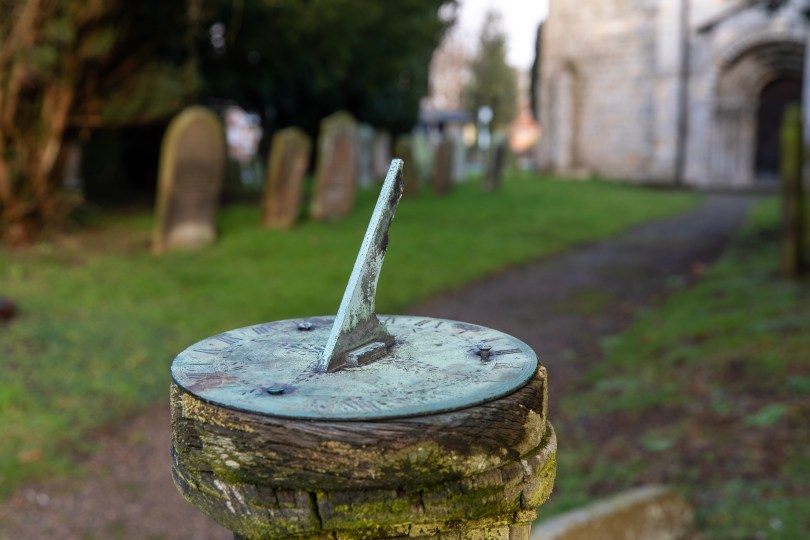







 Swift Reflections