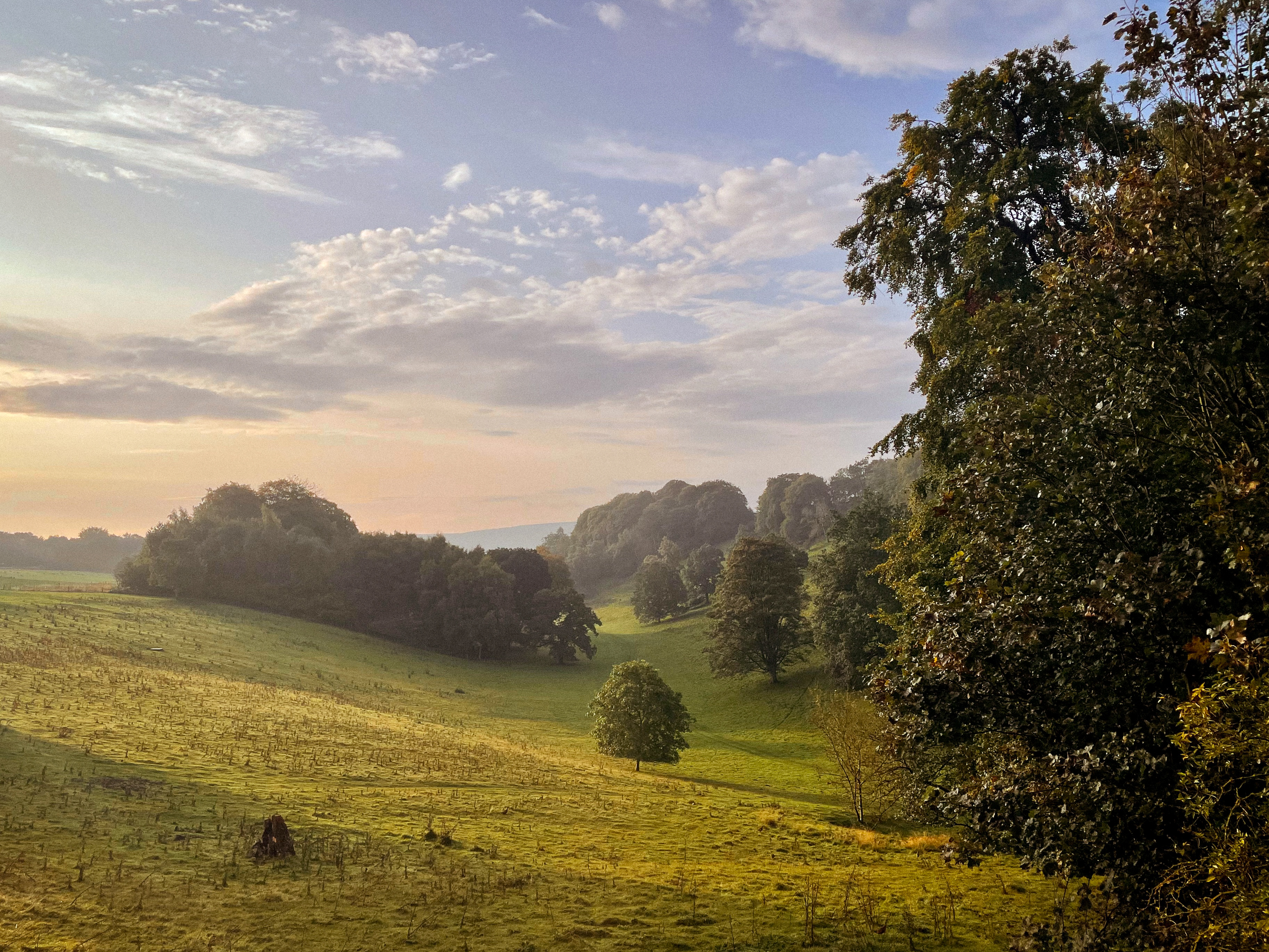
Is God Calling?

I usually skip through the online edition of The Church Times over breakfast on a Friday. It is a newspaper with a venerable history, having first hit the presses in 1863 (between the publication of The Origin of Species and the first sales of Turkish delight). In 1981 a scurrilous and highly enjoyable spoof of The Church Times was published under the title Not The Church Times, reflecting the popular use of the ‘not’ brand of satire in the 1980s. It came complete with adverts for high office, one of which stated:

Applicants are invited to apply, stating their public school, Oxbridge college, year at Westcott House, and Lodge.

Sadly, I would qualify on only one of these criteria and even then, by 1990, Westcott was no longer the powerhouse of episcopal chumocracy for which it was once renowned. This undoubtedly explains why, when there is presently a surfeit of episcopal vacancies in the Church of England, no mitre is likely to fall on that pate so propitiously cleared of hair, which would be enhanced immeasurably by the imposition of a pointy hat. Alas, as Cervantes put it in Don Quixote – quoted later by Sterne – with a head so beaten about by the vagaries of life, if mitres were “suffered to rain down from heaven as thick as hail, not one of them would fit it.”
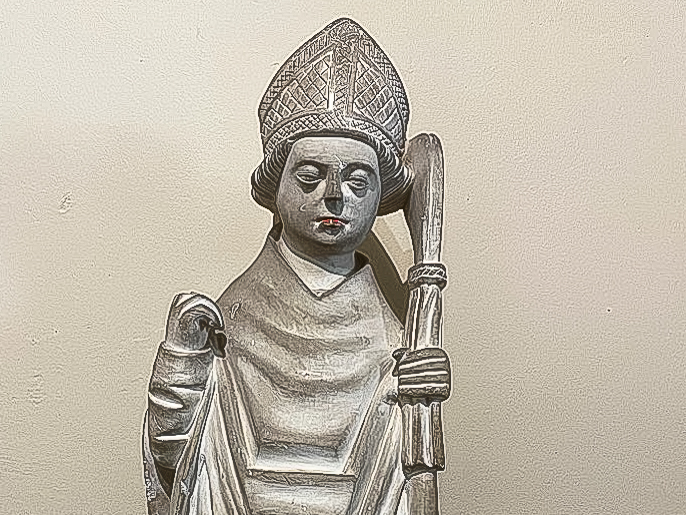
In recent years the criteria for preferment have undoubtedly changed from those in the 1980s. Favour has fallen on evangelical candidates; those perceived to have been successful in an organisation other than the church; and, more than anything else, priests who have a story of leading church growth. Once again, my credentials would make little impression in these categories of assessment.

All of this came to mind as I read through the classified section of this week’s issue of the ecclesiastical newspaper. My eye was drawn to an advertisement from my home diocese, the See of Blackburn. A creation of William Temple, consisting of parishes carved out of the rapidly growing Diocese of Manchester – itself an earlier Victorian offspring of the Diocese of Chester. The ad that caught my eye had a headline in a style not uncommon in The Church Times:

I pondered whether this was the same God responsible for the creation of the universe. That is, the entire reality identifiable from earth, which is at least 28 billion light years in diameter. The God who predates time and will draw time to a close. That God? I imagine that this God probably has rather a lot to do but, God being God, perhaps there would be an infinite supply of time so that spending a few minutes reviewing the needs of the Blackburn Archdeaconry wouldn’t be too onerous.

However, wouldn’t it be more honest and meaningful to ask: ‘Do you want to be the Archdeacon of Blackburn?’ Shouldn’t our desires be material to the concept of vocation, rather than being cast into doubt under a pall of implied sanctity. Perhaps it would lead to much greater honesty and candour if we explored the motivations of why anyone wants any particular role. As the Church of England struggles to address the abuse that has happened, and is happening, in situations where piety has been asserted and manipulated, it might produce a better culture if we began with a humble recognition of our own wants and needs. Wants and needs where, in various ways, God is already present and active. Teasing these out may be the best way to achieve greater honesty; self-knowledge; deeper discernment; and a safer Church.

Perhaps spiritual directors should run the C of E – they are the people, usually, who cut through the flummery and ask this kind of inconvenient question. Might God be calling any of them to Blackburn – or even to Canterbury?

Lent Preachers

As the Church approaches Lent, some Christians might have begun thinking about what to give up, or what to take up. Perhaps a small resolution of abstinence – alcohol or chocolate – and a desire to read something that will draw us a step closer to understanding everything to which Lent points. In some churches, while Holy Week might feature a visiting speaker to lead people through the final week, it has been the custom in cathedrals and elsewhere to have a different guest preacher each Sunday. This practice goes back a long way and can be found in various notices and signs that have survived the passage of time.

In 1725 Ash Wednesday fell on February 10th. Or did it? This statement requires some qualification. The calendar at that stage was still in the Julian form, meaning that the year began on 25 March, hence the Lent preachers list for St Paul’s is described as the year 1724-25. This practice was known as ‘dual dating‘ and caused considerable confusion. It finally ended in England in 1751 with the British Calendar Act and an effective transfer to the Gregorian calendar used by most of the rest of the world.

As the notice from St Paul’s demonstrates, Lent sermons were not confined to Sundays. The advertisement offers distinguished clerics on Wednesdays, Fridays and Sundays, throughout the 40 days. These occasions were not for the minor clergy, but moments when the cathedral staff themselves, or various other deans and bishops, might pronounce their theology and spiritual message.

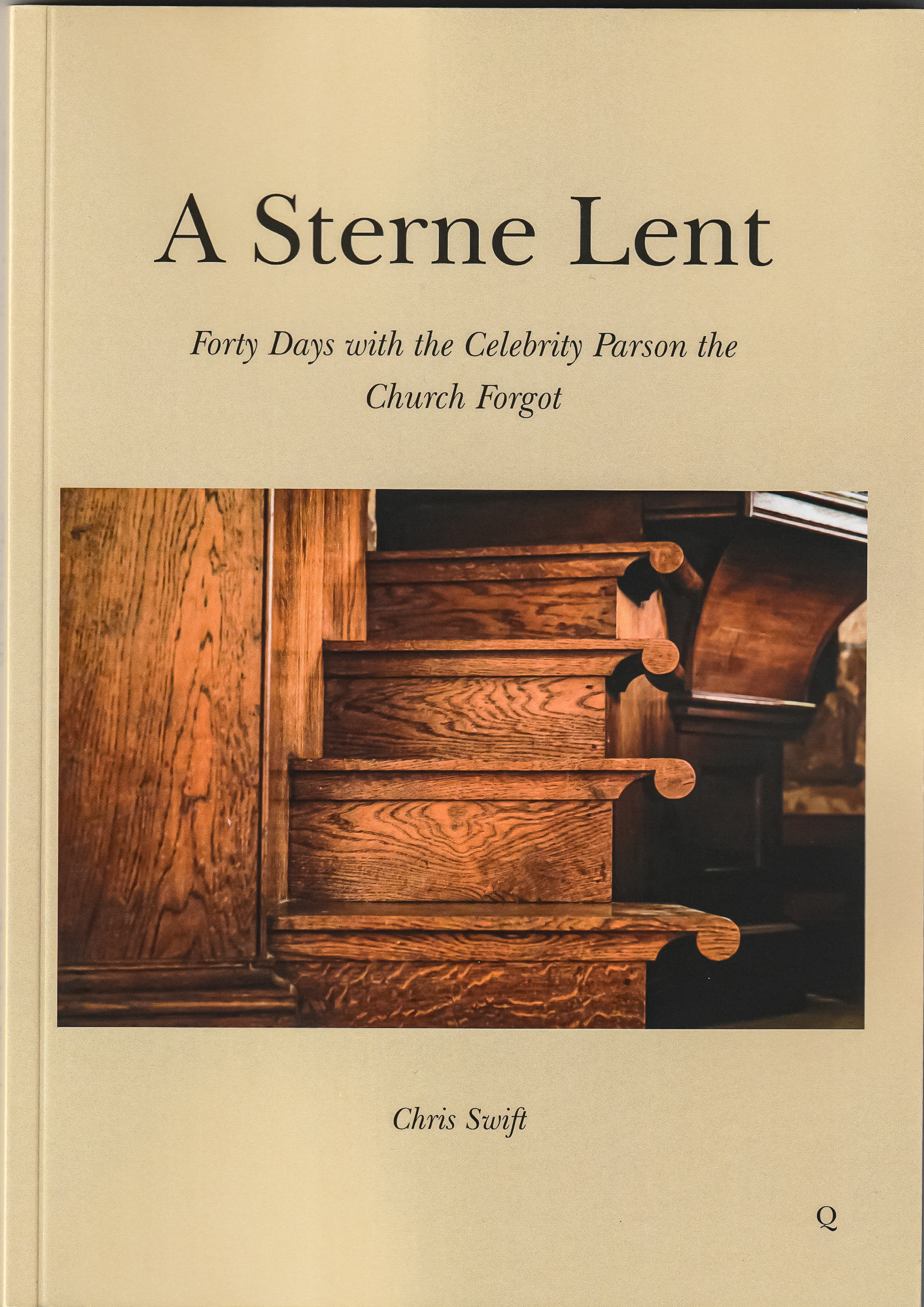
Laurence Sterne, who was a well known and popular preacher, was aware that his humble station in the Church meant that he was unlikely to be invited into the nation’s highest pulpits. The steps that grace the cover of A Sterne Lent – Forty Days with the Celebrity Parson the Church Forgot, are elegant, simple and modest. They are the pulpit steps of All Hallows, Sutton on the Forest, where the preacher stands only a few feet higher than the congregation. Today, I understand that a less formal way of leading worship (and perhaps fewer parishioners) means that this beautiful 18th century piece of furniture is seldom used.

Many of Sterne’s surviving 45 sermons were first preached in the season of Lent. In keeping with the motif found across Sterne’s work, he was mindful of the contrast between success as an author and the skepticism about his character which would keep him out of high office in the Church.

“I just received a Translation into french of my Sermon upon the house of Mourning, from a Lady of Quality – who proposes to print it, for the Caresm, & to give ye people here a specimen of my Sermons – so You see, I shall be Lent Preacher at Paris, tho’ I shall never have the honour at London”

Letter from Laurence Sterne to Henry Egerton, written in Paris, March 8 1762. Quoted in Volume 7 page 233 of The Florida Edition

In a style characteristic of Sterne’s humour, his letter to Henry Egerton in March 1762 makes reference to the fact that his own death had been reported in newspapers back in England. Sterne’s congregation in Coxwold went into mourning. It took more than a week for corrections to appear in the English press. Sterne would undoubtedly have been fascinated by the eulogies which were published in the intervening days.

St Paul’s never beckoned the peculiar rural parson who had found fame – and a little fortune – through both his published sermons and Tristram Shandy. Undoubtedly Sterne has the last laugh, as the great names of that era, who graced the pulpits of the nation’s cathedrals, are now unknown. Yet, somehow, Sterne’s radical approach to the novel continues to stir the creative spirit of contemporary artists and authors across the world. I believe they also have a much neglected spiritual significance.

Perhaps one of the most attractive things about Sterne is his refusal to conform simply in order to ‘get on’. Yes, it rankled with him that there would be no palace to live in, or ample stipend to live off in a lavish style. Sterne can’t quite let go of the cost – the sacrifice – which witty writing and ecclesiastical satire had imposed on his prospects. Friends advised him to temper his writing until he was in the kind of exalted position no one could touch. However, I suspect that Sterne knew this beguiling suggestion for what it was, and that it would blunt the sharpness of his writing. Too many people have entered the church, or politics, certain that when they ‘arrive’ they will enact their intention to do something dazzling and different. Alas, how often do these well-intentioned ambitions become paralysed in the sticky web of power’s compromise? Sterne may not have preached in England’s most exalted pulpits – but the life we encounter in his writing is an enduring lesson on human weakness and hypocrisy, redeemed only by a God whose sense of forgiving humour is so much greater than the dismal depths of our everyday folly.

Midwinter Spring

Most poets love the liminal. At the University of Hull, in the mid 1980s, the poet Philip Larkin served as librarian. I recall him saying that the reason he chose to live and work in the city was that “it was more the end of England than anywhere else”. Being at the margins suited his temperament and talents. Little wonder that he declined the invitation to become Poet Laureate. Far too central – too Establishment.

For TS Eliot the edge of England was a place in the middle, a remote inland location, which fitted the bill: Little Gidding. Here was “England and nowhere”. Perfectly pleasant, dull, undulating agricultural land, punctuated by small villages and hamlets. Like transmitters of divine communication, the tower bells of Great Gidding speak to the distant spire of the now defunct Steeple Gidding and, in-between them, lies the humble chapel of Little Gidding. There is nothing glamorous about these buildings and little to attract the people hurtling between London and The North on the nearby A1. Perhaps the occasional pilgrim seeking to walk in the steps of Eliot, or of Nichols Farrer but, by and large, a deep, settled and impenetrable stillness. Yes: this might well be the end of England.

The Chapel, Little Gidding

Spaces at the end of things are, paradoxically, close to becoming something else. As the land of Wales begins to run out, the fields of England are drawing nearer. The final hours of a year beckon in the coming days of January. In these moments are the possibilities of change. Perhaps when we are between what has been and what is to come, there is a moment to redeem the past and shape the future. Transitions have a life and quality unlike anything else in human experience.

I write this having just said farewell to one decade and commenced another. This threshold puts me in mind of liminality, and the division of time humanity constructed from the ever rising and setting sun. Tempus fugit. Winter birthdays have their own character, when days are short and the light can be all the more impressive for its brilliance and rarity. In his poem Little Gidding TS Eliot wrote in response to the special quality of these days, as “sun flames the ice”, where “Between melting and freezing The soul’s sap quivers”.

Midwinter spring is its own season
Sempiternal though sodden towards sundown,
Suspended in time, between pole and tropic.
When the short day is brightest, with frost and fire…

Extract from TS Eliot, Little Gidding

Byland Abbey, as seen reflected across flooded and frozen fields, 17 January 2025

Ancient ruins, perhaps especially religious haunts – scarred by the most bitter of human disputes – are also liminal places. Between past and present Byland Abbey stands in remote Yorkshire fields as one of the county’s many deserted religious houses. The area in the mid-1400s must have been a sight to behold – a countryside strewn with these ornate factories of prayer and produce. It is only a relatively short distance from Byland to the sites of Rievaulx; Rosedale; Newburgh; Mount Grace and Lastingham. For countless years. visitors have paused in these ruins and sensed the steps that lie below their steps; the footfall of centuries corralled into a single hallowed house. Lying less than two miles from Coxwold, Byland Abbey was visited by the parson-novelist Laurence Sterne on many occasions. He refers to the “delicious Mansions of our long-lost sisters”. Places to muse about the past and the present; to wonder perhaps, as he did about the English Civil War, of the repeatedly un-learned lesson of history, that in order to end one tyranny, we end up creating another. That sometimes the uncertainty of the liminal is far better than the heavy boots of certainty.

There are other places
Which also are the world’s end, some at the sea jaws,
Or over a dark lake, in a desert or a city—
But this is the nearest, in place and time,
Now and in England.

Extract from TS Eliot, Little Gidding

A Season of Sterne

For the past 18 months I have been journeying with the unlikely, contradictory and inspiring Laurence Sterne. In a few weeks’ time I’ll be making the formal launch of the Lent book which is the product of this reflection: A Sterne Lent: Forty Days with the Celebrity Parson the Church Forgot.

People have asked me, as well they might, why on earth I picked Sterne’s work as a muse for the serious spiritual reflections of Lent. There are a number of reasons. Firstly, being in the centre of York, I became aware of multiple connections with Sterne, all within a few yards of where I am living. Indeed, the cleric who built this house, William Ward, might be described as the creative impulse that launched Sterne’s literary career and consequent fame. This creative impetus took the form of Ward’s death. The demise of Ward opened the door to a deeply personal, bitter and decade-long dispute between the Archbishop of York’s legal officer and the Dean. It only ended when Sterne wrote his first book, a satire on the controversy, which was so accurate and witty that the Archbishop ordered all copies of A Political Romance to be burned. Thankfully a few survived.

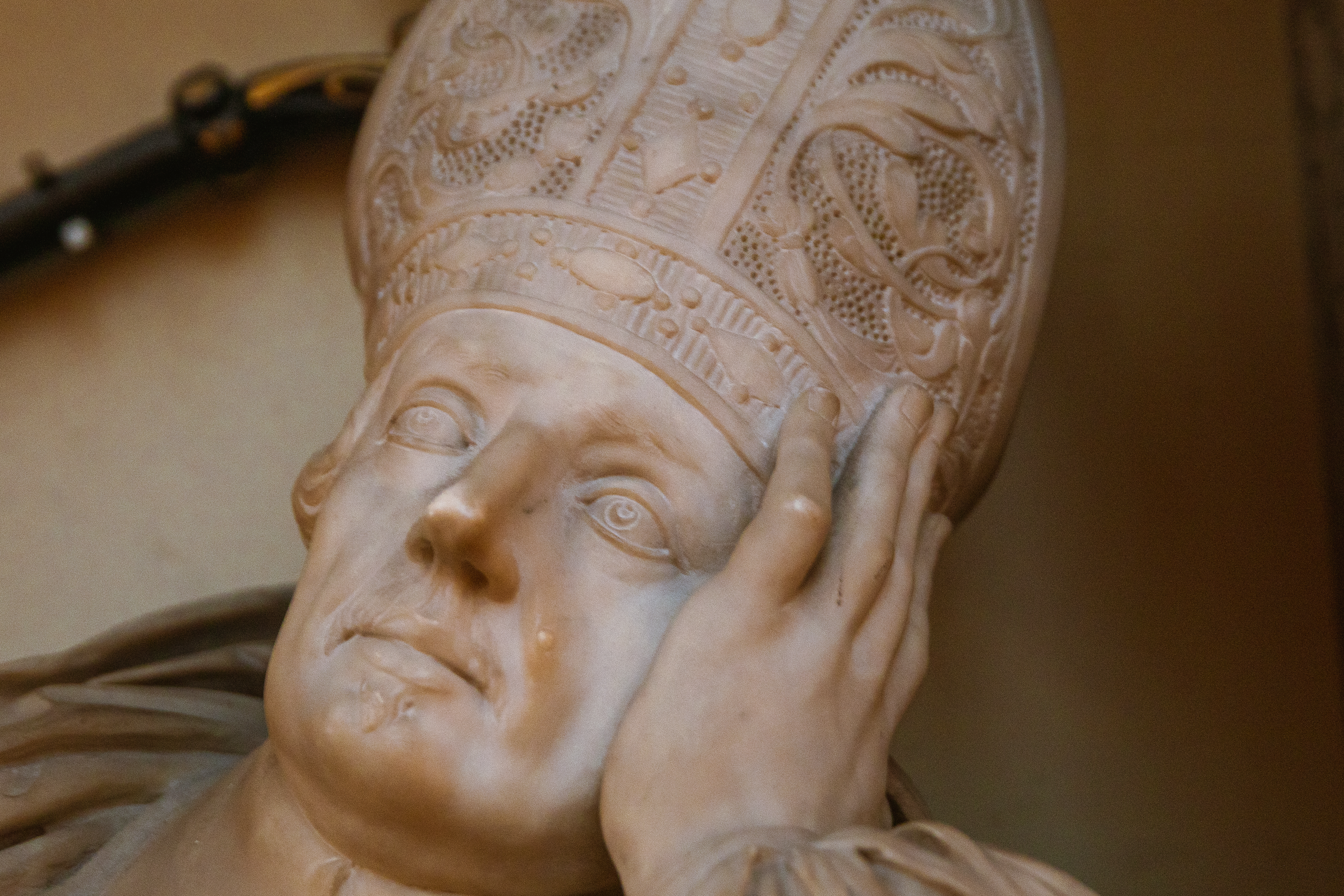
Effigy of Richard Sterne, Archbishop of York 1664-1683. North Quire Aisle, York Minster

Inside York Minster, Laurence’s great grandfather lies in repose. This is Archbishop Richard Sterne, and his recumbent form was carved by Grinling Gibbons (detail pictured above) the notable Anglo-Dutch sculptor. Outside the Minster, but only a matter of yards away, are two civic plaques. The first is in celebration of Elizabeth Montagu, the “Queen of the Blues”, who led a group of privileged women interested in education and mutual support for the development of their respective interests. Montagu was a correspondent with Sterne and also his wife’s cousin. A little further along the same cobbled street is the plaque to Jaques Sterne, the writer’s uncle and one-time Precentor of the Minster. As a Prebendary, Laurence Sterne would often have been in the Minster, preaching or attending meetings of the governing body. On the opposite side of the cathedral, down the ancient Roman road of Stonegate, a stained-glass commemorative disk records the place where Sterne’s Tristram Shandy was first published. As it happens, this printer’s business lies in the lineage of the publisher of A Sterne Lent, Quacks The Printer, which is today found a short distance away on a road parallel to Stonegate.

All this is interesting – possibly – but there is more to A Sterne Lent than geographical convenience. Sterne’s work continues to be significant in the arts and humanities. Tristram Shandy has a sustained and enduring influence on English literature, and literature in other languages. In the fine arts Sterne’s legacy still generates new works. Yet in the Church, Sterne is largely forgotten. Unlike Samuel Johnson or John Donne, he is absent from the religious calendar. When I re-read Tristram Shandy, and took a look at Sterne’s sermons and other writing, I discovered themes that are relevant today and, in many respects, were absolutely groundbreaking in the 18th century. For example, he uses satire to make explicit the repeated absence of female voices from decisions about their bodies and financial independence. It never occurs to the men who pontificate on the acceptability of using a cannula to perform an emergency baptism, to seek a woman’s view about the matter. When spurious pseudo-scientific and legal arguments are cited during a dinner after a major church service, involving the disinheritance of a widow, no female voice is in the conversation.

I do not know what readers will make of A Sterne Lent. As DH Lawrence famously commented: “never trust the teller, trust the tale”. Perhaps that is true in particular for Lent books. Sterne is an unlikely figure to choose as a conversation partner for the most sober season of the Christian year. He is full of mirth; jocularity; and satirical juxtapositions. Giving up some pleasure for the sake of his soul would probably have seemed a bizarre suggestion to Sterne. He is full of humour and weaves a thread of radical and counter-intuitive thinking across his writing. Not only in the prose, but in the physical presentation of the novel, he deploys startling surprises, twists and turns. Like the fluidity of the marbled page, the narratives jostle together and suddenly find themselves emerging into a new and unexpected digressions. Is Sterne taking us for a ride – or on a revelatory and challenging journey? Never trust the teller…

The unsettling ambiguity of Sterne’s writing may help us see the world anew, and fashion questions we had not thought to ask. At a time when there is so much turmoil in the Church of England I would contend that this Lent book offers reflections which have found their moment juste. With a vacancy at Lambeth, Sterne’s writing on vocation, ambition and patronage, are as pertinent today as they were in 1759. If the Church is to change for the better it needs to interrogate and understand the historic power which continues to tick in the mechanism of its present. As any reader of Tristram Shandy will tell you, when it comes to important matters in life, we must at all costs mind what we are about – consider how much depends upon what we are doing – or live with the consequences.

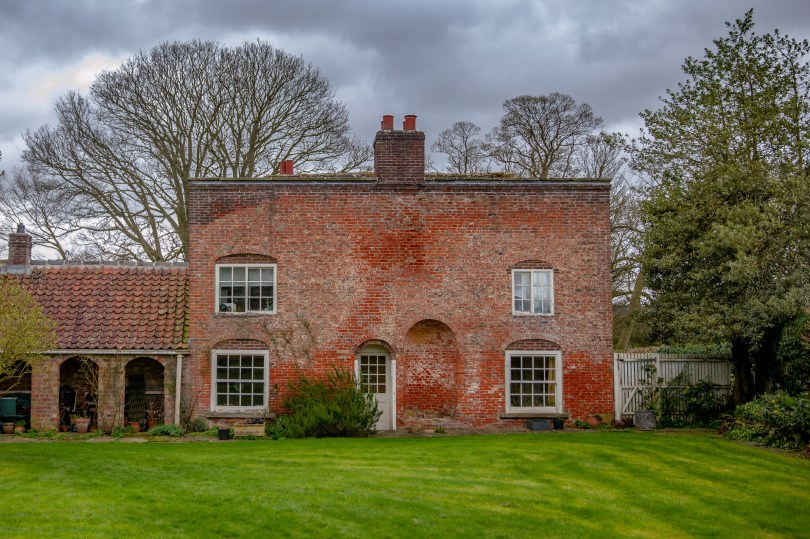
A Sterne Lent can be obtained from Quacks books or Amazon – where a Kindle edition is available. The photograph at the head of this blog features Shandy Hall, Coxwold, the Museum dedicated to the life and work of Laurence Sterne.

Seaside in Winter

This is by far my favourite time of year to be at the coast. Walks with the dog before dawn, watching the clouds change from bruised purple to dazzling gold. Hiking later in the day along headlands and across beaches, with few other walkers about. At night a deep darkness allows the Milky Way to be seen along with the winter constellations. When it is frosty it becomes an altogether magical scene. Only once did I find myself snowed in at a seaside cottage. It is a rare event, especially in a world affected by climate change. Slowly, as the day progressed, each of the three main roads out of Whitby were closed. With nowhere to go it became a good reason to stay in and put another log on the fire.

Oyster Catchers flying in the early morning along the coast at Sandsend

Observed from somewhere warm, the winter seascapes and landscapes offer drama and space for contemplation. This is the time when monarchs in mead-halls would demand that a saga was told. Perhaps a storyteller giving voice to the rich imagery of Sir Gawain and the Green Knight or, earlier still, Beowulf. Stories that reflect the darkness and magic of mid-winter, when the slightest covering of snow transforms the world outside. Perhaps it is hard for us to imagine, in an age of instant entertainment, the majestic scope and spellbinding intricacy of these substantial narratives. Like all knowledge passed down the generations, no doubt a multitude of minor changes occurred over the years which each teller making it their own tale. Eventually, multiple written copies started to keep the narrative in a form that was more stable, and the teller’s individuality became focused on the way of telling.

The sea runs back against itself
With scarcely time for breaking wave
To cannonade a slatey shelf
And thunder under in a cave.

Before the next can fully burst
The headwind, blowing harder still,
Smooths it to what it was at first –
A slowly rolling water-hill.

John Benjamin ‘Winter Seascapes’

Fewer snowy days come in our time – although we are experiencing them in the UK as I write. Generally, winter days are milder, sometimes stormier, which perhaps makes the appearance of ice and snow all the more marvellous. Growing up my mother often said “we don’t get winters like we used to”. I didn’t believe her, thinking this was simply the effect of advancing years reflecting on memories of youth. Of course, she was right. These precious days, if and when they come, may cause disruption and difficulty as people go about their lives – especially for those who are homeless. But maybe they also invite reflection, wonder, and act as a reminder of the world we are all, to some degree, changing.

Holding Still

Over the past few days I drafted a blog, as I do most weeks. It was largely a litany of despair about the state of the Church of England and the nadir of leadership and direction to which we appear to have sunk. Today is the final Sunday in the Church’s liturgical year, but it might also feel like the dying days of a once great institution. Perhaps, if its demise would ensure more people’s safety and sanity, there will be those who think that extinguishing the final embers would be an act of kindness for all concerned. The Church has failed in one of its primary obligations – but I cannot quite abandon the idea of what it might be.

Instead of a dismal diatribe about the Church’s failings (mine included) I have decided to take a different tack. The “idea of what it might be” includes resurrecting the often unseen but invaluable work of spiritual and pastoral care. In early 2020 I was looking for a poem to accompany some reflections for a retreat, but couldn’t find anything that would fit. Given this sad lacuna in English Literature I decided to pen my own verse and, for better or worse, I offer it on this final Sunday of the year as the slightest intimation of what at its best has been, and might still be, in the life of the Church’s sacramental pastoral care.

Holding Still

This work of holding;
of the the task of being
still, in order to hear.
To shift weight without

disturbance; to keep
the hushed, spare –
space; the silence into
which another speaks.

It is not nothing;
this attending and
anointing; this taking
and bearing and blessing.

To touch what has died
with the strength of love;
to see in ashen form the
hope of resurrection.

The image at the head of this blog is a photograph of a ceramic sculpture by Antonia Salmon, entitled “Holding Piece”

‘Why Her Brethren?’

We are in the season of sanctity. First comes All Saints, followed swiftly by All Souls, as we remember those who have lived and died in years gone by – either people we have known, or people extolled by the Church as exemplars of faith. Of course, like so much else, sainthood is bestowed according to the fashion, politics and preferences of church leaders. For example, there are fewer female than male saints. Even so, not everyone makes the cut, nor should they. Part of the premise of my new Lent Book for 2025 is that sometimes the Church forgets those from whom it still has much to learn.

The 18th century vicar and author Laurence Sterne was not a saint, if by that we mean someone faultless in this life. The trouble with Sterne was not so much that he had faults, but that he was very candid about them. In his letters and books there is bawdy and innuendo; passion and compassion. Sterne is all too human and rejoices in a conviction that God had given him the capacity for joy which it would be a sin to deny. In the brief span allotted for his life (he died aged 54) there is an echo of Andrew Marvell’s reminder to His Coy Mistress that at his back he hears “Time’s wingèd chariot hurrying near”. For Sterne, life is too brief and precious to be lived as if it were “one cold eternal winter”.

When I renewed my interest in Sterne’s work, there were certain features that gave his writing a remarkably contemporary resonance. Corresponding with the black British abolitionist Ignatius Sancho Sterne pulls himself up short when he finds himself writing about the kin of a black character in his novel on:

“behalf of so many of her brethren and sisters, came to me—but why her
brethren?—or yours, Sancho! any more than mine?”

Laurence Sterne, Letters

Why indeed? Sterne has the capacity and honesty to recognise his inherent – thoughtless – separation of people on the basis of ethnicity. The plea for a recognition of our God-given and common humanity runs throughout Sterne’s work. When it comes to gender differences Sterne is equally pointed in describing the ‘logic’ which denies a women authority over her own body or, come to that, even the right in law to be regarded as a blood-relative of her own children. Wit is the tool which Sterne uses to excavate the absurdities of his day, bringing to light the thin veneer of social etiquette that enabled the continuation of ridiculous conventions. At the same time, living at Shandy Hall in rural North Yorkshire, Sterne is enmeshed in the society and behaviours of his day. He knows this and uses humour to escape the passive acquiescence to which most conformed. Little wonder that friends encouraged him to get his preferment before he embarked on satire. Wit that came close to the mark and exposed conventions for what they were, could cost you a mitre.

Section from “A Flap Upon the Heart”; one of two new drawings by Rob Oldfield commissioned for the book.

A Sterne Lent offers the opportunity to keep company for a while with this witty, mirthful, digressive and somewhat doubtful parson. The book is immersed in an age that can feel very different from our own, yet contains themes that speak at times with remarkable contemporaneity. Above all, Sterne offers a lively voice whose strength is uninhibited by the usual constraints of ambition. His daring portrayal of the world he inhabited has the saintliness of a child-like disposition to tell the truth, even when it comes at a material cost. Sterne’s accurate depiction of human society bubbles out from his quill and left an enduring impact on the development of the novel. I hope that this curious and intriguing book will provide readers with a glimpse into another England, yet also one that touches with humour on human traits that persist within both church and society.

Divinity must live within herself

I am banned from cycling in misty conditions. This followed a rather painful altercation with some construction fencing that had strayed into the road at the bottom of a long downward incline. On a grey morning, in grey weather, and against a grey road-surface, the grey fencing didn’t register: until I hit it. Suddenly, I was sailing through the air, extending my left arm ahead of me, a reflex action of protection, and landed painfully some yards ahead of the now stationary bike. A lorry driver stopped. Dazed and disorientated I got myself up, beginning to feel an intense pain in my left shoulder. With all the ridiculous desire of an Englishman not wanting to make a fuss, I declined all offers of assistance, placed my bike out of the way, and decided to get a bus towards the hospital where I worked. Once there I went to my office in order to get changed before presenting myself at A&E (one has to have standards). I thought I had broken my shoulder but, it turned out, I had broken the fifth metacarpal of my left hand in two places. I soon learned that it’s an injury called “boxer’s fracture”. At a later date, casting an uncertain eye over me, a surgeon (who clearly didn’t feel I fitted his image of a pugilist) asked me how I acquired the breaks. He suggested that perhaps I should desist from cycling in the future.

Low mist across a ploughed field, near Linton-on-Ouse, October 2024

I did not follow the consultant’s advice, although I have made it a general rule not to ride me bike when visibility is impaired. However, last week, setting out on a beautifully clear sunlit morning in York, I began to encounter misty conditions on the outskirts of the city. Weighing up the likelihood that conditions would improve I pressed on to my planned destination of the Aldwark Toll Bridge, about 15 miles from the centre of York. As I anticipated, when the sun got higher the mist receded and it turned into the kind of bright and clear autumnal day which is the muse of poets. Down country lanes the landscape spoke of the changing season: ploughed fields with the dark earth turned in readiness for growth to come. Trees beginning to bear a foliage of yellow, bronze and green-become-gold.

What is divinity if it can come
Only in silent shadows and in dreams?
Shall she not find in comforts of the sun,
In pungent fruit and bright, green wings, or else
In any balm or beauty of the earth,
Things to be cherished like the thought of heaven?
Divinity must live within herself:
Passions of rain, or moods in falling snow;
Grievings in loneliness, or unsubdued
Elations when the forest blooms; gusty
Emotions on wet roads on autumn nights;
All pleasures and all pains, remembering
The bough of summer and the winter branch.
These are the measures destined for her soul.

Extract from Sunday Morning by Wallace Stevens

It would be very hard to live without this cycle of outer change. In the northern hemisphere they are part and parcel of my spirituality. Within the altering length of days, and the transitions of spring and autumn, Western Christianity has moulded itself into the furniture of the seasons. From the heavenly sparks of Michaelmas, with the equinox behind us, to the remembrance of All Saints and All Souls, liturgy marches to the tune of a changing year. Over the past three decades I have taken funerals in autumn that have a particular poignancy – of change and decay – with a need, somehow, to return home before the darkness falls. A time to comfort one another in a season that tells us, as all seasons do, that while they might occupy a span of time, they can also be a mood; an atmosphere; and a state of being, which greets us on any given day. Divinity is not only something that comes to us in silence. Nor is she confined to some specific time of the year. God is in all these seasons, and the spirit of all these seasons dwells in us.

Wings of Longing

Recently I was prompted to ponder whether angels have beards. I was visiting St John’s church at Howsham, in the Harton Benefice, north east of York. In the church’s porch is a carving of an angel sporting a beard (below). It was a sight that stimulated thoughts about angels, our tendency to anthropomorphise these heavenly beings, and what our long history says, across many faiths, about angels in the 21st century. As it happens, the appearance of angels has a lot to do with our imagination and how people conceived of beings who can span the divide between the secular and the sacred.

Today, on the Feast of St Michael and All Angels, it might be helpful to recall that many theologians across church history have not viewed angels as corporeal. Instead they have been regarded as expressions of Divine thought and agency; the light of heaven that breaks into the darkness of this world. Of course, in the history of art they are consistently represented as beings akin to people, albeit extra-shiny and with a pair of wings. Their expressions are typically impassive, like good servants they betray neither joy nor sorrow about the news being conveyed. The notable exception to this is the antics of the heavenly host at the Incarnation, joyfully praising God and generally whooping it up.

Thomas Aquinas, the Angelic Doctor, famously wrote of the “Bread of Angels, made the bread of people”. Panis angelicus is a stirring hymn of praise to God for the grace of sharing with humanity food which is the everyday fare of heaven. Consequently, at the Eucharist, angels are always referenced in the liturgy. As bread and wine are taken and consecrated, the material becomes one with the Divine, just as it did when the Word became flesh. This enacts a significant truth of Christianity: that in Christ the world is being redeemed. It is a central tenet of orthodox Christology, expressed in the Athanasian creed, that Jesus was perfectly divine and perfectly human. This was not God and a man sharing a room! The presence and witness of the angels in the liturgy expresses this fulfilment of the secular in the sacred. In the birth, death and resurrection of Christ, humanity is truly “ransomed, healed, restored, forgiven”.

“The beast taken” Revelation 19:20. York Minster Great East Window

Angels are not beings confined to churches and places of worship. The biblical references to them are most often in the secular, encountering people out in the world. Their strangeness and seemingly random appearances inspired the author of the Letter to the Hebrews to remind us that in our reception of others “some have entertained angels unawares”. During a time as poet in residence at Bradford Cathedral, Diane Pacitti published a collection of poems entitled Dark Angelic Mills. In the final entry, ‘Angels in Bradford’, Pacitti reflects that angels come in many guises. Perhaps as ‘kindertransport children, Asian workers, Syrian refugees, Rohingya Muslims’. In her poem, just as each church had its angel in the Book of Revelation, she invokes the spirit of St John to call into being the Cathedral’s angel:

Let it spread
huge-feathered wings over this hut of stone.
Let the song of wonder weave into its prayers
and seep into its silences. Angel-voice,
speaker of demanding truth, send out this church
to affirm the holy in what seems most broken.

Dark Angelic Mills by Diane Pacitti, Norwich, Canterbury Press, 2020.

The Church should always be the place which drives the heart of our participation in God’s mission of love for the world. We are drawn in, revitalised, and expelled back into the pathways that take us to both places of obvious significance, as well as to the peripheral and the neglected. In the ‘hut of stone’ where the church gathers we should encounter again the moment when the secular and the sacred meet: ‘the end of all symbols’ and the place where we are fed with the bread of angels.

A Healthy Grave

Yorkshire seems to have had more than its fair share of notable clergy. My forthcoming Lent book concerns one of these, Laurence Sterne, but another distinguished figure is remembered in York – Sydney Smith. Born just three years after Sterne’s death, Smith became known for his wit, politics, writing, and philosophy. He had a remarkable turn of phrase. For example, when wishing to convey the remoteness of his country parish at Foston-le-Clay, he wrote:

‘My living in Yorkshire was so far out of the way, that it was actually twelve miles from a lemon.’

That probably wasn’t true as Foston was only five miles away from Castle Howard where, I can only assume, lemons and every other kind of produce were in rich supply. However, Smith was no doubt correct that he was living a considerable distance from the nearest place to buy a lemon. At Castle Howard he is remembered and celebrated with a plaque that was installed in 1999 by the Sydney Smith Association.

I am fortunate in living not more than twelve yards from a lemon, and therefore I can only guess at Smith’s experience of rural deprivation. However, for much of his working life Smith knew what it was to have lemons close at hand, and the requirements of rural ministry may have come as something of a shock. Elsewhere he writes: “I have no relish for the country; it is a kind of healthy grave”. He had lived in the metropolis of Edinburgh and was undoubtedly used to a wide choice of comestibles, culture and company (well, as wide as it got in the early 19th century). It was here that Smith was involved in launching the Edinburgh Review in 1802. This was a potent platform for liberal views, and began to call for political reform.

The church at Foston appears to have been neglected for a significant period before Smith arrived. There had been no rector, the duties being devolved to a curate. One of Smith’s first tasks was therefore to plan the construction of a fitting rectory. Illustrating the moribund state of the parish Smith wrote:

“When I began to thump the cushion of my pulpit … as is my wont when I preach, the accumulated dust of hundred and fifty years made such a cloud that for some minutes I lost sight of my congregation.”

Smith’s stature as a witty cleric, inclined to political reform, brought him the prospect of preferment in the Church. There was a time when it was possible he would have become a bishop, but for various reasons this never came to pass. When Lord Grey became prime minister in 1830 he was able, within a year, to advance Smith to a residentiary canonry at St Paul’s Cathedral. However, that was the last preferment which Smith received, and he soon realised that further progression was not in prospect. To the end, Smith retained and exemplified a generous spirit and commitment to a constructive and humane expression of religion.

“I hate the insolence, persecution and Intolerance, which so often pass under the name of religion, and, as you know, have fought against them”.

* The photo heading this blog is of the church at Foston: by Stephen Horncastle, CC BY-SA 2.0, https://commons.wikimedia.org/w/index.php?curid=9290721