Sister Moon

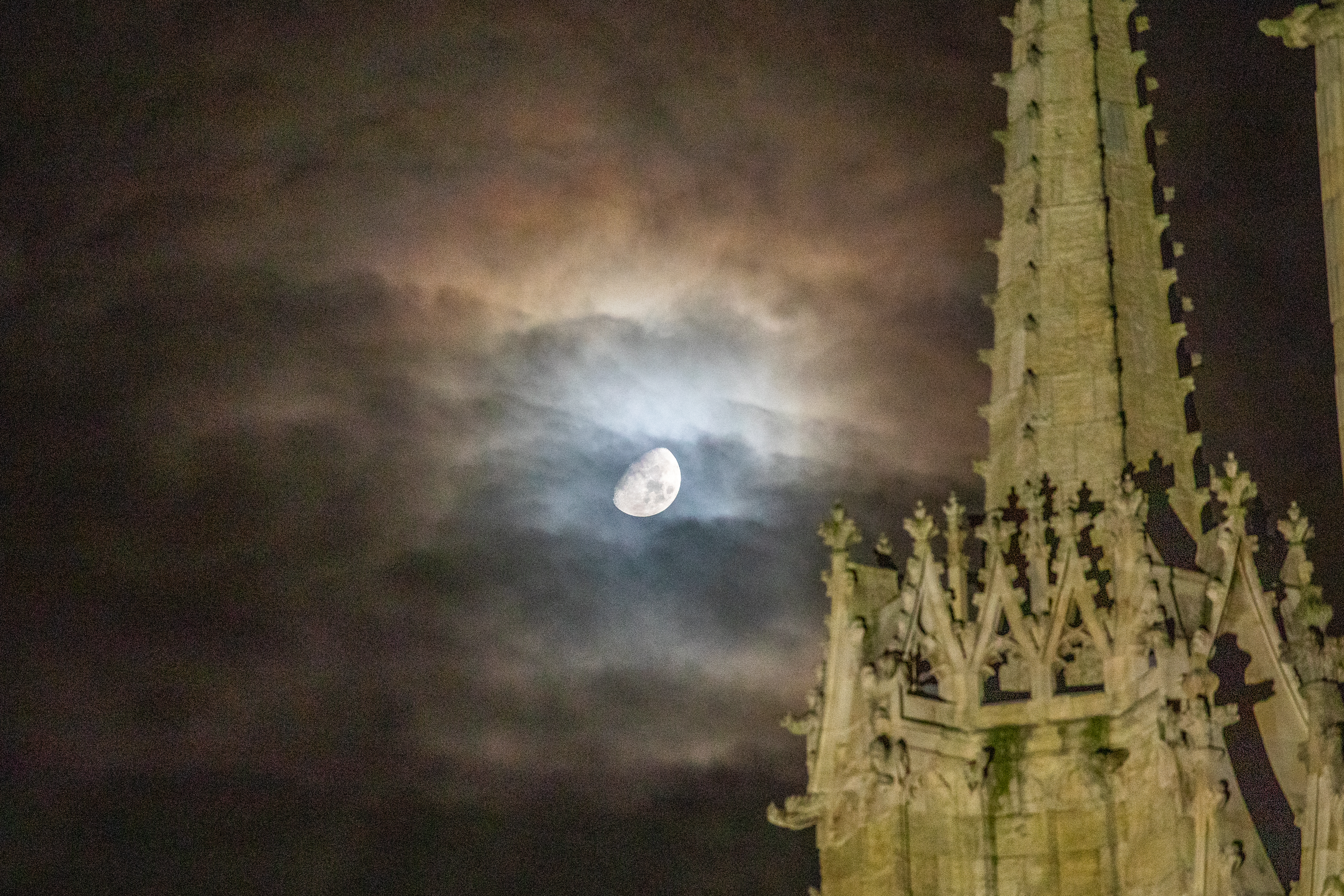
Like many others, I’ll probably make an effort to see tonight’s full moon. Noteworthy not only for its fullness but also, today, for the eclipse which will be at least partly visible from the UK. The ‘blood moon’, as it is called, might offer us a spectacular reminder of this strange and beautiful neighbouring globe, held in the earth’s gravity.

As a presenter on the BBC Radio 4 Today programme commented, events such as the eclipse somehow serve to put humanity’s woes into perspective. As we agonise about the various crises of our time, earth’s celestial companion is a daily reminder of a strange place to which few humans have ever been. Unlike the sun, here is an object at which we can stare, or observe with magnification, with little difficulty. When it is waxing or waning we can see the edge of craters silhouetted against the darkness of space.

Inevitably, the moon has always been part of human religious understanding. Intriguingly, although light is created on the first day of the Genesis account, neither the sun nor the moon appear until day four. Like the light on a cloudy day, it appears that the authors of the Genesis account distinguished between “general” light and the specific radiance of the sun and moon. The two bodies were seen as heavenly lamps, signifying that both generated different forms of light. It does not appear to have been understood at the time that the moon was simply reflecting sunlight.

“Genesis attributed another function to the Moon—marking the onset of Israelite festivals. Such a calendrical function of the phases of Moon is by no means restricted to Genesis. The calendrical function of the Moon has been so widespread around the world in other cultures that it might qualify as a cultural universal”.

Murray, G. F. (2021). Moon Traditions: An Overview of Changing Beliefs About Earth’s MoonThe Human Factor in the Settlement of the Moon: An Interdisciplinary Approach, 19-40.

One interpretation of the purpose of the creation narrative was to lend divine authority to the pattern of the seven day week, with the distinctive feature of a sabbath day. While not unique, the seven day week was not universal in biblical times. The Roman Empire, for example, used an eight day structure until the Jewish and Babylonian practice began to become ascendent. With the conversion of Emperor Constantine the seven day model became mandatory across the Empire. It has been suggested that the cause of this shift in the organisation of time, reflects the alteration of farming from a focus on livestock to one of land cultivation. The latter required much more intensive and back-breaking labour which may have made the concept of a sabbath day a necessary part of both human productivity and survival.

In Francis of Assisi’s Canticle of the Sun the stars and moon are praised as being “clear and precious and beautiful”. Within our understanding of the solar system as it stands today, we know that the position of sun, moon and stars reveal the dynamic character of the universe. We are on a planet that spins on its axis; in an orbit around the sun; with a moon in orbit around earth; in a solar system that orbits the centre of the Milky Way galaxy. The rare occurrence of a lunar eclipse reminds us of these movements, and the interplay of the heavenly bodies. It doesn’t stop us enjoying the beauty of these moments, or detract from the sense of awe that we live in a universe that is vast beyond our imagination, and exists without the slightest influence of human influence.

Language-bearers

In the earliest poem written in Old English, The Dream of the Rood, people are called “language bearers”. It is an intriguing descriptor-name, highlighting one of the unique characteristics of what it means to be human. While watching the new BBC series Human, I was reminded of this defining feature of our distinctiveness. Presenter Ella Al-Shamahi visited a cave in Botswana to make the case that the appearance of the first humans (who share an identity with us) was marked by the development of ritual. Behaviour that implies abstract thoughts and patterns, rendered material through actions that serve no immediate practical benefit.

However, while it may be the evidence of something, ritual must always follow in the wake of something else: the creation of story. Ritual is secondary; stories are primary. As human beings grappled to locate themselves under the stars, and at risk from the vagaries of the weather and nature, stories endow a sense of purpose in survival. We envisage a future, and that future shapes and influences our present actions. Stories also bind us together with those who share the same framework of meaning. It is for this reason that I have long thought of the book Genesis, not so much an account of creation, but as an act of creation. Sharing these particular stories meant you were knit together with the children of Israel, and shared their covenant with God. The story is the fabric that holds the people together and ritual develops out of the narratives to help anchor them within human experience. It may also be true that as stories are embedded in ritual, the act of creativity also shapes the way that the story is told.

At Helleristningene ved Sagelva, in Norway, this is one of two raindeer images ground into the rocks. They are approximately 9,000 years old.

In the way that time is so much greater than we imagine, the script of Humans reminds us that in the entire period that human beings have been around, writing has been present only for the last 1% of our history. It follows that tracing the origins of stories is an impossible task, with the evidence of ritual standing proxy for story’s presence and purpose. Very often we can only speculate about the narratives that lie behind these illustrations, or their purpose once completed. Given the harsh conditions in which early people lived, and the precious nature of resources (including time) needed to survive, the commitment to art and the creation of enduring heritage is surprising. Human being appear to have needed theologies and mythologies that wove experiences into a sense of purpose and blessing.

The poet Eamon Grennan wonders if the cave painters worked in silence, like monks illuminating Medieval manuscripts, or if they kept up a gossip of religious fervour as they created images of wonder in the given contours of rock:

It doesn’t matter: we know
they went with guttering rushlight
into the dark; came to terms
with the given world; must have had
—as their hands moved steadily
by spiderlight—one desire
we’d recognise: they would—before going on   
beyond this border zone, this nowhere   
that is now here—leave something
upright and bright behind them in the dark.

Extract from The Cave Painters by Eamon Grennan

  • The image at the head of this blog is sometimes described as ‘Viking graffiti’ and can be found in Skipwith Church, near York.

War with Trolls

Norway is a country of stunning beauty which experiences, for some of the year, either endless light or total darkness. I can’t quite imagine what winter must be like here, with deep cold as well as an absence of the sun. In summer it is awash with light, at all hours. Perhaps the drama of this experience accounts for the great composers and poets who have come from Norway.

Henrik Ibsen is Norway’s celebrated playwright and the author of the world’s most frequently performed plays (after those of Shakespeare). Ibsen is highly critical of clergy and what he sees as the inhuman demands of upholding a certain kind of Christian Orthodoxy. As an outstanding dramatist, Ibsen crafts his plays to reflect and expose the failings of key institutions and how individuals strive to live authentic lives despite the ingrained failures and disappointments arising from the unattainable expectations of society. As Ibsen reflected from his Norwegian context: “To live is to war with trolls in heart and soul”. His plays go a long way to identify some of these trolls.

“the tragic poets and dramatists, such as Ibsen, those who seem to understand something like holiness, and that life’s real question, ‘the psycho-moral dilemma’, as Arthur Miller calls it, is not ‘How do I feel about God?’ but ‘What dealings have I with God?’, not as a concept but as the leading character in the unfolding drama”.

Goroncy, J. A. (2006). Bitter Tonic for our Time–Why the Church needs the World: Peter Taylor Forsyth on Henrik Ibsen. European journal of theology15(2).

As I mentioned in last week’s blog, during my time away I have been reading Hanna Reichel’s After Method: queer grace, conceptual design, and the possibility of theology. It is not a quick read, but one that has captivated my attention and provided lucid language to describe and interrogate issues in theology I have long experienced, but not always found the framework to express. At its heart this concerns the tensions, and illegibilities, between systematic theology and constructive theology. To illustrate this let me describe some correspondence from many years ago, which relates to something I experienced in ministry and wrote about previously: neonatal loss. From time to time I have been asked to baptise a baby that has died, or was alive only briefly, assisted by significant medical intervention. As I explored this and what it means, theologically, I came across a note in Common Worship written by the illustrious octogenarian (as of yesterday) and onetime Regius Professor of Moral and Pastoral Theology at Christ Church, Oliver O’Donovan. O’Donovan, a former professor of systematic theology, writes: “You cannot baptize someone who is dead”.

From the standpoint of systematic theology this is consistent with Scripture; the history of Church doctrine; and the practice of the Church’s ministry. Well, it is and it isn’t. As I discovered when researching this topic, the Church in its history has found ways round this situation to preserve doctrine and meet the pastoral needs of parents. This creativity lead to the creation of “resurrection chapels” where an apparently deceased child could be handed to a priest, who then disappeared into a chapel, and came back saying that the baby had miraculously been resurrected for a moment, baptised, but then – alas – died. This enabled the veneer of orthodoxy to be preserved while meeting the earnest and sincere needs of parents. In a desire to sustain a credible doctrinal position the Church tolerated these kinds of “work arounds” but failed to allow the realities of human experience to interrogate the substance of systematic theology itself.

The core problem, it seems to me, is that the attempt to uphold a systematic understanding of faith at all costs results in a punished humanity and a pedestrian God. A theological educator said to me some years ago, with an evident sense of relief, that he was so glad they’d abandoned the use of “case studies” in the seminary where he taught. Tales from the frontline of Christian living can be very inconvenient for certain kinds of theology. Preaching at Evensong in an Oxford college, I happened to mention a pastoral call I’d received in the early hours of that day from the northern hospital where I worked. The Master thanked me afterwards for bringing in some “réalité”. It amused me that a French word was required to express the real life that had intruded into the college chapel. The question arises, what kind of theology emerges when human life is stripped out of the equation? For some key critical commentators it is theology devoid of “the messiness of incarnation and real peoples’ lives”, which makes it difficult to imagine what use it is to the people orthodoxy claims to be at the centre of God’s mission.

Barns and Bull-Boxes

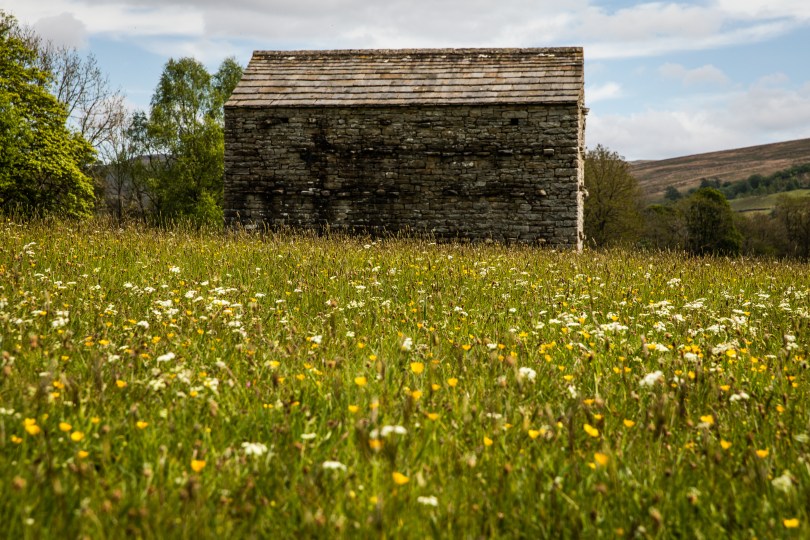
They are peppered across the landscape of Swaledale. The stone-built barns that are sited away from the farms, designed to reduce the transport of hay over difficult ground and enable the cattle to be fed from supplies close by. On the other side of the Pennines, in the Ribble Valley, the poet Glyn Hughes was offered a more modest structure, yet equally remote. For a year he used a stone bull-box as a base for writing poetry. This followed his diagnosis of cancer, and the book of poems to emerge from the experience was to be his last. He saw this small volume of work as the spiritual dimension of his healing.

These two kinds of agricultural structures suggest a long history, often filled with the hardship of rural living. There were undoubtedly precious days of warmth and relaxation but, for most of the people most of the time, life was a struggle against the elements.

The less you possess, the more they are
not decorations but what is more needed: icons
requiring as icons do small space to give up their worth –
this water jug, this stove, this lamp, this spade,
this small table and chair.
All of it “junk” in any place but here

Extract from A Year in the Bull-Box: A Poem Sequence by Glyn Hughes, published by ARC Publications, 2011.

For Hughes, going back was the best way forward in coming to terms with the short span of life he had left. His year in the bull-box brought him back to basic things, albeit with the knowledge of the modern world close at hand. Reviewing the poems in The Guardian Simon Armitage wrote: “I don’t ever remember being as moved by a book of poems”. Which is quite something from the Poet Laureate.

A year of rudimentary living gave Hughes a re-kindled experience of childhood – encountering the smallest things with new attention and fascination. Laughing, perhaps, at the folly of holding back stream water as much as he might have wished to stem forever the tide of illness which would soon overtake him. What might have seemed isolating, bleak or depressing became precious months of connection with the seasons of the year. A spiritual stillness in the midst of an ever-turning world.

I was immortal then, not seventy but
a lithe, inquisitive
child again.

Extract from A Year in the Bull-Box: A Poem Sequence by Glyn Hughes

Play is often dismissed as childish when, what so many of us need, is the spirit of wonder and recreation that childhood brings. Many years ago I heard Gordon Mursell speak at a Diocesan Conference. His theme was God’s playfulness and, in relation to this, he recounted a story from the life of Samuel Johnson. This great lexicographer, who had a reputation for wit and wisdom, had walked to the top of a hill. When he arrived at the summit he declared to his companions that he was determined to take a roll. When those with him worked out what he meant they tried to dissuade him. However, Dr Johnson said that “he had not had a roll for a long time”, and proceeded to empty his pockets before descending the hill horizontally.

We should never lose the ability to be playful explorers of the world. For Glyn Hughes a safe return to the most basic necessities of life became a doorway to re-enchantment. A place to distill what truly matters in life and to experience and contemplate a world we did nothing to create, but to which we remain inextricably a part.

Pillow Talk

This title might conjure up the idea of gossip or salacious bedtime conversations. However, it is also the name of a particular kind of peony. In the garden where we live there are several clumps of this variety and in mid-May I am waiting for the copious buds to break into bloom. They are large and richly coloured flowers – pink meringues that dominate the herbaceous borders for a brief time and make for glorious arrangements in the fireplaces. The vitality of summer prefigured in a vase.

Along with the return of swifts to York in the past two weeks, the early signs of summer are gathering apace. The clear skies, longer daylight, and warm sunshine of recent days, add to the sense of the year’s turn. Already we have put out our garden sofa-swing. An extravagant purchase a couple of decades ago, but one that continues to provide enjoyment across the warmer months. Its comfort and gentle rocking often having the desired effect of inducing an afternoon snooze.

This year the English garden sofa-swing is celebrating its centenary, and a contemporary version of the rocker will be exhibited at the RHS Chelsea Flower Show later this week. It is often regarded as an example of English eccentricity – a bit of living room set in the outdoors. While I don’t go back anywhere near as far as the first appearance of this kind of garden furniture, one did feature very early in my childhood. My maternal grandmother was a fan of colour film for slides and I have some of her collection. (Bessie liked taking pictures of buildings that were about to disappear – including the dramatic demolition of mill chimneys in her native Lancashire).

This photograph was taken in 1966. Judging by the blossom behind the swing it may well have been the first May Bank Holiday weekend. The UK enjoyed some early heat in the first couple of days of the month in that year. I am the cheeky chap looking at the camera, slightly blurred by a sudden movement, and my brother is beside me. The company whose sofa-swing will be exhibited at Chelsea asked for customers’ photographs of historic examples to include in the display. Who knows, we might feature!

Part of my affection for the sofa-swing is connected with a childhood often overshadowed by illness. I had debilitating asthma throughout my pre-teen years, often missing school and struggling for breath. Lying on the swing in my grandparents’ garden, shielded from the sun and gently rocking, gave both comfort and relief. It was – and is – very soothing. As I lie on it today, gazing across at the pillow talk and listening to the plaintive call of a wood pigeon, I am reminded of the opening scene in A Portrait of a Lady, and Henry James’s paean to summer in an English garden:

“Real dusk would not arrive for many hours; but the flood of summer light had begun to ebb, the air had grown mellow, the shadows were long upon the smooth, dense turf. They lengthened slowly, however, and the scene expressed that sense of leisure still to come which is perhaps the chief source of one’s enjoyment of such a scene at such an hour. From five o’clock to eight is on certain occasions a little eternity”

The Art of Not Taking the Deal

We are about the enter Holy Week. Many Christians will mark these days by attending additional church services and spending time in reflection. I never tire of reading the passion narratives because I have no doubt that in them lie the central themes of Christianity. There is a crowd in an city eager to give the inspiring young rabbi their adulation. The intimacy of close friends at supper on an important festival. The isolation of the garden outside the city walls, and then the bitter work of captivity; costly fidelity; suffering and death.

At a time when the world has become increasingly chaotic it is important to be reminded of Christ’s stillness before the powers of his day. The High Priest and Pilate undoubtedly saw the brewing popularity of Jesus as something that would be ended by his execution. On all the metrics of religious power and secular control, the Jesus who goes to the cross is done. The watching world could agree with Jesus’ last words: “It is finished”. Perhaps those two leaders saw it as the messy and unfortunate price to be paid for maintaining control; keeping the peace. The sacrifice of Jesus would enable things to stay as they were – and as they should be.

Maybe Jesus didn’t know the art of the deal? His time in the wilderness at the beginning of Lent suggest that he had set his face against compromises in his ministry. When he stood before Pilate he had no cards to play. Or, perhaps, it is more accurate to say that he chose not to accept the terms of the game. Appearing to go meekly to his death probably confirmed to many of the leaders that Jesus simply didn’t understand the reality of the world he claimed to be saving. Sad, but there you go. One death wouldn’t change anything.

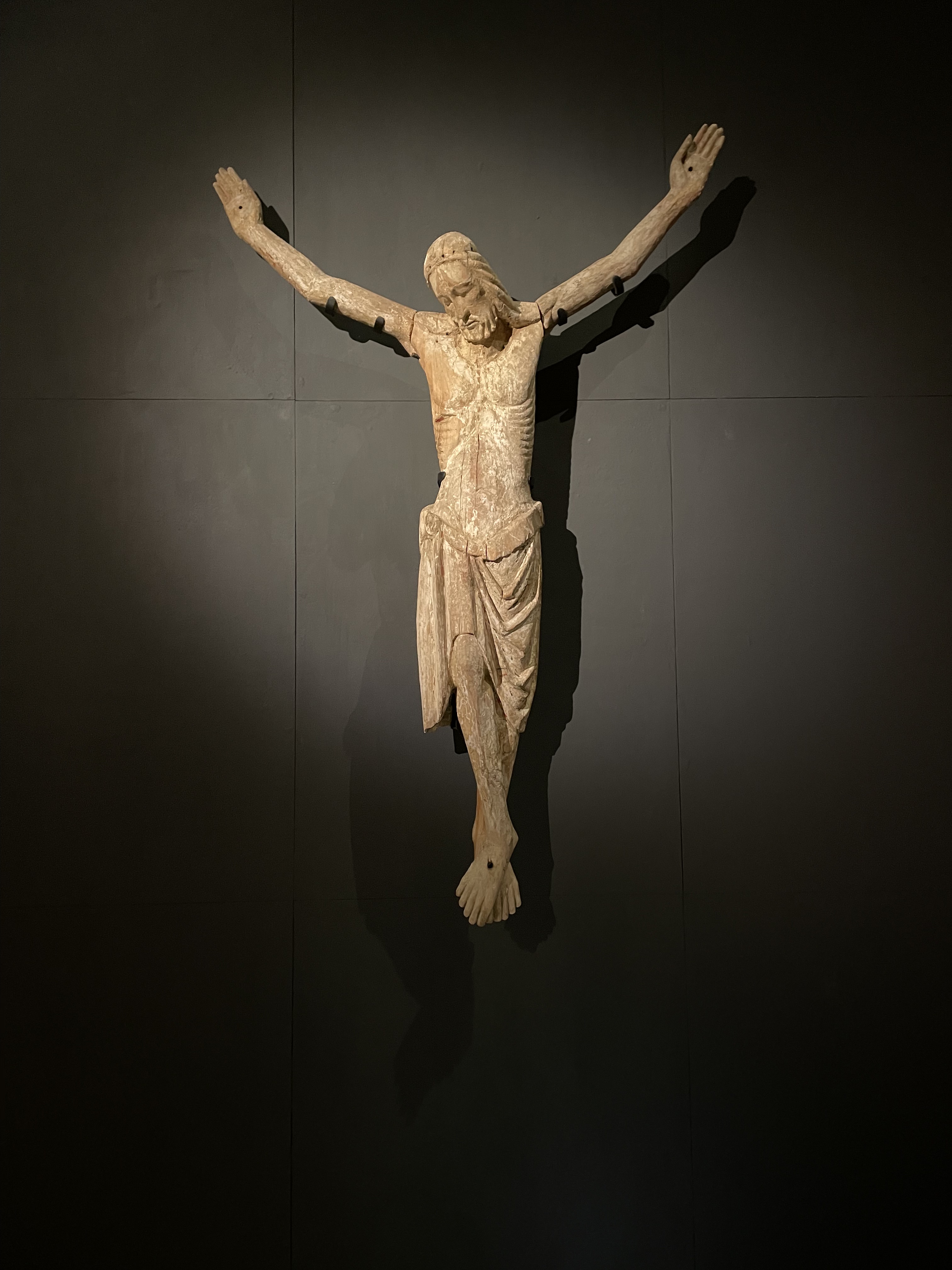
A Station of the Cross by Sepo b. Ntuluna from Tanzania, in the hotel Mattli Antoniushaus, Morschach – built on the grounds of the Franciscan Community in German-Speaking Switzerland.

Then there is the humanity of loss – of which we all know something. Mary caressing the body of her son. A parent unable to intervene to save her child. The powerlessness of love which cradles the life-left body of the son she would have done anything to save. This is the darkness of despair; the earth shaken; the light of the world put out. The day of absence.

‘Faith’ is perhaps the best answer as to why Jesus doesn’t do a deal. That our miserable card games take place inside a much, much bigger story than most of us are willing to acknowledge. Soldiers at the foot of the cross didn’t have cards, but they had dice. It would be beyond their imagining that 2000 years later the events of that sorry day would still be remembered. A miserable death a few hours before a dusk that would usher in the city’s shabbat. It would be hard to imagine something less important. It was ended – time to divvy up the possessions and go home.

“Thou art God, Whose arms of love
Aching, spent, the world sustain”.

WH Vanstone from Hymn to the Creator in ‘Love’s Endeavour, Love’s Expense

Where the Heart is

On holiday I am enjoying the time to read three very different books. One is poetry; another a novel; and the third theology. Despite being different, I am also seeing (or making) many connections between the narratives. This is unsurprising in one sense as I am their common denominator: the one reading. Like the handmade and unique marbled pages in each of the first edition volumes of Sterne’s Tristram Shandy, we perceive our own patterns as we mark and experience the stories mediated by print.

I came to A Dark and Stormy Night by Tom Stacey via an unusual route. At home we have a sculpture bequeathed by an old friend. In doing some research about the sculptor I came across the fact that her husband was a writer. In this novel, a bereaved suffragan bishop – a Dante scholar – gets lost in a forest in darkness while seeking a redundant chapel. It is notable that the bishop lived with and through his wife’s dementia – something Tom Stacey knew about at first hand. His description of this resonates strongly with what I experienced of my mother’s cognitive decline several years ago. Stacey’s insight evidently comes from deep and costly personal experience:

You are forever packing and re-packing to go home. To tell you we are at home only serves to rile you. This lost inner home of yours is never locatable.

Transgressing the boundaries of normal or accepted behaviour is a strong theme of Allan Boesak’s Children of the Waters of Meribah. Boesak is a South African theologian with an abiding commitment to liberation theology.

In a chapter exploring the story in Matthew’s Gospel of the Canaanite woman who comes to Jesus seeking healing for her daughter, Boesak conducts a masterclass in hermeneutics. Experience shapes both writing and reading. Unsurprisingly, Boesak is alert to the location of this account:

She is a Canaanite, the people whose land had been conquered and occupied by Jesus’s people.

What should have been home was no longer home or, at least, a place now made strange and punitive. The experience of being South African leads Boesak, and the scholars he cites, to read this account with the painful insight of experience. The woman comes to Jesus in a “spirit of protest and reclamation”.

The final book is a collection of poetry by Koleka Putuma entitled Collective Amnesia. It is a work that has set records in South Africa in terms of poetry sales. Inevitably, with a heritage of the Group Areas Act, this is a nation that continues to live with “ongoing collective trauma” for countless reasons, not least the dispossession of peoples’ homes. Putuma writes out of her experience with skill, candour and wit.

You will realise that the elders in the room

Learned the alphabet of hurting and falling apart differently

For you, healing looks like talking and transparency

For them, it is silence and burying

And both are probably valid

And

Then

You will realise

That

Coming home

And

Going home

Do not mean the same thing

From the poem ‘Graduation’ in the book ‘Collective Amnesia’ by Koleca Putuma

The Sombre Season

Lent is almost upon us. Somehow, unlike several of our continental neighbours, England maintained the old words for this time, even as the Church’s Latin altered so much of our language. Lent probably came into English through Old Saxon, but its exact history is lost in the folds of antiquity. Nevertheless, the meaning is clear. It is to do with something long, possibly reflecting the lengthening days brought by spring in the northern hemisphere. Maybe, also, the sense that days of abstinence might be long days and, consequently, Lent is a season to be endured. It ends, of course, in Easter – another ancient name from Old English, with origins linked to Northumbrian Eostre. Perhaps the name of a Goddess, or a word for dawn, but in any event adopted by the early Christians of these isles as a fitting word for the new life that awaits at the end of Lent.

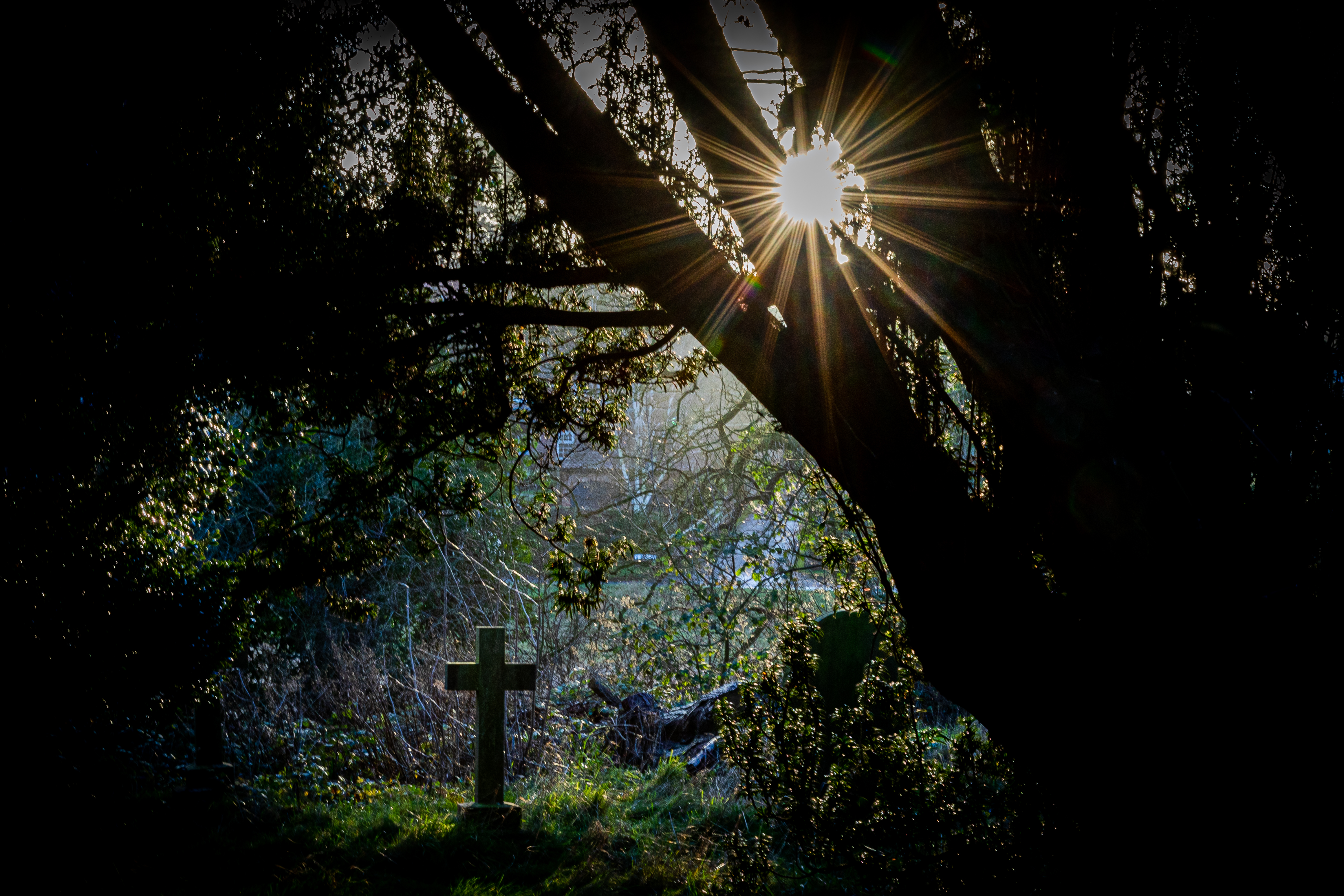
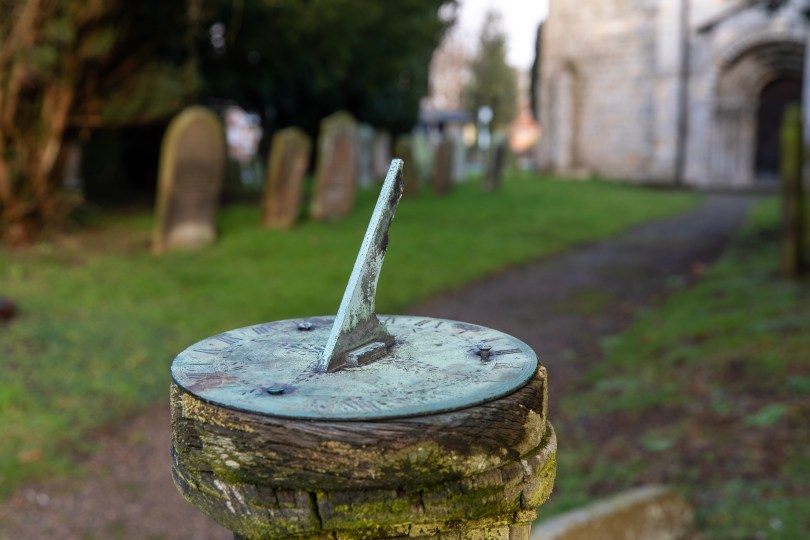
While our warming winters have changed our experience of the seasons, we may still see churchyards transformed with a late frost, or layered in a final fling of snow’s fleeting transformation. There is an added poignancy that these occasions are becoming fewer, with such brief visitations acting as a nostalgic reminder of how we once experienced these months. Much of English literature describes the tyranny of enduring and unavoidable cold, when even a hearthside might offer only limited and temporary relief.

Given their appearance in or around the start of Lent, purple is often the colour of choice for crocuses planted amongst the grave stones that surround our ancient parish churches. A fitting sign of both our mortality and also the liturgical season. From this coming Wednesday, until mid April, many churches will be draped in purple, signifying the Lenten focus on “self-examination and spiritual discipline”.

… crocuses
Pale purple as if they had their birth
In sunless Hades fields.

From The Sun Used to Shine by Edward Thomas

Perhaps ‘sombre’ isn’t the right word for these 40 days. As regular readers of this blog will know by now, I completed a project last year to write a Lent book for distribution before March 2025. A Sterne Lent refers in many places to the sermons preached by the vicar-novelist, Laurence Sterne. It is estimated that at least one third of these 45 homilies were preached in the time of Lent. This is not surprising as even in the 18th century the penitential season was marked by some effort towards thinking and reflection upon religious convictions and actions. For Sterne the denial of joy for such a lengthy period would have been a trial. Laughter spilled out of the unlikely parson, and a significant proportion of his 42 sermons (there are another 3, but those develop content from previous ones) were preached during Lent.

According to the Julian calendar, Sterne preached his sermon on ‘Penances’ on Palm Sunday 1750. Based on some circumstantial evidence it is probable that it was preached in York Minster. Sterne explores some of his core convictions which, alongside a side-swipe at Methodists, centres on a Deity who doesn’t want us to be endlessly glum, or excessively earnest. We were not created “on purpose to go mourning, all our lives long, in sack-cloth and ashes”. However, Lent is a time when our restraint can:

dispose us for cool and sober reflections, incline us to turn our eyes inwards upon ourselves, and consider what we are, – and what we have been doing; – for what intent we were sent into the world, and what kind of characters we were designed to act in it.

It is in this season that Sterne feels the discipline of Lent is intended to “call home the conscience”. In particular, Sterne is critical of our wasteful use of time. We fill up diaries with distractions, “parcelling out every hour of the day for one idleness or another”, and seem eager that when it comes to time we are endlessly inviting others “to come and take it off our hands”. Sterne cannot abide the idea that we reach older age only to discover we have lived “a life so miserably cast away”.

Lent is a time to contemplate what we are here for; how we spend the time we have been given – but not, as Sterne would see it, to fill up the season with so much dour reflection that there is no space for joy.

Is God Calling?

I usually skip through the online edition of The Church Times over breakfast on a Friday. It is a newspaper with a venerable history, having first hit the presses in 1863 (between the publication of The Origin of Species and the first sales of Turkish delight). In 1981 a scurrilous and highly enjoyable spoof of The Church Times was published under the title Not The Church Times, reflecting the popular use of the ‘not’ brand of satire in the 1980s. It came complete with adverts for high office, one of which stated:

Applicants are invited to apply, stating their public school, Oxbridge college, year at Westcott House, and Lodge.

Sadly, I would qualify on only one of these criteria and even then, by 1990, Westcott was no longer the powerhouse of episcopal chumocracy for which it was once renowned. This undoubtedly explains why, when there is presently a surfeit of episcopal vacancies in the Church of England, no mitre is likely to fall on that pate so propitiously cleared of hair, which would be enhanced immeasurably by the imposition of a pointy hat. Alas, as Cervantes put it in Don Quixote – quoted later by Sterne – with a head so beaten about by the vagaries of life, if mitres were “suffered to rain down from heaven as thick as hail, not one of them would fit it.”

In recent years the criteria for preferment have undoubtedly changed from those in the 1980s. Favour has fallen on evangelical candidates; those perceived to have been successful in an organisation other than the church; and, more than anything else, priests who have a story of leading church growth. Once again, my credentials would make little impression in these categories of assessment.

All of this came to mind as I read through the classified section of this week’s issue of the ecclesiastical newspaper. My eye was drawn to an advertisement from my home diocese, the See of Blackburn. A creation of William Temple, consisting of parishes carved out of the rapidly growing Diocese of Manchester – itself an earlier Victorian offspring of the Diocese of Chester. The ad that caught my eye had a headline in a style not uncommon in The Church Times:

I pondered whether this was the same God responsible for the creation of the universe. That is, the entire reality identifiable from earth, which is at least 28 billion light years in diameter. The God who predates time and will draw time to a close. That God? I imagine that this God probably has rather a lot to do but, God being God, perhaps there would be an infinite supply of time so that spending a few minutes reviewing the needs of the Blackburn Archdeaconry wouldn’t be too onerous.

However, wouldn’t it be more honest and meaningful to ask: ‘Do you want to be the Archdeacon of Blackburn?’ Shouldn’t our desires be material to the concept of vocation, rather than being cast into doubt under a pall of implied sanctity. Perhaps it would lead to much greater honesty and candour if we explored the motivations of why anyone wants any particular role. As the Church of England struggles to address the abuse that has happened, and is happening, in situations where piety has been asserted and manipulated, it might produce a better culture if we began with a humble recognition of our own wants and needs. Wants and needs where, in various ways, God is already present and active. Teasing these out may be the best way to achieve greater honesty; self-knowledge; deeper discernment; and a safer Church.

Perhaps spiritual directors should run the C of E – they are the people, usually, who cut through the flummery and ask this kind of inconvenient question. Might God be calling any of them to Blackburn – or even to Canterbury?

Lent Preachers

As the Church approaches Lent, some Christians might have begun thinking about what to give up, or what to take up. Perhaps a small resolution of abstinence – alcohol or chocolate – and a desire to read something that will draw us a step closer to understanding everything to which Lent points. In some churches, while Holy Week might feature a visiting speaker to lead people through the final week, it has been the custom in cathedrals and elsewhere to have a different guest preacher each Sunday. This practice goes back a long way and can be found in various notices and signs that have survived the passage of time.

In 1725 Ash Wednesday fell on February 10th. Or did it? This statement requires some qualification. The calendar at that stage was still in the Julian form, meaning that the year began on 25 March, hence the Lent preachers list for St Paul’s is described as the year 1724-25. This practice was known as ‘dual dating‘ and caused considerable confusion. It finally ended in England in 1751 with the British Calendar Act and an effective transfer to the Gregorian calendar used by most of the rest of the world.

As the notice from St Paul’s demonstrates, Lent sermons were not confined to Sundays. The advertisement offers distinguished clerics on Wednesdays, Fridays and Sundays, throughout the 40 days. These occasions were not for the minor clergy, but moments when the cathedral staff themselves, or various other deans and bishops, might pronounce their theology and spiritual message.

Laurence Sterne, who was a well known and popular preacher, was aware that his humble station in the Church meant that he was unlikely to be invited into the nation’s highest pulpits. The steps that grace the cover of A Sterne Lent – Forty Days with the Celebrity Parson the Church Forgot, are elegant, simple and modest. They are the pulpit steps of All Hallows, Sutton on the Forest, where the preacher stands only a few feet higher than the congregation. Today, I understand that a less formal way of leading worship (and perhaps fewer parishioners) means that this beautiful 18th century piece of furniture is seldom used.

Many of Sterne’s surviving 45 sermons were first preached in the season of Lent. In keeping with the motif found across Sterne’s work, he was mindful of the contrast between success as an author and the skepticism about his character which would keep him out of high office in the Church.

“I just received a Translation into french of my Sermon upon the house of Mourning, from a Lady of Quality – who proposes to print it, for the Caresm, & to give ye people here a specimen of my Sermons – so You see, I shall be Lent Preacher at Paris, tho’ I shall never have the honour at London”

Letter from Laurence Sterne to Henry Egerton, written in Paris, March 8 1762. Quoted in Volume 7 page 233 of The Florida Edition

In a style characteristic of Sterne’s humour, his letter to Henry Egerton in March 1762 makes reference to the fact that his own death had been reported in newspapers back in England. Sterne’s congregation in Coxwold went into mourning. It took more than a week for corrections to appear in the English press. Sterne would undoubtedly have been fascinated by the eulogies which were published in the intervening days.

St Paul’s never beckoned the peculiar rural parson who had found fame – and a little fortune – through both his published sermons and Tristram Shandy. Undoubtedly Sterne has the last laugh, as the great names of that era, who graced the pulpits of the nation’s cathedrals, are now unknown. Yet, somehow, Sterne’s radical approach to the novel continues to stir the creative spirit of contemporary artists and authors across the world. I believe they also have a much neglected spiritual significance.

Perhaps one of the most attractive things about Sterne is his refusal to conform simply in order to ‘get on’. Yes, it rankled with him that there would be no palace to live in, or ample stipend to live off in a lavish style. Sterne can’t quite let go of the cost – the sacrifice – which witty writing and ecclesiastical satire had imposed on his prospects. Friends advised him to temper his writing until he was in the kind of exalted position no one could touch. However, I suspect that Sterne knew this beguiling suggestion for what it was, and that it would blunt the sharpness of his writing. Too many people have entered the church, or politics, certain that when they ‘arrive’ they will enact their intention to do something dazzling and different. Alas, how often do these well-intentioned ambitions become paralysed in the sticky web of power’s compromise? Sterne may not have preached in England’s most exalted pulpits – but the life we encounter in his writing is an enduring lesson on human weakness and hypocrisy, redeemed only by a God whose sense of forgiving humour is so much greater than the dismal depths of our everyday folly.