The Art of Not Taking the Deal

We are about the enter Holy Week. Many Christians will mark these days by attending additional church services and spending time in reflection. I never tire of reading the passion narratives because I have no doubt that in them lie the central themes of Christianity. There is a crowd in an city eager to give the inspiring young rabbi their adulation. The intimacy of close friends at supper on an important festival. The isolation of the garden outside the city walls, and then the bitter work of captivity; costly fidelity; suffering and death.

At a time when the world has become increasingly chaotic it is important to be reminded of Christ’s stillness before the powers of his day. The High Priest and Pilate undoubtedly saw the brewing popularity of Jesus as something that would be ended by his execution. On all the metrics of religious power and secular control, the Jesus who goes to the cross is done. The watching world could agree with Jesus’ last words: “It is finished”. Perhaps those two leaders saw it as the messy and unfortunate price to be paid for maintaining control; keeping the peace. The sacrifice of Jesus would enable things to stay as they were – and as they should be.

Maybe Jesus didn’t know the art of the deal? His time in the wilderness at the beginning of Lent suggest that he had set his face against compromises in his ministry. When he stood before Pilate he had no cards to play. Or, perhaps, it is more accurate to say that he chose not to accept the terms of the game. Appearing to go meekly to his death probably confirmed to many of the leaders that Jesus simply didn’t understand the reality of the world he claimed to be saving. Sad, but there you go. One death wouldn’t change anything.

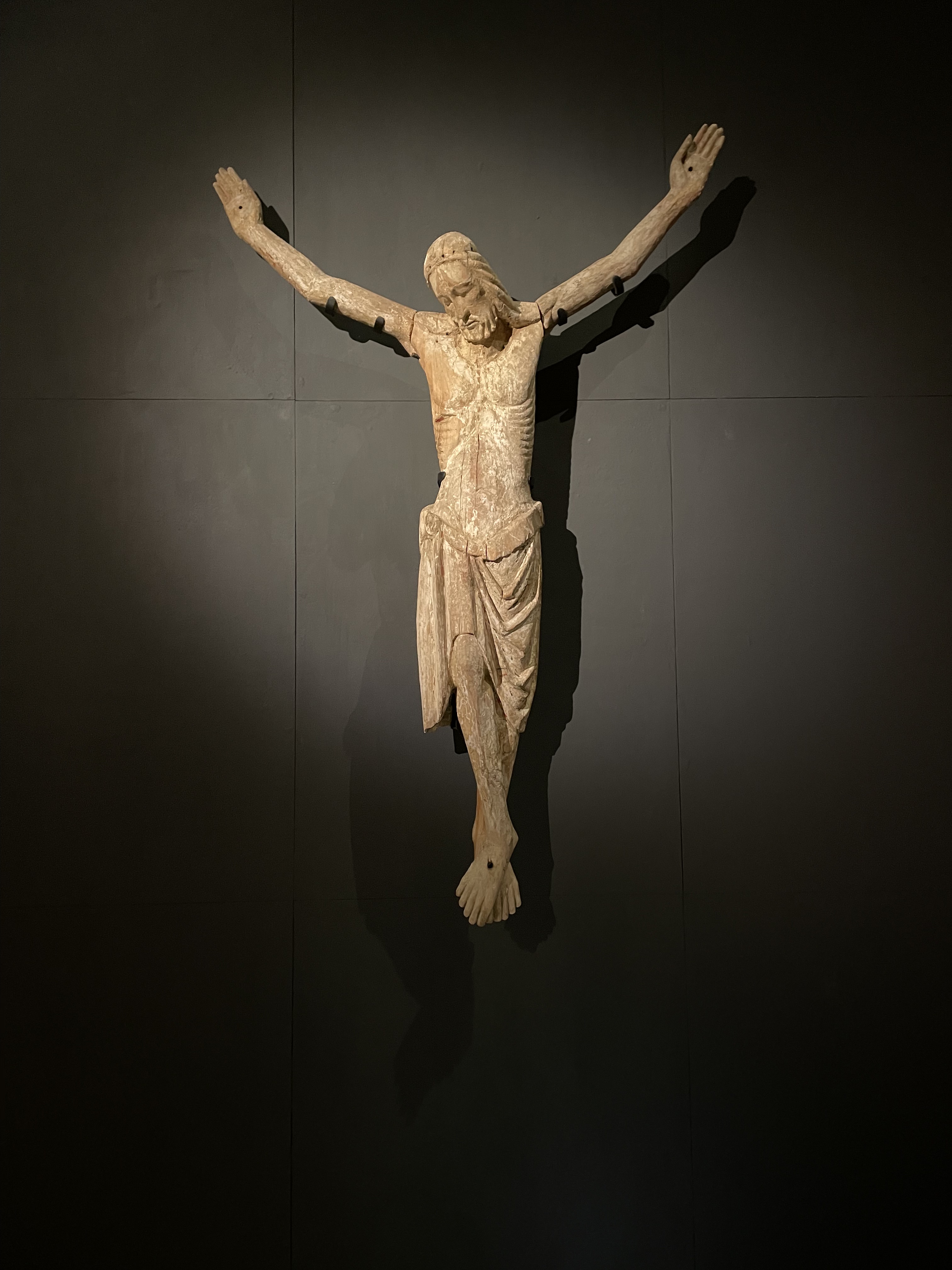
A Station of the Cross by Sepo b. Ntuluna from Tanzania, in the hotel Mattli Antoniushaus, Morschach – built on the grounds of the Franciscan Community in German-Speaking Switzerland.

Then there is the humanity of loss – of which we all know something. Mary caressing the body of her son. A parent unable to intervene to save her child. The powerlessness of love which cradles the life-left body of the son she would have done anything to save. This is the darkness of despair; the earth shaken; the light of the world put out. The day of absence.

‘Faith’ is perhaps the best answer as to why Jesus doesn’t do a deal. That our miserable card games take place inside a much, much bigger story than most of us are willing to acknowledge. Soldiers at the foot of the cross didn’t have cards, but they had dice. It would be beyond their imagining that 2000 years later the events of that sorry day would still be remembered. A miserable death a few hours before a dusk that would usher in the city’s shabbat. It would be hard to imagine something less important. It was ended – time to divvy up the possessions and go home.

“Thou art God, Whose arms of love
Aching, spent, the world sustain”.

WH Vanstone from Hymn to the Creator in ‘Love’s Endeavour, Love’s Expense

Exposed

I’m not the kind of Christian who likes public witness. The sort of knocking-on-doors Christianity; or a beach mission; or even telling my “faith story” in a service feels embarrassing and uncomfortable. There are probably lots of reasons for this, which it would be tempting to dismiss with an air of Anglican superiority.

I am inclined naturally to a reflective and tentative articulation of faith. I don’t believe I have all the answers. “Now we see in a mirror dimly”. I have no doubt, for a host of reasons, that my faith is fractured and partial. It feels fuller and more complete when it is located within a community of faith, bringing many different experiences of God, past and present, under a single roof. Others have natural – and undoubtedly, spiritual – gifts for giving personal testimony. I don’t hesitate to say that this can be both inspiring and has a place within the life of faith. But we are not all created to be the same.

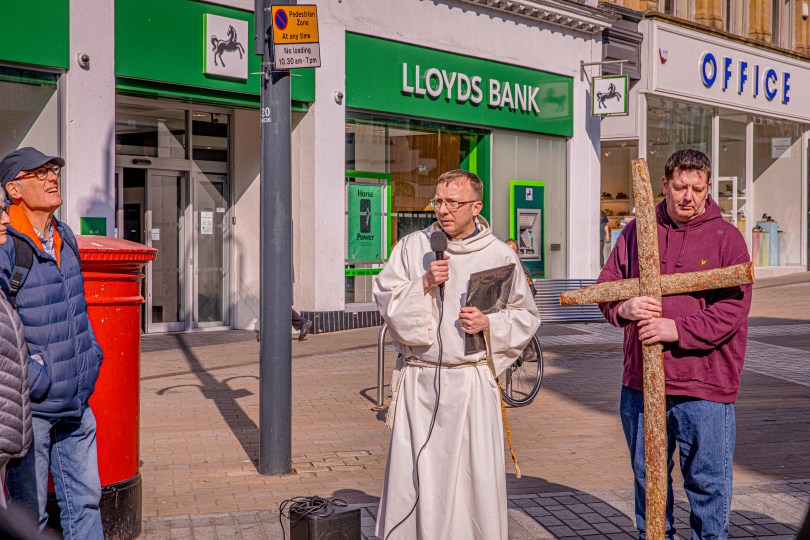
Hence, it was with some trepidation that I went along with the Gospel Streets Urban Pilgrimage in Leeds last week. Led by the admirable Lighthouse community, based in St George’s Crypt under the pastoral care of Jon Swales, the pilgrimage snaked though the streets of Leeds on a sunlit Thursday morning. Jon had a monk-ish aura wearing a cassock alb, and speaking passionately about the City while reading the Gospel of Mark. People stared at us. One passing youth shouted: “You’re all evil; you lot”.

What did it achieve?

For the thirty odd of us participating there were the kind of side-on conversations that people walking to the same destination often share. I met many people I hadn’t encountered before. Members of the Lighthouse community were with us, and it ended with a service of Holy Communion in the Crypt. We were present in spaces where religion is either excluded or extreme; the places where the more you consume the more you matter, and where street preachers tell the world that “the end is nigh”.

Our pilgrimage was less confrontational and more measured. The worst excesses of capitalism were described beside the city’s banks. People damaged by an urban environment that rejects them walked with us in a spirit of solidarity and purpose. Jon asked people sitting and reading in the sunshine of Mandella Gardens if they wouldn’t mind him speaking for a while (sooo Anglican!) and breaches of international law were mentioned by the war memorial.

I’m not sure what we achieved. A statement was made – it was enacted. In the pilgrimage through Lent, we reminded ourselves and anyone who cared to listen, that God is present in the city. That the Church is (or should be) a shelter from the storms of life and a community that is restless and longing for the Kingdom. Where people who have been rejected find a home, and where earthly power is reminded of its place.

It is absurd
to retell here what
happened there,
far away and far ago
when the idiot healed
and said, and wept
and left. A broken
nonsense in the febrile
world of expectation.

The Sombre Season

Lent is almost upon us. Somehow, unlike several of our continental neighbours, England maintained the old words for this time, even as the Church’s Latin altered so much of our language. Lent probably came into English through Old Saxon, but its exact history is lost in the folds of antiquity. Nevertheless, the meaning is clear. It is to do with something long, possibly reflecting the lengthening days brought by spring in the northern hemisphere. Maybe, also, the sense that days of abstinence might be long days and, consequently, Lent is a season to be endured. It ends, of course, in Easter – another ancient name from Old English, with origins linked to Northumbrian Eostre. Perhaps the name of a Goddess, or a word for dawn, but in any event adopted by the early Christians of these isles as a fitting word for the new life that awaits at the end of Lent.

While our warming winters have changed our experience of the seasons, we may still see churchyards transformed with a late frost, or layered in a final fling of snow’s fleeting transformation. There is an added poignancy that these occasions are becoming fewer, with such brief visitations acting as a nostalgic reminder of how we once experienced these months. Much of English literature describes the tyranny of enduring and unavoidable cold, when even a hearthside might offer only limited and temporary relief.

Given their appearance in or around the start of Lent, purple is often the colour of choice for crocuses planted amongst the grave stones that surround our ancient parish churches. A fitting sign of both our mortality and also the liturgical season. From this coming Wednesday, until mid April, many churches will be draped in purple, signifying the Lenten focus on “self-examination and spiritual discipline”.

… crocuses
Pale purple as if they had their birth
In sunless Hades fields.

From The Sun Used to Shine by Edward Thomas

Perhaps ‘sombre’ isn’t the right word for these 40 days. As regular readers of this blog will know by now, I completed a project last year to write a Lent book for distribution before March 2025. A Sterne Lent refers in many places to the sermons preached by the vicar-novelist, Laurence Sterne. It is estimated that at least one third of these 45 homilies were preached in the time of Lent. This is not surprising as even in the 18th century the penitential season was marked by some effort towards thinking and reflection upon religious convictions and actions. For Sterne the denial of joy for such a lengthy period would have been a trial. Laughter spilled out of the unlikely parson, and a significant proportion of his 42 sermons (there are another 3, but those develop content from previous ones) were preached during Lent.

According to the Julian calendar, Sterne preached his sermon on ‘Penances’ on Palm Sunday 1750. Based on some circumstantial evidence it is probable that it was preached in York Minster. Sterne explores some of his core convictions which, alongside a side-swipe at Methodists, centres on a Deity who doesn’t want us to be endlessly glum, or excessively earnest. We were not created “on purpose to go mourning, all our lives long, in sack-cloth and ashes”. However, Lent is a time when our restraint can:

dispose us for cool and sober reflections, incline us to turn our eyes inwards upon ourselves, and consider what we are, – and what we have been doing; – for what intent we were sent into the world, and what kind of characters we were designed to act in it.

It is in this season that Sterne feels the discipline of Lent is intended to “call home the conscience”. In particular, Sterne is critical of our wasteful use of time. We fill up diaries with distractions, “parcelling out every hour of the day for one idleness or another”, and seem eager that when it comes to time we are endlessly inviting others “to come and take it off our hands”. Sterne cannot abide the idea that we reach older age only to discover we have lived “a life so miserably cast away”.

Lent is a time to contemplate what we are here for; how we spend the time we have been given – but not, as Sterne would see it, to fill up the season with so much dour reflection that there is no space for joy.

Lent Preachers

As the Church approaches Lent, some Christians might have begun thinking about what to give up, or what to take up. Perhaps a small resolution of abstinence – alcohol or chocolate – and a desire to read something that will draw us a step closer to understanding everything to which Lent points. In some churches, while Holy Week might feature a visiting speaker to lead people through the final week, it has been the custom in cathedrals and elsewhere to have a different guest preacher each Sunday. This practice goes back a long way and can be found in various notices and signs that have survived the passage of time.

In 1725 Ash Wednesday fell on February 10th. Or did it? This statement requires some qualification. The calendar at that stage was still in the Julian form, meaning that the year began on 25 March, hence the Lent preachers list for St Paul’s is described as the year 1724-25. This practice was known as ‘dual dating‘ and caused considerable confusion. It finally ended in England in 1751 with the British Calendar Act and an effective transfer to the Gregorian calendar used by most of the rest of the world.

As the notice from St Paul’s demonstrates, Lent sermons were not confined to Sundays. The advertisement offers distinguished clerics on Wednesdays, Fridays and Sundays, throughout the 40 days. These occasions were not for the minor clergy, but moments when the cathedral staff themselves, or various other deans and bishops, might pronounce their theology and spiritual message.

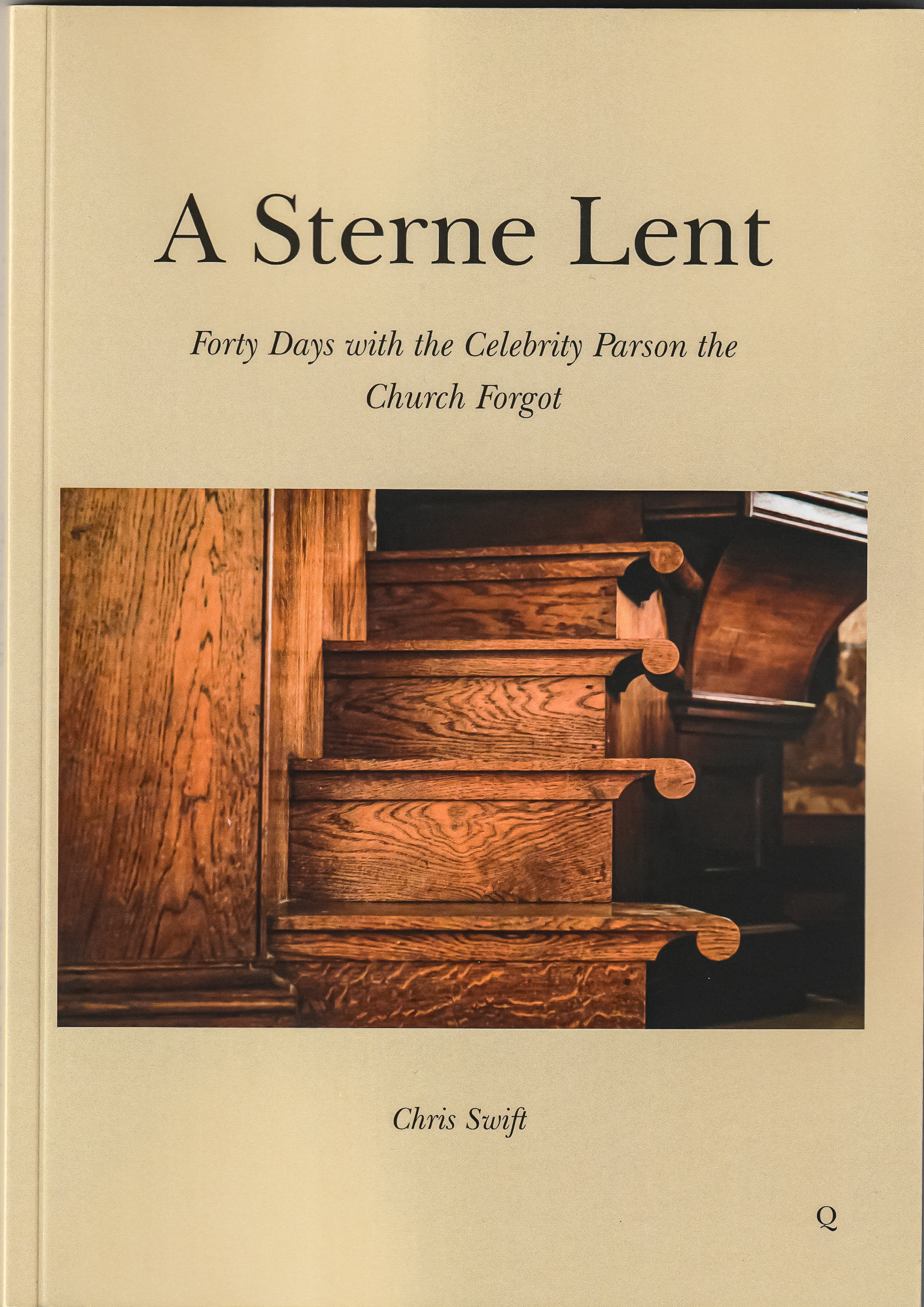
Laurence Sterne, who was a well known and popular preacher, was aware that his humble station in the Church meant that he was unlikely to be invited into the nation’s highest pulpits. The steps that grace the cover of A Sterne Lent – Forty Days with the Celebrity Parson the Church Forgot, are elegant, simple and modest. They are the pulpit steps of All Hallows, Sutton on the Forest, where the preacher stands only a few feet higher than the congregation. Today, I understand that a less formal way of leading worship (and perhaps fewer parishioners) means that this beautiful 18th century piece of furniture is seldom used.

Many of Sterne’s surviving 45 sermons were first preached in the season of Lent. In keeping with the motif found across Sterne’s work, he was mindful of the contrast between success as an author and the skepticism about his character which would keep him out of high office in the Church.

“I just received a Translation into french of my Sermon upon the house of Mourning, from a Lady of Quality – who proposes to print it, for the Caresm, & to give ye people here a specimen of my Sermons – so You see, I shall be Lent Preacher at Paris, tho’ I shall never have the honour at London”

Letter from Laurence Sterne to Henry Egerton, written in Paris, March 8 1762. Quoted in Volume 7 page 233 of The Florida Edition

In a style characteristic of Sterne’s humour, his letter to Henry Egerton in March 1762 makes reference to the fact that his own death had been reported in newspapers back in England. Sterne’s congregation in Coxwold went into mourning. It took more than a week for corrections to appear in the English press. Sterne would undoubtedly have been fascinated by the eulogies which were published in the intervening days.

St Paul’s never beckoned the peculiar rural parson who had found fame – and a little fortune – through both his published sermons and Tristram Shandy. Undoubtedly Sterne has the last laugh, as the great names of that era, who graced the pulpits of the nation’s cathedrals, are now unknown. Yet, somehow, Sterne’s radical approach to the novel continues to stir the creative spirit of contemporary artists and authors across the world. I believe they also have a much neglected spiritual significance.

Perhaps one of the most attractive things about Sterne is his refusal to conform simply in order to ‘get on’. Yes, it rankled with him that there would be no palace to live in, or ample stipend to live off in a lavish style. Sterne can’t quite let go of the cost – the sacrifice – which witty writing and ecclesiastical satire had imposed on his prospects. Friends advised him to temper his writing until he was in the kind of exalted position no one could touch. However, I suspect that Sterne knew this beguiling suggestion for what it was, and that it would blunt the sharpness of his writing. Too many people have entered the church, or politics, certain that when they ‘arrive’ they will enact their intention to do something dazzling and different. Alas, how often do these well-intentioned ambitions become paralysed in the sticky web of power’s compromise? Sterne may not have preached in England’s most exalted pulpits – but the life we encounter in his writing is an enduring lesson on human weakness and hypocrisy, redeemed only by a God whose sense of forgiving humour is so much greater than the dismal depths of our everyday folly.

A Season of Sterne

For the past 18 months I have been journeying with the unlikely, contradictory and inspiring Laurence Sterne. In a few weeks’ time I’ll be making the formal launch of the Lent book which is the product of this reflection: A Sterne Lent: Forty Days with the Celebrity Parson the Church Forgot.

People have asked me, as well they might, why on earth I picked Sterne’s work as a muse for the serious spiritual reflections of Lent. There are a number of reasons. Firstly, being in the centre of York, I became aware of multiple connections with Sterne, all within a few yards of where I am living. Indeed, the cleric who built this house, William Ward, might be described as the creative impulse that launched Sterne’s literary career and consequent fame. This creative impetus took the form of Ward’s death. The demise of Ward opened the door to a deeply personal, bitter and decade-long dispute between the Archbishop of York’s legal officer and the Dean. It only ended when Sterne wrote his first book, a satire on the controversy, which was so accurate and witty that the Archbishop ordered all copies of A Political Romance to be burned. Thankfully a few survived.

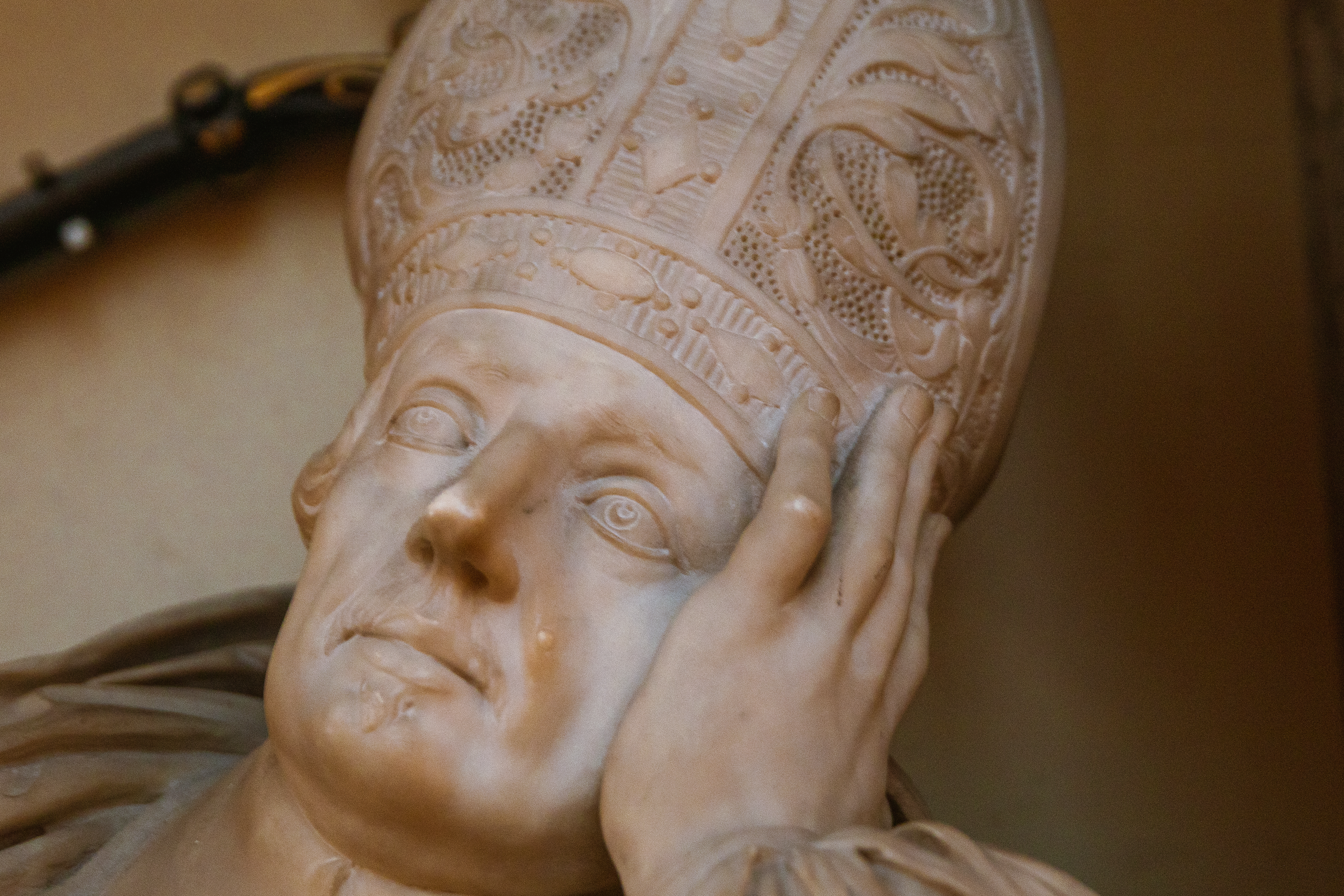
Effigy of Richard Sterne, Archbishop of York 1664-1683. North Quire Aisle, York Minster

Inside York Minster, Laurence’s great grandfather lies in repose. This is Archbishop Richard Sterne, and his recumbent form was carved by Grinling Gibbons (detail pictured above) the notable Anglo-Dutch sculptor. Outside the Minster, but only a matter of yards away, are two civic plaques. The first is in celebration of Elizabeth Montagu, the “Queen of the Blues”, who led a group of privileged women interested in education and mutual support for the development of their respective interests. Montagu was a correspondent with Sterne and also his wife’s cousin. A little further along the same cobbled street is the plaque to Jaques Sterne, the writer’s uncle and one-time Precentor of the Minster. As a Prebendary, Laurence Sterne would often have been in the Minster, preaching or attending meetings of the governing body. On the opposite side of the cathedral, down the ancient Roman road of Stonegate, a stained-glass commemorative disk records the place where Sterne’s Tristram Shandy was first published. As it happens, this printer’s business lies in the lineage of the publisher of A Sterne Lent, Quacks The Printer, which is today found a short distance away on a road parallel to Stonegate.

All this is interesting – possibly – but there is more to A Sterne Lent than geographical convenience. Sterne’s work continues to be significant in the arts and humanities. Tristram Shandy has a sustained and enduring influence on English literature, and literature in other languages. In the fine arts Sterne’s legacy still generates new works. Yet in the Church, Sterne is largely forgotten. Unlike Samuel Johnson or John Donne, he is absent from the religious calendar. When I re-read Tristram Shandy, and took a look at Sterne’s sermons and other writing, I discovered themes that are relevant today and, in many respects, were absolutely groundbreaking in the 18th century. For example, he uses satire to make explicit the repeated absence of female voices from decisions about their bodies and financial independence. It never occurs to the men who pontificate on the acceptability of using a cannula to perform an emergency baptism, to seek a woman’s view about the matter. When spurious pseudo-scientific and legal arguments are cited during a dinner after a major church service, involving the disinheritance of a widow, no female voice is in the conversation.

I do not know what readers will make of A Sterne Lent. As DH Lawrence famously commented: “never trust the teller, trust the tale”. Perhaps that is true in particular for Lent books. Sterne is an unlikely figure to choose as a conversation partner for the most sober season of the Christian year. He is full of mirth; jocularity; and satirical juxtapositions. Giving up some pleasure for the sake of his soul would probably have seemed a bizarre suggestion to Sterne. He is full of humour and weaves a thread of radical and counter-intuitive thinking across his writing. Not only in the prose, but in the physical presentation of the novel, he deploys startling surprises, twists and turns. Like the fluidity of the marbled page, the narratives jostle together and suddenly find themselves emerging into a new and unexpected digressions. Is Sterne taking us for a ride – or on a revelatory and challenging journey? Never trust the teller…

The unsettling ambiguity of Sterne’s writing may help us see the world anew, and fashion questions we had not thought to ask. At a time when there is so much turmoil in the Church of England I would contend that this Lent book offers reflections which have found their moment juste. With a vacancy at Lambeth, Sterne’s writing on vocation, ambition and patronage, are as pertinent today as they were in 1759. If the Church is to change for the better it needs to interrogate and understand the historic power which continues to tick in the mechanism of its present. As any reader of Tristram Shandy will tell you, when it comes to important matters in life, we must at all costs mind what we are about – consider how much depends upon what we are doing – or live with the consequences.

A Sterne Lent can be obtained from Quacks books or Amazon – where a Kindle edition is available. The photograph at the head of this blog features Shandy Hall, Coxwold, the Museum dedicated to the life and work of Laurence Sterne.

‘Why Her Brethren?’

We are in the season of sanctity. First comes All Saints, followed swiftly by All Souls, as we remember those who have lived and died in years gone by – either people we have known, or people extolled by the Church as exemplars of faith. Of course, like so much else, sainthood is bestowed according to the fashion, politics and preferences of church leaders. For example, there are fewer female than male saints. Even so, not everyone makes the cut, nor should they. Part of the premise of my new Lent Book for 2025 is that sometimes the Church forgets those from whom it still has much to learn.

The 18th century vicar and author Laurence Sterne was not a saint, if by that we mean someone faultless in this life. The trouble with Sterne was not so much that he had faults, but that he was very candid about them. In his letters and books there is bawdy and innuendo; passion and compassion. Sterne is all too human and rejoices in a conviction that God had given him the capacity for joy which it would be a sin to deny. In the brief span allotted for his life (he died aged 54) there is an echo of Andrew Marvell’s reminder to His Coy Mistress that at his back he hears “Time’s wingèd chariot hurrying near”. For Sterne, life is too brief and precious to be lived as if it were “one cold eternal winter”.

When I renewed my interest in Sterne’s work, there were certain features that gave his writing a remarkably contemporary resonance. Corresponding with the black British abolitionist Ignatius Sancho Sterne pulls himself up short when he finds himself writing about the kin of a black character in his novel on:

“behalf of so many of her brethren and sisters, came to me—but why her
brethren?—or yours, Sancho! any more than mine?”

Laurence Sterne, Letters

Why indeed? Sterne has the capacity and honesty to recognise his inherent – thoughtless – separation of people on the basis of ethnicity. The plea for a recognition of our God-given and common humanity runs throughout Sterne’s work. When it comes to gender differences Sterne is equally pointed in describing the ‘logic’ which denies a women authority over her own body or, come to that, even the right in law to be regarded as a blood-relative of her own children. Wit is the tool which Sterne uses to excavate the absurdities of his day, bringing to light the thin veneer of social etiquette that enabled the continuation of ridiculous conventions. At the same time, living at Shandy Hall in rural North Yorkshire, Sterne is enmeshed in the society and behaviours of his day. He knows this and uses humour to escape the passive acquiescence to which most conformed. Little wonder that friends encouraged him to get his preferment before he embarked on satire. Wit that came close to the mark and exposed conventions for what they were, could cost you a mitre.

Section from “A Flap Upon the Heart”; one of two new drawings by Rob Oldfield commissioned for the book.

A Sterne Lent offers the opportunity to keep company for a while with this witty, mirthful, digressive and somewhat doubtful parson. The book is immersed in an age that can feel very different from our own, yet contains themes that speak at times with remarkable contemporaneity. Above all, Sterne offers a lively voice whose strength is uninhibited by the usual constraints of ambition. His daring portrayal of the world he inhabited has the saintliness of a child-like disposition to tell the truth, even when it comes at a material cost. Sterne’s accurate depiction of human society bubbles out from his quill and left an enduring impact on the development of the novel. I hope that this curious and intriguing book will provide readers with a glimpse into another England, yet also one that touches with humour on human traits that persist within both church and society.

The Resurrections of Jesus

The shunned, the unloved, the bleeding – the despised and the dead – were all brought back into life by Jesus. In a culture of separation and holiness-by-isolation, the Nazarite Rabbi stepped over boundaries again, and again, and again. When that culminated in the raising of a man from the dead, Lazarus of Bethany, the authorities decided enough was enough. It was time for Jesus to go away. Better that one man should die than the nation perish. Utilitarian arguments often win the day, they are beguilingly simple and often easy to implement. Focused on what is obvious and immediate, they frequently omit or deny wider truths and bigger themes that are, perhaps, simply too inconvenient to contemplate.

Like the sower’s seed, or the prodigal’s father already upon the road, the resurrections of Jesus are strewn across the Gospels. He calls back to life those who have been taught to be dead. To the contamination of a bleeding woman who dares to touch him, a wretched life is made whole. Many are healed and the doubting are allowed to walk away. At a meal with his disciples a woman dares to waste the fragrance of rich perfume; anointing the feet beside which the barren branches bring forth blossom. Here is bread and water; body and blood, the words whispered to the unworthy and the hopeless: you are alive.

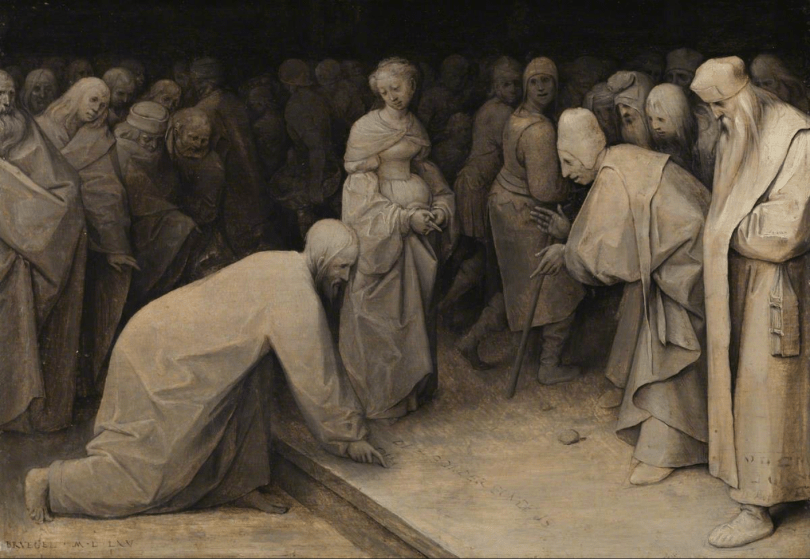
The picture at the head of this blog is called ‘Christ and the Woman Taken in Adultery‘ (1565) and was painted by Pieter Bruegel the Elder. The painting uses a technique called grisaille, meaning that it appears to be monochrome; everything is a neutral shade – sepia-like. It is hard to imagine any depiction which conveys a stronger sense of life drained away. In the crowded painting the head of Jesus is lowest of all. He writes. I have always believed that in this story, at this point, Jesus is incandescent with rage. He knows that the purpose of this moral tale is to trap him and condemn him. Did the Pharisees just happen to catch this woman in the very moment of committing adultery? Or did the lawyers’ question come first, and a cunning plan evolve to create the drama? She is caught in the act – and they know at that moment exactly where to find Jesus. He knows that those who bring her care neither for her sin nor her salvation. She is a prop. It is little wonder that this is one of very few Gospel stories where Jesus pauses and takes his time, perhaps to marshal his feelings before speaking.

“The stone-throwers walk away, one by one, according to age. Until the kneeling Christ and the standing woman remain, in an awkward reversal of their established sexual status. He tells her to go, to sin no more, to pass from this narrative, and out of our knowledge”.

https://www.theguardian.com/artanddesign/2011/sep/30/picture-this-iain-sinclair-bruegel?CMP=share_btn_url

The teachers and the crowd are dismissed by their recognition that no one is without sin. In this dismal tale of exploitation the one whom Christians claim has no sin does not pick up a stone. Violence is interrupted and a word of resurrection love is spoken: I do not condemn you. Like the woman at the well, she stands with Jesus alone. Another woman made the recipient of easy male judgement. The choreography of sin and punishment is cut short by someone who has no interest in this kind of dance. It is time for it all to stop.

On Good Friday we are supposed to think about the agony and suffering of Jesus, and so we should. But the resurrections continue, even on the cross. For the criminal who puts his faith in Jesus, the promise of the life to come: today. Slowly, the light of the world is extinguished. Its remains are planted in the darkness of the sealed tomb: and we wait. Today, at Easter, resurrection triumphs over death. The task of the church is to live this resurrection and set free people so quickly judged by those keen to weigh some sins more than others. To punish those whom it is easy to judge, and hide much greater sin in the folds of wealth. The resurrections of Jesus are not good news for everyone.

Photo credit: The Courtauld

The Flappers

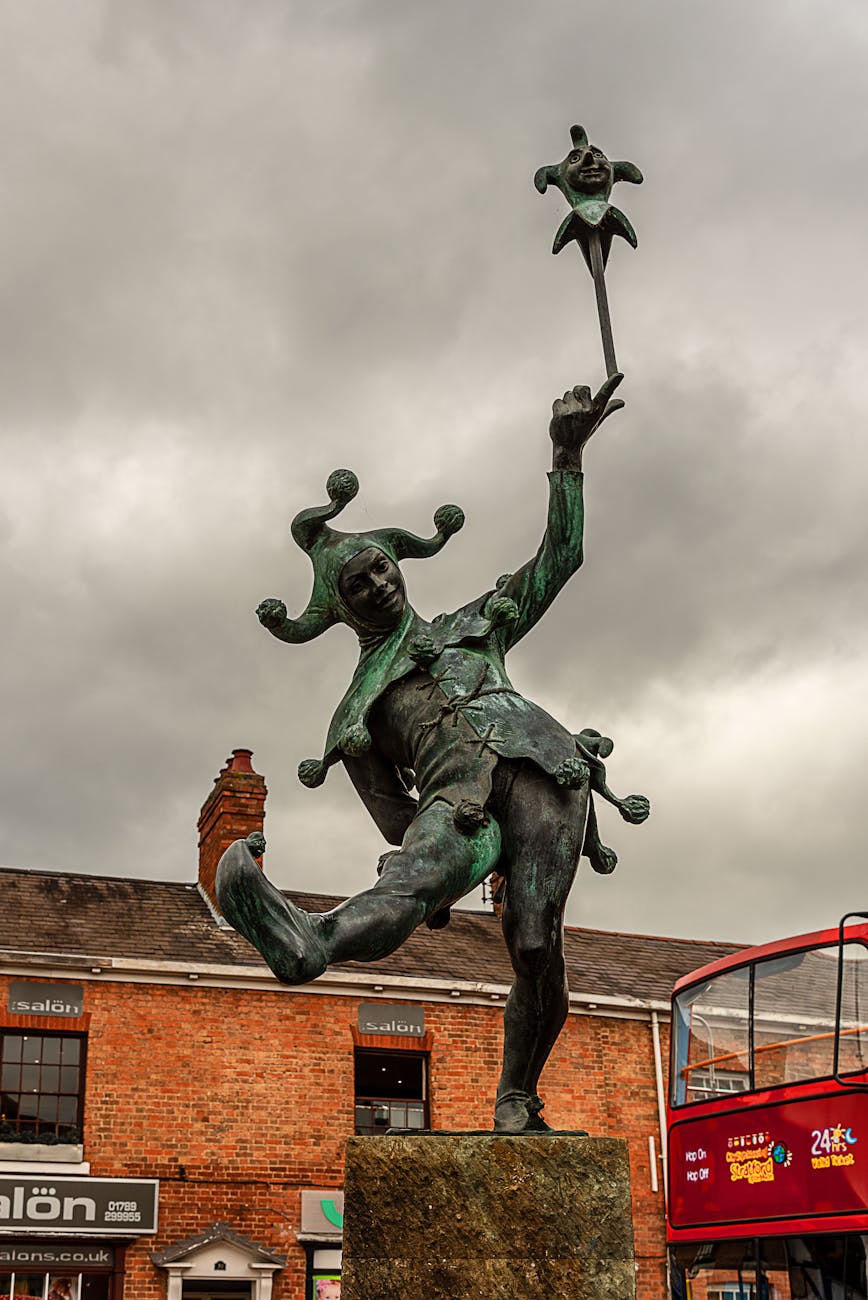
In the weird and wonderful world of Gulliver’s Travels, Jonathan Swift described servants who performed a particular occupation encountered by Gulliver on his third journey. These servants were called ‘flappers’ and their job was to accompany their master or mistress and make sure they were paying attention to what was going on. They did this with the aid of an inflated bladder on a short stick which, when they deemed it important for the person to be alert and listening, was used to flap them on the ear with the bladder. Equally, if it was something they needed to look at carefully, to flap their employer – gently – upon the eyes, thereby preventing them falling down a cliff.

This rather dramatic premonition of contemporary mindfulness was Swift’s satire on the distractedness and self-absorption of philosophers. These 18th century thinkers are portrayed by Swift as disconnected from the world around them, requiring a ‘flap’ or, I would suggest, a slap, to reawaken them to reality. Gulliver was unimpressed by the aristocratic figures who needed flapping, and spent more time conversing with the flappers themselves who, of course, had to pay attention to the world on behalf of others. Swift would be aware that his description is reminiscent of the role played by court jesters, who also used inflated bladders, and were sometimes the only people who could speak truth to power.

Photo by John Nail on Pexels.com

It is not easy to see the world with clarity. Often our gaze is overlaid with memories and interpretations that make our observations conform to views we hold already. This can mean that we fail to discern new patterns or new dangers, in a context where we pull reality towards the norms of our own expectation. I have written before about the value of stringent seeing and speaking, when we try to strip away the layers we impose and see something afresh. It is not easy. Perhaps we all need a flap to the head now and then.

Until I began preparing a sermon for Palm Sunday I hadn’t noticed a comment toward the end of the appointed Gospel reading. St Mark tells us that on entering the Temple, Jesus remained there until ‘he had looked around at everything’. Not preaching; not teaching; not healing or anything else: simply looking. Further research led me to discover that the Greek word used here, περιβλεψάμενος, occurs only seven times in the gospels with all but one of these found in Mark. Why is the evangelist so keen to make this point about the behaviour of Jesus?

Referring to an earlier use of this word in Marks’ Gospel, one suggestion is that the pause for observation “helps to intensify what Jesus is about to do” (Christal, J. 2011). This could be interpreted as a word used to convey dramatic effect: something major is about to happen. That would fit with Jesus’ Palm Sunday entry into Jerusalem and the impending denouement of his mission. Equally, it is possible that Mark’s presentation of the passion captures a growing disparity between what Jesus was realising about the coming days, and a world unaware of events that would come to change history. It reminds me a little of the 2011 film Margin Call about the 2007-8 financial crash. A young financier, working for a large company, had calculated that the world was on the eve of a commercial meltdown. As he is driven across the city he gazes out on a world he knows is about to change, where everyone he sees is oblivious to how their lives will be altered. The character ‘looked around at everything’ because nothing would ever be quite the same again.

I am not convinced that having a flapper around to bop my eyes or ears would necessarily help me to see the world any more clearly. Like the ping of a message on my mobile phone, it would probably lead to irritation. Nevertheless, the point Swift is making is entirely valid. We are parochial and complacent creatures, wrapped up in our own concerns and often lacking the will to shake up our way of seeing the world. In a church where there is often an emphasis to ‘make disciples’ and to be incurious about a theology that questions our way of looking, it might help to remember that Jesus took the time to simply pay attention to the world. At the start of Holy Week it is a helpful reminder to us to ‘look around at everything’. To allow the narratives of Maundy Thursday and Good Friday to jolt our compassion into life, and to look forward with hope to the day of resurrection.

Refreshment

Today passes by all sorts of names: Mothering Sunday; Mothers’ Day; Mid-Lent Sunday; Rose Sunday; Laetare Sunday; Simnel Sunday and Refreshment Sunday. Despite the differences, there is a kinship between them, laying emphasis on different aspects of this waypoint through the long sojourn of Lent. For the vast majority of people, who aren’t making any particular commitment to the season, Mother’s Day will be the most recognisable name.

Refreshment seldom seems a bad idea. When we embark upon any long project, or simply feel weighed down with the routine tasks of daily life, pausing to be refreshed sounds a positive step. In some churches, after the weeks of purple, the vestments and hangings on this Sunday will be a vibrant pink. Colour refreshes the dullness of abstinence, flowers will be given and received, and family dinners will be eaten. In gardens and parks in the northern hemisphere this moment in Lent is accompanied by the emerging colours of spring and, hopefully, some slightly drier and warmer days.

In some traditions and ways of living, the idea of refreshment might be regarded as an indulgence. The consequences of this can be seen all too plainly in Hard Times. Dickens locates the exclusion of play, childlike wonder and a lively imagination, in the pattern of life imposed by a father:

“You have been so careful of me that I never had a child’s heart. You have trained me so well that I never dreamed a child’s dream. You have dealt so wisely with me, Father, from my cradle to this hour, that I never had a child’s belief or a child’s fear”.

Dickens, C., Hard Times, 1854.

Dickens may have exaggerated several aspects of Victorian England in his novels, or placed together less common experiences in a single story, but it all flowed out of a reality with which he was familiar. Allowing space for refreshment in the 19th century could be a dangerous step. People might begin to think; to feel; to dream. Better to do your duty, however bleak the prospects, than imagine a life of being ‘fed on turtle soup and venison with a gold spoon’. In that era few were wealthy and many were poor, and finding any kind of middle way between the two was not in the interests of the powerful. ‘Plus ça change, plus c’est la même chose’.

Rather than being simply a pleasant 5 minutes pausing on a bench, or walking through a wood, refreshment can mean the moment we begin to see life anew, and wonder how to live the lives we are given. It might be the time we decide that change is needed, and that bobbing along as we are isn’t how we are meant to use this one, precious, opportunity we have to be here. Pulling the levers and turning the handles of our part of existence can fill the time – but it should never stop us pausing and lifting our eyes to the horizon.

Refreshment can be dangerous. It can lead to revolution. It may resolve our heart to pursue a different path. It is never time wasted – but the space in which a different future might be imagined.

Jesus Stood

Many of us go with the flow and make sure we don’t stand out from the crowd. At least on most topics. There is a human urge to fit in, accompanied by a fear of separation from the mainstream and finding ourselves isolated. Of course there are also people who love to disagree with the herd: the contrarians. Hopefully, somewhere between these polarities, there are people who disagree when they see its necessity; not for the sake of disagreement alone.

One of the most memorable sermons I recall was preached at the University Church in Oxford, sometime around 1984. The preacher was Trevor Huddleston, and his text was about as short as you can get: ‘Jesus stood’. It comes from Mark 10:46 when Jesus and his disciples are on their way out of Jericho and blind Bartimaeus keeps calling out to him. Bartimaeus was not falling in with the crowd. People were telling him to shut up and behave, but he wouldn’t stop. Despite the swell of the crowd and the momentum to leave the city, Jesus stood. It conjures the imagine of the tide breaking upon a rock.

Huddleston spoke about the anti-apartheid movement and the challenge of speaking out in a society where the weight of social expectation was to keep quiet and behave. To collude with systems of oppression designed to privilege the few. Like Jesus leaving Jericho, we need to courage to hear the voices from the edge of the crowd: to stop, to listen and to act.

There is a lot of appeal in going with the crowd and not making a stand. In one of my favourite quotes from Murder in the Cathedral a tempter reminds Thomas of the venal rewards of compliance, saying: ‘the easy man lives to eat the best dinners’. Join the club; keep quiet; do what’s expected and never, never, rock the boat. Such behaviour can bring handsome prizes.

In the Passion Gospel we find Jesus ‘stood before Pilate’ (Matthew 27:11). This time he isn’t there because of a voice heard on the margins. His posture is an enforced sign of respect. By contrast, as we go on to hear a few verses later, power sits to pass judgement. All the robes and symbols of authority, and troops at command, are with Pilate. Jesus is alone. Yet, if there is no choice of posture, there is a choice to be silent. In the face of the choreography of power Jesus fails to conform to the etiquette of the room. He does not plead for his life. He does not give a rambling defence or seek to implicate others. Silence. In the few verses in which this is described it is possible to feel the authority of Pilate ebbing away.

In 2000 I visited Alison Wilding’s remarkable ‘Passion Project’ exhibited at the Dean Clough Gallery in Halifax. One of the larger pieces in the collection comes under the heading ‘Disposition’. It consists of a huge concrete disc towering over a black mat, which appears to grow wavy stalks (it can be seen here). Abstract art demands work from the viewer, even when set in an exhibition with an overall theme. What is going on here? There is a world of difference between the objects – in almost every sense. They appear only to be connected by a tension that lies between them. In a temporal sense Pilate should be the stone – ready to crush whatever pathetic resistance grows out of the Judean darkness. Spiritually, the disc hints at perfection and eternity. It is balanced and complete, requiring nothing from the sprawling stems that stretch upwards. This is a standoff and the stone will not be moved.

“At the heart of this episode of the Passion is both conflict and stand-off. There is a perplexing estrangement between both objects; the scale of one bears no relationship to the other, but the space separating them is tense and compelling. In the dynamic of the sculpture one part is continually brought into focus and deflected by the other”

Alison Wilding, ‘Contract’, exhibition catalogue, October 2000

Those who make this kind of stand seldom come off unscathed. Jesus knows this and he holds no particular hope of release or escape. The machinery of power will take its course and suffering lies ahead. It is beyond the imagination of this anxious and self-interested power that somehow, by battering and breaking this solitary young rabbi, an alternative power will be released into the world. A power that will enable anyone, no matter how poor or peripheral, to receive a dignity that cannot be removed. To become a child of the living God.