I once worked with a secretary who was fond of pithy analogies. As we age, she remarked one day, it’s like the old fashioned reel-to-reel recording machines. As it nears the end the depleting spool turns ever faster. Perhaps it’s the effect of familiarity that means some days pass almost unnoticed – we are established in our routines and the lack of new experiences or surprises causes our perception of time to drift. This may be why just a few days away from home may seem to occupy much more time. A new location; new people to meet; unfamiliar experiences to share.
Since August last year I have been working on a project to produce a Lent book. This has developed as a conversation between my own experiences in ministry and the legacies, literary and otherwise, of Laurence Sterne, 18th century parson and author. There are several reasons for this choice, circumstantial and otherwise. The echoes of Sterne haunt the streets of York, from the Minster where he preached, to the nearby building where Tristram Shandy was first printed. The villages just north of the city contained the parsonages where he lived and Bishopthorpe Palace was home to his great grandfather. Much further afield the work of Sterne continues to inspire many different kinds of artistic response. The book for which he is best known, Tristram Shandy, has never been out of print since 1759. Sterne’s ghost is one whose latent power can still turn a coin.
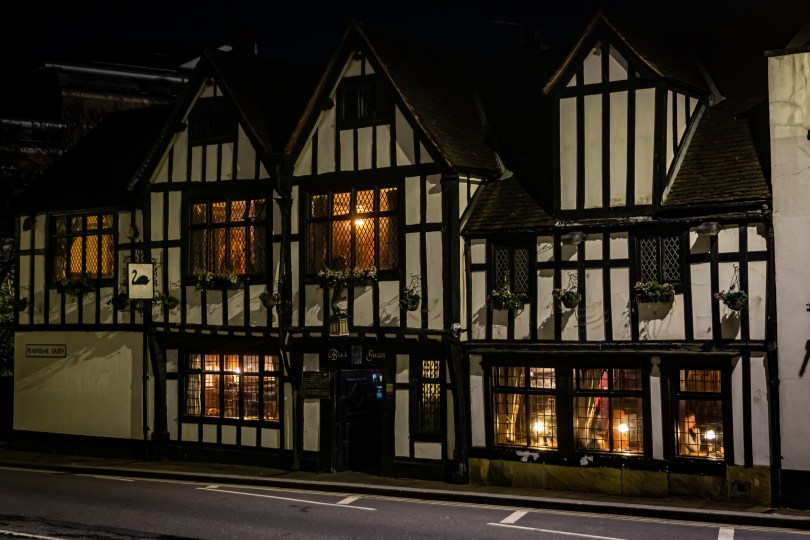
Tristram Shandy was published episodically across many years, coming to an end with volume nine. During the production of the work Sterne’s health deteriorated. He suffered from tuberculosis and often travelled away from a cold and sodden Yorkshire to find a warmer clime. In volume seven he describes one such expedition, going by chaise and spending nights in various taverns. It is this setting that leads Tristram to think about his death (which he had already escaped once). Drawing on earlier writing, Sterne’s character reflects on his place of death, and which location would afford him the most comfort in his final hour.
The conclusion drawn is that an inn would be the best place for “this great catastrophe”. Tristram thinks that the understandable care and concern of friends, mopping his brow and smoothing his pillow, would “crucify my soul”. This thought occurs at an inn within the town of Abbeville where, it would appear, Tristram suddenly realised that choosing which pub might in fact be rather important. He concludes that it could not be the inn at Abbeville, even “if there was not another inn in the universe”. To avoid any possibility that it might be the setting for his last breath, the chapter ends with Tristram demanding that the coach and horses be ready to depart at four o’clock the next morning.
“He [Archbishop Leighton] used often to say, that if he were to choose a place to die in, it should be an inn; it looked like a Pilgrim’s going home, to whom this world was all an inn, and who was weary of the noise and confusion in it.”
Quoted in Bishop Burnet’s History of his own Time (1724)

If the wish that Sterne gave to Tristram was one which the author shared, then it was granted – partially. Sterne died on the 18th March 1768, away from his friends and family, in a boarding house that had become his London lodgings. Journeys constituted a significant part of Sterne’s life, both as a child and an adult, and his ultimate departure came in the city that had granted him fame and a modest fortune. In his last days he struggled even to pen a letter. In his final correspondence, to Anne James, he writes of being “at death’s door this week with pleurisy” and ends by commending her “to that Being who takes under his care the good and kind part of the world”. At 54 Sterne had gifted to the world a remarkable literary legacy and stimulated a debate about his life and thoughts which remains productive because it is still contested. He knew, as did Tristram Shandy, that life is fleeting – and he made the most of the joy that shone fleetingly between the clouds.

 Swift Reflections