Law and Disorder

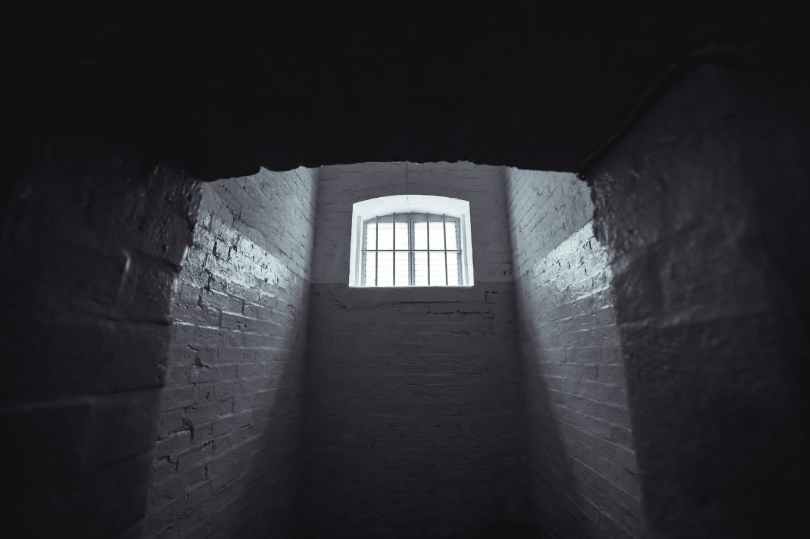
In the early days of my ministry I attended a prison. I had an interest in this that went back to the days when my mother worked as a secretary in a minimum security ‘open prison’, and facilitated a meeting for me with the chaplain. In turn that led a Sunday spent in the old Strangeways, with the remarkable Noel Proctor, and then to a visit to a prison where I was at university in Hull. I have no idea why I felt called to explore this, but it brought me into contact with a world often hidden from public view. Recently, much of the character of this concealed incarceration was portrayed with insight and skill by Jimmy McGovern in the outstanding BBC mini-series, Time. It has stimulated a much needed debate about the day-to-day reality of the criminal justice system.

“McGovern could be criticised for the sheer number of shocking scenes his protagonist witnesses and suffers. But there is nothing in the show that I have not seen first-hand during my time inside”.

“‘There’s nothing here I did not see inside’ – a former HMP inmate on Time” by Eric Allison in The Guardian 18 June 2021

These earlier experiences eventually led to a small role helping out the chaplaincy team close to where I served as a curate. Looking back I have no doubt that I was very innocent in my understanding of life behind bars. I was keen to make connections between this world and the local community and arranged two Sunday visits by our very large confirmation class. The prison Governor was happy to facilitate this on what was a reasonably quiet day of the week. Seeing some of the scenes in Time reminded me of these 11 and 12 year olds sitting in the chapel with many prisoners. The confirmation candidates experienced ‘church’ in a very different setting from the leafy suburbs nearby, and met people who had grown up in very different circumstances. I have no idea what lasting effect it may have had upon them.

The most striking part of McGovern’s drama was the realistic portrayal of corruption. It was not (and is not) a one-sided story. The drama portrays the small nudges and influences that push people further and further towards the edge of their usual behaviour.

“But ’tis strange: And oftentimes, to win us to our harm, the instruments of darkness tell us truths, win us with honest trifles, to betray’s in deepest consequence.”


Macbeth, Shakespeare Act I, Scene 3, lines 124-28

There are still many conversations and situations which took place during my brief chaplaincy that have shaped and informed my ministry. Seeing a Deputy Governor and a life-sentence prisoner side-by-side with hands outstretched, sharing Communion together. A prisoner feeling aggrieved about some injustice in the prison system, who started to tell me his tale but then decided: ‘but you haven’t got the power to sort it’ – and promptly walked away. A young man who had made a dreadful mistake and was determined to start afresh. The carol service which was both strange and deeply moving.

There is a chaplain in McGovern’s drama. It’s never easy to portray spiritual support in largely secular times but Time manages to achieve a sense of authenticity and purpose. So many things are beyond the chaplain’s power to resolve, but what can be done is very moving. It felt as though ‘Miss’ knew what she was about, nether colluding nor despairing, but walking a narrow corridor of integrity in a culture where violence was only ever a heartbeat away. A way of being that brought to mind the writings of Ety Hilesum.

“I know that those who hate have good reason to do so. But why should we always have to choose the cheapest and easiest way? It has been brought home forcibly to me here how every atom of hatred added to the world makes it an even more inhospitable place.”

Etty Hillesum, An Interrupted Life: The Diaries, 1941-1943; and Letters from Westerbork

Changing the dynamics that foster corruption and violence will never be easy. We need a spirituality that has no illusion about this reality but, like Hillesum, is equally if not more determined to resist the temptation to be less than we are. Thankfully, McGovern’s drama is not without realistic hope. At the outset it seems to lie only in the small frame of the chaplain, surrounded by forceful men on every side. She remains faithful to her task, even when help is rejected. As the storylines progress others find their own moment of resistance, often at cost, and discover a way through to somewhere that offers the possibility of redemption. To portray this in a realistic way is not easy – evil always seems more credible – but it is accomplished in this drama. Which is an important reminder that wholly giving way to despair is perhaps the greatest betrayal of all.

Evensong Praised

On the eve of decimalisation, in 1971, my Uncle Alan gave me a few of the new coins. The owner of a draper’s shop in a Lancashire market town, he had them in advance of general circulation. At a young age this was exciting for me rather than strange, but it must have come as a shock to many people; a radical departure from the money familiar for generations. My only memory of using the old currency was adding a modest contribution to the ‘penny miles’ which used to snake their way along the pavement in aid of a good cause. Much easier to achieve with the old penny than with the new.

The 1970s were full of change. As a family we attended the parish church which began to use the experimental orders of service offered by the Church of England. My earliest recollection is the ‘Series 3’ service, and I quickly came to know the communion liturgy by heart. For my parents and grandparents it must have felt jarring – or liberating – to shift the address to God from ‘Thou’ to ‘You’. Money changing; holy words changing – it was quite a decade.

In all the change that has followed for the Church, one service has remained largely untouched. Somehow, Prayer Book Evensong persevered in cathedrals and some parishes, although it has died out in many places. It feels to me that no other service reflects the time of day quite so fittingly. Traditionally held at 6:30 pm, the time has changed over the years, and now often takes place as early as 4 or 5 pm. Yet this hasn’t disturbed unduly the rhythm of the day or the sense that this service is connected with the waning of light and the approach of dusk. At St Cuthbert’s Lytham as a teenager, and St Mary Magdalene Ecton in rural Northamptonshire in the mid-1980s, I attended Evensong many times. Now I enjoy the same opportunity at York Minster. In spiritual and musical terms it is a spacious service, faithful and reflective in tone, it sits well as the business of day gives way to the evening hours.

“You’ve got to enjoy yourself. The evening’s the best part of the day. You’ve done your day’s work. Now you can put your feet up and enjoy it. That’s how I look at it. Ask anybody, they’ll all tell you. The evening’s the best part of the day.” 

Kazuo Ishiguro, The Remains of the Day

Choral Evensong is available to anyone with an internet connection anywhere in the world. Each week BBC Radio 3 broadcasts a service (occasionally played from its archive) and there are countless other options on YouTube and elsewhere. This is not a weekly festival of past musical triumphs, but strives to include new compositions and innovation that adds to the spiritual range of the service. Recently Radio 3 broadcast Evensong from St Pancras Church in London. It was a live event during the London Festival of Contemporary Church Music. About 7 minutes into the service there was the world premier of an introit ‘Troparion’ by Renāts Cvečkovskis. It struck me as a remarkably haunting piece of music. Marking the season of the Ascension the music rose and fell in the ancient church. At one point the wail of a siren penetrates the walls and become part of the music. I’ve no idea which arm of the emergency services it came form, but this sudden intrusion of everyday-London didn’t seem out of place in the contemplation of a departing God.

“the presence of contemporary music in an ancient cathedral, especially its more angular dissonance, serves as a reminder that the worship being offered, although in beautiful and ancient surroundings, is not remote from the anguished and urgent realities of the present day”. 

Simon Reynolds, ‘In Praise of Evensong’ The Church Times 7 May 2021
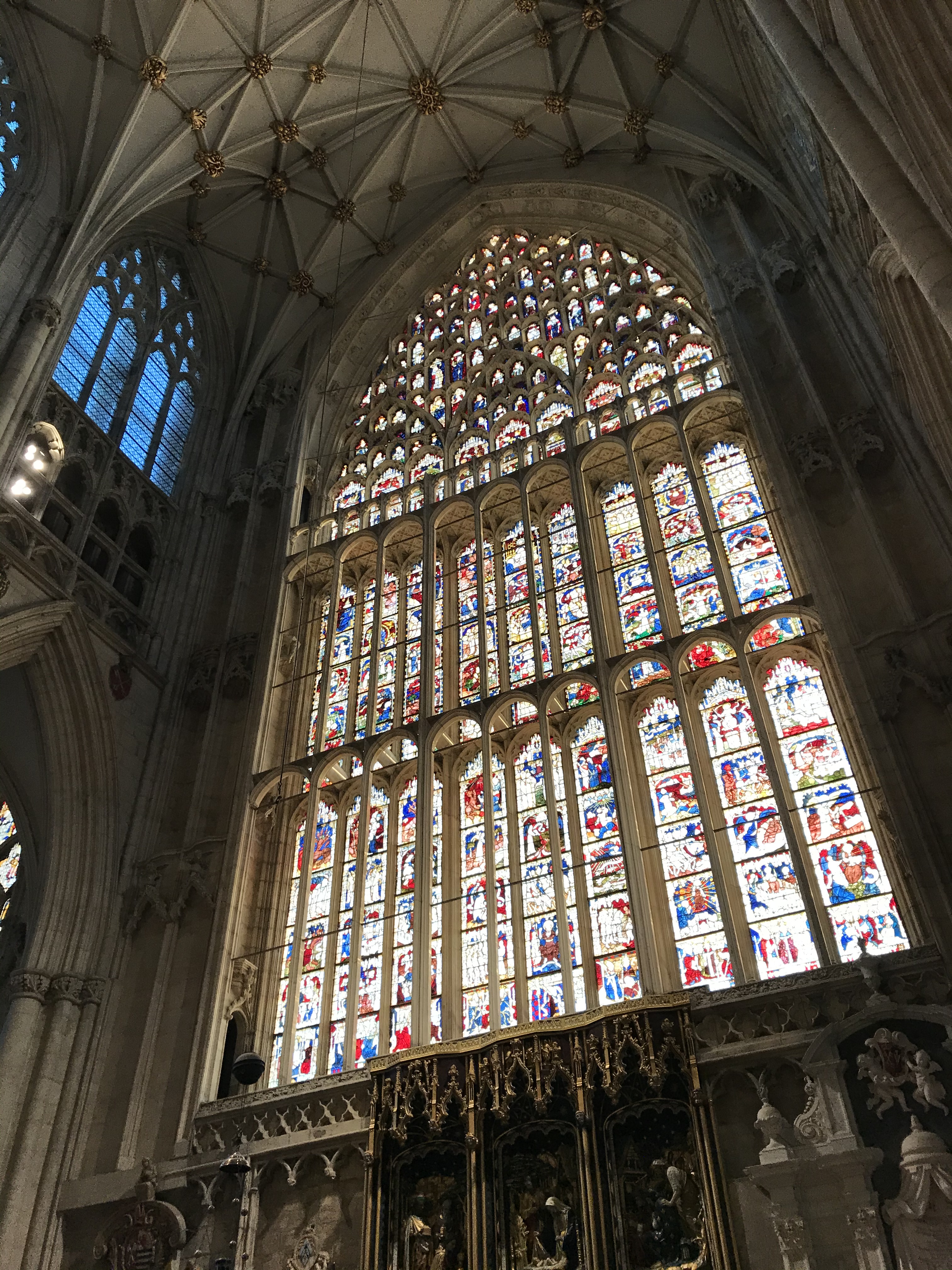
The Great East Window, York – which with fading light, is a frequent backdrop to Choral Evensong

As Simon Reynods wrote a few weeks ago, attendance at Evensong has been growing in recent years. Perhaps this is linked to a new interest in monasticism (in which our evening worship was formed). Or it may be a rediscovery of pilgrimage – a meaningful journey to a place or moment of spiritual significance. Either way, it is a service with sufficient self-confidence to allow seekers, enquirers and tourists to attend. Being at Evensong is an immersive experience combining the deep roots of Judeo-Christian worship with an English language forged in the heat of exceptional times, as the great vowel shift left an enduring mark on our liturgy.

When Lord Rees won the Templeton Prize there was some debate as to why an agnostic astrophysicist had been awarded £1 million by a religious foundation. Described as a churchgoer who doesn’t believe in God, Rees responded that his visits to Evensong in his college chapel were simply ‘the customs of my tribe’. This disarming answer puts a spoke in the wheels of both ardent atheists as well as religious purists. I would like to think that, for Rees, the difficulties of knowing which lie at the heart of faith are a refreshing exposure of uncertainties, which abound in science but are far less often announced in public . His comments certainly hint at this:

“Doing science made me realise that even the simplest things are hard to understand and that makes me suspicious of people who believe they’ve got anything more than an incomplete and metaphorical understanding of any deep aspect of reality,”

Lord Rees, quoted in The Guardian 6 April 2011

It would be wrong if what I have reflected on to this point was not questioned. Is Evensong elitist? The music is often of the highest quality and there are no doubt people who look at the menu of settings and anthems before deciding to set out for a service. The power of the liturgy relies to some extent on the evocative silences and echoes between the notes and words. An occasional intrusion of noise may sometimes add to the service, but not always. Not everyone can be silent and still for an hour. While freedom from vocal participation can be liberating, for others it is frustrating and disempowering. Sometimes Evensong sermons are inclusive and engaged with a God alive in the world, but they can also be inward looking and riddled with churchy language and ideas. The question of culture in worship is something Giles Fraser has addressed, and it continues to be a live debate for the Church. Fraser reflects on his time attending Evensong at St Paul’s Cathedral:

The silence would stop me and calm me down. The prayers and readings would slowly format my thoughts. But it was the music that stole for me a glimpse of heaven. And it was often unspeakably beautiful.

Giles Fraser, Unherd – blog following the announcement of Sheffield Cathedral’s choir being disbanded

Evensong is a rich and important part of worship. Knowing what is being offered and where to find it is much easier now there is a dedicated website. The internet’s offering of liturgy, including Evensong, has become much more extensive during the pandemic – there is a wealth of material to discover. Radio 3’s weekly broadcast is now in its 95th year. I have no doubt it will make the centenary, and endure long, long into the future. It is a jewell in the crown of English worship and will continue to be a vital part of a living spirituality. Not for everyone – but for an eclectic mix of doubtful seekers and faithful pilgrims. When so much continues to change, Evensong has lightened the darkness for people across the centuries: a precious moment of reflection, praise and peace.

Vain Repetition

Mistakes are good. They help us learn, change and improve. A ‘defect’ is a mistake which goes undetected for a long time – an error repeated at both increasing risk and cost. The circumstances that have led to the Church of England’s woeful record of institutional racism reveal terrible defects in the way the Church has attempted to fulfil its mission.

The Church of England has been a part of my life for the whole of my life. My grandfather was a churchwarden in a Lancashire market town, and my grandmother a founding member of the local Mothers’ Union. I climbed up into the pulpit at an early age while gran was arranging the flowers. She told me off and made me come down. In my mid-teens I told my grandfather that I was feeling a call to ordained ministry. He left the room immediately and without a word. When he came back I asked him what had happened – he said that he’d gone to be sick. He had worked with the clergy at close quarters.

Many clergy would attest to attitudes and actions which have hampered their ministry or prevented its development. Couples where both parties are clergy have stories of unfair treatment and a lack of facilitation in supporting two people in parish ministry. At one level it feels that the Church can occasionally be encouraged across the threshold of change, only to fail substantially in taking the steps that enable change to become a reality.

I am one half of a clergy couple. Across 30 years of ordained ministry there has never been a time when we were both in parish ministry. In various meetings and in correspondence before we married, it was made clear that it would be impossible for us to both continue in full-time stipendiary positions. The fact that we have enjoyed fulfilling roles despite these attitudes is not a mitigation for a Church that focused on legislation with little thought for implementation.

The Weekend Telegraph Saturday 2 July 1994

In 2008, along with two colleagues, I was involved in the research and publication of an article which explored some of the characteristics of Anglican health care chaplains in the NHS in England. We had not anticipated being surprised by the basic demographic data which formed the first part of the survey. However, it revealed that 27% of participants were married or partnered to someone in ordained ministry. Also, from the whole cohort, 20% of respondents stated that they were in a same sex relationship. This kind of data begins to reveal something of the silent processes which channel clergy into particular roles.

I was invited to present the findings to the Church of England’s Council for hospital chaplains. It was a full meeting, stacked with the good and great, and I talked through all the key insights from the study. There was one person who pushed back on the implied correlation between clergy couples and people in same-sex partnerships moving into chaplaincy. ‘Maybe there were other things that linked these individuals – did they all have grand pianos?’. Apart from that, nobody spoke (but everyone knew).

While some issues may be couched in the language of modernity and innovation, the reality is that people have always faced cultures that suppress aspects of identity.

Some of the most pernicious forms of prejudice lie just below the surface. Silently they nudge choices one way and not the other. Excluding candidates from roles for which they are eminently qualified and allowing an unrelated characteristic to lead, ‘mysteriously’, to their non- appearance on a short-list. I would love to see a study into the way people change roles when senior leadership moves from one Diocese to another. There is plenty of anecdotal evidence that prior association is a key driver in Church appointments. In 2017 The McGregor-Smith Review (independent review) reminded us that “organisations and individuals tend to hire in their own image”.

The vocational pathways experienced by clergy are an accessible and easy way for the Church to understand the negative forces which shape the deployment of ministers. Forces neither benign nor divine.

It has always appeared to me that the most charismatic element of the Gospel is the offer of radical inclusion. At a time when birth defined status, opportunity and religion, Jesus founded a tribe like no other. A community where nothing is a barrier to belonging and the Church is called to continuously pattern a way of life that prefigures the full coming of the Kingdom. In its words, worship and service, the Church has the most wonderful and amazing job in the world.

Each of us has an obligation to speak and act in this situation. We cannot allow the defects of our mission to continue as the vain repetition of past errors and failings. It is time the Church was recalled to its fundamental, exciting and life-changing role for individuals, communities and society.