Dust and Ashes

Today I shall remind people that they will die. It is a curious and perhaps shocking element of the Church’s witness that on Ash Wednesday we are reminded viscerally of our mortality. Not only in words, but with the touch and mark of ash, we recognise that our constituent parts add up to very little. Our bodies change and decay. This life is not forever and time will undo us as it undoes everyone.

Christians bear this stamp of mortality in a way that is both provocative and hopeful. Through Lent and into Holy Week we follow in the footsteps of someone whose life seemed little more than dust. Born long ago in a distant province of the Roman Empire; regarded as illegitimate; a Rabbi who didn’t come through the normal route of family connection and privilege, but out of a carpenter’s workshop. Despite a brief ministry that attracted crowds and controversy, love and fear, Jesus of Nazareth died as a criminal in the most humiliating of executions.

In the poem Dust, Elizabeth Jennings begins with the same basic reminder that is the message of Ash Wednesday: ‘We are made of dust’. But this is never the end of our story. ‘Blown to the back of the earth, Stormed at, broken, defiled’ we have both a ‘living mind’ and spirit, and are met by a grace that goes to the end of the earth. We are dust, yet this dust is:

A place for visions, a hope
That reaches beyond the stars,
Conjures and pauses the seas,
Dust discovers our own
Proud, torn destinies.
Yes, we are dust to the bone.

Elizabeth Jennings, Dust in ‘Collected Poems’ 1986 Carcanet Press Ltd.

In a similar way, reflecting on Dietrich Bonhoeffer’s participation in the Bradford Declaration against the Nazification of the German Church, signed by German Christian pastors working in England in 1933, the poet Diane Pacitti writes: “out of dust a new world can be formed”. The Christian conviction, expressed at every baptism and on every Ash Wednesday, is not a denial of mortality. We name the reality of death more often than we might imagine – just think of the marriage service. It is simply that in following Jesus Christ we believe that death can become something else. That dust can be the basic thing in which new life is written, born and liberated.

Photo by Irina Anastasiu on Pexels.com

As the pandemic lingers and war erupts in Europe, dust still has its part to play. However far humanity thinks it has come, the basic terms of our existence contain recurring themes. The horror of war haunts us with ever more terrifying weapons, and something akin to Medieval plague has kept us in quarantine and ended millions of lives. As Job found after all his adversity, destruction, losses and sickness, sometimes we need to sit in the dust before things can change. Avoiding or denying the dust risks an unhinged response to the realities of life – a denial of our four score years and ten. It might take a brave priest to ash the forehead of Vladimir Putin and say: ‘remember you are but dust and unto dust you shall return’. However, perhaps only a reminder of this reality can stay the hand of someone who appears bent on terrible destruction. Today people will fast and pray for peace – may their prayers be answered.

When they saw him (Job) from a distance, they did not recognise him, and they raised their voices and wept aloud; they tore their robes and threw dust in the air upon their heads. They sat with him on the ground seven days and seven nights, and no one spoke a word to him, for they saw that his suffering was very great.

Job 2: 12-13
The Church of England

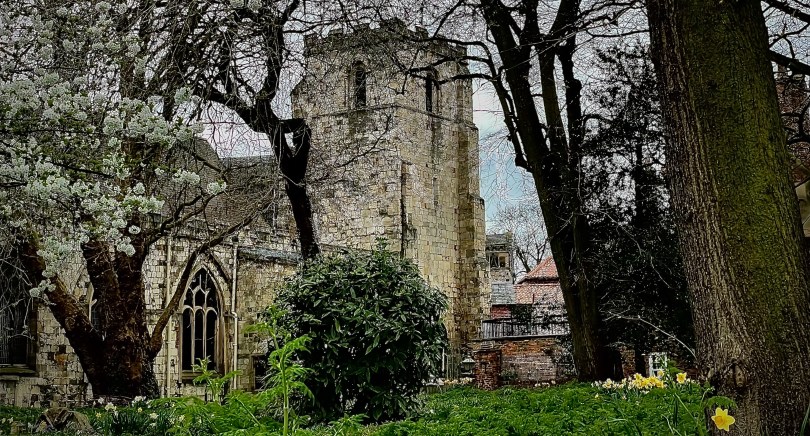
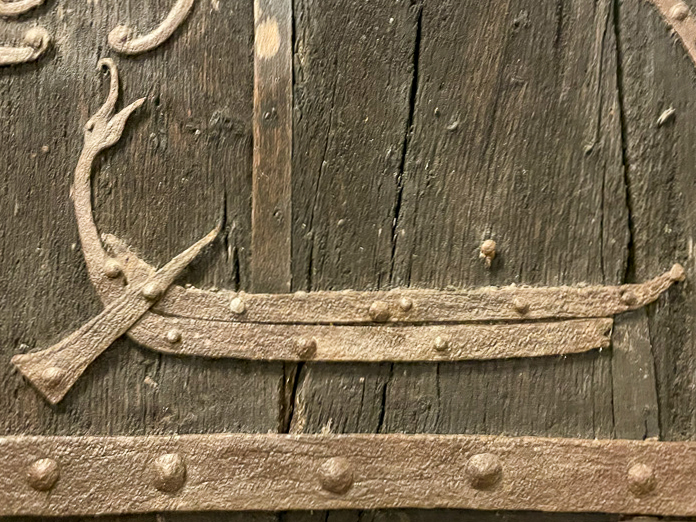
The village church is a gem of a building, a plot of holy ground that has been knelt on for at least a millennium. An iron door hinge depicts a Viking longship, perhaps in tribute to the defeat of the invading Norwegian army that sailed up the River Ouse in 1066. The church features many Norman carvings which, for their variety and quality, are considered to be some of the finest 12th century sculptures in England. It is fabric of exquisite design, a thread of gold pulled across centuries of English Christianity. On the Sunday I attended the congregation consisted of five people. There was no organist and little expectation for a structured liturgy. Together we found two hymns in the church’s copies of Mission Praise which we felt confident enough to sing unaccompanied. It is a story similar to another church I attend, where pre-pandemic double figure attendance has been reduced to seven or eight.

This year I shall have been a priest for 30 years. A curacy began in 1991 with a pattern that seemed relevant and long-established. Sundays could be busy days with an 8 o’clock Communion; 10:30 Parish Eucharist; afternoon baptisms (there were over 80 Christenings one year); Evensong, ending the day with a vibrant Youth Group. Then a move to become a Team Vicar and hospital chaplain on the edge of North London. A small church, but still three services a Sunday, plus the growing work of a chaplaincy that began to be given increasing recognition by the hospital. This led to a departure into full-time chaplaincy with a move back to the North of England. Employment in the NHS lasted for 20 years in total, throughout which I helped out in urban, suburban and rural churches. They were not all thriving, but in each there was a recognisable pattern of Anglican worship, with the Eucharist central to the liturgy of the parish.

It is said that the pandemic has accelerated many changes. The high street is one example as shops struggled to survive the worsening of already difficult trading conditions. I suspect that churches will also find a decline that comes from a mixture of related COVID consequences; a significantly higher mortality rate amongst older people, greater anxiety for some in social mixing; broken patterns of religious practice that will struggle to re-emerge. More broadly, the Church has not been in great evidence during the past two years – it has appeared overly risk averse and hesitant. In an article published recently Rob Marshall writes that once reopened ‘it was immediately clear that there was no swift return to the old ways of doing things’ (The Journal of Christian Social Ethics Jan 2022 p. 56).

The most pressing need for the church is to be an authentic presence, articulating a humble faith expressed in a humane spirituality. It feels that this is something that has become rarer and rarer. Embodying faith and a passion for social justice, Desmond Tutu is no longer with us. Rowan Williams remains a bright light of spiritual coherence and integrity, able to understand and interpret the contemporary world without casting it as the enemy of the Gospel. Listening to Williams speaking in Cardiff in July 2019 I found his analysis accurate, realistic and hopeful. That’s a trinity which is increasingly scarce, and becomes starker as theology departments in England close and vanish. When I studied theology at Hull in the mid-1980s I came to a department already being run down by cuts and unfilled vacancies. I wonder whether other departments of humanity felt (at some level) that this might shift more students in their direction. Voices in support of theology were muted. However, the rest of the humanities must now be realising that what began with theology was not a one-off, but represented a direction of travel. It is likely that history, art, English Literature and the like will soon be subjects for personal hobbies rather than a cornerstone of the academy. Finding value for subjects beyond the physical sciences is getting harder.

In this environment, can the Church of England still have a role? I’ve little doubt that there have been doom mongers in every generation when it comes to the C of E, but the evidence on the ground suggests that things cannot continue as they are for very much longer. As the sea of faith withdraws there will be rock pools that feel as though the tide is still with them, but under the midday sun that illusion will not last long. We cannot go back to some Call the Midwife nirvana – because that never existed. However, there was a time when most people in England knew about their local church – probably even knew the name of the Vicar. Not so much in 2022. Vibrant churches of all traditions are the exception, and look increasingly like islands of survival rather than vanguards of renewal.

The Church of England has mostly been about worship and service, offering a framework of relevant and local spirituality accompanying people’s lives. I don’t think we can or should abandon this – or what’s the point of the C of E at all? We need clergy trained with the knowledge and skill to bridge the cultures of faith and meaning in a post-pandemic world, working with the many gifted people of our parishes. This isn’t simple, but faith is seldom about the easy road – it needs our best efforts of mind, spirit and creativity. It requires love. It’s not clear to me that communities today feel loved by an institution that is asset stripping (vicarages) and reducing professional ministry (vicars). Is it too late to turn that around and give back to places people equipped to care, to teach, to live beside, and to love? To reverse what Paul Hackwood has described as ‘a journey from the local to the central’. Without a serious and realistic commitment to sustain and develop parish ministry, the Church of England risks losing both its purpose and its peculiar genius.

Watery Faith

Sermon preached at the Priory Church of the Holy Trinity, Micklegate, York Epiphany 2 2022

Today we continue in the season of Epiphany – weeks when in the darkness of winter we reflect the light of Christ come into our world. I was going to say, ‘reflect on’ – but the truth of Epiphany is not that we simply contemplate the light shining in the world, but that we invite this light into our lives – to bear something of the brightness of Christ in all that we do, day by day, and among those we meet.

It can feel at the moment, as we listen to the news, that there’s an awful lot of darkness compared with what we may feel to be our faint and flickering lights. Perhaps it was always thus – and our calling to hold our light steady is even more important when the shadows lengthen.

One of my most valuable books is a 1939 edition of William Temple’s commentary on the Gospel of John. Written in nearby Bishopthorpe, when he was Archbishop of York, his reflections on the Gospel are the wise words of both a pastor and a theologian. Yes, it comes bearing the marks of a different era, but many of the points Temple makes are pertinent today. Perhaps even more so in our recent experience because it was written in the upheavals of war. 

The turning of water into wine is the first miracle John describes in what we might call the long epiphany of his Gospel. Out of the four evangelists John is the most consciously theological – he conveys to us what the life of Jesus means for all places; for all times; and for all people. It is magisterial in its scope.

https://en.wikipedia.org/wiki/The_Wedding_at_Cana#/media/File:Paolo_Veronese_008.jpg

Yet given the scale of what John addresses, his account of Jesus is rooted in the real and the everyday. There was a wedding. Across millennia and across cultures, weddings are profound moments of change. Two people become one. Families are bound together – friends rejoice and dance. If you’ve ever seen the Veronese painting ‘The Wedding at Cana’ you can’t miss the sense of overflowing conviviality on his vast canvas. Everyone is talking, laughing and rejoicing – apart from one figure: in serenity, Jesus gazes out at the viewer, a still point amid the commotion. In this picture the figure of worldly splendour is the groom. Decked out in his wedding finery he holds a champagne coupe, staring at it in perplexity as the chief steward tells his tale. ‘How could this have happened?’

John begins this account with the casual comment that it took place ‘on the third day’. Four words that for any Christian signify not the start of Jesus’ ministry, but its joyful conclusion. Another day of reunions and delight: the day of resurrection.

Christ is not a grim task-master in obedience to whom life becomes gloomy. He compared himself to children playing at weddings.

William Temple, ‘Readings in St John’s Gospel’ 1939, Macmillan

This is a miracle that marks the difference between the ways of men and the ways of God. The steward is bewildered. The organisers of this feast have not done what they were supposed to do: give the guests quality wine at the start, and then they won’t notice when you switch to the cheap stuff later. No. What God is doing in Christ isn’t about what we expect – it’s about what we need.

The 17th century Metaphysical poet Robert Crashaw described it with beautifully economy: ‘the modest water saw its God and blushed’.

Offered to God – brought before Jesus – what we may consider the modest water of our lives can be transformed. Perhaps we think the best years are behind us – that the time we have to offer now is weak and watery compared with our past vigour. Tell it to God.

Water become wine.

Faith is all about offering what we have, not what would be ideal. The disciples weren’t the intellectual stars of their generation. They weren’t conspicuously wealthy or influential, they don’t appear to have been known to the religious authorities. Jesus took what was offered and forged the foundations of the church. Time and again people came to him who had little to give, and he took it and blessed it and broke it – and it was transformed.

We may feel like we hold a flickering light of faith – so fragile a gust of wind might extinguish it. This Gospel says ‘don’t worry’. Bring to God what you have. Share what may seem watered down and weak, and Jesus will use whatever we have, and it will be changed. 

In a world where there is so much darkness God asks us to offer what we have. Because, when we place it into the hands of Jesus, who knows what it will become. Two thousand years ago they brought him water at a wedding: today we share wine that becomes the life-blood of our faith – and we go out refreshed, to be God’s light in our world.

Good & Bad Government

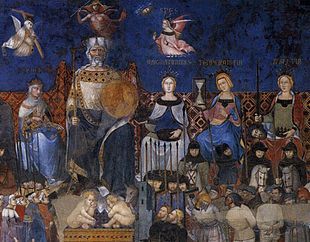
It is sobering to stand before the The Allegory of Good and Bad Government in the beautiful city of Sienna. The exquisitely detailed frescoes by Ambrogio Lorenzetti were painted in the mid-14th century and focus on the responsibilities and consequences of civic authority. It was created at a time when the Italian city-states were evolving efficient and pragmatic forms of government. Notably, as with Lorenzetti’s frescos, this form of politics was not channeled through the Church. Methods of organisation and management were viewed as some of the finest in Europe and provided models for institutions in other lands. For example, Henry VII drew on plans designed for running one of Florence’s hospitals to inform his work to found the Savoy Hospital in London.

The concept of governance, defined as “the way in which public power and authority is formed and used to control and manage society’s resources”.

Laver, R. (2010). ““Good News” in the fight against corruption.” The Review of Faith & International Affairs 8(4): 49-57.

During the Reformation in England there was a decided turn towards the centrality of governance. This isn’t unexpected given the King’s determination to consolidate his position at the pinnacle of authority. Nor can it be surprising that an assertive renewal of governance would clash with anything that might appear to trespass on sovereign power – not least the Church. From the mid 1530s ‘Henry remained insistent on his royal supremacy for the rest of his reign’ (Orme, 2005). The government of Church and State were to be united in the King’s person.

“and shall have and enjoy, annexed and united to the imperial crown of this realm, as well the title and style thereof, as all honours, dignities, preeminences, jurisdictions, privileges, authorities, immunities, profits, and commodities to the said dignity of the supreme head of the same Church belonging and appertaining”.

Henry VIII ‘s Act of Supremacy (1534)

The consequences of this spiritual and temporal unity ran wide and deep. Sovereignty was projected into public life in ways that proclaimed the place of the King as governor of all that lay in the Kingdom. It became customary to replace sacred images in churches with religious texts and the Royal coat of arms. Tellingly, among the options available to address God in prayer, the language of governance became more pronounced. The poorest in society, those availing themselves of re-founded hospitals, made their prescribed prayers to: ‘O Lord, our Governor’.

Good and bad governance is a persistent theme in many books of the Bible. The prophets in particular spoke out for just government and against corrupt or self-interested forms of leadership. Ruling with justice was seen as the fulfilment of God’s will for the people. The initial verses of Isaiah 32 convey the sense of desire for a sovereign righteousness that will bring peace. With the right King the ‘princes will rule with justice’ and be ‘like the shade of a great rock in a weary land’. The prophet articulates the longing of the people. The time for the rule of villains and fools has passed.

 “A fool will no longer be called noble,

    nor a villain said to be honourable”.

Isaiah 32: 5 NRSV
Photo by RODNAE Productions on Pexels.com

While it may sound like a festive after-dinner entertainment, ‘when is a party not a party’ involves far more serious issues than its frivolity suggests. It isn’t possible yet to calculate the sheer cost of lockdowns for people, only time will reveal the consequences of isolation and shielding. For some people the impact of COVID-19 deprived them of a last Christmas with their nearest and dearest.

We can all say silly things and forget the wider context of life around us, but at 10 Downing Street it feels more like an infestation of disdain rather than a slip of the tongue. A Prime Minster who began the pandemic bumptiously telling reporters he’d been to a hospital where there were COVID patients and shaken ‘everyone’s hand‘. Then he was in hospital – but appears to have learned little from the experience. It certainly didn’t appear to increase his determination to practice prudent infection control. A Government that didn’t even bother thinking what COVID would do to care homes, until the mounting death toll made it unavoidable. A Secretary of State for Health who broke the COVID rules and resigned. Vast amounts of money paid to poorly vetted suppliers, to do at huge expense what other countries managed far more economically. The handling of Brexit.

I can only begin to imagine the lurid frescoes Lorenzetti would need to paint to capture this litany of maladministration, self-interest and contempt. ‘Bad Government’ is too weak an epithet for what we are living through, experiencing and enduring.

Practiced Preparations

Last Sunday the kitchen was filled with the rich aroma of Christmas cake. Part of the counter-narrative to convenience food lies in the enduring appeal of homemade seasonal treats. Many people bemoan an ever earlier Christmas, but the truth is that timely preparations have always been a part of autumn. If I had a pound for every time someone has said to me ‘it’s only one day’ I would be a lot wealthier. While that may be true for many, there are others whose thoughts turn to Christmas early in the second half of the year. Someone I met one August, sadly bereaved of one of his few friends, wondered what would happen at Christmas? He spoke fondly of the annual visit that would see a special bottle opened, with conversation that mingled past and present. For some people, Christmas is the axle on which the year turns.

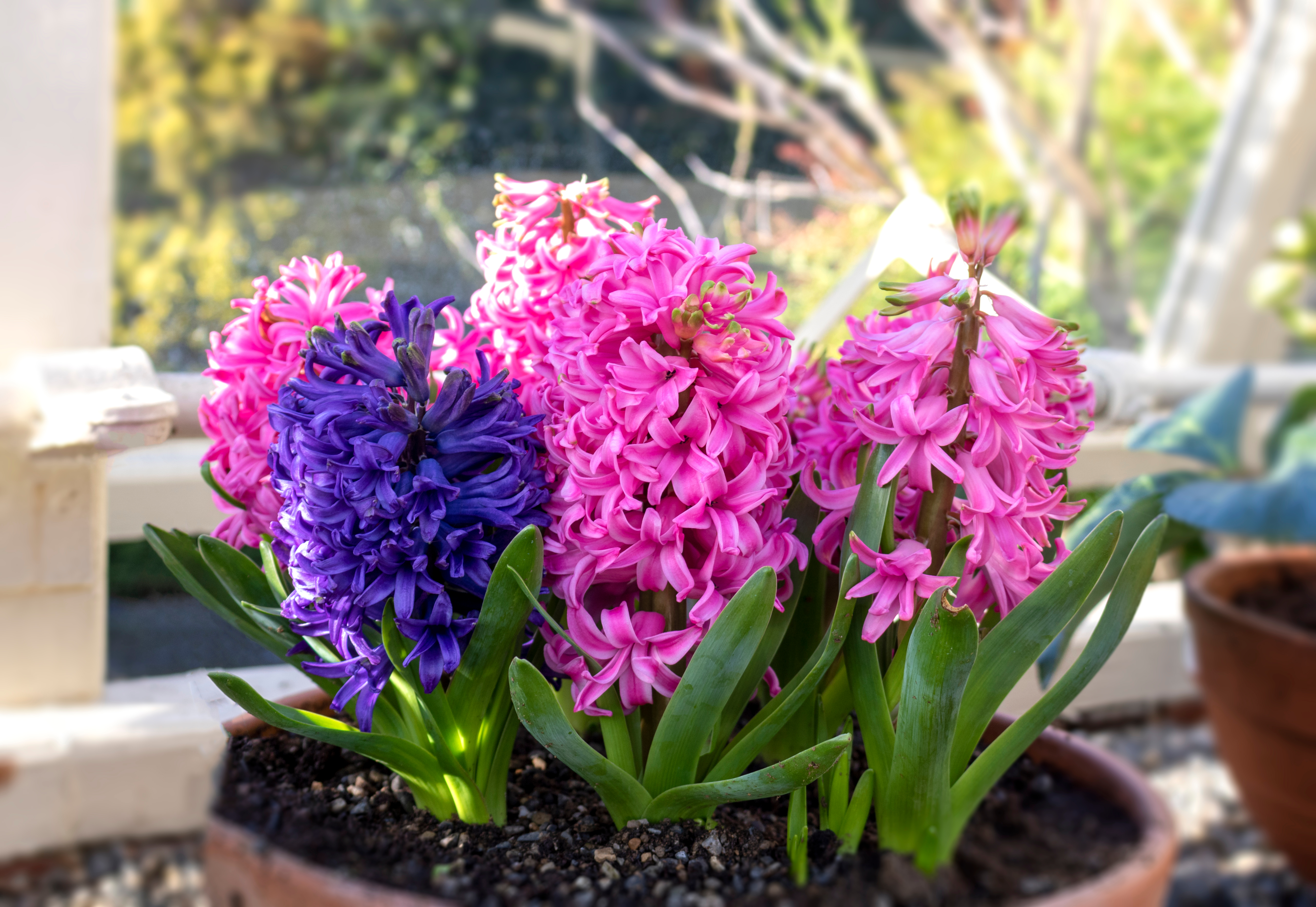
My grandmother, in a ritual practiced by many gardeners, would acquire some forced hyacinth bulbs and make sure their growth was managed in order to bring colour to Christmas. They became gifts for friends and family and filled her home with scent and brightness. The whole process takes 10-12 weeks, so this kind of preparation begins long before darkness starts to fall at an early hour. With a keen eye and careful foresight, presents were bought at various times earlier in the year and put away until needed. Sometimes gifts would be handmade, drawing on her skills in needlework. Again, this couldn’t be managed at short notice – planning was needed to ensure sufficient time to complete the project. Christmas was in mind long before it became a matter for discussion.

If of thy mortal goods thou art bereft,
And of thy meager store,
Two loaves alone to thee are left,
Sell one, and with the dole
Buy hyacinths to feed thy soul.

Saadi, Persian Sufi poet, in Gulistan (The Rose Garden), 1258

With trees up and decorations out, Advent can feel a bit late in the day, which is more appropriate than many might imagine. The themes, music and liturgy of Advent convey the sense that time is running out – salvation is at hand. Our progress through darkening days to the bright feast of the nativity is marked by ominous warnings that the end is closer than we think. We need to wake up and be alert because salvation ‘is nearer than when we first believed’. It can feel that the pots and pans of Christendom are being struck in a cacophony of anticipation and warning, just when the idea of hibernation is most appealing.

Advent is fleeting. Few places observe its daunting themes with sustained focus – there are understandable demands for nativity plays and carols to fill the Sundays up to Christmas. Yet overwriting of the season robs us of a purposeful time and some of our most profound liturgical moods and music.

In Advent, we set our sights toward the horizon of God’s future, and allow that horizon to reframe our present-day attitudes.

Witvliet, J. D. (2008). “Sing to the Lord No Threadbare Song”: Theological Angularity in the Face of Advent Sentimentality. Interpretation62(4), 402-417.

Preparation is part of our waiting. We are promised judgement. In contemplating the apocalypse we see a settling of accounts that could be horrific. What may appear overwhelmingly bleak is countered by the promise that love is born into the cataclysm. A non-sentimental love that knows who we are and helps us find a peace unavailable in our world, but freely given to those who seek it. The discomforting purpose of Advent is to allow the future to question our present. To ask, perhaps (in a post-colonial world riven by inequality) whether we have some responsibility for the people whose lives were lost in the English Channel last week? To consider how much we are complicit in our own misery. Even when observed only partially, Advent holds the space for this kind of reflection and, I can only hope, for action that becomes ever more aligned with a compassionate future to which we are being constantly nudged; invited and called.

When the tracks towards Christmas are well laid and long established there’s the risk that fresh insights will be missed. Practiced preparations can be a great distraction from the work of Advent to feed our souls and animate our awareness. There is so much to do, and a promised satisfaction if all our careful plans and preparation come to fruition. We might even gaze with smugness as we watch the panic of the foolish virgins who have left gift-buying to the very last minute. Surely they knew this day was coming? How incompetent!

Advent, in all its sombre glory, tells us about another day that is coming. Not the 25th of December but a far more significant and consequential day. It is a season that speaks over the fuss of festivities and asks big questions. Questions with a relevance and urgency we disregard at our peril.

Nor Wanting Nor Wasting

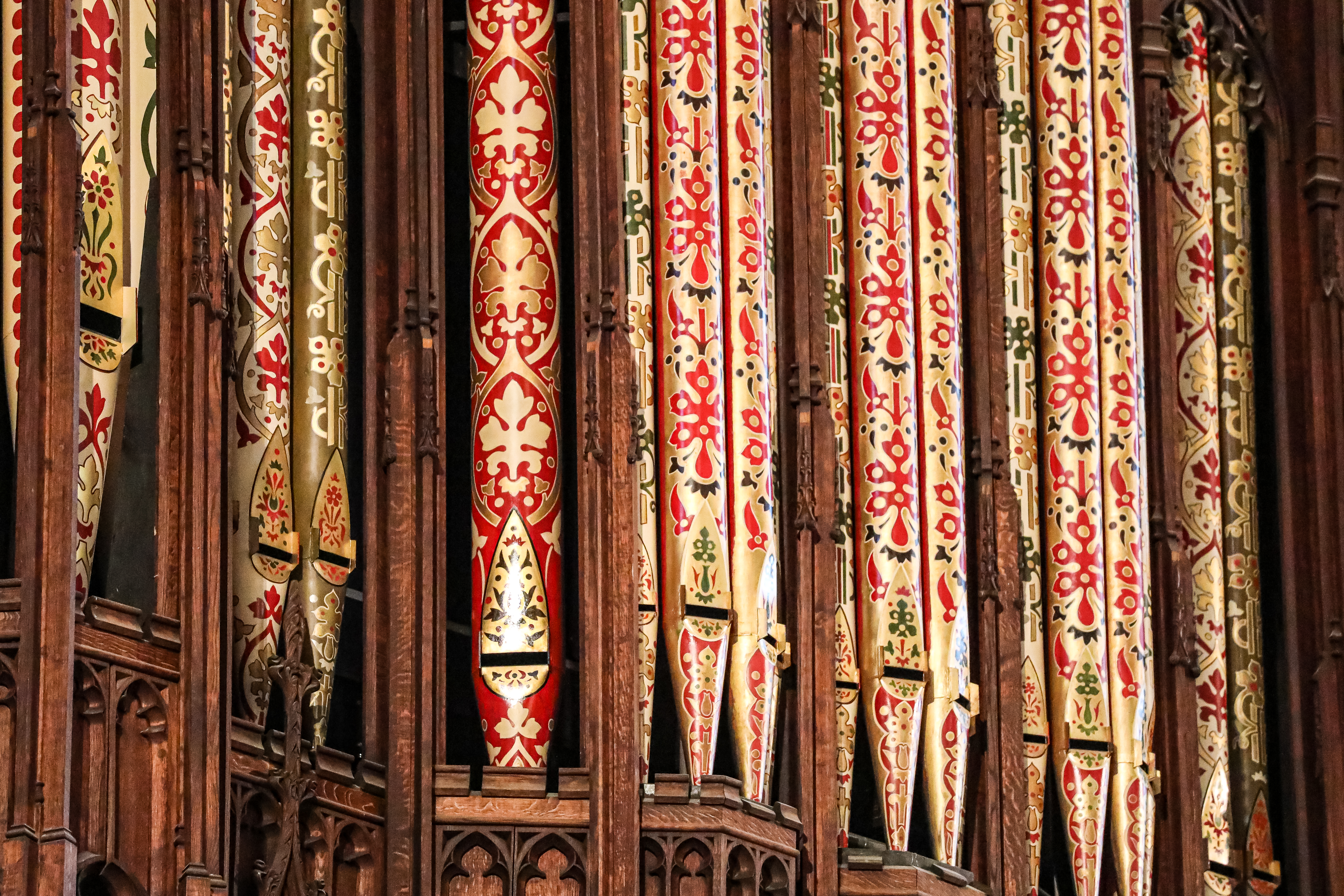
Many people who participate in religious worship have missed singing. Thankfully, it is returning to churches and other places of worship. Singing once again has reminded me of the rich resource of both melody and poetry that makes up our finest hymns. Last Sunday featured Immortal, Invisible, God only wise at Evensong in York Minster. The phrasing and economy of the text allows a rich vein of theology to flow throughout the hymn. The paradox of a God who is hidden in light; lacking nothing, and yet whose bounteousness isn’t wasteful. Neither growing nor diminishing.

Hymns have the capacity to connect our hearts, spirits, minds and emotions in powerful ways. The enduring presence of Songs of Praise on Sunday TV is testimony to the need people feel to hear these much loved tunes and words in their lives. Hymns continue to be sung at some football clubs before matches, and Abide with Me is a part of the traditions of the FA Cup final. Radio 4’s Soul Music has featured a number of hymns and told both the story behind their creation and the impact they have had on people’s lives.

Last week I listened to another Radio 4 programme which set me thinking about all of this. Start the Week took on the ambitious topic of consciousness and how we have a sense of self. Deep waters indeed. One of the speakers was Tiffany Watt Smith, Director of the Centre of the History of Emotions at Queen Mary University of London. In her contribution to the programme Tiffany focused on the idea that language enables emotions. In other words, that “language allows us to notice those inchoate physiological experiences”. The implication is that if we lacked words to express our sensory experiences it could create a degree of inner tension and psychological difficulty.

This makes a lot of sense to me, especially when I think about the capacity of the language of poetry to express those feelings and thoughts that teeter on the edge of perception. So that my worship of a God hidden in light can find shape and expression in the combined effect of music and words. Nothing else will do this nearly so well. Dr Watt-Smith gave some examples during the programme of cultures that had a word to describe a feeling for which we no longer seem to have a use – and words we had in the past to express this, which have now dropped out of use. Perhaps ‘melancholy’ might be one example?

A cursory review of contemporary Western societies suggests that the ebbing of religious language does not represent the loss of religious experience. The growth of spirituality; the interest in phenomena such as eclipses; and the turn to mindfulness, all demonstrate a search for the transcendent. What the atheist Philip Larkin described in Church Going as an unexpected ‘hunger’ to be more serious. In the current edition of the Church Times the reviewer Andrew Brown notes the ‘uncharacteristically tentative article’ in The Economist about the state of the Church of England. The Economist article ends with words reminiscent of the experience of Larkin. Are some things timeless and beyond price?

The experience of working with people living with dementia provides vivid examples of the anxiety and frustration that are generated when words to express feelings elude. Following Watt Smith’s argument, this is not simply a problem in the communication of feelings: the lack of language impedes the development of feeling itself. If we cannot tell, then we are unable to experience hearing our own words being spoken, heard and reflected back to us.

“The Christian worldview is shaped by a variety of forces: community praxis, scripture, prayer, and perhaps supremely, participation in the liturgy”.

White, S. J. (2006). “Sing to the Lord A new song”: Christian Hymnody and the Scientific Worldview. Liturgy, 21(3), 41-50.

It may be that faith cannot be shared and developed when the language of belief has waned. This is not a purely technical problem in sharing faith, but a fundamental obstacle in allowing religious sentiments to grow. A hunger may be felt, but how will that appetite blossom and flourish? The resources that animated an inner sense of God were once plentiful and rich. Now it feels that there are gaps and holes in the discourses available to us, and a central theme with multiple facets has become a landscape of disparate ideas, struggling to sustain a core.

The Jewish people in exile asked how they could sing the Lord’s song when they had been ripped away from the fabric of of community and context. It is a question that is highly relevant for Christians in the West today as societies become ever more distanced from Christian culture and heritage. In the midst of exile it is never easy to see how liberation might come – yet time and again God’s people eventually found the freedom to re-establish a culture of faith.

We need the poetry and music to re-pattern the narrative of faith, even as we search for ways to live faithfully in a land that may feel unfamiliar and strange. In Susan White’s paper, there is a widening gap between a scientific world and a Church singing hymns reflecting a pre-modern world. I echo her conclusion that unless we find new ways of faith in the 21st century ‘we will find ourselves wandering directionless between the two worlds’. We need poets and musicians who can use the kind of economy , skill and depth illustrated by Immortal Invisible. This is no easy task, but unless we renew the culture of faith in the West, religious feeling will reach for words that can no longer be found.

Seasons for Everything

It always felt like the first intimation that summer had ended. When I was a vicar in north London in the early ’90s, the opening week of September brought an invitation to speak to the local Cub Scouts. After the holidays and warmer days of August this annual meeting marked the start of all those activities that punctuate the remaining months of the year. There might be warm days, or even brief heatwaves, but they always felt borrowed out of season. The trajectory of shortening days continued notwithstanding the gift of unexpected heat.

York has been exceptionally busy this month. It has been impossible to get a table for dinner at a reasonable hour even when you try to book the day before. The streets hum with the chatter of tourists discovering (or rediscovering) the charm of England’s northern capital. When the sun is out the river side pubs and open spaces fill with drinkers and sunbathers alike.

This weekend York has hosted a balloon fiesta and crowds have filled The Knavesmire. People have come from far and wide to visit the fair or hear the acts performing on the open air stage. On the whole this looks and feels like a return to 2019 normality, with little mask wearing or social distancing. The joy of these once familiar freedoms at an outdoor event no doubt adds to the delight of those attending. Yet it is hard to feel entirely at ease when so many concerns circle the globe. From the disastrous exit from Afghanistan to a UK COVID rate 26 times higher than a year ago. The problems we face show little sign of diminishing, even though vaccination has thankfully transformed the severity of the risk associated with the pandemic.

We need ordinary pleasures. During the past 18 months many of us have rediscovered a connection with nature, from walks to wild swimming. In places this has created its own pressures on the environment and local facilities, but there are plenty of less crowded locations of outstanding natural beauty. As I know from working with older people, the vivid differences we see in each of the four seasons can be both orientating and affirming. To look at a tree tells us where we are in the year. The deep greens of August promise the glorious transformation to browns, yellows and golds still to come.

The interplay of human activity and the seasons is captured brilliantly by Ali Smith in her quartet series. Here the personal, the political and the natural are meshed together in a vivid reflection of how the seasons shape our thoughts and interactions. I can’t imagine living where both daylight and weather alter very little across the year, but perhaps smaller changes simply become more significant. During a year I spend in South America that certainly seemed to be the case.

“The days are unexpectedly mild. It doesn’t feel that far from summer, not really, if it weren’t for the underbite of the day, the lacy creep of the dark and the damp at its edges, the plants calm in the folding themselves away, the beads of the condensation on the webstrings hung between things.” 

Smith, A. (2016). Autumn (Vol. 1). Penguin UK.

The Church’s year is clearly marked by a Christianity that developed chiefly in the northern hemisphere. As the months march on to the year’s end, gathering darkness is met by the gift of light. The imagery and significance of saints’ days, fasts and feasts parallels the natural world and walks hand-in-hand with the changing seasons. It feels that liturgy and the seasons are welded together.

I have no doubt that age and experience influence the ways in which we respond to the stations of the sun (to quote the title of Ronald Hutton’s book). While some may feel melancholy at the approach of autumn, the Cubs of Barnet were full of enthusiasm and energy as they gathered together after the summer holidays. For them, the season of ghost stories and fireworks ensures that darkness is not without excitement; and explosions of light are brilliant only because they are set against the backdrop of night.

The Greatest Temptation

Judging by the queues and packed rooms of the Thomas Becket exhibition at the British Museum, the story of the tension between Church and State continues to hold fascination. Archbishops of Canterbury tend to come and go without too much fuss, and seldom leave anything approaching the legacy of Becket. The impact of this Archbishop’s murder catapulted Canterbury into the top flight of European destinations for Medieval pilgrims. The elaborate shrine that housed the remains of the Saint drew visitors from far and wide. It is the cause of the journey that features the many characters of The Canterbury Tales, drawing into one text figures from a range of classes.

The exhibition is in its final week and appears to have been very popular. The alabaster reliefs, elaborate reliquaries, and fine stained glass portray the channeling of wealth in honour of a saint whose significance across the continent lasted until the 16th century. At the same time, as Chaucer’s fiction depicts, the motives of pilgrims varied considerable. The corruption of spiritual practices through avarice is evident in The Canterbury Tales. Nevertheless, the portrayal of corruption demonstrates a common agreement about the the kind of life clergy should lead and the way in which the Church should carry out its vocation. The ‘poor parson’ is a priest unswayed by wealth or the social standing of the parishioners. We are told that ‘first he wrought, and afterwards he taught’.

For if a priest be foul in whom we trust
No wonder that a common man should rust;
And shame it is to see – let priests take stock –
A shitten shepherd and a snowy flock.

The most notable work of literature in the 20th century which focused on the life of Becket was penned by TS Eliot. Many years ago I was a member of the the cast for an eleven performance run of the play in a parish church. At the interval one evening I overheard someone telling their friend that they had come thinking Murder in the Cathedral was a whodunit – but they kindly stayed for the second half. Of course, at one level, any consideration of the events of 1170 involves reflection on who was truly responsible for the deed.

Both Chaucer and Eliot explore the concept of the decisions and choices made by Christian leaders. Whether in a parish or at a cathedral, the doing and saying must be closely aligned. Eliot’s rendering of Becket shows the power of temptation to deflect the pilgrim from their path – to choose an accommodation with sin rather than try to confront and resolve our true calling. Like Jesus in Gethsemane, Becket is in the path of inexorable events. There is a moment for possible escape, and in both cases soul-searching arrives at a point of spiritual peace and steadfastness.

In all the various discussions about the future of the Church of England I hope that somewhere this same kind of spiritual examination is underway. I fear it isn’t. There is understandable angst among the hierarchy that the trajectory of attendance figures and finances will ultimately undo the C of E. As this likelihood marches towards us, it seems that our concerns are narrowing to focus on how best to escape this apparent failure. I think the lesson of Becket gives us a different model for how to confront our demise.

The Church is renewed all the time by the food it offers to Christians seeking to discern the best way forward. Patterns of Bible readings ensure that we are guided by the wide sweep of religious experience and thought, not becalmed by the vagaries of a particular day. For anyone reading this who hasn’t discovered it, the Church of England Daily Prayer app is an excellent resource, now with an audio option. Reading the Hebrew Scriptures at morning prayer this week has reminded me of the pith and power of wisdom. Here is thought distilled through faith and experience – the kind of guidance the Church needs today more than ever. Rather than haste and urgency a greater stillness and listening to God is required. As the parish priest David Ford argues in last week’s Church Times, the excitement of those bent on evangelising their way out of decline appears not to register the faithful, quiet and fruitful witness of many parishioners.

“The beginning of wisdom is this: Get wisdom,

and whatever else you get, get insight.

Prize her highly, and she will exalt you;

she will honour you if you embrace her.

She will place on your head a fair garland;

she will bestow on you a beautiful crown”.

Proverbs 3: 7-9

There is much in Scripture about not making a show of faith or kindness. Jesus is clear that performing self-righteous prayers in public, and brandishing conspicuous generosity, are to be avoided by his followers. He knows from his harrowing in the wilderness that there are temptations in religion which can give even the holiest human a moment’s hesitation. Lesser mortals need to live with clerical identity and its claims with as much humility as possible. When have a divine conviction that our course of action is the right one, or the only one, we risk falling prey to a sin that is both subtle and persuasive.

Chaucer’s poor parson or Eliot’s saintly Archbishop both demonstrate considerable wisdom. Perhaps having the insight to risk perishing while doing the right thing is not the least faithful route available to the Church. Who knows what good may grow out of the seeds of diligent pastoral care, or the hearts that will be turned to God by the witness of an Archbishop who resisted the greatest temptation of all: ‘to do the right thing for the wrong reason’.

We the Passengers

For all its faults, limitations and breadth, the Church of England has embodied a particular way of service and witness. Planted in every community, the Parish Church is a focus for spiritual expression, history and continuity. The buildings of the Church tell the story of God’s presence in the world; the death and resurrection of Christ; the connection of the here and now to a Kingdom that is becoming. They are the public expressions of Christian faith and offer the community a place to pray; to seek; and to find. The presence of these buildings is a testament to centuries of worshippers and a space of invitation ready for future generations. They are not often the buildings we would construct today – nor do they always meet the needs of modern congregations. Yet time and again creative alterations have enabled a balance to be struck between history and necessity; the beauty of a former age, and the inspiration of the present.

“Lay-led churches release the Church from key limiting factors. When you don’t need a building and a stipend and long, costly college-based training for every leader of church . . . then actually we can release new people to lead and new churches to form”. 

‘Vision and Strategy update for Synod’ The Church Times Friday 2 July 2021

The rich but daunting legacy of the Church has been questioned in a recent report in which Canon John McGinley has identified the limiting factors facing the institution. It would appear that his answer to the challenges facing the Church is to move away from virtually everything that defines the C of E. Fewer paid clergy; less investment in the education of ministers; getting rid of buildings. There is an attractive naïveté in this view of the world – the investment in a bright future of low-budget Jesus-clubs with vastly reduced overheads. What’s not to like?

Well, quite a lot. This kind of arrangement already exists across a broad range of churches, it hardly needs inventing. There is nothing particular that the Church of England would bring to these house churches, and a huge amount to lose. Shifting the focus from public worship to private homes has all sorts of implications. Everyone has a right to attend worship in their Parish Church: domestic settings can be more choosy. As large amounts of money are invested in new expressions of Church it is important to ask why such funds can’t be allocated to strengthening the resources that sustain the parish system. Over the last thirty years the direction of travel has been to merge churches; group congregations; and share vicars. The stretch has become wider and wider with no end in sight to the melancholy, long withdrawing roar, of well-educated, professionally trained and locally visible clergy.

Amongst at least some clergy there is a clear distaste for the kinds of people who attend church. Just over a decade ago this was palpably clear in the disastrous ministry of a former vicar of Wetherby. Of course people can be difficult (that’s clear in the Epistles) but brow-beating the laity into the preferred theology of the minister is seldom a success, from whichever tradition the vicar comes. The disdain for people who don’t engage with the current liturgical fashion has to stop. I’ve known serving bishops refer to attendees at early morning worship as those who prefer ‘non-contact sports’. In other words, people who come to church but don’t engage: passengers. This is a disturbing and wholly anti-pastoral characterisation. In my experience many of these faithful people are wounded or grieving and this is the service that saves than from well-meaning but overbearing compassion. They are not passengers. They participate by being there; receiving the sacrament and praying. It is very dangerous to measure things by a standard that isn’t calibrated to capture the dimensions of what is under examination. In the current meeting of General Synod there has been reference to measuring the ‘depth of discipleship’, not simply its quantity. How this is developed will reveal much about the prevailing perception of what matters in the C of E.

It appears that much of the energy driving this kind of proposal comes from a desire to succeed. As Martyn Percy has commented in this debate, there are gendered and indeed sexual elements to this ambition. The attempt to achieve growth and public profile in Christian mission feels at times like an exercise in countering personal insecurity. The kind of new churches being talked about feel a million miles away from the deep, gritty, faithful and radiant ministry of the chaplain portrayed so skilfully in the recent Jimmy McGovern BBC mini-series Time.

“God left us with a very troubling model of success. I think success for the Church has to be something measured by the degree to which the compelling radiance of God comes through.”

Rowan Williams quoted in The Church Times, 9 September 2009

Even as I write this blog it feels paradoxical that most of my ministry has been spent outside the pay of the Church Commissioners. Being with people in prison breaking bread; talking with prisoners about faith and sharing in Bible study. Sitting by a hospital bed where two or three pray together and face the tough realities of suffering, loss and mortality. Singing hymns with 40 people on a Sunday evening in a retirement complex. Most of the time I have done these things, the interest of the institutional Church has been limited. For example, these moments of ministry tend not to be counted. Rather than launch some grandiose scheme of suburban sitting-room religion why don’t we invest more in recognising, supporting and growing the ministry that is already happening and proving so well received and valuable? I think we would be surprised just how much is already going on in our communities.

The answer may be that these places and people don’t fit the image of the youthful, successful and heteronormative family life so often equated with success. The picture of shining disciples who just ‘get on with it’ rather than wrestle with theological dilemmas and pastoral complexities. In a nation of increasing diversity, not least in matters of religion, this simplicity may sound appealing but it comes with considerable risks. Leading and serving the church in the 2020s certainly isn’t less challenging than it’s been in the past.

Clergy don’t need cheaper training – they need enhanced training. This training is likely to be more expensive than the training provided today. Why would we want the clergy of the future to be less able to recognise, understand and manage the responsibilities they hold? We need people who don’t simply safeguard against physical abuse but leaders who know the wisdom of ensuring people are able to make open and balanced choices about belief. Placing an overriding emphasis on recruitment and growth is likely to generate behaviours that increase the risks of abuse. The telling observation by the Leeds sociologist Zygmunt Bauman is often at the back of my mind and can serve as a salutary reminder that religious ministry is enmeshed in powerful and potentially dangerous inter-personal dynamics:

“One of the most insidious of the many shapes of domination (pastoral power), as it blackmails its objects into obedience and lulls its agents into self-righteousness by representing itself as self-sacrifice in the name of ‘the life and salvation of the flock'”

Zygmunt Bauman, Postmodern Ethics

Maybe we have arrived at a moment when the Church of England needs to engage in a consultation about its future. A consultation which will include people who don’t attend church but value its presence; people in extra-parochial settings who experience its ministry; and the people who come faithfully and frequently to experience the joy and peace of worship. Surely, for something so richly present in the landscape of England, the future direction of the institution deserves wider consideration. Perhaps even the passengers can have their say?

Getting High

Elevation has a connection to altered states as old as humanity itself. It is unsurprising that height is a metaphor for intoxication, a sense of elation rising above the mundane and everyday. For many people reaching the summit of a mountain is a transcendent experience, the kind of perspective described by William James as a moment when “we can experience union with something larger than ourselves and in that union find our greatest peace”.

Standing watch over Whitby are the remains of an abbey, where a church has stood since the year 657. The choice of location reflects a common practice of placing churches on prominent sites overlooking a village or town. Nor is this practice confined to Christianity – it is a phenomenon which can be seen in countless world religions, including Hinduism and Buddhism.

This architectural preference reflects the belief that spiritual matters are ‘above’. Whether that is simply the place where God dwells, or a parallel world of saints and angels, heavenly beings are consistently elevated; on high; raised up. Placing a church above the everyday existence of home and work illustrated these metaphysics. Not only was this done by the elevation of the building, it was often reflected in the interior, where steps were set at key points suggesting a gradual ascent towards perfection: nave to choir; choir to sanctuary; sanctuary to high altar.

In 1 and 2 Kings, high places are a matter of considerable discussion. Here the bamah (plural bamot) are places where shrines and altars are established. Customarily, many of these were at the summit of hills and mountains and it is understandable that translators often took the idea of raised places to render this word. However, the book of Ezra describes bamot in ravines or valleys, suggesting that these were places of high religious significance, but not necessarily always placed at physical altitude.

Getting to the summit of a mountain holds a human fascination. Whether it’s Everest, or the 282 munros to bag in Scotland, getting to the top offers a sense of achievement and exclusivity. Not everyone makes it, and many don’t ever begin. Reaching such a goal implies physical fitness and mental determination. Those achieving such targets become part of club with limited membership.

Every valley shall be lifted up,
and every mountain and hill be made low;
the uneven ground shall become level,
and the rough places a plain.

Isaiah 40:4

When it comes to the prophet Isaiah there’s the suggestion of a divine ‘levelling-up agenda’. Elite places of encounter are flattened – what was accessible for the few becomes an opportunity for the many. The Christian faith finds in Jesus Christ the incarnation of this vision, the revelation of a God as close to us as we are to ourselves. A holy presence that comes to meet us wherever we are: in a stable, in temptation, by a well, at supper, or on the cross. A relationship that takes us out of ourselves, dispelling the illusion of a self-centred existence. These connections beyond us, to God and neighbour, become paramount ways to live a good life and see ourselves in perspective.

Many people have special places, perhaps because they once offered a life-changing experience. High places and threshold places – such as any natural wonder – can have the capacity to give us a transcendent moment. It is no coincidence that for some of Jesus’ disciples it was a moment of revelation on a mountain that enabled them to see Jesus transfigured. These places and experiences have always belonged together in the human imagination. The good news is that faith can bring these elevated insights into the everyday. We only need to think of the diminutive field RS Thomas saw illuminated by the sun for a moment, the ‘miracle of the lit bush… the eternity that awaits you’, to know that spiritual transformation is only ever a moment away. All we need are the eyes to see it.