Oscar Wild wrote the line that “wisdom comes with winters”. He might also have added, that growing old should be done with great care. For most of us it is inevitable, and brings all the risks of rejecting the world that is emerging in our wake. It isn’t difficult to recall the pessimism of my grandfather, born before powered flight and dying after the launch of a space shuttle ceased to be headline news. Having lived through rationing he despaired at the “throwaway” society that emerged in the twentieth-century.
In an age when generative artificial intelligence has arrived on many people’s desktops and phones, it feels as though we are in another moment of defining change. Projecting myself into the future, I wonder whether this alteration will become coupled to COVID-19? In other words, before the pandemic, we were fairly certain – bar a ghost writer – that an author had scripted their text from the title to the final word. Yes, there was proof-reading, copy-editing and the influence of publishers, but the script remained the work of the author. After COVID, how do we know the extent to which AI has been used. For example, has it conjured up the title – or a selection of titles – from which the writer has made a choice? Was the overall plan of a novel generated by a computer, complete with chapter headings and key features of the plot? The fact of the existence of chat-GPT, Copilot, and the rest, means that we cannot be certain how far the fingerprints of AI stretch across the work. It will be very difficult for even the most diligent student, pulling her hair out at 2 am ahead of an essay deadline, not to simply press the button, copy what she needs, and go to bed.
The inexorable decline of the Church of England cannot be pegged to a particular event. The concave downward curve of the C of E stretches back to the 1950s, if not earlier. In the current issue of The Church Times, Andrew Brown and others look at the in-tray awaiting the next Archbishop of Canterbury. Brown’s contribution is to review the various past Archbishops and the many attempts, and initiatives, intended to stem the haemorrhaging congregations. Brown argues that the collapse of the Established Church was partly a consequence of wider societal changes to which the Church had been wedded:
“It would be unfair to blame any archbishop for the scale of the subsequent collapse. The Church had been an integral part of a hierarchical and militarised England — as recently as 1990, the Archbishop of Canterbury was a man who had won the MC in action as a tank commander — and, when that country was washed away like a magnificent sandcastle by the tides of history, most of the Church went with it”.
Speaking at a training day for Licensed Lay Ministers in Mirfield yesterday, I was reflecting on just how much the landscape of ministry has changed since I was deaconed on 1991. Every parish had its vicar and vicarage; a minimal amount of money – if any – was sent to the Diocese; local ecumenical work drew together congregants and paid staff from several denominations. As a good friend reminds me from time-to-time, at theological college I predicted that during my time in ministry we would arrive at a point where the only stipendiary post in a deanery would be the Area Dean. If that hasn’t happened yet, it must surely be very close.
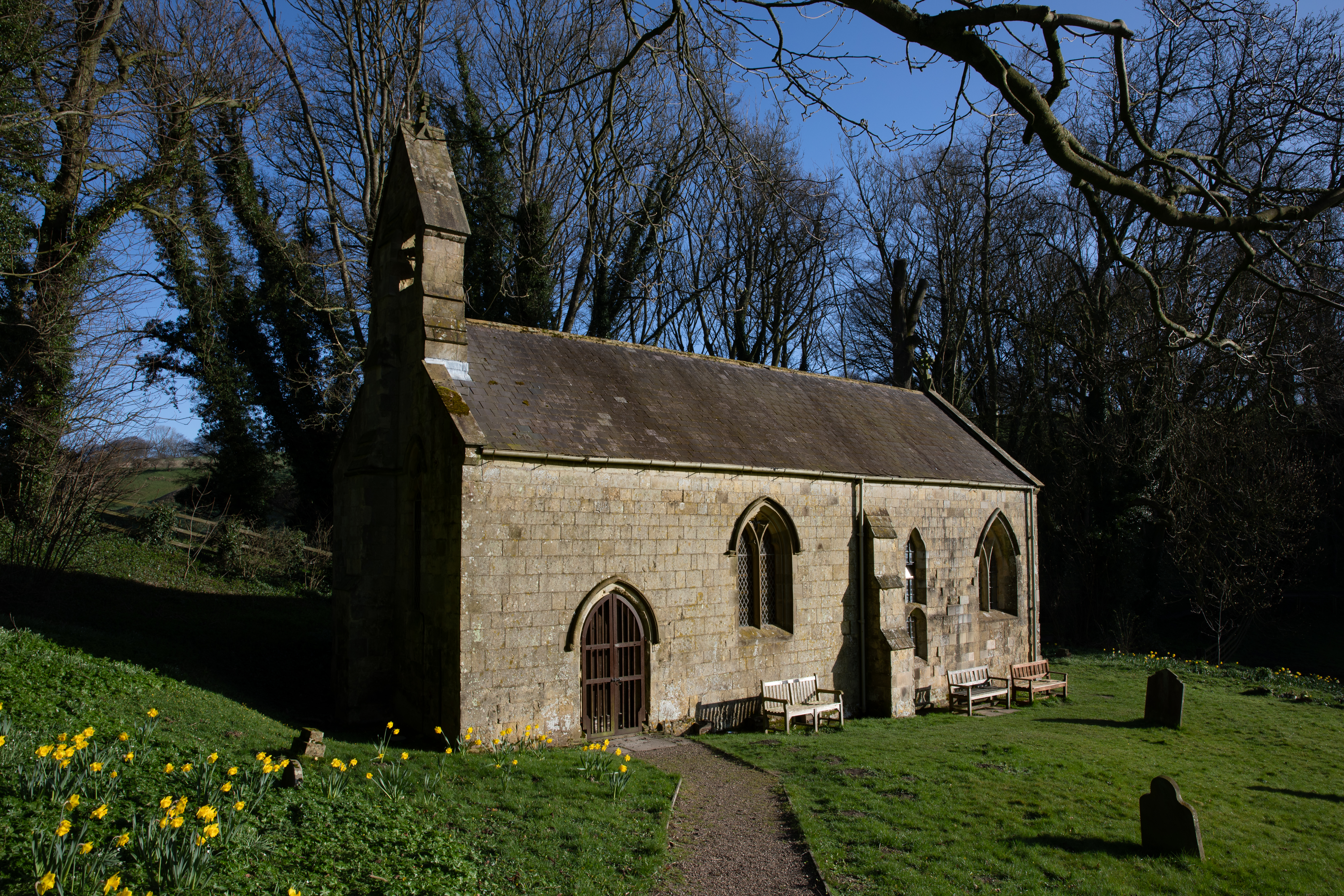
Currently I assist on Sundays in a variety of rural churches around York. Many of the church buildings are architectural gems, listed grade one or two, and containing a rich record of parish history. However, it’s always important to take a stole as many of these churches no longer have the items I would expect to find as a visiting priest. In one vestry I noted a processional cross and accompanying candles leaning in the corner, strewn in cobwebs and perhaps last put down by the crucifer on the day the last choir processed back from singing Evensong.
I don’t want to give a false or inadequate impression of the clergy in the past. They were not always glory days, and the scandals of abuse tell a dark story of what happened below the surface. This was true of many professions before a culture of effective safeguarding was established. There were also plenty of spiteful, indolent and career-starved clergy who used the pulpit as a form of performative one-sided therapy. The opportunity to verbalise every prejudice and, of course, list the many failings of the diocesan bishop, who – after all – had the temerity to “overlook” him. The comfortable deanery for which he once hankered was now the cesspit of oligarchy. However, the ancient system of one-priest-one-parish at least allowed the possibility of good, and plenty of good was done. That a gifted parson with compassion, skill and personality might use all her strength to help those beleaguered by modernity, as well as pronounce the forgiveness sins that have been humanity’s lot since Eden.
Recently I’ve been reading Jeff Young’s Wild Twin, Winner of the TLS Ackerley Prize, 2025. Described as an “hallucinatory memoir of Young’s time as a young man in the 1970s”, the connections of past and present abound in the book. For example, he describes his father’s early life in Liverpool:
“During the Blitz when he climbed up through the skylight onto the roof, he was the watcher of the skies, the overseer of oblivion. He had first-hand knowledge of a place being there, and then not being there, of a thing you know being present and then becoming absent. He was a witness to the erasure and the aftermath of absence”.
Jeff Young, Wild Twin – dream maps of a lost soul and drifter, Little Toller Books, 2024
To some extent we are all witnesses to various erasures, if we endure long enough. Thankfully many of us live without the first hand experience of war, but will live in a world where war is never far away, nor without the risk of escalation. The world is always becoming, and developments such as AI bring both opportunity and risk. Hopefully, AI will enable many people to see health-risks long before they arrive and take appropriate action to halt or temper the worst consequences of that illness. Perhaps, just possibly, the expansion of virtual experiences will lead some people to seek a spirituality that is earthed and rooted in direct experiences and in-person community. There is already some evidence that this is happening. Religion – the oldest cultural expression of humanity – may yet find the wisdom to achieve renewal in the aftermath of absence.










 Swift Reflections