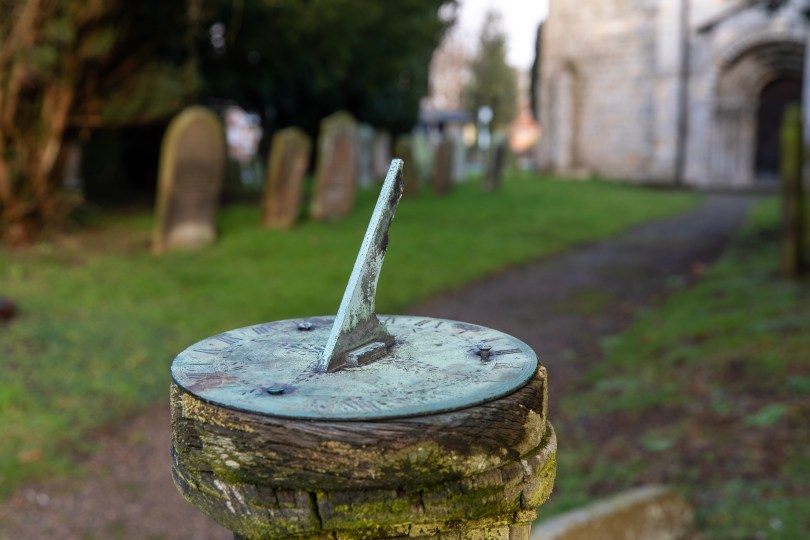
A churchyard feels an appropriate place for a sundial, even in January when the daylight is fleeting. In addition to its timepiece, the fabulous Norman church of Stillingfleet is surrounded by mature yew trees, with their pagan and Christian symbolism and, according to some, once offering a living arsenal for the bowmen of the village. Today they tower over graves that are a mix of the well-maintained and the tottering. In places the elements have gouged out the ancient letters, leaving a ribcage of indentations on the once smooth surface of stone.
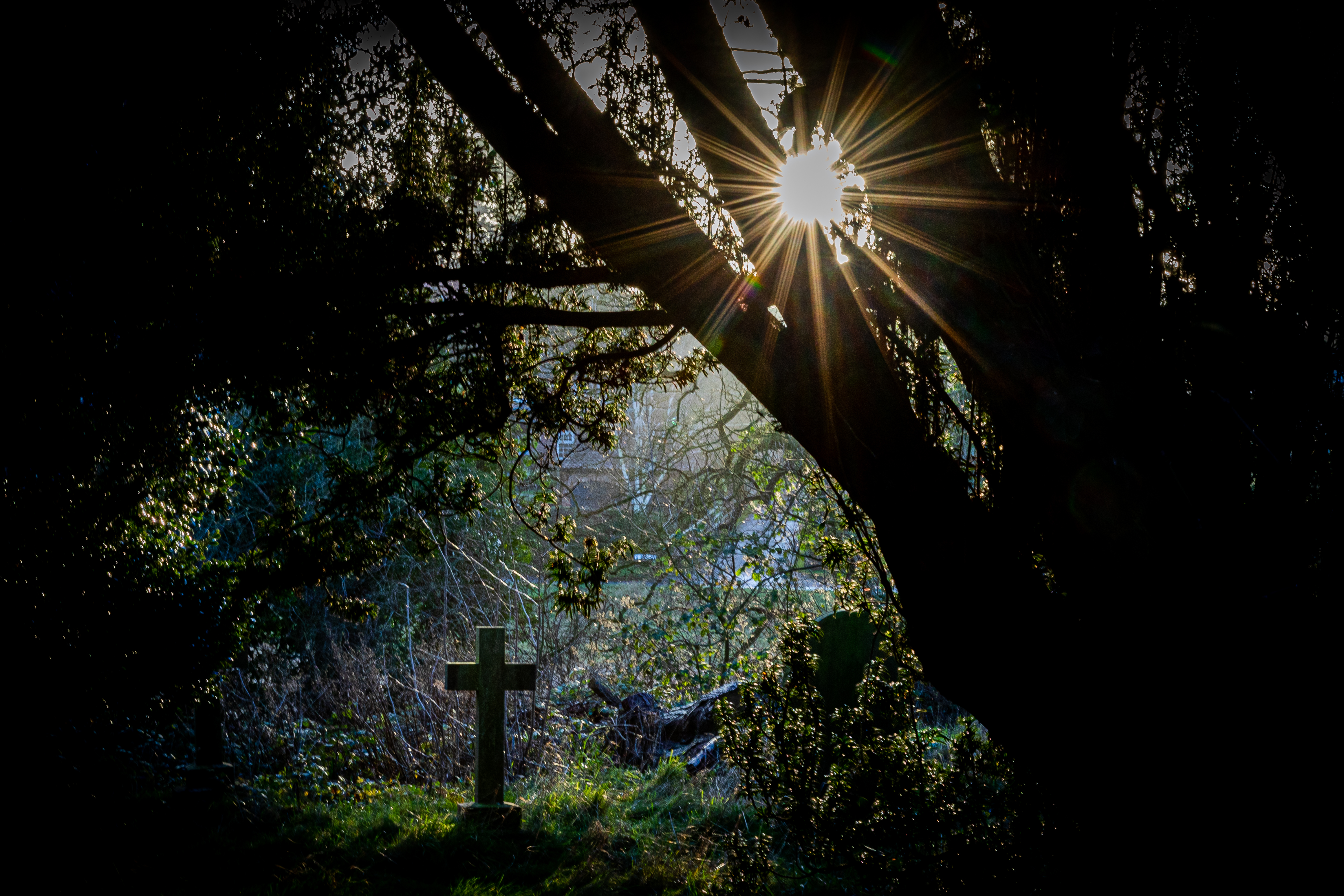
Of course, as many have come to realise, Stillingfleet’s churchyard is a sanctuary for nature untroubled by construction and development. The dead offering protection for so much that is living but all too often struggling to survive in the modern world. From lichens to snowdrops, the gentle neglect of holy ground provides space and tranquility for life to flourish.
Beneath those rugged elms, that yew-tree’s shade,
Where heaves the turf in many a mould’ring heap,
Each in his narrow cell for ever laid,
The rude forefathers of the hamlet sleep.
Lines from Grey’s Elegy Written in a Country Churchyard
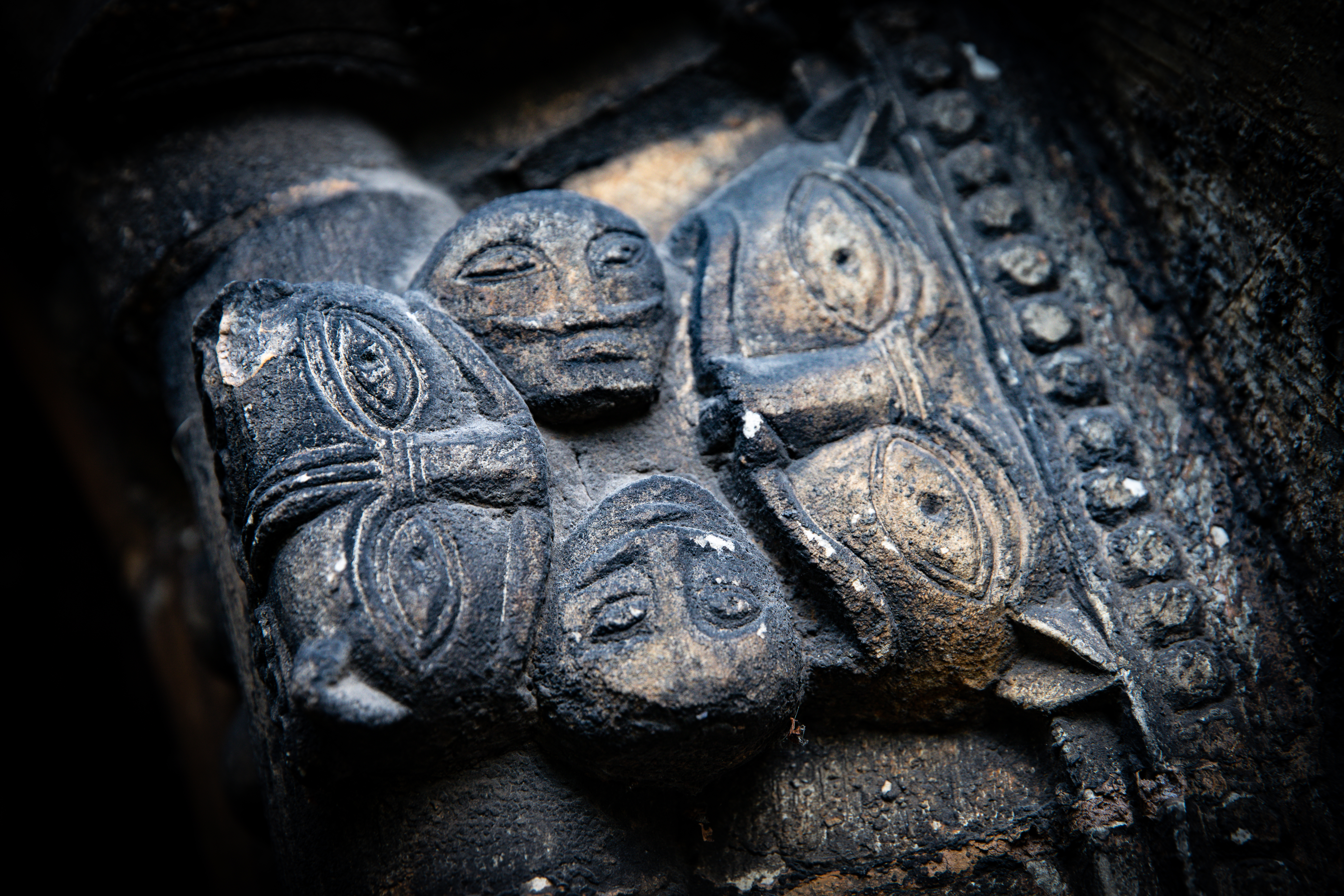
The most astonishing architectural feature of the church is the south door, described as ‘a door of national importance‘. I have written about this door previously, but as impressive as the door is the Norman doorway surround. The carved images of beaks and human figures are a marvellous survival across more than eight centuries. The clarity of the images today might owe something to their position on the south side of the building, and the durability of the stone used to create them. While we are familiar with seeing such churches surrounded by later buildings, they must have been a truly extraordinary sight when family dwellings were more rudimentary. On winter nights, candlelit services must have made these churches extraordinary images of light when so much of the world was in darkness, and homes couldn’t wholly keep out the elements.
Across the many centuries in which churches have retained their ground and provided the space for worship, much has changed. The chaos of our own time would be familiar to many who have gone before us, and I’m quite sure that it will also be a part of the lives of generations to come. We have the time we’re given, an opportunity for good or ill, and we pass on its risks and opportunities to others. I haven’t entirely given up hope that the lanterns of faith left by former generations might still hold some light for the future, and trust that the prayers said by those lying in their narrow cells were not exclusively for their own salvation, but for the good of the world as a whole.
 Swift Reflections