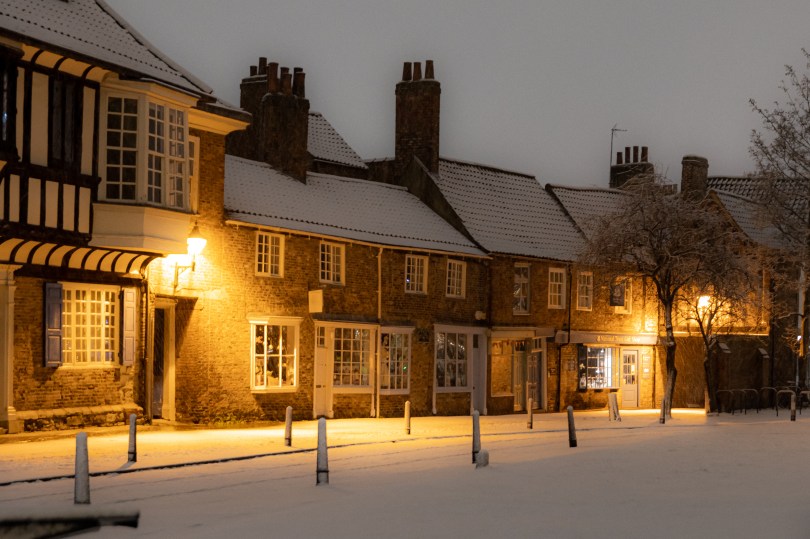
Many years ago I was on retreat on the beautiful island of Iona. It was the beginning of winter, and the island experienced some bitter weather. One evening, another retreatant had arranged to give a recital of Sir Gawain and the Green Knight. The community library was offered as the space, with a roaring fire providing both light and warmth for the reading. Almost without a single pause, the magical story of Gawain was recited on this enchanted isle, as the first days of winter began to bite.
Among the other memories I have of this unexpected story-telling, was the word “snittering”. The retreatant gave a short introduction to the poem, which she had studied at some point. In describing the weather as somewhere between snow and hail, she had chosen to retain this word used in Gawain’s original Middle English alliterative verse. Many other translators have opted for more familiar terms. However, she told us that while once staying with the family of a boyfriend from the north east, she had heard the word used in conversation. It was a living, not an archaic term. Its existence in the north east perhaps suggests a Viking origin. Snittering has a wonderfully onomatopoeic quality – even as you speak it, the sound of icy rain upon glass comes to mind.
With cruelty enough from the north to torment the naked flesh.
The snow fell snittering sharply, nipping the wild creatures;
The whistling wind whipped down upon them shrilly from the heights,
And filled the hollows of every dale up full with heavy drifts.From Sir Gawain and the Greek Knight https://www.jstor.org/stable/25650810?seq=2
It isn’t hard to work out why snittering came to my mind this morning. Driving out from York to lead worship in the Garrowby churches, the bitter weather made its presence felt. It’s not often I take a service these days and see my own breath! Despite heating being on from an early hour, the cold in the stone of St Andrew Bugthorpe was remarkably slow to yield to any warmth.
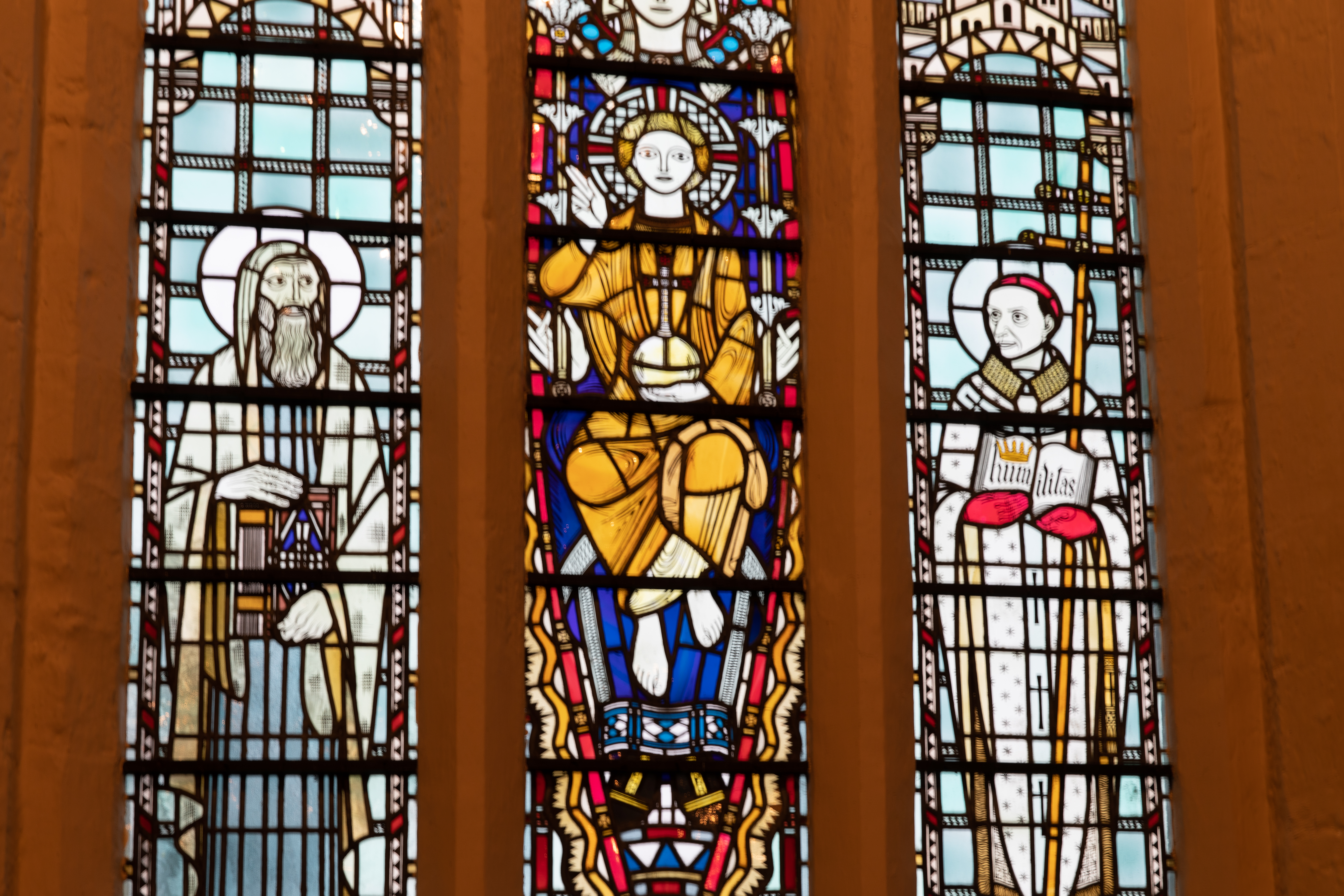
The East Window of St Andrew Bugthorpe contains glass by Edward Moore. It depicts Our Lady with the Christ Child in a mandorla, alongside St Andrew and St. Charles Borromeo, the sixteenth-century reforming Bishop of Milan. The patron saint of the Second Viscount Halifax.
As we approach the Eve of St Agnes, and the Keats poem with which it is associated, the poetry of an icy England can give some vicarious pleasure to those safely sat somewhere warm. Cold weather can be lovely to look at but potentially dangerous to those who find walking on ice covered by a sheen of water a daunting prospect. Thankfully I only had to drive through a few millimetres of slush this morning, although I took the slightly longer route to avoid a steep hill. In a warm car the snittering sleet was a reminder of past winters, and the time when harsh weather in the UK was experienced with much greater cost to health. Sadly, for many people here, and more so in other parts of the world, winter continues to inspire a sense of dread due to its economic cost, and the pressures it places on the boundaries of survival.
 Swift Reflections