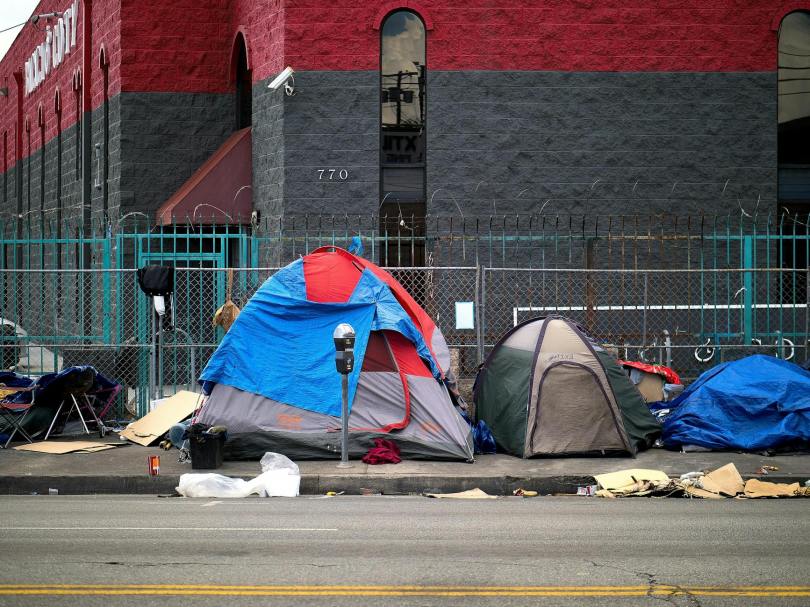
During research into the London hospitals at the Reformation, I discovered their role in policing the streets. Following the dissolution of the monasteries, each of the five re-founded hospitals maintained beadles, part of whose job was to patrol the streets around the institutions, retrieving the sick and poor into them, with the power to “expulse” sturdy vagrants from the City. This was done in response to concerns by city leaders that the city was looking disheveled. In the politics of reformation, this was an unwelcome development. In the document re-founding the London hospitals it was stated:
“considering the miserable estate of the poor aged sick sore and impotent people, as well men as women, lying and going about begging in the common streets of the said City of London and the suburbs of the same, to the great pain and sorrow of the same poor aged sick and impotent people, and to the great infection hurt and annoyance of his Grace’s loving subjects, which of necessity must daily go and pass by the same poor sick sore and impotent people being infected with divers great and horrible sicknesses and diseases...”
The Crown, 1546
The last part suggests the true cause, despite protestations of concern for the homeless, of the creation of London’s post-Reformation hospitals. It allowed the poor and diseased to be put out of sight. This is a good example of how the geography of poverty matters a lot more than the existence of destitution. The myths of Robin Hood and his outlaws living in woodland reflects this expulsion into obscurity.

Medieval beggar, with crutch, rendered as a grotesque at York Minster
Plus ça change, plus c’est la même chose. Donald Trump didn’t like the view from his $1.5 million state Cadillac, and ordered parks in Washington DC to be cleared of temporary structures. He deployed the military. People were given scant notice of the impending eviction, and bulldozers arrived to complete the task.
The White House said it will offer to place people sleeping on the streets in homeless shelters and provide access to addiction or mental health services – but if they refuse, they will face fines or jail time.
From a BBC report posted on 17 August 2025
Immaculate public areas are not always a good or healthy sign of a compassionate society. I recall visiting Santiago in Chile in 1987, with General Pinochet in charge, and finding the subway exceptionally clean with classical music blaring out. Perhaps not a bad thing except, when a woman walked in while eating an ice cream, she was immediately surrounded and intimidated by security personnel. The ice cream had to be thrown into a bin. It would appear that for many leaders on the right, poverty doesn’t exist if it can’t be seen (by them) and perhaps many of us bother little about what’s “out of sight”.
The fantasy video which appeared after Trump’s statements about making Gaza a Mediterranean resort (re-tweeted by Trump on his own account) affirms this narrative of illusion. The poor will always be with us, but that doesn’t matter if they are out of view. Rather than allowing his motorcade trip to inspire programmes to alleviate poverty, it simply incentivised the violent and dramatic relocation of misery.
What is happening on the other side of the pond is, inevitably, stimulating similar attitudes here. Reform UK’s statement about mass deportations of asylum seekers is all about the geography of poverty. It doesn’t matter if it’s somewhere overseas, perhaps in a country whose economy and politics still labour under circumstances brought about by the aftermath of colonialism. The injustices of global trade are irrelevant when those in power simply want an outlook that’s neat and tidy.
 Swift Reflections