
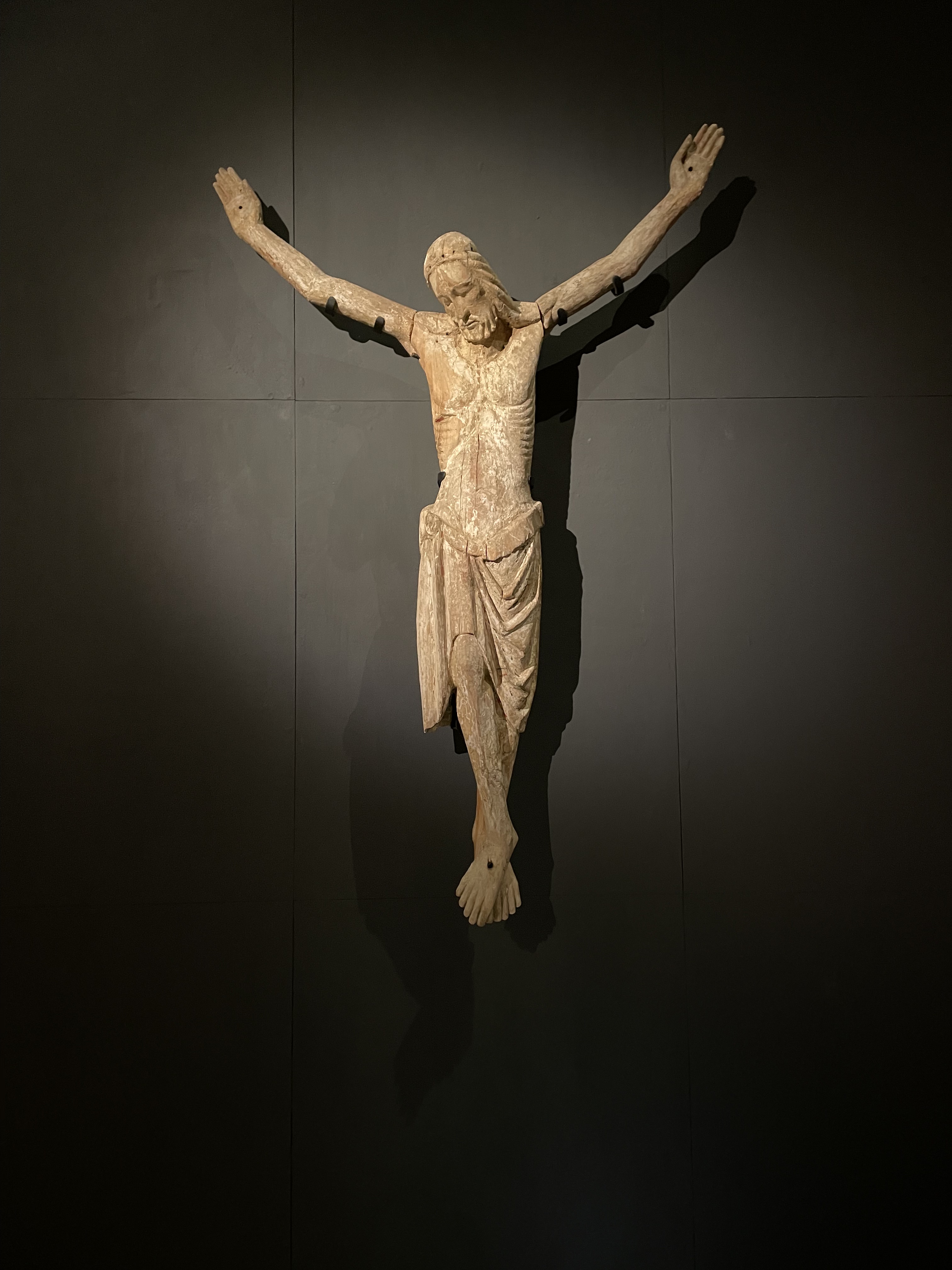
We are about the enter Holy Week. Many Christians will mark these days by attending additional church services and spending time in reflection. I never tire of reading the passion narratives because I have no doubt that in them lie the central themes of Christianity. There is a crowd in an city eager to give the inspiring young rabbi their adulation. The intimacy of close friends at supper on an important festival. The isolation of the garden outside the city walls, and then the bitter work of captivity; costly fidelity; suffering and death.
At a time when the world has become increasingly chaotic it is important to be reminded of Christ’s stillness before the powers of his day. The High Priest and Pilate undoubtedly saw the brewing popularity of Jesus as something that would be ended by his execution. On all the metrics of religious power and secular control, the Jesus who goes to the cross is done. The watching world could agree with Jesus’ last words: “It is finished”. Perhaps those two leaders saw it as the messy and unfortunate price to be paid for maintaining control; keeping the peace. The sacrifice of Jesus would enable things to stay as they were – and as they should be.
Maybe Jesus didn’t know the art of the deal? His time in the wilderness at the beginning of Lent suggest that he had set his face against compromises in his ministry. When he stood before Pilate he had no cards to play. Or, perhaps, it is more accurate to say that he chose not to accept the terms of the game. Appearing to go meekly to his death probably confirmed to many of the leaders that Jesus simply didn’t understand the reality of the world he claimed to be saving. Sad, but there you go. One death wouldn’t change anything.

A Station of the Cross by Sepo b. Ntuluna from Tanzania, in the hotel Mattli Antoniushaus, Morschach – built on the grounds of the Franciscan Community in German-Speaking Switzerland.
Then there is the humanity of loss – of which we all know something. Mary caressing the body of her son. A parent unable to intervene to save her child. The powerlessness of love which cradles the life-left body of the son she would have done anything to save. This is the darkness of despair; the earth shaken; the light of the world put out. The day of absence.
‘Faith’ is perhaps the best answer as to why Jesus doesn’t do a deal. That our miserable card games take place inside a much, much bigger story than most of us are willing to acknowledge. Soldiers at the foot of the cross didn’t have cards, but they had dice. It would be beyond their imagining that 2000 years later the events of that sorry day would still be remembered. A miserable death a few hours before a dusk that would usher in the city’s shabbat. It would be hard to imagine something less important. It was ended – time to divvy up the possessions and go home.
“Thou art God, Whose arms of love
Aching, spent, the world sustain”.
WH Vanstone from Hymn to the Creator in ‘Love’s Endeavour, Love’s Expense‘
 Swift Reflections