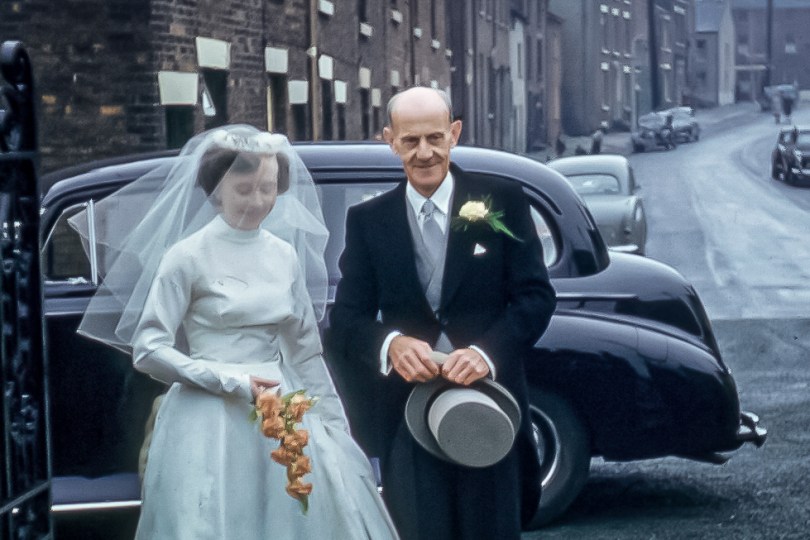
In September 1957 my parents got married. Earlier in the year my grandfather had been asked to become ‘Vicar’s Warden’ at the local Parish Church. He accepted. A local tradesman and Rotarian, Robert’s family was slowly advancing in material circumstances and civic standing. When he became a churchwarden it was news (albeit locally). The gazette carried a report that he “will be sworn in by the archdeacon or chancellor at the annual visitation”. In the 1950s, perhaps especially in counties like Lancashire, the Church of England was a notable presence in most communities. I attended the church primary school across the road from the substantial sandstone bulk of St Michael’s, erected in 1822. On Ascension Day we had a half day – one of many minor observations that peppered the year and kept the school, town and community connected. I’m sure the growing number of working parents often cursed the annual appearance of what must have appeared to be a rather random and inconvenient half-day!
When I began ordained ministry in 1991, also at a parish in Lancashire, it seemed that every church had at least its own vicar if not a curate as well. A nearby incumbent, in a more rural parish, took most of one day a week to visit a local hospital using public transport. Perhaps it was an inefficient way to spend his time, but I bet there were some interesting conversations along the way. In the parish where I served we had over 80 baptisms in one year; a memorable Holy Week with one or more funerals every day; and a church hall that bore the brunt of heavy usage from uniformed groups, parish thespians and the might of the Parochial Church Council. There was certainly no shortage of work to do or activities to support. By the time youth group had ended on a Sunday evening, on a day that began at 7:30 am, I was very happy to slump into a comfortable chair.
Those days have gone – for better and for worse.
Had the Church of England stopped evolving in the 1990s it is hard to know what would be left today. Perhaps, if it had continued to invest and support as much parish ministry as possible, the numbers with which Church House and the Archbishops’ Council seem preoccupied would be little different from those we see today. When people bemoan churches that appear to be stuck in the past, or unchanging, there is good evidence around that these same churches are often doing very nicely. Of course, nothing remains genuinely unaltered because the people change, and so does society. The ordination of women as priests and bishops was a matter of both faith and justice, and has added fresh qualities and fulfilled vocations at a time when both were in decline.
We know from many different reports that in the past egregious wrongs were perpetrated by clergy, and laity, under the guise of virtue, holiness and a perverted theology. I suspect that what we know about is the tip of a very, very large iceberg. All too often clergy have been a law unto themselves and, when something has been raised, benefited from the collusion of powerful patrons. This lack of accountability has deep roots. When I researched the history of institutional spiritual care I came across the case of a Victorian workhouse chaplain, Frederick Pocock, who neglected his charge with impunity due to the unwavering support of his bishop. The Board of Governors of the institution was powerless.
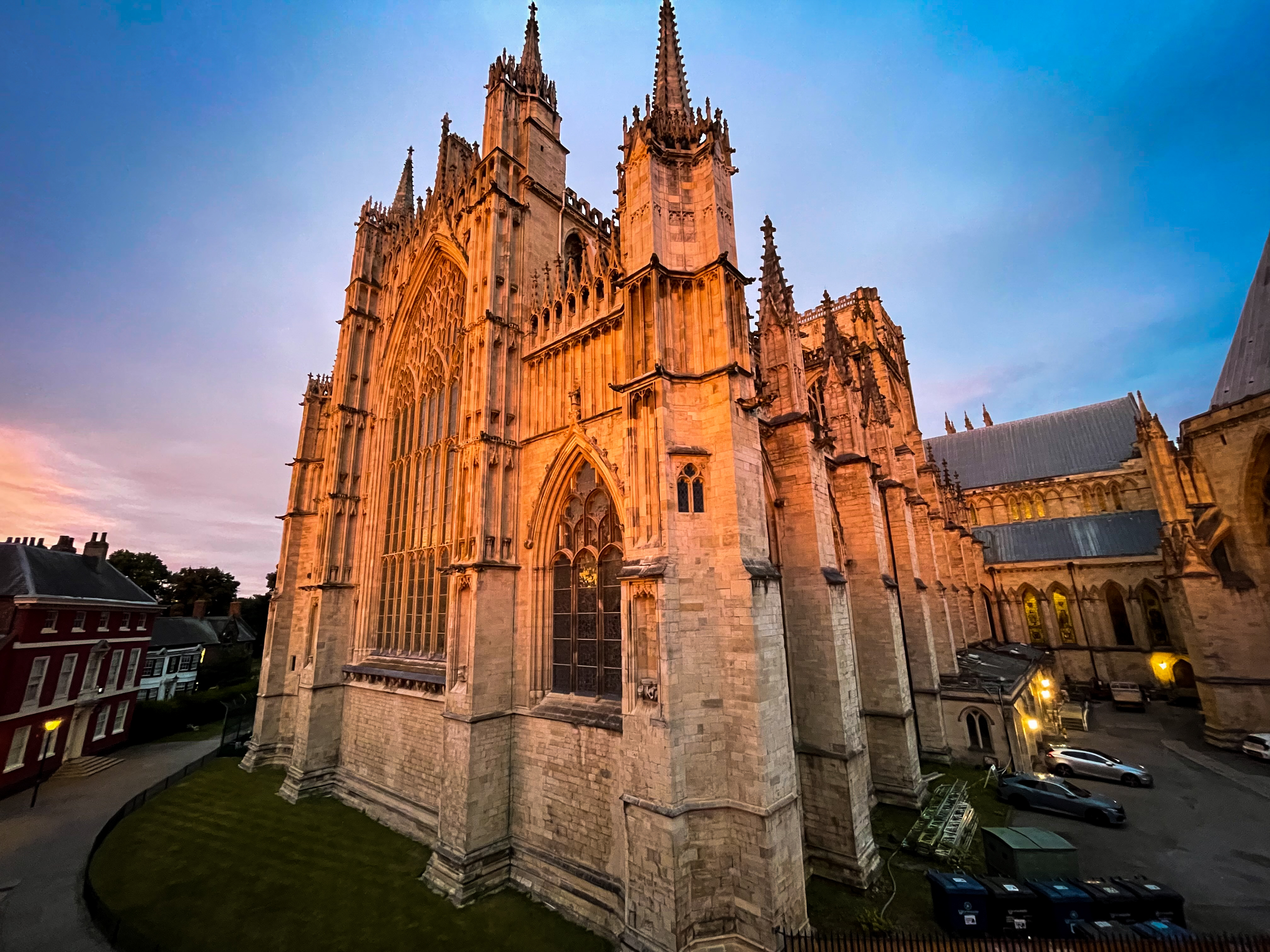
At one level, it seems astonishing that the Church has failed to learn a lesson that goes back deep into its history. In another sense, for rogue clergy, the cover-ups and collusion were (are) a desirable facet of the mercurial behaviour of a Medieval institution embedded in the modern world. Perhaps it is unsurprising (although it was startling at the time) that when I told my grandfather that I was exploring a sense of vocation he immediately left the room to be sick. Looking back I wonder, as a churchwarden, what he had seen or heard that caused such a reaction? He never said.
There is much about Anglican reason, tradition and spirituality that appeals to me. At its best there is a generous and pastoral care for communities and the “frowsty barn”, as Larkin put it, that is often at the physical centre of towns and villages. Sometimes it is the spiritual centre as well – but not always. It feels that this is the moment when England needs to decide the fate of its Church. Whether through a Royal Commission – as Martyn Percy suggests in today’s Observer – or a different process, some definitive solution is needed to ensure the safety and ongoing purpose of the Church. Many of the attractive characteristics of the Church I grew up with have gone – but can something new emerge that preserves the best of it for the future? The 500th anniversary of the Act of Supremacy is on the horizon (2034). Perhaps even Thomas Cromwell might feel that now is the right time to begin reshaping the kind of Church he helped establish, to fulfil it’s calling in a new era?
“To reform church and state you must deal with the populace.”
Mantel, H. (2011). Wolf Hall (Vol. 1). Fazi Editore.
 Swift Reflections