
The consequences of war run wide and deep. While the focus of Remembrance may be soldiers on the battlefield, the effort of supporting a sustained conflict involved many, many, more people. At Bishop Auckland’s Mining Art Gallery, a new exhibition – Ted Holloway – A Bevin Boy Remembered – takes the work of a single Bevin Boy to present an insight into what it meant to be conscripted into the mines. Coal was essential to the overall war effort and the manufacturing capability of the country. It was in December 1943 that Ernest Bevin, the wartime Minister of Labour and National Service, devised the scheme to conscript by ballot a number of men of military age to go into the coal industry. Holloway, who was caught up in a form of work many would not have chosen, drew on his experiences to create art which reflects the hard and perilous experience of working underground. While many Bevin Boys were not working at the coalface they performed an invaluable role in maintaining the mine’s infrastructure, enabling regular miners to dig for coal and increase their productivity
“I was sent into the quarry, which was adjacent to the pit… That quarry work was the hardest work I have ever done in my life. It was through winter and you often had freezing water round your ankles and we had leather boots and no wellies, raw fingers, it was so cold, it was so hard and it sometimes rained and you had to carry on working. I looked forward to the warmth of going down the working pit, which came after about five weeks”.
I was called up for National Service in the autumn of 1943, by Douglas Ayres
There has been a long political campaign to honour the courage, effort and difference which the work of the Bevin Boys brought to the war. Sometimes referred to as the “forgotten conscripts” they finally achieved recognition when the Bevin Boys Veterans Badge became available after 2007. This still feels a modest acknowledgement of what they achieved, especially given the experience of many who, unlike other conscripts, did not return to their communities in uniform (or with the automatic right to resume their former employment).

Take Five (2006) Tom Lamb, Gemini Trust, Zurbarán Collection
War brings many horrors and devastates communities. The Bevin Boys remind us that the efforts of countless people to support a war effort often go unacknowledged and can be left in the dark. While the work of the British Legion and many other groups has been effective in widening the recognition of people (and animals) engaged in military struggle, it seems that too many national leaders forget this cost when new conflicts begin. I can only imagine that those who lived through the world wars would be incredulous that we continue to approach so many disputes with a call to arms. The post-war aspirations that new bodies, such as the UN, would manage disagreements differently, and peacefully, seems to have failed. Perhaps, as the last survivors of the world wars leave us, the risk of future conflagrations will increase. Maintaining some honest recollection of war’s human and material cost, and the legacy it leaves, might become more necessary than ever.
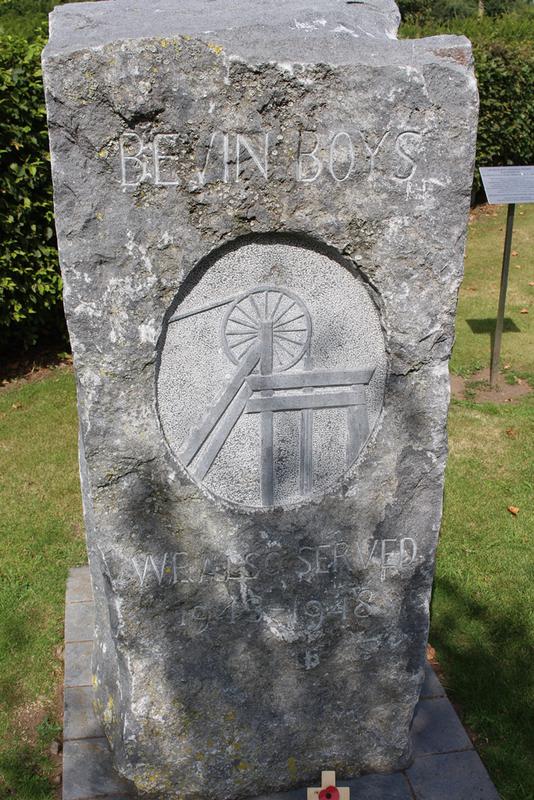
- Above – The Bevin Boy Memorial, Alrewas, Staffordshire
- The picture which heads this blog is taken from Miners’ Heads No. 2 by Ted Holloway.
 Swift Reflections