
The cold has come. In an era of climate change there is no guarantee that winters will bring us frost or snow – at least, not for any extended period of time. Parson Woodforde, an undistinguished parson in a small rural parish, would have been consigned to oblivion except for one unusual practice: he kept a diary. Woodforde’s world of the 18th century witnessed some of the final decades of the Little Ice Age, which began around 1300 and lasted until 1850. It is quite likely that the Christmas we call ‘Dickensian’ holds some folk memory of the unusually bitter weather that occurred before the Victorian era got into its stride. Woodforde’s winters are hard to imagine given our experiences today.
“We breakfasted, dined, &c. again at home. Very hard Frost indeed, last Night, froze above Stairs in the Stair-Case window quite hard. It froze the whole day within doors in a few Minutes – very severe Weather indeed – So cold last Night that it was a long time before I could get any sleep at all… We were obliged to have Holly-branches without berries to dress up our Windows &c. against Christmas, the Weather having been so severe all this Month, that the poor Birds have entirely already stript the Bushes.”
Christmas Eve, 1796
Perhaps some of us have childhood memories, before double-glazing and central heating, which include times when there was ice on the inside of the windows. However, on the whole, better insulation and heating – combined with climate change – mean that fewer of us experience this degree of harshness in winter. In a different age, Woodforde’s diligent pastoral ministry was no doubt challenging and costly. It also had its rewards and, however difficult it might have been, the clergy were better-off than the vast majority of their parishioners. The question for many of them was how to live in the style they associated with being a gentleman, and living in houses which towered above neighbouring dwellings. Nevertheless, there is a lovely detail in the diaries of how the parson’s diligent ministry was recognised with anonymous generosity:
“Had another Tub of Gin and another of the best Cognac Brandy brought me this Evening about 9. We heard a thump at the front Door at this time, but did not know what it was, till I went out and found the 2 Tubs – but nobody there”.
Woodforde, J. (2011). The diary of a country parson, 1758-1802. Hymns Ancient and Modern Ltd.
I’m not sure what quantity of liquor a tub contained but I’m confident it would have kept the parson and his guests well supplied during long winter evenings.
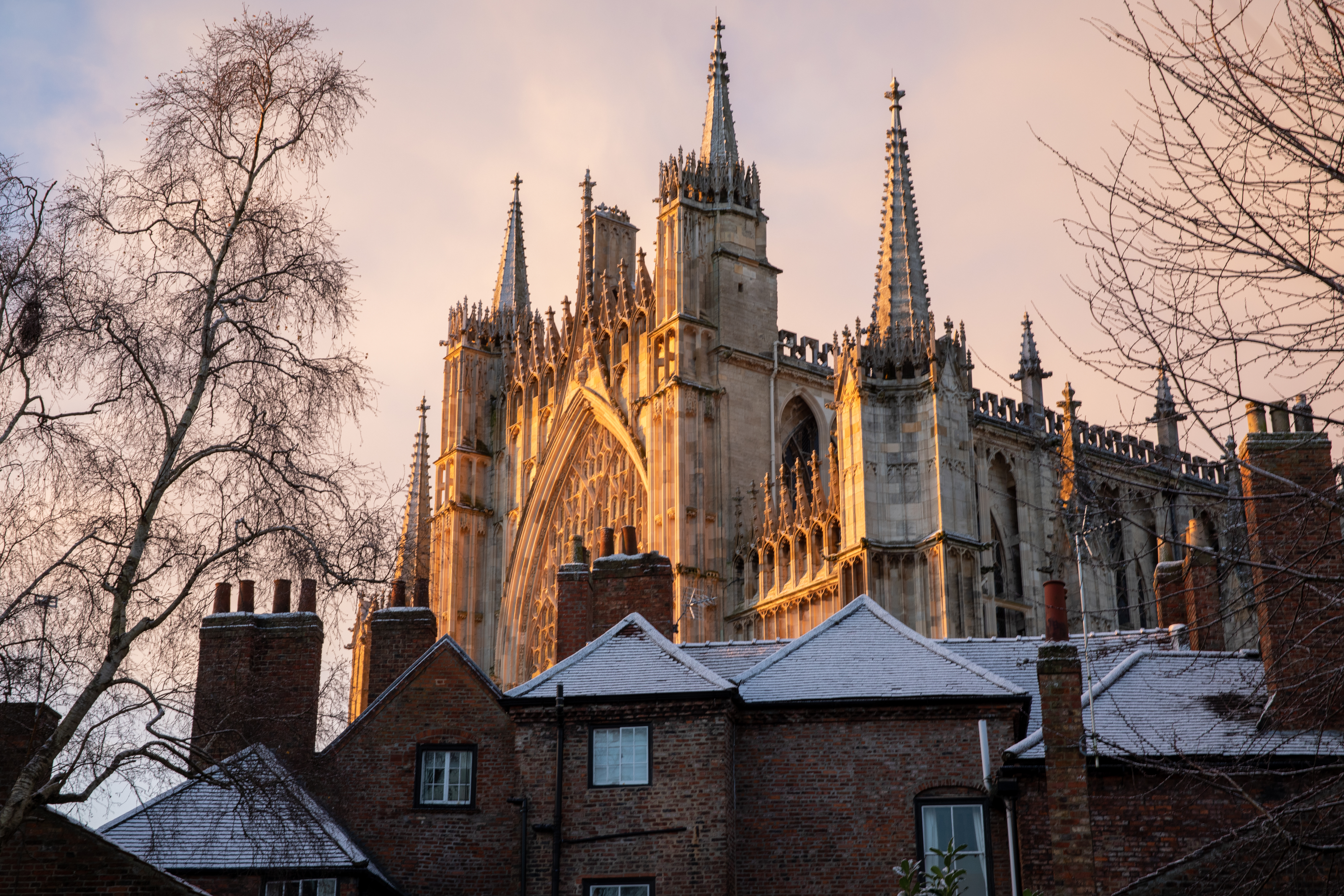
It is into this growing darkness and falling temperatures that Advent arrives. With Christmas Eve landing on a Sunday, this is the shortest period of Advent the calendar allows. Across the three frenetic weeks before Christmas the season urges reflection on sombre themes. Calling into a supermarket in the middle of York the other day, a member of staff on the till commented that it was so busy ‘you’d think the world was about to end’. Ironically, this may be the point where the extremes of consumerism and the message of Advent collide.
Worlds end all the time. In Gaza children have spoken about how they simply want things ‘to go back to the way they were’. Not that this was ideal, but there were homes, families, stability and some kind of future ahead. For them a world they knew has come to an end, in a way that is devastating. This is true across every theatre of war, where destruction is easy and instant – and building a meaningful future is slow, arduous and uncertain.
Advent can bring a chill that serves to focus our thoughts on the cost of these ongoing end-times, and the task of holding a light when surrounded by a cynicism that gives way to darkness. The cold reminds us of the need for homes, and the suffering of people who lack shelter, support or the means to find warmth. Advent tells us the sobering news that all we take for granted is only temporary, and we must be stirred and watchful for the moments God’s light breaks through. Parson Woodforde offers us perspective about the enduring nature of crisis. On Advent Sunday 1797, he wrote that ‘the present times seem to prognosticate e’er long very alarming circumstances. No appearance of Peace…’. To hold an improbable light in this fearful darkness is the work of Advent – and it is certainly needed no less today than it has been in centuries past.
 Swift Reflections