Send Thine Archangel

I’ve always loved Michaelmas. Perhaps it’s about the time of year when the feast of Michael falls, with schools back and universities about to start the academic year. Or it could be to do with the dedication of the church where I grew up, St Michaels’ Kirkham, and the C of E primary school I attended. For whatever reason, St Michael has always occupied by thoughts in September.

Much of the understanding of angels has shifted over the centuries under the changing winds of theological fortune. At the Reformation many physical representations of angels were lost, albeit that interest in angels continued in other ways. For Milton they were towering figures of supernatural power; of a grandeur hard for humans to gaze upon, yet also imbued with a compassion that is equally reflective of the God they serve.

Whereat Michael bid sound
The archangel trumpet; through the vast of Heaven
It sounded, and the faithful armies rung
Hosanna to the Highest

Paradise Lord, book VI

Angels persist in popular imagination and are major figures in many world religions. Especially connected with children, there have been several funerals I’ve conducted for babies where Robbie Williams’ Angels has been played and poems about angels have been read. The contemporary artist and poet Roger Wagner depicts angels across the full spectrum of his work. Often he creates contemporary scenes in which these spiritual beings are as real as the cooling towers of a power station. Through their presence in his illustrated translations of the Psalms, Wagner’s angels are given a consistent appearance across the arc of human history – hinting that human structures are temporary and fleeting set alongside the presence of these ageless entities.

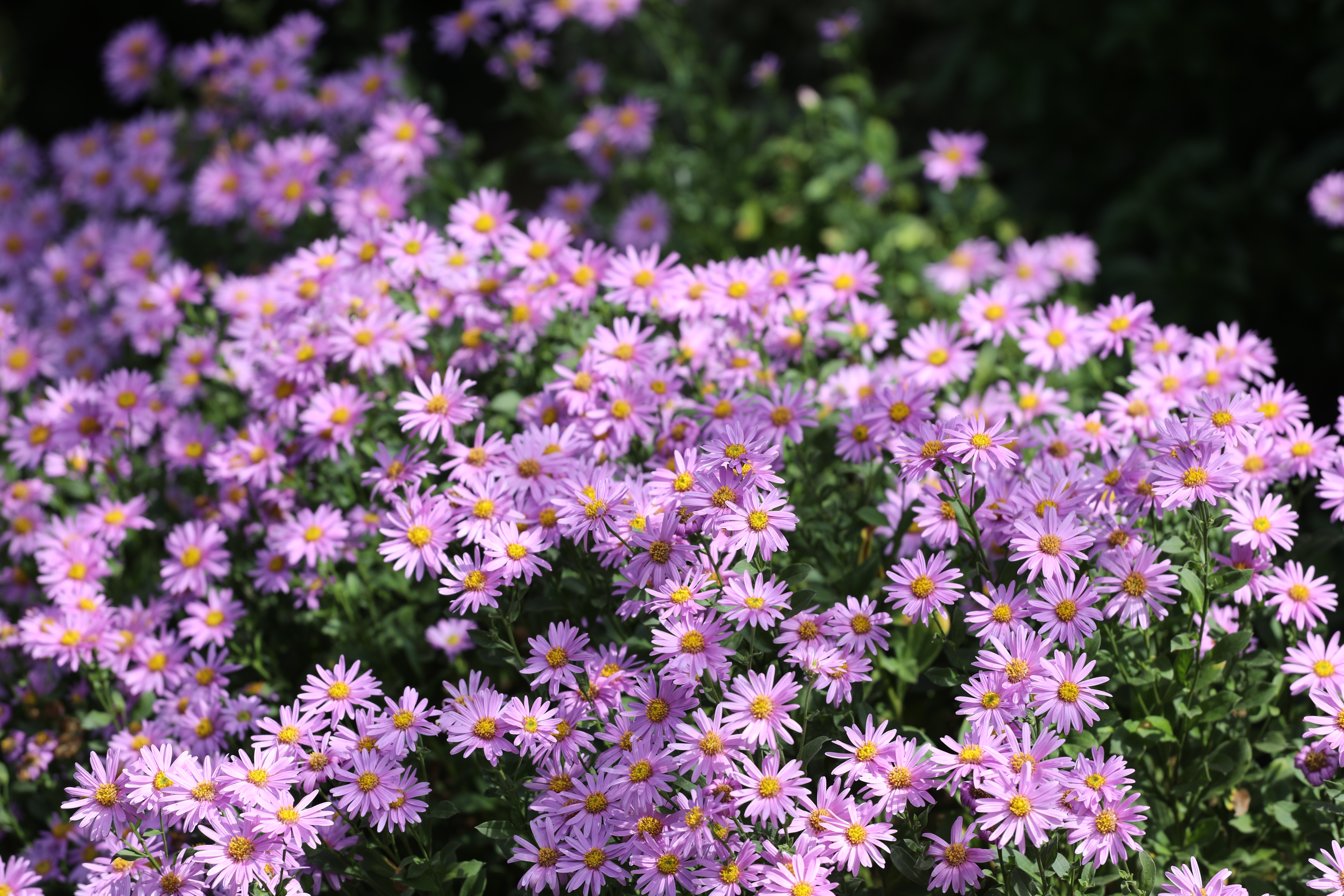
Michaelmas Daisies , Museum Gardens, York 2021

And in that summer evening’s fading light
I saw his angels gather in the wheat.
Like beaten gold their beauty smote the air
And tongues of flame were streaming in their hair.

‘I Saw the Seraphim’, Roger Wagner 2019

Angels probably surface most in Western countries towards the end of the year. Whether on Christmas cards, at nativity plays, or their ubiquitous presence in carols, it feels that December is the month when we allow these strange creatures to enter our imaginations. In the child-like play of creativity that the festive season invites, these bright beings connect with a nostalgia that appears to bring wistful comfort to some. Yet angels aren’t all about sweetness and light.

When the second Adam appears, angels fly like sparks at the moment the human and divine are forged into one. The shepherds’ experience of overwhelming glory is countered by the threats of infanticide and the flight into Egypt. In the Shepherd’s Farewell by Berlioz, the lyric is tinged with a sense that even Christ must journey through a wilderness, and the shepherds petition God’s blessing on the holy child.

That is how life goes–we send our children into the wilderness. Some of them on the day they are born, it seems, for all the help we can give him. Some of them seem to be a kind of wilderness unto themselves. But there must be angels there, too, and springs of water. Even that wilderness, the very habitation of jackals, is the Lord’s.

Marilynne Robinson, Gilead

It feels to me that angels occupy that ever-present and boundless wilderness of the unknown. As we understand more about the universe its scale seems to widen, and within human life there is an equal expanse of the yet-to-be-known. These glittering creatures may have cast us out of Eden, but they are also with us on our journey, ciphers of the realms of which we are only dimly aware. When Milton pictures Adam and Eve leaving the garden, they go to meet a world that ‘was all before them’. Into this great unknown they go ‘hand in hand with wandering steps and slow’.

This and the first picture are depictions of angels in the stained glass of the Great East Window (1405-1408). Photos by the author.

God protect you,
guide you safely through the wild!

The idea of angels and their depiction in the arts may seem far removed from our reality. What they represent still has lessons to teach us, and in their glow they carry the embers of eternity. They are in the dark places as well as the daylight, the unexpected glimpse of something wonderful and beyond our comprehension. Signs heralding life’s ultimate goodness and the hope of returning home. For all our advances in the world, Shakespeare’s words convey with simplicity what remains true today: ‘There are more things in heaven and earth…Than are dreamt of in your philosophy’. The infinity of angels reminds us of a vastness which cannot be fathomed, and a God who is dazzling glory – and the faintest flicker of hope in our darkness.

Older Age: A Time of Truth

The title for this blog echoes a publication celebrating its 50th anniversary this year. In 1971 Michael Wilson’s The Hospital – A Place of Truth was published by the ‘University of Birmingham Institute for the Study of Worship and Religious Architecture’. The snappy title of the Institute does little justice to the work it sent to print. Wilson’s study is the first thorough, academic and professional enquiry into the role of the hospital chaplain. It took place between 1967 and 1971, and is well-written, with a scope that is broad and deep. Inevitably couched in the culture of its time (and a national church which didn’t enable women to be ordained), there is a wealth of valuable insight and evidence in its 385 pages. For example, we learn that the first Muslim chaplain had been appointed the year before publication. This landmark research remains a seminal example of an approach which is still relevant to chaplaincy today. In particular, Wilson asked all constituencies in the hospital and local community about what they found important concerning the presence of a chaplain. If you wish to know more about the publication James Woodward’s “The relevance of Michael Wilson’s chaplaincy research for healthcare chaplaincy today” is well worth reading.

In the 1960s institutions had very clear boundaries. In many cases staff lived on the site of the hospital. Today those boundaries are more porous and there is a constant but incomplete drive to make health care about a pathway rather than a place. For example, it has long seemed inequitable and undesirable that the experience of end of life care should depend so much on location. The contrast of final days spent on a busy general medical ward and those spent in a hospice bedroom, could not be starker. Despite all the efforts of skilled and committed staff, we are still working to make palliative care equally excellent in all settings.

Nevertheless, I would argue that place in now relatively less important when it comes to care than it was in the 1960s. While still significant settings, hospitals are not the kind of ‘total institutions’ once described by Erving Goffman. When considering older age I’m inclined to focus more on the experience than on the location. Whether in homes or places or care, many characterises of ageing remain the same.

Nearly a year ago I reflected on the conundrum of how institutions embedded in almost every community seem to be politically invisible. Despite the fact that most scientists and politicians have visited these communities, or have relatives living in them, it appears that we choose not to think about the realities of their complex operation. In March 2020 wild and wholly irresponsible assumptions were made about the safety of care homes in a pandemic. In September 2021 the supposed solution to the funding of social care almost entirely misperceives the needs of these vital care settings.

“Staff are dealing with their own ageing whilst also observing the ageing of their patients and the reaction to this of the relatives. None of this is particularly easy and spiritual practices seemed to help staff manage these complexities”

Mowat, Harriet. “Gerontological chaplaincy: the spiritual needs of older people and staff who work with them.” Health and Social Care Chaplaincy (2013): 27-31.

Ageing confronts us with truths about ourselves, and about our neighbours. These truths are not always easy to contemplate. It can feel in contemporary British society that we side with Shakespeare’s characterisation of our final years: ‘second childishness and mere oblivion’. Yet this is to allow our fears to avert our gaze before we can take the time to understand ageing and its effects with greater insight. It is the time of truth in as much the mastery of self, and in particular the suppression of desires, may give way as our cognitive capacities change. While relatives may often say their relation is ‘different’, sometimes that transformation reflects a clearer sense of identity and personality. Unsurprisingly we may fear this kind of truth for ourselves as well. A controlled temper may lose its restraint as the years progress. The truth is not always easy or comfortable. Yet ageing may equally well diminish a sense of fear and trepidation. There has been more than one centenarian sky-diver.

Last week I was reminded in one of the reading options for Morning Prayer that ageing can be seen in a number of ways. There is not, and never has been, only one interpretation of getting older.

“For old age is not honoured for length of time, or measured by number of years; but understanding is grey hair for anyone, and a blameless life is ripe old age”

Wisdom 4:7

It feels that in the UK Government’s settlement for social care an opportunity has been missed to learn the truths of the experiences of older people. The focus has been on finances and asset-preservation, rather than the understanding and retention of wisdom. The elderly are a political problem to manage, not a wealth of personality, love and experience to value. Somehow we need to achieve a breakthrough in how we relate to older people in our society. The cloak of invisibility needs to be removed so that we can see ageing as an important time of truth for us all – and not just for others.

The Land the Sunset Washes

It was a very warm mid-afternoon. Cycling had ended for the day, and our tent was pitched. I was 18 years old, sitting with my back to a tree by a babbling brook somewhere in Belgium and reading The Portrait of a Lady. A book that opens with an idyllic description of afternoon tea in a beautiful Thames-side garden during ‘the perfect middle of a splendid summer afternoon’. The kind of writing that lends space and warmth to the image it creates, a picture conjured when the full heat of day was ebbing: an hour which ‘expressed that sense of leisure still to come’. While it is an image steeped in privilege, the leisure and heat of a perfect summer’s day is something many of us have been fortunate to experience at one time or another.

There is an unpredictability about the climate in England that lends a sense of unexpected gift to weather events. Whether it is the warmth and stillness of a summer’s day, or snow falling at a time we are able to enjoy it, nothing in the climate can be taken for granted. A year may pass with hardly any glorious summer days – and winter can fizzle its way through drizzle and damp without the spectacle of a world transformed in a sheet of white. Perhaps we talk about the weather so much because we lack the certainties taken for granted in other countries. Yet even there, climate change means diminished confidence in weather patterns familiar for generations.

Summer in the northern hemisphere can be a time when many people are away and the pace of life seems to slow, just a touch. For classical music lovers The Proms season begins and, to quote Sir David Attenborough in this year’s BBC trailer, ‘a kind of light comes into the diary’. Watching Ralph Fiennes’ stunning performance of TS Eliot’s Four Quartets at York Theatre Royal last week, I was reminded of the reference to ‘summer, the unimaginable Zero summer’. Perhaps this is the kind of perfect day that lives in our memory and is also expressed as a future hope. The pause at the close of an August day, when nature is full and still, and when the warmth feels comfortable and enduring. In a culture when we are so often invested in the last thing, or planning the next thing, a rare moment when we attend to what is at hand.

And for that minute a blackbird sang
Close by, and round him, mistier,
Farther and farther, all the birds
Of Oxfordshire and Gloucestershire.

The final lines of Adlestrop by Edward Thomas

It is this kind of moment, set against the horror of WW1, that made Adlestrop so popular. The poem by Edward Thomas captures the heat-filled moment of a train pausing at a rural station. Long before the rise of mindfulness, this unexpected stop allows the poet to drink in the reality of the moment – from meadowsweet to birdsong. Its uneventfulness somehow achieves a transcendence, even as the moment slips away and the train resumes its journey. It was a picture of peace published just weeks after Thomas lost his life in the war, and it became a touchstone for people longing for the ordinary beauty and peace his words evoked.

In a more recent poem Sean O’Brien reflects on another train journey, this time lost in marking adjudication as the engine draws the carriages through an England of past and present. A daydream lacuna of stillness when work is set aside and the landscape passes like a film.

“This green reserve where no one comes or goes and all
Are necessary as the weather, and where no one seeks
Coherence greater than this afternoon suggests, and where
To all intents and purposes the living and the dead may pass
Their time beneath a sun in cloudy splendour.”

Sean O’Brien , The Lost of England, from The Beautiful Librarians 2015 Picador Poetry
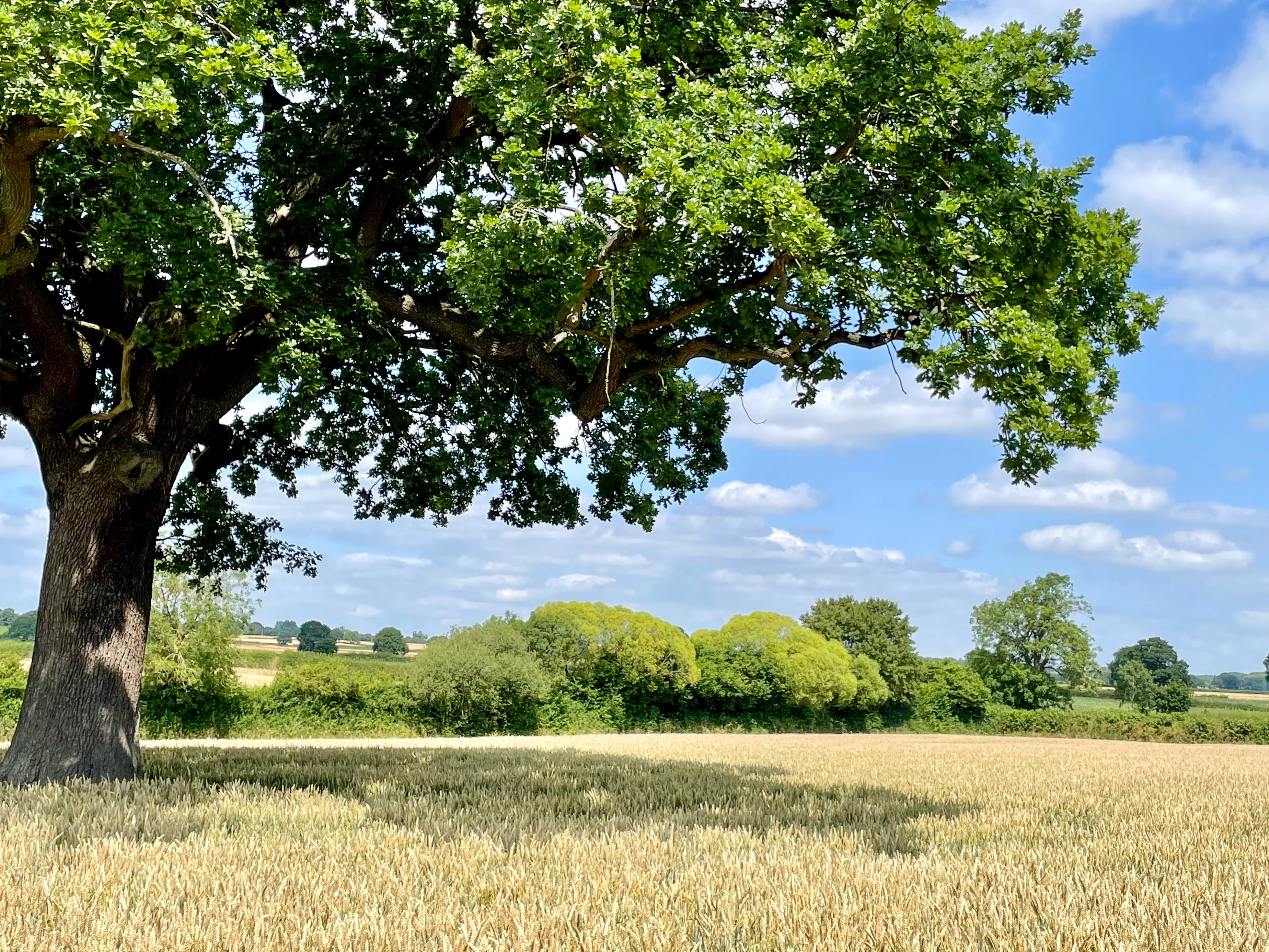
View from Route 66 of the National Cycle Network near Dunnington

As we attempt to recover from the worst effects of the pandemic we need these moments of pause and reflection more than ever. They cannot always be planned, but when they occur we should sink into their stillness. Moments of tranquil and transcendent beauty, when the burdens of past and future are lifted and we are simply required to ‘be’. Entering into such stillness is not a luxury but a vital ingredient of being human. A fleeting pause which, if well observed, becomes food for our journey.

For most of us, there is only the unattended
Moment, the moment in and out of time,
The distraction fit, lost in a shaft of sunlight,
The wild thyme unseen, or the winter lightning
Or the waterfall, or music heard so deeply
That it is not heard at all, but you are the music
While the music lasts.

TS Eliot, The Dry Salvages, The Four Quartets

The Religious Stuff

A year ago I was leading a retreat in Yorkshire. Always challenging but rewarding, it was an opportunity to address Christian ministry in a changing world. At that point few of us knew quite how changing. The attendance of one person was doubtful because he had just returned from the Far East and needed the outcome of a coronavirus test. It arrived in time; it was clear; and he attended. The innocence of a crowded room, all unmasked, with many people over 70, seems like another world. We sang hymns heartily and shared the peace. Some small measures were beginning to appear, such as the bottle of hand gel amongst the silver and wine, but otherwise things felt fairly normal.

I wrote last week about the changing place of the Christian faith in the UK over the past six decades. It was a Lenten theme, focusing on the BBC plays making up Jesus of Nazareth, shown on the Sundays leading up to Easter Day in 1956. A world where such a production was a landmark event drawing high level viewing figures. A story already known to most people was given flesh and blood, costume and context. It had a powerful impact. Yet the decades which followed have seen the continued ebbing of the ‘sea of faith’. In Arnold’s poem containing this famous phrase, it is perhaps the language and rituals of faith which have been most marked in their regression. The recognisable outer shape of faith which touched and connected so many aspects of Britain’s common life. The moments in particular when, as Larkin wrote, human compulsions are ‘robed as destinies’.

I have often felt that there is a valuable study to be made into the vanishing presence of civil religion. By this I mean those times when the church presides, often fleetingly, over collective moments. We still have these on the national stage, such as Royal weddings and funerals. However, at a much more modest level there has been a long history of momentary religious observance. Until at least the year 2000 the chaplain at a fairly ordinary West Yorkshire General Hospital would say grace before the canteen sittings for the staff Christmas dinner. In the Leeds Teaching Hospitals a Christmas Day consultants’ carol service continued until about 2008. Doctors gathered with their families on the morning of the 25th of December for a tradition which went back to the days when they would have then gone to the wards to carve the turkey. Like many other such moments, it has gone.

The Chapel, Leeds General Infirmary

It seems very unlikely that these days will return, even if we thought that was a good idea. The Church appears to teeter on the edge of moments in our personal and collective lives. An increasing number of funerals are presided over by civil celebrants and little is of automatic right for the clergy of the Established Church. Today humility is not only a desirable spiritual quality; time and again the Church has been shown to have much to be humble about.

Hopefully, as we emerge from lockdown and the restrictions made necessary by COVID-19, there will be fresh opportunities to serve and witness. As people move to a place where the pandemic is neither approaching nor raging, there will be time to take stock. When COVID-19 is firmly in the rearview mirror I have no doubt that there will be deep moments of reflection, even distress, as we comprehend what has happened. We have been shaken, and the ground may never quite feel the same again. The aftermath of the virus will be with us for years in many spheres of life.

One of the continuing strengths of the Church of England is the extraordinary stock of spiritual places in its care. As things begin to open up again, what an amazing opportunity to make these places open and available. To allow all and sundry to use these largely ancient places as somewhere to be; to reflect; to ponder. With creative purpose there can be opportunities to remember who or what has been lost in people’s lives. Knitted hearts to hang on tree branches; thoughts and prayers to write; and the simplicity of silence. The stillness of ‘a serious house on serious earth’ – a place Larkin felt would always be needed when we experience that surprising hunger to know a wisdom at peace with our mortality.

The Church, Little Gidding

The title for this Blog came from a recent conversation with a chaplain who was extolling the chance to be involved in things that were not simply ‘the religious stuff’. One of the challenges for the church is that religion has come to be seen very narrowly. This is a sad development with which we should not collude. In reality religion is all those things that bind us together within a sense of being loved, guided and created. I’m quite sure that some of the most truly religious things ever done have not needed the labels of religious language. In an age when it has become ever harder to speak without misunderstanding, or being reinterpreted, perhaps our open and patient presence is, and should, be enough. On a Sunday when we remember Jesus clearing the Temple, I can do little better than conclude with the passionate words TS Eliot put into the mouth of Thomas à Becket:

Unbar the doors! throw open the doors!

I will not have the house of prayer, the church of Christ,

The sanctuary, turned into a fortress…

The church shall be open, even to our enemies.

Autumn – Another Beauty

Today I had one of those salutary moments, when something simple makes you pause. For the first time in several month, with a slight chill in the early morning air, I put on a winter coat. As I reached into a pocket I pulled out a face mask. In an instant I was reminded just how long the pandemic is enduring and how, half a year later, we are once again looking at a curve that is rising at a vertiginous rate.

Most of the cost of this protracted crisis will not emerge until after a point of solution or stabilisation is reached. We are now living through what a friend describes as a ‘chronic emergency’, which will no doubt have more and less acute phases. A recent two week holiday in the UK had occasional moments when it felt as though I was on furlough from the front-line. Still hearing the reports of struggle and danger but removed from its immediate impact.

Spending time in the depths of rural mid-Wales had much of the benefit of being on retreat. The weather was an unexpected gift of warm days and comfortable nights. Across a landscape of hills, woodland and waterways, the turn of the year was coming into view as foliage showed the first signs of autumn. Sitting by the River Wye just above Rhayader I was reminded of a reflection which took place much further downstream. At Tintern Abbey, more than two hundred years ago, Wordsworth’s contemplation of a bucolic scene led to thoughts about the changes brought to us by the passage of time:

While here I stand, not only with the sense

Of present pleasure, but with pleasing thoughts

That in this moment there is life and food

For future years.

Wordsworth, Lines written a few miles above Tintern Abbey, 1798
The Wye River above Rhayader

In current circumstances we may all be drawing on ‘life and food’ laid down in past years to help us navigate turbulent waters. A Western tendency for several decades has been to assume a degree of certainty about the future. Only when viewed at a distance can we see how this is an aberration in terms of both human history and the reality of life in other parts of the world. If a pay cheque doesn’t come at the end of the month it is an outrage which leads to prompt correction and a shamefaced apology. Yet in the 1980s, while spending a year in South America, it was an accepted reality that sometimes pay might be delayed for one or more months – especially in the public sector. We need to be circumspect about what we take for granted. Will 2020 be viewed as a scary year that departed momentarily from story of economic growth and prosperity, or will we look back on it as the beginning of the decade of Covid? We don’t know – and we shouldn’t assume.

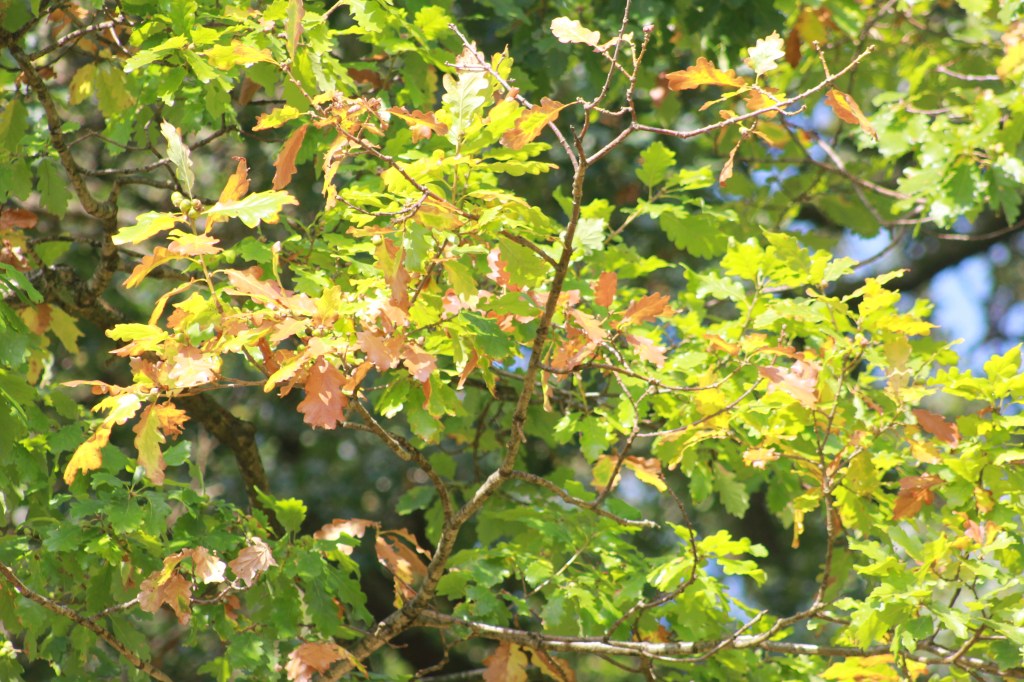
Emerging autumn colours

In uncertain times we can all benefit from contact with things that convey a sense of continuity. The seasons arrive with reassuring regularity, and each one with its own riches. Autumn has often been a metaphor for later life, and it is a reminder that even change which may not always be welcome comes with its own beauty. We may mourn the loss of summer’s rich canopies and expansive days of warmth, but in the transformation of the season there is a spectacular display of colour. Its fleeting nature, combined with the change in climate, can intensify the pleasure we take in a beauty made all the richer by our knowledge of its brevity.

We enter autumn with questions about the future which are unusual for many of us – but not for all. Living wisely with uncertainty can be a tall order, and finding reserves of reflection matter all the more when our footing feels less sure. Pausing to recognise the beauty of today, or recalling those past moments that have grounded and fed our spirit, will perhaps be more valuable now than we imagine.

“When thou shalt look us out of pain”

During 20 years of chaplaincy in the NHS I faced all kinds of questions which might be grouped under the simple, short, yet daunting word: ‘why?’

It wasn’t only a question for people who might have seen themselves as religious. When I was present with families in traumatic circumstances there were often non-religious people among them. It seems that there is a basic assumption in life that there should be some reward for virtue, or at least a balance between the rain and sunshine. The suffering of the innocent, especially children, resists any attempt to attach constructive meaning. Occasionally a family member would venture something along the lines of ‘perhaps it’s for the best’, but when this happened it was often met with silence and muted rejection.

Time and again I was aware that in life-changing situations, when words were wholly inadequate to the experience of loss, the role of the chaplain was not orientated towards a solution. There was no good outcome, and in this context spiritual care was far more to do with helping shoulder pain than in any attempt to make things better. In my ethnographic writing about the experience of being a chaplain, offering compassionate presence in small spaces of great suffering, the simple fact of being there, bearing a particular group of associations, appear to be core components of the role.

There was more to this than pastoral empathy, valuable as that can be for people in distress. I was conscious at times that I was bringing the outside in. Even while being a member of staff, the religious identity I carried spoke of the wider community. When meeting a chaplain for the first time perhaps the most frequently asked question is: ‘where is your church?’, or mosque, synagogue or gurdwara. People of faith are linked to places of faith and the connection flows to and fro. In an institutional setting this can mean that the chaplain has a particular role in bearing the symbolism of community; connections to the past and the future; and a broad association with shared beliefs, culture, heritage and identity.

Yet there is a further dimension to this role – that of witness. The longer I worked in institutional settings the more aware I became that seeing what takes place, and holding that in the perspective of prayer and ritual, was part of what was expected. People cared that their experience, perhaps taking place at the dead of night in a large city, was not happening in seclusion. In their presence, words and actions, chaplains are personifying elements of the faith they profess. As I wrestled with this experience – and still wrestle – there is something in it about the God who doesn’t look away. I am not there to promote a God who can be bargained with in order to grant our wishes. The very least I can do is to behold this suffering, to touch and bless a life which is ending, and share the sorrow of the grieving whose lives are changing irrevocably. In the current circumstances of Covid-19 this can be experienced as a deprivation for both those in spiritual need and the chaplain tasked to provide it.

This element of pastoral ministry, the chaplain’s gaze, occurred to me again recently while reading Mark Oakley’s reflections on the poems of George Herbert. In The Glance, Herbert writes of a time when God “shalt look us out of pain”. It seems an odd notion, but I know from experience that looking has its own quality, and that in the silent relationship of beholding, much can be transacted. Following Herbert, this might be seen as a foretaste of a time when clarity of perception between God and humanity will dissolve the hurts and pains we all carry.

Maybe, in the request to witness those moments, and to be present with loved ones as they say farewell, there is a sign that this kind of seeing, and being seen, truly matters. That when we sense God’s presence with us, beholding our pain, there is hope that in the end this suffering will be lifted from us. It doesn’t diminish the experience we are passing through, with all its calamity, but it offers an unspoken hope that suffering is not – and never is – the last thing we see.