Forgotten Conscripts

The consequences of war run wide and deep. While the focus of Remembrance may be soldiers on the battlefield, the effort of supporting a sustained conflict involved many, many, more people. At Bishop Auckland’s Mining Art Gallery, a new exhibition – Ted Holloway – A Bevin Boy Remembered – takes the work of a single Bevin Boy to present an insight into what it meant to be conscripted into the mines. Coal was essential to the overall war effort and the manufacturing capability of the country. It was in December 1943 that Ernest Bevin, the wartime Minister of Labour and National Service, devised the scheme to conscript by ballot a number of men of military age to go into the coal industry. Holloway, who was caught up in a form of work many would not have chosen, drew on his experiences to create art which reflects the hard and perilous experience of working underground. While many Bevin Boys were not working at the coalface they performed an invaluable role in maintaining the mine’s infrastructure, enabling regular miners to dig for coal and increase their productivity

“I was sent into the quarry, which was adjacent to the pit… That quarry work was the hardest work I have ever done in my life. It was through winter and you often had freezing water round your ankles and we had leather boots and no wellies, raw fingers, it was so cold, it was so hard and it sometimes rained and you had to carry on working. I looked forward to the warmth of going down the working pit, which came after about five weeks”.

I was called up for National Service in the autumn of 1943, by Douglas Ayres

There has been a long political campaign to honour the courage, effort and difference which the work of the Bevin Boys brought to the war. Sometimes referred to as the “forgotten conscripts” they finally achieved recognition when the Bevin Boys Veterans Badge became available after 2007. This still feels a modest acknowledgement of what they achieved, especially given the experience of many who, unlike other conscripts, did not return to their communities in uniform (or with the automatic right to resume their former employment).

Take Five (2006) Tom Lamb, Gemini Trust, Zurbarán Collection

War brings many horrors and devastates communities. The Bevin Boys remind us that the efforts of countless people to support a war effort often go unacknowledged and can be left in the dark. While the work of the British Legion and many other groups has been effective in widening the recognition of people (and animals) engaged in military struggle, it seems that too many national leaders forget this cost when new conflicts begin. I can only imagine that those who lived through the world wars would be incredulous that we continue to approach so many disputes with a call to arms. The post-war aspirations that new bodies, such as the UN, would manage disagreements differently, and peacefully, seems to have failed. Perhaps, as the last survivors of the world wars leave us, the risk of future conflagrations will increase. Maintaining some honest recollection of war’s human and material cost, and the legacy it leaves, might become more necessary than ever.
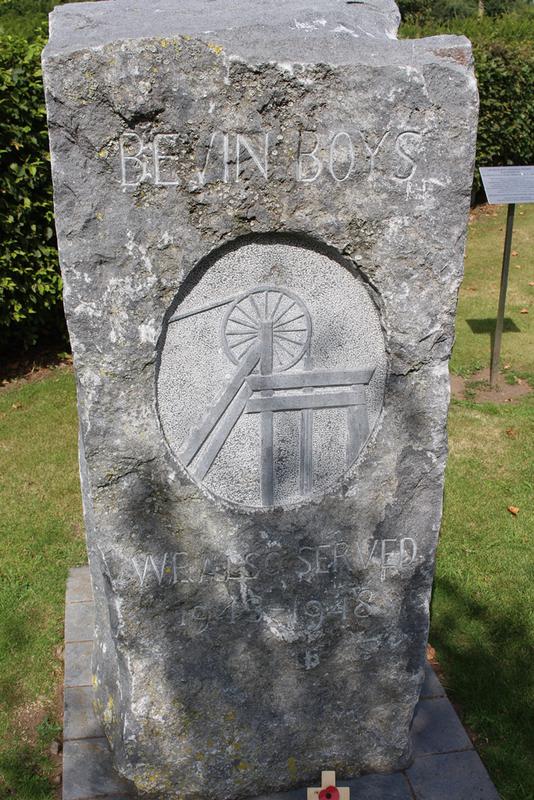
  • Above – The Bevin Boy Memorial, Alrewas, Staffordshire
  • The picture which heads this blog is taken from Miners’ Heads No. 2 by Ted Holloway.
Those who do not think as we do

I am standing in a Spanish market town which looks like so many others which I’ve visited over the years. As it happens, by longstanding tradition, Monday has been market day from time immemorial. However, on Monday April 26th 1937 – about a month after Easter – it was a day like no other. From 4 pm, and lasting for several hours, German and Italian planes bombed the hell out of Guernica. The buildings consisted mainly of wood, and the aircraft first targeted the town’s water tanks and fire station. Those who attempted to flee into the countryside were strafed by German fighters circling the drop zone of the bombers. It is estimated that with visitors to the market from nearby Bilbao, there were 10,000 people in the town that day. Three days after the attack the forces of General Franco occupied the town and, consequently, it is very difficult to know the true human cost of this atrocity. The most likely figures estimate 1,645 dead and 889 injured. Given the length and intensity of the attack these numbers may be underestimates, but we shall never know for certain. Due to the longevity of Franco’s reign independent data-gathering and interviews with survivors only took place long after the destruction of the town.

Guernica had no air defences. In fact, there was nothing in the town which could have responded to an attack from the air. Without fear of their own losses, German and Italian forces reigned down terror – and this was a primary goal of the mission. It communicated around the world that Axis forces could, and would, attack civilian targets with impunity, wherever it was deemed necessary. Reducing a town to rubble simply became one strategy in the ambitions of conquest which the dictators desired and sought to enact. It was a powerful example to anyone contemplating resistance about the cost of non-compliance.

“It is necessary to spread terror,” General Emilio Mola declared on 19 July 1936, just a day after the coup began. “We have to create the impression of mastery, eliminating without scruples or hesitation all those who do not think as we do.”

General Emilio Mola quoted in “Guernica” in the BBC History Magazine

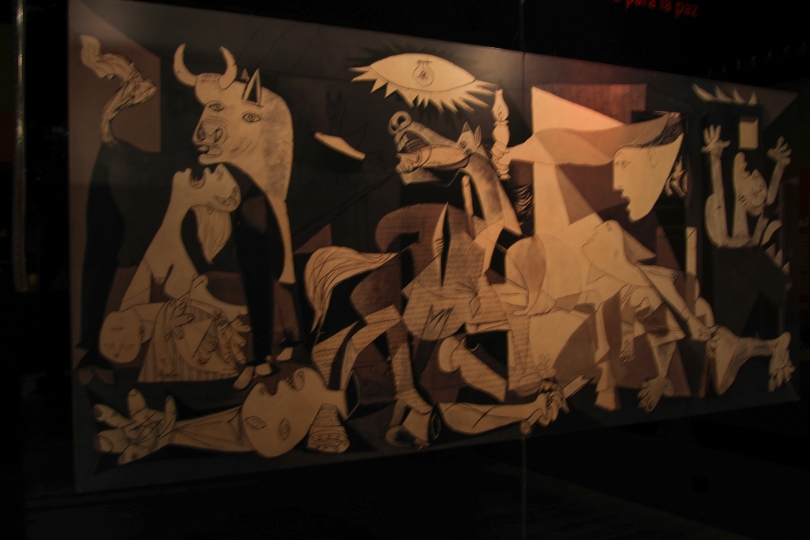
It was the event which inspired what has been described as the last political masterpiece of art, Picasso’s Guernica. Visiting the peace museum in the town there are several representations of Picasso’s work, set alongside many photographs of the destruction left behind. As with Ukraine and Gaza, and so many other places, the piles of rubble and scorched buildings stand as symbols of desecrated communities. There are always narratives that seek to find excuses for such actions. “Local people were sympathetic to terrorists; they sheltered them; they conspired with them”: therefore the cost they have paid is entirely proportionate. Only the delusional can believe that the eradication of schools; hospital and places of worship will bring about an enduring peace. Instead, it plants in the hearts of the survivors, and especially the young, a determination fuelled by a loss which seeks justice by all available means. These fires burn long, long, after the incendiary devices have done their worst.

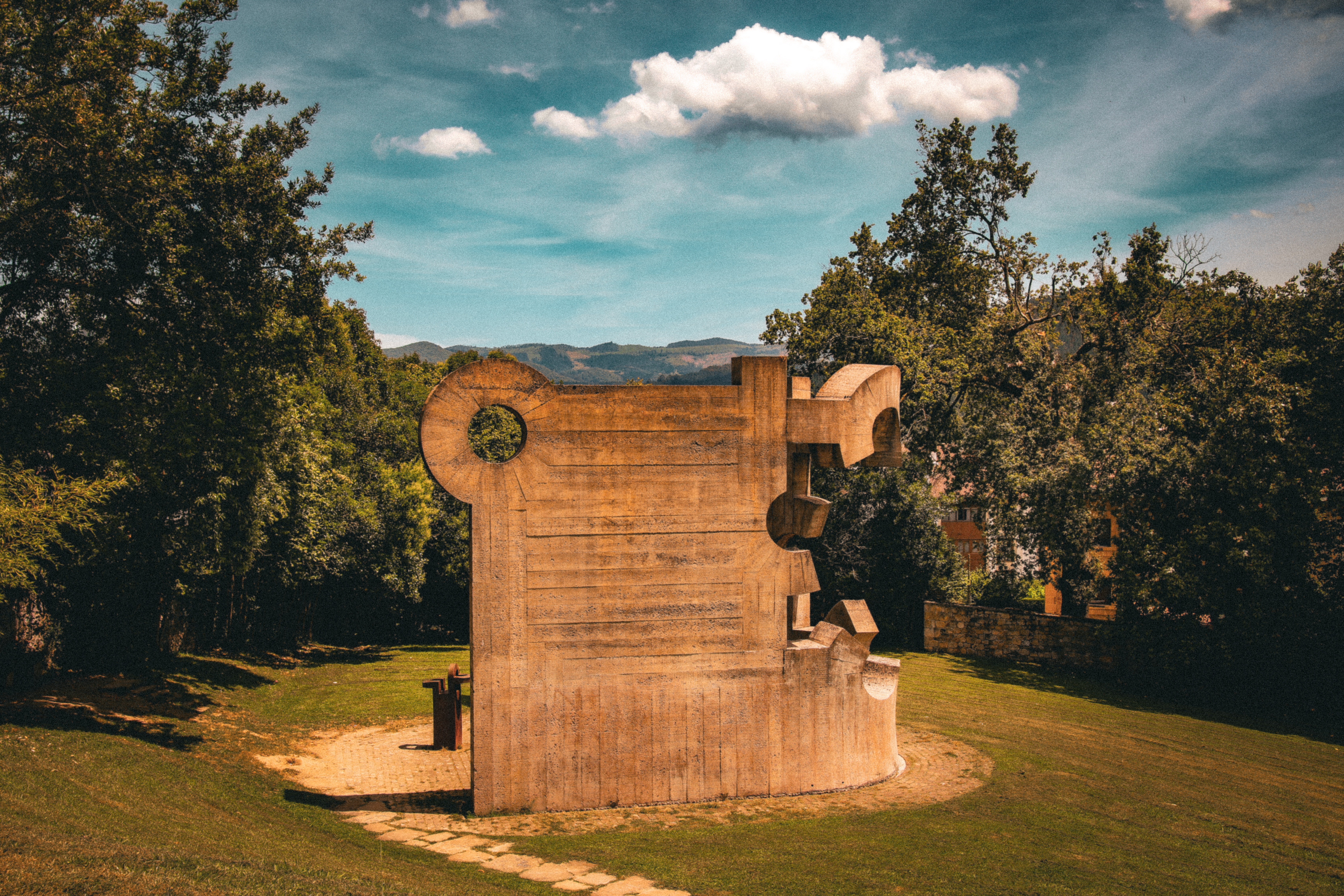
In Guernica’s ‘Park of the Peoples of Europe’ are works by the Basque sculptor Eduardo Chillida (pictured) and Henry Moore. Chillida’s piece (pictured) is entitled “Our Father’s House” and was commissioned to mark the 50th anniversary of the bombing.

The desire to eradicate difference is perhaps one of the most pernicious threads pulled through the most shameful parts of human history. When our arguments don’t prevail, or people seem unreasonably stubborn to retain their language or culture, let’s simply bomb them into submission. What we never seem to learn, despite the beguiling simplicity of this approach, is that it doesn’t work. It perpetuates hatred and drives culture underground, not to extinction. If a fraction of the energy and resource that went into war were taken to promote peace, we would live in a very different world. It took the horrors of WWII to create the United Nations, and several other institutions dedicated to promote understanding, peace and reconciliation. At some point, God willing, may we find in the aftermath of today’s destruction an equal determination to seek peace and pursue it.

Ashes Under Eboracum

Around the age of seven I went on a trip to Hadrian’s Wall. My parents took us to Housesteads, then on a walk along the wall from Steel Rigg. It is a dramatic and evocative setting, with the wall climbing the contours high up onto the Whin Sill. For whatever reason, it started an interest in Roman Britain that lasted well into my teens. The Lancashire town where I lived had Roman heritage, and a military shield boss found locally is in the British Museum. Encouraging my developing interest, my parents then arranged a tour in York – Roman Eboracum – with a local archeologist.

Living in that same city more than forty years later I’m mindful of the history lying just below the pavement. At least one of the sewers built by the Romans survives in excellent condition under Church Street in York. From Romans, to Saxons and Vikings, this patch of earth has been the centre of influence in the north for thousands of years. The Minster’s foundations stand in the remains of the heart of the Roman fortress – an empire of spiritual life supplanting the temporal forces that once ruled the city.

History has been in the news in the UK following the announcement that two modern universities plan to cut courses. There is concern that only elite centres of study will continue to offer history degrees. In a world where science is offering so much in responding to COVID-19, it isn’t difficult to see why some universities may be reviewing what they offer. Yet how short-sighted. Without doubt both humanities and the arts offer a vital dimension to our understanding and outlook. As I commented many blogs ago, when it came to COVID-19, our best academic modellers lacked the insight or imagination to appreciate how care homes interacted with their local communities. Without the disciplines that explore lived human experiences key dimensions of our understanding are absent. That absence can result in a failure to register vital elements of the reality we are addressing.

A people without the knowledge of their past history, origin and culture is like a tree without roots.


Marcus Garvey

History offers us perspective. As we study the past we encounter people very confident about how much they knew and how human life should be governed. These understandings have changed over time, and an important lesson for today should be the provisional nature of our knowledge. Science operates on the basis that there is more to know and, consequently, that what we take today to be certain may be questionable tomorrow. Many years ago, when running an elective course for medical students, I asked what proportion of all that could be known about medicine they thought was known today. With commendable candour one student pronounced it was ‘diddly-squat’. Our learning increases all the time and, when we look back at the past, we can experience horror at the medical procedures people once endured. Our great-great grandchildren may feel much the same when they look back at our response to the pandemic.

History has the power to teach us humility. It tells us that people made choices which seemed rational and wise at the time, only to realise that seeds of disaster were being sown. Understanding the past is vital if human beings are going to learn, change and live well in the future. Simply doing what we want in one generation fails to recognise that we are part of the future, and our choices have consequences that endure. This is perhaps one of the most important lessons in the response to climate change.

To-day the Roman and his trouble
Are ashes under Uricon.


From A Shropshire Lad 31: On Wenlock Edge the Wood’s in Trouble, by A. E. Housman

Housman’s poem reminds us that for all the power and reach of the Roman Empire, today it is a layer of ash under Wroxeter. The Roman remains of York are impressive and have endured a long time, but the people who built them and ruled here are gone. Much of the understanding about how the world works has changed over those centuries and, while some things may remain, human self-perception moves on. It will continue to evolve and change, hopefully with the aid of the arts and humanities bringing their own unique learning to our understanding. To lose that knowledge is too great a risk when we know how quickly human life can change. Living humbly with the limitations of our knowledge might be the most significant contribution history conveys to help us make wise choices today.