Liberation

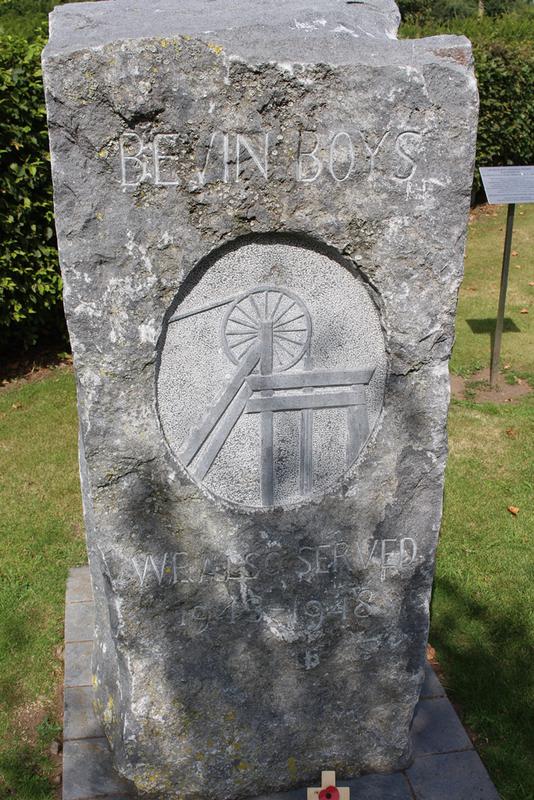
Sometime in the mid-1980s, while studying theology as an undergraduate, my tutor told us that the new language of our discipline was Spanish. He was reflecting on the fact that for most of the 20th century it had been German, but now the rise of Liberation Theology had shifted the axis of theology to the Southern Hemisphere. A few years later, while working and studying in Argentina, I asked my Spanish tutor whether we might read A Theology of Liberation by Gustavo Gutiérrez. I’m not sure my tutor enjoyed the experience of helping me understand the technical and unusual language of the writing which Gutiérrez embarked on in the late 1960s, but it was undoubtedly memorable for both of us! Last week, this Peruvian priest, sometimes called the “father of liberation theology”, died aged 96.

At the beginning of an interview with the Bishop of Blackburn before my ordination in 1991 there was a moment in silence during which he perused my file. Suddenly the bishop latched onto a comment about my interest in Latin America and exclaimed: “Liberation Theology – in my Diocese!” This has seldom been a theology which has lifted the hearts of prelates, and he probably felt fairly safe by stationing me in the leafy suburbs of Preston. Nevertheless, even there, I managed to cause a little trouble now and then, not least over the ordination of women and by developing a social responsibility group in the parish.

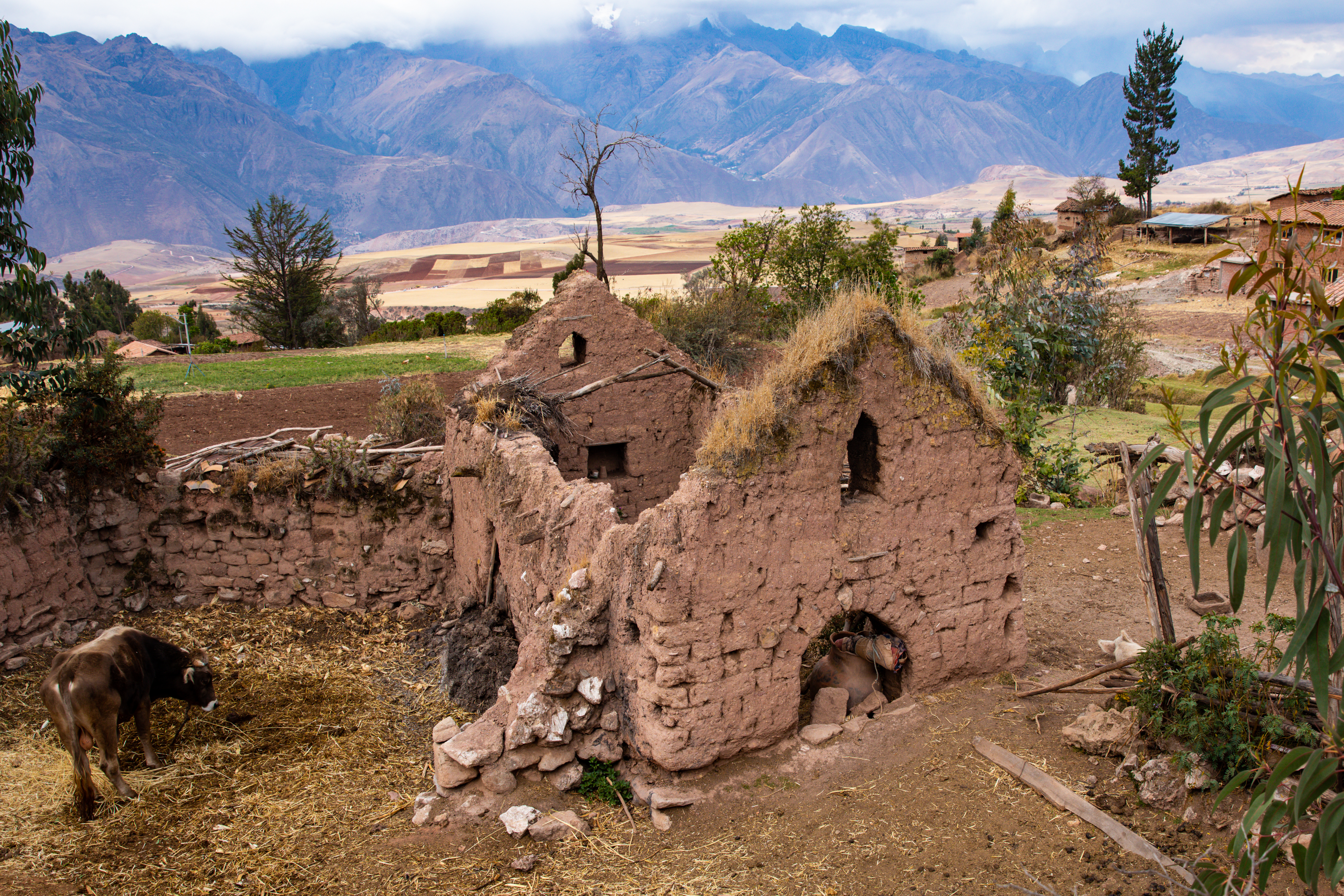
Poverty in Peru continues to be widespread despite progress achieved before the onset of the pandemic. Today, seven in ten Peruvians are poor or are at risk of falling into poverty. Picture taken during a visit to a social development project in rural Peru, 2022.

During my time in South America I observed that capitalism flowed more sluggishly than in Europe. It felt as if the aspirations of Western living were there, and some of its attributes and mechanisms, but it seemed that there was simply too little resource to make it happen. Comparisons can be odious, but this felt like the periphery of a system which served the North well, by sacrificing the best interests of the South. To note the fragility of structures in Latin America is not a criticism, but a recognition of the consequential dependency which the wealthy countries maintain with poorer nations. If the blood of finance flows more slowly in the South, it nevertheless continues to serve the interests of the North.

“The poor are a by-product of the system in which we live and for which we are responsible. They are marginalized by our social and cultural world”.

Gustavo Gutiérrez, The Power of the Poor in History

The scale, power and vested interests of capitalism feel insurmountable. No doubt many see it as the least-worst system for organising resources and creating successful societies. The truth is that this domestic security in the West – which is far from perfect – is paid for by many other communities across the world. The natural environment is ravaged and abandoned; societies are left in a state of daily hunger; the consequences of climate change are denied by powerful leaders. As is almost always the case, the least well-off shoulder the worst excesses of system that perpetually widens the gap between wealth and poverty.

Resignation in the face of injustice was never an option for Gustavo Gutiérrez. Like so many pioneers he experienced the scepticism, doubt and hostility which innovation brings. At one point he seemed destined for a formal rebuke by Catholic bishops – if not the Vatican – but this was headed off following an intervention by the eminent Jesuit theologian Karl Rahner. The influence of Gutiérrez continued to be felt across Latin America, and elsewhere, throughout his life. It will continue after his death. His passionate concern for the authenticity of the Church, by renouncing privilege and choosing instead to advocate for the poor, was always rooted in the Gospel and the Jewish Scriptures. Solidarity with the poor was the cri de coeur of Gutiérrez, as well as the product of his theology and lived experience. Ultimately, by the movement of the Holy Spirit in the world, the mission of God to which Gutiérrez bore witness will find fresh hands and voices to continue the work of liberation, which the Peruvian saw as the fundamental nature and purpose of Christ.

A Theology that Connects

The image at the head of this blog, entitled “the death struggle”, was painted by Edvard Munch. The struggle depicted is not primarily that of the person dying, who cannot be seen, but is found in the faces of those expressing their grief. In some measure, in their bereavement, they are beginning to grapple with an altered reality. Very often the faces and experiences of both the unwell, and those who care about them, are remote in the work of theology. In health care chaplaincy in particular, the vast majority of theological reflection and writing is done by the professionals, not by the people undergoing the experiences of illness. This is why a recent article by Professor Graeme Smith is interesting. It draws on evidence from research into the experiences of seafarers who have received ministry from chaplains. Entitled “A theology of chaplaincy from below”, it explores the sailors’ narratives to make the argument that the recipients of chaplains’ care are people who produce of a theology of their own.

It is true that there is a very limited range of material which elicits and explores the experiences of people who receive chaplaincy care. Even when it does happen, it is often filtered through the voice of the chaplain, describing the chaplain’s perception of how people have responded to what has been offered. Equally, a large proportion of what is gleaned is framed as “customer satisfaction” rather than theological insight. The reasons for this are clear, as the secular employers of many chaplains are much more comfortable with these kinds of metrics than with data from a field of study and information with which they may be unfamiliar: theology. Graeme Smith is also right in identifying a suspicion of theology and religion, which may make the use of material framed in this discipline a matter of contestation and doubt.

Smith also analyses of the chaplains’ responses to questions about their theology and purpose. Here he finds that their theology of chaplaincy is both brief and vague. The chaplains would speak about a “ministry of presence” and might expand that to include reference to “incarnational theology”. While I am familiar with this style of response from chaplains I think it would be accurate to note that health care chaplains might also add theodicy and ethics. Similarly, in recent years, some military chaplains would be able and willing to articulate their theology in relation to the growing field of “moral injury”. Perhaps one of the systemic issues Smith identifies in his work has developed as a result of greater inter-faith working. While this is excellent and valuable it may have inclined teams to focus on their areas of common concern and diminished some of the deeper exploration of theology within a particular faith.

While the notion of “being there” in chaplaincy has been a widely accepted trope for professional spiritual care, the COVID-19 pandemic placed that concept under considerable pressure. Being there added to the risk factors of caring institutions. One more body out and about on the wards, or in care homes, added to the risk of the virus being brought into the setting. Was being there essential? As it emerged over time, there were marked differences between chaplains ministering at a distance and those still able to be a physical presence in the hospital or care home. While it might be possible to interpret the incarnation as the needless burdening of Mary and Joseph, with pain and cost to come, God-at-a-distance and God-among-us represent theologies that are worlds apart. Good things did happen at a distance, but it appears that the presence of the chaplain in places of acute loss and suffering had an altogether different quality and consequence.

“It must be very difficult for chaplains who are not able to go into their home and schemes, because I’ve experienced that for retirement living, really not the same. It’s really not the same. Chaplaincy is hands on, face to face and I’m very conscious at least I’ve been able to do, and that must be frustrating for others who have not been able to”.

Swift, C. (2020). Being There, Virtually Being There, Being Absent: Chaplaincy in Social Care During the COVID-19 Pandemic. Health & Social Care Chaplaincy, 8(2).

Without doubt chaplains could do more to articulate and develop the theologies of their ministry. Megan Smith sees this as essential in order for chaplains to sustain their identity and not get wholly absorbed into the institutional paradigms of the places in which they serve. Further, she argues that a simplistic interpretation of incarnation as “being Christ to others” often fails to take full account of all the dimensions inherent in the incarnation. For example, the Word made flesh has a prophetic, critical and challenging edge, which may not be understood or expressed in the ministry of chaplains. At the same time, there can be a misperception that the chaplain comes to bring theology into the institutional setting, while not taking proper account of the possibility that theology is already there – waiting to be encountered.

In my role as a chaplain I have never doubted the importance of theology in what I do, or for the context of a large and complex institution. Theology asks unusual questions and stimulates debates which often lie silent within the discourses of the spiritual. Accessing the theology of the recipients of care is not always easy, but I agree that it is necessary. This is not only for the benefit of chaplains and those to whom they offer care. I have long said that the place where theology is written is very significant. Theology written in intensive care; during a pandemic; in A&E; or from a prison cell, speaks from a place where the tidiness and safety of doctrinal certainty often buckles under the messy complexity of living. The work of Jens Zimmermann on incarnational humanism might offer one route to finding a fuller account of the incarnation as a basis for a theology developed by everyone caught up in a community defined by common characteristics. This might be NHS patients; military personnel; or a community of seafarers. It is significant that Zimmermann finds in Dietrich Bonhoeffer, the prisoner-theologian, the epitome of this approach to theology, where the Christ comes to fulfil our humanity:

“because Christ died for our true humanity, the Christian works for the common good in society as best as possible under any given circumstances”.

Zimmermann, J. (2016). Bonhoeffer’s incarnational humanism. Theologica Wratislaviensia, (11 Dietrich Bonhoeffer na 500 lat Reformacji), 73-86.

Divinity must live within herself

I am banned from cycling in misty conditions. This followed a rather painful altercation with some construction fencing that had strayed into the road at the bottom of a long downward incline. On a grey morning, in grey weather, and against a grey road-surface, the grey fencing didn’t register: until I hit it. Suddenly, I was sailing through the air, extending my left arm ahead of me, a reflex action of protection, and landed painfully some yards ahead of the now stationary bike. A lorry driver stopped. Dazed and disorientated I got myself up, beginning to feel an intense pain in my left shoulder. With all the ridiculous desire of an Englishman not wanting to make a fuss, I declined all offers of assistance, placed my bike out of the way, and decided to get a bus towards the hospital where I worked. Once there I went to my office in order to get changed before presenting myself at A&E (one has to have standards). I thought I had broken my shoulder but, it turned out, I had broken the fifth metacarpal of my left hand in two places. I soon learned that it’s an injury called “boxer’s fracture”. At a later date, casting an uncertain eye over me, a surgeon (who clearly didn’t feel I fitted his image of a pugilist) asked me how I acquired the breaks. He suggested that perhaps I should desist from cycling in the future.

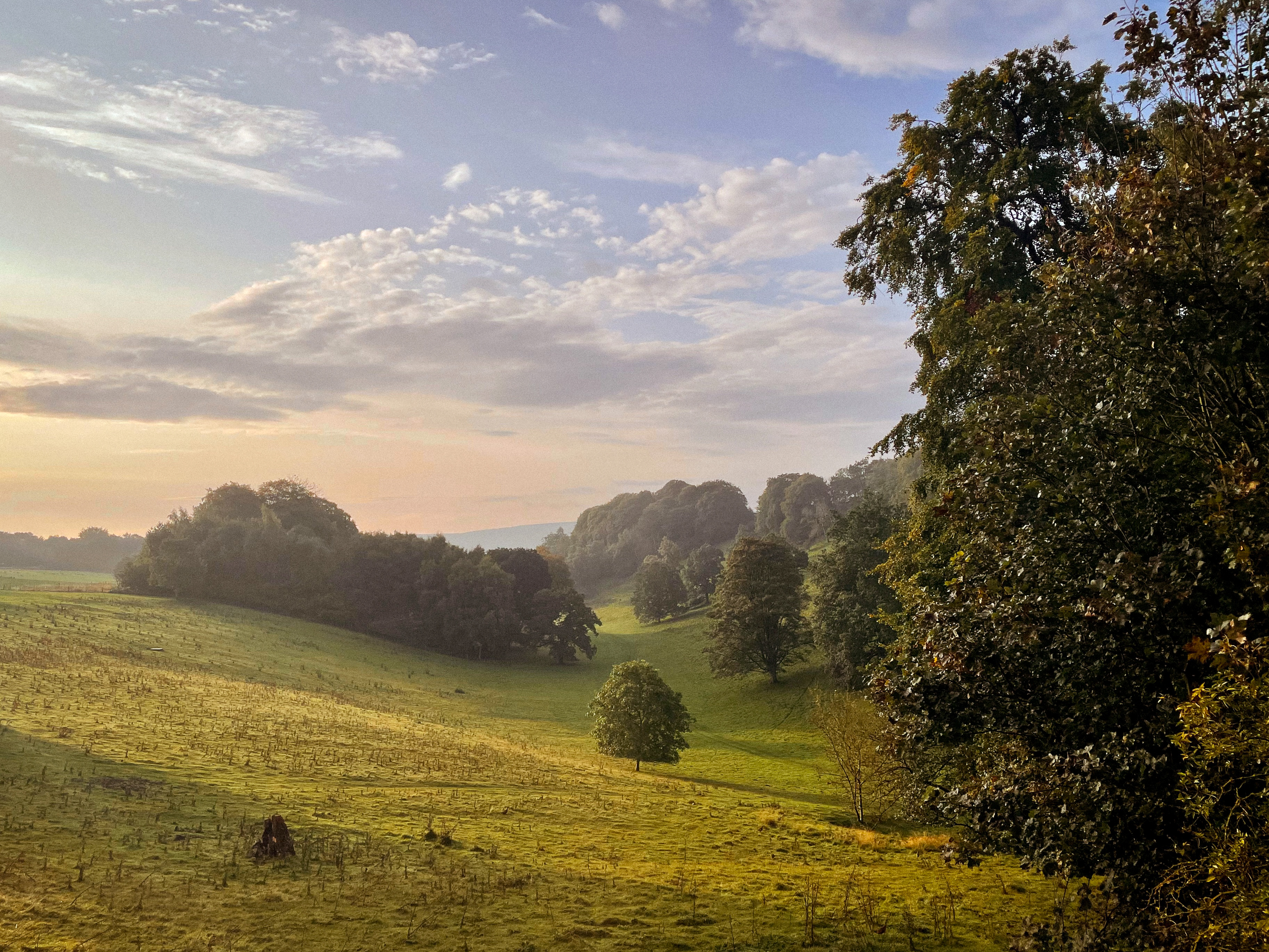
Low mist across a ploughed field, near Linton-on-Ouse, October 2024

I did not follow the consultant’s advice, although I have made it a general rule not to ride me bike when visibility is impaired. However, last week, setting out on a beautifully clear sunlit morning in York, I began to encounter misty conditions on the outskirts of the city. Weighing up the likelihood that conditions would improve I pressed on to my planned destination of the Aldwark Toll Bridge, about 15 miles from the centre of York. As I anticipated, when the sun got higher the mist receded and it turned into the kind of bright and clear autumnal day which is the muse of poets. Down country lanes the landscape spoke of the changing season: ploughed fields with the dark earth turned in readiness for growth to come. Trees beginning to bear a foliage of yellow, bronze and green-become-gold.

What is divinity if it can come
Only in silent shadows and in dreams?
Shall she not find in comforts of the sun,
In pungent fruit and bright, green wings, or else
In any balm or beauty of the earth,
Things to be cherished like the thought of heaven?
Divinity must live within herself:
Passions of rain, or moods in falling snow;
Grievings in loneliness, or unsubdued
Elations when the forest blooms; gusty
Emotions on wet roads on autumn nights;
All pleasures and all pains, remembering
The bough of summer and the winter branch.
These are the measures destined for her soul.

Extract from Sunday Morning by Wallace Stevens

It would be very hard to live without this cycle of outer change. In the northern hemisphere they are part and parcel of my spirituality. Within the altering length of days, and the transitions of spring and autumn, Western Christianity has moulded itself into the furniture of the seasons. From the heavenly sparks of Michaelmas, with the equinox behind us, to the remembrance of All Saints and All Souls, liturgy marches to the tune of a changing year. Over the past three decades I have taken funerals in autumn that have a particular poignancy – of change and decay – with a need, somehow, to return home before the darkness falls. A time to comfort one another in a season that tells us, as all seasons do, that while they might occupy a span of time, they can also be a mood; an atmosphere; and a state of being, which greets us on any given day. Divinity is not only something that comes to us in silence. Nor is she confined to some specific time of the year. God is in all these seasons, and the spirit of all these seasons dwells in us.

Wings of Longing

Recently I was prompted to ponder whether angels have beards. I was visiting St John’s church at Howsham, in the Harton Benefice, north east of York. In the church’s porch is a carving of an angel sporting a beard (below). It was a sight that stimulated thoughts about angels, our tendency to anthropomorphise these heavenly beings, and what our long history says, across many faiths, about angels in the 21st century. As it happens, the appearance of angels has a lot to do with our imagination and how people conceived of beings who can span the divide between the secular and the sacred.

Today, on the Feast of St Michael and All Angels, it might be helpful to recall that many theologians across church history have not viewed angels as corporeal. Instead they have been regarded as expressions of Divine thought and agency; the light of heaven that breaks into the darkness of this world. Of course, in the history of art they are consistently represented as beings akin to people, albeit extra-shiny and with a pair of wings. Their expressions are typically impassive, like good servants they betray neither joy nor sorrow about the news being conveyed. The notable exception to this is the antics of the heavenly host at the Incarnation, joyfully praising God and generally whooping it up.

Thomas Aquinas, the Angelic Doctor, famously wrote of the “Bread of Angels, made the bread of people”. Panis angelicus is a stirring hymn of praise to God for the grace of sharing with humanity food which is the everyday fare of heaven. Consequently, at the Eucharist, angels are always referenced in the liturgy. As bread and wine are taken and consecrated, the material becomes one with the Divine, just as it did when the Word became flesh. This enacts a significant truth of Christianity: that in Christ the world is being redeemed. It is a central tenet of orthodox Christology, expressed in the Athanasian creed, that Jesus was perfectly divine and perfectly human. This was not God and a man sharing a room! The presence and witness of the angels in the liturgy expresses this fulfilment of the secular in the sacred. In the birth, death and resurrection of Christ, humanity is truly “ransomed, healed, restored, forgiven”.

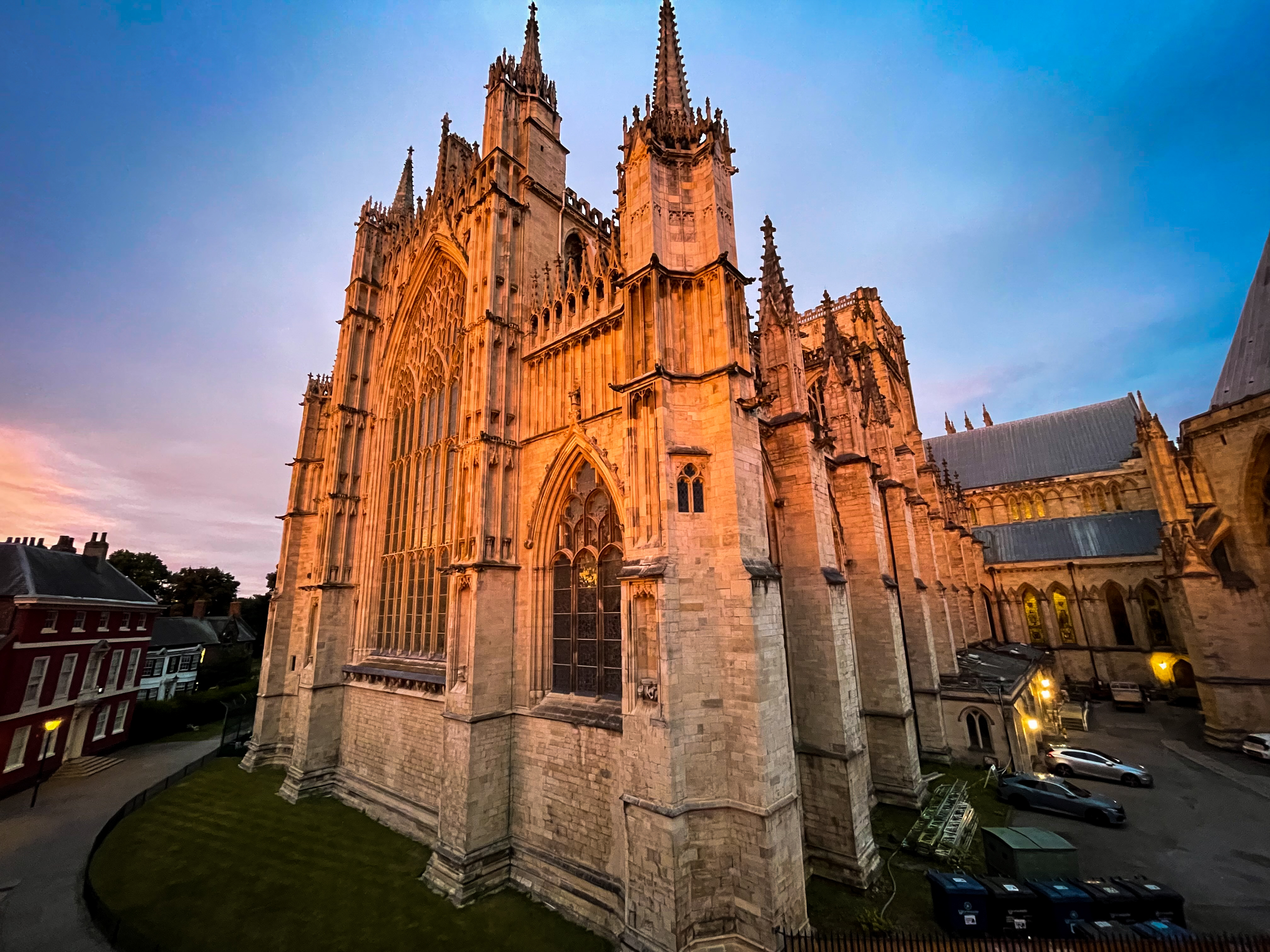
“The beast taken” Revelation 19:20. York Minster Great East Window

Angels are not beings confined to churches and places of worship. The biblical references to them are most often in the secular, encountering people out in the world. Their strangeness and seemingly random appearances inspired the author of the Letter to the Hebrews to remind us that in our reception of others “some have entertained angels unawares”. During a time as poet in residence at Bradford Cathedral, Diane Pacitti published a collection of poems entitled Dark Angelic Mills. In the final entry, ‘Angels in Bradford’, Pacitti reflects that angels come in many guises. Perhaps as ‘kindertransport children, Asian workers, Syrian refugees, Rohingya Muslims’. In her poem, just as each church had its angel in the Book of Revelation, she invokes the spirit of St John to call into being the Cathedral’s angel:

Let it spread
huge-feathered wings over this hut of stone.
Let the song of wonder weave into its prayers
and seep into its silences. Angel-voice,
speaker of demanding truth, send out this church
to affirm the holy in what seems most broken.

Dark Angelic Mills by Diane Pacitti, Norwich, Canterbury Press, 2020.

The Church should always be the place which drives the heart of our participation in God’s mission of love for the world. We are drawn in, revitalised, and expelled back into the pathways that take us to both places of obvious significance, as well as to the peripheral and the neglected. In the ‘hut of stone’ where the church gathers we should encounter again the moment when the secular and the sacred meet: ‘the end of all symbols’ and the place where we are fed with the bread of angels.

Something Art Can Do

A recent visit to the Auckland Project exceeded my expectations. The investment in a range of cultural, historic and artistic exhibits in this market town has been extraordinary. The excessive scale and grandeur of the Bishop of Durham’s official residence has been transformed into a visitor attraction, with a new gallery of world faiths added to the property. While the timing of the project’s opening was ill-fated, coming just months before the first lockdown in early 2020, it appears that in recent years the ambition to make the former mining town a major tourist destination has been realised.

In the episcopal residence, Auckland Castle, rooms have been themed according to many of the former bishops. This means that the furnishings are contemporaneous with the figure being celebrated, and in some cases an audio or visual loop of material is featured. For example, in remembering the controversial prelate David Jenkins, there is an extract of an interview in which he speaks about his understanding of faith and the central tenets of Christianity.

Close to the centre of Bishop Auckland, just a short walk from the Castle, there is the Spanish Gallery. Billed as “the UK’s first gallery dedicated to the art and culture of the Spanish Golden Age”, it is an impressive collection. The connection that underpins this addition to the town lies in the famous paintings which fill the walls of the Bishop’s dining room in the Castle. These are Jacob and his Twelve Sons by Francisco de Zurbarán, bought by the Bishop of Durham in 1757. It would be hard to find any collection of Spanish art in the UK, outside of London, which could compete with what has been brought together in this northern market town.

“This world class gallery, which is spread across four floors and housed in two stunning Grade II listed buildings, is fast becoming a must-see for art enthusiasts across the North East of England and beyond”.

Reflecting on both the gallery and the Castle, there is an interesting juxtaposition of inspiring artwork and the more mundane “management of religion”. Bishops have no doubt inspired many people over the centuries but, for much of the time, they have turned the wheels of religion to maintain the institution and – in the case of the Church of England – upheld the status quo. This is particularly true for the prince bishops of Durham, who often served as the State’s enforcer in the north. Such a role entitled the bishops to the magnificence of a stately home, great wealth and the other privileges of office. Some, including Bishop Westcott and David Jenkins, subverted these expectations by siding with the miners during industrial disputes. However, they appear to have been the exception rather than the rule.

“The Bishop was loudly cheered by the miners, who had assembled in large numbers in the streets of Bishop Auckland; and he has every reason to congratulate himself on the results of his intervention”.

The Spectator, “The intervention of the Bishop of Durham (Dr. Westcott) in the Durham miners’ strike” 4 June 1892

The question my visit provoked is about the relationship between the bureaucracy of faith and the creativity which often inspires and disturbs our taken-for-granted expectations. Finding them sitting so closely side-by-side at the Auckland Project was an unusual experience. When Bishop Richard Trevor bought the paintings for the Auckland Castle dining room, they were not for general viewing. This was an experience for the elite and the Castle and grounds exuded wealth and privilege. While the Auckland Project has opened up these treasures (for a reasonable price), and located them close to several narratives about previous bishops, it begs a question about the role of the Established Church. Many major works of art have been commissioned by wealthy prelates, and some of these continue to provide inspiration today, but how is a far less mighty Church maintaining its task of providing space and inspiration for wide variety of people to engage, contemplate and be changed? There was a glimmer of hope about this at the end of the faith exhibition where major works by the contemporary artist, Roger Wagner, are hung. Wagner is someone who knows how transformative art can be in the journey of faith:

“It was the first thing that brought a sense of personal connection with the Gospels – which I’d studied, but never seen that you could enter into them in that kind of way. Something art could do which I’d never envisaged before”.

Roger Wagner speaking to The Church Times in 2013.

A Healthy Grave

Yorkshire seems to have had more than its fair share of notable clergy. My forthcoming Lent book concerns one of these, Laurence Sterne, but another distinguished figure is remembered in York – Sydney Smith. Born just three years after Sterne’s death, Smith became known for his wit, politics, writing, and philosophy. He had a remarkable turn of phrase. For example, when wishing to convey the remoteness of his country parish at Foston-le-Clay, he wrote:

‘My living in Yorkshire was so far out of the way, that it was actually twelve miles from a lemon.’

That probably wasn’t true as Foston was only five miles away from Castle Howard where, I can only assume, lemons and every other kind of produce were in rich supply. However, Smith was no doubt correct that he was living a considerable distance from the nearest place to buy a lemon. At Castle Howard he is remembered and celebrated with a plaque that was installed in 1999 by the Sydney Smith Association.

I am fortunate in living not more than twelve yards from a lemon, and therefore I can only guess at Smith’s experience of rural deprivation. However, for much of his working life Smith knew what it was to have lemons close at hand, and the requirements of rural ministry may have come as something of a shock. Elsewhere he writes: “I have no relish for the country; it is a kind of healthy grave”. He had lived in the metropolis of Edinburgh and was undoubtedly used to a wide choice of comestibles, culture and company (well, as wide as it got in the early 19th century). It was here that Smith was involved in launching the Edinburgh Review in 1802. This was a potent platform for liberal views, and began to call for political reform.

The church at Foston appears to have been neglected for a significant period before Smith arrived. There had been no rector, the duties being devolved to a curate. One of Smith’s first tasks was therefore to plan the construction of a fitting rectory. Illustrating the moribund state of the parish Smith wrote:

“When I began to thump the cushion of my pulpit … as is my wont when I preach, the accumulated dust of hundred and fifty years made such a cloud that for some minutes I lost sight of my congregation.”

Smith’s stature as a witty cleric, inclined to political reform, brought him the prospect of preferment in the Church. There was a time when it was possible he would have become a bishop, but for various reasons this never came to pass. When Lord Grey became prime minister in 1830 he was able, within a year, to advance Smith to a residentiary canonry at St Paul’s Cathedral. However, that was the last preferment which Smith received, and he soon realised that further progression was not in prospect. To the end, Smith retained and exemplified a generous spirit and commitment to a constructive and humane expression of religion.

“I hate the insolence, persecution and Intolerance, which so often pass under the name of religion, and, as you know, have fought against them”.

* The photo heading this blog is of the church at Foston: by Stephen Horncastle, CC BY-SA 2.0, https://commons.wikimedia.org/w/index.php?curid=9290721

The Little Church

As happens from time to time, I caught different parts of the same radio programme on separate days. The topic was the rise and fall of Little Chef, the roadside restaurant chain which began in 1958. At various times the firm found itself in trouble and experienced rescues and takeovers. For a long while it was a popular brand although I recall, in the early 90s, experiencing slow and variable service; uncertain standards of cleanliness; and very indifferent food. I began to avoid them at all costs!

The Radio 4 programme, in the series Toast, was first broadcast back in April. In many ways it was the sorry story of a brand that had lost its way, despite some frontline staff putting considerable faith in its culture and potential. At one point the many of the properties used by the chain were bought, then sold and leased back, in order to raise cash to invest in the fabric and the food. Despite the understandable attraction of this approach there are many examples of companies that come to regret the long-term obligations to the freeholder that are integral to leasing. Come rain or shine, prosperity or austerity, charges stipulated from the lease continue regardless of the wider economic realities.

“The main lesson for this, is to not let nostalgia make you fall in love with something that no longer has a purpose in the society that we live in today”.

Sam Alper, entrepreneur, speaking on “Sliced Bread. Toast – Little Chef” Radio 4, 25 August 2024

Hearing Sam Alper’s final assessment of Little Chef’s difficulties and eventual demise, I could not avoid thinking of the Church of England. Of course, I don’t believe that the C of E lacks a purpose. Presumably Little Chef was served by the underlying reality that everyone gets hungry, not least on a long journey. The appetite was there and Little Chef attempted to deliver the goods in a way that was appealing to people and made it their preference when choosing where to eat. The Church exists in a culture awash with spiritual needs; a desire to be loved and included; and people’s hunger for life’s purpose and meaning. However, the Church has largely failed to connect the story it carries with the needs of the people it is called to serve.

In the silly season of summer news reports, it was hardly surprising that some unrelated stories and commentaries were nicely turned into a yarn about how the C of E was trying to rebrand. The delightful – if erroneous – narrative was that the Church wants to stop using the word ‘church’. Andrew Brown in the Church Times gives a synopsis of how the story emerged. The difficulty in wholly denying the idea is that various churches and new expressions of church have indeed chosen a more zappy and (allegedly) appealing nomenclature. Why bother with the fusty old church when you could attend Sanctuary, complete with complementary bacon rolls?

Of course, none of the new ecclesial communities are free. There is very weak evidence to suggest that these entities establish the kind of commitment and income associated with traditionally parish churches. The flip side of the doom-and-gloom about the health of parishes is that so many manage to sustain their viability with the dedicated work of such a small number of people. Ancient buildings are maintained; children are baptised; weddings take place; and some money is channeled towards the diocese. Often these churches are in double-digit groups served by a single vicar or, indeed, a priest doing the work voluntarily. Across much of north Yorkshire these churches are open daily and welcome walkers, cyclists and those wishing to discover a significant cultural and spiritual space.

If the fundamental nature of the Church of England is changing the consequent risk is that it ceases to be the Church of England. The embedded reality of parish ministry, with the local cleric living in and among the people, meant that there was time for the vicar to be involved in a wide range of social, cultural and civic activities. These could range from the governance of schools, to local charities, to the annual pantomime. This was not a perfect system, and clergy inevitably vary in their gifts and qualities for this kind of ministry. Yet, at its best, people knew the parson and there were countless opportunities for serious conversations about faith to take place in different contexts every day. As a curate in the early 1990s there was a rich variety of engagement with a broad cross-section of the parish. Between individual conversations, and presiding at funerals and weddings, several thousand people each year had the opportunity to hear and experience our expression of the Gospel, in all its imperfection and glory. This wasn’t all down to the vicar, but paid staff can provide a particular focus, representation, and professional knowledge which, when shared and supported, can be empowering and transformative.

Perhaps I am simply being nostalgic. When Tony Blair came to power in 1997 there was a moment when it appeared he might want to harness the role of the Church of England to achieve social change. For example, he intervened to influence the appointment of the Bishop of Liverpool. At the same time the Secretary of State for Health met with leaders in hospital chaplaincy to launch a landmark programme of diversification and inclusion. Tellingly, following Keir Starmer’s landslide victory, there has been no talk about the role of the Church of England in supporting a programme of change. The little Church appears too diminished and distant to be considered a meaningful partner in supporting the vision of a social Gospel of national consequence, in the style of William Temple’s Christianity and the Social Order.

The remedy? Have faith in the parishes; support the parishes; fund the parishes. In an editorial in the Church Times it was calculated that the ‘cost’ of obtaining each new church member through innovative and strategic activities was about £5,800. I wonder what kind of Church of England we would have if every parish had been offered one-off support funding of £6K for each new regular worshipper they were able to attract? By support funding, I mean additional resources for developing initiatives appropriate to their context, be it launching food banks, purchasing high quality training or running missional programmes. Maybe even subsidising activities based on hospitality, such as Harvest Festivals or other community celebrations.

Above all, trusting the clergy and people of the parishes with what are, in essence, their historic funds, to further the vision of God they have discerned for their circumstances. I suspect that if that offer had been made, the Church would have become a lot more creative and exciting, with funding spread across all church traditions, and not weighted towards certain styles of community and worship. The end result, building up the parish system, might have amounted to a lot more than the little Church.

England’s Bloodiest Battle

I had wanted for some time to visit the town of Towton. Not so much the town itself as for the fields which rise above it on the way to Saxton. Here a battle took place in the 15th century which may have cost more lives than any other conflict on English soil. It was part of the War of the Roses, and some estimates claim that 28,000 Lancastrian and Yorkist soldiers lost their lives in a single day. Over time the signs of battle have vanished from a landscape now given over to agriculture. It cannot be claimed with certainty where the spot lies on which the warfare took place. However, on the 29th of March 1461, during a snowstorm, two mighty armies clashed and laboured for several hours to prevail. It was Palm Sunday.

This battle is a central event in Shakespeare’s Henry VI part 3. The exhausting and bloody nature of a conflict in which the armies were evenly matched is expressed in words the Bard gives to King Henry:

Now sways it this way, like a mighty sea
Forced by the tide to combat with the wind;
Now sways it that way, like the selfsame sea
Forced to retire by fury of the wind.
Sometime the flood prevails, and then the wind;
Now one the better, then another best,
Both tugging to be victors, breast to breast,
Yet neither conqueror nor conquerèd.
So is the equal poise of this fell war.

Shakespeare, W. Henry VI part III, Act 2 scene 5.

Gazing across fields, above which huge clouds pass serenely, it is hard to imagine the butchery that took place here more than half a millennium ago. The loss of life is all the more extraordinary given the weapons available at the time. War was a matter of sustained labour, with sheer physical force being the principal means of achieving victory. Being a soldier required strength and stamina and the chances of survival were poor if you were injured in any way, as the medicines of the time had limited effects.

In Macbeth, Shakespeare describes another military encounter, also finely matched: “Doubtful it stood, As two spent swimmers that do cling together And choke their art”. This would be a fitting description of the struggle across the fields near Towton. Perhaps, in some cases, there are worse things than an immediate and crushing defeat. The attrition of balanced forces was devastating for the communities involved. At the time of the battle England’s population was under 2 million and the losses of the day may have amounted to more than one percent of the nation’s inhabitants. Inevitably, this figure would have included an even greater proportion of the able-bodied men of the time.

Today, the fields above Towton look no different from the the arable land that stretches east towards York and west towards Leeds. The history of the place is told on a couple of display boards with a trail that takes visitors across the most likely places of significance during the battle. The devastation of this domestic conflict is long disappeared, but it has become a place for people to visit and contemplate the history of warfare, politics and – it is to be hoped – the continuing necessity to labour for the peaceful resolution of conflict

Lancashire Low

It’s probably a phrase which means nothing to all but a few people today, but ‘Lancashire Low’ was once a term applied to the character of the worship offered in the churches of that county. I heard it first when speaking with an ‘ACCM selector’. These figures were the driving force of the Church of England’s process for selecting candidates to train for ministry. Having lived all my life in Lancashire this description came as news to me although, intuitively, I recognised what it was describing. Not high up the candle ‘bells and smells’; nor ‘happy clappy’ evangelicalism, but a fairly sober, minimalist and no-frills approach to divine service. During my childhood and adolescence, as the C of E began to experiment with new liturgies, this character was beginning to change. Perhaps most notably, the Eucharist was becoming the most central act of worship, and a variety of vestments were beginning to be used more widely.

“the Lord’s Supper is a sacrament of our redemption by Christ’s death; it is not only a badge or token of our profession, but rather a certain sure witness and effectual sign of grace and God’s goodwill towards us, by which He doth work invisibly in us, and doth not only quicken, but also strengthen and confirm our faith in him”.

Mary Astell (1668-1731)

One of the parishes in York which I am supporting on Sundays could not be further removed from ‘Lancashire Low’. The church of St Lawrence, a few yards outside the city wall to the east, was built at the time of Catholic emancipation to offer a High Church, Book of Common Prayer, liturgy for people who might otherwise have been attracted across the Tiber. On Maundy Thursday, when the church is stripped of all adornments, the vestry overflows with the sheer quantity of vestments, candles, hangings etc. etc..

Despite the disparity between the church of my youth and this particular church, there are many interesting features in the character of St Lawrence’s. Firstly, located in an area of significant student accommodation, it counts many 18-30 year olds in its congregation. As is the manner of High Church liturgy, there are lots of ways for these young adults to get involved, for example, in the choir or serving. Perhaps in an age when choice continues to be elevated as the principal virtue, the given nature of the liturgy – its specification and detail – holds a counter-cultural appeal. Also, in a world of words, the presence of fabrics, colour, smells and bells, offers an in-person sensory experience that is welcome and appealing. All too often, when I assist at other churches, there is only the vaguest awareness of a pattern or tradition. “Wear what you like” can be the unhelpful response when I ask about the usual clergy attire for conducting the service. More often than not there are no vestments at the church or, if there are, the sets are incomplete.

Unusually, with an immense amount of hard work by dedicated laity, this church has been transformed from near-closure to become one of the better-attended churches in the city. There has been a sustained commitment to weekly Evensong on Sundays which has established a strong choral reputation and can see attendances reach a hundred. Generous gifts and successful grant applications have put the fabric of the building back into good order. None of this has been easy, not least because many students are only with the church for a few years while some, however, have decided to make York their home and continue to worship and assist at the church.

It is not possible to convey the Gospel, or help people shape and develop their religious life, without contact and engagement. Over many years the church of St Lawrence has done the hard work of building student engagement and outreach. Despite the assumption of many people that a church using the Prayer Book would be destined to failure, the opposite has been true. This is not without risks, as there can be a temptation in any tradition to see what is at hand and miss that to which it points, but you can’t get somewhere unless you start somewhere. In recent years several young men and women have entered on a journey of vocation leading to ordination. This is a church that has an ebb and flow of involvement, but it is unlikely – whatever happens in the future – that people will forget the experience of worship into which they are invited and immersed at a formative stage in their lives.