Autumn – Another Beauty

Today I had one of those salutary moments, when something simple makes you pause. For the first time in several month, with a slight chill in the early morning air, I put on a winter coat. As I reached into a pocket I pulled out a face mask. In an instant I was reminded just how long the pandemic is enduring and how, half a year later, we are once again looking at a curve that is rising at a vertiginous rate.

Most of the cost of this protracted crisis will not emerge until after a point of solution or stabilisation is reached. We are now living through what a friend describes as a ‘chronic emergency’, which will no doubt have more and less acute phases. A recent two week holiday in the UK had occasional moments when it felt as though I was on furlough from the front-line. Still hearing the reports of struggle and danger but removed from its immediate impact.

Spending time in the depths of rural mid-Wales had much of the benefit of being on retreat. The weather was an unexpected gift of warm days and comfortable nights. Across a landscape of hills, woodland and waterways, the turn of the year was coming into view as foliage showed the first signs of autumn. Sitting by the River Wye just above Rhayader I was reminded of a reflection which took place much further downstream. At Tintern Abbey, more than two hundred years ago, Wordsworth’s contemplation of a bucolic scene led to thoughts about the changes brought to us by the passage of time:

While here I stand, not only with the sense

Of present pleasure, but with pleasing thoughts

That in this moment there is life and food

For future years.

Wordsworth, Lines written a few miles above Tintern Abbey, 1798
The Wye River above Rhayader

In current circumstances we may all be drawing on ‘life and food’ laid down in past years to help us navigate turbulent waters. A Western tendency for several decades has been to assume a degree of certainty about the future. Only when viewed at a distance can we see how this is an aberration in terms of both human history and the reality of life in other parts of the world. If a pay cheque doesn’t come at the end of the month it is an outrage which leads to prompt correction and a shamefaced apology. Yet in the 1980s, while spending a year in South America, it was an accepted reality that sometimes pay might be delayed for one or more months – especially in the public sector. We need to be circumspect about what we take for granted. Will 2020 be viewed as a scary year that departed momentarily from story of economic growth and prosperity, or will we look back on it as the beginning of the decade of Covid? We don’t know – and we shouldn’t assume.

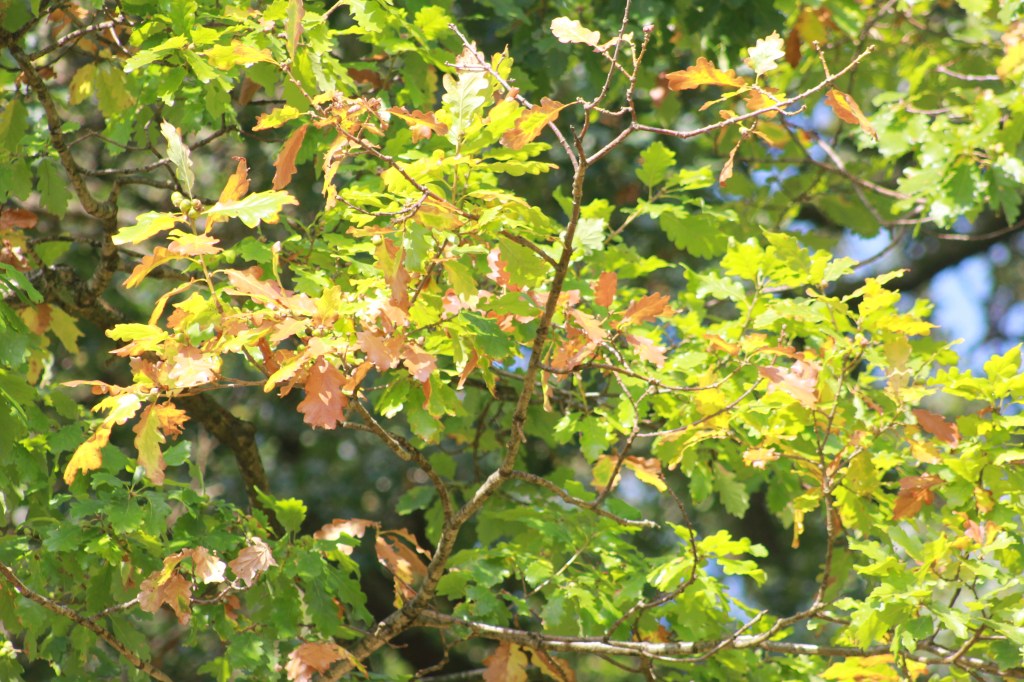
Emerging autumn colours

In uncertain times we can all benefit from contact with things that convey a sense of continuity. The seasons arrive with reassuring regularity, and each one with its own riches. Autumn has often been a metaphor for later life, and it is a reminder that even change which may not always be welcome comes with its own beauty. We may mourn the loss of summer’s rich canopies and expansive days of warmth, but in the transformation of the season there is a spectacular display of colour. Its fleeting nature, combined with the change in climate, can intensify the pleasure we take in a beauty made all the richer by our knowledge of its brevity.

We enter autumn with questions about the future which are unusual for many of us – but not for all. Living wisely with uncertainty can be a tall order, and finding reserves of reflection matter all the more when our footing feels less sure. Pausing to recognise the beauty of today, or recalling those past moments that have grounded and fed our spirit, will perhaps be more valuable now than we imagine.

Things of Mourning

Often bereavement leads to a major task of sorting. Deciding what to do with the stuff of long lives – items acquired over decades – can take a lot of time. Not only because of the volume of items, but also because each can stir a memory. In some cases there may be little that remains, as the work of sorting has been integral to moves from family home to smaller house, to a flat and maybe, finally, a single room. Yet this can also mean that the little which remains is the most moving.

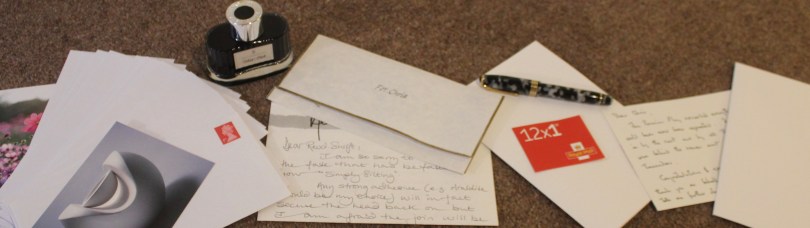
It is tempting to become pious on this topic and tut at a materialism which many in the West take for granted. Yet tangible things have a potency when they are linked to lives we have known and loved. A simple item can be a connection across generations and remind us of an enjoyment they inspired in someone no longer here. The photo above is of my grandfather’s fountain pen – which I’m guessing was a gift for his twenty-first birthday in 1922. There’s no one still alive to ask, but its gold band bears his initials and it’s a lovely keepsake.

These reflection on the ‘Things of Mourning’ were prompted by a few words from Acts chapter 9. Following the death of Dorcas we hear that Peter went with the mourners to visit the deceased. On arrival the women were ‘weeping and showing tunics and other clothing that Dorcas had made’. There is a sense that in showing these items of creativity and skill the personality of Dorcas is evoked and honoured. ‘Things’ can aid our grieving as they bear the imprint of someone’s personality.

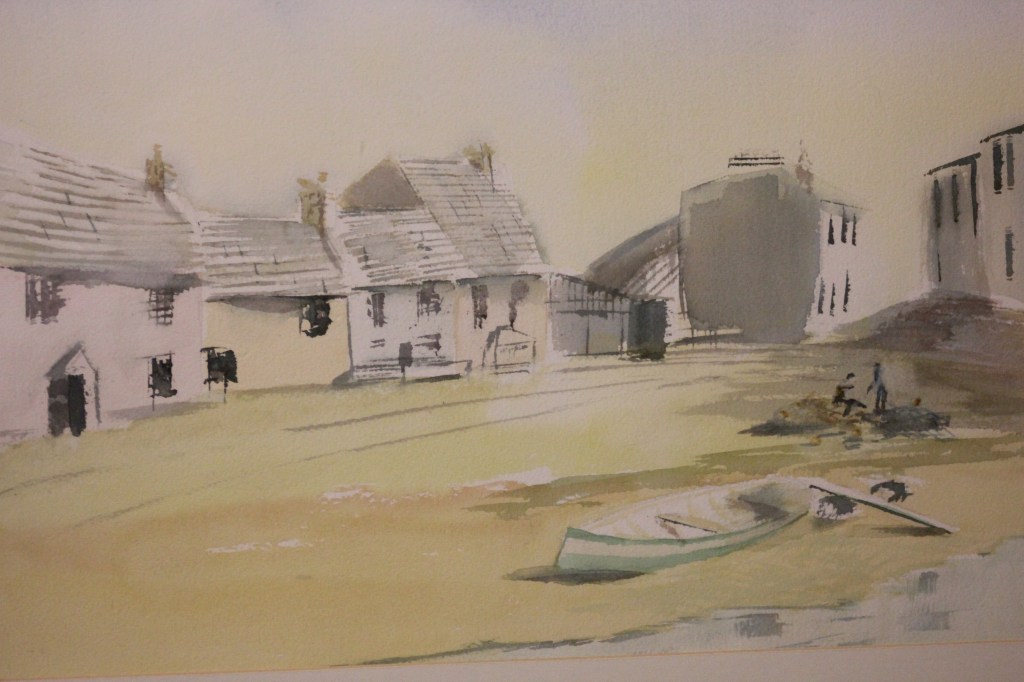
Painting by Stan Swift

My father was a prolific watercolour hobbyist. Retirement didn’t halt his enthusiasm and he continued to paint into his 80s. He was midway through a new picture when illness overtook him and his life came to an end. I still have this uncompleted work. After he died we found paintings everywhere. Some on the walls, others in boxes and some in bags. There were even unframed paintings behind the sofa. Every time we went to look for something we found more! So, at his funeral, a room adjacent to the church became a temporary exhibition where friends and family could help themselves to something for both memory and enjoyment.

For all these reasons it is easy to understand how people become so distressed when a burglary results in the loss of something with little financial value. The anguish has nothing to do with price, but everything to do with value. As Thomas A Kempis wrote many centuries ago:

A wise lover values not so much the gift of the lover as the love of the giver.

Thomas A Kempis, The Imitation of Christ

Gifts and the things we inherit have a power to token a love which continues to be lodged in our memory after someone has died. The things of mourning matter for the connections they enable. What they may be made of matters very little: what they mean can touch the depths of our soul.

A Time to Sing

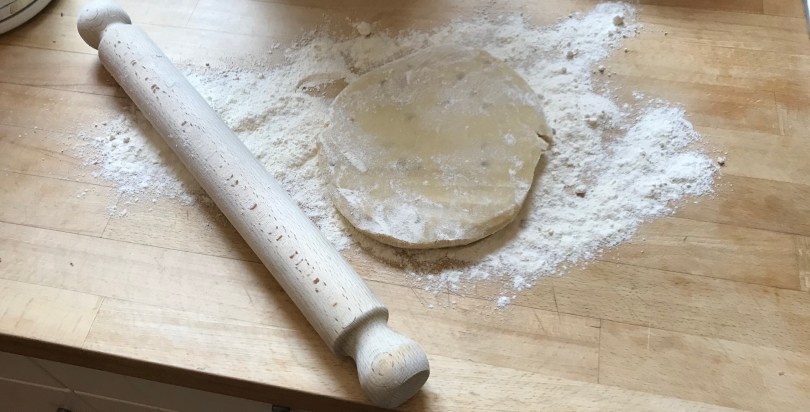
It is Sunday afternoon, on a rather cold Bank Holiday weekend. As I do from time-to-time, I combine baking with Radio 3’s broadcast of choral evensong. Both the listening and the production of shortbread are the kind of absorption that brings its own peace. It is not something I do routinely, but connects me with many moments across fifty years. A grandmother whose hands I can only ever remember as flour-dusted; the familiarity of a liturgy smoothed by the centuries; and a time of day that feels uniquely spacious.

The absence of live choral music, or any kind of group singing, has been striking in 2020. Sunday mornings do not feel the same without the hymns that bind a congregation and choir in a unity of intent. Words which should be sung feel flat if simply spoken.

In care homes singing has always been a powerful source of animation, bringing alive people who may have seemed lost in their own thoughts. At Methodist Homes (MHA) there is the added benefit of Music Therapists, combining the skills of musicians with the insights of psychology. A growing body of research underscores the value of music as a therapy which can be used effectively in the care of people living with dementia. The qualities of music to restore our senses and focus the mind go back at least as far as David’s playing of the harp for Saul (1 Samuel 16:23).

Perhaps this absence of singing will engender a new respect for something we too often take for granted. Music is for all seasons, and in our mourning and rejoicing it has a vital part to play. On Friday 4 September at 10:45 MHA will be holding a national memorial for everyone who has died during Covid-19. There will be a two-minute silence across all of MHA’s homes and schemes at 11 am. Sadly, the world will continue to lose people to the virus, but it feels right to pause at this point and recall those whose life on earth has ended. The online service contains pieces by our Music Therapists, and without them it would lack impact and the embodiment of our feelings.

Whether we are mourning or dancing, music lends any occasion a distinct dimension of expression and meaning. Without giving explanation, it can tell a powerful story. As we continue to journey through the days of Covid-19 we are in uncharted territory. The challenge is to find how we can sing the Lord’s song when the act of singing itself is the subject of concern. The absence of congregational singing removes one of our chief consolations at the moment we need it most. As choirs return I hope that we discover a new respect for the difference singing makes, and how music mingles with our souls.

Know Thyself

One of the scenes in Much Ado About Nothing sees the friends of Beatrice describe her faults. Beatrice supposes she is hidden, but the friends know full well that she is listening. When they have left, Beatrice steps forwards and concludes: “how happy are they that hear their detractions and can put them to mending”.

Self-knowledge and identity are themes that run through today’s readings in church. Isaiah’s message to those who seek the Lord:

Look to the rock from which you were hewn, and to the quarry from which you were dug.

Isaiah 51: 1b New Revised Standard Version

Our origins can be a significant part of our identity. In the Letter to the Romans members of the Church are urged “not to think of yourself more highly than you ought to think, but to think with sober judgment” (Romans 12:3b). Having an accurate self-understanding requires work and commitment. Lastly, in Matthew 16, Jesus questions the disciples about his identity and, in the same moment, we learn of Peter’s role as the rock on which the church will be built.

Understanding our own incompleteness is a prerequisite for growth. Only when we recognises our strengths and detractions can we be open to learn and to change. Like most people I always hear criticism more loudly than praise. Peter may have felt lifted up by the words of Jesus but it’s only a moment later that he is rebuffed as he attempts to intervene to prevent the suffering Jesus will undergo.

While Beatrice may have heard her faults discussed in an ad hoc manner, modern approaches to understanding personality are more systematic. There are many tools available to help us learn in greater depth about ourselves are how we can become more constructive in the way we work with others. We can’t change the “quarry from which we were dug” but we can learn to understand what that means for us and the ways we behave.

All of this has something to say about the way our formation as people can be furthered. For Christians the values which inform our understanding are orientated towards community and service. Like St Peter, we’re called to be ourselves in God’s presence – warts and all – and to discover more fully who God calls us to be.

It is already clear that the Covid-19 pandemic is testing people’s capacity to cope with a world that has become suddenly more dangerous and less certain. It seems that everyone is anticipating a rise in problems of mental health and wellbeing. In 2013 the successor of Peter addressed bishops in Brazil and spoke about human formation:

it is important to devise and ensure a suitable formation, one which will provide persons able to step into the night without being overcome by the darkness and losing their bearings; able to listen to people’s dreams without being seduced and to share their disappointments without losing hope and becoming bitter; able to sympathize with the brokenness of others without losing their own strength and identity.

Address of Pope Francis: Archbishop’s House, Rio de Janeiro Saturday, 28 July 2013

Impetuous Peter always took the plunge, as he did in declaring Jesus ‘the Christ’ and leaping into waves in order to meet him. Sometimes we feel we are sinking, and when we do, we need the hand of someone set on firmer ground. Someone able to “step into the night without being overcome by the darkness”. As the consequences of disruption in 2020 reverberate across the world we need those who feel at peace with their origins. People who do not think of themselves more highly than they ought and who, more than anything else, know themselves well enough to help in all the mending that will need to be done.

Transgression

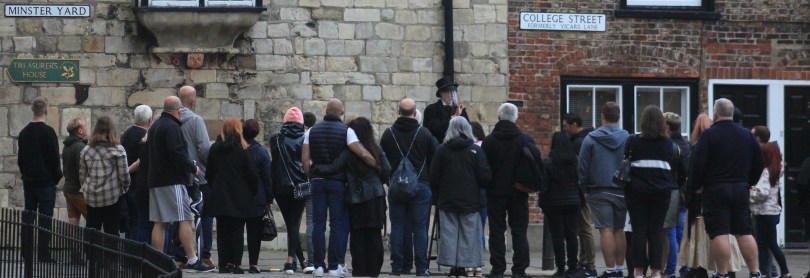
Since Covid-19 restrictions eased York’s ghost tours appear to be more popular than ever. On most days it’s possible to see as many as three separate groups, all well attended, dotted round the Minster. Maybe it’s a consequence of other places of entertainment being closed, combined with recent warm weather, but it’s a niche part of the economy that appears to be thriving.

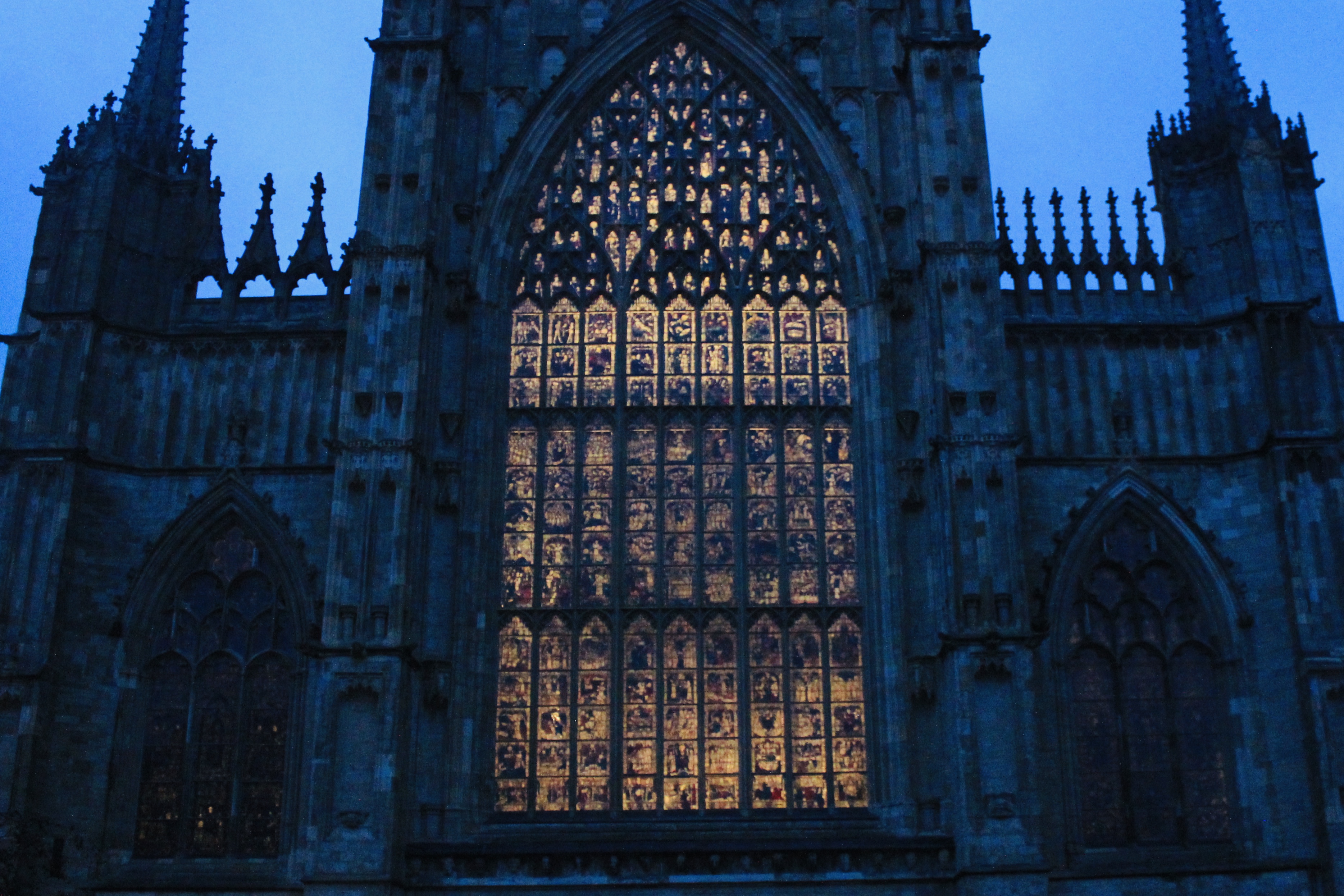
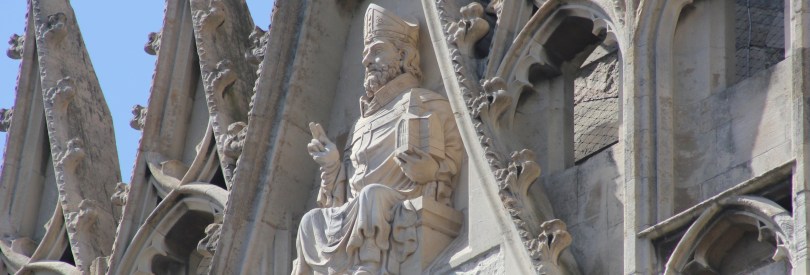
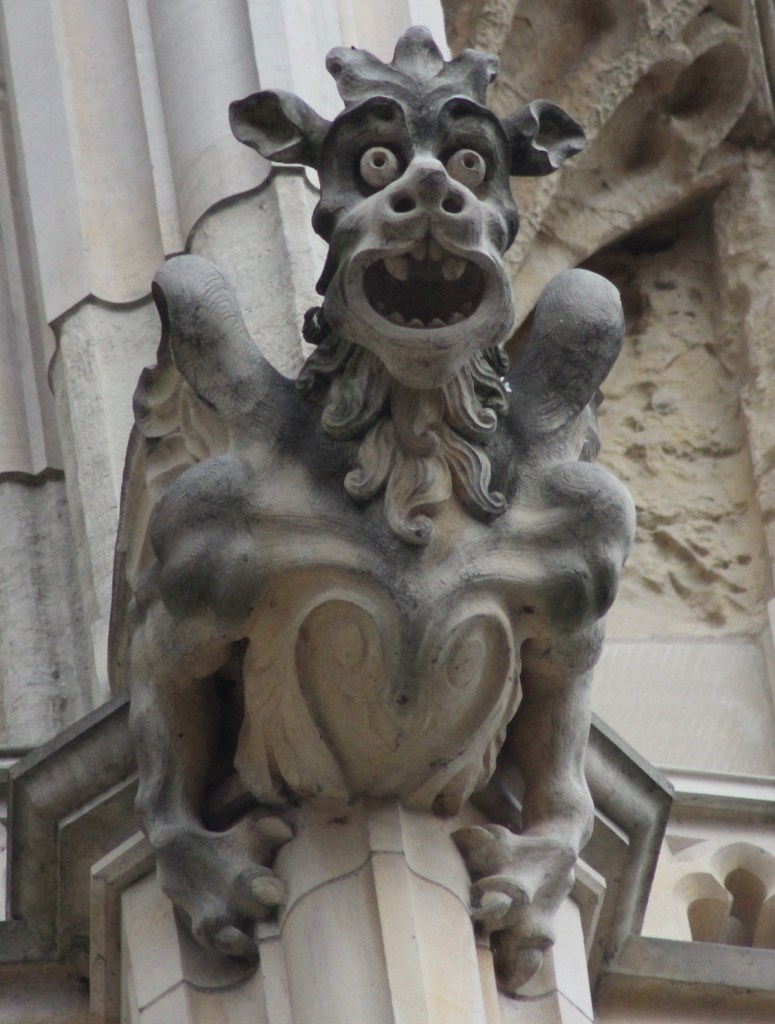
It’s understandable why York Minster is such a good location for these nightly escapades. The sheer scale of the building lets it sit in the city centre with benign indifference. It is as old and cumbersome as a dragon. There are numerous details around the area which suggest a sense of history and the supernatural. Over a decade ago gas lighting was returned to the surrounding streets, lending a hint of Victorian melancholy. The high walls of the Minster are peppered with grotesques which glower down on the tiny figures bustling around its base. These contorted statues leap out at right-angles from columns and towers, daring lesser spirits to meddle with the sacred space they guard. To all intents and purposes they are ecclesiastical scarecrows, protecting the territory as its custodians sleep.

As you can tell, even writing about it makes me come over a bit Gothic! Into this context the leaders of the ghost tours weave their stories. At dusk the stories are told about the girl who died in the Plague House; the marching Roman soldiers who could only be seen from their knees up; and much, much more. By gas light, and down cobbled streets, the past is conjured into life.

This can all be very entertaining. Yet I wonder if there is a little more to the pull of these invitations to the supernatural? Some years ago I was involved in research into the experiences of people who bereaved due to traumatic loss. Following the interviews I was struck by how many people either had a visceral experience of the deceased, or attended places (such as the Spiritualist Church) where this possibility would be envisaged or even encouraged. The study concluded:

people are reluctant to share their experiences of post-death encounters with health professionals because they fear that they will be diagnosed with mental illness or ridiculed.

Chapple, A., Swift, C., & Ziebland, S. (2011). The role of spirituality and religion for those bereaved due to a traumatic death. Mortality16(1), 1-19.

It was striking that on a visit to somewhere badly affected by Covid-19 one of the first things I was shown was a photograph. In this recent picture of a living person it was said that the image of a person who died from the virus could be seen. In the aftermath of World War One, sightings of the lost were a regular occurrence and shared in the newspapers. When mortality exceeds our expectations we experience things that can seem both comforting and disturbing.

Perhaps when there are few avenues to acknowledge experiences which don’t fit, people find their own alternatives. When the world we anticipate and take for granted is transgressed, it helps to be in a context where we can at least consider other possibilities. As the virus continues to take away so much, we may need new frameworks to articulate and understand our experiences. I’m not suggesting taking a ghost tour (although they can be fun) but churches could do more to give permission for people to speak about things which other contexts implicitly silence.

Like a Thunderbolt

Once, writing a Passion Play for a church, the only text I felt happy with was the opening line: ‘I can tell you nothing about anything from the time before telling’. The words came out of reflection on the Gospel of John and the opening words of the Bible. It struck me that Genesis is not so much an account of creation, as an act of creation. When people took to their hearts a shared narrative of their beginning, they ceased to be individuals and became a community bound by a story. Even as the words were spoken, shared and ingested, the shape of a nation was being fashioned. Genesis may not be the account of creation so much as an active (and ongoing) process of creation and renewal.

I’ve written previously about the power of stories to mediate our understanding of the world in which we live. In particular, the way a story can help us make sense of calamities and begin to find a way to cope with events. As the twentieth century demonstrated, the power of our stories can also be used to generate horrendous division and destruction. Not all stories are good. Like the discoveries of science, the way we connect events and interpret intentions, can be used in ways that are profoundly damaging. Language is technology, and probably the most useful skill humanity has developed.

The moment I became aware of the power and capacity of language was in primary school, aged 7, rummaging in a corner of the classroom. Goodness knows what I was supposed to be doing! I came across a book of poetry byTennyson. One in particular struck me then and the memory of its impact has remained with me ever since. Called simply The Eagle it is the briefest description of an eagle’s plunge towards its prey. Yet in its six lines something was switched on in my brain and I saw how words could bear the impress of reality. Words which, arranged in a particular way and rising out of a depth of feeling, carry within them a visceral sense of experience.

The wrinkled sea beneath him crawls, He watches from his mountain walls, And like a thunderbolt he falls.

Alfred, Lord Tennyson The Eagle, 1851

Over the years my appreciation of poetry has changed, but I owe something to those few lines which inspired a passion. The poetic use of language can shake us out of the tram lines of prose and jar us into startled attention. It allows words to be placed in unexpected associations, often with a hint of playfulness mixed into the experience, all of which lends itself to creative thought.

In recent months I have been reflecting on the way our choice of words reveals a lot about our response to the pandemic. Among the swath of texts about the new virus are signs that say much about our evolving thoughts. Countries where people spoke warmly about how well they had weathered COVID-19 now find that the virus has returned. There was an assumption made to see this as a single event passing around the world, whereas we now see a picture which is more complex, dynamic and repetitive. By now we know it would be wrong to think COVID-19 simply arrives and leaves. The language used a few months ago reveals how our understanding has changed.

In the early days of the UK’s experience Simon Armitage wrote a poem featured in The Guardian, and this weekend there is a piece published by Barbara Kingsolver in the same paper. Entitled How to Do Absolutely Nothing it’s a ‘shape’ poem capturing in its form the gradual loss of things, concluding with the word leave standing alone. As we all continue to face restrictions in response to the virus this poem resonates with different experiences of loss. In the life changes enforced by COVID-19 we may all be trying to ‘Find out what’s left’, and see with a new sense of value what we once took for granted.

.

Ennobled Fractures

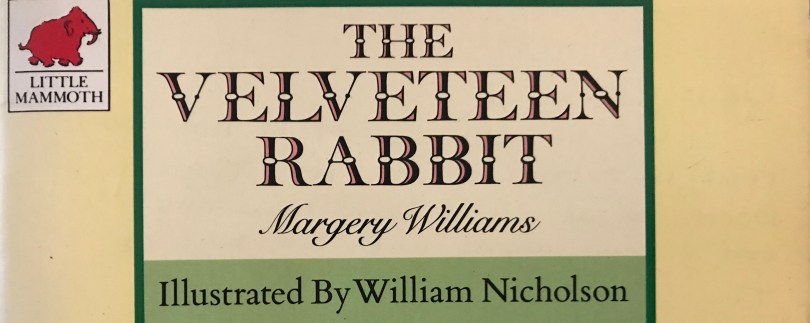
In some ways I took it as a mixed compliment. When I left the parish where I served as curate some good friends gave me a copy of The Velveteen Rabbit. If you’re unaware of this book, it’s a charming morality tale of how love brings us alive and makes us ‘real’. Centred on the toy of the title, we learn that in becoming real we tend to get rather well-used and worn.

by the time you are Real, most of your hair has been loved off, and your eyes drop out and you get loose in the joints and very shabby. But these things don’t matter at all, because once you are Real you can’t be ugly, except to people who don’t understand.

Margery Williams, 1881-1944. (2003). The velveteen rabbit : or how toys become real. Leesburg, VA :GiGi Books

Like many children our daughter had a favourite toy. Not a velveteen rabbit, but a cotton one named ‘Vicky’. As the years went on, grandmothers had faithfully repaired bits and replaced parts, but the love for this rabbit never diminished. Sadly, on a holiday in the Yorkshire Dales the toy was left on a bus – traumatising her parents even more than our daughter! I still think of Vicky Rabbit riding around the beautiful landscape in a bus full of children.

Repairing much loved things is an activity as old as humanity. Very often we aspire to ‘invisible mending’, and attempt the great skill required to conceal a fault. Sometimes it can be done – but for those who know what happened it may never seem the same. When a visiting vicar commented to my grandmother on a fine new piece of needlework hanging in her hall she couldn’t suppress the need to tell him where the fault was in the tapestry. Invisible to everyone else, Bessie felt that any admiration needed to be qualified by her knowledge that it was imperfect. The picture needed to be truthful.

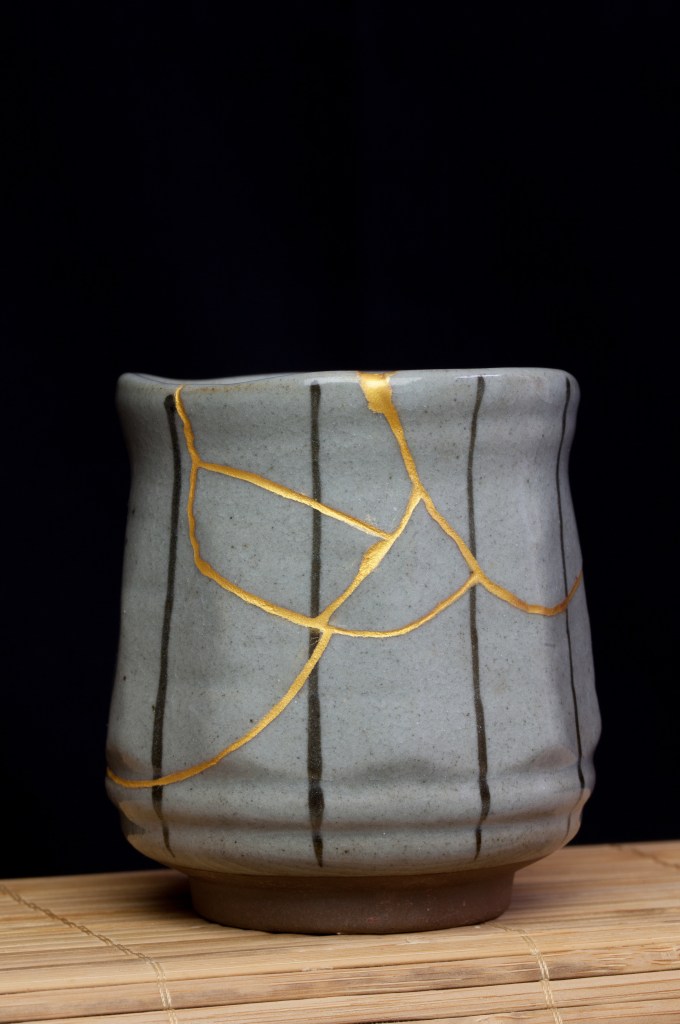
A small handmade tea cup repaired using the Japanese art form of kintsugi and a gold powder.

Not everyone aspires to this kind of good-as-new restoration. Reading Andrés Neuman’s new book fracture I was reminded of the ancient art of Kintsugi, when a pottery repair is accentuated by the use of gold. Rather than concealment, the crack becomes a rich vein within the ceramic work, adding interest and individuality. There is a lot of fracture in Neuman’s novel, set as it is against the backdrop of the 2011 tsunami but also connected to other events. It’s a book that feels very pertinent as we begin to see the scars exposed by the COVID-19 pandemic.

A question that emerges as we live through this extraordinary health, wellbeing, economic and political emergency concerns the way we respond to these multiple assaults. Perhaps we could try to conceal some of our unlooked-for experiences, and rush back to a limping version of our former ways? Alternatively, we could learn something important about how we live and relate to others. Learn to become more realistic in our living by stopping the pretence that we can behave as if we are unconnected to others on the small planet we share. To recognise that some of the things which shatter our self-assurance are not imperfections, but necessary interruptions in the smooth glaze of our story.

As the months roll on there will be much to repair and to heal. Perhaps some of this cannot be put to the good, reconstituted or restored. Yet there will be moments when we can choose to ennoble our repairs – to make life and the structures of society fairer and more caring. There will be glimmers of good amongst the pain that many are feeling, and we need to reveal the fractures that have allowed things to change for the better. Whether it’s a growing recognition of how support for older people has been neglected, or the daily injustices that have energised ‘Black Lives Matter’, there are some fractures in our common life we should seek to repair – but never conceal.

Erratic Legacies

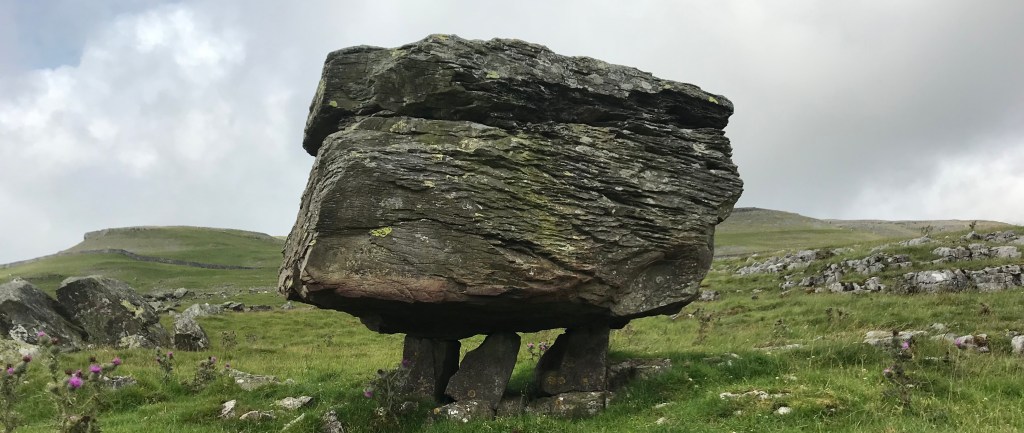
Thousands of years ago a glacier melted and deposited the Norber Erratics. Time and erosion then exposed these cuckoo slabs of sandstone and slate. High above the lush farmland of Austwick the vast boulders teeter on tiny limestone plinths. They are one of many examples of the way defining natural events in one era can shape our landscape for millennia.

My visit to the erratics comes at a point of psychological and spiritual recovery. As with many others working in areas massively impacted by COVID-19, events since March altered normal patterns of life. For about 100 days I woke everyday between 4 and 5 am. In the crisis of coronavirus this was part of how life was, in what the British Psychological Society call the active phase. The unbroken days of being in a state perhaps best described as ‘ready alert’; living in a rapidly changing situation, with frequent and sometimes contradictory information, and the need for instant response and action.

Like countless others caught up in these events the virus stimulated emotional need while simultaneously denying consolation. People have been bereaved – but unable to hug; families traumatised but unable to meet; prayer sought, but the faithful denied the opportunity to worship together. Prayer can take place anywhere, but there are places of spiritual significance that matter to many, and sometimes we want to sit among those who pray when we feel least able to pray ourselves.

prayer is more than an order of words, the conscious occupation Of the praying mind, or the sound of the voice praying.

Eliot, T. S. (1944). Little Gidding. Four Quartets. Collected Poems 1909–1962.

I walked to the erratics during a couple of days away. That should sound a very unsurprising sentence – except that I haven’t stayed away from home for several months and the novelty of the experience, face masks and all, was striking.

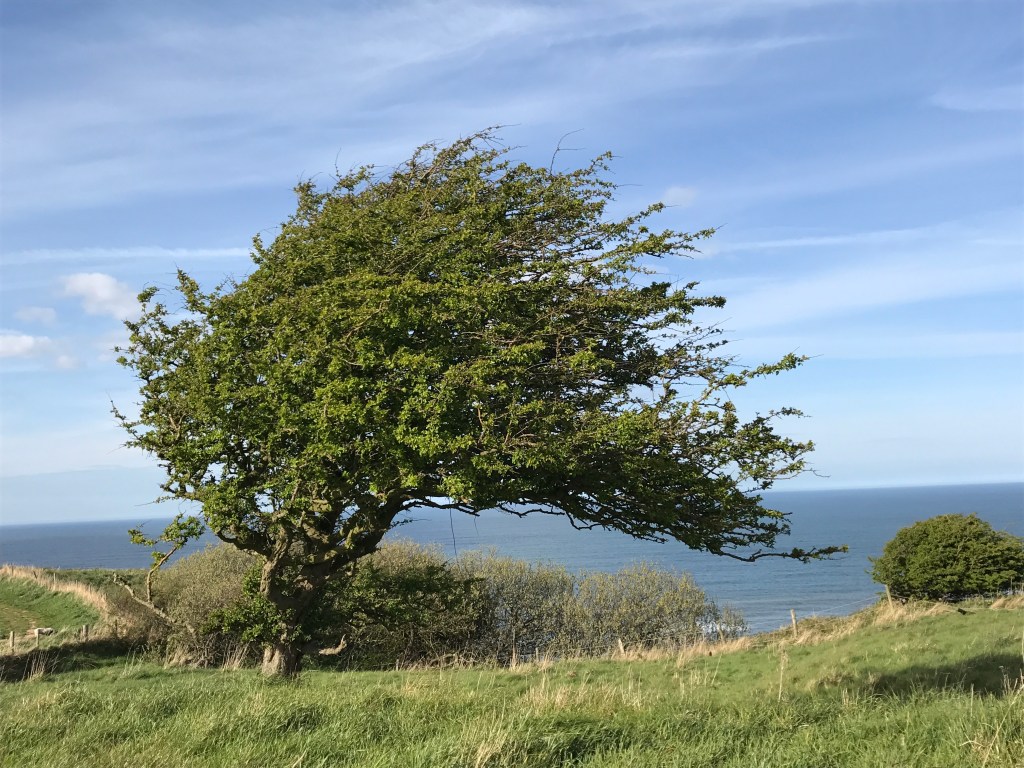
Events come in different shapes and sizes. Sometimes they may bring temporary change, like the tug of a breeze on the boughs of a tree. However, if there is a prevailing wind – if the gusts are more often a gale – then nature’s persistence has lasting consequences. It’s something I think of every time I walk from Whitby to Staithes and see the long suffering thorns. Over the years they have been sculpted by the wind into flame-like shapes, their branches drawn out towards the sea.

COVID-19 is a long way from its conclusion. It is a gale that has blown around the globe with astonishing speed, leaving devastated communities and economies in its wake. Already we know that this is more than a troubling breeze. The consequences for individuals, societies and economies will be part of our landscape for decades to come. At the moment it’s hard to discern what new shapes are forming. Only time will tell, but we all have something to offer as we support each other through this storm. Consolations may be interrupted, but the desire for the good of those around has never been stronger. Perhaps we need, now more than ever, to make the effort to communicate that care – in whatever way we can.

Surgery for the Soul?

It’s great to be back in a church building, sharing in services ‘in the flesh’. Yet the strangeness of our times is reinforced at every turn. From leaving my track and trace details on entry, to the procession of visored clergy, and the silent, sanitised, distribution of Holy Communion. Nothing is quite the same.

The elements of protective equipment have been familiar to me across 20 years of service in the NHS. In more recent times any visit to a care home involves a routine of infection control that includes the constant wearing of a mask. In the context of COVID-19 the delicate balance of homeliness and clinical safety has shifted resolutely in favour of the latter. How to help people live well while being safe is a vexing question for anyone operating places of residential care.

The appearance of ministers as medico-clerical hybrids reminds me of the way the sacred and secular co-existed in the Middle Ages. The physical served as a continual source of analogies for the spiritual. For example, the act of confession was compared with various elements of physical healing:

As the best physician, Christ ‘orders therapeutic baths through our outpouring of tears’ and the healthful diet of ‘fasts’. And the strongest and most effective medicine of all was penance.

Swift, C. (2016). Hospital chaplaincy in the twenty-first century: The crisis of spiritual care on the NHS. Routledge.

This correspondence of the physical and spiritual is sometimes startlingly visceral. In the York Mystery Plays the Barber Surgeons were allocated the section of the story dealing with the baptism of Jesus. Their contribution ended with a prayer addressed to the Lord, ‘as Sovereign Leech’, curing our ‘sore’. It feels very strange to exalt Jesus as the spiritual leech, yet it is entirely fitting with this Medieval desire to connect the physical and spiritual realms with unflinching determination. Why would Jesus not be equated with the key healing technique of the time, used for purging infection and restoring health?

The Shambles, York
The Shambles, York

Much has changed since York’s Medieval plays saw pageant wagons trundling through its narrow streets proclaiming the stories of the Christian faith. Fewer people today would see the spiritual world so closely aligned with the physical realm. Nevertheless, the realities of human sin; of greed, inequality and war, remain as real as ever. What we do with the material world, whatever we understand it to be, is a question of more than material consideration. Our beliefs allow us to turn a deaf ear to the consequences of climate change. We tolerate inequality in life not because the physical world tells us to do it – but because we choose to accept it. We choose to do less than we might to alter the ever expanding wealth of the rich.

Perhaps some radical surgery should be prescribed? Human beings require comfort for the damage we all carry, but also challenge for the damage our choices bring to others. Inequality is not a concern only for the powerful and the oppressed. It’s a concern for us all. Maybe the sight of clergy in visors should remind us that religion can be dangerous, in the best sense. Dangerous because it should not leave us alone, content with the injustices of which we are a part. Religious belief is designed to change us, to provide both consolation and, when needed, incision.

The churches are children playing on the floor with their chemistry sets, mixing up a batch of TNT to kill a Sunday morning. It is madness to wear ladies’ straw hats and velvet hats to church; we should all be wearing crash helmets. Ushers should issue life preservers and signal flares; they should lash us to our pews. For the sleeping god may wake someday and take offense, or the waking god may draw us out to where we can never return.

Dillard, A. (2016). Teaching a stone to talk: Expeditions and encounters (Vol. 57). Canongate Books.

Liturgy is full of symbolism, often ancient. As we witness the innovation of clerical PPE perhaps we should take a moment to reflect on what this physical barrier says to our spiritual insight. To be reminded that, like everything with the potential to transform, there is both power to create and power to destroy. We need to ‘handle with care’ the gift of faith and ensure that we live it in ways that strengthen the weak and weaken the mighty. To develop our belief as a remedy for the casually tolerated ills of our age, and allow the God-in-us to heal the terrible sores that are part of human life.

Virtually Being There

As I mentioned in my first pandemic blog, the issue of a chaplain’s presence in the context of distress has long seemed important. An embodied participation in events as they unfold is seen as critical to the practice of spiritual care. When God doesn’t appear to answer the deepest desires of human beings – for recovery or healing – the absence of a chaplain might feel like the confirmation of experience. Being there conveys pastoral response; compassion; and witness. This tragedy is not ignored – it has been seen.

During a recent conference on theology and Covid-19, I presented a paper on the topic. It is by no means a finished article, but rather a field report reaching towards theological reflection. The pandemic has provided plenty of good reasons to concentrate on the day job and shelve intellectual enquiry for better times. However, this suggests that theology is a task only for tranquil times and cloistered concentration, and I don’t believe that’s true. Theology needs to be done in difficult places and at difficult times or it risks becoming an irrelevance. Not only data gathering, but some of the thinking needs to be started in the compressed moments of critical times.

The conference reminded me of the existence of ‘trauma theology’ and the inspiring work of Shelly Rambo. Her seminal work, Spirit and Trauma: A Theology of Remaining, offers valuable material for anyone seeking to relate catastrophe and a theology which is engaged with people’s experience. At the moment the world continues to experience the sea-swell of sickness washing over every continent and island, leaving in its wake illness, death and all kinds of fear – from physical vulnerability to a paralysed economy. Rambo’s book takes its point of departure from hurricane Katrina and the devastation of New Orleans by a different kind of natural disaster. As she describes, while the critical time will come and go, the ‘after the storm’ remains. Global events of death and disruption linger long in the lives and memories of those affected, as we continue to see in the various ways by which WWII persists in both personal and public experience.

The impact of Covid-19 is already the subject of active contestation and dispute. Official narratives will be created alongside the stories of individuals who live this experience as a personal encounter with their mortality. As I observed last week, these stories have considerable power and can become something separate from the event itself – a mutating memory with the potential to shape and inform the present, for good or ill.

As a health care chaplain I often said that I tramped the familiar path between Good Friday and Holy Saturday. Usually, the resurrection was a distant possibility and the chaplain’s work oscillated between the moment of death and the experience of absence. Each death a figure swept from the landscape of someone’s life, very often creating the yawning gap of a potent presence. There was no magic which made this ‘alright’ but a painful living with what these defining moments of human existence mean for each of us.

Take courage; the time is near for God to heal you; take courage.

Book of Tobit, chapter 5 v. 10

The picture which heads this blog is of the Archangel Raphael, and was painted by a friend who gave it to me during my time as a chaplain in the NHS. These strange figures flit too and fro in the scriptures of the world’s religions, greeting and warning, announcing and healing. Raphael is associated with the latter and can be found, amongst other places, in the Book of Tobit. Here Raphael both announces that a time of healing will come and offers to be a companion and guide on the journey which lies ahead.

In time we shall all live with the ‘after storm’ and wrestle with its consequences. There will be those keen to shake the dust of Covid-19 off their shoes and spring forward into a bright tomorrow. Yet this event will not be dismissed so easily. In health, the economy, psychology and spirituality, the question will not be ‘shall we continue to think about it?’ but rather how that thinking will be done. Faith affirms the persistent promise of hope – there is a greater good to which we move – while offering to stay with us while we make this journey. As in the Bible, angels may appear at first as strangers, but in time those who stay with us and guide us come to be known for the hope which they embody, and the transformation they bring.