Summer Daze

It is unsurprising that I have seen few swifts in the centre of York. One evening there were some high up above the Minster’s central tower – and now and then I spot a solitary bird above the garden. The preference of these birds is the open spaces of Yorkshire, rather than the urban quarters. Cycling back from Beningbrough recently we traveled beside open fields near Overton, a very small village mentioned in the Domesday Book. As I looked up to my right I suddenly noticed a sky full of activity – a large number of swifts darting and diving above the land.

They are remarkable birds to watch. High up, flitting among the clouds, swifts dart, spin and slice their path through dense summer air. They are in the element where they spend a remarkable amount of their lives. It is now well established that swifts can remain airborne for months at a time; eating, sleeping and finding moisture on the wing. Given this propensity for flight they aren’t the easiest birds to observe, often circling high up on a summer’s day. Their visits to the UK from Africa usually last about 4 months.

The poet Edward Thomas is not alone in responding to a mood that midsummer can stir in the hearts of many who rest and watch in a landscape steeped in life and heat. In Haymaking the poet is observing the countryside just before dawn, with the pre-mechanised task of harvesting about to begin. Birds in nearby thickets are already singing:

While over them shrill shrieked in his fierce glee
The swift with wings and tail as sharp and narrow
As if the bow had flown off with the arrow.

https://www.poetryfoundation.org/poems/53746/haymaking Edward Thomas, Haymaking

The scimitar curve of the swift is perhaps its chief identifier, and the bird’s call is captured beautifully in Thomas’ ‘fierce glee’. An arrow’s flight is a good simile for the speed of the creature, and the idea of the bow going with the arrow captures the taut shape of the swift’s wings.

A swift I photographed last week against light cloud at Lanercost Priory, Cumbria

When you can see a swift at close quarters they become more noticeably different from other birds with which they are often associated, such as swallows. Swifts have a body shape that seems almost prehistoric – which reflects their early divergence from many other species. As Katherine Rundell put it in an excellent 2019 article in the London Review of Books, their antiquity means that they were on ‘nodding acquaintance with the Tyrannosaurus’. In this piece Rundell notes that swifts were one of the inspirations behind the legendary ‘martlet’, which never landed and was believed to have no feet.

In heraldry, the swift is one of the inspirations for the imaginary martlet, a stylised bird without feet. Unable to land, the martlet is a symbol of restlessness and pursuit: of the constant search for knowledge and adventure and learning.

Consider the Swift, by Katherine Rundell LRB Vol. 41 No. 16 · 15 August 2019

The North Yorkshire wildlife artist Jonathan Pomroy (@JonathanMPomroy) is a keen observer of swifts, and in the recent heatwave he noted the way these, and other birds, achieve some extra release of warmth: they dangle their feet in flight. Jonathan’s watercolours capture the detail, beauty and speed of the birds, which is certainly a challenge when the air is so hot that watercolours don’t perform as they should.

Our brief summer visitors were placed on the ‘Red List’ at the end of 2021, following a decline of more than 50% in the last 25 years. There are many reasons for this, with one major factor being the rising number of building conversions. Swifts are creatures of habit and return to the same site to nest. Renovation work might close gaps and holes that are essential for their survival. If the nesting place has disappeared it makes it less likely that a pair will breed. Many agencies are advocating the use of swift nest boxes and encouraging people to consider the consequences of building works. It would be a devastating loss if these summer visitors vanished from a landscape which they fill each year with life, beauty and dazzling displays of aerial brilliance.

Feature photo by: https://www.istockphoto.com/portfolio/avs_lt?mediatype=photography

Decennium Horribilis

The Queen famously reflected that 1992 had been, for her, an annus horribilis. At the moment if feels like the 2020s might come to be known as the decade of horror. Even as we wobble (possibly), out of a devastating pandemic, the world’s worst nightmares of climate change are becoming a reality. In the coming days the UK will experience temperatures never before known. For several days, the sun will extend its scorching heat all the way from the cool cloisters of Oxford colleges to York Minster; from the industrial north, to the vast storage heater that is our capital city. In all their antiquity, buildings will be placed in the stress of temperatures for which they were not built, and from which they may not survive unscathed.

A word that became over-used in the pandemic was ‘unprecedented’. Yet here we are again, facing a very different health emergency. As is so often the case, Shakespeare expresses this experience with economy when he puts the following text in the mouth of Claudio:

“When sorrows come, they come not single spies, but in battalions”

Hamlet, Act IV, Scene V

Michael Rosen, writing in yesterday’s edition of The Guardian, hits the nail on the head when he reflects from personal experience that we have not even begun to digest the catalogue of pains which have touched us all: “we are chewing over several levels of trauma at the same time: personal, social, national and possibly global”. I suspect that for many of us these traumas have been shelved, as much as they can be. The rapid succession of crises means that even as one drops from the headlines, a fresh assault has already muscled into prime position. It was all COVID; then a connected string of economic shocks, labour shortages and inflation; a war in Europe and displaced people to support; spiralling energy bills; and now a sustained period of temperatures we normally associate with Andalucía. I’ve probably missed some, and there are certainly other emerging concerns snapping at our heels.

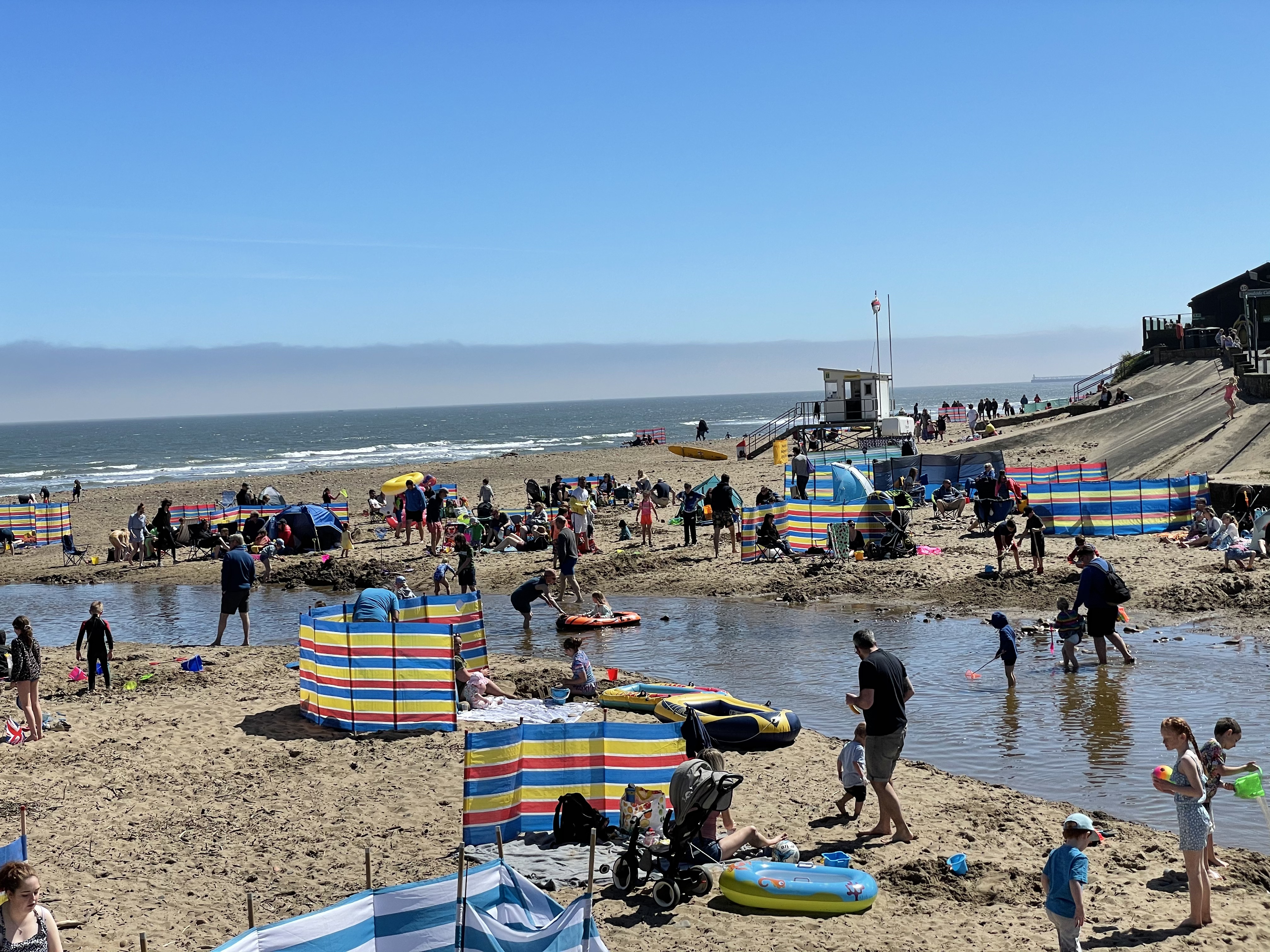
Coastal resorts will offer some cool respite from the high temperatures, for those able to travel

For the privileged and well resourced these challenges are inconvenient, rather than definitive. Isolation for the well-heeled may not have been welcome, but it came with interior space; expansive gardens; and possibly gyms or swimming pools. Excessive heat might be worrying, but it will be tolerated in large rooms, behind thick walls and with high ceilings. Perhaps, even, with air conditioning. For the poor in our society it will be a different story. Small spaces, tower blocks, no private garden, an infrastructure of roads and pavements that will absorb the heat throughout the day and emit it during the night. In the 1980s I was staying in Argentina during a spring heatwave with temperatures in excess of 40°. I was in student accommodation, sharing a small room, close to the centre of Córdoba. During a sleepless night I reached out to touch the wall and found it still warm, stalling the drop in temperature for which we were all waiting. People survive in these temperatures, but they do not thrive.

There have been few decades in human history that have all been sweetness and light. In terms of the title of this blog, it is also worth considering the question: ‘horrible for whom?’ Just like the Queen, our perception of events can be very parochial. It may concern our home and our family, but touch little on a broader political context. Once out of the long Edwardian summer, European history of the 20th century is a sorry story of futile destruction; a second war that followed disastrous economic turmoil; the physical division of Europe and the threat of nuclear destruction. However, both with the pandemic and the UK weather forecast, there are measurable impacts which can only be described as ‘unprecedented’. This is not simply an endless human story of generational angst. These experience are either entirely novel or the fresh occurrence of a crisis last experienced a century ago.

As Rosen observes, talk of memorial events to recognise the 200,000 COVID deaths in the UK appears to have been kicked into the long grass. Our attention has moved on (but, perhaps, not our feelings or our analysis of events). I certainly meet many people who think of COVID as last-year’s news. As we move beyond the first quarter of this decade the signs are not good that peace and prosperity will be more prevalent by the end of 2029 than they were in 2020. The carousel of crises shows little sign of stopping and its pace certainly feels much faster. My hope and prayer is that we shall – eventually – begin to reflect on the cost of our inequalities and the toxic world they are creating. More importantly, that reflection and prayer leads to action and a stronger sense of how we, as a global community, act to ensure that the sorry story of the last couple of years does not become our permanent reality.

Holy God,
earth and air and water are your creation, and every living thing belongs to you: have mercy on us
as climate change confronts us.
Give us the will and the courage
to simplify the way we live,
to reduce the energy we use,
to share the resources you provide, and to bear the cost of change.
Forgive our past mistakes and send us your Spirit,
with wisdom in present controversies
and vision for the future to which you call us in Jesus Christ our Lord. Amen.


© The Anglican Church of Australia

The Smallest Twine

At the central crisis in Much Ado About Nothing, Hero is not only jilted at the altar but disgraced by means of deception. While the Friar advises a counter-deception, to right the wrong, Hero’s father is bewildered. When advised to accept the Friar’s plan, he responds: ‘Being that I flow in grief,
The smallest twine may lead me’.

Clergy and pastors are often with people at a time of bewilderment. We meet people who are in the midst of grief, or turning to a minister as a source of trusted advice. Of course this is not only a situation faced by clergy. However, for some people the legacy of respect for clergy, perhaps instilled in childhood, may assume that any advice is divinely guided and lacks any other kind of motivation. Sadly, there is plenty of evidence to the contrary. Manipulation by appeal to divine authority is nothing new. In the York Mystery play of The Flood, Noah struggles to persuade Mrs Noah to get onboard. Finally he tells her: ‘It was God’s will without a doubt’. Understandably, Mrs Noah is unimpressed with this approach:

What, thinks thou that will let thee quit?
Nay, by my troth, thou gets a clout.

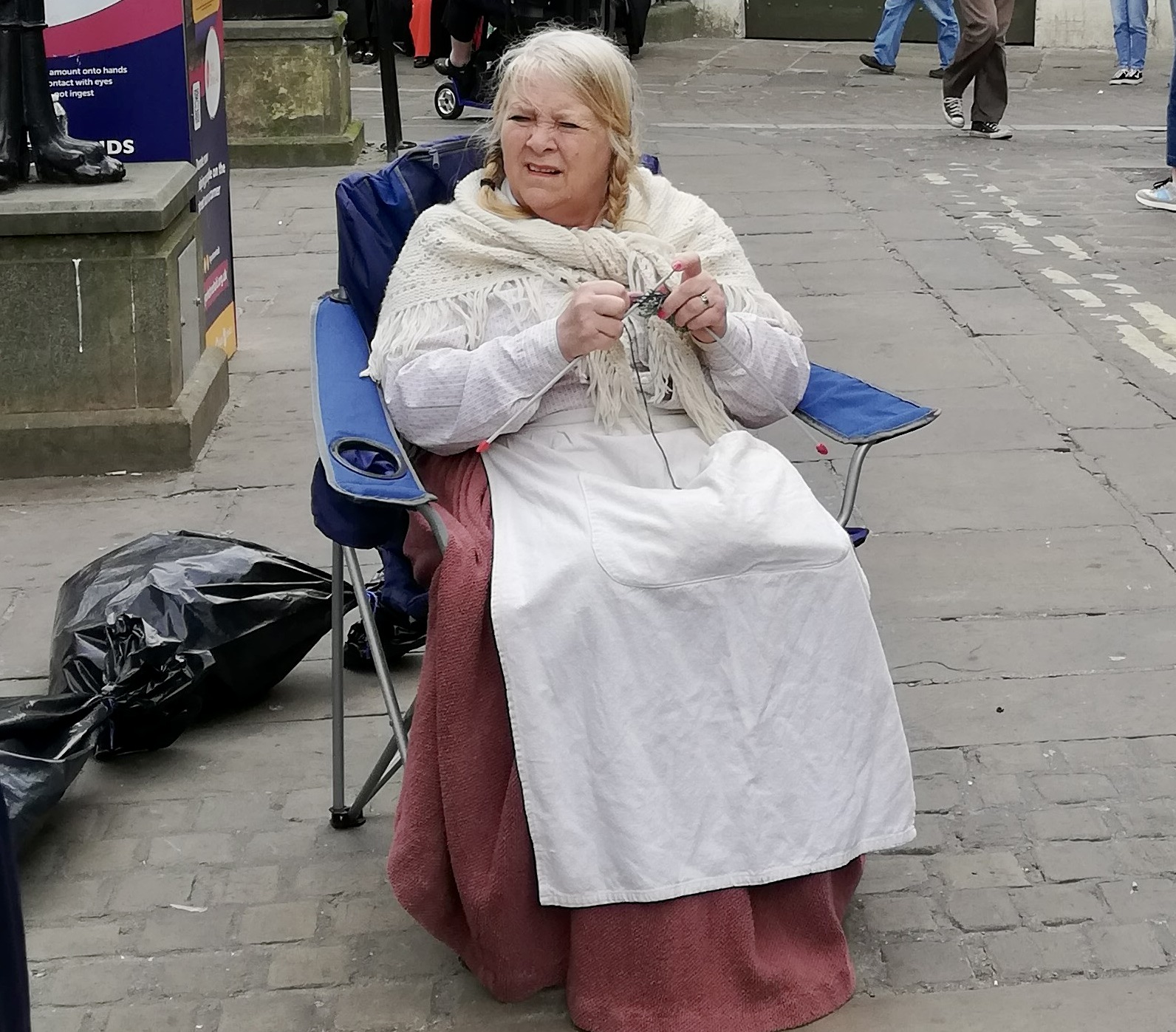
An unimpressed Mrs Noah, played by Helen Wilson, in The Flood, York Mystery Plays 2022

Recognition of distinctive dynamics in pastoral care is an essential step in recognising that the nature and form of abuse may be nuanced. Religions typically mirror forms of kinship, and at its best church can be a family of chosen association – with a strong sense of communal love, support and care. While this is commendable we also need to remember that most abuse takes place in families, and it might be that the prevalence of abuse in church communities reflects similar vulnerabilities of trust, inter-generational contact, authority and power.

I have quoted in a previous blog the caustic observation of the sociologist Zygmunt Bauman:

“One of the most insidious of the many shapes of domination (pastoral power), as it blackmails its objects into obedience and lulls its agents into self-righteousness by representing itself as self-sacrifice in the name of ‘the life and salvation of the flock'”

Zygmunt Bauman, Postmodern Ethics

Certainly this is a powerful summary of the consequences that emerge when pastoral or spiritual power is abused and goes unchecked. Virtue is an excellent facade for many kinds of vice. If a leader claims that what they are doing is directed by God, when an individual has been shaped to believe that God must be obeyed, the opportunities for malfeasance become almost limitless. It is the kind of thing that has persuaded elderly people to leave all their estate to the church (or the vicar); for people to be induced into forming inappropriate relationships; or engineered the acceptance of unreasonable expectations about the use of time.

There is a growing literature about the significance and operation of pastoral abuse. This field is in its early development and there is considerable scope for deepening both the scholarship, and the practical advice that flows from it. For example, in her consideration of abuse through an examination of Ezekiel 34, Amy White notes that ‘self-sacrificial leadership for the sake of the lost was clearly lacking’. However, I have known many self-sacrificial clergy who have been perfectly capable of spiritual manipulation.

The very discomforting question which needs to be addressed in any examination of spiritual abuse is whether God is ever capable of it? In the stories of both The Flood and Job, God is described as causing or permitting apocalyptic suffering. If church leadership is invested in literal understandings of Scripture this question needs to be addressed. Alternatively, if the Bible is understood as a collection of books describing an evolving discernment about the nature of God, then we arrive at a very different place, and one in which pastoral power in the person of Jesus is open to both questioning and accountability: “Yes, Lord; yet even the dogs under the table eat the children’s crumbs.”

Given the weight and significance of religious ideas, the need to handle pastoral relationships with care is essential. Only in recent years, and largely when compelled to do so, have churches acknowledged the need for greater accountability. Ironically, it could be argued that this failure to take prompt action to prevent abuses arises from a limited understanding of sin. While happy to wag the moral finger at various minority groups, many Christians appear to have lacked a willingness to be curious about wrongdoings much closer to home. Although no system is a perfect solution to the misuse of pastoral relationships, a greater expectation and resourcing of professional supervision would go a long way to excavating and naming pastoral risks. This would both help people understand the bewilderment in which they often minister, and recognise the temptation to pull the twine to places where people should not be led.

Thy Neighbour’s Ass

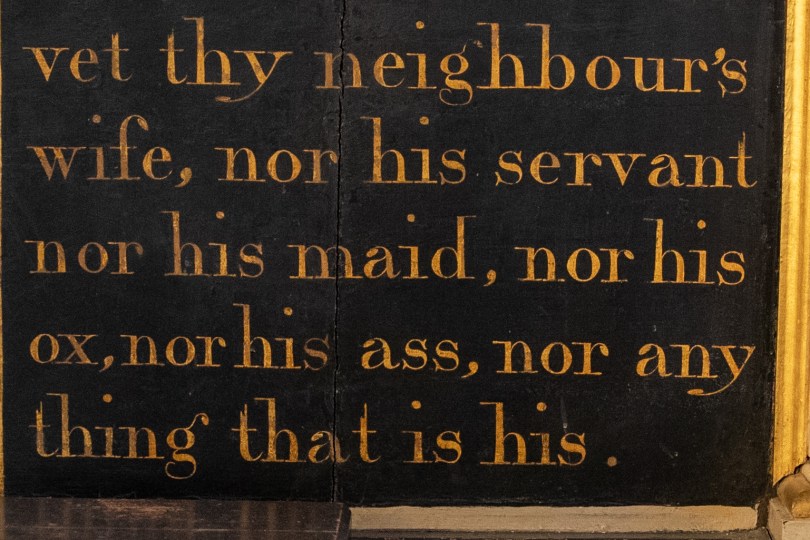
We don’t hear a lot about coveting these days. What was once a sin, a transgression of Commandment number 10, seems to pretty much be the basis for modern economics. No longer a failing or flawed characteristic, wanting what others have is seen as aspirational and positive. In the late-Medieval and Reformation shift of religious ideas, where churches were once kaleidoscopes of Christian iconography, the new thinking put words at the heart of everything. In the now closed and re-purposed church of St. Michael Spurriergate, York, the Commandments occupy a central position behind the altar. The increased placement of inscriptions in churches was both a cause and effect of growing literacy.

“During the later Middle Ages images came to be supplanted by written texts: a format that was destined to outlast images and to dominate the interior landscape of churches after the Reformation”

Orme, N. (2021). Going to Church in Medieval England. Yale University Press p. 113

Coveting is not the same as feeling envy. The latter is regarded as a negative emotion and is one of the deadly sins. The former is a longing to enjoy the same possessions as someone else. However, it is easy to see how the two are closely related: coveting might become envy. The problem with commandments is that they are easy to announce (and to read) and far more difficult to enact. This can result in the stigmatisation of emotional responses that are to a large extent beyond our mental capacity to control. In other words, we long to have lawnmower quite as splendid as the one owned by our neighbour; we know that we should not be feeling this envy; but thought alone cannot dispel the desire.

“Envy is an emotion characterized by intense coveting of what another has (see e.g., Smith & Kim, 2007). Social life presents us with a wealth of opportunities to covet what another person has. Indeed, there is always somebody who is more moral, more intelligent, more attractive, more popular, more prosperous, more skilled, or more successful than we are. There are no boundaries to what we can desire in envy”.

Rodriguez Mosquera, P. M., Parrott, W. G., & Hurtado de Mendoza, A. (2010). “I fear your envy, I rejoice in your coveting: On the ambivalent experience of being envied by others”. Journal of personality and social psychology, 99(5), 842.

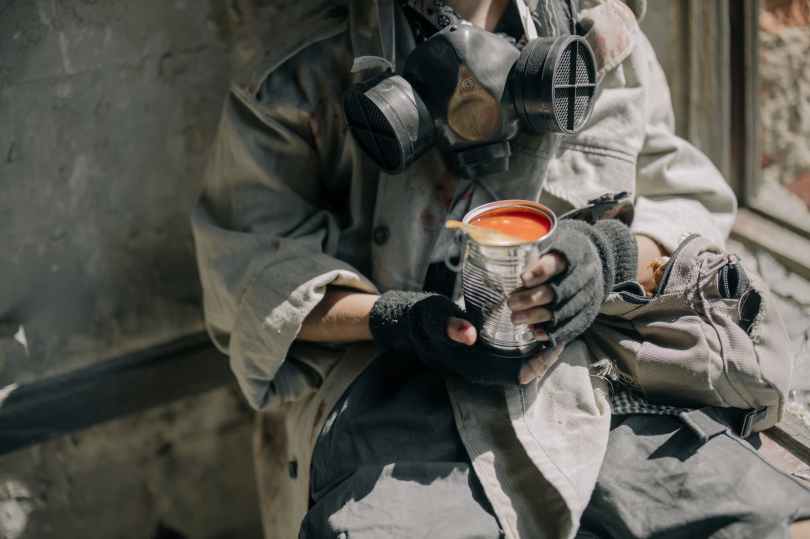
One recent response to the topic of envy suggests that psychologists and philosophers can work together to overcome the perception that envy is reprehensible. The authors of the paper conclude that envy is a more neutral concept than commonly believed, and that envy can be ‘functional or dysfunctional’. However, interesting as this approach might be, I would argue that there is a wealth of evidence that in the digital age, where image can be seen to be everything, envy is both more pervasive and more destructive than ever before. In the society which received the Ten Commandments covetousness of a neighbour’s possessions or lifestyle probably meant someone across a fence or down the road. Now anyone can click online and take a virtual tour around the homes of the mega-wealthy; gaze at the bodies of super-models; or find any one of thousands of lifestyles that might be envied. Capitalism is driven by our dissatisfaction and desire for more and for better.

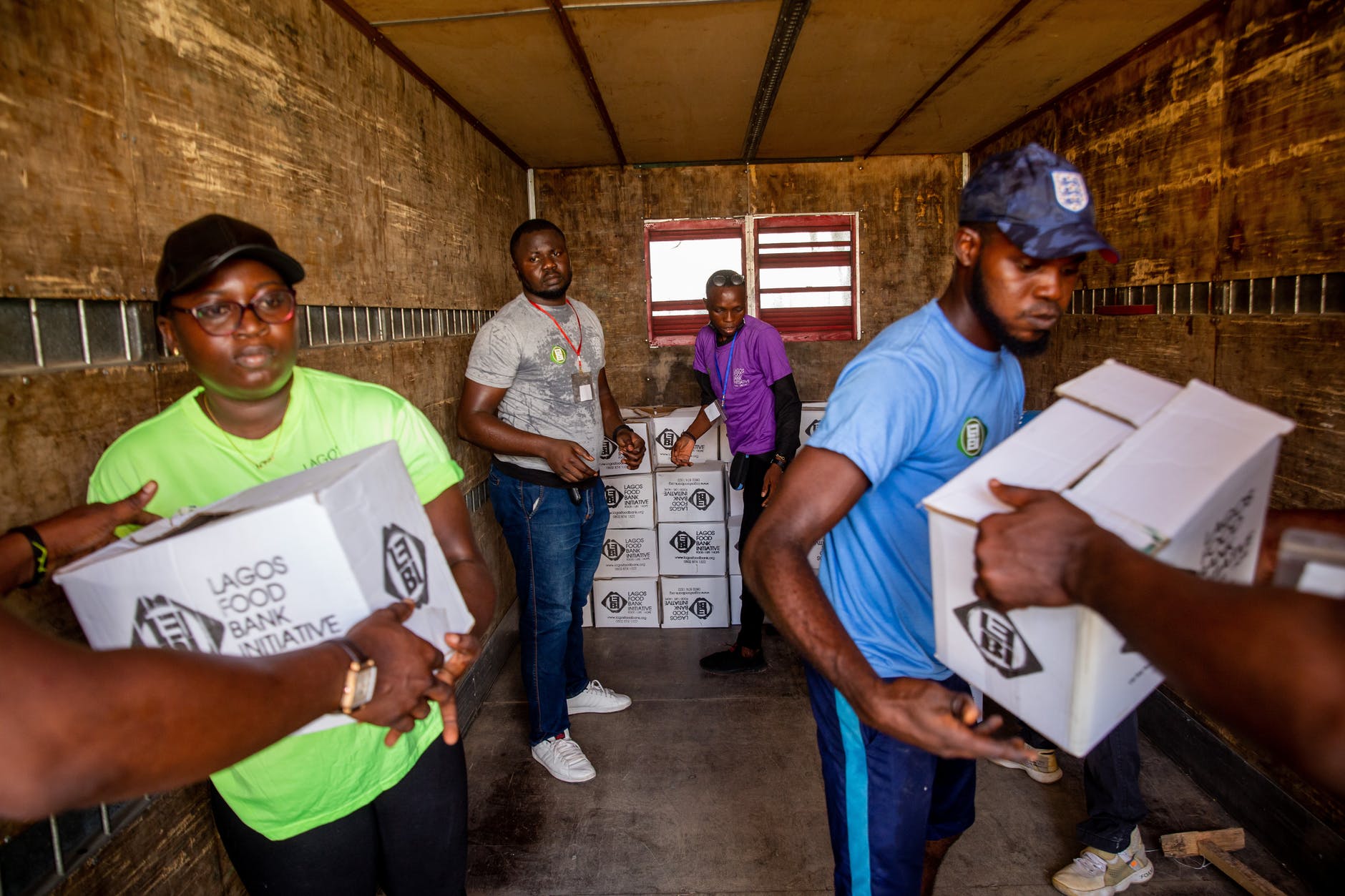
Photo by Lagos Food Bank Initiative on Pexels.com

I think there is a distinction between this envy of what others have, and a desire for the improvement of life-chances for everyone. We might ‘envy’ a country for its health system or treatment of older citizens. This is not about our own possessions but about the wellbeing of the community as a whole. In some quarters the aspirations of Trade Unions for better pay and conditions is attacked with a suggestion that workers are engaging in wealth-envy. The language of class warfare is used to imply that people who have failed to become rich are simply jealous of those sitting in their mansions with millions. This is to misunderstand the anger of those who believe that people in full-time employment using food banks in a wealthy society is both immoral and unacceptable.

All Are Drowned

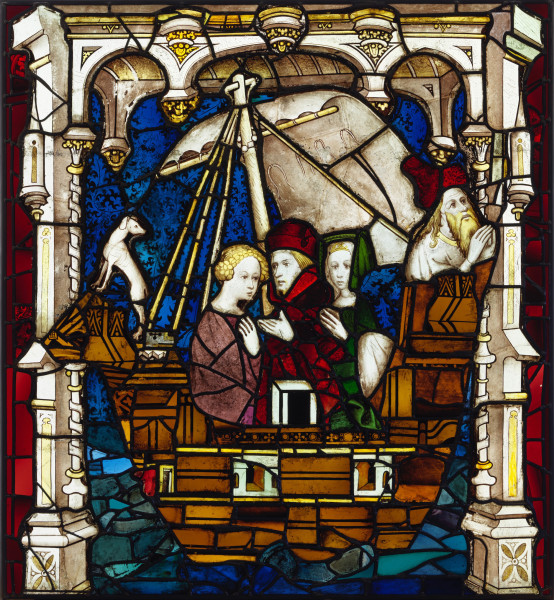
A literal reading of the story of The Flood would surely see God in the dock for genocide. Apart from one family, life in the world is washed away by a Deity impatient with the sinful state of humanity. According the Genesis 5:7, it is a decision to ‘blot out form the earth the human beings I have created’. In the York Mystery Plays performing this week, it is only Mrs Noah who makes a ‘din’ at this sudden and devastating loss of life:

But Noah, where are now all our kin
And company we knew before?

The resonance of these words to audiences that lived through plague years can only be imagined. People survived and wondered what had become of their neighbours; their extended families; and their friends. All the guilds that performed in the plays would have experiences the painful deaths of colleagues, with the plays being performed after a gap caused by the worst excesses of infection. Perhaps a full cast was harder to find and familiar figures were noticeable by their absence?

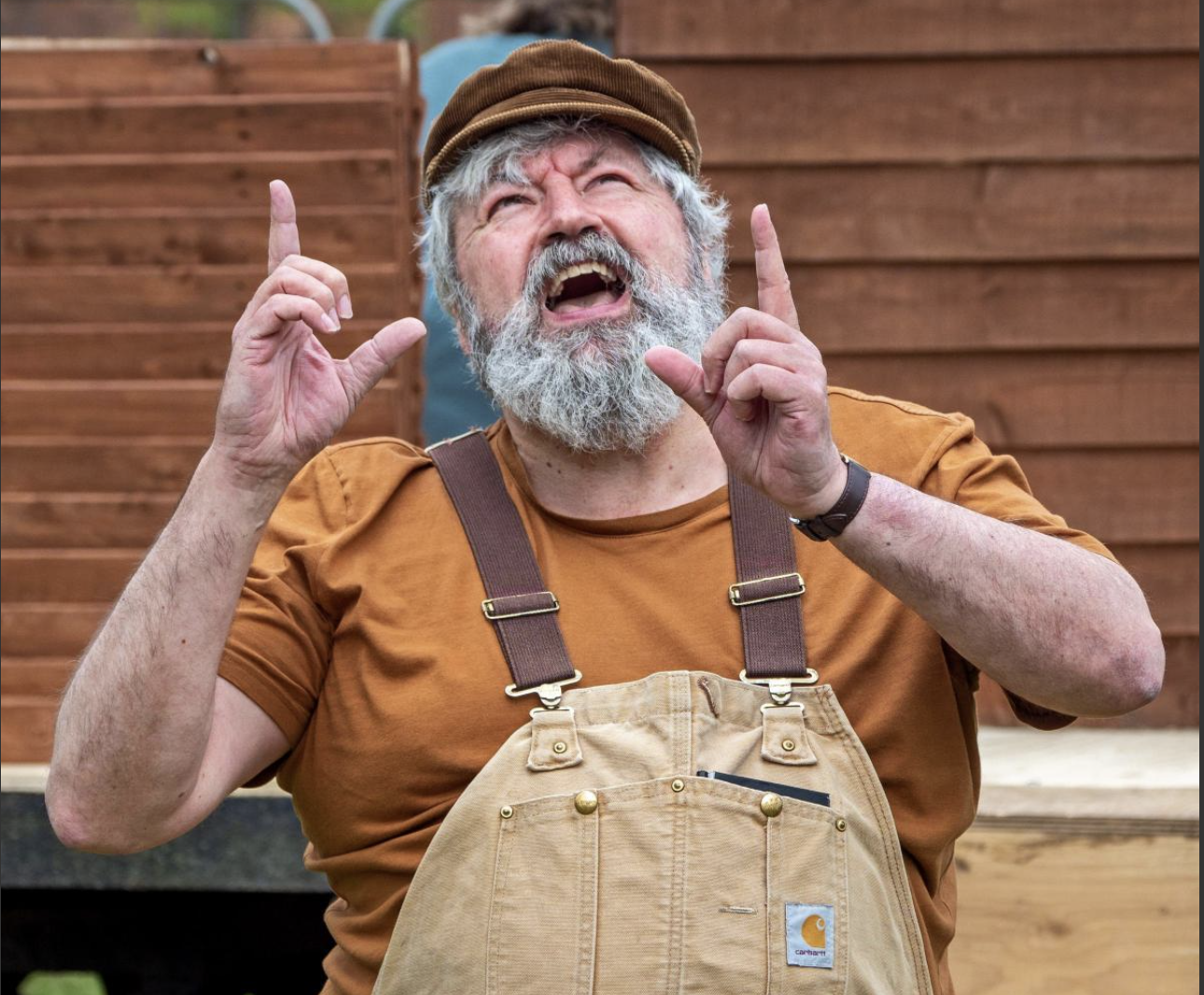
Maurice Crichton as Noah in The Flood, York’s Mystery Plays in 2022 (picture in York Press)

Some of the problems of the story are touched on in the narratives of the play. At the end, when the waters subside, an innocent son asks: ‘how shall this life be led Since none are in this world but we?’ Populating a new world from one family raises its own problems and risks. There is humour in the son’s question but also a serious point about the regeneration of humanity. In the streets of York such blunt questions were permitted in a way that was unlikely to be acceptable in the Minster and churches of the city.

In England the Archbishop of York proclaimed that the plague was “surely… caused by the sins of men who, made complacent by their prosperity, forgot the beauty of the most high Giver”.

Beidler, P. G. (1981). Noah and the Old Man in the “Pardoner’s Tale.” The Chaucer Review, 15(3), 250–254. http://www.jstor.org/stable/25093759

Understandably, and perhaps addressing the unspoken questions of an audience wondering about the repetition of such a catastrophe, one son asks whether the empire of the world will now last forever. Noah gives the assurance that there will not be another flood – but that the world ‘shall once be waste with fire, And never worth to world again’. The final cataclysm will be a blazing end to God’s creation. In current circumstances it might indeed feel that this is where we are heading – although the Deity only needs to sit back and watch as we pursue lifestyles that may lead to this ultimate conflagration. As the Mystery Play wagons roll through York this week they will follow a pattern, and repeat the words, used back into the mists of time. In every age they offer food for thought and hopefully, entertainment, which reflects on both our place in the world and the consequences of our actions.

We travel upon the Ark, in mud and rain,
Our oars promises from God.   
We live—and the rest of Humanity dies.   
We travel upon the waves, fastening
Our lives to the ropes of corpses filling the skies.
But between Heaven and us is an opening,
A porthole for a supplication.

The New Noah, by Adonis, translated by Shawkat M. Toorawa

Honourable Men

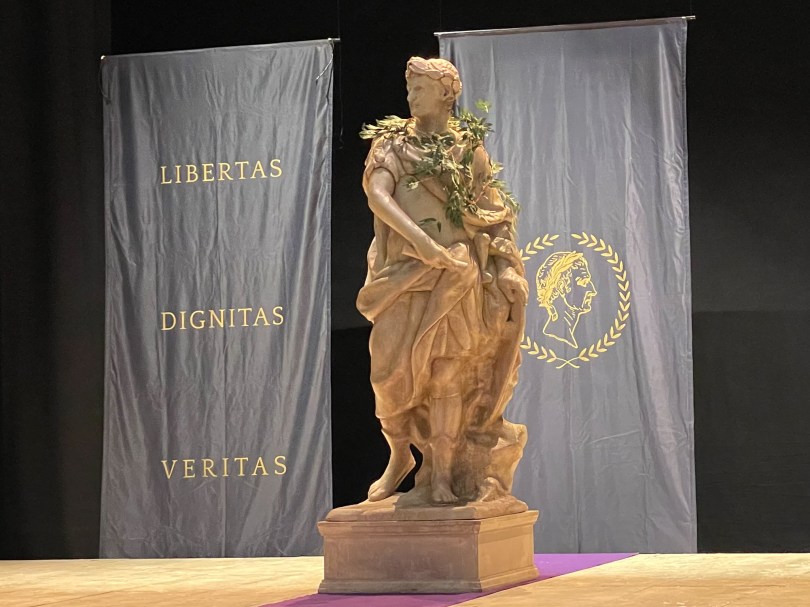
Marc Antony’s speech in Julius Caesar is a text famous for its oratory and skill in speaking one thing while meaning another. Time and again, he describes the conspirators who have killed Caesar as ‘honourable men’. As this repetition builds it sounds ever more hollow. The substance of the speech creates a growing space in which the populous may start to draw its own conclusions. It is a tactic of consummate skill that in Shakespeare’s hands becomes the opening salvo in a civil war.

‘Honour’ is not a term that sits comfortably in modern discourse. There is a mountain of evidence that suggests some MPs, who by tradition carry the title ‘Honourable’, are content to exhibit behaviour that undermines the recognition implied by the convention. It appears at times that there is a general desire on their part to sully the value of ethics in political office to achieve a particular goal: if everyone is behaving badly, what’s the difference when it comes to voting in elections? One recent example of this is the repeated claim by the Prime Minister that there are more people in work now than before the pandemic.

Responding to a complaint from the fact-checking organisation Full Fact, Mr Humpherson had told No 10 this claim had been made by the prime minister in Parliament on 24 November, 15 December, 5 January, 12 January and 19 January.

And it was “disappointing” the prime minister had “continued to refer to payroll employment as if describing total employment, despite contact from our office and from others”.

BBC News Website 7 February 2022

Perhaps Mr Johnson has learned the lesson from his time in journalism, that prominent and false claims continue to have credence even if they are corrected at a later date (less prominently, and in a much smaller font). Whether it is the ‘success’ of Brexit; the assertion that the UK Government did an excellent job handling the pandemic; or the overall state of the economy, aspirational claims and bluster appear to be the primary tactic of current political leadership. I am sure that however inaccurate many of these claims will appear to be, their confident assertion will hoodwink many people. The Globe’s touring production of Julius Caesar carries the right stapline: ‘Ancient Rome has never felt closer to home’. Elsewhere, Shakespeare provides Beatrice with words of contempt for the supposed bravery of big liars:

He is now as valiant as Hercules that only tells a lie and swears it.

Beatrice speaking in Much Ado About Nothing Act 4 scene 1

Establishing honour in civic life is not easy. It isn’t difficult to accuse people in leadership of hypocrisy, and none of us is perfect. However, it is a very sad state of affairs when honour is no longer held as a value to pursue. When simply holding power is seen as a kind of virtue, and the assumption is that whatever ‘sacrifice’ might be involved can be offset by the prospect of future gains (Saturday’s Guardian suggests that the Prime Minister will be able to earn £5 million per annum after leaving office).

The current political landscape in England cannot be blamed on leadership alone. We have stood by while the virtues and values of good government have been eroded. Any attempt to reverse this decline and promote more honourable leadership will require work at the grass roots. As people see the bluster for what it is, there is the chance that we can re-set expectations and encourage action and voting that sustains a better quality of leadership. I am not altogether hopeful that this can be achieved, but what honour would there be if we did not at least make the attempt?

Holy Zadok

Handel’s anthem, composed in 1727 for the critical moment of a coronation, the anointing, is the only piece to have been used on all subsequent coronations. It is not hard to understand why. It is magisterial, with a substantial introduction which swells and calms, sustaining a growing sense of expectation. When the choir enters, it is with a sudden and dizzying burst of sound. The text from 1 Kings is brief. In many respects it is a prosaic passage, describing with an almost matter-of-fact tone the actions of a priest and a prophet. Centuries later, in the hands of Handel, it is transformed to embellish the coronation of a British sovereign, conveying an auspicious announcement and the response of the people.

Zadok the priest and Nathan the prophet
anointed Solomon king.
And all the people rejoiced and said:
“God save the King!
Long live the King!
May the King live forever!
Amen! Amen! Alleluia!”

The text of the anthem from 1 Kings chapter 1

In its context the words used in the anthem signify rejoicing after uncertainty and discord. Another of David’s sons is attempting to take the crown, even as his elderly father still lives. The promise of succession had been given to Solomon, but this suddenly looks precarious. To avert civil war or other disorder, David orders Solomon to be taken to Nathan and Zadok (two figures who had not sided with the contender) – so that he can be proclaimed King. This action seals the succession and prevents any violence.

The BBC Radio 4 episode of Soul Music which centres on Handel’s anthem is a fine reflection on the technical achievements of the work as well as its past and present reception.

Hearing Zadok the Priest played for the Platinum Jubilee in York Minster this weekend, with the organ recently restored, has been a highlight of the celebrations. The well known notes, the tension of the moment and the release of expectation, never lose their power, despite their familiarity. As with so much of the symbolism of a coronation, each reference carries links to other times and occasions. Sometimes these feel fully justified, while at others it can amount to a forced connection which may be far removed from its original meaning. The text in 1 Kings, with its reference to Zadok and Nathan, appears to convey social order; the fulfilment of lawful succession; righteousness and fidelity.

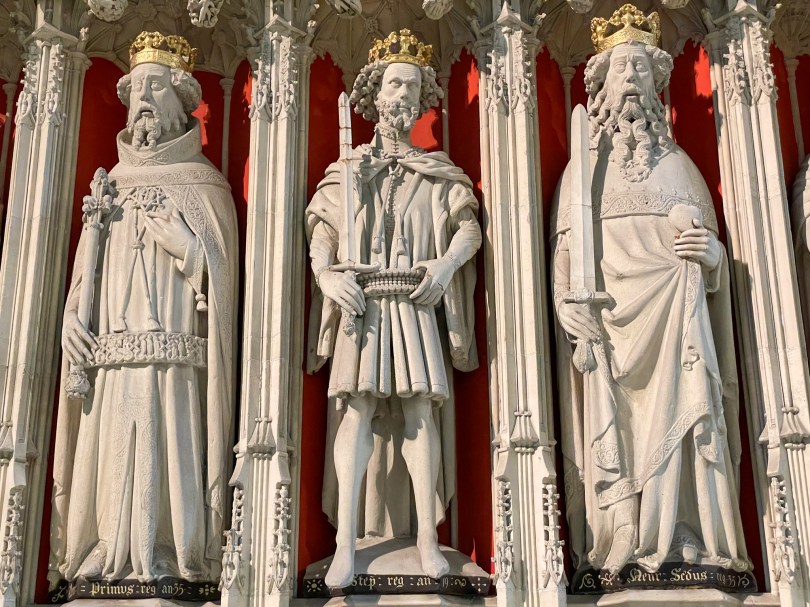
David and Solomon, The Great East Window, York Minster

Events conspired to bring Elizabeth II to the throne – it could easily have been otherwise. Across seventy years her presence has provided stability in the winds of political change. Perhaps one day we shall know what the Queen thought about the political leadership and direction of the country. I cannot imagine that the last decade will have filled her with satisfaction as her long reign enters its twilight years. In the UK, even as the pandemic began, 27% of children were living in poverty. Recent rises in energy costs and the overall impact on the cost of living are likely to increase that figure, despite Government assistance. The gap between wealth and poverty has ballooned during the pandemic and it will take more than charity to transform this dismal trajectory.

Zadok and Nathan ensured orderly succession. Prophets, priests and kings did not always agree – but the tensions between these roles could work creatively for the people as a whole. Checks and a recognised dispersal of power are always needed for good governance, but so too is a common desire to see the whole community flourish. There has been much that is good over the last 70 years, but the reality of an ever-widening gap between wealth and poverty requires determined action if we wish to see everyone enjoy both peace and prosperity. This weekend has witnessed a rightful sense of celebration, but to honour the Queen and her unique role in British public life we cannot pass by the pressing issues of our time. A fitting legacy for this remarkable reign will be a society in which the fear of injustice, and of poverty, will begin to fade.

In Memory of God

Sometime in the late 1930s or early 40s, my father was very naughty. He used to tell me the tale with a chuckle, as he recounted the time he carved his initials into a church pew. What remained most notable in this memory was the rationale that accompanied his telling off. He was told, rather sternly I imagine, that he: ‘shouldn’t do that because people pay a lot of money to have their names inscribed in church’. As always in Lancashire, people cut to the chase.

On a recent visit to St Paul’s Cathedral I was reminded of this as I walked amongst the multitude of monuments. To amble down the aisles of this cathedral is to be surrounded by the ghosts of Empire – set out either in the commemoration of notable clergy who converted people around the world, or in the words written across the tombs of generals; admirals; and sea captains. I doubt there are many omissions from the references to far flung parts of Empire that once came under British rule. Across the acres of white marble I was left wondering what untold stories lie behind the eulogies of these historic leaders. In contrast to the praise of their actions, the voices of the acted upon are absent.

There is no doubt that these monuments signify both money and power. Set in the midst of the City of London, the figures can be seen as the immortalised heroes of a mercantile thirst that brooked little opposition. The inscriptions carry numerous references to the East India Company. There is something very disturbing about a spiritual place that glorifies colonial power and is silent about a legacy still blighting people around the world. This substantial void at the centre of Capitalism – Conrad’s ‘heart of darkness’ – is a fitting mausoleum for the sons of Empire.

In the current issue of Crucible, The Journal of Christian Social Ethics, Carlton Turner writes about the possibilities of decolonising theology. This is a challenging task as theology was recruited into the work of colonisation from the outset, or at least from the moment when a faith smelted in the experience of military occupation was integrated into government. The statue of the Emperor Constantine outside York Minster is an ever present reminder that Christianity, once on the margins of Empire, suddenly came to occupy a place at the centre.

… for people within the colonial situation, the very way theology has been done, and continues to be done, is problematic and perpetuates their own annihilation.

Turner, C. ‘Give us Healing Balm: Decolonising Theology Through African Caribbean Eyes’, Crucible April 2022 pp. 16-23.

The theology of the privileged never fully absorbs the theology that germinates in ‘base communities’, but the struggle and cost of sustaining local and authentic theologies is far from easy. For some theologians, acquiescence to the status quo is tantamount to self-harm or accepting an unchosen and enforced sacrifice (in favour of the West). Trust in Theological Education, written by Eve Parker and just published by scm press, adds further consideration and challenge to the assumptions of a theology written mostly in places of privilege and power.

When we listen to a greater variety of voices we have the opportunity to understand the damage which our theology has created, and the risks arising from a ‘normative’ Christianity applied across a range of contexts. For observers from these contexts it must often seem that these fine statues glorify man and, at best, give a modest nod to the memory of a God who made the inconvenient choice to be born amongst the poor of our planet. Every day in St Paul’s the following words are said or sung. The incongruence feels too large to reconcile:

He hath shewed strength with his arm :
he hath scattered the proud in the imagination of their hearts.
He hath put down the mighty from their seat :
and hath exalted the humble and meek.
He hath filled the hungry with good things :
and the rich he hath sent empty away.

The Magnificat, Book of Common Prayer (Luke 1)

Donne and Dusted

I was very sad when John Donne died. This wasn’t recently (in fact, 1631), nor is it a plot spoiler, but is retold in the culmination of Katherine Rundell’s absorbing recent biography of the poet. Like so many in his generation Donne had a momento mori close by on his desk – a reminder of mortality present at all times. To modern sentiments this may seem mawkish, but in an era when sudden death was far from rare, it was wise to live with an active awareness that your current experience could came to an abrupt full stop.

The awareness of death is a characteristic consistent with Donne’s relentless attention to the material world, no matter how grim or gritty it got. There was nothing too impolite or unseemly to be dragged into the pulpit of St Paul’s Cathedral and shared with the multitudes. Life, Donne told his hearers, is like a journey between a gaol and a place of execution. A short trip that ran from crime to punishment, darkness to death. Except that this wasn’t the lesson of his analogy. Donne was provoking the congregation to contrast our human inattention with the alertness of someone knowingly going to their death. As he put it, on the journey from Newgate to Tyburn, no one sleeps. Yet, Donne argues, we are heading towards the same certainty spending significant parts of the journey asleep. His call echoes the Biblical and Advent theme that ‘now it is time to wake out of sleep’. To be stirred up, ‘now, in the time of this mortal life’.

Donne is not a wholly attractive figure. As a financially challenged poet his obsequious letters to various grandees grate in a more egalitarian age. His rise to high office in the Church of England required careful nurturing of royal connections. Despite this, he brought to the Deanery a fierce intellect; an astonishing mastery of language; and a theological sensitivity to the complexity of the times. The combination of his gifts and experiences enabled Donne to further what we might now call ‘the Anglican Project’ – establishing the groundwork for an expression of Christianity shaped by the heritage and nuances of English experience. There was certainly an appetite for his approach, with large crowds flocking to hear him preach. A few years ago, an experiment took place to see how audible Donne’s sermons would have been from the outside pulpit at St Paul’s, surrounded by hundreds of people.

The memorial to John Donne, St Paul’s Cathedral

Perhaps the most curious, visceral and haunting detail in Rundell’s book describes Donne’s preparation for death. As the end approached Donne saw its prospect as one final dramatic moment. He ordered an urn and shroud to be made, then lay in the shroud so an artist could sketch his appearance at full scale. This became the image from which his statue was carved following his death – still in St Paul’s today, one of very few to survive the Great Fire of 1666.

“Donne made himself ready; part, perhaps, of a desire to have things done exactly as he had imagined them – an artist of ferocious precision, dying precisely. His last words – ‘I were miserable if I might not die.'”

Rundell, K, ‘Super-Infinite: The Transformations of John Donne’, Faber 2022 p. 290

It is fitting that Donne is most often remembered for his poem beginning ‘No man is an island’. Fitting because it addresses two themes which ran throughout Donne’s life: mortality and connectedness. He lived at a time when the fusion of the material and spiritual, the sensory and the abstract, was an acceptable way to write about the world. Given the ubiquity of death, including young family members, mortality made Donne’s life an ever changing landscape. Undoubtedly these losses were never welcome, but they contributed to a vivid celebration of life and determination to be awake and alert. Donne notices the world in a way that comes from an acute sense that each and every day is gift that will not be repeated.

Will God Get COVID?

This might sound like a rather abstruse theological question – along the lines of angels and pinheads. However, it isn’t as far as I’m concerned. Since auditioning for the York Mystery Plays‘ forthcoming wagon productions, I have become God’s understudy. I’m not sure whether this kind of role existed before, but the shadow of COVID has meant directors are more concerned about having ‘first reserves’ for the main speaking parts.

Some years ago I encountered the York Mystery Plays while undertaking research connected with the history of hospital chaplains. This involved visits to the York Minster Library to access records and materials connected with the large hospital of St Leonard, developed out of an infirmary built over a thousand years ago. It was here that I came across a reference in the prayer of the Barber Surgeons which addressed the Lord ‘as Sovereign Leech’. It’s a small expression of the visceral and earthy content of the plays, bringing the stories told in Latin in the pristine interior of the Minster down to the vernacular of the Shambles. A narrow lane where the butchers of York conducted their trade, and the cobbles no doubt ran with blood.

The play in the cycle which I’m supporting is The Flood. Given some of the inaccessibility of the language it’s helpful to have a story which is well known, even outside Christian circles. The cast has reflected on the question of what kind of god saves one family and kills everyone else? This may have been less troublesome to Medieval tellers of the tale or their audiences, where the traditional explanation of ‘sin’ is the accepted reason offered for the mass slaughter. God repents of creating humanity and decides to ‘work this work I will all new’.

Sithen has men wrought so woefully
And sin is now reigning so rife,
That me repents and rues fully
That ever I made either man or wife.

I’ve no doubt that official toleration of the plays depended to some extent on the text more or less following the official story known to the literate people of the day. However, it would be fascinating to know what some thought about this mass extinction when plague had been part of their experience. Times when everyone would have known someone who had suffered and died in the frequent outbreaks that occurred in urban centres. In the second half of the 14th century York’s population fell from 15,000 to 10,000. As the deaths undoubtedly fell unevenly, some families and professional Guilds would have experienced dire losses. Questions about the link between sin and an early grave may well have vexed the minds of citizens, especially given the suffering that took place with very limited medical aid.

Photo by James Wheeler on Pexels.com

At the very least, after the plagues, the story of the Flood may not have seemed quite so innocent or uncomplicated. Unlike many, this does not give me concern from a biblical perspective. Like the story of Job, I do not view these as literal accounts in the sense that they describe physical happenings as we would evaluate them today. Very often these accounts are addressing theological and philosophical questions that were real and pressing for people. Why do sudden natural events wipe away large number of people? Where is God in this destruction and loss of life? Are human beings living the way God is calling them to live? Can we make a fresh start? One view about the demise of Mystery Plays across Europe suggests that a growing diversity of beliefs meant that vernacular plays were no longer uncontroversial accounts of an agreed theology. This both placed people’s souls at risk (of error) and posed challenges to civic authorities attempting to maintain order in fractious times.

The plays are full of hints and winks that add ribald humour to the narrative and no doubt contributed to the popularity of the plays. For example, we are left to wonder whether one of the daughters became pregnant in the ark when she remarks towards the end of the flood: ‘Nine months past are plain Since we were put to pain’ (both the timespan and reference to pain – Genesis 3:16 – appear to leave little doubt). As with so much community theatre, the allocation of roles could also lead to mirth. Might some of the humour be subversive, casting a teetotaler as Noah or a reprobate as God? We know from the contemporaneous Canterbury Tales the character of Medieval discourse and popular humour or, at least, the kind of humour that found a ready audience. In a dissertation by Asier Ibáñez Villahoz, it is suggested that both the Mystery Plays and the Tales draw on a form of carnival subversion. While I disagree with Villahoz’s claim that sexual humour is absent, it may certainly have been more obscure or toned down when compared with the Tales due to its public performance.

Carnival subversion appears in the way some characters as the adulterous woman or Noah’s wife are depicted connected to that anti-feminist tradition. Misogyny is a major issue in these plays: not only Eve is represented in a negative way but also other women that have just been mentioned do not behave the rigid orthodox way of behaviour they should have.

https://uvadoc.uva.es/bitstream/handle/10324/33297/TFG_F_2018_35.pdf;sequence=1

The resurrection of the Mystery Plays in a modern setting may reflect the relative decline in the UK of religious disagreements as a cause for public disorder. The audiences appear happy to regard the wagon plays as public spectacles, with historical interest and a spirit of local pageantry. Seeing them performed in full for the first time since the pandemic may cause some to reflect on the recent inundation of infection. Whether this unforeseen loss of life will raise theological questions is uncertain and, despite the inevitable temptation, I genuinely hope that God does not come down with COVID.