Known Unknowns

Much mocked at the time, Donald Rumsfeld’s response to a press question is a largely accurate assessment of the murky evidence on which we attempt to make decisions. Sometimes we know that we don’t have the data about something. Equally, we know that there will be things that blindside us – key pieces of information that come out of the blue. These are the unknown unknowns. Realising that this is the reality in which we work, we need a wise humility about the scope of information that is available to us. One of the dangers inherent in the decision making process is the temptation to only see the information our data tools are designed to collect. This appears to make perfect sense, as we have proven and validated methods to acquire certain kinds of evidence. However, it may also mean that we give scant regard to the unknown unknowns – the inevitable and significant factors that are not amenable to the measurements we can use. These exist, but operate outside our frame of reference.

Reports that say that something hasn’t happened are always interesting to me, because as we know, there are known knowns; there are things we know we know. We also know there are known unknowns; that is to say we know there are some things we do not know. But there are also unknown unknowns—the ones we don’t know we don’t know. And if one looks throughout the history of our country and other free countries, it is the latter category that tends to be the difficult ones.

“Defense.gov News Transcript: DoD News Briefing – Secretary Rumsfeld and Gen. Myers, United States Department of Defense (defense.gov)”. February 12, 2002. Archived from the original on March 20, 2018.

There are useful philosophical approaches to the basis of our knowledge. Often there is a distinction made between analytical (or Anglo-Saxon) philosophy and continental philosophy. The former is very much focused on the known knowns; the latter is more concerned with lived experience and the role of language in the nature of our perception. It follows that continental philosophy has a healthy regard for the scale of information that isn’t amenable to our existing forms of analysis and measurement. Many years ago I was involved in the delivery of a learning module for medical students at a Russell Group university. At one point I asked the 30 or so students to imagine everything they could ever conceive might be known about human physiology and clinical care. The I asked them to tell me how much of that they felt we knew today. With commendable insight and honesty one student responded: ‘sweet FA’. We tend to place great confidence on our current knowledge, which his understandable, but the story of science is that what we knew in 1922 is largely inferior, wrong or misguided, compared with what we know today. The corollary of this is that what we know today is likely to be seen in the future as clumsy, partial or lacking critical information.

It is encouraging that the Templeton Foundation has awarded funding to the University of St Andrews for a project entitled “Widening Horizons in Philosophical Theology”. This work has led to a host of international research studies co-ordinated to inform the development of a renewed philosophical theology, drawing on insights from the approaches of continental philosophy. This is intended to generate an “holistic approach to exploring questions of spiritual discovery and growth”. All this involves close attention to the lived experience of people as we share in relationships and learn more about ourselves and those around us.

In attempting to understand hospital chaplaincy and my place within its practice, I spent time exploring the work of Michel Foucault, one of the continental philosophers. In reading Foucault’s work I felt a strong affinity with his attention to shifting regimes of power and what knowledge this permits or suppresses. As a chaplain I was aware of the authority of medical and managerial discourses and the ebbing regard given to religious and spiritual ways of knowing. As prevailing power relations often seem inevitable and invisible, my formation as a priest and a chaplain frequently seemed to jar with a view of knowledge that most people regarded as self-evident. There was certainly a counter-narrative of patient experience, but this was usually accommodated within, rather than allowed to alter, the terms of what counted as actionable information.


https://templetonreligiontrust.org/explore/new-directions-in-philosophical-theology/

Without doubt approaches aligned with analytical philosophy have delivered a huge amount for many people. It is equally true that a vast amount of knowable information lies outside the systems we use to gather data. These are often aspects of the complex and multi-faceted experience of living that we find difficult to disaggregate into measurable and reportable data. Researchers have designed approaches that attempt to translate this complexity into useful information, but it remains a challenge.

It presents continental philosophy as an open, discovery-oriented discipline whose questions, approaches and methods make it an important partner for a theology.

https://philosophical-theology.wp.st-andrews.ac.uk/vision/

Given the scope and nature of theology, the recognition of inter-connection and open enquiry offered by continental philosophy has considerable potential to inform methods of theological research. Theology has no illusions about how little we know, and the enormity of potential knowledge that surrounds us. Understanding how to act in this context of partial information, in which lived experience is critical but often unamenable to study, is something a theology informed by continental philosophy could make more visible and help us live creatively within all that remains unknown.

The Year that King Uzziah Died

Our memories are often linked to significant events. Will people in the future say, I wonder, that for most of us 2020 was the year that COVID began? Sometimes it is personal recollections that mark the passing of time. Four years ago my father-in-law died on Boxing Day and my mother on New Year’s Eve. It brought to an end a year we shall never forget. For both its global significance and no doubt the sense of personal loss, 2021 will probably live with 2020 as a watershed in our collective perception of time.

It surprises some people that the demise of a King is the theme for a Christmas carol. Michael Nicholas’s composition ‘Twas in the Year that King Uzziah Died’, featured in an afternoon concert on Radio 3 recently and lies in a long tradition of settings for this text (including Dr Francis Jackson CBE, onetime Director of Music at York Minster). The words from Isaiah feel an incongruous and unpromising start to a carol, and perhaps explain why it doesn’t sit in the canon of popular nativity anthems. Equally, it is clear why this moment would remain with the prophet throughout his life. In that year, Isaiah had an astounding vision of the Lord. It was awesome and overwhelming, spectacular and sobering. At that moment, Isaiah sees himself in the presence of God and feels his unworthiness. The text in Isaiah builds the sense of scale and magnificence. The celestial speech of seraphs, and the music and cries of acclamation are so great that the pivots on the threshold shake.

And at their cry the lintels moved apace,
And clouds of incense filled the holy place.

From overpowering beauty Isaiah is asked to undertake a thankless task. He is called to prophecy the destruction of the people; the laying waste of the land; the failure of the crops. After Uzziah’s long reign, during which much of the security and fabric of Jerusalem was restored, the people are to face the loss of everything they possess. Isaiah’s task is to tell prophetic truth – as Alison Phipps puts it:

The beautifully excessive, poetic, edgy speech of the prophet who is experiencing a ‘surfeit of aliveness’ (Scarry 2001: 89) as conferred by the beauty of God’s right relationships marks out what Brueggemann terms a ‘counterscript’ (Brueggemann 2007). This ‘counterscript’ is a steady, careful truth-telling about the wrongness and wrongedness of present relationships between God and God’s (ex-) people; between people and people; between the more-than-human-world (creation) and human beings

Phipps, A. (2010). 7th February: 5th after Epiphany. The expository times, 121(4), 187-188

The message given to Isaiah was that after the terrible time to come, a stump would survive the desolation. Out of this unpromising remnant the life of the people would continue. The role of the prophet is to tell the reality of what is unfolding and foretell the hope that is to come. In this way the prophets steer Israel through times when a better future would have seemed impossible – the accuracy of their carefully narrated truth enabling the people to have confidence in the description of a better world that lies beyond their present troubles. Realistic about current woes, prophecy is capable of stirring people to work towards enduring change.

Photo by Ihor Lypnytskyi on Pexels.com

Last week we lamented the loss of a contemporary prophet – Archbishop Desmond Tutu. He was certainly someone who epitomised this ‘surfeit of aliveness’ and the relentless truth-telling that offered a counter-narrative to both the evils of apartheid and the temptation for retribution. Tutu did not hold his friends to a lesser standard than he held those who had operated and enabled segregation. He wanted to save the nation of South African for everyone and offer the world a different model of community.

As we embark on 2022 we need voices that expose the injustices of our world and challenge short-sighted self interest. The pandemic will not end until we have much better levels of vaccination across the world. Narrow self-interest must rise above the narrative of ‘me and mine’ to recognise and act on our responsibilities to humanity. What is true for COVID-19 is no less true for climate change. We cannot cut ourselves off and live lives disconnected from the poorer nations of our planet. The truth is that we are all in these defining issues together, and we shall prosper, live or die, together. Long may the prophets continue to trouble us – and hold out the hope of our salvation.

The Passing Present

I am always moved by the sight of ancient stone stairways. The sag of centuries worn stone looks like a gentle impress made on fabric. Our forebears used some of the most resilient materials available to bear the steps of millions. Over time, the micro-erosions of clogs, boots and heel plates have changed that steely strength into the smooth aspect of stone turned through the mill of human transit. Like the steady drip of water on granite, the repeated touch of soles has altered what seemed unchanging and certain. If we stopped an individual at the top of the stairs and asked if they had left a mark on the stone during their ascent, they would almost certainly look back and answer: ‘no’.

On Christmas Eve for sixteen years, at around 5:30 pm, I would hover by the entrance to the oldest part of the Leeds General Infirmary. It was here that I met the choristers of Leeds Minster as they arrived to sing carols around the wards. This time of day on the 24th of December was always remarkably quiet. Visitors had left – or they were leaving their visit until the following day. Wards were as empty as they could be. Creating capacity before Boxing Day seemed to be a major management priority, and I once went with the singers onto a ward where there was just one patient. That will not be the case this year.

After arriving, the choristers would bustle into the nearby Boardroom where a buffet tea awaited. Following this festive offering they changed into their choir robes and formed two lines on the tiled floor of Gilbert Scott’s ‘St Pancras of the North’. Then, in the silence of its Victorian grandeur, a lone voice would hit the first note of Once in Royal David’s City. The choir joined in and we all processed up the split stone staircase to the Chapel on the first floor, the choristers’ steps falling where their predecessors had walked on this same day for over a century.

Christmas can incline us to nostalgia. In a world where the present seems to pass very quickly, surviving and looking forward can preoccupy our thoughts. Those quiet moments in the busyness of Christmas may lead us to remember other festivities and look back (either happily or uneasily) to our childhoods. On Christmas Eve, in waiting for the choir, there was the space to reflect on the history of the hospital and all who had walked these corridors since the 1860s. The poor who had sought help here before the founding of the NHS; the rich philanthropists who created it; and the eminent doctors, proud of their place in a rising profession. It isn’t hard to understand why Christmas is synonymous with ghost stories and a strong sense of the past. For all those years, on Christmas Eve, I felt I was keeping company with my predecessors.

The Chapel, Leeds General Infirmary

Once again, this Christmas is likely to be unusual for many people around the world. For the second year in a row the infection and illness caused by COVID-19 is expected to curtail the extent of our celebrations. Countries are closing boarders and battening down the hatches. Even if laws are not changed, we are being encouraged to limit our contacts and make sure we are vaccinated. Already the hospitality and entertainment sectors are suffering cancellations.

Restrictions imposed in response to the pandemic hit the headlines, but they don’t tell the full story of how people are responding to the experience. We know from occasional media reports, and perhaps from first hand knowledge, that countless micro-acts of kindness have helped people journey through this difficult and isolating event. The cards, phone calls and messages that have enabled people to feel valued and connected. The delivery of food, or medicine, that has allowed neighbours to keep safe and have the things they need. The vast majority of these small deeds will pass unreported. Research is unlikely to capture the scale, extent or consequence of these tiny impressions of compassion. The people doing them generally appear to feel these actions amount to very little. Nevertheless, they are part of the fabric of our lives, shaping and sustaining the quality of our relationships. When news reports convey the scale of problems facing humanity there is both comfort and hope in the knowledge that so much unregarded kindness happens at a local level. Love expressed with no expectation of reward, but done for its own sake, and found in the bonds of human connection which, at Christmas, are hallowed by the Incarnation.

People, look east. The time is near
Of the crowning of the year.
Make your house fair as you are able,
Trim the hearth and set the table.
People, look east and sing today:
Love, the guest, is on the way.

Eleanor Farjeon (1881-1965)

Good & Bad Government

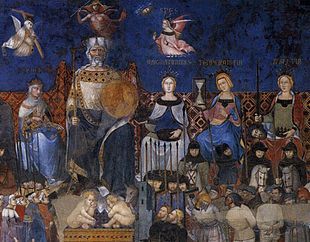
It is sobering to stand before the The Allegory of Good and Bad Government in the beautiful city of Sienna. The exquisitely detailed frescoes by Ambrogio Lorenzetti were painted in the mid-14th century and focus on the responsibilities and consequences of civic authority. It was created at a time when the Italian city-states were evolving efficient and pragmatic forms of government. Notably, as with Lorenzetti’s frescos, this form of politics was not channeled through the Church. Methods of organisation and management were viewed as some of the finest in Europe and provided models for institutions in other lands. For example, Henry VII drew on plans designed for running one of Florence’s hospitals to inform his work to found the Savoy Hospital in London.

The concept of governance, defined as “the way in which public power and authority is formed and used to control and manage society’s resources”.

Laver, R. (2010). ““Good News” in the fight against corruption.” The Review of Faith & International Affairs 8(4): 49-57.

During the Reformation in England there was a decided turn towards the centrality of governance. This isn’t unexpected given the King’s determination to consolidate his position at the pinnacle of authority. Nor can it be surprising that an assertive renewal of governance would clash with anything that might appear to trespass on sovereign power – not least the Church. From the mid 1530s ‘Henry remained insistent on his royal supremacy for the rest of his reign’ (Orme, 2005). The government of Church and State were to be united in the King’s person.

“and shall have and enjoy, annexed and united to the imperial crown of this realm, as well the title and style thereof, as all honours, dignities, preeminences, jurisdictions, privileges, authorities, immunities, profits, and commodities to the said dignity of the supreme head of the same Church belonging and appertaining”.

Henry VIII ‘s Act of Supremacy (1534)

The consequences of this spiritual and temporal unity ran wide and deep. Sovereignty was projected into public life in ways that proclaimed the place of the King as governor of all that lay in the Kingdom. It became customary to replace sacred images in churches with religious texts and the Royal coat of arms. Tellingly, among the options available to address God in prayer, the language of governance became more pronounced. The poorest in society, those availing themselves of re-founded hospitals, made their prescribed prayers to: ‘O Lord, our Governor’.

Good and bad governance is a persistent theme in many books of the Bible. The prophets in particular spoke out for just government and against corrupt or self-interested forms of leadership. Ruling with justice was seen as the fulfilment of God’s will for the people. The initial verses of Isaiah 32 convey the sense of desire for a sovereign righteousness that will bring peace. With the right King the ‘princes will rule with justice’ and be ‘like the shade of a great rock in a weary land’. The prophet articulates the longing of the people. The time for the rule of villains and fools has passed.

 “A fool will no longer be called noble,

    nor a villain said to be honourable”.

Isaiah 32: 5 NRSV
Photo by RODNAE Productions on Pexels.com

While it may sound like a festive after-dinner entertainment, ‘when is a party not a party’ involves far more serious issues than its frivolity suggests. It isn’t possible yet to calculate the sheer cost of lockdowns for people, only time will reveal the consequences of isolation and shielding. For some people the impact of COVID-19 deprived them of a last Christmas with their nearest and dearest.

We can all say silly things and forget the wider context of life around us, but at 10 Downing Street it feels more like an infestation of disdain rather than a slip of the tongue. A Prime Minster who began the pandemic bumptiously telling reporters he’d been to a hospital where there were COVID patients and shaken ‘everyone’s hand‘. Then he was in hospital – but appears to have learned little from the experience. It certainly didn’t appear to increase his determination to practice prudent infection control. A Government that didn’t even bother thinking what COVID would do to care homes, until the mounting death toll made it unavoidable. A Secretary of State for Health who broke the COVID rules and resigned. Vast amounts of money paid to poorly vetted suppliers, to do at huge expense what other countries managed far more economically. The handling of Brexit.

I can only begin to imagine the lurid frescoes Lorenzetti would need to paint to capture this litany of maladministration, self-interest and contempt. ‘Bad Government’ is too weak an epithet for what we are living through, experiencing and enduring.

The Speed of Love

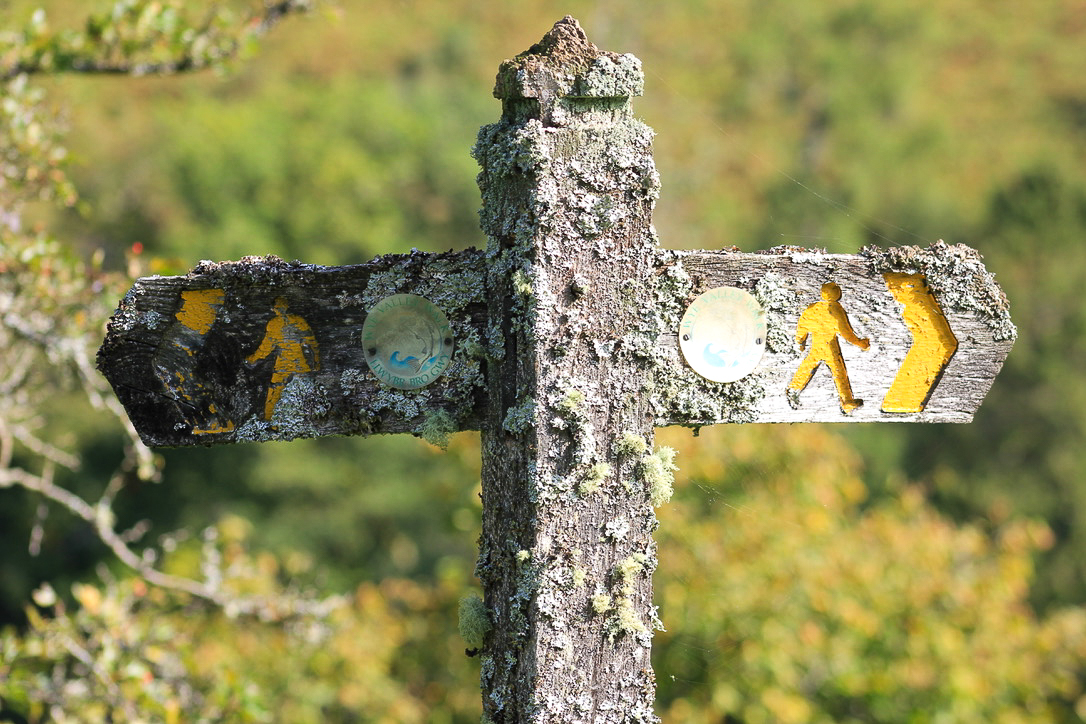
I have always been intrigued by liminal places. The kind of setting that is neither here nor there, one thing nor the other. Sometimes they are the border lands where people live, perhaps working in one country and supporting a nearby football team in another. In places they are the dividing line – the point of passage from one landscape to a very different terrain. I associate this with the feeling of a sea crossing to an island, or the steep ascent and dramatic drop when crossing the North York Moors. These are generally uninhabited places where a crossing can be closed suddenly in winter weather. Often they assist the sense of separation from a familiar context – a good way to mark a different place and time; something unusual.

While they may not be crossing places from one kind of setting to another, even a country walk has the power to loosen our attachment to busy thoughts. Watching the excellent BBC 4 series Winter Walks I’ve been struck by the spiritual qualities of these seemingly ordinary country rambles. Unlike so much that grabs media attention today, these are not death-defying climbs up impossible slops, nor heroic marches across vast distances. Their route and length are decidedly modest. However, winter no doubt reduces the number of people the walkers encounter, so an awareness of the adverse elements and a spirit of reflective solitude emerge.

A good example of the spiritual qualities of a walk came in the episode featuring Alasdair Campbell. He began by a Yorkshire force (waterfall) with his surroundings covered in light snow. He went on to discuss his challenges with mental health. Reading a small inscription on a bench moves him to speak about the dead and how he still feels to be in their company. Family features, as it has so often, when he recalled childhood days spent in similar landscapes growing up in Yorkshire. There is a reflection on silence and sound. Throughout these episodes brief texts appear on screen stating the distance covered and the journey to go. There are occasional reminders of how many minutes it is until sunset, providing a factual commentary that complements the hints of finitude present in the walker’s words.

There is growing evidence that this kind of walking is good for our mental health. Sadly, as it appears to be the only measure we value, this benefit is quantified as a financial saving in the provision of health and social care services. This limits the broader recognition that many kinds of walking are primarily spiritual and holistic experiences. For people interested in faith and belief it comes as no surprise that these winter walks (mini pilgrimages?) stimulate this sense of spirituality. In 1980 the Japanese theologian Kosuke Koyama published his book Three Mile and Hour God. The idea of a God who goes with us at walking speed has a lot of appeal. It can feel that in Western life there is an irresistible and inexorable drive to go faster tomorrow – to use our time efficiently so that there appears to be more time. Slowing down to a walking speed, as the BBC series illustrates, effortlessly foregrounds spiritual themes.

“God walks ‘slowly’ because he is love. If he is not love he would have gone much faster. Love has its speed. It is an inner speed. It is a spiritual speed. It is a different kind of speed from the technological speed to which we are accustomed. It is ‘slow’ yet it is lord over all other speeds since it is the speed of love”.

Koyama, K. (2021). Three mile an hour God. SCM Press.

Advent is a good time to think about journeys. According to Luke’s gospel, after the annunciation, Mary hurries to a town in the hill country to visit her cousin Elizabeth. It doesn’t sound like an easy journey, and Mary remains in Elizabeth’s home for three months before returning. This time (we assume) well into her pregnancy, and carrying a fragile flicker of hope through the world’s darkness. Other journeys will follow – for registration in Joseph’s hometown; for shepherds from the fields; and, in due course, figures from the East putting their faith in a star. This is without mentioning the flight into Egypt and the echoes of Exodus. These were mostly slow and risky journeys by our standards.

Some journeys are inevitable. No matter how ill prepared we are, the 25th of December will come (and go). Wherever possible people will travel to be with loved ones. Sometimes those journeys begin several days before Christmas – with visits to others along the way. There can be an inevitability about the distance to be crossed and the day that will come. How we use these times is very much down to us – to simply get to our destination, or allow the journey to sift our thoughts and feelings. Reflecting that all of life is a journey – until it is not.

“This year I don’t know how to find

the way to Christmas. Instead

my mind replays memories

I’d thought to burn – the first-blows

of my youth.

And yet Christmas

and my family will come;

have already begun their journey South,

and there is solace in that …

From ‘Midwinter’ by Anne Walsh

Practiced Preparations

Last Sunday the kitchen was filled with the rich aroma of Christmas cake. Part of the counter-narrative to convenience food lies in the enduring appeal of homemade seasonal treats. Many people bemoan an ever earlier Christmas, but the truth is that timely preparations have always been a part of autumn. If I had a pound for every time someone has said to me ‘it’s only one day’ I would be a lot wealthier. While that may be true for many, there are others whose thoughts turn to Christmas early in the second half of the year. Someone I met one August, sadly bereaved of one of his few friends, wondered what would happen at Christmas? He spoke fondly of the annual visit that would see a special bottle opened, with conversation that mingled past and present. For some people, Christmas is the axle on which the year turns.

My grandmother, in a ritual practiced by many gardeners, would acquire some forced hyacinth bulbs and make sure their growth was managed in order to bring colour to Christmas. They became gifts for friends and family and filled her home with scent and brightness. The whole process takes 10-12 weeks, so this kind of preparation begins long before darkness starts to fall at an early hour. With a keen eye and careful foresight, presents were bought at various times earlier in the year and put away until needed. Sometimes gifts would be handmade, drawing on her skills in needlework. Again, this couldn’t be managed at short notice – planning was needed to ensure sufficient time to complete the project. Christmas was in mind long before it became a matter for discussion.

If of thy mortal goods thou art bereft,
And of thy meager store,
Two loaves alone to thee are left,
Sell one, and with the dole
Buy hyacinths to feed thy soul.

Saadi, Persian Sufi poet, in Gulistan (The Rose Garden), 1258

With trees up and decorations out, Advent can feel a bit late in the day, which is more appropriate than many might imagine. The themes, music and liturgy of Advent convey the sense that time is running out – salvation is at hand. Our progress through darkening days to the bright feast of the nativity is marked by ominous warnings that the end is closer than we think. We need to wake up and be alert because salvation ‘is nearer than when we first believed’. It can feel that the pots and pans of Christendom are being struck in a cacophony of anticipation and warning, just when the idea of hibernation is most appealing.

Advent is fleeting. Few places observe its daunting themes with sustained focus – there are understandable demands for nativity plays and carols to fill the Sundays up to Christmas. Yet overwriting of the season robs us of a purposeful time and some of our most profound liturgical moods and music.

In Advent, we set our sights toward the horizon of God’s future, and allow that horizon to reframe our present-day attitudes.

Witvliet, J. D. (2008). “Sing to the Lord No Threadbare Song”: Theological Angularity in the Face of Advent Sentimentality. Interpretation62(4), 402-417.

Preparation is part of our waiting. We are promised judgement. In contemplating the apocalypse we see a settling of accounts that could be horrific. What may appear overwhelmingly bleak is countered by the promise that love is born into the cataclysm. A non-sentimental love that knows who we are and helps us find a peace unavailable in our world, but freely given to those who seek it. The discomforting purpose of Advent is to allow the future to question our present. To ask, perhaps (in a post-colonial world riven by inequality) whether we have some responsibility for the people whose lives were lost in the English Channel last week? To consider how much we are complicit in our own misery. Even when observed only partially, Advent holds the space for this kind of reflection and, I can only hope, for action that becomes ever more aligned with a compassionate future to which we are being constantly nudged; invited and called.

When the tracks towards Christmas are well laid and long established there’s the risk that fresh insights will be missed. Practiced preparations can be a great distraction from the work of Advent to feed our souls and animate our awareness. There is so much to do, and a promised satisfaction if all our careful plans and preparation come to fruition. We might even gaze with smugness as we watch the panic of the foolish virgins who have left gift-buying to the very last minute. Surely they knew this day was coming? How incompetent!

Advent, in all its sombre glory, tells us about another day that is coming. Not the 25th of December but a far more significant and consequential day. It is a season that speaks over the fuss of festivities and asks big questions. Questions with a relevance and urgency we disregard at our peril.

Larkin Around

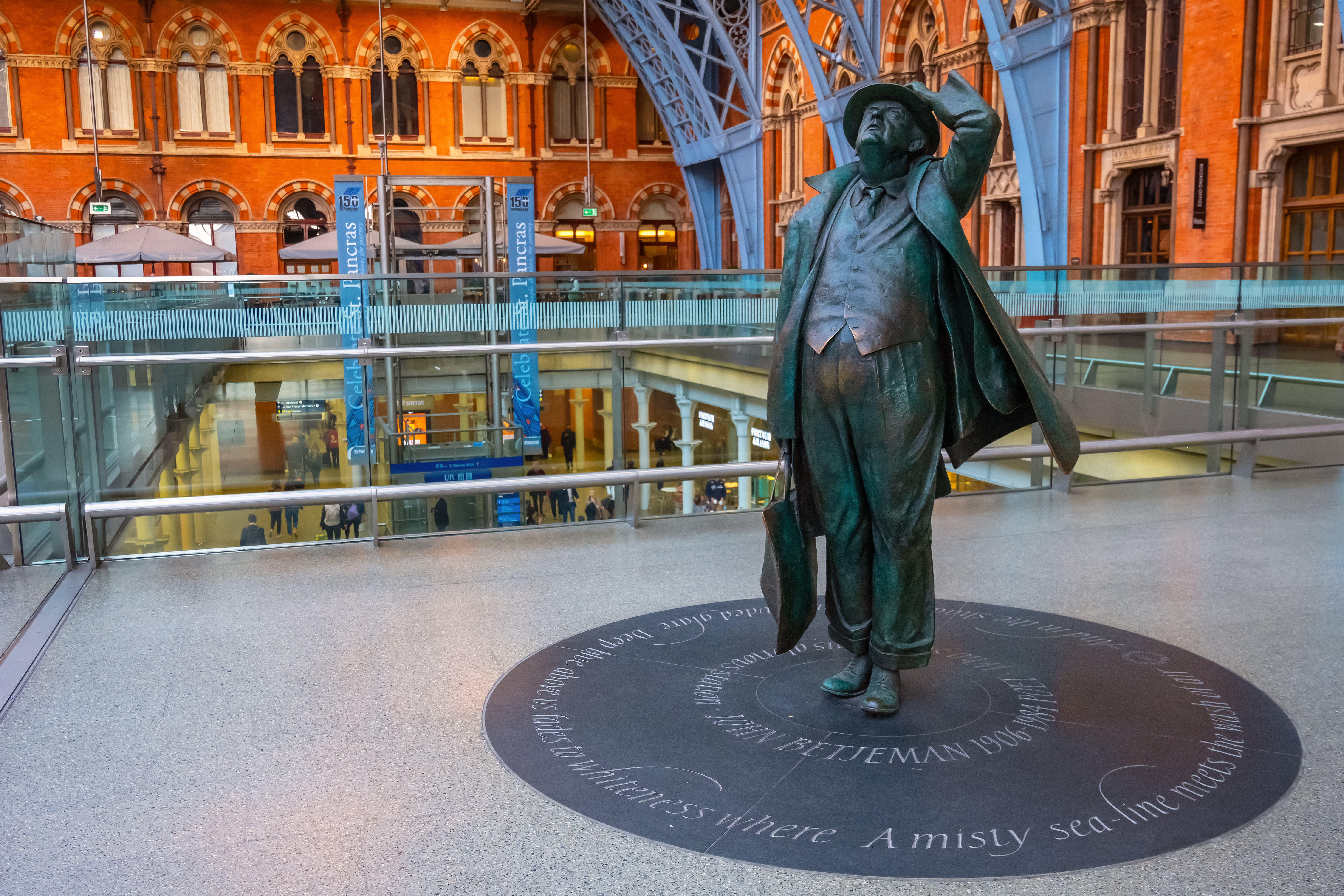
The Sunday after John Betjeman died Philip Larkin went to church. I was in St Mary’s Cottingham for Evensong when the familiar figure of the university librarian entered – just after the service had started. While Larkin was well known for church going, he preferred to make sure there was ‘nothing going on’ inside before crossing the threshold. I’ve no idea whether or not he stayed to the end, but his silent presence made a poignant homage to the senior poet. In death, Betjeman got Larkin into a church service, which would probably have raised a chuckle from the poet renowned for his passionate interest in all things ecclesiastical.

Like most undergraduates at Hull, I had very little to do with Larkin. He appeared during induction to speak about the library and offered the advice: ‘spending your grant on library fines is a very silly way to part with your money’. Once during a student all night work-in opposing Thatcherite cuts to higher education, Larkin stomped about in the theology and philosophy section, huffing and puffing, until a fellow student – unaware who was creating the noise – expelled a loud ‘sshhh’ in his direction. We were very studious in those days.

Although different poets, Larkin and Betjeman had a respectful and constructive relationship. In 1964 Betjeman interviewed Larkin in a BBC Monitor programme. It begins with an exploration of Larkin’s chosen context, the city of Hull. The isolation and ‘end of England’ ambiance chimed with the poet who felt so suited to its remoteness.

November often brings Betjeman to mind. His poem Winter at Home captures an England long departed. A season of quiet when the appearance of fog is welcomed as it grounds aircraft and adds to the sense of stillness. For Betjeman it is a time for reading long novels, and noting the small changes that mark the slow shift of the seasons. The moment when the Michaelmas daisies are too frost bitten for use in church and dried arrangements are put in place instead. An era when the limited supply of international goods meant people were compelled to work within the limitations – and opportunities – of the season.

John Betjeman’s devotion to the Church of England and the unique and prevailing Anglican temper of his character and imagination have been amply explored…

Gardner, K. J. (2014). Strange deliberations: John Betjeman and protestant nonconformity. Christianity & Literature63(2), 225-256.

When it came to Christianity and Church Larkin and Betjeman could not have been more different, yet the Monitor interview suggests that there were spiritual touching points despite the outward differences. Sitting with Betjeman in an overgrown cemetery, Larkin muses that ‘everything I write… has the consciousness of approaching death’. While having a very limited knowledge of churches, Larkin says that he developed a habit of visiting them (when empty). He comments: ‘I always welcomed the feeling I had going into a church’. There is a deep interest here in the liminal, the mortal, and the endless.

I am not sure whether Larkin’s silent Evensong tribute to Betjeman is recorded anywhere. Eighteen months later Larkin himself died, and two of England’s most significant post-world war poets were gone. A tribute by the English department took place the day before I left Hull for good. It was a highlight of my three years in the university city, with Larkin’s ‘loaf-haired secretary’ present along with others who were, in one way of another, caught up in his poems.

Writing about a theological approach to Larkin, Theo Hobson makes a persuasive case that the poet’s attention to the realities of life challenge a complacent secularism. At the same time, “his pursuit of ‘undeceived’ honesty… becomes a personal myth”. This leads Larkin to flirt with nihilism but not to succumb to it. For the complacent secularist as much as for those developing a deceptive ‘sub-theological gospel’, Larkin crafts poetry that disturbs seemingly self-evident narratives.

I wonder if anything in Evensong struck a chord with Larkin’s thoughts that evening? Was there the slightest lifting of an eyebrow as the words of the Magnificat cut through the blent air: ‘He hath scattered the proud in the imagination of their hearts’.

Remembering the Absence

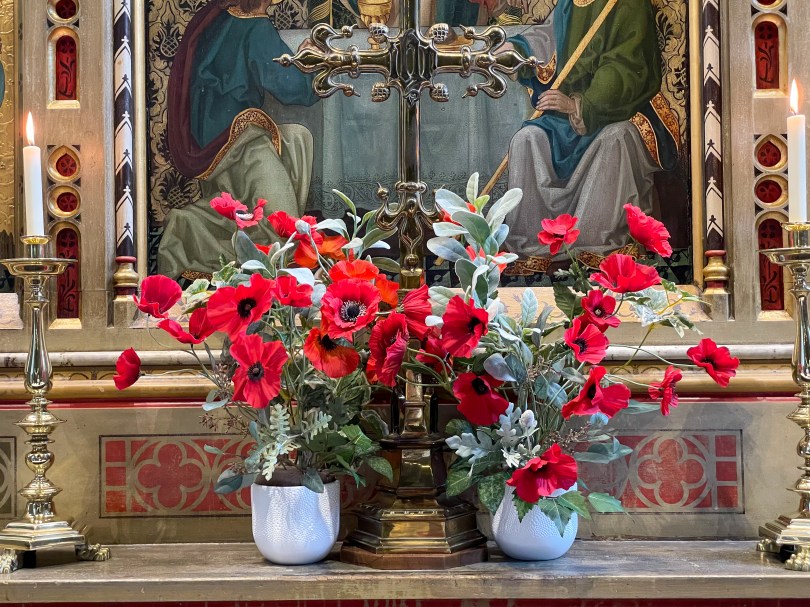
Increasingly, I think of my grandfather on Remembrance Sunday. I can imagine that his arrival in the world would have attracted some kind and amusing comments. Thomas was a ‘Valentine’ baby – born on 14 February. So far so good, but unbeknown to his parents and family he was born in a fateful year: 1896. This meant that his eighteenth birthday fell in February 1914, and in the summer of that year he signed up for active service,

I know almost nothing about his military service. Sadly, we only overlapped in life for 11 months. I was born in the January and he died in December. I know that he enlisted with the Loyal North Lancashire Regiment and, because of the Battalion in which he served, he spent most of WWI in Gallipoli, the Middle East and West Africa. It appears that he continued to be in the army as a Private until 1920. As he had nothing that drew him into official records (such as injury) there is very little left to show for his six years of service. Like most other troops, he was awarded the British War Medal and Victory Medal.

I would love to have talked with him about those years. With an upbringing in a Lancashire market town, and a family trade of weaving, Tom probably never imagined that he would travel so widely or find himself in such danger. The Regiment he joined would have been full of people he knew, perhaps even distant relatives or school friends. Those years away from home probably had a number of consequences, not least marriage at the then relatively late age of 28. Equally, I have no idea either whether this experience contributed to his death aged 69. My non-combatant maternal grandparents lived into their 80s.

Across the twentieth century, and even today, people will be thinking about absent family members and friends. War has led to so many untimely deaths, and continues to do so. Given that peaceful co-existence is so clearly in the interests of humanity it seems remarkable that it is so elusive. Human greed and fear appear to be the characteristics that fuel conflict and despite all we have learned we find it impossible to resolve these feelings and live peacefully with one another. The astonishing development of technology and science is unmatched by any noticeable change in human maturity, wisdom or insight.

The father of the poet Ted Hughes served with the Lancashire Fusiliers during WWI. At Gallipoli he was one of only 17 men to survive from his battalion, giving some idea of the harrowing circumstances in which these young men found themselves. As so many of the troops were serving in the same units the consequent loss of life within the mill towns of Lancashire was devastating. As Hughes put it, ‘We are the children of ghosts / And these are the towns of ghosts’.

Hi father’s war stories were so vivid, his psychological wound so palpable that Hughes felt he himself had witnessed the apocalyptic carnage. 

Meyers, J. (2013). Ted Hughes: War Poet. The Antioch Review71(1), 30-39.

Only recently has some kind of understanding emerged about the enduring scars of conflict. The growing study and use of the concept of moral injury reflects an awareness of suffering that continues. Alongside PTSD there is recognition that terrible events in conflict reverberate down the decade and – as the quote above illustrates – even be passed across generations. When the cost of a war is estimated these kinds of injury appear to be omitted from the calculations. The lack of peace in our world comes at a terrible price.

The soldier and war poet Siegfried Sassoon imagines in one of his compositions that the devil visits a cenotaph. The prayer of the prince of darkness is that humanity will forget the damage done by war, and that human folly will be repeated. It feels that our task is the exact opposite – to remind any war-hungry politician that conflicts seldom end in less than a century, and that the greatest price is paid by ordinary men and women long after the guns fall silent. The absence of an estimate of emotional damage does not mean the damage doesn’t exist. There is no lack of testimony, like that of Hughes, showing the lasting trauma both in field participants and in the communities from which so many young people suddenly became absent.

We will remember them – and must never forget that hell on earth reaches far and wide.

Sternly Spoken

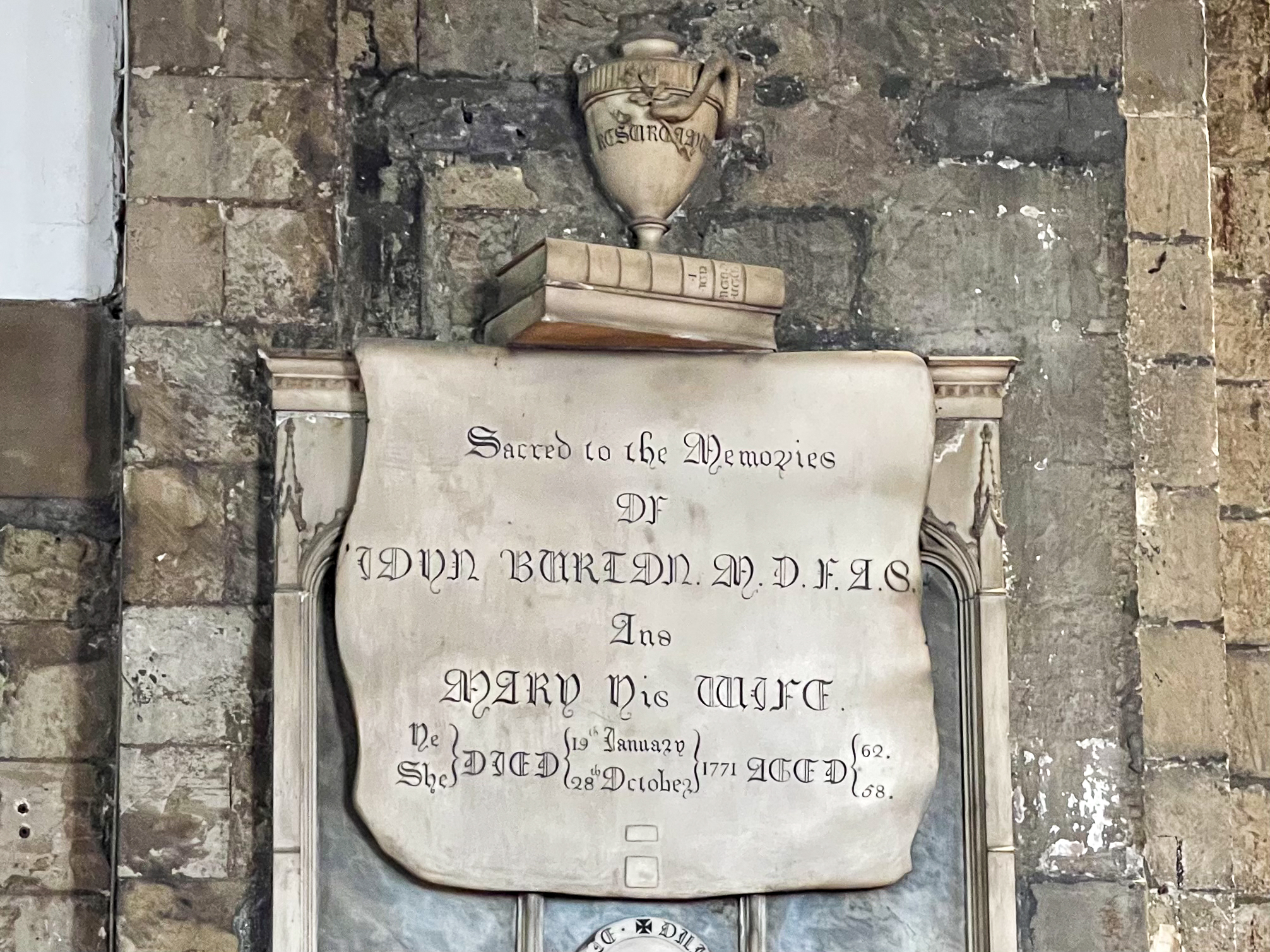
At some point during my BA studies at the University of Hull I encountered The Life and Opinions of Tristram Shandy, Gentleman. I was taking a degree in English Literature and Theology, and Sterne’s renowned work cropped up in a course on Augustan Literature. It felt a disorderly work compared with other writing from the period, but its many digressions are also its captivating quality. Like a fairground roller coaster, there are hairpin bends in this fictional tour de force. Little did I imagine that a few decades later I would be living quite so close to the places Sterne would have known during his life. Near to York Minster there was Sterne’s publisher. His uncle and patron Jaques Sterne was precentor in the Minster as well as Archdeacon of Cleveland. This morning I led the service at Priory Church of Holy Trinity Micklegate, where one of the characters thought to have been lampooned in his work is buried. Dr John Burton’s pioneering work in obstetrics appears to have inspired the figure of the ‘man-midwife’, Dr Slop.

It may well be that Sterne attacked Dr Burton in this way due to the religious politics of the time. Burton was a Jacobite and Catholic sympathiser, something that landed him in goal at the instigation of the Precentor. Sterne was ordained by the time he wrote Shandy and it says something about the times that a cleric could publish something so candid about the realities of life and human follies. The novel came in at number 6 in a Guardian list of the best one hundred novels.

“Digressions, incontestably, are the sunshine;—they are the life, the soul of reading;—take them out of this book for instance,—you might as well take the book along with them;” 

The Life and Times of Tristram Shandy, Gentleman

For all the playful style of Tristram Shandy there is political weight in its portrayal of 18th century life. It is a book designed to wield influence, and in its hints and winks it would have tantalised people across a breadth of classes and situations. In an edition of In Our Time dedicated to the book, it was pointed out that the fictional writings of Sterne were seen as a way to increase the sale of his printed sermons, rather than the sermons advertising the novel. It reminds us how very different times were in Georgian England and how significant preaching was considered in this era.

While there is a lot to criticise about the way religion and politics has mixed in the past, there is also scope for concern about a church that walks away from politics. After all, politics is about the way we live – what governance permits or outlaws. It can no more be something the church should avoid than the preaching of the Gospel. The idea that Jesus wasn’t a political figure is ludicrous – in his clashes with the authorities, and teaching about the operation of institutions such as the Temple, he was entirely political.,

It has felt in recent years that the Church has had a vanishing presence in the political arena. Declining attendances combined with a focus on personal salvation have chipped away at the place the C of E once occupied. This is not the Church of Faith in the City, nor do parish clergy have the time they once enjoyed to participate extensively in civic life. Of course there’s a very good argument that laity ought to be doing this in any event, as the people of faith embedded in the community. However, the perspective of a person set aside to focus on spiritual concerns – with the experience of living and working in several communities – has a value that is unique.

Instead of providing strength, solace, inspiration, and communion, churches are decidedly human institutions comprised of the eccentric, the stupid, and the venal. 

The failure of organized religion in Laurence Sterne’s Tristram Shandy by David Dobbie Tull, 1991

The recently launched Archbishops’ Commissions may be a hopeful sign that the Church wishes to speak in the public square. Given the goings-on in British politics lately, surely there is a need for a moral voice (and possibly lampooning)? What took place concerning the scrutiny of MPs suggests a political leadership that is shameless of its self-interest, only responding when its fawning supporters in the media announce that things have gone too far. Today Sterne would have ample material for a new novel, without the need for very much invention. Despite all its constraints and interested parties, the Church is called to speak from its experience, beliefs and commitment – and sometimes that speech must be stern in making clear the yawning gap between the ideals of public service, and the shameless pursuit of personal interest.

Dumb Oratories

In The Eve of St Agnes Keats created a poem that can cause a shiver even on a summer’s afternoon. Like the accrual of snow, or the gradual appearance of frost, the poet adds layer upon layer of freezing imagery. Into this icy world Keats introduces the fire of youthful passion, dangerous and agile, breaking convention and stealing away into the night. The chill of the poem goes hand-in-hand with a general sense of the supernatural and of a world that vanished ‘long ago’, but is brought to life through the magic of poetic imagination.

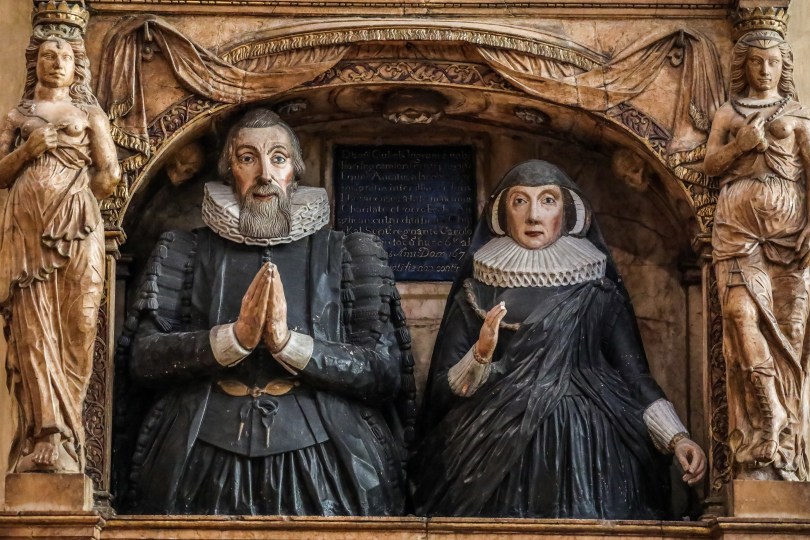
The poem includes references to funerary monuments: ‘The sculptur’d dead’. It is these figures of noblemen and women that Keats describes as ‘praying in dumb orat’ries’. Often we find the depictions of the deceased in our churches and cathedrals placed in a pose of intercession. In some religious understandings this may suggest that virtuous people who have died continue to support us through their prayers. Although not in church (but more significantly in heaven) the good continue to be in relationship with us through the prayers they offer on our behalf. It was the theology that powered an industry of intercession in the Middle Ages, with the sick, poor and clergy in particular, paid to intercede with the Saints for the souls of the wealthy seeking admission to paradise. Keats describes one of these ‘beadsmen’, someone typically pensioned in order to pray, using his rosary for those he was tasked to remember.

Numb were the Beadsman’s fingers, while he told
His rosary, and while his frosted breath,
Like pious incense from a censer old,
Seem’d taking flight for heaven, without a death,
Past the sweet Virgin’s picture, while his prayer he saith.

John Keats, The Eve of St Agnes, 1819

For anyone who has experienced a close bereavement this may not seem to be very surprising. The dead are seldom forgotten by those who were caught up in their living. The deceased continue to be with us in our thoughts, dreams and daily living. I cannot count how many times I have heard hospital patients speak about a visceral experience of a loved one being present with them. Sometimes it takes place in a dream, but it can also be an experience that appears to be as real as anything else. It was these encounters that led me to write a paper in 2014 with Stephen Sayers, discussing these experiences and suggesting how NHS staff might support such events during a patient’s admission. Interestingly, I think it is the only paper to which I’ve contributed that remains entirely uncited. This lends support to our contention in the paper that the clinical world is inclined to dismiss experiences that don’t make sense, and categorise them as evidence of mental illness. Awareness of this culture is something people discern and it is likely that many experiences like this are never shared with anyone. It seems that we lack a narrative for experiences which are real and meaningful for many, but fail to fit in with our sense of rationality.

On All Hallows’ Eve, and with All Souls’ Day this week, people around the world will be reflecting on those who have died. Given that our awareness and thoughts about the dead are often private and internal, this week offers a rare moment for names to be spoken and people remembered in public. Despite the continuing growth of a playful and scary Halloween, the serious, quiet and moving act of explicit remembrance offers a less spectacular but deeper moment when we acknowledge our continuing bonds with the departed. Remembrance Sunday adds to the sense that November has an inclination to memorial.

We continue to have traffic with those we have loved but see no more. There are particular moments, such as a family wedding, when those attending may think of the people who are absent – but whose blessings would be with the couple and their future. Choices we make in life may lead us to ponder what the deceased would think of our decisions. For better or worse, the silent prayers of the dead circle our experience and commune with our conscience. What may seem to be dumb and frozen out of our reality is never wholly gone. In different ways Halloween; All Hallow’s; All Soul’s and Remembrance Sunday remind us of this truth and allow a fleeting moment for what is hidden to be spoken and named.

We die with the dying: 

See, they depart, and we go with them. 

We are born with the dead: 

See, they return, and bring us with them.

TS Eliot, Little Gidding