Useless Beauty

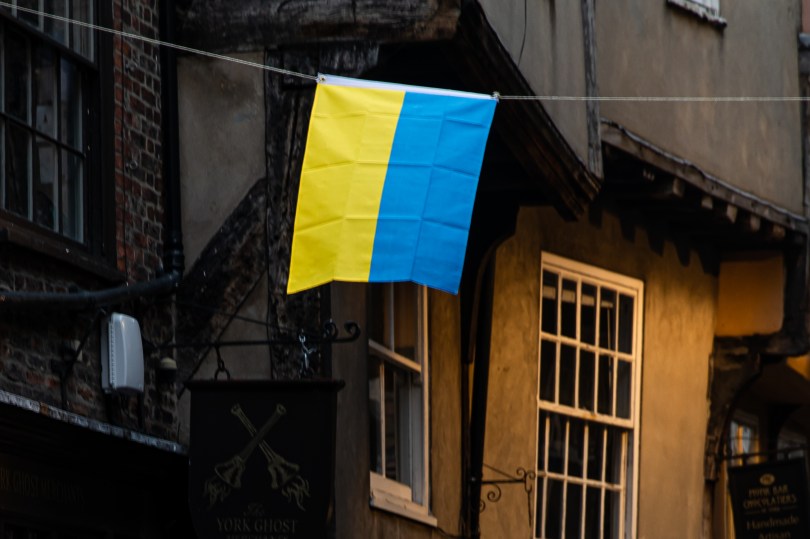
Sadly, neither music nor sculptures stop tanks. Military bands, uniforms and insignia may all demonstrate the way art can be conscripted into morale boosting service, but these are details rather than the main event. Many people will be tempted to see artistic talent in current circumstances as a ‘nice to have’ at a time when many people in Ukraine are searching for bread, shelter, safety and warmth. Yet the countless social media clips of singing children, firefighter violinists, and heavily sandbagged civic statues, suggest a deep determination to make sure that a people’s culture endures.

I am a great admirer of the ceramic sculptures created by Antonia Salmon. In a recent circulation to her contacts, Antonia reflects on the state of the world and the point of art:

“In one sense it could be easy to regard the arts as frivolous at a critical time such as this. Both the quality of our Presence and regard for our fellow human beings, and for our planet as a whole, is vitally important at this time. I’m certain that in whatever way you are able you will contribute to the awareness and growth of human connection, to love and to beauty.”

Antonia Salmon, Spring Update 13 March 2022, email quoted with permission
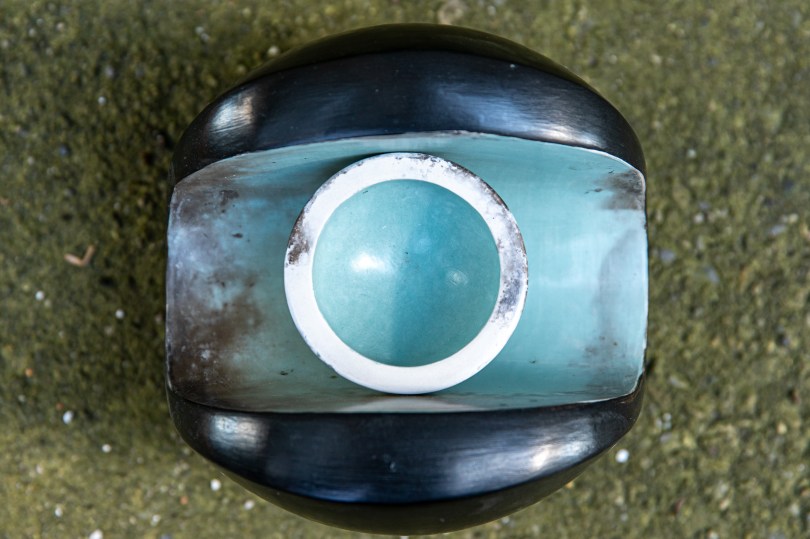
Detail of ‘Winged Form’ by Antonia Salmon

In the same week as receiving Antonia’s email I heard an excellent reflection on lament. This was given by Wendy Lloyd in a Lent series for York Minster. With the title Prayer as Lament and Hope, Wendy set out the idea of prayerful lament as a way of ensuring we continue to hold the vision of how things could (or should) be, especially when life is at its most difficult and destructive. All the acts of art or culture we are seeing in Ukraine suggest that in adversity people need to sustain a vision that amounts to far more than nostalgia. It constitutes a progressive hope focused on a time when all these slivers of Sabbath become the life we lead. As we maintain and re-pattern our creative senses and connectedness, art can make us restless with many aspects of the world in which we are living. As such, lament prevents us colluding with the failings and distortions of the world. In her reflection Wendy quoted an excellent article from a recent issue of The Financial Times:

Lament understands that naming reality is part of what enables one to address it and move towards a new reality. It is a way of bearing witness to injustice when we see it, to the unfairness of life, and yet also to a deeper belief in a world where we can seek help and have the agency to make decisions and take action so that pain and suffering are not the accepted order of the day.

Enuma Okoro, The Importance of Lament, The Financial Times, March 4 2022

When we see courageous acts of creativity and beauty in the midst of horror it reminds us all that we cannot afford to abandon the very things that make human beings their best selves. The arts have an invaluable role in both naming the injustices of life whilst simultaneously expressing the hope and possibility of something far better. In Lent, for Christians, the temptations of Jesus illustrate the tawdry shortcuts that will never achieve the splendour of what might be – of the time when all creation finds its true peace and purpose.

The featured image is an overview of ‘Holding Piece’. Antonia Salmon’s website: http://www.antoniasalmon.co.uk

The Question

President Zelensky’s address to the UK Parliament was a masterful presentation of truth-telling, conviction and heartfelt oratory. Touching lightly on classic speeches of British history and literature, he appropriated the words of Hamlet to sum up his country’s plight – and the question ‘to be’. As Shakespeare’s character suggests, the choice to continue living is not without cost or consequence. Some may see the determined resistance of Ukraine’s fighters as a hopeless last stand – almost suicidal in the face of overwhelming odds. Others can only applaud with both awe and admiration the courage of people unwilling to let go of their life, freedoms and sovereign identity.

Whether ’tis nobler in the mind to suffer
The slings and arrows of outrageous fortune,
Or to take arms against a sea of troubles
And by opposing end them. To die—to sleep

Seldom do heads of state face the suddenness of the question as to whether their nation should be – or not be. It is little wonder that European minds turn back to the 1930s when looking for a comparison with the present crisis. Countries falling under the sway of an aggressor who refuses to listen to the voices of other nations, but is more than willing to deploy military force against civilians. Propaganda and brutality at home: fear abroad. It is an approach used by dictators for as long as human history. Like all bullying it is effective only until one slash with the sword suddenly echoes with the ring of steel. What was supposed to be quick and easy meets its match – mettle answers metal. I cannot believe that President Putin imagined that the conquest of Ukraine would be so slow; so costly in Russian lives; or so devastating to the Russian economy. There has been a miscalculation or a misunderstanding; delusions of power or the fear of a successful, prosperous, democratic neighbour. Or perhaps he simply doesn’t care, confident that gradual escalation will lead to ultimate victory.

Part of the reason it is so moving to hear President Zelensky’s speech is the possibility that he may not be alive for very much longer. He has chosen to stay in Kiev, and must be the number one target for Russian forces. It is difficult to think that Ukrainian defiance will be quite as determined or as effective without this charismatic leader so visibly present in the war.

One of the oddities about Hamlet’s soliloquy alluded to by Zelensky, is its departure from what many would regard as orthodox thinking about death. For the Church, the afterlife was much more than a dream filled sleep. There is only one implicit reference to religion, describing death as ‘a consummation devoutly to be wished’. In this soliloquy it seems there is no heaven; no Christ; no God; no judgement. Vladimir Brljak’s paper entitled ‘Hamlet and the Soul-Sleepers‘ identifies the presence of popular 16th century beliefs about a state of sleep which preceded the general resurrection and last judgement. This belief was initially advocated by Martin Luther and was shared by other Reformers in England. The audiences for Hamlet would recognise this heresy in the words of the young Prince studying in a city at the heart of the Protestant Reformation. With reference to the First Quarto edition of Hamlet, Brljak finds even stronger evidence that this wayward doctrine was the basis for Hamlet’s soliloquy.

… the sleepers saw themselves as pious Christians, but their opponents relentlessly misrepresented them as denying the immortality of the soul and consequently bordering on atheism.

Brljak, V., 2018. Hamlet and the Soul-Sleepers. Reformation & Renaissance Review, 20(3), pp.187-208.
Vancouver

In the space of just two weeks the people of Ukraine have been forced to face urgent questions of sovereignty and mortality. In their response to the Russian invasion the two things have been welded together, with countless examples of individual sacrifice and tenacity. If the primary issue is the survival of a nation, there is also an implied question for other democratic countries. If this can be ‘allowed’ to happen, what else can be done by a powerful totalitarian state without the threat of consequences? If Finland begins an application process to join NATO we may discover just how far Putin will go to ensure neighbouring states conform to his wishes. At a time when Ukraine is facing an existential threat, there are other countries now living with a question about the scope of their freedom ‘to be’. If the West tries to sleep through this crisis, hoping it will eventually go away, we may all learn to our cost just what kind of nightmares might suddenly become our reality.

To Break Every Yoke

I have been fortunate in my life to know very little of war. It has been a distant experience, vicariously brought nearer by television, conversations, films and books. Only once have I ever felt the uncertainty and apprehension that comes with sudden military action. This was in Argentina in 1987, while spending a year in the country working with a mission organisation. I was based in Córdoba where, in April of that year, a Major in the army began a mutiny. A few days later this was followed by a military revolt in Buenos Aires in support of the Major’s action. It was Holy Week, and in the student hostel where I was staying in Córdoba a man in plain clothes took up sentry just outside the property. Some of the students asked who he was and phoned the local police station to check his credentials. Back in the UK my family saw film on BBC News of tanks rolling through the streets of the capital.

Thankfully what became known as ‘the Carapintada’ mutiny was short-lived. The elected President regained control and peace was restored across the country. In places unfamiliar with recent armed conflict it seems unimaginable that life can change so quickly. Yet, in Ukraine, we are witnessing the terrible cost of war in Europe in the 21st century. Destruction is so quick and devastating – building and establishing civil society takes much more effort and far more time. Even if there was a permanent caseation of hostilities and withdrawal of Russian troops, it would take years for Ukraine to be restored to what it was just couple of weeks ago. Given that the conflict is unlikely to end soon I wonder whether I will ever see that country return fully to peace, stability and prosperity in my lifetime.

Is not this the fast that I choose:
to loose the bonds of injustice,
to undo the thongs of the yoke,
to let the oppressed go free,
 and to break every yoke?

Isaiah 58:6 NRSV

Religions as a whole have a mixed track record when it comes to conflict. Many people don’t describe themselves as ‘religious’ due to the way in which religious groups have behaved when it comes to war. More often than not people in the West see religious differences as part of the problem rather than the solution. Without doubt there is truth in the view that just as religions can be brilliant at binding people together, shaping their identify and offering a sense of purpose, so too that cohesion can come into conflict with other groups holding different convictions. Even now we see two Orthodox churches each supporting leaders who are commanding their nations in a war. There are certainly dissenting voices, but the leadership of the churches appears to be supporting the Governments of both countries.

A student from Ukraine speaking at a demonstration in York UK on Saturday 5 March 2022

Speaking at a rally in York yesterday the Archbishop of the city suggested that we have taken peace in recent years for granted – and that ‘peace is something you have to work at’ (BBC Breakfast at 1:18 minutes). Undoubtedly this is a Western perspective as many part of the world have been mired in conflict in recent decades, but it has not been at our door. The challenge for us is to reflect on the extent to which racism has shaped our responses to various crises, which must prompt soul-searching and a change in our attitudes. There is no question that our response to Ukraine is the least we can do – but in many other conflicts there is almost certainly more that we could have done.

For Christians attempting to observe Lent this year there are plenty of passages in the Bible that tell us God is uninterested in token sacrifices. Isaiah describes God’s fast as an active confrontation with the injustices of the world. When you loose the bonds of injustice and let the oppressed go free not everyone is pleased. Pursuing God’s call for us to confront the evils of our age will bring us into conflict with the people doing the oppressing and keeping people captive. This Lent let us recognise injustice and heed God’s call to confront it so that people are freed from suffering. Let us also ask in our hearts why we do not always feel equally motivated to do this for all peoples around the world. Maybe, this year, Lent will begin to break the yoke of our prejudice and allow us to become the people who let the oppressed go free, irrespective of who they are.

Dust and Ashes

Today I shall remind people that they will die. It is a curious and perhaps shocking element of the Church’s witness that on Ash Wednesday we are reminded viscerally of our mortality. Not only in words, but with the touch and mark of ash, we recognise that our constituent parts add up to very little. Our bodies change and decay. This life is not forever and time will undo us as it undoes everyone.

Christians bear this stamp of mortality in a way that is both provocative and hopeful. Through Lent and into Holy Week we follow in the footsteps of someone whose life seemed little more than dust. Born long ago in a distant province of the Roman Empire; regarded as illegitimate; a Rabbi who didn’t come through the normal route of family connection and privilege, but out of a carpenter’s workshop. Despite a brief ministry that attracted crowds and controversy, love and fear, Jesus of Nazareth died as a criminal in the most humiliating of executions.

In the poem Dust, Elizabeth Jennings begins with the same basic reminder that is the message of Ash Wednesday: ‘We are made of dust’. But this is never the end of our story. ‘Blown to the back of the earth, Stormed at, broken, defiled’ we have both a ‘living mind’ and spirit, and are met by a grace that goes to the end of the earth. We are dust, yet this dust is:

A place for visions, a hope
That reaches beyond the stars,
Conjures and pauses the seas,
Dust discovers our own
Proud, torn destinies.
Yes, we are dust to the bone.

Elizabeth Jennings, Dust in ‘Collected Poems’ 1986 Carcanet Press Ltd.

In a similar way, reflecting on Dietrich Bonhoeffer’s participation in the Bradford Declaration against the Nazification of the German Church, signed by German Christian pastors working in England in 1933, the poet Diane Pacitti writes: “out of dust a new world can be formed”. The Christian conviction, expressed at every baptism and on every Ash Wednesday, is not a denial of mortality. We name the reality of death more often than we might imagine – just think of the marriage service. It is simply that in following Jesus Christ we believe that death can become something else. That dust can be the basic thing in which new life is written, born and liberated.

Photo by Irina Anastasiu on Pexels.com

As the pandemic lingers and war erupts in Europe, dust still has its part to play. However far humanity thinks it has come, the basic terms of our existence contain recurring themes. The horror of war haunts us with ever more terrifying weapons, and something akin to Medieval plague has kept us in quarantine and ended millions of lives. As Job found after all his adversity, destruction, losses and sickness, sometimes we need to sit in the dust before things can change. Avoiding or denying the dust risks an unhinged response to the realities of life – a denial of our four score years and ten. It might take a brave priest to ash the forehead of Vladimir Putin and say: ‘remember you are but dust and unto dust you shall return’. However, perhaps only a reminder of this reality can stay the hand of someone who appears bent on terrible destruction. Today people will fast and pray for peace – may their prayers be answered.

When they saw him (Job) from a distance, they did not recognise him, and they raised their voices and wept aloud; they tore their robes and threw dust in the air upon their heads. They sat with him on the ground seven days and seven nights, and no one spoke a word to him, for they saw that his suffering was very great.

Job 2: 12-13

Peripheral Vision People

A long time ago I worked as a bread-wrapper at ASDA. It was on the Isle of Dogs in London’s East End and the rumour was that the store had 110% staff turnover per annum. It certainly felt a very transitory workforce, and my own employment lasted just under a year. From the Docklands Light Railway I would gaze down from a train to see work underway on the foundations of Canary Wharf. It was a time of huge upheaval for the local population and the East End as a whole.

In my work of wrapping and stacking I experienced something a lot of people will recognise. Wearing my bakery uniform I noticed that people never looked at me. Workers doing basic (but essential) jobs know how easily they become peripheral to people’s attention. The scope of this disregard is extensive and is manifested not only in personal interactions but in pay, conditions of service and benefits. With rising inflation, a hike in National Insurance payments and spiralling energy costs, many of these workers are now facing an unacceptable decline in living standards. MHA is one of many charity’s and operators calling on the Government to do more to support the sector and help employees be given the recognition they deserve.

My own experience of being peripheral was minuscule and fleeting. For many people, including women; people living with a disability; and people whose ethnicity is in a minority; being peripheral is part of everyday living. I am as susceptible as anyone for allowing ingrained attitudes to influence my looking and the way I value other people. It is something we all need to struggle to overcome. At ASDA the only people who gave any real attention to me and my co-workers were children. Children who found the world fascinating and intriguing and hadn’t yet learned the kind of seeing that channels our gaze to the people and things we have been taught to see as important. In her recently published collection of essays Esi Edugyan discusses race and identity with reference to works of art:

Perhaps my ambivalence also comes from certain threads I sensed missing. For these exhibitions represented renditions of the same Western story, a story of wealth and expansion. Black people are present, but as footmen, slaves, lady’s maids, magi… Black bodies are less living, breathing people than repositories for cultural anxieties. Blacks are an expression of status, of Christianity’s reach, of white morality. They are rarely, until the twentieth century, just human beings, living human lives.

Esi Edugyan, Out of the Sun: Essays at the Crossroads of Race, Profile Books Limited 2022

While we cannot see everything all of the time, we need to be aware that we all face limitations to our vision. However, that doesn’t mean we should accept our outlook or leave it unchallenged. When Jesus extolled the virtue of childhood to his disciples I wonder if he had in mind the capacity of children to be engaged in the world without acquired prejudices. To remove the blinkers we are given, or choose, in order to see people as central to the mission inspired by the statement that ‘God so loved the world’. A world containing a remarkable variety of people. To be born again surely means – if nothing else – to grow again and to see again. The ability to expand our vision of the world is the condition which precedes our capacity to be changed. Only through our transformation can we then be of any use in building that Kingdom which is rooted in a peace the world cannot give.

We must always contest our inclination to let people drift into our peripheral vision. It is good that many of us are being stirred into action to support the people of the Ukraine. Yet there have been many wars in far-away places for which many people we have felt too little concern. It is likely that our sense of identification with the people under attack is the key to the different responses the world makes to various disasters. Ensuring that we are in dialogue with a rich variety of people, and reading and watching things that expand our horizons, acts to prevent a tendency to insularity. As Christians head towards Ash Wednesday and the start of Lent, it is a good time for each of us to ask who is in our peripheral vision – and why are they there? We may discover that zoning-out people with certain characteristics, including those carrying out minimum wage jobs, is robbing us all of a richer life. Life in a community that is radically different from our accepted models, where no one is peripheral, and the gifts and distinctiveness of everyone are valued and affirmed.

The Wrong Way

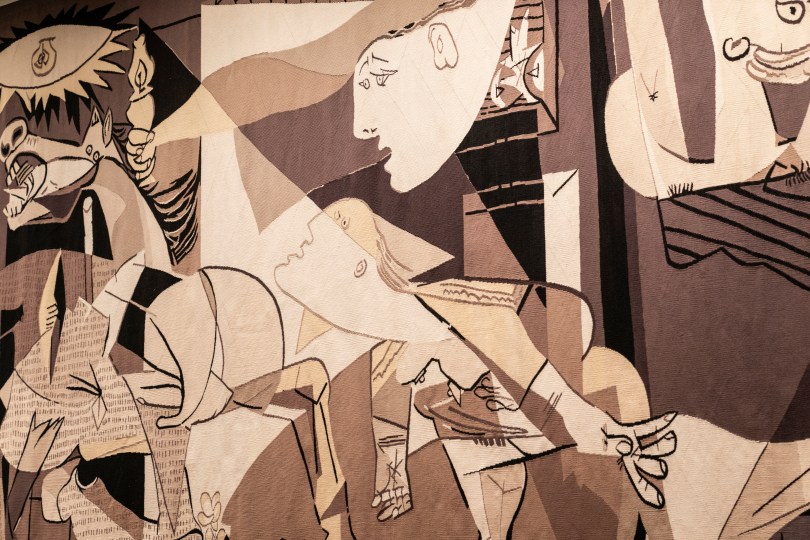
We had decided to visit the Reina Sofia gallery in Madrid ‘temprano’: early. Somehow, in our confusion of language and signage, we ended up going in by the exit. We didn’t mean to, but nobody challenged us on our route. Unsurprisingly, as Picasso’s Geurnica is the highlight of the collection, it sits in a room close to the completion of people’s visit. On this particular day it also meant that it was almost the first thing we came to and, for probably 8 whole minutes, we were alone with the masterpiece and its security guard. Usually the key work of a gallery throngs with people getting their look at one of the wonders of the world. For us that day brought the unexpected privilege of silence, space and the opportunity to gaze at the artwork without the jostle of others. It was quite a moment.

Guernica is named after the Basque town which was reduced to rubble after bombardment by German and Italian warplanes in 1937. The scale of destruction served the propaganda purposes of Franco who wished to promote fear as a way to defeat his opponents. For Italy and Germany it was an opportunity to test their weapons and capabilities before the full horror of global war was unleashed. As is so often the case, in the fog of war, the accounts given at the time varied widely. Berlin denied any involvement and the rumour was propagated that Republican forces had done it with explosives as part of their retreat. As the saying goes, ‘The first casualty of War is Truth’. As we contemplate military manoeuvres on the Ukrainian border the risk of intended or unintended hostilities – when the truth of what is transpiring is so doubtful – is frighteningly real. Time and again in human history a spark has led to conflagration.

Photo by Pixabay on Pexels.com

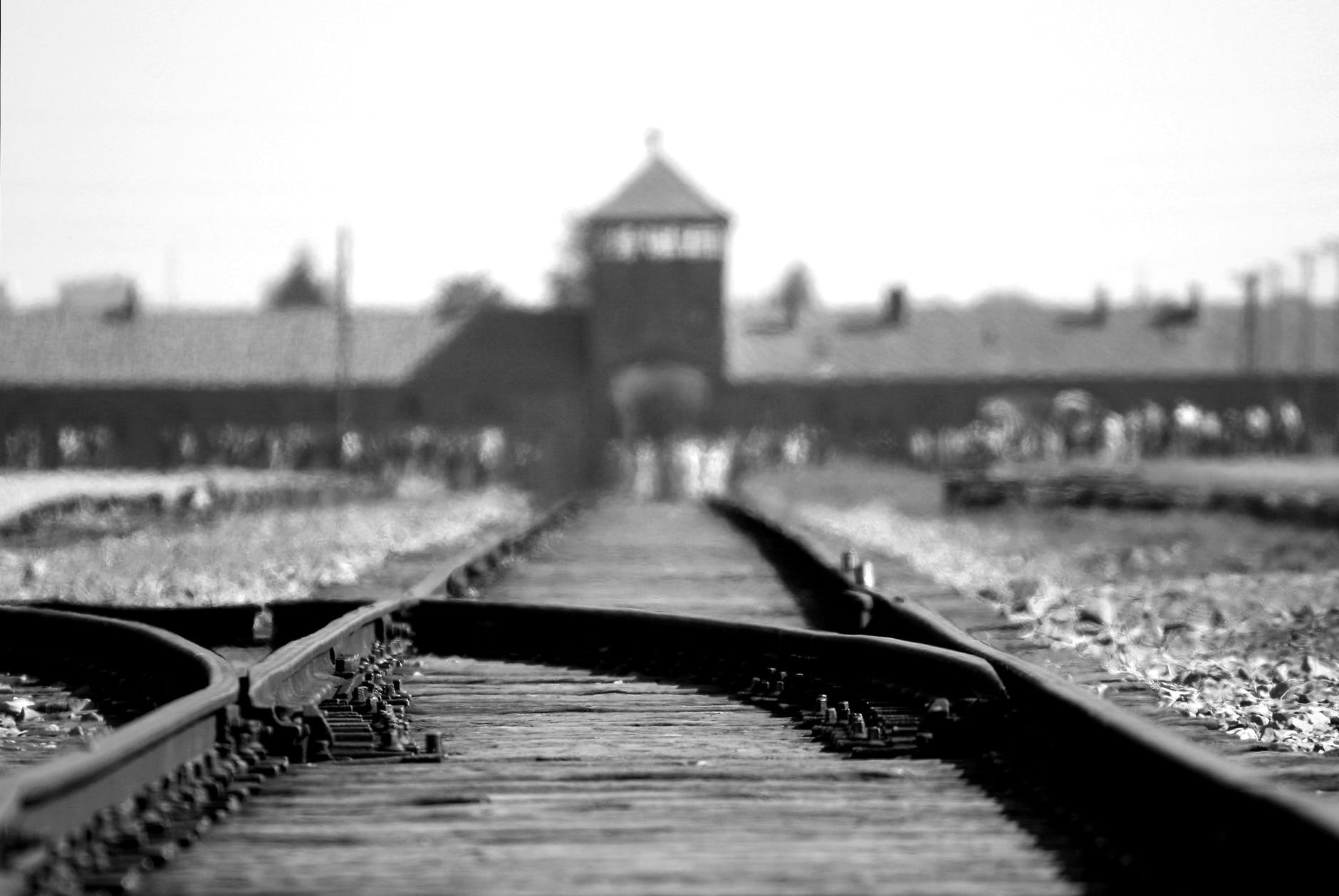
Over the years I have spoken with people who experienced life in terrible places of fear and death during conflict. I have listened to a personal account of horror told by a survivor standing beside a cattle-truck in Auschwitz. From the same war, but in a very different setting, I have heard about the experience of someone who spent years as a prisoner of war. At the moment I’m reading Herta Muller’s novel The Hunger Angel, which centres on the experiences of Leo in a Soviet labour camp. While we view these experiences from the perspective of history, a recurring theme for all these voices is the uncertainty of when or how the experience would come to an end. In winter especially, the hardships and suffering of people detained in the horror of the camps appeared to be an unending tale of misery. It is remarkable that anyone emerged alive from such places, either physically or spiritually.

There’s no such thing as a winnable war
It’s a lie we don’t believe anymore

Sting, Russians, 1985

Studying the history of conflict and genocide is an important task in every generation. For me part of the power of Guernica is the reminder that we arrive in horrific places via a whole catalogue of other atrocities and mundane acts of human indifference. Evil is built, rather than suddenly appearing. It’s why some of the most important struggles against tyranny are fought in the foothills before the full scale of disaster is both blindingly obvious and seemingly irresistible. The present prospect of war in Europe must urge us to work and pray for leaders to weigh the full cost of conflict. Even when things appear confused and uncertain we need to seek peace and pursue it – to stand up for a world in which war is never viewed as the right way to settle disputes.

Dear Lord

Author of all peace who through your son reconciled us to yourself, we pray for peace in our world at a time of heightened tensions.

We pray

for our governments and political leaders – for wise counsel and sound initiative to defuse tension

for diplomats – that they may have space to negotiate

for the people of Ukraine – that their close ties with the people of Russia and other neighbours will remain strong even in the face of military threat.

We pray that all governments commit time to dialogue and understanding, respect the will and freedom of all peoples, invest in welfare and alleviation of poverty and reject militarism and the threat of violence.

May Christ’s teaching and example be our inspiration, may hearts and minds be changed, and may your holy spirit be at work transforming each of us day by day,

Through your everlasting grace and mercy.

Amen.

A Prayer for Ukraine – The Methodist Church

Plague and Pestilence

At the time of writing I have COVID. It’s something I believe I’ve avoided for two years although, without the benefit of testing, it is impossible to say for certain. Thankfully, due to vaccination, I have no more symptoms than those of a heavy cold. I remain confined to home until Tuesday at the earliest – maybe longer if the lateral flow tests are positive. I am experiencing what millions of others have endured, but thankfully without the hospitalisation and critical illness that came to so many before the advent of the vaccines and continues to be a reality for many people across the world. I have the virus at a time when some scientists are concerned about the political and media drive to normalise COVID, even as the USA approaches a total of one million COVID deaths. Writing in Scientific America, Steven Thrasher refers to “the manufactured consent to normalize mass death and suffering”.

The UK Government is putting out a clear message that it’s time to move on from COVID. The fit and healthy, the young and the vaccinated, want to get on with life and leave the misery of lockdowns behind. If wishing made it so. This is still a new disease, with no evidence about long term effects or what will happen if we simply resign ourselves to a virus whose tide will ebb and flow for years to come. It is quite possible that the current mood of Government is to accept 80,000 COVID deaths a year as a reasonable price for ‘normality’.

Quoted at https://twitter.com/chrischirp/status/1492234692741025793

Whether individually or as a community, difficult experiences can lead to transformative change. Perhaps the most notable example of this in the UK’s history is the creation of the NHS. War had demonstrated that the central organisation of resources by the State could defeat an evil. The Beveridge Report published during wartime made the argument that 5 ‘Great Evils’ could be overcome if the resources of the State were marshalled and coordinated. War inevitably broke many patterns of social interaction and expectation, and this also created a moment of opportunity. Labour’s 1945 election victory bore witness to the appetite for change and the determination to see genuine improvements across a range of social situations. The NHS was launched in 1948.

At this point in the COVID pandemic, with a growing consensus that we are over the worst, the opportunity for lessons learned appears to have been missed. National political leadership has degenerated into a blustering determination to push past every criticism and crisis. When the Prime Minister is accused of lacking ‘shame’ I wonder whether the word has any meaning for Mr Johnson. There is a school of thought that finds merit in denying responsibility, marching forward and seeing anyone who admits shame as fundamentally weak. What’s the use of shame when you can dazzle, distract and deny – and live to fight another day?

Tragically, what we are experiencing in domestic politics is no less true for international relations. At one point it felt that lessons were being learned and attitudes were changing and warming. Speaking at the World Policy Forum in 2020 Dennis Snower sounded an optimistic note:

The pandemic has revealed a vast sea of kindness and benevolence in our communities around the world. It has led to countless acts of selfless heroism in hospitals and care homes. It has impelled many of us to use our greatest strengths to serve our greatest purposes, suddenly giving our lives new, inspiring meaning.

Opening Address to the Digital Global Solutions Summit 2020

If anything it feels that the most significant legacy of the past two years is for people to focus their thoughts closer to home. The wave of early retirements suggests that people may want to disengage from workplace commitments and concentrate instead on family and personal pursuits. It feels that the pandemic has done nothing to enhance international co-operation, or patience or kindred feeling. Fear of disease has given way to fear of conflict and we stand on the verge of war in Europe. At the same time, most if not all of the pre-pandemic conflicts around the world remain unresolved.

from plague, pestilence, and famine, from battle, and murder, and from sudden death, Good Lord deliver us.

The Book of Common Prayer, 1662, The Litany

In the Bible disaster usually brought people to a realisation that things could not continue as they were. Generally that led to a recognition that doing what they wanted, and ignoring God, was not the right way to proceed. As I have written previously, lamentation was often the response that led to an honest recognition of disaster and a desire to renew the relationship with God. Conditioning people to live with a sustained number of excess deaths is not lament – but instead a further confirmation that preventable deaths limited to some sections of society are acceptable. Whether or not people believe in God, it is clearly true that not everything is under human control or manipulation. Admitting this reality might be one way to understand the past two years and begin to generate the sense of common humanity which is surely the only way we will learn, change and survive. Sadly, it is hard to see how this mature reflection might begin.

Drawing Life

Recently I attended a life drawing class at York Art Gallery. It has been a few years since I took courses at Leeds College of Art, and it was both frustrating and rewarding to pick up charcoal once again. Frustrating because the drawings never look like I think they should – rewarding because in the concentration and application, the time flies. More than anything else life drawing is about looking at the figure, rather than being guided by the idea of the human form we carry in our heads. It requires attention to negative spaces; the shapes within the human form; and the relative size of limbs at different angles. To respond to the uniqueness of a given model, on a particular day, requires deep concentration and endless practice.

This is the reality, and the intrigue, of the human figure: not the ubiquitous muscular young athletes presented to us in textbooks. Nike Okunade, in her second year at Southampton Medical School, was struck by the individuality of the life drawing models. “I loved the idea of getting to draw different kinds of people, different genders, shapes, and sizes.”

Price-Kuehne, F. E. (2010). Life drawing for medical students. BMJ, 340.

Turning up to these classes as a participant can also offer the opportunity of activity without the burden of role. While for many people the profession of someone may be irrelevant, clergy often experience altered interactions when their identity is known. In some cases people censor their language, or apologise for swearing. This may be a minor detail but it betokens a change to behaviour that may run deeper than simply the use of colourful language. I imagine many people find this when their profession is known, from police officers to funeral directors. Simply being present, focusing on the person we are to draw, has the benefit of company, sensitivity and a common task. At the same time it is humbling, engrossing and nourishes the soul.

Despite my frequent lament that it appears we wish to return as soon as possible to our pre-COVID lives, there is evidence that many people have re-evaluated their lives and priorities. Writing about a renewed passion for nature following lockdowns, the New Jersey journalist Ambreen Ali wrote last week about how the pandemic has changed her family life: ‘My children rolled in the sand and escaped into their imaginations, oblivious and content’. Whether in nature or art, crafts or cooking, some people have discovered fresh priorities. It may account in part for the high level of retirements at the moment.

Life-painting by Euan Uglow

Once we are beyond childhood it can feel that the world around us is largely assumed. Memory informs our sight and steers us through the journeys and activities of daily life. It is a way of living that makes a lot of sense – experiencing everything afresh every day could be exhausting. Prior experience helps us cut to the chase and get stuff done. Yet it also comes with risks. When we assume we know what we see there is the chance that we miss unexpected qualities. Perhaps what astounded people about Jesus was his capacity to see and speak the world differently. Little wonder that a child became the symbol of how his followers could enter the Kingdom of God. Being born again requires us to grow again and move beyond the kind of thinking that leave us acting on auto-pilot.

It is wonderful that despite the many losses caused by the pandemic there are people who have found fresh excitement and creativity in the world. A global crisis is not a desirable way to help us re-evaluate our lives – but it would be remiss not to reflect on our lives in the wake of suffering. All experiences have the capacity to teach us. If we are able to do so, there are opportunities to take that draw life back into us. Moments and activities that revitalise our sight, and allow us to question our assumed world in the face of one we see (again) for the first time. A seeing that can draw life out of what we think we know – and reminds us that in creativity we are working with the life-bringing spirit of God.

The Church of England

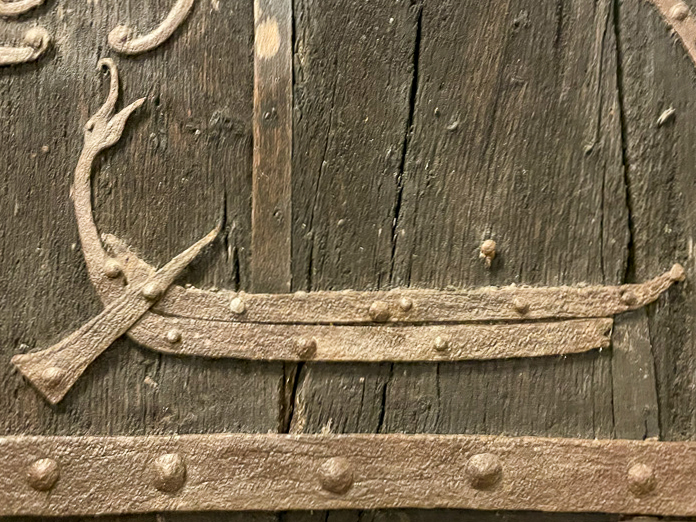
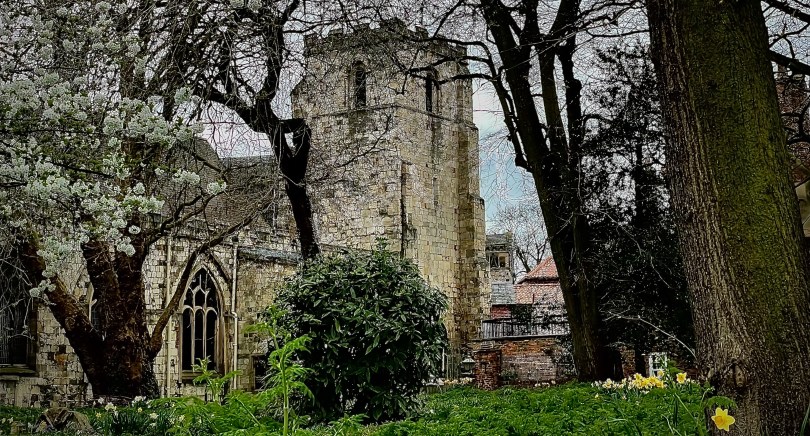
The village church is a gem of a building, a plot of holy ground that has been knelt on for at least a millennium. An iron door hinge depicts a Viking longship, perhaps in tribute to the defeat of the invading Norwegian army that sailed up the River Ouse in 1066. The church features many Norman carvings which, for their variety and quality, are considered to be some of the finest 12th century sculptures in England. It is fabric of exquisite design, a thread of gold pulled across centuries of English Christianity. On the Sunday I attended the congregation consisted of five people. There was no organist and little expectation for a structured liturgy. Together we found two hymns in the church’s copies of Mission Praise which we felt confident enough to sing unaccompanied. It is a story similar to another church I attend, where pre-pandemic double figure attendance has been reduced to seven or eight.

This year I shall have been a priest for 30 years. A curacy began in 1991 with a pattern that seemed relevant and long-established. Sundays could be busy days with an 8 o’clock Communion; 10:30 Parish Eucharist; afternoon baptisms (there were over 80 Christenings one year); Evensong, ending the day with a vibrant Youth Group. Then a move to become a Team Vicar and hospital chaplain on the edge of North London. A small church, but still three services a Sunday, plus the growing work of a chaplaincy that began to be given increasing recognition by the hospital. This led to a departure into full-time chaplaincy with a move back to the North of England. Employment in the NHS lasted for 20 years in total, throughout which I helped out in urban, suburban and rural churches. They were not all thriving, but in each there was a recognisable pattern of Anglican worship, with the Eucharist central to the liturgy of the parish.

It is said that the pandemic has accelerated many changes. The high street is one example as shops struggled to survive the worsening of already difficult trading conditions. I suspect that churches will also find a decline that comes from a mixture of related COVID consequences; a significantly higher mortality rate amongst older people, greater anxiety for some in social mixing; broken patterns of religious practice that will struggle to re-emerge. More broadly, the Church has not been in great evidence during the past two years – it has appeared overly risk averse and hesitant. In an article published recently Rob Marshall writes that once reopened ‘it was immediately clear that there was no swift return to the old ways of doing things’ (The Journal of Christian Social Ethics Jan 2022 p. 56).

The most pressing need for the church is to be an authentic presence, articulating a humble faith expressed in a humane spirituality. It feels that this is something that has become rarer and rarer. Embodying faith and a passion for social justice, Desmond Tutu is no longer with us. Rowan Williams remains a bright light of spiritual coherence and integrity, able to understand and interpret the contemporary world without casting it as the enemy of the Gospel. Listening to Williams speaking in Cardiff in July 2019 I found his analysis accurate, realistic and hopeful. That’s a trinity which is increasingly scarce, and becomes starker as theology departments in England close and vanish. When I studied theology at Hull in the mid-1980s I came to a department already being run down by cuts and unfilled vacancies. I wonder whether other departments of humanity felt (at some level) that this might shift more students in their direction. Voices in support of theology were muted. However, the rest of the humanities must now be realising that what began with theology was not a one-off, but represented a direction of travel. It is likely that history, art, English Literature and the like will soon be subjects for personal hobbies rather than a cornerstone of the academy. Finding value for subjects beyond the physical sciences is getting harder.

In this environment, can the Church of England still have a role? I’ve little doubt that there have been doom mongers in every generation when it comes to the C of E, but the evidence on the ground suggests that things cannot continue as they are for very much longer. As the sea of faith withdraws there will be rock pools that feel as though the tide is still with them, but under the midday sun that illusion will not last long. We cannot go back to some Call the Midwife nirvana – because that never existed. However, there was a time when most people in England knew about their local church – probably even knew the name of the Vicar. Not so much in 2022. Vibrant churches of all traditions are the exception, and look increasingly like islands of survival rather than vanguards of renewal.

The Church of England has mostly been about worship and service, offering a framework of relevant and local spirituality accompanying people’s lives. I don’t think we can or should abandon this – or what’s the point of the C of E at all? We need clergy trained with the knowledge and skill to bridge the cultures of faith and meaning in a post-pandemic world, working with the many gifted people of our parishes. This isn’t simple, but faith is seldom about the easy road – it needs our best efforts of mind, spirit and creativity. It requires love. It’s not clear to me that communities today feel loved by an institution that is asset stripping (vicarages) and reducing professional ministry (vicars). Is it too late to turn that around and give back to places people equipped to care, to teach, to live beside, and to love? To reverse what Paul Hackwood has described as ‘a journey from the local to the central’. Without a serious and realistic commitment to sustain and develop parish ministry, the Church of England risks losing both its purpose and its peculiar genius.

Watery Faith

Sermon preached at the Priory Church of the Holy Trinity, Micklegate, York Epiphany 2 2022

Today we continue in the season of Epiphany – weeks when in the darkness of winter we reflect the light of Christ come into our world. I was going to say, ‘reflect on’ – but the truth of Epiphany is not that we simply contemplate the light shining in the world, but that we invite this light into our lives – to bear something of the brightness of Christ in all that we do, day by day, and among those we meet.

It can feel at the moment, as we listen to the news, that there’s an awful lot of darkness compared with what we may feel to be our faint and flickering lights. Perhaps it was always thus – and our calling to hold our light steady is even more important when the shadows lengthen.

One of my most valuable books is a 1939 edition of William Temple’s commentary on the Gospel of John. Written in nearby Bishopthorpe, when he was Archbishop of York, his reflections on the Gospel are the wise words of both a pastor and a theologian. Yes, it comes bearing the marks of a different era, but many of the points Temple makes are pertinent today. Perhaps even more so in our recent experience because it was written in the upheavals of war. 

The turning of water into wine is the first miracle John describes in what we might call the long epiphany of his Gospel. Out of the four evangelists John is the most consciously theological – he conveys to us what the life of Jesus means for all places; for all times; and for all people. It is magisterial in its scope.

https://en.wikipedia.org/wiki/The_Wedding_at_Cana#/media/File:Paolo_Veronese_008.jpg

Yet given the scale of what John addresses, his account of Jesus is rooted in the real and the everyday. There was a wedding. Across millennia and across cultures, weddings are profound moments of change. Two people become one. Families are bound together – friends rejoice and dance. If you’ve ever seen the Veronese painting ‘The Wedding at Cana’ you can’t miss the sense of overflowing conviviality on his vast canvas. Everyone is talking, laughing and rejoicing – apart from one figure: in serenity, Jesus gazes out at the viewer, a still point amid the commotion. In this picture the figure of worldly splendour is the groom. Decked out in his wedding finery he holds a champagne coupe, staring at it in perplexity as the chief steward tells his tale. ‘How could this have happened?’

John begins this account with the casual comment that it took place ‘on the third day’. Four words that for any Christian signify not the start of Jesus’ ministry, but its joyful conclusion. Another day of reunions and delight: the day of resurrection.

Christ is not a grim task-master in obedience to whom life becomes gloomy. He compared himself to children playing at weddings.

William Temple, ‘Readings in St John’s Gospel’ 1939, Macmillan

This is a miracle that marks the difference between the ways of men and the ways of God. The steward is bewildered. The organisers of this feast have not done what they were supposed to do: give the guests quality wine at the start, and then they won’t notice when you switch to the cheap stuff later. No. What God is doing in Christ isn’t about what we expect – it’s about what we need.

The 17th century Metaphysical poet Robert Crashaw described it with beautifully economy: ‘the modest water saw its God and blushed’.

Offered to God – brought before Jesus – what we may consider the modest water of our lives can be transformed. Perhaps we think the best years are behind us – that the time we have to offer now is weak and watery compared with our past vigour. Tell it to God.

Water become wine.

Faith is all about offering what we have, not what would be ideal. The disciples weren’t the intellectual stars of their generation. They weren’t conspicuously wealthy or influential, they don’t appear to have been known to the religious authorities. Jesus took what was offered and forged the foundations of the church. Time and again people came to him who had little to give, and he took it and blessed it and broke it – and it was transformed.

We may feel like we hold a flickering light of faith – so fragile a gust of wind might extinguish it. This Gospel says ‘don’t worry’. Bring to God what you have. Share what may seem watered down and weak, and Jesus will use whatever we have, and it will be changed. 

In a world where there is so much darkness God asks us to offer what we have. Because, when we place it into the hands of Jesus, who knows what it will become. Two thousand years ago they brought him water at a wedding: today we share wine that becomes the life-blood of our faith – and we go out refreshed, to be God’s light in our world.