Hear Our Voice

Churchyards are often depicted as ghostly places. A kind of hinterland between the lit windows of a “frowsty barn”, where prayers to the eternal are stacked, and the nearby houses and shops containing all the business of the living. Perhaps this cordon sanitaire around a church makes a fitting threshold between the mortal and the immortal. The hope of eternity and the certainty of the grave. They are always places that incline me to contemplation as I read each brief epitaph. How is a life of 90 years reduced to so few words? The dates of our arrival and departure; our names; perhaps a verse of Scripture or of sentiment. The information leads me to say, in whispered tones: “how young”; “how old”; “how many”.

Of course, this orderly arrangement of death feels a far cry from the magnitude of human loss recalled in the 80th anniversary of the liberation of Auschwitz (in Polish: Oświęcim). Tomorrow marks 80 years since its liberation. During my ministry I have spoken with two people who were prisoners in that utterly dreadful place. One of them is still alive. The other, who converted to Christianity not long after the war, had lost none of her ferocity when I encountered her in 2016. Seldom have I met someone so passionate for justice; so committed to the common good; and so entirely unafraid of asking difficult questions. Such souls are the pillars of a forthright and determined decency which upholds the fabric of caring communities.

I have been to Auschwitz once. During the time of its operation there were no graves dug to bury each victim of the wickedness which thrived in this place. Murder on an industrial scale. I wonder how far outside its evil centre the graveyard would extend if each person had been given a decent burial? Miles upon miles in all directions. A cemetery that would be visible from space. Instead, the scale of destruction is remembered in the piles of shoes; hair and other remains of the horror carried out by one people against another. On the day we visited, standing by the remains of the camp’s cremators, as dusk fell, the recitation of prayers came as an expression of hope in the face of an atrocity whose remembrance had left us dumbfounded.

I fear that as the last survivors of this terror leave us, we are entering a phase when history may be repeated. It was the legacy of liberating the concentration camps, and the truth about them which shocked the world, that gave energy to so much humanitarian work in the second half of the 20th century. There was an air of determination that human beings must never be treated this way again by any state. Tragically, they have been and they are, but our tolerance of the intolerable seems to be growing. Like so many in Nazi Germany who had doubts about the regime, we wring our hands and turn away. The questions and demands are too great. We’d like to help but…

In the entrance to Leeds City Art Gallery there is a painting by the artist Jacob Kramer (1892-1962). Kramer was born on the eastern edge of Ukraine, then in the Russian Empire, and spent part of his life working in Leeds. His painting “Hear our voice O Lord our God” was given to the Gallery by the Jewish community of the city in 1920. The text relates to one of Judaism’s most important prayers. This theme of the work reflected the reason Kramer fled Russia: the Pogroms that followed the killing of the Tsar. In the painting the widowed woman offers an agonising cry and an aspect of despair. It brings to my mind the words of Jeremiah chapter 31:

A voice is heard in Ramah,
lamentation and bitter weeping.
Rachel is weeping for her children;
she refuses to be comforted for her children,
because they are no more.

Let us remember, not to despair – but to act.

Midwinter Spring

Most poets love the liminal. At the University of Hull, in the mid 1980s, the poet Philip Larkin served as librarian. I recall him saying that the reason he chose to live and work in the city was that “it was more the end of England than anywhere else”. Being at the margins suited his temperament and talents. Little wonder that he declined the invitation to become Poet Laureate. Far too central – too Establishment.

For TS Eliot the edge of England was a place in the middle, a remote inland location, which fitted the bill: Little Gidding. Here was “England and nowhere”. Perfectly pleasant, dull, undulating agricultural land, punctuated by small villages and hamlets. Like transmitters of divine communication, the tower bells of Great Gidding speak to the distant spire of the now defunct Steeple Gidding and, in-between them, lies the humble chapel of Little Gidding. There is nothing glamorous about these buildings and little to attract the people hurtling between London and The North on the nearby A1. Perhaps the occasional pilgrim seeking to walk in the steps of Eliot, or of Nichols Farrer but, by and large, a deep, settled and impenetrable stillness. Yes: this might well be the end of England.

The Chapel, Little Gidding

Spaces at the end of things are, paradoxically, close to becoming something else. As the land of Wales begins to run out, the fields of England are drawing nearer. The final hours of a year beckon in the coming days of January. In these moments are the possibilities of change. Perhaps when we are between what has been and what is to come, there is a moment to redeem the past and shape the future. Transitions have a life and quality unlike anything else in human experience.

I write this having just said farewell to one decade and commenced another. This threshold puts me in mind of liminality, and the division of time humanity constructed from the ever rising and setting sun. Tempus fugit. Winter birthdays have their own character, when days are short and the light can be all the more impressive for its brilliance and rarity. In his poem Little Gidding TS Eliot wrote in response to the special quality of these days, as “sun flames the ice”, where “Between melting and freezing The soul’s sap quivers”.

Midwinter spring is its own season
Sempiternal though sodden towards sundown,
Suspended in time, between pole and tropic.
When the short day is brightest, with frost and fire…

Extract from TS Eliot, Little Gidding

Byland Abbey, as seen reflected across flooded and frozen fields, 17 January 2025

Ancient ruins, perhaps especially religious haunts – scarred by the most bitter of human disputes – are also liminal places. Between past and present Byland Abbey stands in remote Yorkshire fields as one of the county’s many deserted religious houses. The area in the mid-1400s must have been a sight to behold – a countryside strewn with these ornate factories of prayer and produce. It is only a relatively short distance from Byland to the sites of Rievaulx; Rosedale; Newburgh; Mount Grace and Lastingham. For countless years. visitors have paused in these ruins and sensed the steps that lie below their steps; the footfall of centuries corralled into a single hallowed house. Lying less than two miles from Coxwold, Byland Abbey was visited by the parson-novelist Laurence Sterne on many occasions. He refers to the “delicious Mansions of our long-lost sisters”. Places to muse about the past and the present; to wonder perhaps, as he did about the English Civil War, of the repeatedly un-learned lesson of history, that in order to end one tyranny, we end up creating another. That sometimes the uncertainty of the liminal is far better than the heavy boots of certainty.

There are other places
Which also are the world’s end, some at the sea jaws,
Or over a dark lake, in a desert or a city—
But this is the nearest, in place and time,
Now and in England.

Extract from TS Eliot, Little Gidding

A Season of Sterne

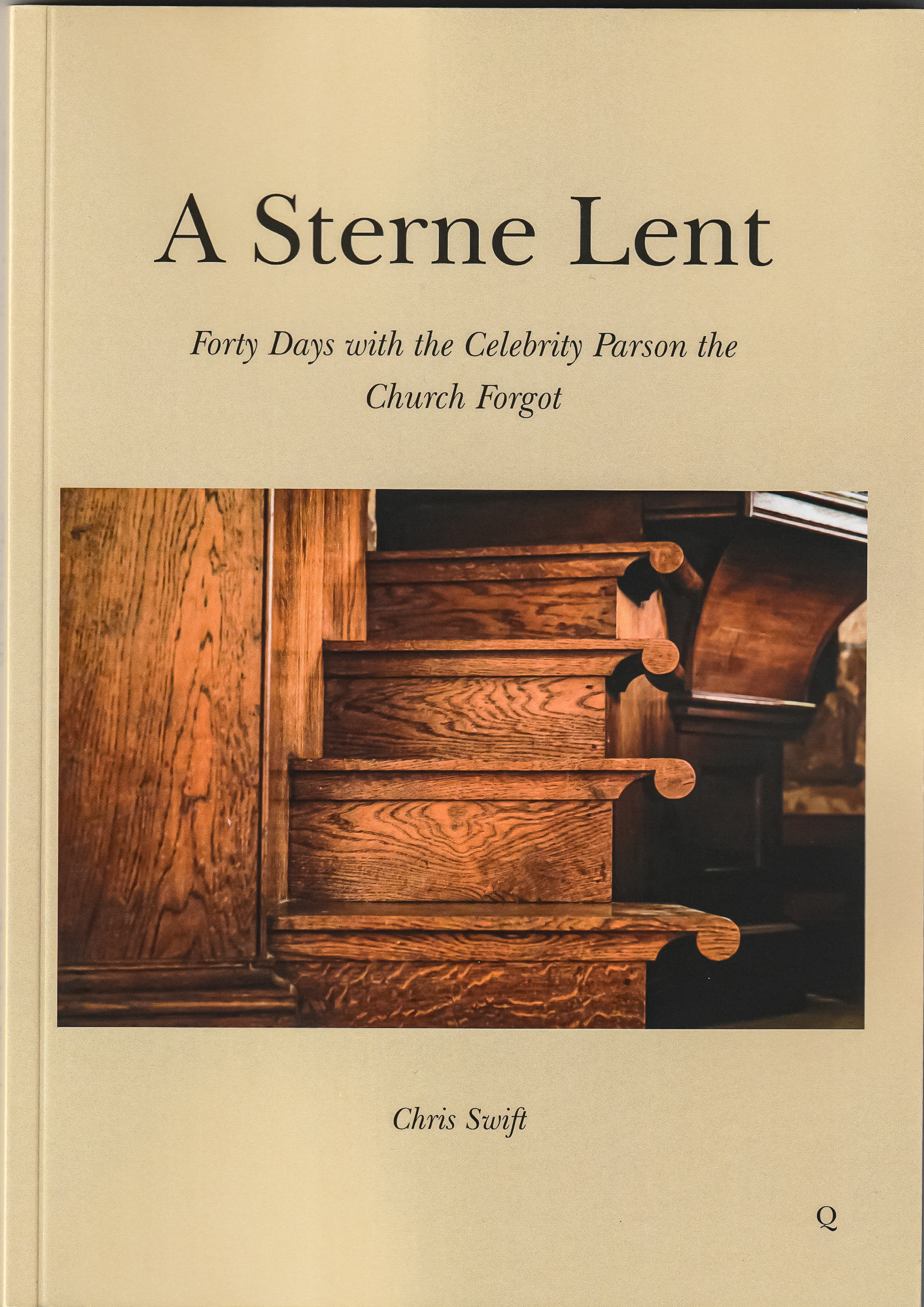
For the past 18 months I have been journeying with the unlikely, contradictory and inspiring Laurence Sterne. In a few weeks’ time I’ll be making the formal launch of the Lent book which is the product of this reflection: A Sterne Lent: Forty Days with the Celebrity Parson the Church Forgot.

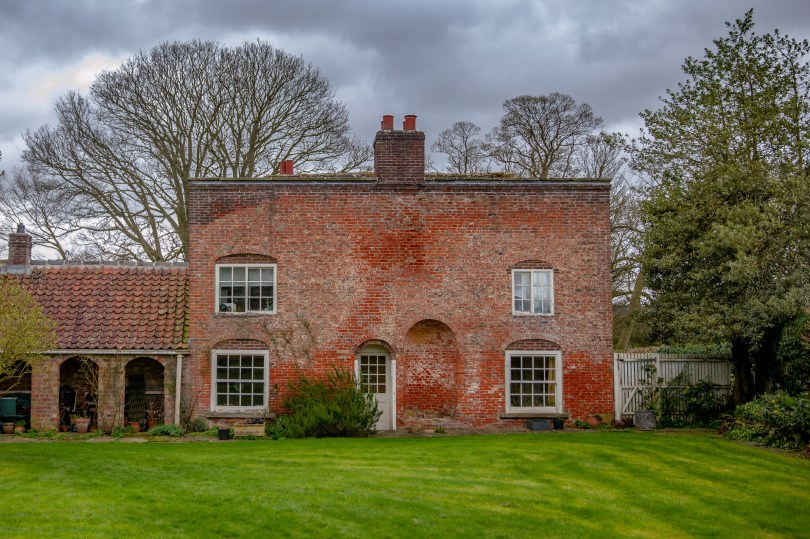
People have asked me, as well they might, why on earth I picked Sterne’s work as a muse for the serious spiritual reflections of Lent. There are a number of reasons. Firstly, being in the centre of York, I became aware of multiple connections with Sterne, all within a few yards of where I am living. Indeed, the cleric who built this house, William Ward, might be described as the creative impulse that launched Sterne’s literary career and consequent fame. This creative impetus took the form of Ward’s death. The demise of Ward opened the door to a deeply personal, bitter and decade-long dispute between the Archbishop of York’s legal officer and the Dean. It only ended when Sterne wrote his first book, a satire on the controversy, which was so accurate and witty that the Archbishop ordered all copies of A Political Romance to be burned. Thankfully a few survived.

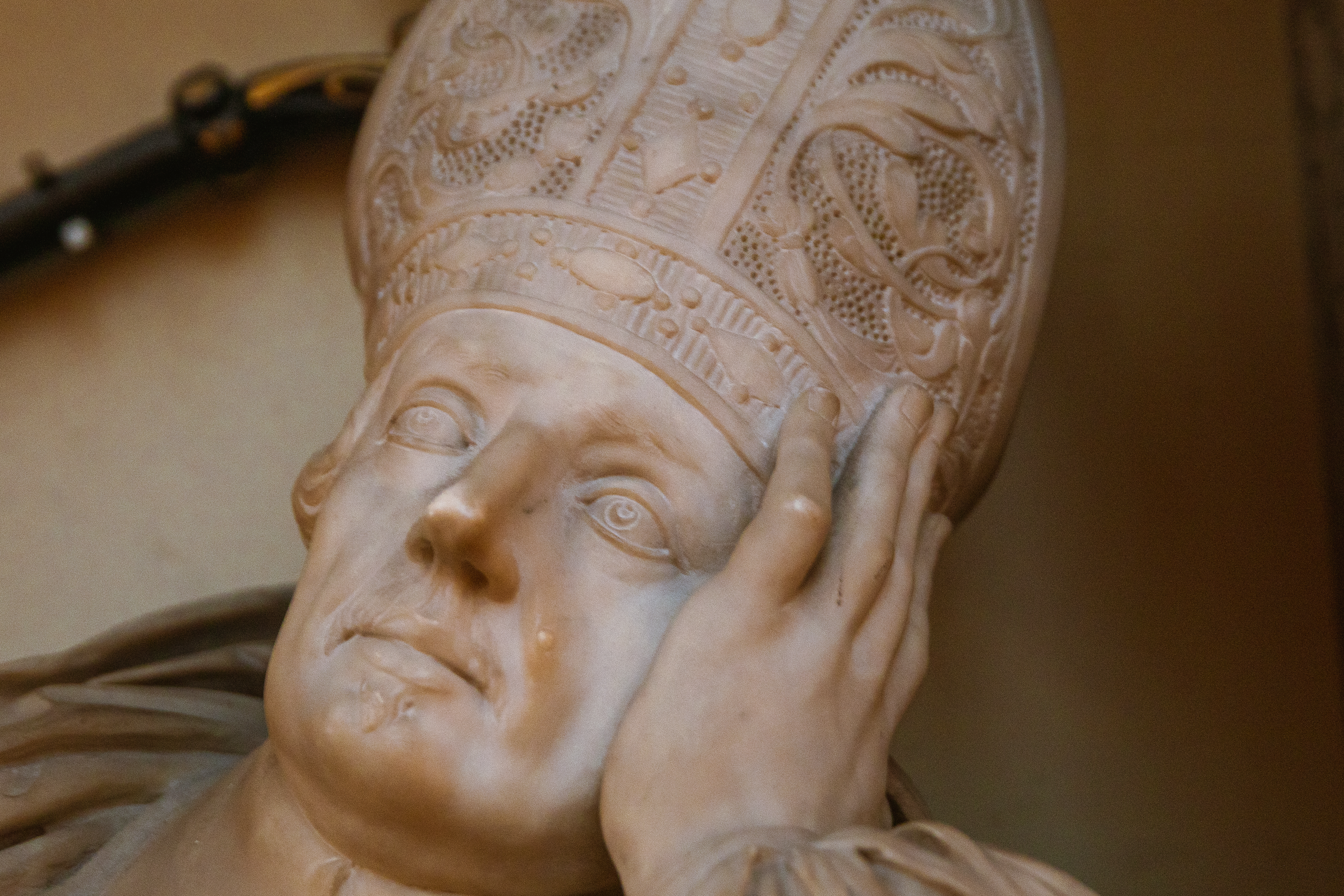
Effigy of Richard Sterne, Archbishop of York 1664-1683. North Quire Aisle, York Minster

Inside York Minster, Laurence’s great grandfather lies in repose. This is Archbishop Richard Sterne, and his recumbent form was carved by Grinling Gibbons (detail pictured above) the notable Anglo-Dutch sculptor. Outside the Minster, but only a matter of yards away, are two civic plaques. The first is in celebration of Elizabeth Montagu, the “Queen of the Blues”, who led a group of privileged women interested in education and mutual support for the development of their respective interests. Montagu was a correspondent with Sterne and also his wife’s cousin. A little further along the same cobbled street is the plaque to Jaques Sterne, the writer’s uncle and one-time Precentor of the Minster. As a Prebendary, Laurence Sterne would often have been in the Minster, preaching or attending meetings of the governing body. On the opposite side of the cathedral, down the ancient Roman road of Stonegate, a stained-glass commemorative disk records the place where Sterne’s Tristram Shandy was first published. As it happens, this printer’s business lies in the lineage of the publisher of A Sterne Lent, Quacks The Printer, which is today found a short distance away on a road parallel to Stonegate.

All this is interesting – possibly – but there is more to A Sterne Lent than geographical convenience. Sterne’s work continues to be significant in the arts and humanities. Tristram Shandy has a sustained and enduring influence on English literature, and literature in other languages. In the fine arts Sterne’s legacy still generates new works. Yet in the Church, Sterne is largely forgotten. Unlike Samuel Johnson or John Donne, he is absent from the religious calendar. When I re-read Tristram Shandy, and took a look at Sterne’s sermons and other writing, I discovered themes that are relevant today and, in many respects, were absolutely groundbreaking in the 18th century. For example, he uses satire to make explicit the repeated absence of female voices from decisions about their bodies and financial independence. It never occurs to the men who pontificate on the acceptability of using a cannula to perform an emergency baptism, to seek a woman’s view about the matter. When spurious pseudo-scientific and legal arguments are cited during a dinner after a major church service, involving the disinheritance of a widow, no female voice is in the conversation.

I do not know what readers will make of A Sterne Lent. As DH Lawrence famously commented: “never trust the teller, trust the tale”. Perhaps that is true in particular for Lent books. Sterne is an unlikely figure to choose as a conversation partner for the most sober season of the Christian year. He is full of mirth; jocularity; and satirical juxtapositions. Giving up some pleasure for the sake of his soul would probably have seemed a bizarre suggestion to Sterne. He is full of humour and weaves a thread of radical and counter-intuitive thinking across his writing. Not only in the prose, but in the physical presentation of the novel, he deploys startling surprises, twists and turns. Like the fluidity of the marbled page, the narratives jostle together and suddenly find themselves emerging into a new and unexpected digressions. Is Sterne taking us for a ride – or on a revelatory and challenging journey? Never trust the teller…

The unsettling ambiguity of Sterne’s writing may help us see the world anew, and fashion questions we had not thought to ask. At a time when there is so much turmoil in the Church of England I would contend that this Lent book offers reflections which have found their moment juste. With a vacancy at Lambeth, Sterne’s writing on vocation, ambition and patronage, are as pertinent today as they were in 1759. If the Church is to change for the better it needs to interrogate and understand the historic power which continues to tick in the mechanism of its present. As any reader of Tristram Shandy will tell you, when it comes to important matters in life, we must at all costs mind what we are about – consider how much depends upon what we are doing – or live with the consequences.

A Sterne Lent can be obtained from Quacks books or Amazon – where a Kindle edition is available. The photograph at the head of this blog features Shandy Hall, Coxwold, the Museum dedicated to the life and work of Laurence Sterne.

Seaside in Winter

This is by far my favourite time of year to be at the coast. Walks with the dog before dawn, watching the clouds change from bruised purple to dazzling gold. Hiking later in the day along headlands and across beaches, with few other walkers about. At night a deep darkness allows the Milky Way to be seen along with the winter constellations. When it is frosty it becomes an altogether magical scene. Only once did I find myself snowed in at a seaside cottage. It is a rare event, especially in a world affected by climate change. Slowly, as the day progressed, each of the three main roads out of Whitby were closed. With nowhere to go it became a good reason to stay in and put another log on the fire.

Oyster Catchers flying in the early morning along the coast at Sandsend

Observed from somewhere warm, the winter seascapes and landscapes offer drama and space for contemplation. This is the time when monarchs in mead-halls would demand that a saga was told. Perhaps a storyteller giving voice to the rich imagery of Sir Gawain and the Green Knight or, earlier still, Beowulf. Stories that reflect the darkness and magic of mid-winter, when the slightest covering of snow transforms the world outside. Perhaps it is hard for us to imagine, in an age of instant entertainment, the majestic scope and spellbinding intricacy of these substantial narratives. Like all knowledge passed down the generations, no doubt a multitude of minor changes occurred over the years which each teller making it their own tale. Eventually, multiple written copies started to keep the narrative in a form that was more stable, and the teller’s individuality became focused on the way of telling.

The sea runs back against itself
With scarcely time for breaking wave
To cannonade a slatey shelf
And thunder under in a cave.

Before the next can fully burst
The headwind, blowing harder still,
Smooths it to what it was at first –
A slowly rolling water-hill.

John Benjamin ‘Winter Seascapes’

Fewer snowy days come in our time – although we are experiencing them in the UK as I write. Generally, winter days are milder, sometimes stormier, which perhaps makes the appearance of ice and snow all the more marvellous. Growing up my mother often said “we don’t get winters like we used to”. I didn’t believe her, thinking this was simply the effect of advancing years reflecting on memories of youth. Of course, she was right. These precious days, if and when they come, may cause disruption and difficulty as people go about their lives – especially for those who are homeless. But maybe they also invite reflection, wonder, and act as a reminder of the world we are all, to some degree, changing.