Over the past few days I drafted a blog, as I do most weeks. It was largely a litany of despair about the state of the Church of England and the nadir of leadership and direction to which we appear to have sunk. Today is the final Sunday in the Church’s liturgical year, but it might also feel like the dying days of a once great institution. Perhaps, if its demise would ensure more people’s safety and sanity, there will be those who think that extinguishing the final embers would be an act of kindness for all concerned. The Church has failed in one of its primary obligations – but I cannot quite abandon the idea of what it might be.
Instead of a dismal diatribe about the Church’s failings (mine included) I have decided to take a different tack. The “idea of what it might be” includes resurrecting the often unseen but invaluable work of spiritual and pastoral care. In early 2020 I was looking for a poem to accompany some reflections for a retreat, but couldn’t find anything that would fit. Given this sad lacuna in English Literature I decided to pen my own verse and, for better or worse, I offer it on this final Sunday of the year as the slightest intimation of what at its best has been, and might still be, in the life of the Church’s sacramental pastoral care.
Holding Still
This work of holding; of the the task of being still, in order to hear. To shift weight without
disturbance; to keep the hushed, spare – space; the silence into which another speaks.
It is not nothing; this attending and anointing; this taking and bearing and blessing.
To touch what has died with the strength of love; to see in ashen form the hope of resurrection.
The image at the head of this blog is a photograph of a ceramic sculpture by Antonia Salmon, entitled “Holding Piece”
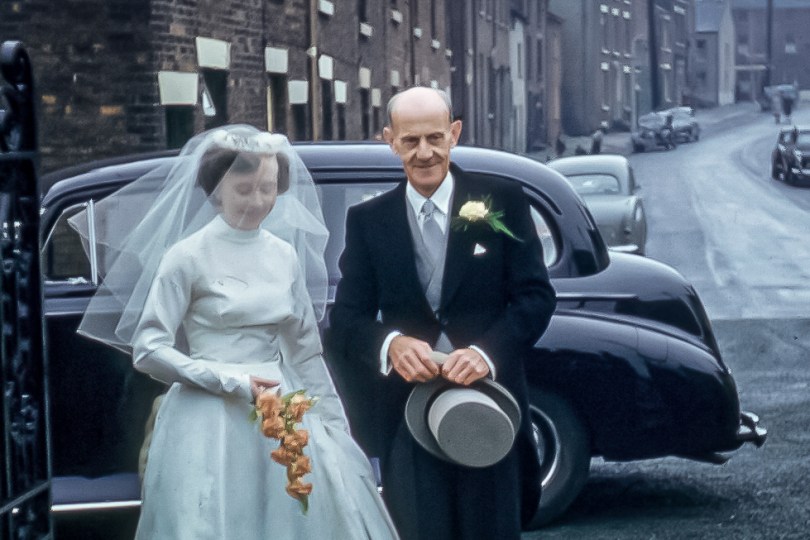
In September 1957 my parents got married. Earlier in the year my grandfather had been asked to become ‘Vicar’s Warden’ at the local Parish Church. He accepted. A local tradesman and Rotarian, Robert’s family was slowly advancing in material circumstances and civic standing. When he became a churchwarden it was news (albeit locally). The gazette carried a report that he “will be sworn in by the archdeacon or chancellor at the annual visitation”. In the 1950s, perhaps especially in counties like Lancashire, the Church of England was a notable presence in most communities. I attended the church primary school across the road from the substantial sandstone bulk of St Michael’s, erected in 1822. On Ascension Day we had a half day – one of many minor observations that peppered the year and kept the school, town and community connected. I’m sure the growing number of working parents often cursed the annual appearance of what must have appeared to be a rather random and inconvenient half-day!
When I began ordained ministry in 1991, also at a parish in Lancashire, it seemed that every church had at least its own vicar if not a curate as well. A nearby incumbent, in a more rural parish, took most of one day a week to visit a local hospital using public transport. Perhaps it was an inefficient way to spend his time, but I bet there were some interesting conversations along the way. In the parish where I served we had over 80 baptisms in one year; a memorable Holy Week with one or more funerals every day; and a church hall that bore the brunt of heavy usage from uniformed groups, parish thespians and the might of the Parochial Church Council. There was certainly no shortage of work to do or activities to support. By the time youth group had ended on a Sunday evening, on a day that began at 7:30 am, I was very happy to slump into a comfortable chair.
Those days have gone – for better and for worse.
Had the Church of England stopped evolving in the 1990s it is hard to know what would be left today. Perhaps, if it had continued to invest and support as much parish ministry as possible, the numbers with which Church House and the Archbishops’ Council seem preoccupied would be little different from those we see today. When people bemoan churches that appear to be stuck in the past, or unchanging, there is good evidence around that these same churches are often doing very nicely. Of course, nothing remains genuinely unaltered because the people change, and so does society. The ordination of women as priests and bishops was a matter of both faith and justice, and has added fresh qualities and fulfilled vocations at a time when both were in decline.
We know from many different reports that in the past egregious wrongs were perpetrated by clergy, and laity, under the guise of virtue, holiness and a perverted theology. I suspect that what we know about is the tip of a very, very large iceberg. All too often clergy have been a law unto themselves and, when something has been raised, benefited from the collusion of powerful patrons. This lack of accountability has deep roots. When I researched the history of institutional spiritual care I came across the case of a Victorian workhouse chaplain, Frederick Pocock, who neglected his charge with impunity due to the unwavering support of his bishop. The Board of Governors of the institution was powerless.
At one level, it seems astonishing that the Church has failed to learn a lesson that goes back deep into its history. In another sense, for rogue clergy, the cover-ups and collusion were (are) a desirable facet of the mercurial behaviour of a Medieval institution embedded in the modern world. Perhaps it is unsurprising (although it was startling at the time) that when I told my grandfather that I was exploring a sense of vocation he immediately left the room to be sick. Looking back I wonder, as a churchwarden, what he had seen or heard that caused such a reaction? He never said.
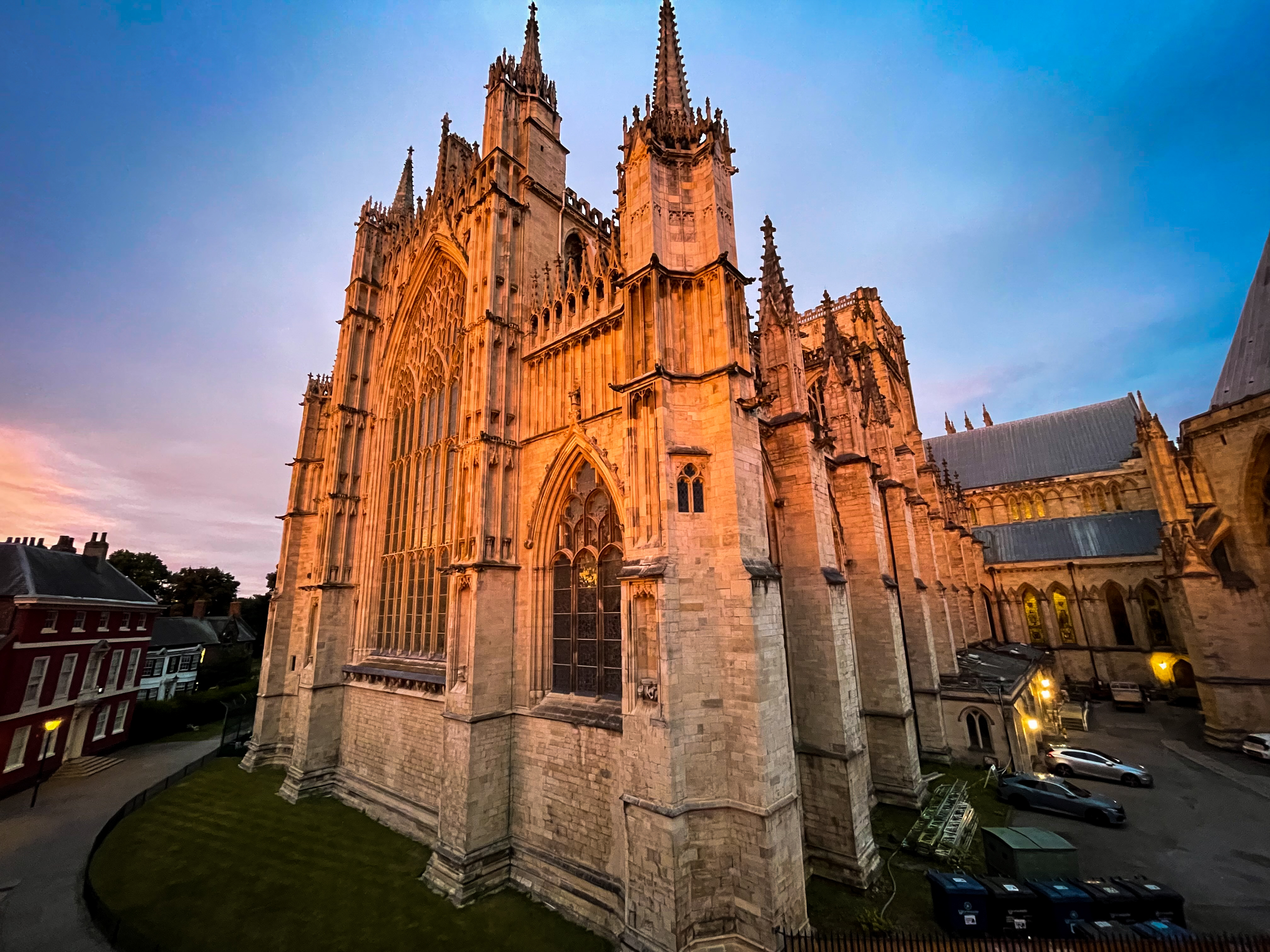
There is much about Anglican reason, tradition and spirituality that appeals to me. At its best there is a generous and pastoral care for communities and the “frowsty barn”, as Larkin put it, that is often at the physical centre of towns and villages. Sometimes it is the spiritual centre as well – but not always. It feels that this is the moment when England needs to decide the fate of its Church. Whether through a Royal Commission – as Martyn Percy suggests in today’s Observer – or a different process, some definitive solution is needed to ensure the safety and ongoing purpose of the Church. Many of the attractive characteristics of the Church I grew up with have gone – but can something new emerge that preserves the best of it for the future? The 500th anniversary of the Act of Supremacy is on the horizon (2034). Perhaps even Thomas Cromwell might feel that now is the right time to begin reshaping the kind of Church he helped establish, to fulfil it’s calling in a new era?
“To reform church and state you must deal with the populace.”
Mantel, H. (2011). Wolf Hall (Vol. 1). Fazi Editore.
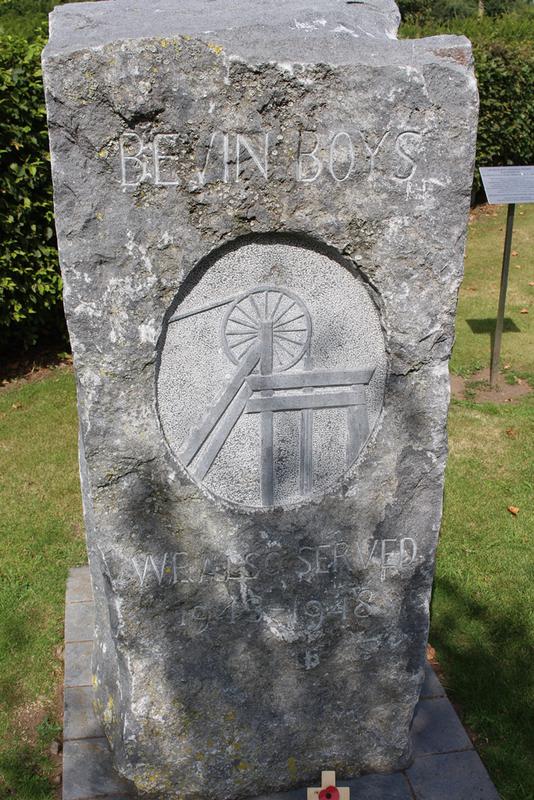
The consequences of war run wide and deep. While the focus of Remembrance may be soldiers on the battlefield, the effort of supporting a sustained conflict involved many, many, more people. At Bishop Auckland’s Mining Art Gallery, a new exhibition – Ted Holloway – A Bevin Boy Remembered – takes the work of a single Bevin Boy to present an insight into what it meant to be conscripted into the mines. Coal was essential to the overall war effort and the manufacturing capability of the country. It was in December 1943 that Ernest Bevin, the wartime Minister of Labour and National Service, devised the scheme to conscript by ballot a number of men of military age to go into the coal industry. Holloway, who was caught up in a form of work many would not have chosen, drew on his experiences to create art which reflects the hard and perilous experience of working underground. While many Bevin Boys were not working at the coalface they performed an invaluable role in maintaining the mine’s infrastructure, enabling regular miners to dig for coal and increase their productivity
“I was sent into the quarry, which was adjacent to the pit… That quarry work was the hardest work I have ever done in my life. It was through winter and you often had freezing water round your ankles and we had leather boots and no wellies, raw fingers, it was so cold, it was so hard and it sometimes rained and you had to carry on working. I looked forward to the warmth of going down the working pit, which came after about five weeks”.
There has been a long political campaign to honour the courage, effort and difference which the work of the Bevin Boys brought to the war. Sometimes referred to as the “forgotten conscripts” they finally achieved recognition when the Bevin Boys Veterans Badge became available after 2007. This still feels a modest acknowledgement of what they achieved, especially given the experience of many who, unlike other conscripts, did not return to their communities in uniform (or with the automatic right to resume their former employment).
Take Five (2006) Tom Lamb, Gemini Trust, Zurbarán Collection
War brings many horrors and devastates communities. The Bevin Boys remind us that the efforts of countless people to support a war effort often go unacknowledged and can be left in the dark. While the work of the British Legion and many other groups has been effective in widening the recognition of people (and animals) engaged in military struggle, it seems that too many national leaders forget this cost when new conflicts begin. I can only imagine that those who lived through the world wars would be incredulous that we continue to approach so many disputes with a call to arms. The post-war aspirations that new bodies, such as the UN, would manage disagreements differently, and peacefully, seems to have failed. Perhaps, as the last survivors of the world wars leave us, the risk of future conflagrations will increase. Maintaining some honest recollection of war’s human and material cost, and the legacy it leaves, might become more necessary than ever.
Above – The Bevin Boy Memorial, Alrewas, Staffordshire
The picture which heads this blog is taken from Miners’ Heads No. 2 by Ted Holloway.
We are in the season of sanctity. First comes All Saints, followed swiftly by All Souls, as we remember those who have lived and died in years gone by – either people we have known, or people extolled by the Church as exemplars of faith. Of course, like so much else, sainthood is bestowed according to the fashion, politics and preferences of church leaders. For example, there are fewer female than male saints. Even so, not everyone makes the cut, nor should they. Part of the premise of my new Lent Book for 2025 is that sometimes the Church forgets those from whom it still has much to learn.
The 18th century vicar and author Laurence Sterne was not a saint, if by that we mean someone faultless in this life. The trouble with Sterne was not so much that he had faults, but that he was very candid about them. In his letters and books there is bawdy and innuendo; passion and compassion. Sterne is all too human and rejoices in a conviction that God had given him the capacity for joy which it would be a sin to deny. In the brief span allotted for his life (he died aged 54) there is an echo of Andrew Marvell’s reminder to His Coy Mistressthat at his back he hears “Time’s wingèd chariot hurrying near”. For Sterne, life is too brief and precious to be lived as if it were “one cold eternal winter”.
When I renewed my interest in Sterne’s work, there were certain features that gave his writing a remarkably contemporary resonance. Corresponding with the black British abolitionist Ignatius Sancho Sterne pulls himself up short when he finds himself writing about the kin of a black character in his novel on:
“behalf of so many of her brethren and sisters, came to me—but why her brethren?—or yours, Sancho! any more than mine?”
Laurence Sterne, Letters
Why indeed? Sterne has the capacity and honesty to recognise his inherent – thoughtless – separation of people on the basis of ethnicity. The plea for a recognition of our God-given and common humanity runs throughout Sterne’s work. When it comes to gender differences Sterne is equally pointed in describing the ‘logic’ which denies a women authority over her own body or, come to that, even the right in law to be regarded as a blood-relative of her own children. Wit is the tool which Sterne uses to excavate the absurdities of his day, bringing to light the thin veneer of social etiquette that enabled the continuation of ridiculous conventions. At the same time, living at Shandy Hall in rural North Yorkshire, Sterne is enmeshed in the society and behaviours of his day. He knows this and uses humour to escape the passive acquiescence to which most conformed. Little wonder that friends encouraged him to get his preferment before he embarked on satire. Wit that came close to the mark and exposed conventions for what they were, could cost you a mitre.
Section from “A Flap Upon the Heart”; one of two new drawings by Rob Oldfield commissioned for the book.
A Sterne Lent offers the opportunity to keep company for a while with this witty, mirthful, digressive and somewhat doubtful parson. The book is immersed in an age that can feel very different from our own, yet contains themes that speak at times with remarkable contemporaneity. Above all, Sterne offers a lively voice whose strength is uninhibited by the usual constraints of ambition. His daring portrayal of the world he inhabited has the saintliness of a child-like disposition to tell the truth, even when it comes at a material cost. Sterne’s accurate depiction of human society bubbles out from his quill and left an enduring impact on the development of the novel. I hope that this curious and intriguing book will provide readers with a glimpse into another England, yet also one that touches with humour on human traits that persist within both church and society.





 Swift Reflections