Liberation

Sometime in the mid-1980s, while studying theology as an undergraduate, my tutor told us that the new language of our discipline was Spanish. He was reflecting on the fact that for most of the 20th century it had been German, but now the rise of Liberation Theology had shifted the axis of theology to the Southern Hemisphere. A few years later, while working and studying in Argentina, I asked my Spanish tutor whether we might read A Theology of Liberation by Gustavo Gutiérrez. I’m not sure my tutor enjoyed the experience of helping me understand the technical and unusual language of the writing which Gutiérrez embarked on in the late 1960s, but it was undoubtedly memorable for both of us! Last week, this Peruvian priest, sometimes called the “father of liberation theology”, died aged 96.

At the beginning of an interview with the Bishop of Blackburn before my ordination in 1991 there was a moment in silence during which he perused my file. Suddenly the bishop latched onto a comment about my interest in Latin America and exclaimed: “Liberation Theology – in my Diocese!” This has seldom been a theology which has lifted the hearts of prelates, and he probably felt fairly safe by stationing me in the leafy suburbs of Preston. Nevertheless, even there, I managed to cause a little trouble now and then, not least over the ordination of women and by developing a social responsibility group in the parish.
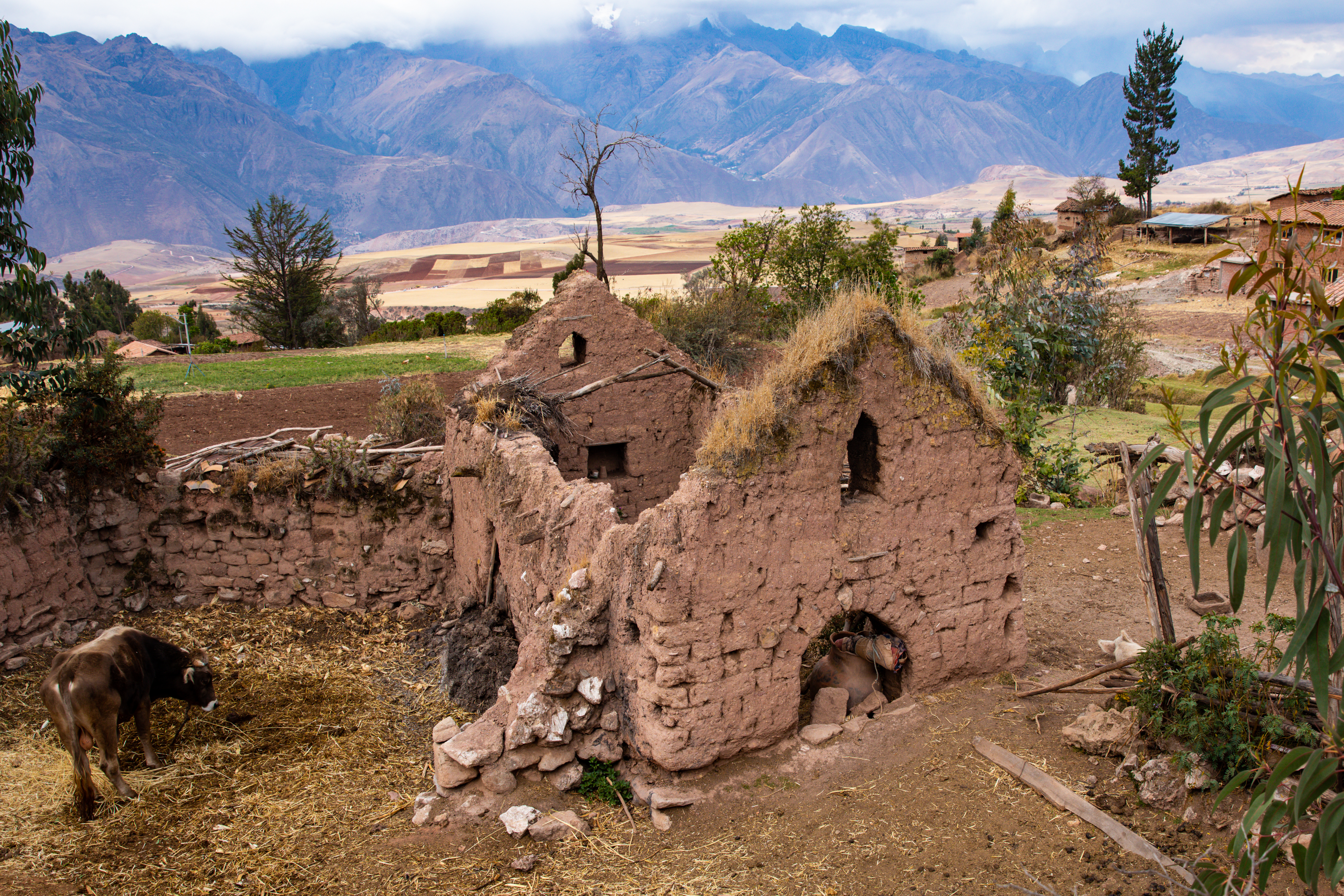
Poverty in Peru continues to be widespread despite progress achieved before the onset of the pandemic. Today, seven in ten Peruvians are poor or are at risk of falling into poverty. Picture taken during a visit to a social development project in rural Peru, 2022.

During my time in South America I observed that capitalism flowed more sluggishly than in Europe. It felt as if the aspirations of Western living were there, and some of its attributes and mechanisms, but it seemed that there was simply too little resource to make it happen. Comparisons can be odious, but this felt like the periphery of a system which served the North well, by sacrificing the best interests of the South. To note the fragility of structures in Latin America is not a criticism, but a recognition of the consequential dependency which the wealthy countries maintain with poorer nations. If the blood of finance flows more slowly in the South, it nevertheless continues to serve the interests of the North.

“The poor are a by-product of the system in which we live and for which we are responsible. They are marginalized by our social and cultural world”.

Gustavo Gutiérrez, The Power of the Poor in History

The scale, power and vested interests of capitalism feel insurmountable. No doubt many see it as the least-worst system for organising resources and creating successful societies. The truth is that this domestic security in the West – which is far from perfect – is paid for by many other communities across the world. The natural environment is ravaged and abandoned; societies are left in a state of daily hunger; the consequences of climate change are denied by powerful leaders. As is almost always the case, the least well-off shoulder the worst excesses of system that perpetually widens the gap between wealth and poverty.

Resignation in the face of injustice was never an option for Gustavo Gutiérrez. Like so many pioneers he experienced the scepticism, doubt and hostility which innovation brings. At one point he seemed destined for a formal rebuke by Catholic bishops – if not the Vatican – but this was headed off following an intervention by the eminent Jesuit theologian Karl Rahner. The influence of Gutiérrez continued to be felt across Latin America, and elsewhere, throughout his life. It will continue after his death. His passionate concern for the authenticity of the Church, by renouncing privilege and choosing instead to advocate for the poor, was always rooted in the Gospel and the Jewish Scriptures. Solidarity with the poor was the cri de coeur of Gutiérrez, as well as the product of his theology and lived experience. Ultimately, by the movement of the Holy Spirit in the world, the mission of God to which Gutiérrez bore witness will find fresh hands and voices to continue the work of liberation, which the Peruvian saw as the fundamental nature and purpose of Christ.

A Theology that Connects

The image at the head of this blog, entitled “the death struggle”, was painted by Edvard Munch. The struggle depicted is not primarily that of the person dying, who cannot be seen, but is found in the faces of those expressing their grief. In some measure, in their bereavement, they are beginning to grapple with an altered reality. Very often the faces and experiences of both the unwell, and those who care about them, are remote in the work of theology. In health care chaplaincy in particular, the vast majority of theological reflection and writing is done by the professionals, not by the people undergoing the experiences of illness. This is why a recent article by Professor Graeme Smith is interesting. It draws on evidence from research into the experiences of seafarers who have received ministry from chaplains. Entitled “A theology of chaplaincy from below”, it explores the sailors’ narratives to make the argument that the recipients of chaplains’ care are people who produce of a theology of their own.

It is true that there is a very limited range of material which elicits and explores the experiences of people who receive chaplaincy care. Even when it does happen, it is often filtered through the voice of the chaplain, describing the chaplain’s perception of how people have responded to what has been offered. Equally, a large proportion of what is gleaned is framed as “customer satisfaction” rather than theological insight. The reasons for this are clear, as the secular employers of many chaplains are much more comfortable with these kinds of metrics than with data from a field of study and information with which they may be unfamiliar: theology. Graeme Smith is also right in identifying a suspicion of theology and religion, which may make the use of material framed in this discipline a matter of contestation and doubt.

Smith also analyses of the chaplains’ responses to questions about their theology and purpose. Here he finds that their theology of chaplaincy is both brief and vague. The chaplains would speak about a “ministry of presence” and might expand that to include reference to “incarnational theology”. While I am familiar with this style of response from chaplains I think it would be accurate to note that health care chaplains might also add theodicy and ethics. Similarly, in recent years, some military chaplains would be able and willing to articulate their theology in relation to the growing field of “moral injury”. Perhaps one of the systemic issues Smith identifies in his work has developed as a result of greater inter-faith working. While this is excellent and valuable it may have inclined teams to focus on their areas of common concern and diminished some of the deeper exploration of theology within a particular faith.

While the notion of “being there” in chaplaincy has been a widely accepted trope for professional spiritual care, the COVID-19 pandemic placed that concept under considerable pressure. Being there added to the risk factors of caring institutions. One more body out and about on the wards, or in care homes, added to the risk of the virus being brought into the setting. Was being there essential? As it emerged over time, there were marked differences between chaplains ministering at a distance and those still able to be a physical presence in the hospital or care home. While it might be possible to interpret the incarnation as the needless burdening of Mary and Joseph, with pain and cost to come, God-at-a-distance and God-among-us represent theologies that are worlds apart. Good things did happen at a distance, but it appears that the presence of the chaplain in places of acute loss and suffering had an altogether different quality and consequence.

“It must be very difficult for chaplains who are not able to go into their home and schemes, because I’ve experienced that for retirement living, really not the same. It’s really not the same. Chaplaincy is hands on, face to face and I’m very conscious at least I’ve been able to do, and that must be frustrating for others who have not been able to”.

Swift, C. (2020). Being There, Virtually Being There, Being Absent: Chaplaincy in Social Care During the COVID-19 Pandemic. Health & Social Care Chaplaincy, 8(2).

Without doubt chaplains could do more to articulate and develop the theologies of their ministry. Megan Smith sees this as essential in order for chaplains to sustain their identity and not get wholly absorbed into the institutional paradigms of the places in which they serve. Further, she argues that a simplistic interpretation of incarnation as “being Christ to others” often fails to take full account of all the dimensions inherent in the incarnation. For example, the Word made flesh has a prophetic, critical and challenging edge, which may not be understood or expressed in the ministry of chaplains. At the same time, there can be a misperception that the chaplain comes to bring theology into the institutional setting, while not taking proper account of the possibility that theology is already there – waiting to be encountered.

In my role as a chaplain I have never doubted the importance of theology in what I do, or for the context of a large and complex institution. Theology asks unusual questions and stimulates debates which often lie silent within the discourses of the spiritual. Accessing the theology of the recipients of care is not always easy, but I agree that it is necessary. This is not only for the benefit of chaplains and those to whom they offer care. I have long said that the place where theology is written is very significant. Theology written in intensive care; during a pandemic; in A&E; or from a prison cell, speaks from a place where the tidiness and safety of doctrinal certainty often buckles under the messy complexity of living. The work of Jens Zimmermann on incarnational humanism might offer one route to finding a fuller account of the incarnation as a basis for a theology developed by everyone caught up in a community defined by common characteristics. This might be NHS patients; military personnel; or a community of seafarers. It is significant that Zimmermann finds in Dietrich Bonhoeffer, the prisoner-theologian, the epitome of this approach to theology, where the Christ comes to fulfil our humanity:

“because Christ died for our true humanity, the Christian works for the common good in society as best as possible under any given circumstances”.

Zimmermann, J. (2016). Bonhoeffer’s incarnational humanism. Theologica Wratislaviensia, (11 Dietrich Bonhoeffer na 500 lat Reformacji), 73-86.

Divinity must live within herself

I am banned from cycling in misty conditions. This followed a rather painful altercation with some construction fencing that had strayed into the road at the bottom of a long downward incline. On a grey morning, in grey weather, and against a grey road-surface, the grey fencing didn’t register: until I hit it. Suddenly, I was sailing through the air, extending my left arm ahead of me, a reflex action of protection, and landed painfully some yards ahead of the now stationary bike. A lorry driver stopped. Dazed and disorientated I got myself up, beginning to feel an intense pain in my left shoulder. With all the ridiculous desire of an Englishman not wanting to make a fuss, I declined all offers of assistance, placed my bike out of the way, and decided to get a bus towards the hospital where I worked. Once there I went to my office in order to get changed before presenting myself at A&E (one has to have standards). I thought I had broken my shoulder but, it turned out, I had broken the fifth metacarpal of my left hand in two places. I soon learned that it’s an injury called “boxer’s fracture”. At a later date, casting an uncertain eye over me, a surgeon (who clearly didn’t feel I fitted his image of a pugilist) asked me how I acquired the breaks. He suggested that perhaps I should desist from cycling in the future.

Low mist across a ploughed field, near Linton-on-Ouse, October 2024

I did not follow the consultant’s advice, although I have made it a general rule not to ride me bike when visibility is impaired. However, last week, setting out on a beautifully clear sunlit morning in York, I began to encounter misty conditions on the outskirts of the city. Weighing up the likelihood that conditions would improve I pressed on to my planned destination of the Aldwark Toll Bridge, about 15 miles from the centre of York. As I anticipated, when the sun got higher the mist receded and it turned into the kind of bright and clear autumnal day which is the muse of poets. Down country lanes the landscape spoke of the changing season: ploughed fields with the dark earth turned in readiness for growth to come. Trees beginning to bear a foliage of yellow, bronze and green-become-gold.

What is divinity if it can come
Only in silent shadows and in dreams?
Shall she not find in comforts of the sun,
In pungent fruit and bright, green wings, or else
In any balm or beauty of the earth,
Things to be cherished like the thought of heaven?
Divinity must live within herself:
Passions of rain, or moods in falling snow;
Grievings in loneliness, or unsubdued
Elations when the forest blooms; gusty
Emotions on wet roads on autumn nights;
All pleasures and all pains, remembering
The bough of summer and the winter branch.
These are the measures destined for her soul.

Extract from Sunday Morning by Wallace Stevens

It would be very hard to live without this cycle of outer change. In the northern hemisphere they are part and parcel of my spirituality. Within the altering length of days, and the transitions of spring and autumn, Western Christianity has moulded itself into the furniture of the seasons. From the heavenly sparks of Michaelmas, with the equinox behind us, to the remembrance of All Saints and All Souls, liturgy marches to the tune of a changing year. Over the past three decades I have taken funerals in autumn that have a particular poignancy – of change and decay – with a need, somehow, to return home before the darkness falls. A time to comfort one another in a season that tells us, as all seasons do, that while they might occupy a span of time, they can also be a mood; an atmosphere; and a state of being, which greets us on any given day. Divinity is not only something that comes to us in silence. Nor is she confined to some specific time of the year. God is in all these seasons, and the spirit of all these seasons dwells in us.